Michael Cochez is an Assistant Professor in the Learning and Reasoning group at the Faculty of Science, Vrije Universiteit Amsterdam . His research focuses on Machine Learning , Knowledge Graph Embedding , and Prototype-Based Ontologies , with applications in Scalable Hierarchical Clustering , Ontology Matching , and Knowledge Evolution . He teaches Intelligent Systems , Data Mining , and Machine Learning courses. His research explores integrating Knowledge Graphs into end-to-end ML models , addressing challenges in Approximate Query Answering and Knowledge Representation . He has also contributed to Multi-Agent Systems and Cloud Communication through projects like Graphino.nl (his consultancy business). His students include Jiawen Chen (supervised thesis on Smart Semantic Multi-channel Communication ).
Dr. sc. hum. Richard Zowalla is a researcher at the Faculty of Computer Science, Heilbronn University, specializing in health informatics and software engineering. He works at the Interdisciplinary Center for Machine Learning (ZML) and focuses on health web analysis, text mining, and open source software. Education: Doctorate in human sciences (Dr. sc. hum.), dissertation on German health web data analysis (2022) Research interests include health information systems, focused web crawling, text mining, and software quality management in agile environments. His work bridges healthcare and computer science through data-driven analysis of online medical resources. Publication trends show expertise in health web readability, multilingual health data comparison, and AI-driven service innovation. His articles emphasize practical applications of machine learning and data visualization in healthcare contexts. Teaching: Software Lab (2016-2025), Advanced Programming Techniques (2020-2024), Database Internship (2014-2025), Distributed Systems (2016-2017) Labs & Teams: Active member of the Interdisciplinary Center for Machine Learning (ZML) at Heilbronn University, contributing to collaborative research in health data analysis.
Prof. Dr. Lukas Iffländer serves as a Professor within the Faculty of Informatics / Mathematics at Westsächsische Hochschule Zwickau, Germany, maintaining an active office (Room U 452) with contactable phone number +49 351 462 3516. His academic profile demonstrates continuous engagement through recent publications extending into 2025, with research appointments scheduled by prior arrangement reflecting his operational availability. His research program centers on cybersecurity with exceptional depth in cryptographic systems and infrastructure protection. Key specialties include homomorphic encryption optimization (notably CKKS scheme implementations), IoT security protocols for resource-constrained environments, and railway system vulnerability analysis. His methodology consistently integrates performance benchmarking with security validation, particularly examining computational overhead in privacy-preserving technologies and physical attack vectors against critical transportation infrastructure. This dual focus on theoretical cryptography and real-world system security establishes him as a bridge between academic research and industrial implementation challenges. Analysis of his 15 most recent publications (2023-2025) reveals three dominant research trajectories: (1) Cryptographic performance evaluation, where he pioneers benchmarking frameworks for homomorphic and attribute-based encryption in practical scenarios like linear regression; (2) Railway security innovation, addressing digital interlocking systems and physical attack mitigation through technology forecasting; (3) IoT security optimization, developing multi-objective recommendation systems for group communication protocols. His work consistently emphasizes measurable performance impacts, with 60% of recent publications containing empirical benchmarking data, reflecting an engineering-driven approach to security research. No scientific awards were documented in the source materials. Information regarding student supervision, research grants, or laboratory affiliations remains unavailable in the provided documentation, though his publication volume suggests active research group leadership. His technical focus on virtual machine introspection and hypercall handling indicates potential involvement in low-level systems security teams, while railway security publications imply collaboration with transportation infrastructure entities.
Ngoc Tien Tran is a Junior Professor for Numerical Simulation at the Institute of Mathematics, Faculty of Mathematics, Natural Sciences and Technology, University of Augsburg since 2023. Previously, he was a Research Associate at Friedrich Schiller University Jena (2021-2023) and Humboldt University of Berlin (2018-2021). Dr. Tran's educational background includes: Doctorate in Mathematics, Humboldt University of Berlin (2021) Master of Mathematics, Humboldt University of Berlin (2018) Bachelor of Mathematics, Humboldt University of Berlin (2016) Dr. Tran's research focuses on advanced numerical methods for complex mathematical problems. His primary areas of interest include numerical methods for completely non-linear second-order PDEs , the convergence behavior of adaptive methods , nonstandard discretizations and hybridizable methods , and convex minimization and eigenvalue problems . His work bridges theoretical mathematics with practical computational techniques, developing innovative approaches to solve challenging problems in numerical analysis. Dr. Tran's publication record demonstrates a consistent focus on hybrid high-order methods and their applications to various mathematical problems. His recent work shows a progression from foundational methods to specialized applications in areas like the Monge-Ampère equation, eigenvalue problems, and convex minimization. A notable trend is his emphasis on guaranteed error control and stability analysis, reflecting a commitment to robust and reliable numerical methods. Dr. Tran is involved in research supported by the ERC Consolidator Grant and participates in the GAMM Workshop on Numerical Analysis and the One World Numerical Analysis Seminar. As a Junior Professor at the University of Augsburg, Dr. Tran advises students and contributes to the Numerical Mathematics research team. His teaching includes courses such as 'Finite elements in the calculus of variations' and a 'Seminar on Numerics' for Summer semester 2025. He is part of a vibrant research community that includes colleagues like Daniel Peterseim and Tatjana Stykel, as well as numerous research associates.
Dr. Stefan Michael Genennig is a researcher at the School of Business, Economics and Society at Friedrich-Alexander-University Erlangen-Nuremberg (FAU), affiliated with the Chair of Information Systems I, Innovation and Value Creation under Prof. Dr. Möslein. He completed his Master of Science in Management (M.Sc.) from FAU in 2015, after which he pursued doctoral studies leading to his dissertation "Realizing Digitization-Enabled Innovation – A Service Systems Perspective for Management" (2019/2020). During his academic journey, he completed exchange semesters at Södertörns Högskola in Stockholm and UIBE in Beijing, and gained practical experience through internships with Siemens Healthcare and Sportfive Team at 1. FC Nürnberg. Dr. Genennig's research focuses on innovation in service systems, particularly examining how digitization is transforming and enabling service innovation. His work spans multiple domains including business information systems, digital transformation, and service management. He has developed methodological frameworks for data-based service design and business model innovation, with applications across various industries including sports, manufacturing, and general service sectors. His publication record demonstrates a strong focus on the intersection of digital technologies and service systems. Analyzing his most recent works reveals consistent themes around value creation through digital transformation, with particular attention to business models 4.0, data-driven service innovation, and the integration of digital resources into service ecosystems. His research methodology often combines field-based design science approaches with empirical analysis of real-world business contexts. Dr. Genennig has been actively involved in advising and research projects, collaborating with industry partners and academic colleagues on topics related to digital service innovation. His work has been supported by institutional research frameworks at FAU, contributing to the university's strength in business information systems and digital transformation research. He is part of research teams focusing on service systems engineering and digital business model innovation, working within FAU's ecosystem of research excellence in business administration and information systems.
Urs Schreiber is a Professor at New York University in Abu Dhabi (NYU AD), working in the Mathematics Division of Science. He leads the Research Center for Quantum and Topological Systems (CQTS) under the group of Prof. Hisham Sati. His work bridges mathematical physics, quantum theory, and topology, with significant contributions to understanding strongly-coupled quantum systems and their applications to topological quantum technology. His research focuses on applying tools from algebraic topology and geometric homotopy theory to fundamental problems in quantum physics. His major projects include Hypothesis H on flux quantization in M-theory, geometric engineering of anyons on M5-branes, and developing quantum language via linear homotopy types. His work represents a unique synthesis of advanced mathematical techniques with cutting-edge theoretical physics, particularly in the areas of M-theory, topological quantum computing, and differential cohomology. Schreiber has established himself as a leading figure in the application of higher categorical and homotopical methods to physics. His research demonstrates a clear trajectory toward developing mathematical frameworks for next-generation quantum technologies, with particular emphasis on topological approaches that could provide fault-tolerant quantum computing platforms. His work shows strong connections between abstract mathematical structures and practical quantum computing applications, particularly through homotopy type theory implementations. Monograph: The Character Map in Non-Abelian Cohomology (with D. Fiorenza & H. Sati, 2023) Monograph: Equivariant Principal ∞-Bundles (with H. Sati, 2025) Contributor: Mathematical Foundations of Quantum Field and Perturbative String Theory (2011) Schreiber has advised numerous graduate students in areas spanning homotopy theory, quantum field theory, and mathematical physics. His teaching portfolio includes courses on Mathematical Quantum Field Theory, Topological K-Theory, and Stable Homotopy Theory. He is also the founder of the nLab research wiki project (started in November 2008), which has become an essential resource for researchers working at the intersection of mathematics and physics. His research group actively develops mathematical foundations for quantum and topological systems with practical implications for quantum technology development.
Sarah Depenbusch is a researcher at the Work and Organizational Psychology department, Paderborn University, focusing on the intersection of digital transformation and human behavior. Her work emphasizes virtual reality (VR) applications in workplace learning, technostress mitigation, and employee retention strategies. Email: sarah.depenbusch@uni-paderborn.de Office: Warburger Str. 100, Room H4.316, Paderborn Current Role: Research Associate and Chair Assistant Research Trends: Her recent publications highlight VR-based training tools for SMEs, proactive job crafting strategies, and the psychological impacts of digital transformation on organizational dynamics. Teaching: She contributes to bachelor and master courses in organizational psychology, including lectures on digital workplace challenges and practical psychology modules.
Prof. Dr. Daniel Beverungen holds the Chair of Information Systems, specifically Business Information Systems, at Paderborn University where he serves as Vice Dean for Processes and Cooperation at the Faculty of Business Administration and Economics. He is also Speaker of the Steering Committee of the Software Innovation Campus Paderborn (SICP) and Chairman of the Board of the Software Innovation Lab (SI-Lab). His work bridges academic research with industry applications through strong partnerships with companies across Germany. His academic journey began with a Dipl.-Wirt.-Inf. (MSc equivalent) in Information Systems from Paderborn University in 2006. He earned his Dr. rer. pol. from the University of Münster in 2010, followed by postdoctoral research there until 2015. He served as Acting Professor at Münster (2015-2016) and was appointed Venia legendi in 2014. In 2021, he received an offer for a Full Professorship at Bamberg University (declined). Prof. Beverungen's research primarily focuses on service research, business process management, and the design of innovative information systems. He is renowned for his conceptualization of smart service systems and has led the development of industry standards (DIN SPEC 33453, DIN PAS 1091, DIN PAS 1094). His work examines how workarounds transform into process innovations and investigates digital platforms for value co-creation in hyper-connected environments. Recent research emphasizes digital responsibility and sustainable digitalization. His publication portfolio reveals a strong trajectory toward understanding smart service systems, business process innovation through workarounds, and digital responsibility frameworks. The research spans theoretical foundations to practical applications in industries like energy distribution, urban retail, and cultural platforms. A notable trend is the integration of socio-technical perspectives in information systems design, emphasizing how people and technology interact in complex service ecosystems. Prof. Beverungen has received notable recognition including: Paper of the Year 2020 from Electronic Markets journal Membership in the Wissenschaftskolleg der Universität Paderborn (2024-2025) SAP Certified Associate for Business Process Integration with SAP S/4HANA (2022) As an academic leader, Prof. Beverungen has supervised numerous students through project seminars focused on business process management and information systems design. He leads significant research initiatives including SHAPE, Change.WorkAROUND, and AProSys projects with industry partners. His editorial roles include Department Editor for Business Process Management at BISE journal and Guest Editor for Electronic Markets. He has secured funding for research on digital service systems and platform-based innovations. Prof. Beverungen directs the Software Innovation Campus Paderborn (SICP), a major innovation hub where 43 professors collaborate with 44 companies on digital innovations. He chairs the Software Innovation Lab (SI-Lab), Paderborn University's largest central research facility. Through SICP, his team develops solution perspectives for ERP systems like SAP S/4HANA and digital data rooms, with particular expertise in Networked Cultural Platforms as part of the German government's Data Space Culture project.
Alisa Lorenz is a Lecturer for Business Intelligence and Research Associate for the VLUID project at Technische Hochschule Mittelhessen (THM) in Gießen, Germany, while pursuing her PhD in Information Systems at the University of Cologne. With over 7 years of industry experience in Data & Analytics, Business Intelligence, and Project Management, she bridges academic research and practical application in smart city development. Her research focuses on the intersection of smart cities, technology acceptance, and data-driven traffic management. Specifically, she investigates how citizen science approaches influence technology acceptance and adoption in smart city contexts, with a particular emphasis on intelligent traffic management applications. Her work combines business intelligence methodologies with urban planning considerations to develop more effective and user-accepted smart city solutions. Best Paper Award at the International Conference on Software Business (ICSOB) 2022, Bolzano As an educator, she lectures on Business Intelligence for master's courses in Digital Business and Corporate Management at THM. She actively supervises student theses on emerging topics such as Data Mesh architecture and its implications for data-driven organizations. Currently, she is working on the VLUID project in Wetzlar, funded by the German Federal Ministry for Digital and Transport, which aims to revolutionize traffic management through data-driven approaches and intelligent solutions developed in collaboration with citizens.
Ruth Hagengruber is a Professor of Philosophy at the Department of Philosophy , Paderborn University , and serves as Head of the Faculty of Arts and Humanities. She founded the Center for the History of Women Philosophers and Scientists (2016) and EcoTechGender research area (2006). Präsidentin der Deutschen Gesellschaft für Philosophie e.V. (Since 2025) Secretary, International Association of Women Philosophers e.V. (Since 2021) Co-founder of the Elisabeth of Bohemia Prize and Encyclopedia of Concise Concepts by Women Philosophers (2018) Her Habilitation (1998) and Doctorate (1993, magna cum laude) focus on Practical Philosophy, natural sciences history, and ancient church history. She has held academic roles at the University of Koblenz-Landau (Associate Professor, 2005; Research Assistant, 2001-2003; 1996-1999) and Albertus Magnus University of Cologne (Lecturer, 1995-2005). Her research spans Philosophy of Informatics (creativity, digital humanities), History of Women Philosophers (Émilie Du Châtelet manuscripts, Elisabeth von Böhmen), and EcoTechGender (economic, technological, and gender intersections). Recent publications include editions of Du Châtelet's works and gender-focused philosophy journals. 2015 : Wiener-Schmidt Prize, Society for Cybernetics and Systems Theory 2014 : Award for Innovation and Quality in Teaching, Paderborn University (for Philosophy in the Media ) 2016-2017 : Research Award Fellowship, Stifterverband Essen Since 2019 : Lifetime Member, International Association for Computing and Philosophy She organizes international projects (Erasmus collaborations), editorial boards (Springer Series Women in the History of Philosophy and Sciences ), and academic events like the 2016 Émilie Du Châtelet session at the International Leibniz Congress. Her work integrates theatre, film, and media to explore philosophical themes.
Dr. Len Ole Schäfer is a Postdoctoral Researcher at the CATALPA research cluster, FernUniversität in Hagen, leading the project 'Organizational Resilience and Creativity: Exploring the Future of Educational Technology in Higher Education' (ORC) in collaboration with the Alexander von Humboldt Institute for Internet and Society (HIIG). His work investigates the interplay between organizational resilience, creativity frameworks, and educational technology implementation within higher education institutions, emphasizing trust-based leadership and strategic adaptation. Schäfer holds a PhD in Sociology (2018) from the University of Bamberg examining the UK's Research Excellence Framework impact on academic practice, and a Diploma in Sociology (2012) focused on ranking construction in science. His academic trajectory includes research positions at Zeppelin University (2018), University College London's Centre for Global Higher Education (2016), and the University of Bamberg (2012-2018). His research centers on higher education organizational dynamics, particularly how universities navigate digital transformation through resilience-building and creativity cultivation. Key interests include sociological theory applications, organizational sociology frameworks, and the role of digitalization strategies in enabling innovation. His work consistently analyzes resistance to digital change, strategic ambiguities in institutional policies, and trust mechanisms that foster EdTech adoption across diverse academic contexts. Recent publications reveal a cohesive trajectory examining organizational responses to digital disruption, with emphasis on faculty perspectives, leadership approaches, and structural adaptations. His studies—primarily qualitative and mixed-methods—highlight tensions between centralized strategies and decentralized implementation, resistance triggers, and the paradoxical role of ambiguity in enabling innovation during rapid technological change. As an active community contributor, Schäfer serves on the advisory board of FernUniversität's #NewLearning Blog and reviews for 'Higher Education - The International Journal of Higher Education Research'. His project leadership in ORC (2023–present) and OrA (until 2023) demonstrates sustained engagement with German higher education's adaptability challenges, while international collaborations with HIIG and conference presentations at EGOS and Swiss Sociological Association forums extend his scholarly impact.
Prof. Dr.-Ing. Torsten Zesch serves as Deputy Scientific Director, Member of the Executive Board, and Head of the Research Professorship for Computational Linguistics at FernUniversität in Hagen since March 2022. He previously held W2 and W1 Professorships for Sprachtechnologie (Language Technology) at Universität Duisburg-Essen from 2014-2022. Zesch is also Spokesperson of the Advisory Board of the German Society for Computational Linguistics and Language Technology (GSCL) since 2024, having previously served as GSCL President from 2018-2024. Dr. Zesch completed his dissertation (Dr.-Ing.) in Computer Science at Technische Universität Darmstadt in 2009. His research spans robust language processing systems, analysis of non-standard language structures, and educational applications of language technology, with particular focus on automatic content scoring and spelling error correction for learner language. Zesch's recent publications reveal a strong focus on integrating language technology with educational applications. His work demonstrates expertise in developing practical NLP solutions for educational assessment, including transformer-based spelling error feedback systems, hierarchical automatic scoring methods, and leveraging LLMs for educational applications despite cold-start problems. He also maintains significant research in hate speech detection, particularly in multimodal contexts and visio-linguistic models. As leader of the Computational Linguistics research professorship within the CATALPA research center, Zesch directs a team investigating how language technology can support educational processes. His projects DAKODA and KISS-Pro focus on language acquisition and educational applications. He has contributed significantly to the field through numerous publications in top NLP and educational technology venues, with over 100 publications spanning from 2006 to present.
Sascha Spors is a Professor at the Chair of Signal Theory and Digital Signal Processing within the Institute of Communications Engineering at the University of Rostock. His work spans spatial audio processing, medical signal processing, and data-driven methodologies. Chair of the AES Technical Committee on Spatial Audio Ombudsperson at the University of Rostock Research focuses on spatial sound capture/synthesis, perception of synthetic sound fields, and biomedical applications like implant monitoring via electrical impedance tomography. He contributes to open science initiatives and research data management frameworks. Key collaborations include memberships in the IEEE Signal Processing Society, Deutsche Gesellschaft für Akustik (DEGA), and Audio Engineering Society (AES).
Alke Martens is Professor and Chair of Practical Computer Science at the Institute of Computer Science, Faculty of Computer Science and Electrical Engineering, University of Rostock. She serves as Dean of Studies for the Faculty, Director of the Institute, Digitalization Officer at the university, and Head of Junior Studies, with additional leadership roles including Chairwoman of the Digital Innovation Center Supervisory Board and Head of the Historical-Technical Collection of Computer Science. Research Interests: Her work centers on computer science didactics, digital transformation in educational and corporate environments, and societal implications of computing. She develops school-level curricula through initiatives like "Computer Science Unplugged" and "Rent-a-Professional," bridging cognitive systems, AI pedagogy, and teacher training to advance computational thinking in K-12 education. Academic Engagement: Martens actively shapes educational policy as Dean of Studies and GI Ambassador, while her cross-faculty memberships in the Interdisciplinary Faculty (Ageing Department), Center for Teacher Education (ZLB), and ICT Network demonstrate commitment to interdisciplinary digital innovation. Her IEEE and German Informatics Society affiliations further highlight expertise in intelligent learning systems and e-education.
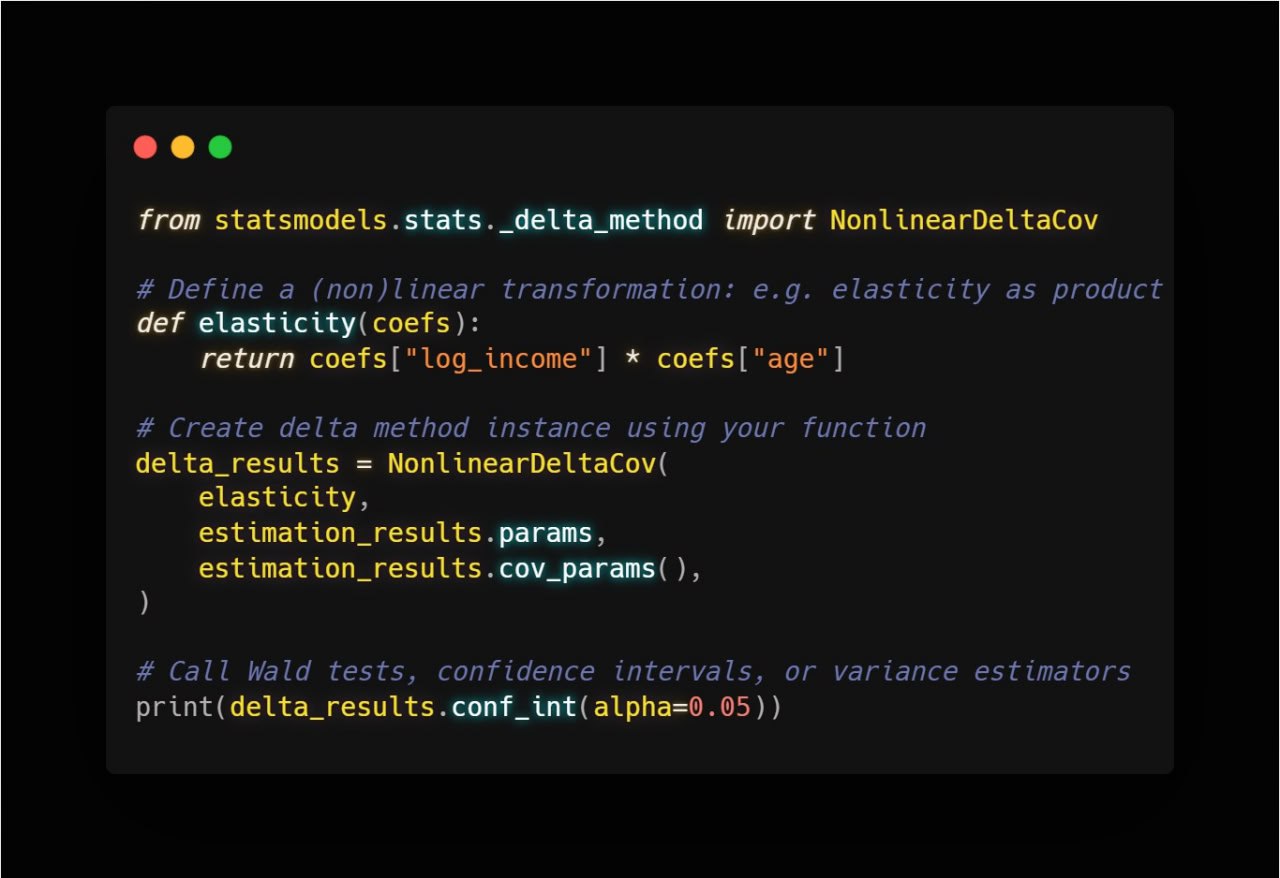
Vladislav Morozov is a tenure track Assistant Professor (W1) of Econometrics and Statistics at the Institute for Financial Economics and Statistics within the Department of Economics at the University of Bonn. He holds a PhD in econometrics from Universitat Pompeu Fabra, Barcelona, and maintains an active research program focused on developing practical statistical methods for handling unobserved heterogeneity in economic applications. His research interests encompass Econometrics , Nonparametric Statistics , Semiparametric Statistics , and methods for addressing Unobserved Heterogeneity . Dr. Morozov investigates how unobserved differences between economic agents affect causal inference, with particular attention to heterogeneous treatment effects and parameters that vary across populations. His work demonstrates that even with limited data (such as just two periods of panel data), it's possible to identify average causal effects despite infinitely many unobserved differences between individuals. His recent publications and blog posts reveal a strong focus on practical statistical methods, including applications of the delta method in statsmodels, visualization of statistical convergence concepts, and critical examinations of common econometric practices like fixed effects modeling and hypothesis testing procedures. His work bridges theoretical econometrics with practical implementation for empirical researchers. Dr. Morozov maintains active engagement with the academic community through his lecture notes on econometrics with unobserved heterogeneity, which cover topics from linear models with heterogeneous coefficients to nonparametric approaches. He has recently shifted from LaTeX Beamer to Quarto Reveal.js for creating reproducible, maintainable presentations that integrate code execution directly into slides. He is an active contributor to methodological discussions in econometrics, particularly regarding the challenges posed by unobserved heterogeneity in non-experimental settings, which can lead to significant bias and invalid inference if not properly addressed. His work provides robust methods for handling these pervasive issues in economic research.