State University of New York at BuffaloUnited States
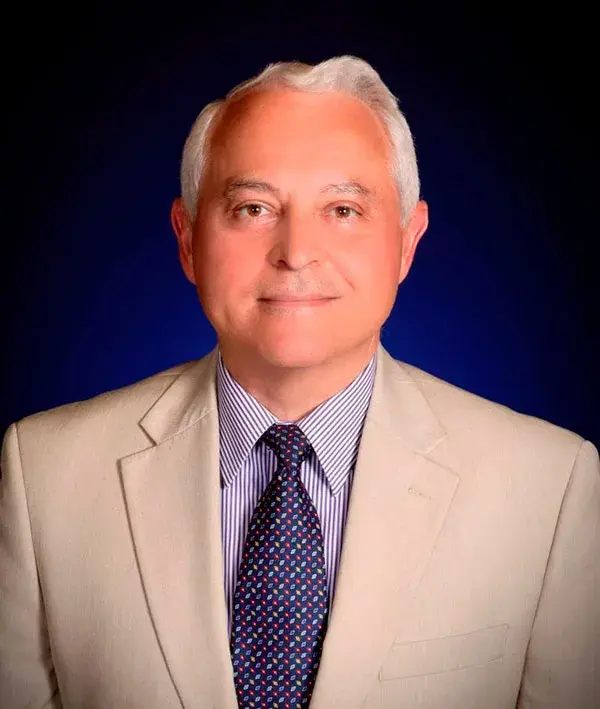
Andrew S. Whittaker is a SUNY Distinguished Professor in the Department of Civil, Structural and Environmental Engineering at the University at Buffalo, State University of New York . He serves as Director of the Institute of Bridge Engineering and Interim Director of the Stephen Still Institute for Sustainable Transportation and Logistics , both within the School of Engineering and Applied Sciences . A registered Civil and Structural Engineer in California, Whittaker specializes in structural and earthquake engineering, bridge engineering, blast and impact engineering, performance-based engineering, and nuclear structures. Research Interests: His work focuses on seismic isolation systems for nuclear reactors, fluid-structure interaction in advanced reactor vessels, gamma radiation effects on materials, and the dynamic behavior of graphite blocks in high-temperature gas reactors (HTGRs). He also explores the commodification of microreactors and soil-structure interaction for seismically isolated facilities. Scientific Awards: Distinguished Member, American Society of Civil Engineers (2025) Untermyer & Cisler Reactor Technology Medal (2023) Nathan M. Newmark Medal (2023) Fellow of multiple societies (ASCE, SEI, ACI) Awards and grants highlight his leadership in nuclear safety, seismic engineering, and reactor design.
University of North Carolina at CharlotteUnited States
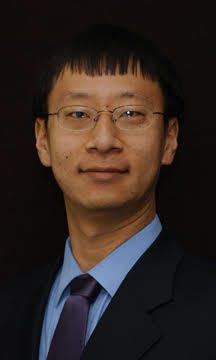
Weichao Wang is a Professor and Chair of the Department of Software and Information Systems at the University of North Carolina at Charlotte (UNC Charlotte). He holds a Ph.D. in Computer Science from Purdue University (2005), with earlier degrees from Tsinghua University. His research focuses on securing pervasive systems, wireless networks, cloud computing, and critical infrastructures, integrating multi-disciplinary approaches like information theory and visualization. He leads efforts in cybersecurity education for K-12 and higher education. Key roles include organizing IEEE conferences (e.g., IPCCC) and editorial roles in journals like ITU Intelligent and Converged Networks. His awards include the 2024 AECT Crystal Award and multiple Distinguished TPC recognitions. Students under his advisement have contributed to areas like mobile cloud computing and network security. Professional contributions include service on over 50 conference committees and journal reviewing. Current research emphasizes cybersecurity in education, IoT defense, and AI-driven security systems. His lab explores immersive visualization for cybersecurity training and augmented reality applications.
Nan Marie Jokerst is the J. A. Jones Distinguished Professor of Electrical and Computer Engineering at Duke University's Pratt School of Engineering and Executive Director of the Duke Shared Materials Instrumentation Facility. She previously served as Chair of the Duke Academic Council (2014-2015) and Associate Dean for six years. B.S. in Physics, Creighton University (1982) M.S.E.E., University of Southern California (1984) Ph.D. in Electrical Engineering, University of Southern California (1989) Her research spans chip-scale photonic sensing systems , III-V thin-film lasers on silicon , metamaterials , and heterogeneous integration . She develops optical systems for medical diagnostics, environmental monitoring, and security applications through the Jokerst Laboratory, which combines optical system design, optoelectronic device development, and semiconductor fabrication expertise. Her recent publications show strong focus on terahertz strain mapping using metamaterials, multi-pixel tissue characterization for cancer margin detection, and microfluidic sensing platforms with embedded photodetectors. Key trends include advancing non-destructive structural monitoring and miniaturized biomedical diagnostics through novel photonic integration techniques. IEEE Fellow (2003) Optica Fellow (2001) NSF Presidential Young Investigator Award IEEE Third Millennium Medal IEEE/HP Harriet B. Rigas Medal USC Viterbi School Alumni Award She has advised numerous graduate students in photonic device research and secured major grants including the NSF National Nanotechnology Coordinated Infrastructure ($6M, 2015-2021) and NNCI: North Carolina Research Triangle Nanotechnology Network ($20M, 2020-2026). Her leadership extends to co-founding Triangle Women in STEM and serving on the National Academies Board on Global Science and Technology. The Duke Shared Materials Instrumentation Facility under her direction provides critical cleanroom and characterization resources for interdisciplinary research.
Patrick J. Murphy is a full Professor and the Goodrich Entrepreneurship Chair at the University of Alabama at Birmingham (UAB), serving as Founding Director of the highly acclaimed Barefield Entrepreneurship Program (BEP). He holds editorial leadership roles as Editor-in-Chief of the Journal of Small Business and Enterprise Development and former Editor-in-Chief of Management Decision . Dr. Murphy’s academic journey includes a PhD in Business Administration from the University of Illinois at Chicago (2004), complemented by extensive international experience, including Mandarin fluency and prior work in Beijing. His research focuses on entrepreneurship theory, social enterprise, and historical case studies, with notable contributions like the Heptalogical Model of Entrepreneurship and analyses of Antebellum social ventures. Awards include Techstars’ 'All Star Mentor' (2024) and recognition as Illinois’ 'Entrepreneurship Professor of the Year' (2017). The BEP, under his leadership, has achieved 378% enrollment growth (2020–2024) and secured over $7M in funding. Dr. Murphy’s professional activities span academic service (e.g., Academy of Management Historian), community engagement (former Chicago Cultural Alliance Board President), and entrepreneurial ventures in racehorse breeding. His work bridges historical insights with modern challenges, emphasizing institutional forces, ethical leadership, and cross-cultural entrepreneurship.
Dan M. Ionel, Professor and inaugural L. Stanley Pigman Chair in Power at the University of Kentucky (UK), directs the Power and Energy Institute Kentucky (PEIK). He is affiliated with the SPARK Laboratory in the Department of Electrical and Computer Engineering, focusing on renewable energy, electric machines, and smart grids. Alternative and Renewable Energy Technologies Electric Machines and Power Electronic Drives Electromagnetic Devices Electric Power Systems Energy Storage Smart Grids and Buildings His research integrates machine learning with electromagnetic design for applications like electric vehicles and aircraft propulsion. Recent work includes axial flux permanent magnet machines with Halbach arrays and cryogenic thermal management systems. Scientific awards include IEEE Fellowship. Research is sponsored by NSF, DOE, NASA, and industry partners like ANSYS, EPRI, and Regal Rexnord. Collaborations span national labs (NREL, ORNL), utilities (LG&E, TVA), and aerospace entities.
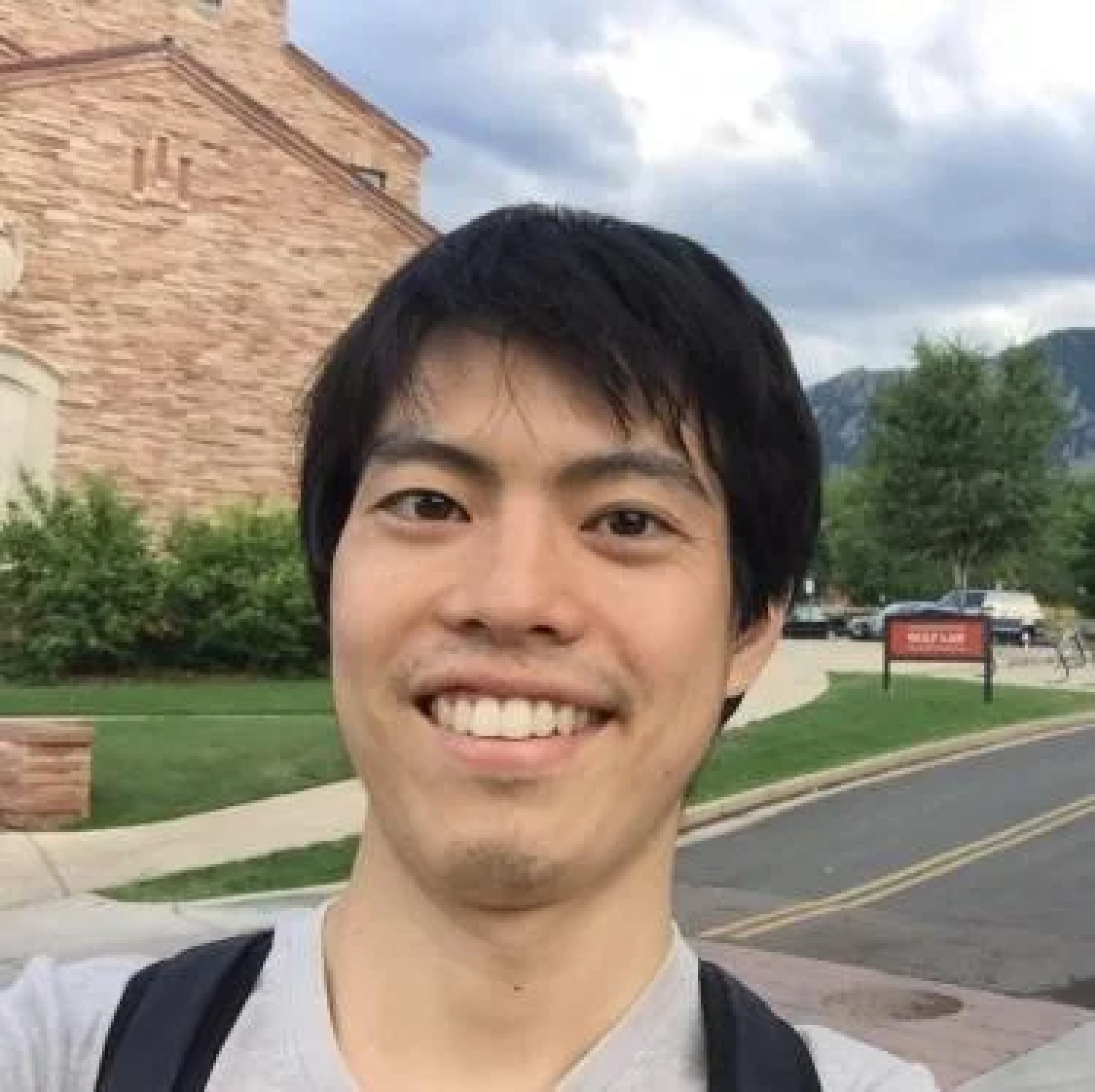
Ryo Suzuki is an Assistant Professor at the ATLAS Institute within the University of Colorado Boulder's Computer Science department. His research focuses on innovative intersections of Human-Computer Interaction (HCI), Augmented Reality (AR), and robotics. He explores systems that blend AI, haptics, and shape-changing interfaces to create enriched user experiences. Key areas of investigation include embedding interactivity into static educational materials (e.g., textbooks), developing AI-driven AR tools for procedural instruction, and creating shape-changing robotics for tactile feedback. His work often emphasizes practical applications in education, remote collaboration, and creative industries. Recent projects include MapStory (LLM-driven map animation), RealityEffects (3D volumetric video augmentation), and HoloDevice (holographic cross-device collaboration).
Amity Doolittle is a Senior Lecturer II at the Yale School of the Environment (YSE), Yale University. Her research focuses on property rights, natural resource management, and the social and political processes shaping environmental inequities. She employs interdisciplinary methods from anthropology, political science, environmental history, and political ecology. Notable projects include historical land-use studies in New Haven, Connecticut, and analyses of indigenous rights in global climate policy. She teaches graduate courses on qualitative research methods, environmental justice, and property rights, emphasizing active, collaborative learning. Doolittle holds a B.A. from Harvard University and M.E.S./Ph.D. from Yale University. Her office is located in Kroon Hall, Yale’s environmental campus. Education: B.A., Harvard University; M.E.S., Ph.D., Yale University Her research interests include legal pluralism, historical resource conflicts, and the intersection of colonial and postcolonial discourses. Current projects examine urban land-use changes in New Haven and the rhetorical strategies of indigenous leaders in climate negotiations. She advises 10–12 master’s students annually on thesis projects and placements worldwide. Teaching highlights include Qualitative Research Methods , Environmental Justice , and Political Ecology of Tropical Forests . Her courses integrate hands-on methods, such as analyzing oral histories and policy documents. Labs/Teams: Collaborates with the Urban Resources Initiative (URI) on greenspace stewardship and community-led projects.
Xuhui Lee is the Sara Shallenberger Brown Professor of Climate Science at Yale University's School of the Environment. He maintains offices at Kroon Hall (195 Prospect Street) and laboratory facilities at the Class of 1954 Environmental Science Center (21 Sachem Street, Room 300) in New Haven, Connecticut. Professor Lee is an active researcher and educator specializing in the interactions between the terrestrial biosphere, atmosphere, and anthropogenic drivers, with particular expertise in boundary-layer meteorology and climate science. He is currently on leave for the Fall 2025 semester but continues to accept doctoral students. Professor Lee received his B.S.C. and M.S.C. from Nanjing Institute of Meteorology in China, followed by a Ph.D. from the University of British Columbia. His academic journey has positioned him as a leading expert in climate science, particularly in the areas of land-atmosphere interactions and urban climate systems. Professor Lee's research focuses on boundary-layer meteorology, micrometeorological instrumentation, remote sensing, and carbon cycle science. His work examines biophysical effects of land use on the climate system, greenhouse gas fluxes in terrestrial environments (including forests, cropland, and lakes), isotopic tracers in carbon dioxide and water vapor cycling, and urban climate adaptation and mitigation strategies. His lab employs diverse methodologies including field observations (eddy covariance, optical isotope instruments, and greenhouse gas analyzers), mathematical models (land surface models, large-eddy simulation, WRF, and earth system models), and environmental remote sensing (satellites and drones). The Lee Lab investigates phenomena across multiple scales from micro (urban greenspaces) to global (land wet-bulb temperature, historical deforestation). Analysis of Professor Lee's recent publications reveals a strong focus on urban climate systems, greenhouse gas emissions, and land-atmosphere interactions. His 2024-2025 work demonstrates increasing application of advanced remote sensing technologies and machine learning approaches to climate problems, with significant attention to urban heat islands, methane and CO2 emissions monitoring, and the impacts of land use change on climate systems. His research shows a clear trajectory toward more sophisticated integration of observational data with modeling approaches to address critical climate challenges. Sara Shallenberger Brown Professor of Climate Science (named professorship) Professor Lee actively mentors doctoral students and has established the Lee Lab as a hub for climate research at Yale. His lab group conducts field observations, mathematical modeling, and remote sensing analysis to advance understanding of climate systems. The lab's research infrastructure supports investigations from micro-scale urban environments to global climate patterns, with particular emphasis on urban heat mitigation and greenhouse gas monitoring. The Lee Lab at Yale, located in Room 300 of the Class of 1954 Environmental Science Center, serves as the primary research facility for Professor Lee's team. The lab deploys an array of research methodologies including field observations with eddy covariance systems and optical isotope instruments, mathematical modeling using land surface models and earth system models, and environmental remote sensing with satellites and drones. The lab's research spans multiple spatial scales from micro (urban greenspaces) to global (land wet-bulb temperature patterns), addressing critical questions about climate change impacts and mitigation strategies.
Kevin Pipe is a Professor of Mechanical Engineering, Applied Physics, and Electrical Engineering at the University of Michigan’s College of Engineering, where he also serves as Associate Dean for Undergraduate Education. He holds a Ph.D. (2004) and dual bachelor's/master's degrees (1999) in Electrical Engineering from MIT. His research focuses on microscale heat transfer in electronic/optoelectronic devices, thermoelectric energy conversion, and medical thermal applications. Key projects include molecularly engineered high-conductivity polymers, phase-change materials for thermal management, and cryoanesthesia devices. His work has been featured in Wired and Phys.org , and he received the DARPA Young Faculty Award (2009) and ME Achievement Award (2008). Research collaborations include work with MSE Professor Jinsang Kim’s group on polymer thermal conductivity and computational sprinting projects with computer science partners. His lab explores thermal interfaces in high-power diode lasers, spinal cool-sensing circuits, and ultra-rapid cooling anesthesia systems. Over 60 peer-reviewed articles and patents document his contributions to thermal sciences and materials engineering. Current efforts emphasize translating lab innovations into clinical and industrial applications. Education: Ph.D. in EE, MIT (2004) M.Eng. in EECS, MIT (1999) S.B. in EECS, MIT (1999) Key Awards: Defense Advanced Research Projects Agency Young Faculty Award (2009) ME Achievement Award (2008) Lab Focus Areas: Thermal management of microelectronics Thermoelectric materials Medical thermal devices Grant activities include DARPA-funded projects and industry partnerships. His interdisciplinary approach bridges mechanical, electrical, and biomedical engineering to address thermal challenges in computing and healthcare.
University of North Carolina at Chapel HillUnited States
Torin Monahan is a Professor in the Department of Communication at the University of North Carolina at Chapel Hill and co-Editor-in-Chief of Surveillance & Society , the leading journal on surveillance studies. He earned his PhD and MS from Rensselaer Polytechnic Institute and BA/MA from California State University, Northridge. His research focuses on the social and cultural dimensions of surveillance, particularly racial and gender inequalities, digital platforms, urban studies, and dual-career academic dynamics. Education: PhD, Science and Technology Studies – Rensselaer Polytechnic Institute MS – Rensselaer Polytechnic Institute BA, MA – California State University, Northridge Research Interests: Monahan's work explores surveillance systems' intersection with race, gender, and technology. He has authored seven books, including the award-winning Surveillance in the Time of Insecurity (2010), and investigates AI surveillance in higher education. Current studies include visual and performance art critiques of surveillance and racializing effects of security protocols. Publication Trends: Recent articles address dual-career academic challenges ( Discover Education , 2024), ethical surveillance impossibility (2025), and urban surveillance impacts of ride-hailing platforms ( Cities , 2022). His scholarship spans Surveillance & Society , The Qualitative Report , and International Journal of Cultural Studies , emphasizing critical race theory, data politics, and community resistance. Scientific Awards: Surveillance Studies Book Prize (2011) Expert Testimony to the European Commission Invited Discussant, U.S. Office of the Director of National Intelligence Grants & Collaborations: Monahan has received multiple U.S. National Science Foundation grants. He collaborates with scholars like Jill Fisher and David Murakami Wood, focusing on dual-career couples, hospital information systems, and critical surveillance theory. His 2024 Discover Education paper synthesizes institutional challenges for dual-career academic hiring.
University of Illinois Urbana-ChampaignUnited States
Dr. Michael Tissenbaum is an Associate Professor at the University of Illinois, Urbana-Champaign, holding appointments in the College of Education’s departments of Curriculum & Instruction, Educational Psychology, and the Siebel School of Computing and Data Science. His research focuses on collaborative learning environments, technology-enhanced STEM education, and computational literacies. He previously worked at MIT's App Inventor lab, developing the 'computational action' framework to empower youth through computing. Key roles include affiliations with the National Center for Supercomputing Applications (NCSA) and the Siebel Center for Design. His work emphasizes designing transformative learning spaces combining physical and digital tools. Notable projects include the REACH Projector for remote collaboration and studies on maker identity development. Tissenbaum has contributed to journals like Computers and Education and International Journal of Computer-Supported Collaborative Learning , with a focus on real-time classroom orchestration and sociomaterial theories in education.
Alexei Yurchak is a Professor in the Department of Anthropology at the University of California, Berkeley. His research focuses on Soviet and post-Soviet societies, with particular attention to cultural practices, political transformations, and the intersection of history and anthropology. He is renowned for his work on late socialism, the collapse of the USSR, and the cultural legacies of Soviet ideology. Yurchak’s scholarship bridges anthropology, history, and political theory, exploring themes such as parody, memory, and the paradoxes of power in authoritarian systems. Key contributions include his book Everything Was Forever, Until It Was No More: The Last Soviet Generation , which examines the cultural identity of the final generation raised under Soviet rule. His research also delves into post-Soviet Russia’s political dynamics, ethnographic analyses of systemic change, and the role of cultural forms like music, art, and media in shaping societal narratives. His articles span topics from Soviet music culture and the aesthetics of parody to contemporary Russian politics. He critiques the interplay between ideology and everyday life, emphasizing how cultural practices reveal deeper political and social structures. Yurchak’s interdisciplinary approach has positioned him as a leading scholar in postsocialist studies and critical anthropology.
Vincent John Mooney III is an Associate Professor at the School of Electrical and Computer Engineering and an Adjunct Associate Professor at the School of Computer Science, Georgia Institute of Technology. His research focuses on Hardware-Software Co-Design , Cyber Physical Systems Security , and Low-Power Architectures . He has authored numerous publications on topics such as probabilistic computing, hardware security, and embedded systems design. Dr. Mooney has received prestigious awards including the NSF Career Award , National Semiconductor Fellowship , and ARCS Best Paper Award . Education: Ph.D. in Electrical Engineering (1998), Stanford University MA in Philosophy (1997), Stanford University MS in Electrical Engineering (1994), Stanford University Certificate of Graduate Study (1992), University of Navarra BS in Electrical Engineering and Computer Science (1991), Yale University Research interests span hardware/software codesign, cybersecurity in embedded systems, and synthesis of reconfigurable architectures. His recent work includes Gridtrust for decentralized supply chain cybersecurity and COPPER for computation obfuscation. Dr. Mooney has supervised numerous Ph.D. students and held leadership roles in conferences such as HOST and CASES . Scientific awards include NSF Career Award (2000) National Semiconductor Fellowship (1997-1998) AT&T Engineering Scholarship Program (1987-1991) NCAA Postgraduate Scholar (1991) Senior Member, IEEE (2003) ARCS 2012 Best Paper Award Advising and grants highlight his mentorship of students like Jun Cheol Park and Yudong Tan , along with grants such as the U.S. Air Force Summer Faculty Fellowship (2007). He leads the Hardware/Software Codesign for Security Group at Georgia Tech and has contributed to advancements in real-time operating systems and deadlock detection algorithms.
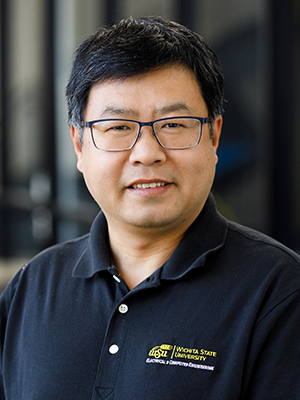
Chengzong Pang is an Associate Professor and MSECE Graduate Coordinator at the Department of Electrical and Computer Engineering, College of Engineering, Wichita State University. His work focuses on power systems, electrical engineering innovations, and renewable energy integration. He specializes in transient stability analysis, control systems, and smart grid technologies. Research Interests: Dr. Pang's expertise includes advanced control strategies for power electronics (e.g., PMSM, UPQC), machine learning applications for grid stability (LSTM/SVM), and energy storage solutions for renewable integration. His research also addresses challenges in microgrid operation, subsynchronous oscillation mitigation, and battery storage systems. Key Trends in Publications: Over 20 years of publications (2002–2022) emphasize: (1) Machine learning for power system analysis, (2) Control system design for renewable integration, (3) Grid stability enhancement via advanced algorithms, and (4) Smart grid infrastructure optimization. Recent works (2021–2022) highlight transient stability prediction and ANFIS-based power quality solutions. Labs/Teams: Active in energy systems research groups focusing on renewable integration and grid modernization, though specific lab names are not explicitly stated in the provided texts.
Rebecca Ingber serves as Professor of Law at Cardozo School of Law, Yeshiva University, and holds dual leadership roles as Co-Director of the Floersheimer Center for Constitutional Democracy and Senior Fellow at NYU School of Law's Reiss Center on Law and Security. Her institutional affiliations extend to high-level governmental roles including U.S. Substitute Member to the Council of Europe's Venice Commission, Advisory Committee member to the U.S. Department of State's Office of the Legal Adviser, and U.S. representative to the OSCE Moscow Mechanism roster of experts. Her academic foundation includes a BA from Yale University and JD from Harvard Law School, complemented by a clerkship with Judge Robert P. Patterson, Jr. of the Southern District of New York. These credentials underpin her expertise in constitutional and international legal frameworks. Professor Ingber's research centers on the critical intersection of international law, national security, and constitutional separation of powers, with particular focus on executive war powers, bureaucratic resistance mechanisms, and the erosion of international legal norms. Her work consistently examines how domestic institutions interact with international legal constraints, especially regarding military actions, treaty compliance, and accountability mechanisms. Recent scholarship demonstrates increasing urgency in analyzing challenges to the rules-based international order. Analysis of her 2020-2025 publications reveals dominant themes in war powers legitimacy, state responses to international criminal jurisdiction, and the systemic weakening of legal constraints on executive action. Her scholarship uniquely bridges theoretical legal analysis with immediate real-world applications, frequently addressing contemporaneous events like the Soleimani strike, ICC arrest warrants, and torture prohibitions through rigorous doctrinal examination. Her scientific recognition includes: Dean’s Award for Scholarship from BU Law Mike Lewis Prize for National Security Law Scholarship (2017) for 'Co-Belligerency' Professor Ingber maintains significant policy influence through congressional testimony on war powers and executive authority, while her scholarly impact extends through editorial leadership at Just Security and contributions to Lawfare . Her advisory roles in The American Law Institute and the ALI’s Foreign Relations Law Restatement demonstrate sustained contribution to legal doctrine development, though specific grant funding details remain undisclosed in source materials. She actively shapes discourse through the Floersheimer Center for Constitutional Democracy, which examines democratic governance challenges, and the Reiss Center on Law and Security, where she contributes to interdisciplinary national security research initiatives addressing evolving threats to legal frameworks.