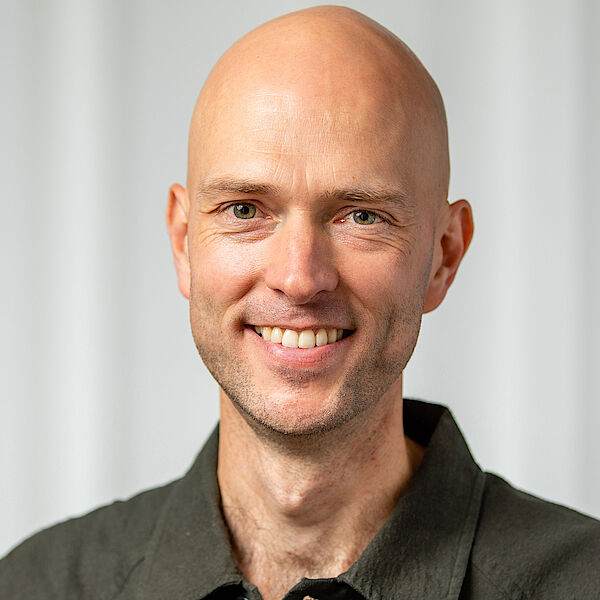
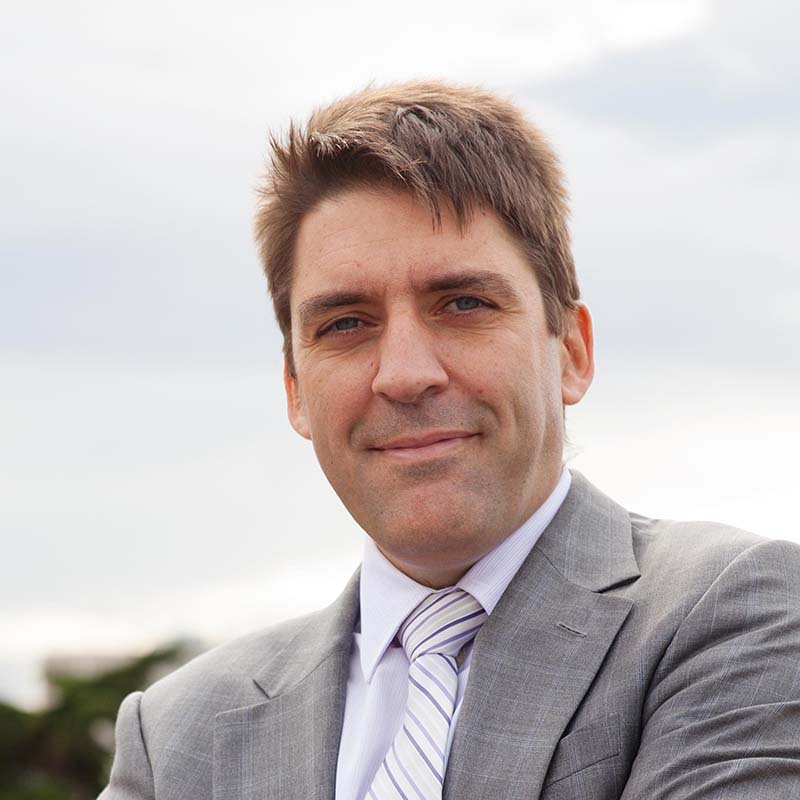
Kent Bertilsson is a Professor and Director of Studies at the Department of Computer and Electrical Engineering (DET) at Mid Sweden University . He serves as a Deputy Prefect and specializes in Power Electronics , with a focus on Embedded Systems , Power Converters , and Fiber Installation Equipment . His research includes projects like DeHigh (electrification of work vehicles) and STORE (electrical energy storage). His work spans High-Frequency Converters , Planar Magnetics , and Multilevel Inverters , with applications in Electric Vehicles and Renewable Energy Systems . He has extensively published in journals like IEEE Transactions on Power Electronics and Energies , emphasizing component optimization and energy efficiency. Notable projects include 48 V Drive Systems and Smart Industry Sweden .
Liane Huttner serves as a Lecturer in Private Law and Criminal Sciences at the Jean Monnet Faculty of Law, University of Paris-Saclay, specializing in legal frameworks governing digital environments with emphasis on human rights and democratic values amid technological change. She actively contributes to national academic discourse through conferences and collaborative research initiatives across French institutions. Dr. Huttner earned her PhD in Law from Paris 1 Panthéon-Sorbonne in 2022, defending her dissertation "The Algorithm's Decision: Private Law Study on Human-Machine Relations" under Judith Rochfeld's supervision, establishing her expertise in AI's legal implications. Her research spans critical digital law domains: Media and Information Law Digital Law Private Law Digital Democracy Internet Law Data Law Law and Technology Human Rights Digital Inequalities Digital Governance She investigates legal adaptation to technological evolution, advocating frameworks prioritizing human autonomy. Recent publications demonstrate her focus on emerging regulatory challenges: the 2024 monograph "The algorithm's decision" analyzes private law in human-machine interactions, while the 2025 work "New challenges in European consumer law" addresses digital technology, food, health, and environmental regulation. Both works underscore law's role as a critical counter-power protecting human freedom against technological dominance. Dr. Huttner collaborates extensively through the Institut Droit, Éthique, Patrimoine (IDEP) at Jean Monnet Faculty, engaging with Paris Panthéon-Sorbonne University, Nantes University, and others on interdisciplinary projects examining law, ethics, and technology governance in digital societies.
Prof. Dr.-Ing. André Nitze is a faculty member at the Brandenburg University of Technology in the Department of Economics . His research focuses on Internet of Things (IoT) , Digital Business Models , Software Architectures , Cloud Computing , Mobile Computing , and Predictive Analytics . He leads research projects on municipal LoRaWAN infrastructure, rural on-demand transport systems, and user-centered digitalization for sustainable development. Area of Expertise: IoT Applications, Software Engineering, Digital Transformation Current Research: Sustainable Municipal LoRaWAN, Rural Mobility Solutions Projects: risKI - KatKomm (2024-2026): Protocol development for disaster communication InNoWest (2023-2027): Subproject leader for digital sustainability OSLO (2023): Rural on-demand transport software architecture Awards: Best Paper Award at ICDS 2024 for work on LoRaWAN infrastructure Education & Supervision: M.Sc. and B.Sc. in Business Informatics Supervised over 15 theses including topics on GIS analysis, sensor networks, and AI applications
Emmanuel Baccelli is a Professor for "Open and Secure IoT Ecosystem" at Freie Universität Berlin since September 2019, holding a joint position with Inria and the Einstein Center Digital Future (ECDF). He is also a scientific researcher at Inria since 2007 and co-founder/coordinator of the RIOT open source operating system for IoT devices since 2013. His research focuses on the intersection of low-power protocols, deeply embedded open source software, and security in the Internet of Things (IoT) ecosystem. Baccelli emphasizes the critical trade-off between energy efficiency and security in IoT systems, advocating for privacy-by-design principles and open specifications. His work addresses how users can maintain control over their systems and data in an increasingly connected world. Baccelli's publications demonstrate a clear progression toward secure, efficient IoT systems with recent work focusing on secure firmware updates, TinyML deployment, and privacy-preserving protocols. His research spans from foundational networking protocols to practical implementations for constrained devices, with a consistent emphasis on open source solutions and security-by-design. Baccelli completed his PhD in 2006 at École Polytechnique in Paris on "Routing and Mobility in Large Packet-Based Networks" and received his habilitation from Université Pierre et Marie Curie in 2012. He previously served as a Guest Professor at Freie Universität Berlin in 2013-2014 with a DAAD Grant. His professional activities include significant contributions to IETF standards, particularly RFCs related to routing protocols for low-power networks. Baccelli's research has practical applications across multiple domains including healthcare, smart agriculture, and industrial IoT systems, where security and energy efficiency are paramount concerns.
Carlos Batlle is an Associate Professor at Comillas Pontifical University in Madrid. He also serves as a Part-Time Professor at the Florence School of Regulation (FSR) and a Research Affiliate at MIT CEEPR . His academic and professional roles focus on energy economics, regulation of electric power systems, and modeling of electricity markets. Key Affiliations : Comillas Pontifical University (Associate Professor, Institute for Research in Technology) Florence School of Regulation (Part-Time Professor, Training Program for European Energy Regulators) MIT Center for Energy and Environmental Policy Research (CEEPR) (Research Affiliate) Advisory Academic Panel of Ofgem (UK National Regulatory Authority) Research Interests include: Regulation and market design of electric power systems Integration of renewable energy sources Tariff structures and end-user rate design Capacity mechanisms and grid reliability Energy poverty and consumer protection Smart distribution systems and grid modernization Recent Publications highlight trends in electricity market reform, decarbonization strategies, and regulatory frameworks. Key themes include balancing efficiency and equity in residual cost allocation, evolving bidding formats in day-ahead markets, and addressing energy poverty during global crises. His work spans empirical analyses, policy critiques, and taxonomy development for energy systems.
Massimo Zucchetti is a Full Professor at Politecnico di Torino, Department of Energy (DENERG), where he has been teaching Radiation Protection and Nuclear Power Plants. He maintains a significant international presence as a Research Affiliate at the Plasma Science and Fusion Center at MIT, a position he has held since 2005. His academic journey began at Politecnico di Torino, where he graduated in Nuclear Engineering in 1986 and completed his PhD in Energetica between 1986-1990. He progressed through the academic ranks at Politecnico di Torino from Associate Professor (1998-2002) to Full Professor (2002-present), with prior research experience at the European Commission Joint Research Centre. Zucchetti's research spans nuclear fusion engineering, radioactive waste management, and energy policy. His work focuses particularly on controlled thermonuclear fusion, nuclear safety, and radioactive waste management, with emphasis on tritium transport in fusion reactors, safety analysis of fusion power plants, and environmental impact assessment. He has led multiple significant research projects including TITANS (Tritium Impact and Transfer in Advanced Nuclear reactorS, 2022-2025), components for ITER (2008-2010), and innovative materials for fusion reactors (2004-2006). As coordinator of the IEA Program on Environmental, Safety and Economic Aspects of Fusion Power, he plays a key role in international fusion research collaboration. His recent publications show a clear trend toward practical applications of fusion technology, particularly in the ARC (Affordable Robust Compact) reactor design. These works emphasize neutronics, thermal-hydraulics, tritium management, and safety analysis for compact fusion systems. His research demonstrates increasing focus on making fusion energy more commercially viable through innovative engineering solutions while maintaining rigorous safety standards. The interdisciplinary nature of his work connects nuclear engineering with environmental science and energy policy. Fellow of Plasma Science and Fusion Center, MIT (2015-present) Research Affiliate Fellow at Laboratory for Nuclear Science, MIT (2005-2015) Nomination for 2015 Nobel Prize in Physics for research on advanced fuel nuclear fusion Editor-in-Chief of multiple journals including International Journal of Ecosystems and Ecology Science and Journal of International Environmental Application & Science Zucchetti actively mentors PhD students in the Energetica program at Politecnico di Torino, with current advisees working on topics ranging from multiphysics modeling in ARC-class reactors to innovative materials for next-generation nuclear reactors. He coordinates significant research grants from competitive funding programs including EURATOM and PRIN. His laboratory work focuses on fusion reactor components, particularly breeding blankets and tritium management systems. The TESIN research group within DENERG serves as his primary research team, working on thermal-hydraulic analysis, neutronics, and safety assessments for advanced nuclear systems.
Rainer Mühlhoff is Professor of Ethics and Critical Theories of Artificial Intelligence at the University of Osnabrück, holding positions at both the Institute of Cognitive Science and Institute of Philosophy. He is also affiliated with the Weizenbaum Institut for the Networked Society in Berlin. His work bridges philosophy, mathematics, and computer science to critically examine the societal implications of AI and digital media. Mühlhoff's research focuses on the intersection of AI ethics, social philosophy, and power dynamics in digital systems. His work centers on analyzing AI as sociotechnical systems rather than purely technical artifacts, emphasizing how machine learning systems reproduce and amplify social inequalities through predictive analytics, data collection practices, and interface design. Key research areas include Predictive Privacy (examining how predictive analytics creates collective privacy risks), Purpose Limitation for AI (developing regulatory frameworks for AI systems), and the relationship between digital technology and authoritarian political movements. His publications reveal a consistent focus on power-aware AI ethics that moves beyond individualistic frameworks to analyze systemic issues. Mühlhoff's work connects philosophical traditions with contemporary technological challenges, particularly examining how AI systems function as prediction machines that reshape social reality through their cybernetic feedback loops. His recent books address both theoretical foundations of AI ethics and urgent political concerns about AI's relationship to emerging fascist tendencies. Mühlhoff leads the 'Ethics and critical theories of artificial intelligence' research group at Osnabrück and is actively involved in third-party funded research projects including SIMPORT (BMBF, 2020-2023) and the Excellence Cluster 'Science of Intelligence' at TU Berlin. His Data Ethics Outreach Lab (DEOL) serves as a scientific transfer platform translating research findings into practical applications and public discourse. Through his research team, Mühlhoff develops Ethics by Design approaches for human-computer interaction and investigates issues including digital disenfranchisement, the ethics of usability, and the relationship between digital media and affectivity. His work frequently appears in interdisciplinary venues and he regularly presents at major conferences including the Chaos Communication Congress and Oxford Internet Institute.
Professor Subhajit Basu is a leading academic at the University of Leeds , holding the position of Professor of Law and Technology within the School of Law . His work bridges Law, Artificial Intelligence, Big Data, and Emerging Technologies , with a focus on the Global South . He has authored influential books including Privacy and Healthcare Data (Routledge, 2016) and Global Perspectives on E-Commerce Taxation Law (Ashgate, 2008). PhD, Liverpool John Moores University LLB, Calcutta University Called to the Bar in 1998, specializing in Corporate Law in India Research Interests span Regulation of Emerging Technologies, AI Governance, Health Data Privacy, Autonomous Systems, and Online Harm . His recent projects include CoR: Sextortion in the Age of Blockchain and Deepfakes (Naif Arab University, 2025–2026) and Autonomy and Moral Agency in Bioethics (WBNUJS, 2024–2025). He previously led EU Horizon projects like PASCAL (2019–2023) on Connected and Autonomous Vehicles. Scientific Awards include the Hind Rattan (Jewel of India, 2020) and fellowships from the Royal Society of Arts and Higher Education Academy . His editorial leadership includes Editor-in-Chief of the International Review of Law Computers and Technology and associate roles on five journals. Notable Grants include funding from Naif Arab University (Saudi Arabia), EU Horizon 2020, EPSRC, and the Atlantic Philanthropies. He has provided consultancy to the National Cybercrime Research Centre (Poland), the Government of Saudi Arabia on AI frameworks, and The Dialogue (India) on IT Rules.
Dr. Mohammad Monfared is a Senior Lecturer in the Department of Electronic and Electrical Engineering at Swansea University's School of Aerospace, Civil, Electrical and Mechanical Engineering within the Faculty of Science and Engineering. He joined Swansea University in 2022 after previously working at Ferdowsi University of Mashhad in Iran, where he received the Best Researcher Award in 2015. His academic journey began with a PhD in electrical engineering from Amirkabir University of Technology (Tehran Polytechnic) in 2010, which he completed with honors. Dr. Monfared's research focuses on the control and utilization of renewable energy generation systems and power electronics in the context of distributed generation, microgrids, and smart energy systems. His work is particularly relevant to Sustainable Development Goals 7 (Affordable and Clean Energy), 9 (Industry, Innovation and Infrastructure), 11 (Sustainable Cities and Communities), and 13 (Climate Action). He collaborates extensively with the Energy and Power Research Group (EPRG) at Swansea University, particularly with Dr. Meghdad Fazeli and Professor Mike Jennings, who holds a Royal Academy of Engineering Research Chair in 'Advanced Semiconductors for Electric Vehicles'. His research has practical applications and includes experimental verification in nearly all of his published works. Dr. Monfared's recent publications demonstrate a strong focus on power converter topologies, control strategies for renewable energy integration, and smart grid technologies. His work spans from high-boost impedance networks and DC-DC converters to grid-forming inverters and energy management systems. A notable trend in his research is the emphasis on practical implementation with experimental validation, bridging the gap between theoretical concepts and real-world applications in power electronics and renewable energy systems. Best Researcher Award from Ferdowsi University of Mashhad (2015) Department's Best Teacher Award at Swansea University (2023-24) Outstanding Reviewer Award for IEEE Transactions on Power Electronics (2023) IEEE Senior Member (2015) Dr. Monfared actively supervises PhD and MSc students, with current research projects focusing on gate-oxide reliability of wide bandgap power MOSFETs, single-phase PV-battery grid-forming inverters, and day-ahead PV generation forecasting. He collaborates with industry partners including National Grid, ABB, Siemens, and Vishay Intertechnologies on high-impact research projects. His future research direction involves establishing stronger industry collaborations to bridge the gap between academic innovation and real-world application, with a focus on advancing renewable energy technologies and power electronics for distributed generation and smart energy systems. Dr. Monfared also serves as an Associate Editor for both IEEE Transactions on Industrial Electronics and IEEE Transactions on Power Electronics, contributing to the scholarly community in his field.
Celine Taylor Parkins-Ozephius serves as Junior Assistant Professor at Utrecht University's School of Law, specifically within the Willem Pompe Institute for Criminal Law and Criminology. Her academic appointment falls under the Faculty of Law, Economics and Governance, where she focuses on the intersection of criminal procedure and digital technology. Her research centers on digital evidence reliability in criminal courts, with particular expertise in smartphone forensics, biometric authentication, and cross-border digital investigations. Current projects examine judicial frameworks for assessing technical evidence, EU standards for digital searches, and privacy implications of law enforcement's access to encrypted devices. Her work frequently addresses tensions between investigative needs and fundamental rights in digital contexts. Teaching responsibilities include coordination of the master's course "In-Depth Criminal Procedure Law," where she delivers lectures and tutorials. She actively supervises master's theses in criminal procedure and digital evidence topics. Her publications demonstrate consistent engagement with emerging challenges in digital criminal justice, including EncroChat investigations, two-factor authentication evidence, and ECHR compliance in digital evidence collection. Collaborative work appears across multiple Dutch legal journals and the EHRC Updates platform, often with Dave van Toor and other Willem Pompe Institute colleagues. Her research methodology combines doctrinal legal analysis with practical examination of investigative techniques, emphasizing the need for updated judicial frameworks in digital evidence assessment.
Mathias Ekstedt is a Professor of Industrial Information and Control Systems at KTH Royal Institute of Technology in Stockholm, Sweden. Affiliated with the Software Systems Architecture and Security (SSAS) research group under the Division of Network and Systems Engineering in the Department of Computer Science, School of Electrical Engineering and Computer Science (EECS). He holds a Ph.D. (2004) and M.Sc. (1999) from KTH. Co-founder of foreseeti (acquired by Google in 2022) Director of KTH's Master Programme in Cybersecurity Member of the Digital Futures research center's Trust Working Group Affiliated with Center for Cyber Defense and Information Security (CDIS) Ekstedt's research focuses on information security and cybersecurity integrated with software/systems architecture modeling and analysis . His work emphasizes probabilistic attack/defense graphs for system-of-systems security evaluation, particularly in SCADA and Industrial Control Systems within power infrastructure. He has developed the Meta Attack Language (MAL) and collaborated extensively with the power industry. Recent research trends (2022-2025) include: Threat modeling languages for ICT and power systems Probabilistic attack graph applications in energy flexibility markets and smart cities Software Bill of Materials (SBOM) challenges in Java ecosystems Dynamic attack graph generation and lazy evaluation techniques Cyber-physical security for low-voltage grids and substation automation Ekstedt supervises 17 Ph.D. students (11 as main supervisor, 6 as co-supervisor) and has mentored numerous postdocs. He leads major projects like the SSF project CHAINS (software supply chain security) and coordinates initiatives within SweGRIDS , HONOR , and SOCCRATES .
Peter Scharff Smith is a Professor at the Department of Criminology and Sociology of Law , University of Oslo. His career spans interdisciplinary research in penology, sociology of law, human rights , and war crimes , with a focus on solitary confinement, prisoner-family dynamics, and Holocaust-related legal practices. Current affiliation: University of Oslo Past affiliations: University of Copenhagen, Cambridge University, New York University Research interests include: Punishment & Human Rights : Solitary confinement effects, women in prison, children of prisoners Legal Consciousness : Public justice sentiments, marginalized groups' legal experiences War Crimes : Waffen-SS legal frameworks, techniques of Othering Key article trends reveal sustained focus on prison reform , scandals in isolation , and historical parallels between Holocaust studies and incarceration . His work bridges empirical research and advocacy, particularly for international soft-law prison standards . Scientific awards : Danish Labour History Award (1994) Carlsberg Clare Hall Fellowship (2003) Methodological approach combines historical analysis, comparative Nordic studies, and practical reform projects in Danish and Norwegian corrections systems.
Sverker Molander is a Full Professor at the Environmental Systems Analysis group at Chalmers University. His research integrates systems approaches to analyze human-induced environmental change and its mitigation, with a focus on chemical risk assessment, material flows, and renewable energy systems. He actively collaborates with social scientists to examine technology-society-ecosystem interfaces and participates in international programs like Sida's collaboration with Universidade Eduardo Mondlane in Mozambique. SETAC Global Science Committee member Baltic Sea Foundation research delegation Kamprad Family Foundation scientific reviewer His work employs environmental risk assessments, life cycle analyses, and substance flow modeling, particularly examining: Toxicological impacts of nanomaterials Renewable energy environmental interactions Chemical exposure limit inconsistencies Multidisciplinary approaches to sustainability Risk communication in chemical supply chains Climate-chemical pollution intersections Recent publications demonstrate expertise in: Ecotoxicity extrapolation methods Machine learning for toxicity prediction Circular tungsten flows Marine energy collision risks Climate-adapted chemical management His research connects technical systems with societal and ecological considerations, emphasizing indicator development and interdisciplinary collaboration.
Daniel Månsson is a Professor at the Department of Electrical Engineering, Royal Institute of Technology (KTH), specializing in smart electricity grids and power system components. His work spans electromagnetic compatibility (EMC) of large distributed systems, energy storage optimization, and privacy protection in smart metering. PhD in Engineering Physics (with specialization in Electromagnetism) Docent (Swedish Academic Title) in Electrical Engineering His research focuses on: Optimization of self-sufficient microgrids with energy hubs Smart meter privacy protection using energy storage EMC analysis of photovoltaic systems and UWB transients Hybrid energy storage system performance in renewable grids Recent publications indicate expertise in: Electromagnetic interference from solar PV systems Cyber-physical security in smart meters Conducted emission analysis Greenhouse gas reduction through optimized storage
Jenny Martinez serves as the Provost at Stanford University and is a Professor of Law holding the Frederick Emmons Terman Professorship. She previously served as the Richard E. Lang Professor of Law and Dean of Stanford Law School, becoming the law school's 14th dean. She also holds a position as Senior Fellow (by courtesy) at the Freeman Spogli Institute for International Studies and maintains faculty affiliations with Stanford's Center on International Security and Cooperation and the Center on Democracy, Development and the Rule of Law. Provost, Stanford University Professor of Law, Stanford School of Law Frederick Emmons Terman Professor Senior Fellow (by courtesy), Freeman Spogli Institute for International Studies Professor Martinez earned her BA from Yale University in 1993 and her JD from Harvard Law School in 1997. Her early career included clerkships with Justice Stephen Breyer of the U.S. Supreme Court and Judge Guido Calabresi of the U.S. Court of Appeals for the Second Circuit, followed by service as an associate legal officer for Judge Patricia Wald at the United Nations International Criminal Tribunal for the former Yugoslavia in The Hague. As a leading expert in international law and constitutional law, Professor Martinez has made significant scholarly contributions spanning civil procedure & litigation, comparative law, constitutional history, human rights, international criminal law, and transnational justice. Her research examines the historical foundations of legal systems while addressing contemporary challenges in constitutional and international law. She teaches courses on constitutional law, civil procedure, international law, and international business transactions at Stanford Law School. Professor Martinez's publications reveal consistent focus on the intersection of historical legal developments and contemporary human rights issues, with particular attention to how international legal frameworks evolve to address humanitarian concerns. Her work demonstrates expertise in both theoretical legal analysis and practical application of legal principles to real-world challenges. Member, American Law Institute Former member, U.S. State Department's Advisory Committee on International Law Faculty affiliate, Stanford Center on International Security and Cooperation Faculty affiliate, Stanford Center on Democracy, Development and the Rule of Law As an experienced litigator, Professor Martinez has worked on numerous cases involving international law and constitutional law issues. Her professional background uniquely combines academic scholarship with practical legal experience, including work on trials involving genocide, crimes against humanity, and war crimes at the United Nations International Criminal Tribunal for the former Yugoslavia. She has also engaged with contemporary governance challenges, participating in discussions about social media platforms' oversight mechanisms. Professor Martinez leads initiatives at Stanford that bridge legal scholarship with practical applications, particularly through her involvement with the Stanford Center for Law and History and her leadership in addressing critical issues of academic governance, free speech, and diversity in higher education.