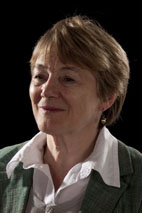
Caroline Humphrey is a Professor at the Department of Social Anthropology, University of Cambridge. Her career spans roles such as Rausing Professorship of Collaborative Anthropology (2006–2010), University Professor of Asian Anthropology (1998–2006), and University Reader in Asian Anthropology (1995–1998). She has contributed extensively to social anthropology, focusing on post-socialist societies, ritual studies, and cultural memory. B.A. Social Anthropology, 1965, Girton College, Cambridge M.A. in Mongolian Studies, 1971, University of Cambridge Ph.D. in Social Anthropology, 1973, University of Cambridge Humphrey's research bridges politics of memory and inequality , with fieldwork in Siberia, Mongolia, and post-Soviet Russia. Her work explores ritualization of power , barter economies , and property transformations in global contexts. Articles highlight themes like urbanization , historical analogies , and shamanic practices . Her scientific accolades include the 1990 J. I. Staley Prize , 2002 The Heldt Prize , and 2008 Henry Allen Poe Prize . She has served on editorial boards for journals like History and Anthropology and Inner Asia , and advisory panels including the MacArthur Project in Inner Asia.
Dr. Gregorio López López is an Associate Professor at the School of Engineering (ICAI) of Universidad Pontificia Comillas and a member of the Institute for Research in Technology (IIT). His research focuses on Smart and Sustainable Grids, Intelligent Systems, and Bioengineering. He holds a PhD in Telecommunications Engineering from Universidad Carlos III de Madrid (2014), recognized with the Extraordinary PhD Dissertation Award and CISCO-COIT Prize. Education: PhD in Telecommunications Engineering (UC3M, 2014), MSc and BSc in similar fields. His research interests include M2M communications optimization, IoT cybersecurity, and smart grid technologies. He has led over 17 national/EU projects including eFORT and InteGrid. His work spans 64 conference papers and 31 journal publications. Key awards: CISCO-COIT Prize (2015), Extraordinary PhD Award (2015), Deloitte Prize (2021), Lyntia Prize (2022). He advises 4 PhD students, teaches telecommunications subjects, and contributes to cybersecurity initiatives like the RAYUELA project. His lab focuses on integrating cybersecurity with smart grid systems and youth tech safety.
Martin S. Flaherty serves as Leitner Family Professor of International Human Rights Law and Founding Co-Director of the Leitner Center for International Law and Justice at Fordham University School of Law. He holds concurrent positions as Visiting Professor at Princeton University's School of Public and International Affairs, Charles and Marie Robertson Visiting Professor, and teaches at Columbia Law School and Barnard College. His extensive career includes clerkships with Justice Byron R. White of the U.S. Supreme Court and Chief Judge John Gibbons of the U.S. Court of Appeals for the Third Circuit. Flaherty's educational background includes a B.A. summa cum laude from Princeton University, an M.A. and M.Phil. with distinction from Yale University (in history), and a J.D. from Columbia Law School where he served as Book Reviews and Articles Editor of the Columbia Law Review. His research spans constitutional law and history, international human rights, and foreign relations law. Flaherty examines the intersection of judicial power and international affairs, advocating for robust judicial review in foreign policy matters. His work critically analyzes U.S. constitutional interpretation through historical lenses while addressing contemporary human rights challenges in authoritarian regimes and post-colonial contexts. Recent scholarship focuses on Hong Kong's autonomy, drone warfare legality, and academic responsibility in authoritarian states. His publications reveal a consistent focus on constitutional interpretation in foreign affairs, historical analysis of legal doctrines, and human rights protection mechanisms. Key trends include challenging executive power essentialism, examining judicial globalization, and addressing the practical implementation of international human rights standards in domestic legal systems. President of the American Association of the International Commission of Jurists Member of the Council on Foreign Relations Legal Expert Advisor at the Sixth Committee of the United Nations General Assembly Flaherty directs the Leitner Center for International Law and Justice, leading human rights missions to Northern Ireland, Turkey, Hong Kong, Mexico, Malaysia, Kenya, Romania, and China. His advocacy work with Human Rights First and the New York City Bar Association demonstrates significant engagement with practical human rights implementation. His research has been supported by institutional affiliations and publication in premier law journals, though specific grant details aren't provided in the source material. As Founding Co-Director of the Leitner Center, Flaherty oversees a multidisciplinary team focused on international human rights advocacy and education. The Center conducts field missions, produces policy reports, and collaborates with global human rights organizations. His work bridges academic scholarship with practical human rights interventions through this institutional framework.
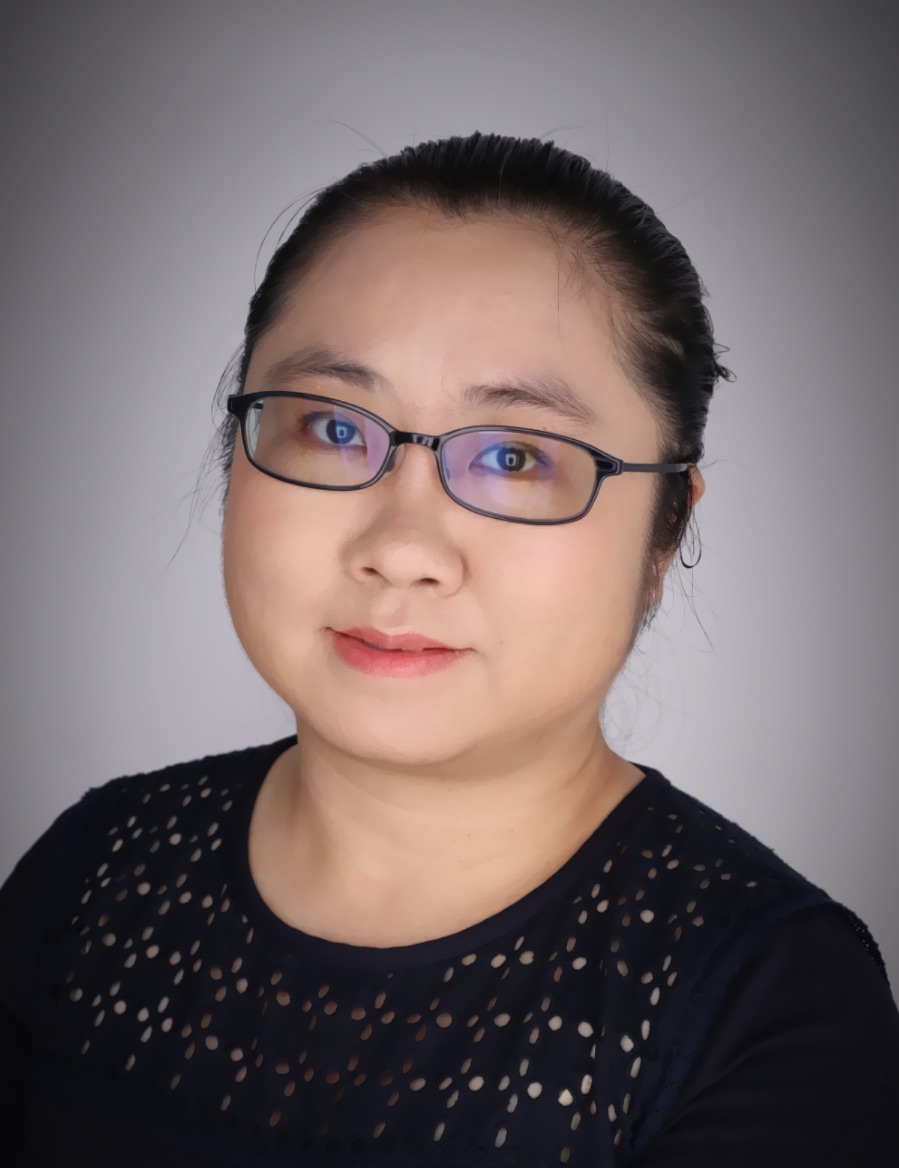
Dr. Shenyue Jia is an Assistant Professor of Geography and Director of the Geospatial Analysis Center at Miami University, Ohio. Her research focuses on leveraging satellite and crowdsourced data to analyze climate change impacts in semi-arid ecosystems and human adaptation strategies. She also innovates GIS education to democratize geospatial analysis tools beyond traditional software. Education: Ph.D. in Geography (UCLA), M.S. in Cartography (Nanjing University), B.S. in GIS (Nanjing Normal University) Her research interests include: Wildfire risk assessment using SMAP soil moisture and vegetation indices GIS applications in disaster response (e.g., power outage analysis during wildfires) Social media data utilization for crisis management GIS curriculum development emphasizing R/Python tools Recent projects include NASA DEVELOP's Kentucky tornado power outage analysis and collaborative work with CrisisReady on real-time geolocation data platforms. She has presented at AGU Annual Meetings and received grants from CADS and Miami University's CTE. Key Collaborations: CrisisReady, Thriving Earth Exchange, Google Geo for Good Teaching initiatives include a Climate Science Communication course and 3D urban modeling projects funded by the Humanities Center. She advises Slade Laszewski, whose 2024 ERC publication on WUI population trends earned recognition.
Regan Zane is the David G. and Diann L. Sant Endowed Professor in the Department of Electrical and Computer Engineering at Utah State University. His research focuses on high-efficiency power converters for transportation electrification, battery systems, and microgrid applications. PhD, MS, BS in Electrical Engineering, University of Colorado Boulder IEEE Fellow and recipient of 15+ scientific awards including NSF CAREER and IEEE Bass Award Recent work emphasizes dynamic wireless charging for electric vehicles, second-life battery reconditioning , and high-frequency converter design . Publications span topics in ZVS analysis, resonant topologies, and grid-integrated systems. Key awards include: 2020 Utah Clean Cities Sustainability Partner of the Year 2019 Utah Innovation Award in Clean Technology 2008 IEEE Richard M. Bass Outstanding Young Engineer Mentored 20+ graduate students in power electronics and electrified transportation projects. Led development of USU's EVR Research Facility and contributed to DARPA/MIT collaborations on solid-state hydraulic systems.
Elizabeth Ford is a Visiting Professor at the Seattle University School of Law, specializing in labor and employment law. Her research focuses on wage theft, administrative enforcement failures, and systemic solutions like the proposed Wage Recovery Funds framework. She teaches in a workers' rights clinic and has published extensively on legal reforms to empower low-wage workers. Key Roles: Visiting Professor (Seattle University School of Law), Workers' Rights Clinic Director Research Areas: Wage theft recovery mechanisms, administrative law, clinical legal education, state labor policies Her 2022 article in the California Law Review critiques current wage enforcement systems and proposes Wage Recovery Funds to shift financial risks from workers to employers. She has co-hosted a podcast discussing this framework and authored over 20 state-specific analyses in the Uncommon Law series.
Jimmy McGibney is a Lecturer in the Department of Computing and Mathematics at Waterford Institute of Technology (WIT), now part of South Eastern Technological University (SETU). He holds a Master of Engineering from Dublin City University (1995) and a Bachelor of Engineering (Electronic) from University College Dublin (1992). His research focuses on network security, AI-driven cybersecurity solutions, trustworthiness in service compositions, and resource-constrained environments. External roles include serving as a Researcher at the Telecommunications Software and Systems Group (2000), a Research Assistant at Dublin City University (1996–1997), and a Systems Engineer at Aldiscon (1994–1996). His work emphasizes applied research in intrusion detection systems, network forensics, and trust management frameworks. Key research interests include AI applications in cybersecurity, trust metrics for service compositions, and securing edge computing environments. He has organized workshops on digital forensics and incident response, and his recent work explores AI methodologies for resource-limited systems. McGibney’s publications span over 38 works, including peer-reviewed chapters and conference contributions. Notable areas include network forensic readiness frameworks, deep learning-based intrusion detection, and trust overlays for spam protection. He has contributed to projects funded by industry and academic collaborations, focusing on practical cybersecurity solutions.
Haitham Abu-Rub is a Professor at Texas A&M University at Qatar specializing in power systems, renewable energy integration, and power electronics. His research focuses on developing innovative solutions for grid stability, EV charging infrastructure, and intelligent control systems. He has published extensively in IEEE journals and conferences, addressing challenges in smart grids and sustainable energy systems. His work spans power converter design, fault diagnosis, and AI applications in energy management. Recent projects include decentralized PV trading systems, resilient inverter networks, and physics-informed neural networks for insulation diagnostics. Dr. Abu-Rub collaborates internationally on projects involving grid-interactive buildings, digital twins for power converters, and adaptive control techniques for electric vehicle charging.
Shahid Hussain is an Associate Professor at King Abdullah University of Science and Technology (KAUST) in the Computer, Electrical and Mathematical Sciences and Engineering Division. His research spans multiple domains including electric vehicle infrastructure, blockchain technology, and intelligent systems for IoT applications, with a focus on practical implementations of computational intelligence techniques. Dr. Hussain's research interests include: Electric Vehicles and Smart Grid Integration Fuzzy Logic and Intelligent Decision Systems Blockchain Applications for Security and Privacy Machine Learning for IoT and Healthcare Applications Energy Management Systems Smart City Infrastructure Development His recent publications demonstrate a strong focus on applying hybrid computational approaches to solve complex engineering problems, particularly in transportation systems and healthcare applications. Dr. Hussain has published extensively in IEEE journals, with particular emphasis on innovative approaches to electric vehicle charging infrastructure, secure IoT systems, and blockchain-enabled solutions for real-world challenges. Dr. Hussain maintains active collaborations with researchers globally, particularly with Reyazur Rashid Irshad, Young-Chon Kim, and Subhasis Thakur. His work bridges theoretical advancements with practical implementations, as evidenced by his research on fuzzy integer linear programming for EV charging stations and blockchain-enabled security frameworks for medical IoT systems.
Vladimir V. Terzija is a prominent researcher specializing in power systems engineering with a focus on smart grid technologies, synchronized measurement systems, and power system protection. His extensive publication record spans over two decades, demonstrating continuous contributions to the field of electrical power engineering across numerous IEEE journals and conferences. Terzija's research primarily centers on advanced power system monitoring, protection, and control methodologies. His work has significantly contributed to the development of synchronized measurement technology applications, fault analysis algorithms, and state estimation techniques for modern power systems. He has pioneered approaches for wide-area monitoring systems, transmission line fault analysis, and integrating renewable energy resources into power grids while maintaining stability and reliability. His research spans from fundamental power system theory to practical implementations addressing contemporary challenges in grid operation. Analysis of his recent publications reveals a strong focus on integrating artificial intelligence and machine learning techniques into power system applications, particularly for condition monitoring, anomaly detection, and predictive maintenance. His work increasingly addresses challenges posed by the energy transition, including grid stability with high renewable penetration, multi-energy system integration, and advanced control strategies for low-inertia power systems. The interdisciplinary nature of his research connects power engineering with data science, optimization theory, and cybersecurity. Throughout his career, Terzija has collaborated extensively with researchers across Europe and internationally, as evidenced by his numerous co-authored publications with institutions worldwide. His work appears consistently in top-tier IEEE publications, indicating recognition by the power engineering community. While specific awards aren't documented in the available publication records, his sustained research productivity and influence in the field suggest significant professional recognition. Terzija has supervised numerous research projects focused on power system monitoring and control, with particular emphasis on practical implementations that bridge theoretical developments with real-world grid applications. His work on WAMS (Wide Area Monitoring Systems), fault location algorithms, and state estimation techniques has contributed to advancing grid operational capabilities. The research trajectory shows increasing focus on addressing challenges associated with renewable energy integration, grid digitalization, and maintaining stability in modern power systems. His research group appears to focus on developing advanced monitoring and control systems for power networks, with particular expertise in synchrophasor technology applications. The collaborative nature of his work suggests involvement in international research consortia addressing contemporary power system challenges, particularly those related to grid stability in systems with high renewable penetration and the development of intelligent monitoring solutions for power infrastructure.
Christine Morley is a Professor and Head of the Social Work and Human Services Disciplines at QUT's Faculty of Health. She co-leads the 'Access to Justice' research program at the Centre for Justice and chairs the Faculty of Health Equity Committee. As an Adjunct Professor at the University of the Sunshine Coast, she focuses on critical social work pedagogy and transformative practice. Her work addresses neoliberal challenges in education, domestic violence, and mental health service delivery. Education: PhD from La Trobe University. Professional memberships include the Australian Association of Social Workers and editorial roles at Advances in Social Work and Welfare Education . Prior roles include Head of Social Work at the University of the Sunshine Coast (2008–2016) and practitioner roles in sexual assault services (1997–2007). Research interests center on critical reflection, social justice activism, and resisting neoliberal influences in academia. Key publications include Engaging with Social Work (2014) and the Routledge Handbook of Critical Pedagogies for Social Work (2020). Awards recognize her contributions to transformative learning and student-centered pedagogy. Recent work explores pandemic impacts on social work education and domestic violence services. She advocates for field education reforms to address placement poverty and financial stress among students.
Izabela Delabre is a Senior Lecturer in the School of Social Sciences at Birkbeck, University of London, currently on maternity leave until September 2025. She holds a PhD in Human Geography from the University of Reading (2017), an MSc in Environmental Management (2013), a BSc in Environmental Sciences (2008), and a Postgraduate Certificate in Learning and Teaching in Higher Education (2024). Her research focuses on the intersection of forest governance, sustainable agriculture, and global-local sustainability transformations. She leads the MSc Global Environment and Sustainability program and teaches Future Food Systems and Sustainability. Key research areas include political ecology of tropical forests, anticipatory governance, and critical analysis of private environmental standards. She co-convenes the multidisciplinary working group on 'Plantations: Political ecologies of extraction and resistance' supported by Birkbeck Institute for Social Research. Her recent grants include funding from DEFRA for Nature-Based Solutions and The David and Lucile Packard Foundation for conservation finance initiatives. Scientific Awards: Fellow of the Higher Education Academy (Advance HE) Teaching Roles: Programme Director for MSc Global Environment and Sustainability Grants: Nature-Based Solutions for Climate Change at the Landscape Scale (DEFRA-funded) No Trees, No Future: Unlocking Conservation Finance Potential (Packard Foundation) Delabre’s work bridges academia and practice, with prior roles as Research Fellow at the University of Sussex and the Zoological Society of London’s Business and Biodiversity Conservation Programme. Her research emphasizes equitable sustainability governance and the socio-political dimensions of environmental certification systems.
Weiwei Lei is a full Professor and Australian Research Council Future Fellow at RMIT University's School of Science (STEM College). His research focuses on nanomaterials for sustainable water and energy solutions, with over 230 publications and $20M in grants. He leads interdisciplinary collaborations globally, mentoring 29 students and 6 postdocs. Research & Impact: Specializes in functional nanomaterials for energy conversion/storage and water purification. His work has garnered 500+ media mentions (BBC, ABC) and industry partnerships (e.g., UK Highways, AquaPure). Key contributions include nanomaterial synthesis routes and energy-water nexus solutions. Awards: ARC Future Fellowship (2022), DECRA (2014), TechConnect Innovation Award (2015). Leadership roles include Research Theme Leader and ERA Engineering Deputy Cluster Leader. Grants: Secured $12.2M as lead CI across ARC grants, IMCRC, and federal funding. Active in industry partnerships for applied research. Mentoring: Supervised 17 primary PhD/Master’s students, many now professors/industry leaders. Postdoc mentorship includes 2 ARC DECRAs. Labs/Teams: Leads initiatives like 'Plasma coating for sustainable future' and 'Advanced nanomaterials for energy harvesting'. Collaborates with global researchers (Asia/Europe/Americas) on 75% of publications.
Professor John Ashton holds the position of Professor of Financial Regulation at the University of York's School for Business and Society, a role he has held since December 2021. Prior to this, he taught banking, finance, and related subjects at institutions including the University of Leeds, University of East Anglia, Bangor University, and Bournemouth University since 1993. His research focuses on financial and economic regulation, particularly in banking, insurance, and utility markets, with recent emphasis on pricing transparency and regulatory improvement in financial markets. He is a Fellow of the Chartered Bankers Institute and has contributed to policy guidance for the UK Financial Conduct Authority and the Competition and Markets Authority. Professor Ashton chairs the British Accounting and Finance Association's Financial Markets and Institutions Special Interest Group and serves as Editor-in-Chief of the Journal of Financial Regulation and Compliance . His work includes policy contributions on loyalty costs in financial services and barriers to entry in UK banking. He has extensive experience in regulatory training and has advised on payment systems and financial innovation risks at the G20 level. Education Background: Prior academic roles across multiple UK universities since 1993, with pre-academic experience in the financial services industry and insurance sector. Research Contributions: Over 50 peer-reviewed publications on topics ranging from cryptocurrency market dynamics to predatory financial services. Professional Affiliations: Member of the International Institute for Banking and Financial Services (University of Leeds) and founder of the ESRC Centre for Competition Policy (University of East Anglia). His research interests extend to environmental spending influenced by mutual fund ownership, the impact of cryptocurrency heists on market efficiency, and the regulatory challenges posed by behavioral economics in overdraft and insurance markets. He has also explored gender diversity on corporate boards and the effectiveness of punishments for accounting fraud. Grants and advisory roles include contributions to EU accession banking governance studies and evaluations of financial misconduct detection rates. His work often bridges academic research with practical policy implementation, emphasizing real-world regulatory challenges and solutions.
Kasper Jessen is an Assistant Professor at Aalborg University's Faculty of Engineering and Science, affiliated with the Esbjerg Energy Section. He holds a Master's in Sustainable Energy Engineering (Offshore Energy Systems, 2018) and a Bachelor's in Energy Engineering (Dynamic Systems, 2016). His research focuses on sustainable energy technologies with emphasis on power electronics, microgrid stability, and solid oxide electrolysis systems. Primary research domains include: Design and control of DC microgrid infrastructure Robust power conversion for renewable energy systems Real-time simulation of electrochemical processes Advanced control algorithms for power-to-X applications Dynamic modeling of solid oxide electrolyzers His recent publications (2023-2024) demonstrate strong focus on microgrid stability solutions, real-time emulation of electrolysis systems, and advanced control schemes for power converters. Research consistently addresses renewable integration challenges through experimental validation and simulation. Currently leads or contributes to several major projects: Control and Protection of DC Microgrids (PI, ongoing since 2019) BlueBARGE : Renewable electricity for maritime applications (EU Commission, 2024-2026) Robust And Dynamic Electrolysis for Power-to-X (2024-2027) EMPOWER : Sustainable batteries for zero-emission transport (2022-2025) DynEfuel : Dynamic eFuel production technology (2023-2025)



 218 x 305.jpg)
