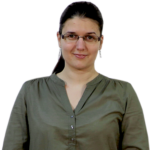
Prof. Victor Grigoras is a faculty member at the Technical University of Iași, holding the rank of Professor. He specializes in electrical engineering and computer science, focusing on signal processing, parallel architectures, and nonlinear dynamics in power systems. His research interests include smart grid technologies, renewable energy integration, and data-driven methodologies for grid optimization. He teaches courses such as 'Semnale, Circuite și Sisteme' and 'Algoritmi și Structuri Paralele de Calcul.' His research spans over 15 recent articles (2021–2025), emphasizing advancements in smart grid automation, machine learning applications in voltage quality analysis, and optimal power flow solutions for renewable integration. Notable trends include SCADA system improvements, energy storage strategies for prosumer grids, and IoT-based energy management. His work addresses challenges in grid reliability, power quality, and future urban grid resilience under high EV adoption scenarios. Prof. Grigoras has contributed to frameworks for electric vehicle charging station placement, hydropower plant optimization via data mining, and demand response mechanisms using smart metering. His methodologies often combine clustering techniques with fuzzy logic or metaheuristic algorithms to solve complex grid problems.
Dr. Aurelian Catalin GALCA is a Senior Researcher I at the National Institute of Materials Physics (NIMP) in Magurele, Romania, where he works in the Laboratory of Complex Heterostructures and Multifunctional Materials (HeCoMat). He serves as NIMP's responsible for international collaborations with the Agence universitaire de la Francophonie (AUF) since 2016, managing administrative procedures and educational, training, and research activities for foreign PhD students and postdocs. Dr. GALCA's educational background includes: PhD in Physics from the University of Twente, Netherlands (2006) Master's degree in Solid State Physics from the University of Bucharest, Romania (2002) Bachelor's degree in Physics from the University of Bucharest, Romania (2002) Dr. GALCA's research focuses on the non-destructive characterization of nanoscaled materials using advanced techniques including spectroscopic ellipsometry, X-ray diffraction, UV-Vis and infrared spectroscopy, and Raman spectroscopy. His work also encompasses the preparation of dielectric/semiconductor/metallic thin films by physical vapor deposition methods and the development and testing of optoelectronic devices . His expertise spans materials science, nanotechnology, photovoltaics, and magnetooptics, with particular emphasis on thin film characterization and engineering for solar cell applications, memory devices, and other electronic applications. Analysis of Dr. GALCA's recent publications reveals a strong focus on advanced materials for energy applications , particularly photovoltaics and energy storage. His work spans thin film solar cells (CZTS, CBTS), perovskite solar cells, supercapacitors, and magnetocaloric materials. A common thread is the precise engineering of material properties through composition control, phase transitions, and surface morphology optimization. His research increasingly incorporates computational methods to complement experimental findings, demonstrating an interdisciplinary approach to materials science. Dr. GALCA has received notable recognition for his work, including: RADU GRIGOROVICI prize awarded by the Romanian Academy in 2011 for contributions to the optical characterization of oxide systems As a research leader, Dr. GALCA has coordinated three national projects, two of which as Principal Investigator, including the "Science and engineering of kesterites for the next generation of solar cells" project. He has also contributed to economic projects with CyberSwarm Inc. and Honeywell Romania. His expertise is sought after as a scientific reviewer for top journals including Scientific Reports, ACS Applied Materials & Interfaces, and Applied Surface Science, and as an Expert Evaluator for the European Commission (H2020), ANR (France), CNR (Italy), and Romanian funding agencies. Dr. GALCA leads research activities at the Laboratory of Complex Heterostructures and Multifunctional Materials (HeCoMat) at NIMP, where his team focuses on the characterization and development of advanced materials for optoelectronic applications. The laboratory is equipped with state-of-the-art instrumentation for thin film deposition and characterization, supporting research in photovoltaics, memory devices, and other electronic applications. Dr. GALCA's team collaborates extensively with international partners, reflecting his role as NIMP's responsible for AUF collaborations.
Claudia Steluta Martis is an Associate Professor at the Department of Electrical Machines, Marketing & Management , Technical University of Cluj-Napoca, Romania. Her expertise spans electrical machine design, electromagnetic compatibility, and motor control systems. Date of birth: 19 August 1967, Măcin, Tulcea, Romania Education Industrial High School, Măcin (1981-1985) Technical University of Cluj-Napoca, Electrical Engineering (1985-1990) Research interests focus on design and modeling of electrical machines , particularly doubly-salient permanent magnet motors and electric traction drives. She has contributed to electronically commutated small motor development and electromagnetic compatibility in electromechanical systems. Research projects include National Science Foundation collaborations on doubly-salient motor design, bilateral programs with Italy (University of Cassino), and grants from Romania's National Education Ministry for energy-efficient drives and real-time control systems. Professional experience includes engineering roles at SINTEROM SA and Dania Comprod SRL (1990-1996), followed by academic positions. International mobility includes Erasmus-Socrates stays at Helsinki University of Technology (1999) and University of Cassino (2000).
Natalia Alekseevna Evseeva serves as an Associate Professor at the Department of Automobiles, Heat Engines and Hybrid Power Plants within the Faculty of Transport at Zaporizhzhia Polytechnic National University. She has been active at the institution since 2001 and holds the academic title of Candidate of Technical Sciences. She also holds the prestigious position of Vice-Academician of the Academy of Technical Sciences of Ukraine. Her educational foundation includes a degree from Zaporizhia Industrial Institute (1993) with a specialty in 'Metallurgy of non-ferrous metals' and qualification as a 'metallurgical engineer'. She further solidified her academic credentials by defending her Candidate's thesis in 2015 titled 'Improving the mechanical and operational properties of special-purpose chromium-nickel-manganese steel'. Dr. Evseeva's research portfolio demonstrates significant expertise in internal combustion engines, heat engineering, and automotive systems. Her work particularly emphasizes engine cooling systems, thermal management, fuel injection technology, and alternative fuel systems. She has published 22 scientific papers, including a textbook and a patent, with her most recent publications appearing in 2025. Her scholarly contributions show a consistent progression toward more sophisticated modeling techniques and innovative solutions for engine performance optimization, particularly in the areas of electric pump integration for cooling systems and advanced fuel injection technologies. Certificate from the Department of Education and Science of Zaporizhzhia City Council (November 2023) Certificate from Oleksandrivska District Administration of Zaporizhzhia City Council (December 2019) Honorary Certificate from ZNTU (May 2016) Honorary Certificate from the Department of Education and Science of Zaporizhzhia Regional State Administration (2015) Honorary Certificate from Zhovtneva District Administration (2006) Dr. Evseeva actively contributes to academic governance as a member of the scientific and methodological council of the Faculty of Transport and the labor conference. She serves as the guarantor of the bachelor's educational program 'Internal Combustion Engines'. Her professional development includes internships at PJSC 'Zaporizhabraziv' (2020) and recent training in academic integrity (2025) and educational leadership (2025), reflecting her commitment to both research excellence and educational innovation.
Luminita Roxana Clotea is an Associate Professor at the Department of Electrical Engineering and Applied Physics, Faculty of Electrical Engineering and Computer Science, Transilvania University of Brasov, Romania. Her research focuses on power electronics systems and renewable energy technologies, particularly analyzing energy efficiency in electrical conversion systems. Focus on evaluating power losses in multilevel inverters Applications in wind energy and photovoltaic systems Investigations into soft-switching converter technologies Her publications demonstrate expertise in electrical engineering domains, particularly in optimizing semiconductor-based energy conversion systems. While no specific awards are mentioned in the available information, her work appears in international conference proceedings and technical publications.
Anatoly Petrovych Zabolotny is an Associate Professor and Head of the Trade Union of the Faculty of Electrical Engineering at Zaporizhzhia Polytechnic National University. He holds the academic title of Associate Professor and the academic degree of Candidate of Technical Sciences. His educational background includes a diploma with honors from Zaporizhia Machine-Building Institute named after V.Ya. Chubar (1978), where he specialized in Electrical Machines as an electromechanical engineer, and further education from Zaporizhzhia State Engineering Academy in Finance (2000), where he obtained the qualification of Economist. Dr. Zabolotny's scientific interests focus on mathematical modeling of energy exchange processes in the formation of optimal power supply systems containing conversion equipment. His main disciplines taught include Modeling of power supply systems, Basics of energy conservation, Energy saving in technological installations and buildings, and Energy market infrastructure. His research primarily centers on electrical engineering and power systems, with work spanning from fundamental electrical drive systems to practical applications in energy conservation and power system design, particularly emphasizing mathematical modeling approaches for system optimization. Honorary Certificate of the Ministry of Education and Science of Ukraine (2008) Gratitude of the Department of Vocational and Technical Education of the Ministry of Education and Science of Ukraine (2008) Gratitude of the National Ecological and Naturalistic Center for Student Youth of the Ministry of Education and Science of Ukraine (2009) Dr. Zabolotny has been active at the university since 1980, contributing significantly to both academic instruction and faculty administration. He is fluent in Ukrainian and English, facilitating international academic communication and collaboration.
Cristina Stângaciu is a Lecturer at the Department of Computer and Information Technology, Politehnica University of Timisoara. Her research focuses on embedded systems, real-time systems, IoT, and energy-efficient computing. She has contributed to mixed criticality task scheduling and wireless sensor networks. PhD in Real-Time Systems (2015) Scientific Secretary of Department Involvement in projects: Bright Cityscapes - Synthia, CloudPUTing, TEEFIOS Her research interests span real-time task scheduling, embedded operating systems, and smart sensing systems. Recent work explores IoT security and multicore scheduling techniques. Key article trends include real-time scheduling frameworks, IoT protocol optimization, and energy-efficient embedded systems. Topics like lightweight cryptography and CAN FD improvements are prominent in her 2024-2025 publications. Merit Diplomas (2021, 2022) Merit Awards 2025 As advisor to PhD students, she contributes to advancements in real-time systems through grants and collaborative projects like SCMUPT 2025. Her work integrates practical and theoretical aspects of sensor networks and cloud platforms.
Cătălin Petrea ION is an Associate Professor at the Department of Electrical Engineering and Applied Physics, Faculty of Electrical Engineering and Computer Science, Transilvania University of Brașov, Romania. His research focuses on rotating electrical machines, renewable energy systems, and micro-hydro power plant technologies. Key Research Areas: Rotating electrical machines, renewable energy sources, micro-hydro power plants Publications: 6 notable works (2011–2023) on induction generators, PMSM design, and microgrid integration His recent publications emphasize energy efficiency in electric machines, sustainable power generation from hydro sources, and integration of autonomous systems into modern grids. Despite no explicit awards or student mentoring details in the text, his work highlights technical contributions to renewable energy infrastructure and applied physics in electrical engineering contexts.
Lorand Szabo is a Full Professor at the Department of Electrical Machines and Drives , Faculty of Electrical Engineering , Technical University of Cluj-Napoca , Romania. He has been affiliated with this institution since 1990, transitioning from Research and Design Engineer to Lecturer (1999), Associate Professor (2007), and Full Professor (current). He also served as an Invited Professor at Pannon University (Hungary, 2007-2008) and University of Pavia (Italy, 2015). Teaching : Special Electrical Machines (1985-present), Electrical Machines and Drives (1996-present), Computer Aided Design of Electromechanical Systems (2009-present). Supervision : Ph.D. supervisor since 2007 for 8 students (6 completed). Research Focus : Linear and variable reluctance electrical machines, fault-tolerant designs, bearing fault detection in motors, and condition monitoring. His work extends to automotive applications (electric vehicles, hybrid systems), wind energy generators, and sustainable material sourcing for electrical machines. Recent Publications (2023-2025) address critical topics in sustainable mobility, including rare earth material dependency, deep-sea mining for electric technologies, battery management systems, and resource-efficient motor designs. These works reflect his interdisciplinary approach combining electrical machine innovation with environmental and industrial systems thinking. Technical Expertise : Finite element analysis (JMAG, ANSYS Motor-CAD), LabVIEW modeling, fault detection algorithms (wavelet transforms, kurtosis deconvolution), and modular motor construction for automotive and renewable energy applications.
Yuriy Mykolayovych Savonov serves as Associate Professor at Zaporizhzhia Polytechnic National University within the Department of Integrated Welding Technologies and Modeling of Structures under the Faculty of Engineering Physics. With continuous academic service since 1979, he maintains active research and teaching roles including courses on Welding Equipment Schematics and Technological Methods for Increasing Machine Parts Service Life . His educational background includes higher education from V.Ya. Chubar State University of Mass Media (1979), Faculty of Mechanics and Metallurgy, with specialization in "Equipment and Technology of Welding Production" and qualification as Mechanical Engineer. He holds the Candidate of Technical Sciences degree (1989) with thesis on "Development and implementation of welding materials for pulp and paper production equipment made of two-phase steel 12X21N5T". Savonov's research centers on weldability challenges of corrosion-resistant austenitic and austenitic-ferritic steels, with significant contributions to electroslag remelting, corrosion resistance in alkaline environments, and restoration techniques for industrial equipment. His work bridges theoretical materials science with practical industrial applications across metallurgical, pulp/paper, and construction sectors. Analysis of his recent publications reveals strong focus on titanium recycling processes, advanced welding technologies for duplex steels, and innovative surface engineering solutions. His research demonstrates consistent evolution from fundamental welding science toward sustainable material processing and equipment longevity enhancement. Professional activity includes regular participation in the university's "Week of Science" conferences through 2022, with collaborative projects spanning multiple Ukrainian technical institutions. His scholarly output exceeds 30 publications including 5 author's certificates and 1 educational manual, primarily published in Ukrainian metallurgical and engineering journals. Current research infrastructure involves laboratory work at university facilities (room 257-a, building 2) with English communication capability at dictionary level. His ORCID (0000-0003-1347-5366) and Scopus (6505863212) profiles document ongoing scholarly contributions.
Dr. Chernova Irina Viktorivna is an Associate Professor at Zaporizhzhia Polytechnic National University's Faculty of Business Technologies and Economics, Department of Business and Management. With a Candidate of Philological Sciences degree (1999) and Master's in Architecture (2021), her expertise bridges Ukrainian cultural history with modern business communication. Specializes in Management Psychology , Public Relations , and Corporate Branding Developed 120+ scientific works including 3 Web of Science/Scopus publications Led international educational projects with Prometheus and DVV International Her research examines: Branding and Digital Marketing strategies Communication Systems in post-conflict management Historical Preservation in urban development Recent publications analyze: Ukraine's national image in global economics Ukrainian business communication challenges Psychopedagogical motivation frameworks
Catalina Gabriela MIHALCEA serves as an Assistant Researcher at the Laboratory of Atomic Structures and Defects in Advanced Materials (LASDAM) within the National Institute of Materials Physics. Her work focuses on advanced nanomaterials for gas sensing and photocatalytic applications, with particular expertise in metal oxide semiconductors including TiO 2 , SnO 2 , NiO, and WO 3 . Her research interests span gas sensing mechanisms (particularly for CO 2 , methane, acetone, and hydrogen), defect engineering in nanomaterials , and photocatalytic performance optimization . Key methodologies include hydrothermal synthesis, co-precipitation, and advanced characterization techniques such as EPR spectroscopy, TEM, and XRD. She investigates how morpho-structural properties, synthesis parameters, and environmental conditions (humidity, temperature) affect material performance. Analysis of her 15 most recent publications reveals a strong emphasis on in-field condition testing using computer-controlled Gas Mixing Systems, with significant contributions to understanding charge carrier trapping in phase-transforming TiO 2 , electrode geometry effects in SnO 2 sensors, and humidity-resistant sensing platforms. Her work demonstrates consistent innovation in sensor design and fundamental material behavior under operational conditions. She actively collaborates with researchers across multiple institutions, evidenced by co-authorship on publications spanning materials synthesis, characterization, and application testing. Her technical contributions include developing synthesis protocols for black TiO 2 with enhanced visible-light photocatalysis and optimizing WO 3 sensors for low-concentration acetone detection in high-humidity environments.
Marius MARCU is an Associate Professor at the Computer and Software Engineering Department , Faculty of Automation and Computers , Politehnica University of Timisoara , Romania. His career spans over two decades, combining academic rigor with industry collaboration, particularly in mobile systems and energy-efficient computing. PhD in Computer Science (2005) Master's in Advanced Computer Engineering (1996) BSc in Computer Systems Engineering (1995) His research focuses on Mobile Systems and Applications , Dynamic Power and Thermal Management , and Power-Aware Applications , with over 60 publications and leadership in 11 R&D projects. His work bridges theoretical advancements with practical implementations in wireless sensor networks and embedded systems. Recent publications emphasize energy characterization , thermal profiling , and wireless positioning accuracy across 2010–2011. He actively contributes to academic governance as Studies Program Manager for the Master of Information Technology and peer reviewer for IEEE and ACM. Merit Diplomas 2021 Project Director, FP7-eMuCo (2008–2010) Advisory roles for Alcatel-Lucent R&D contracts
Roman Fedorovych Sukhonos is a Senior Lecturer at the Department of Automobiles, Heat Engines and Hybrid Power Plants within the Faculty of Transport at National University "Zaporizhzhia Polytechnic". He has been affiliated with the university since 2011, contributing to both teaching and research activities in the field of internal combustion engines and automotive systems. His educational background includes: Bachelor's degree in Engineering Mechanics from Zaporizhzhia National Technical University (2010) Master's degree in Internal Combustion Engines from Zaporizhzhia National Technical University (2011), with qualifications as "Master in Internal Combustion Engines, Researcher (Engineering Mechanics), Lecturer at Universities and Higher Educational Institutions" Roman Sukhonos specializes in thermal and gas-dynamic processes in internal combustion engines. His research focuses on improving engine performance, efficiency, and emissions characteristics through innovative design approaches and diagnostic methods. He has particular expertise in two-stroke engine technology, resonant supercharging systems, and the analysis of engine misfires and their effects on performance. His recent publications demonstrate a strong focus on practical applications of engine technology, ranging from chainsaw engines to high-performance automotive systems like Ferrari V12 engines. There's a clear trend toward integrating modern diagnostic techniques, including acoustic monitoring and neural networks, with traditional engine design principles. His work spans both theoretical analysis and experimental validation of engine performance characteristics. Dr. Sukhonos has received numerous awards and recognitions for his contributions: Letter of appreciation from Zaporizhzhia Regional State Administration (June 2023) Honorary certificate from Zaporizhzhia Regional Council (June 2022) Letter of appreciation from Rector of National University "Zaporizhzhia Polytechnic" (May 2022) Honorary certificate from Executive Committee of Zaporizhzhia City Council (November 2021) Certificate from Rector of National University "Zaporizhzhia Polytechnic" (December 2019) Certificate from Oleksandrivka District Administration (December 2018) Third degree diploma from Ministry of Education and Science, Youth and Sports of Ukraine (July 2012) Certificate from Executive Committee of Zaporizhzhia City Council (December 2005) While specific details about his advising activities are not explicitly mentioned, his extensive publication record with multiple co-authors suggests active involvement in research mentoring. His participation in numerous conferences and publication of textbooks indicates significant contributions to curriculum development and student education. His research appears to be supported through university affiliations and collaborations with colleagues. Dr. Sukhonos is part of a research team at the Department of Automobiles, Heat Engines and Hybrid Power Plants that focuses on engine diagnostics, performance optimization, and alternative engine designs. His collaborations with colleagues like Georgy Slynko indicate a strong research group working on advancing internal combustion engine technology despite the industry's shift toward electric propulsion.
Volodymyr Valentynovych Vasilevsky is a Senior Lecturer at Zaporizhzhia Polytechnic National University's Faculty of Electrical Engineering. Holding a Candidate of Technical Sciences degree, his career has focused on electromechanical systems and power transformer insulation analysis since joining the university in 2012. Education: Master's in Electrical Machines and Devices (Zaporizhia National Technical University, 2011) Research: Specializing in insulation resource modeling, neural network applications for transformer diagnostics, and lifecycle management of power equipment Key Contributions: Developed layered models for insulation resource consumption, automated evaluation systems for transformer diagnostics, and defect distribution dynamics models Contact: Email lisses@ukr.net , Office 520a, Zhukovsky St. 64