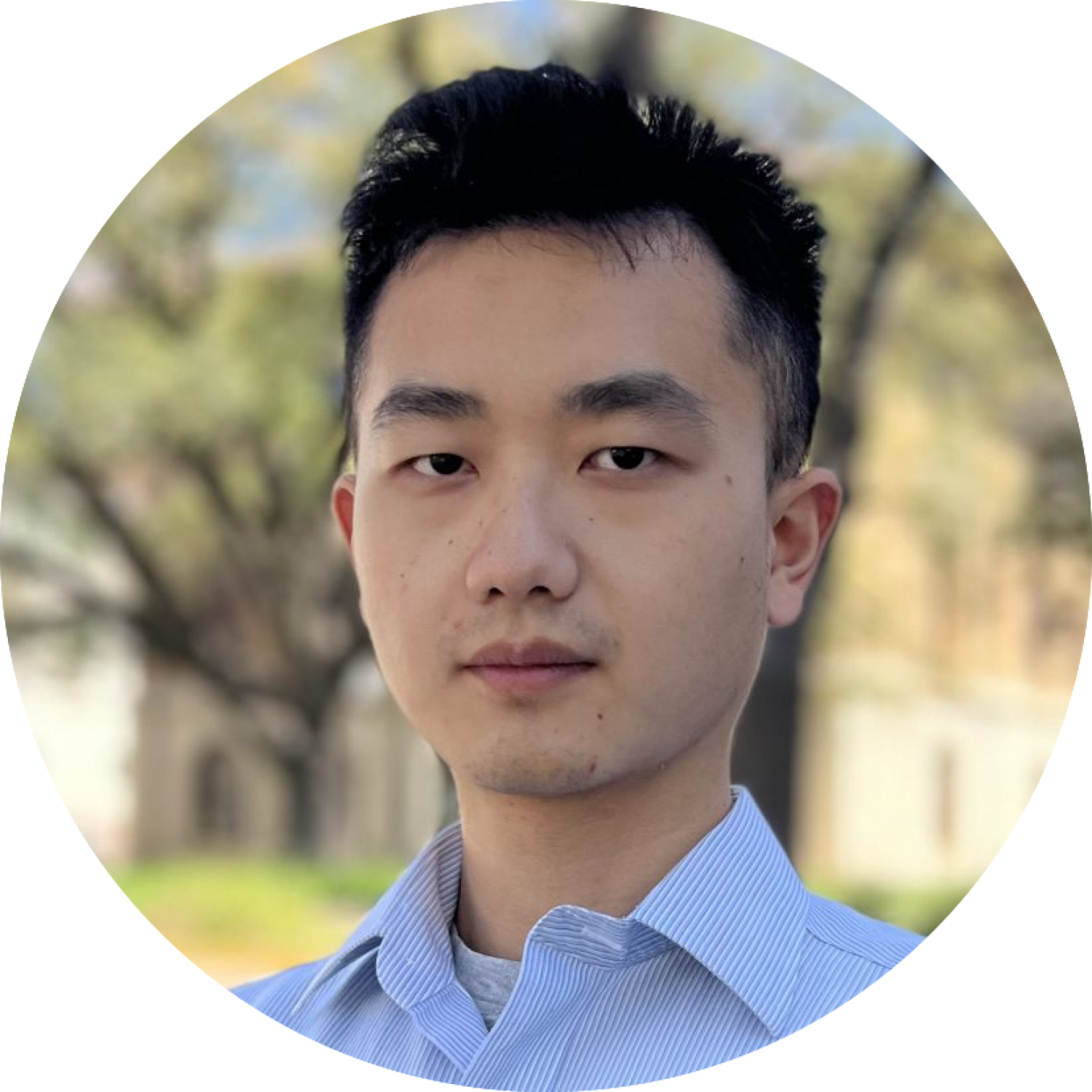
Zhi Li is an Assistant Professor at the University of Colorado Boulder's College of Engineering and Applied Science, Department of Civil, Environmental and Architectural Engineering. He leads the newly established Flood Lab, focusing on flood prediction and monitoring through remote sensing and coupled hydrologic-hydraulic models. Joined CU Boulder in Fall 2025 Former Dean's Postdoc Fellow at Stanford University PhD in Civil Engineering & Environmental Science from University of Oklahoma (2022) His research spans hydrological modeling , extreme events , and AI4Science applications, particularly in deep learning and intelligent agents for flood risk assessment. Li’s work also connects floods with public health and economic systems , aiming to develop the Flood-Agriculture-Climate-Economics-Disease (FACED) framework. Key Themes: High-resolution flood modeling Climate change impacts on hydro-meteorology Remote sensing integration Flood-agriculture interdependencies Global health implications Scientific Awards: Dean's Postdoc Fellow, Stanford Doerr School of Sustainability (2023) Hoving Fellowship, University of Oklahoma (2019) Li’s recent publications emphasize improved precipitation estimation (IMERG V07), Brown Ocean Effect studies, and Fourier neural operators for rapid flood forecasting. His collaborative work with NOAA and NASA focuses on comparing ground-based and spaceborne radar systems for extreme event analysis.
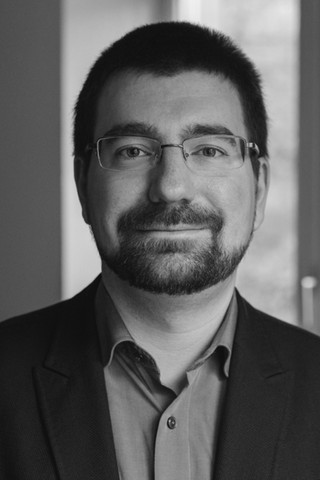
Dr. Aris Dimeas is a Researcher at the National Technical University of Athens in the Department of Electric Power and Industrial Applications . He holds a diploma and PhD in Electrical and Computer Engineering from NTUA and has extensive experience in power systems operations, renewable energy integration, and smart grid technologies. Specialized in AI applications for power systems Developed control software for demand side management Consultant for PPC (2007-2012) Research Focus : Smart grids and digital twin implementations Renewable energy market dynamics Microgrid optimization and control algorithms Collaborations : Active participant in EU research projects, collaborating with HEDNO and other energy grid operators on electronic meters and intelligent network deployments. Teaching : Instructs courses on electric energy systems, power system analysis, and energy management.
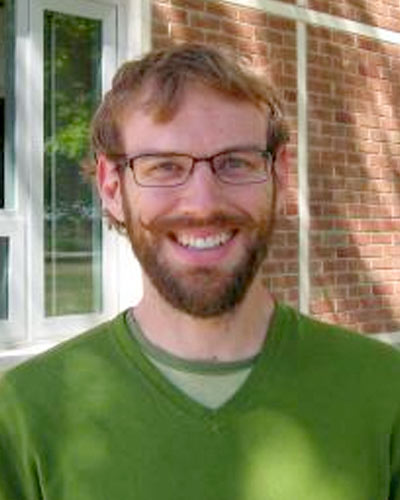
Dr. Jorge Barreto is an Associate Professor in Quantum Technologies at the University of Bristol, affiliated with both the School of Physics and the School of Electrical, Electronic and Mechanical Engineering. As Director of the Centre for Doctoral Training in Quantum Engineering, he leads research at the intersection of applied physics and semiconductor technologies. Senior Lecturer, Quantum Engineering Technology Labs (QET Labs) EPSRC Quantum Engineering Centre for Doctoral Training member Bristol Quantum Information Institute participant His research focuses on integrating photonic circuits with single photon detectors, modulators, and sources to develop optical quantum information processors. Key areas include cryogenic photonic calibration , quantum-referenced tomography , and silicon photonics applications. Recent projects explore photonic integrated circuits operating at low temperatures and scalable quantum communication systems. Notable contributions include 2023 work on spontaneous emission tomography and 2022 research on zero-power calibration . He has authored publications in Nature Materials , ACS Photonics , and Quantum Science and Technology , with over 140 citations. Dr. Barreto collaborates internationally and has participated in workshops like the NSF Workshop (2015). He supervises 8 research works and leads datasets on photon pair sources and quantum tomography. Current projects address cryogenic light-matter interaction and hybrid quantum platforms like silicon-BTO integration.
Harutyun Ishkhanovich Avetisyan is a Professor and Head of the Basic Department "System Programming" at the Faculty of Computer Science of the National Research University Higher School of Economics (HSE). He began his tenure at HSE in 2017 and brings 30 years of scientific and teaching experience to his role. Additionally, he serves as the Director of the Institute for System Programming of the Russian Academy of Sciences (ISP RAS), a position he has held since 2015. Avetisyan holds numerous prestigious academic distinctions, including being elected as an Academician of the Russian Academy of Sciences in 2019 and as a Corresponding Member in 2016. He earned his Doctor of Physical and Mathematical Sciences degree in 2012 and was awarded the academic title of Associate Professor in 2009. His educational background includes a specialty in "Applied Mathematics" from Yerevan State University (1993). His research focuses on three main areas: analysis and transformation of programs, software security, and parallel and distributed computing technologies. These interests are reflected in his extensive publication record and leadership in major research initiatives. His work bridges theoretical computer science with practical applications in cloud computing, secure data storage, and high-performance computing systems. Avetisyan's scholarly contributions demonstrate a consistent focus on system programming challenges, particularly in the areas of code analysis, optimization, and security. His recent publications indicate a growing interest in cloud computing paradigms, smart city infrastructure, and energy-efficient computing solutions. His research has significant implications for both academic theory and industrial applications in software development. Among his notable recognitions, Avetisyan was awarded the medal of the Order "For Merit to the Fatherland" 2nd degree in 2021 for his significant contributions to science and dedicated service. He also serves on the editorial boards of several prestigious journals including "Programming" (since 2015) and "Proceedings of the Institute for System Programming of the RAS" (since 2010). Throughout his career, Avetisyan has led and participated in numerous research grants funded by the Ministry of Education and the Russian Foundation for Basic Research. His professional trajectory shows steady progression from postgraduate studies (1997-2000) to research fellow (2000-2002), deputy director of ISP RAS (2002-2015), and ultimately director of the institute (2015-present). At HSE, Avetisyan teaches courses in parallel programming and mentor seminars for master's students in Software Engineering. His teaching philosophy emphasizes the integration of cutting-edge research with practical software development skills, preparing students for careers at the forefront of computer science.
Sadaharu Kataoka is a Professor at Waseda University's Faculty of International Research and Education, School of International Liberal Studies. With a distinguished career spanning over two decades, Professor Kataoka specializes in African politics, international relations, and security studies, with particular expertise in Franco-African relations and the political dynamics of the Sahel region. Professor Kataoka's educational background reflects his deep engagement with international affairs and African studies: Doctorat en Sciences Politiques from Universite de Paris I (Pantheon-Sorbonne), completed between 1993-2000 Diplome des Etudes Approfondies en Sciences Politiques from Universite de Paris II Maitrise de Sciences Politiques from Universite de Paris II Diplome from L'Institut des hautes études de défense nationale (2005), focusing on Conflicts in Africa and Security Studies Undergraduate studies at Waseda University's Faculty of Political Economics Professor Kataoka's research focuses on critical areas of international relations with a particular emphasis on African politics. His work examines the complex interplay between security, development, and governance across the African continent. He has made significant contributions to understanding the evolving nature of European-African relations, particularly France's shifting policy toward its former colonies. His research also delves into the dynamics of regional security organizations, election processes in African democracies, and the impact of external powers including Russia's growing influence in Africa. His scholarship bridges theoretical frameworks with practical policy implications, often drawing on extensive fieldwork across multiple African countries. Professor Kataoka has developed particular expertise in the political economy of conflict, examining how resource distribution, historical legacies, and international interventions shape contemporary African politics. An analysis of Professor Kataoka's recent publications reveals a consistent focus on the evolving geopolitical landscape of Africa. His work increasingly addresses the multipolar competition for influence on the continent, with particular attention to how traditional powers like France are adapting to challenges from Russia, China, and other emerging actors. The thematic progression in his scholarship shows a deepening engagement with security challenges in the Sahel region, electoral politics across the continent, and the complex interplay between governance and development. Professor Kataoka has held numerous leadership positions in professional organizations, including serving on the administrative council of the Société franco-japonaise de sciences politiques since 2015 and as Director of the African Development Association since 2014. His professional memberships span multiple associations including the African Studies Association and the Japan Association of International Relations. His research has been supported by various grants including Japan Society for the Promotion of Science Grants-in-Aid for Scientific Research, particularly for his work on governance in Sub-Saharan Africa. He has also conducted numerous commissioned studies for the Japanese Ministry of Foreign Affairs on topics ranging from NEPAD (New Partnership for Africa's Development) to African legislative support. Professor Kataoka maintains active engagement with policy communities through regular media appearances and participation in international forums. He frequently provides expert commentary on African affairs for major media outlets including NHK International Broadcasting and Radio France International.
Stephan Packard is a Professor for Cultures and Theories of Popularity at the Institute for Media Culture and Theatre at the University of Cologne, where he has held a full professorship since 2017. Previously, he served as Junior Professor for Media Cultural Studies at Albert Ludwig University of Freiburg (2010-2017) and was repeatedly an acting professor for Cultures and Theories of Popularity at the University of Cologne (2015-2017). His research focuses on media control (including censorship, surveillance, and propaganda), popular visual cultures with particular emphasis on comics research, and the complex relationships between factuality, fictionality, and virtuality. As a media semiotician and discourse analyst, Packard examines how meaning is constructed across different media forms and how power operates through media systems. Packard's scholarly output shows a clear trend toward examining the intersections of comics studies with broader media theory, political philosophy, and critical social analysis. His recent publications increasingly address digital sovereignty, algorithmic control, and the transformation of media landscapes in the digital age, while maintaining his foundational work in comics theory and media semiotics. His research connects historical analysis of media forms with contemporary concerns about digital media power structures. Heinz Maier-Leibnitz Prize of the German Research Foundation (2015) Packard leads several significant research projects including the OER-Verbundprojekt 'Comicforschung.nrw,' 'The Adventure as a Popular Nomad: Transformations of Adventure Narratives in Comics,' and the 'Glossary of Digital Sovereignty.' He is actively involved in multiple academic networks including the Global South Studies Center (since 2025), the Key Profile Area Skills and Structures in Language and Cognition (since 2024), and was the first chairman of the Society for Comics Research (ComFor) from 2013-2019. His work bridges theoretical media studies with practical concerns about digital citizenship and media literacy in contemporary society.
Per Bækgaard is an Associate Professor at the Department of Applied Mathematics and Computer Science, Technical University of Denmark (DTU), specializing in Cognitive Systems. He serves as Head of Study for Human-Centered Artificial Intelligence, leading research in human-computer interaction, user experience, eye tracking, and cognitive neuroscience. His work bridges AI and human cognition to create systems that enhance daily life and support meaningful tasks. PhD, MSc EE, Technical University of Denmark His research interests center on Human-Computer Interaction (HCI) , User Experience , and Human-Centered Artificial Intelligence , with strong emphasis on Eye Tracking , Cognitive Neuroscience , and Digital Media . He explores how digital systems can adapt to users’ cognitive states using physiological signals like pupil dilation and gaze patterns, aiming to improve learning, health, and decision-making. His work aligns with UN Sustainable Development Goals in health and education. The recent publications reflect a strong trend in integrating eye tracking and pupillometry with AI-driven adaptive systems , particularly in education and healthcare. Themes include generative AI in learning , trustworthy AI in supply chains , and digital micro-interventions for mental health . The interdisciplinary nature spans computer science, psychology, and biomedical engineering, showcasing a cohesive focus on human-centered technology evaluation. Scientific Awards: Best Paper Award, 26 Jun 2020 – for contributions to gaze interaction research Per Bækgaard actively supervises PhD students and leads multiple research projects, including those involving generative AI in education , digital phenotyping , and AI in nursing and mental health . He is the main supervisor for several PhD projects and a co-supervisor or examiner in others, demonstrating a strong commitment to academic mentoring. His grant involvement includes projects funded by DTU and collaborative research initiatives in digital health and AI. He is part of the Cognitive Systems group at DTU, contributing to interdisciplinary research in AI, neuroscience, and human factors. His team collaborates on projects involving real-time physiological monitoring, adaptive interfaces, and AI-mediated learning systems, positioning him at the forefront of human-centered AI research in Scandinavia.
Alexey Pavlov is a Professor of Petroleum Cybernetics at the Department of Geosciences and Petroleum, Norwegian University of Science and Technology (NTNU). He holds an MSc in Applied Mathematics from St. Petersburg State University, a PhD in Mechanical Engineering from Eindhoven University of Technology, and has industrial R&D experience from Statoil and Ford Motor Co. Education: MSc (Applied Mathematics, St. Petersburg State University), PhD (Mechanical Engineering, Eindhoven University) His research focuses on control systems for petroleum engineering applications, including nonlinear control theory, iterative learning control, and data-driven optimization methods. Publications reveal a strong emphasis on real-time drilling optimization, well integrity monitoring, and synchronization in networked systems. Recent work trends include machine learning integration for oil well monitoring, moment matching in model reduction, and extremum seeking control for multi-agent systems. Collaborations span institutions like Ford Motor Co., Statoil, and Eindhoven University of Technology. Current affiliations include the Department of Geosciences and Petroleum at NTNU. No scientific awards or advisee information is explicitly mentioned in the provided texts.
Thor Inge Fossen is a Professor of Navigation and Marine Craft Control at the Department of Engineering Cybernetics, Faculty of Information Technology and Electrical Engineering at the Norwegian University of Science and Technology (NTNU). He is a key scientist at the Norwegian Centre for Embodied AI (NCEI) and internationally recognized for his work in navigation systems, guidance systems, and control of marine vessels, aircraft, and drones. Professor Fossen holds a PhD in Engineering Cybernetics and an MSc in Marine Technology. His academic journey has led him to become a Fellow of AAIA, IEEE, and IFAC, reflecting his significant contributions to the field. His research spans several critical areas in marine and aerospace systems: Marine craft hydrodynamics and motion control Navigation, guidance, and control systems for marine craft, aircraft, and drones Cybersecurity of autonomous vehicles Sea-state estimation and wave analysis Attitude control and estimation Fossen's marine craft model, which is widely used in the industry Professor Fossen's publication record demonstrates a strong focus on adaptive control systems, particularly Line-of-Sight (LOS) guidance laws, with numerous papers on 3D path following for marine and aerial vehicles. His recent work (2023-2025) shows increasing integration of machine learning techniques with traditional control systems, particularly in areas like constrained control allocation using deep neural networks. There's also a growing emphasis on cybersecurity aspects of autonomous vehicle guidance systems. His scientific recognition includes: Fellow of the American Institute of Aeronautics and Astronautics (AAIA) Fellow of the Institute of Electrical and Electronics Engineers (IEEE) Fellow of the International Federation of Automatic Control (IFAC) Professor Fossen has been actively involved in advising graduate students, with numerous PhD and MSc graduates. He has led significant research projects including the Marine Systems Simulator (MSS) and the Python Vehicle Simulator, which are widely used tools in the field. His current appointments include being a Study Program Coordinator for the Master's program in Cybernetics and Robotics at NTNU and a Key Scientist at the Norwegian Centre for Embodied AI. He leads research teams focused on embodied AI applications for marine systems, with particular emphasis on safe and secure autonomous operations in complex maritime environments. His work bridges theoretical control systems with practical marine applications, making significant contributions to both academic research and industry implementation.
Eilif Pedersen is a Professor and Program Leader for Marine Technology at the Norwegian University of Science and Technology (NTNU). He leads the Department of Marine Technology under the Faculty of Engineering. His research focuses on mathematical modeling, simulation of machinery systems, and energy-efficient solutions in marine and offshore contexts. He is actively involved in projects such as SEACo, SFI Smart Maritime, and ViProMa, emphasizing virtual prototyping and hybrid power systems. Key research areas include bond graph methodology, thermodynamic system modeling, and dynamic analysis of marine systems. Pedersen supervises numerous PhD and industrial projects, including studies on hybrid propulsion, wind turbine dynamics, and fuel cell integration. He has contributed to over 50 publications, with recent work addressing co-simulation techniques, energy conservation in marine systems, and emission reduction strategies. His expertise spans marine engines, fluid dynamics, and renewable energy applications. Collaborations with industry partners like Rolls-Royce and Kongsberg Digital highlight his commitment to bridging academic research with practical maritime challenges.
Dr Duncan Hodges is a Senior Lecturer in Cyberspace Operations at Cranfield University, affiliated with the Centre for Electronic Warfare Information and Cyber within Cranfield Defence and Security. His research spans cybersecurity, digital identity, offensive cyber operations, and natural language processing applications in security. His research interests include: Identity in cyber and natural spaces Offensive cyber activity and information warfare Natural Language Processing in cybersecurity Insider threat detection Smart home and IoT security Hodges' recent publications (2015–2022) reflect a strong focus on behavioral biometrics, identity cues, privacy, and cyber-enabled crime. His work combines technical innovation with social science insights, especially in understanding human factors in cybersecurity. Key themes include keystroke dynamics, smart home vulnerabilities, and personality inference from digital behavior. Scientific Awards and Fellowships: ESRC NCRM Fellow on Digital Identity Visitor at the Alan Turing Institute Research Leadership and Grants: Lead PI on EPSRC project: 'People Powered for Desirable Social Outcomes' CO-I on EPSRC project: enabling sensitive disclosures via conversational agents Two projects funded by the Centre for Research and Evidence in Security Threats (CREST) Collaborations with EPSRC, ESRC, Innovate UK, and Defence Science and Technology Labs (DSTL) Labs and Research Groups: He is part of the Information Operations Group at Cranfield and collaborates with the Cyber Security Centre at the University of Oxford and the Alan Turing Institute .
David Renfrew is an Associate Professor in the Department of Mathematics and Statistics at SUNY Binghamton. His research focuses on probability theory, random matrix theory, and their applications to mathematical physics and biological systems. Primary research areas: Probability, Random Matrix Theory, Mathematical Physics Special interest in non-Hermitian matrices and free probability interplay Current work explores dynamics of coupled systems and spectral properties of structured matrices Recent publications analyze singularity degrees of random matrices (2025), fractional free convolutions (2024), and universality phenomena in elliptic random matrices (2023). His methodological work bridges abstract probability theory with concrete applications in network dynamics and differential equations.
Taehyung Kim is an Associate Professor at the University of Michigan-Dearborn in the Department of Electrical and Computer Engineering , College of Engineering and Computer Science. His research focuses on power electronics , motor drives , and electric/hybrid power systems for vehicles and aircraft , with an emphasis on renewable energy integration and fault-tolerant control . Education Ph.D., Electrical & Computer Engineering, Texas A&M University M.S., Electrical Engineering, Korea University B.S., Electrical Engineering, Korea University His research interests include energy conversion systems, power electronics for electric vehicles, evaluation and diagnosis of AC motors, and position sensorless control of permanent magnet motors. He leads the KIM Laboratory , which explores unmanned aerial vehicles (UAVs) , battery systems , and powertrain reliability . The 15 most recent articles (2024-2021) highlight his work on hybrid UAVs , fault detection algorithms , cost-effective converters , and powertrain optimization . These publications span power electronics , renewable energy integration , and electric propulsion systems , with applications in transportation electrification and industrial power systems . Scientific Awards NSF Mid Career Advancement Award, 2023 IEEE-IAS Prize Paper Award (2nd Place), 2012 Best Paper Award, IEEE Transportation Electrification Conference, 2021 Listed in "World Top 2% Scientists" (Stanford University, 2020-2024) Listed in Marquis Who’s Who in America Technical Program Co-Chair, 2009 IEEE Vehicle Power and Propulsion Conference Prof. Kim has advised numerous PhD and Master’s students , including Feng Zhou , Sreekanthreddy Chalapala , and Sahithya Parvathareddy . He has secured significant grants from the NSF , Department of Energy , and industry partners like Ford, focusing on smart monitoring , fault identification , and energy management for electrified systems. His lab’s facilities include advanced power electronics labs and hybrid powertrain testing environments .
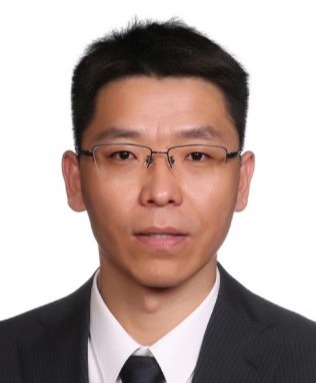
Cao Haishan is an Associate Professor at Tsinghua University, affiliated with the Department of Energy and Power Engineering in the School of Mechanical Engineering. His research focuses on cryogenic cooling systems, high heat flux thermal management, and the physics of amorphous ice formation and phase transitions. He leads a research group supported by the National Natural Science Foundation of China and industry partners including Huawei, Midea, and Lenovo. Ph.D., Mechanical Engineering, University of Twente, 2013 M.Sc., Chemical Engineering, Dalian Institute of Chemical Physics, Chinese Academy of Sciences, 2009 B.Sc., Chemical Engineering, Zhejiang University, 2006 Dr. Cao's research spans three major areas: cryogenic cooling (including micro cryocoolers and sorption systems), high heat flux electronic cooling (especially with non-condensable gases), and the formation and transformation of amorphous water ice. His work combines theoretical modeling, computational simulation, and experimental validation, often at micro and nano scales. He applies principles from thermodynamics, fluid dynamics, and materials science to solve engineering challenges in refrigeration and thermal control. The recent publications reflect a strong trend toward interdisciplinary research, integrating machine learning for heat transfer prediction, computational screening of MOFs for cryogenic switches, and fundamental studies of ice nucleation on various substrates. The articles span journals in physics, engineering, materials, and applied thermal sciences, indicating broad impact across multiple domains. Notable scientific awards include: Gustav and Ingrid Klipping Award (2016) Cryogenics Best Paper Award (2017) Annual Teaching Excellence Award, Tsinghua University (2023) Excellent Supervisor Award, Tsinghua University (2024) Multiple First Prize Advisor awards in national student contests on energy saving Dr. Cao has been principal investigator on several grants, including projects funded by the National Natural Science Foundation of China on amorphous ice lifetime and micro-cryocooling for semiconductor chips. He has also led industry-university collaborations with Huawei, Midea, and Lenovo. He advises graduate students and leads a research team focused on next-generation cooling technologies. He serves on editorial boards for Journal of Refrigeration , Vacuum and Cryogenics , and Energies , and has chaired sessions at major international conferences such as ICEC-ICMC and ACTS. His research group operates within the Institute of Thermophysics at Tsinghua University, leveraging facilities in the Lee Shau Kee Science and Technology Building. The team collaborates with national laboratories and international institutions, particularly maintaining ties with the University of Twente. Current efforts are directed toward ultra-low vibration cooling, efficient separation of non-condensable gases, and extending the stability of amorphous ice for cryobiological applications.
Alan Mantooth is a Distinguished Professor holding the Twenty-First Century Research Leadership Chair in Engineering within the Department of Electrical Engineering at the University of Arkansas, Fayetteville. He serves as Director of the National Center for Reliable Electric Power Transmission (NCREPT), Executive Director for GRAPES (NSF I/UCRC) and SEEDS (DoE Center), and Deputy Director of the NSF Engineering Research Center for Power Optimization of Electro-Thermal Systems (POETS). His educational background includes: B.S. in Electrical Engineering, University of Arkansas M.S. in Electrical Engineering, University of Arkansas Ph.D. in Electrical Engineering, Georgia Institute of Technology Dr. Mantooth's research centers on analog/mixed-signal IC design, power electronics CAD, and semiconductor device modeling with emphasis on harsh-environment applications. His pioneering work in silicon carbide (SiC) and gallium nitride (GaN) power systems has enabled high-temperature operation for electric vehicles and renewable energy infrastructure, significantly advancing reliability in extreme conditions. His 2025 publications reveal strong trends toward AI-driven power electronics (e.g., SolarFormer++ for PV profiling), wide-bandgap device modeling (β-Ga2O3, SiC), and innovative packaging solutions. Key themes include reliability engineering for extreme environments, multi-physics optimization, and explainable AI for safety-critical power systems. Major scientific recognition includes: IEEE Fellow (2009) for power electronic device modeling Three R&D 100 Awards (2009, 2014, 2016) for SiC power modules IEEE Power Electronics Society Technical Achievement Award (2019) Multiple university teaching/research awards including SEC Faculty Achievement Award (2015) As an exceptional mentor (UA Outstanding Mentor 2006-2008), he co-founded Lynguent and Ozark Integrated Circuits. His centers NCREPT, GRAPES, and SEEDS have secured major funding from NSF, DoE, and industry partners, supporting over 350 refereed publications and numerous patents. Current research focuses on AI-enhanced power electronics, recyclable packaging, and next-generation wide-bandgap device characterization. He leads the NCREPT test facility and multi-institutional teams developing grid-connected power electronic systems, secure energy delivery architectures, and thermal management solutions for high-power-density applications, with direct impact on electric transportation and renewable energy integration.