Kent Bertilsson is a Professor and Director of Studies at the Department of Computer and Electrical Engineering (DET) at Mid Sweden University . He serves as a Deputy Prefect and specializes in Power Electronics , with a focus on Embedded Systems , Power Converters , and Fiber Installation Equipment . His research includes projects like DeHigh (electrification of work vehicles) and STORE (electrical energy storage). His work spans High-Frequency Converters , Planar Magnetics , and Multilevel Inverters , with applications in Electric Vehicles and Renewable Energy Systems . He has extensively published in journals like IEEE Transactions on Power Electronics and Energies , emphasizing component optimization and energy efficiency. Notable projects include 48 V Drive Systems and Smart Industry Sweden .
Amir Babaki is an Assistant Professor at the Institute of Mechanical and Electrical Engineering, University of Southern Denmark. His research focuses on power electronics, wireless power transfer, and high-efficiency converter design for electric vehicle applications. University: University of Southern Denmark School: Institute of Mechanical and Electrical Engineering Rank: Assistant Professor Email: amirbabaki@sdu.dk Research Interests Babaki's work centers on power electronics, specifically front-end converters, wireless power transfer (WPT), and high-frequency resonant converters. His research explores efficiency optimization in dynamic WPT systems for electric vehicles (EVs), including control strategies for power factor correction and voltage regulation. He also investigates integrated magnetic structures for misalignment tolerance and develops predictive control methods without communication or model dependencies. Research Projects He contributes to projects like HiCoMMID (2021-2024) on motor integrated drives and HPC (2024-2027) for ultra-high efficiency DC-DC converters in high-power charging. These projects intersect with automotive engineering, energy efficiency, and converter design optimization. Teaching Babaki supervises Master's theses and teaches courses in power electronics and electrical engineering, including PE2 and ELTR3 modules related to converter technologies and wireless power systems.
Jun Wu is a Professor in the Department of Public Health at the University of California, Irvine. Her research focuses on air pollution exposure assessment and air pollution epidemiology, particularly in reproductive health, aiming to improve exposure characterization and assess health impacts. Ph.D. in Environmental Health from University of California, Los Angeles Her exposure assessment work employs geographical information systems (GIS), atmospheric dispersion models, and statistical techniques to quantify population and individual air pollution exposures, including studies on vehicle-related pollution, naphthalene, wildfires, and traffic pollutants. Her epidemiology research links air pollution to adverse pregnancy outcomes like preeclampsia, preterm births, and early pregnancy loss. The Google Scholar articles reflect interdisciplinary work in photonics, semiconductor devices, and optical systems, featuring advancements in microwave photonic oscillators, photodiodes, and color-tunable organic light-emitting diodes. These studies emphasize low phase noise, thermal dissipation, and high-efficiency device design across microwave and optoelectronic domains. Health Effect Institute Walter A. Rosenblith New Investigator Award, 2010 International Society of Exposure Analysis Young Investigator Award, 2005 Samuel J. Tibbitts Fellowship, School of Public Health, UCLA, 2003 Chancellor’s Fellowship, UCLA, 2000, 2003 PWEA Student Research Award, Pennsylvania Water Environment Association, 2000 Jun Wu's laboratory (https://drwulab.net/) develops exposure models and investigates environmental health impacts, combining GIS with atmospheric modeling. Her research bridges environmental science and public health, targeting pollution-related health risks.
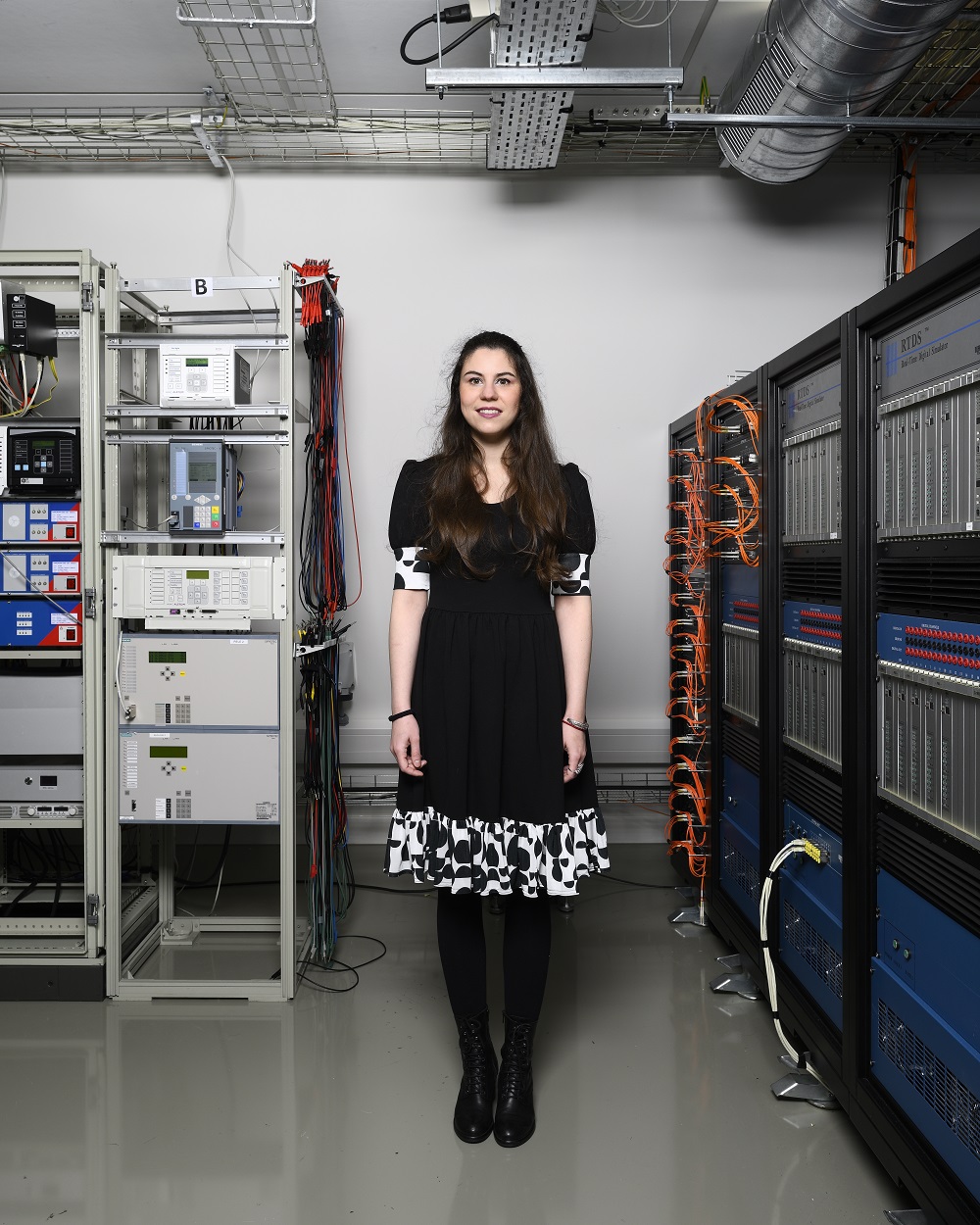
Aleksandra Lekić is a researcher at the Electrical Sustainable Power Lab within the Faculty of Electrical Engineering, Mathematics and Computer Science (EEMCS) at Delft University of Technology (TU Delft). Her work focuses on digital replicas of energy systems and real-time simulations for stability analysis. Fields of Interest : Energy Transition, Power Systems, Digital Twins, Renewable Energy Integration, Control Systems, Real-Time Simulation, Offshore Wind Farms, Grid Stability Research Focus : She develops digital twin models to simulate extreme scenarios in power systems, particularly for offshore wind farm networks. Her control systems research aims to stabilize energy grids under overgeneration conditions by redirecting excess energy. This work supports North Sea countries' collaborative energy transition goals. Advising : Aleksandra supervises a diverse group of students and researchers working on energy transition technologies. Labs & Teams : She contributes to the Electrical Sustainable Power Lab, leveraging supercomputers for real-time simulations of hypothetical energy systems.
Dr Xiandong Ma is a Reader in Power and Energy Systems at Lancaster University's School of Engineering, where he has been a faculty member since December 2008. His research focuses on intelligent condition monitoring and fault diagnosis of power systems, with particular expertise in wind energy systems and smart grid technologies. His educational background includes: BEng in Electrical Engineering from Jiangsu University (1986) MSc in Power Systems and Automation from Nanjing Automation Research Institute (1989) PhD in Partial Discharge based High-voltage Plant Condition Monitoring from Glasgow Caledonian University (2002) Dr Ma's research spans intelligent condition monitoring and fault diagnosis/prognosis of wind power systems and electrical assets, condition-based operations and maintenance of power and energy systems, modeling, optimization, and control of smart/micro grids with renewable energy resources, power conversion and renewable energy integration, and associated machine learning and AI technologies and digital twin solutions. His work bridges theoretical advances with practical engineering applications in the renewable energy sector. His recent publications demonstrate a strong focus on quantum machine learning applications for wind turbine monitoring, electric vehicle-grid integration challenges, wave energy conversion systems, and nuclear fuel inspection technologies. The research shows a clear trajectory toward more sophisticated AI-driven solutions for energy systems, with increasing emphasis on multi-physics modeling and cross-domain applications. Dr Ma has received several prestigious recognitions: Chartered Engineer Fellow of the Institution of Engineering and Technology (FIET) Fellow of the Higher Education Academy (FHEA) Member of EPSRC Peer Review College KTP Fellowship awarded by University of Technology Sydney (2018) Ranked in the world's top 2% scientists by Stanford University He actively supervises numerous PhD students and postdoctoral researchers, with current projects including the Leverhulme Trust-funded "Self-Aware Power Networks: Autonomous Operation at Scale" and several EPSRC-funded initiatives. Dr Ma has secured significant research funding and collaborates extensively with industry partners to translate research into practical applications. Dr Ma leads research within Lancaster's Energy research group, focusing on the integration of advanced sensing, AI, and control techniques for next-generation power and energy systems. His team works closely with industrial partners including ALSTOM Power and various renewable energy companies to develop innovative solutions for real-world energy challenges.
Professor Nebojsa Mitrović is a distinguished faculty member at the Electronic Faculty of the University of Niš, Serbia, where he serves as a Professor in the Department of Power Engineering. With decades of academic and research experience, he has established himself as a leading expert in electric motor drives and power electronics. His work bridges theoretical research with practical industrial applications, particularly in crane systems and power quality issues. Professor Mitrović's research interests span electric motor drives, power electronics, control systems for electrical machines, induction motors, voltage sag effects on electrical drives, crane applications, renewable energy systems, and electromechanical energy conversion. His work demonstrates a consistent focus on improving the performance and reliability of electrical drive systems, particularly in industrial settings where power quality issues can significantly impact operations. He has made substantial contributions to understanding how voltage sags affect various types of motor drives and has developed innovative control strategies to mitigate these effects. His extensive publication record shows a clear research trajectory focusing on electric motor drives and power electronics. The most recent publications (2020-2023) demonstrate continued innovation in grid-connected converters, microgrid stability, and modern testing methodologies for electric drives. Earlier works (2006-2017) established foundational knowledge in direct torque control, multi-motor drive systems for cranes, and voltage sag effects on industrial drives. His research consistently addresses practical engineering challenges while advancing theoretical understanding in the field. Professor Mitrović has contributed significantly to academic literature through numerous journal articles, conference papers, and book chapters. His 2009 monograph "Implementacija algoritama za upravljanje momentom i fluksom asinhronih motora" (Implementation of Algorithms for Torque and Flux Control of Induction Motors) and the 2012 book chapter "Electrical Drives for Crane Application" in Mechanical Engineering published by InTech represent substantial contributions to the field. He has also co-authored educational materials including solved problem collections and laboratory exercises for electric motor drives courses. Professor Mitrović actively supervises student research and has been involved in numerous technical projects, including the development of laboratory setups for testing vector controlled induction motor drives. His work has practical applications in various industries, particularly in crane systems and industrial drive applications. He has collaborated extensively with colleagues including Vojkan Kostić, Milutin Petronijević, and Bojan Banković on research projects funded by various Serbian research initiatives. His laboratory work includes the development of testing systems for electric drives and the implementation of advanced control algorithms for industrial applications. Professor Mitrović is associated with the Power Engineering Department at the University of Niš, where he teaches courses including Electric Motor Drives, Selected Topics in Electric Motor Drives, Electrical Machines, Electromechanical Energy Conversion, and Modeling of Electrical Machines and Drives. His teaching reflects his research expertise and provides students with both theoretical knowledge and practical skills in electric drive systems.
Dr. Ali Nabavi is a Reader in Energy Systems and Head of the Centre for Energy Decarbonisation and Recovery at Cranfield University . He serves as Director of the Advanced Chemical Engineering Course and has made significant contributions to low-carbon energy systems through experimental and computational research. PhD in Energy (Cranfield, 2016) MSc in Thermal Power and Fluid Engineering (Manchester, 2012) Research Areas: Carbon capture, utilization, and storage (CCUS) Reversible solid oxide fuel cells Hydrogen purification technologies Process intensification for energy efficiency Microfluidic particle formulation Hydrogen social acceptance modeling Recent Publications: Focus on sorption-enhanced reforming, hydrogen social dynamics, and catalyst development for gas processing. His work spans experimental validation and computational modeling across multiple energy systems. Scientific Contributions: Development of novel adsorbents for CO2 capture and optimization of solid oxide fuel cell integration in transportation applications. Facilities: Utilizes Cranfield's High-Performance Computing (HPC) systems and advanced material synthesis labs with pilot-scale reactor infrastructure.
Sri Niwas Singh serves as Chair Professor in the Department of Electrical Engineering at the Indian Institute of Technology, Kanpur, where he has established himself as a leading expert in power systems engineering with significant research contributions spanning multiple critical areas. His educational qualifications include: PhD in Electrical Engineering from IIT Kanpur (1995) M.Tech in Electrical Engineering from IIT Kanpur (1989) B.Tech in Electrical Engineering from KNIT Sultanpur (1987) Professor Singh's research program focuses on Power System Restructuring, FACTS Technology, Optimal Power Dispatch and Security Analysis, Power System Dynamics, Operation and Control, Distribution System Planning and Demand Side Management, and Application of Genetic Algorithms and Artificial Neural Networks in Power Systems. His work bridges theoretical concepts with practical applications, particularly in smart grid technologies and renewable energy integration. His publication record reveals a consistent research trajectory addressing evolving power system challenges, with increasing emphasis on renewable energy integration and computational intelligence techniques. The progression from traditional power system analysis toward smart grid technologies and AI applications demonstrates his ability to adapt research focus to emerging industry needs. His significant professional recognitions include: 2013 IEEE Educational Activities Board Meritorious Achievement Award in Continuing Education Three PhD theses supervised by him receiving the POSOCO Power System Award (2012) Humboldt Research Fellowship (awarded 2005 and 2007) INAE Young Engineer Award (2000) C.B.I.P. Young Engineer Award (1996) Professor Singh has mentored numerous graduate students, with three of his PhD students receiving the prestigious POSOCO Power System Award in 2012. His research has attracted substantial funding and collaboration opportunities, supporting advanced work in power systems analysis and control. His laboratory focuses on power system simulation, renewable energy integration studies, and smart grid technology development, with a research team comprising PhD scholars and industry collaborators working on cutting-edge power engineering problems.
Francesco Liberati is an Associate Professor in Automatic Control at Sapienza University of Rome, Department of Computer, Control and Management Engineering (DIAG). His research focuses on cyber-physical systems, model predictive control (MPC), and hybrid MPC-deep learning algorithms with applications to power systems, traffic control, and task scheduling. PhD in Systems Engineering from Sapienza University (2015) Assistant Professor (RTD-B) at Sapienza University (2021-2024) Assistant Professor (RTD-A) at eCampus University (2015-2017) Liberati’s work combines theoretical advancements in control theory with real-world implementations in smart grids and transportation systems. He has pioneered approaches integrating MPC with reinforcement learning for large-scale optimization problems, particularly in electric vehicle (EV) charging and grid reconfiguration. His recent publications emphasize: Stochastic and economic MPC for renewable energy storage Decentralized control algorithms for EV charging Cyber-physical security in microgrids and smart infrastructure Hybrid AI-control solutions for traffic and industrial systems Scientific recognition includes: 2021 Best Paper Award, IEEE World AI IoT Congress (AIIoT) 2021 Networked Systems Best Paper Award He serves as Associate Editor for Advanced Control for Applications (Wiley) and on the Editorial Board of Smart Cities (MDPI). His applied research spans European Commission H2020 projects and collaborations with industry partners in energy and transportation sectors.
Eiichiro Tanaka is a Professor at Waseda University's Faculty of Science and Engineering , specializing in Medical Assistive Technology , Robotics , and Design Engineering . His research focuses on developing wearable robotic systems for gait training, neuro-rehabilitation, and elderly mobility assistance. Key Research Areas : 1. Human-Robot Interaction for emotion-adaptive assistive devices. 2. Biomechanical Modeling of lower-limb assistance. 3. Ontological Frameworks for academic emotion analysis. 4. Non-Powered Exosuits for muscle fatigue reduction. His work integrates deep neural networks and physiological signal processing to create emotion-aware walking aids. Recent studies (2022-2020) demonstrate 24% fatigue delay and 16% walking distance improvement using RE-Gait® devices. Earlier projects include guide-dog robots and self-contained gear diagnostics . All publications employ 3D motion analysis , Wearable Sensors , and torque control algorithms .
Karim Abu Salem serves as a Fixed-term Assistant Professor in the Department of Mechanical and Aerospace Engineering (DIMEAS) at the Polytechnic University of Turin, affiliated with the College of Mechanical, Aerospace, and Automotive Engineering. He additionally holds invited membership in the College of Management and Production Engineering. His teaching portfolio includes Aerospace Vehicle Design, Space Flight Mechanics/Structures, Space Environment Operations, and Aeronautical Legislation courses for both bachelor's and master's programs in Aerospace Engineering. Dr. Abu Salem's research centers on sustainable aviation innovation, specializing in box-wing aircraft configurations, hybrid-electric and hydrogen propulsion systems, and advanced structural design methodologies. His work addresses critical challenges in emissions reduction, flight dynamics optimization, and climate impact mitigation through computational modeling, metamodeling techniques, and multidisciplinary design analysis. Key focus areas include unconventional aircraft architectures, power management systems, and metamaterial applications for next-generation aerospace vehicles. Analysis of his recent publications (2023-2025) reveals a concentrated research trajectory toward decarbonizing regional and medium-range aviation. His work demonstrates increasing emphasis on liquid hydrogen propulsion, box-wing aerodynamic efficiency, and holistic environmental impact assessment beyond CO 2 emissions. The publications exhibit strong collaboration patterns with researchers like G. Palaia and E. Carrera, primarily targeting high-impact journals in aerospace engineering and sustainability. As an active educator, Dr. Abu Salem contributes to curriculum development across multiple aerospace engineering programs, bridging theoretical concepts with emerging sustainable aviation technologies through his course collaborations and lectures.
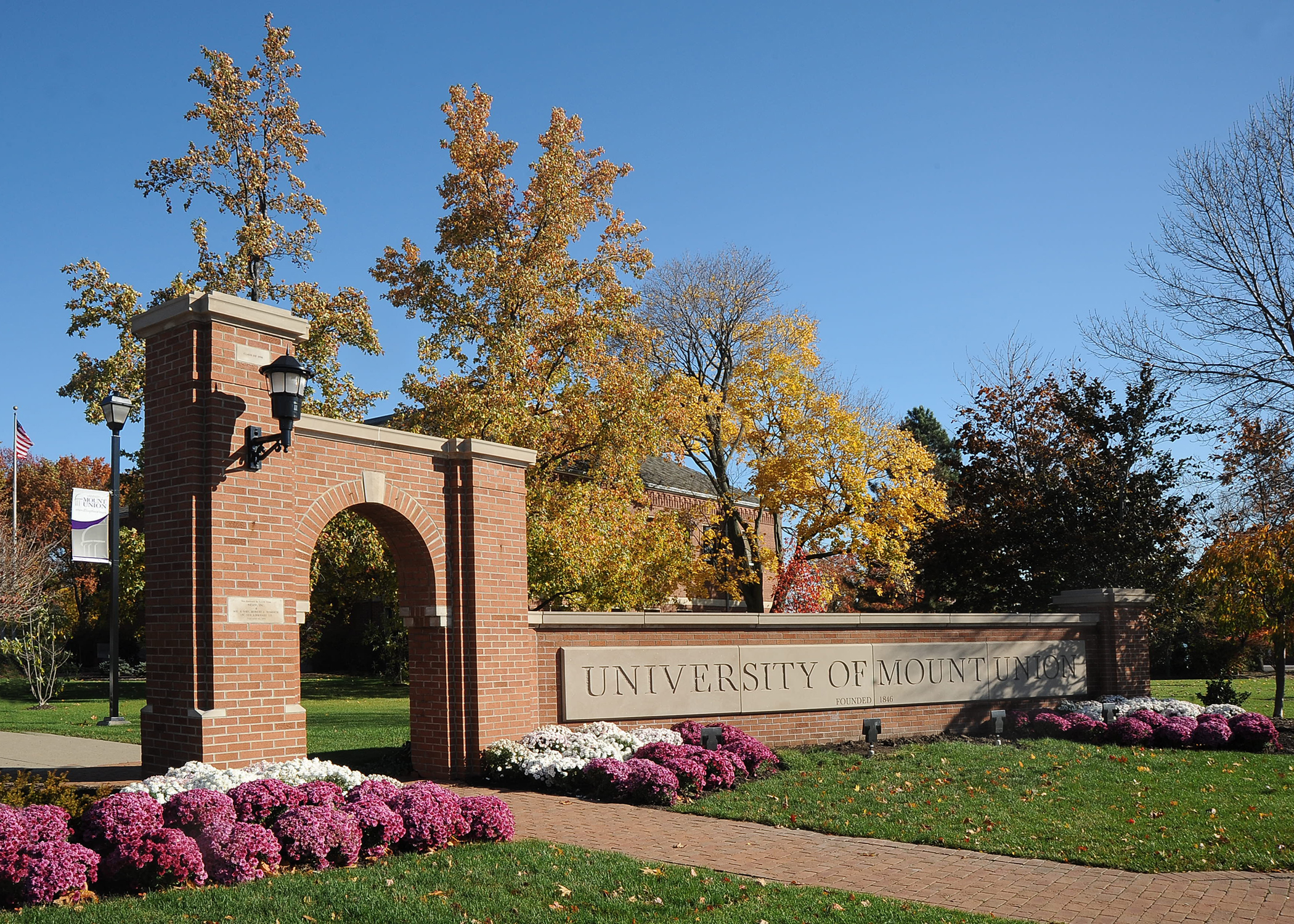
Dr. Colin Campbell serves as an Associate Professor of Physics and Astronomy within the Biochemistry, Chemistry, and Physics Department at the University of Mount Union. He also coordinates the university's data science program, bridging physics and interdisciplinary data-driven research. His teaching portfolio includes foundational courses such as General Physics II, Modern Physics, Thermodynamics and Statistical Mechanics, and Data Science Fundamentals, emphasizing active student engagement and collaborative learning environments. Campbell's research centers on complex systems and network science, applying computational and theoretical physics to diverse domains including ecology, cellular biology, and neuroscience. He investigates phenomena like electrical grid failures, immune system dynamics, and ecological community resilience through network topology and graph theory. His work often involves modeling biological networks using Boolean dynamics to understand emergent behaviors and system stability. Analysis of Campbell's recent publications (2015-2024) reveals a consistent focus on network-based modeling across disciplines. Key themes include plant-pollinator network robustness against species invasions, control strategies for complex networks, and medical physics applications like proton beam therapy optimization. His interdisciplinary collaborations span ecology, neuroscience, and oncology, highlighting the unifying power of network science in solving complex real-world problems. While no specific scientific awards are listed in available sources, Campbell actively mentors undergraduate students, co-authoring publications with them on topics ranging from ecological networks to medical physics. He champions active learning and maintains an 'open door' policy, fostering strong student-faculty interactions both inside and outside the classroom. The Biochemistry, Chemistry, and Physics Department at Mount Union provides research opportunities through faculty-led projects and student organizations. Campbell encourages student involvement in computational physics and data science initiatives, promoting a collaborative and supportive academic environment where students can explore their interests.
Maria Elena Martin Cañadas is an Associate Professor at the Department of Electrical Engineering within the Barcelona East School of Engineering (EEBE) at Universitat Politècnica de Catalunya (UPC). She leads research at the SEPIC group (Power Electronics and Control Systems), focusing on renewable energy integration and power systems optimization. Research Interests: Her work spans power electronics, microgrid design, energy policy analysis, and control systems for distributed generation. Key research areas include: Regulatory frameworks for renewable energy adoption Uncertainty modeling in energy systems High-temperature heat pump technologies Economic optimization of microgrids Solar energy integration and policy analysis Publication Trends: Recent articles (2020-2025) demonstrate strong focus on regulatory impacts in energy systems, with methodologies addressing uncertainty through stochastic modeling and probabilistic analysis. Dominant themes include microgrid optimization, solar policy evolution, and decarbonization strategies for industrial applications. Student Advising & Projects: Supervised doctoral candidates include Alonso (microgrid design), Coronas (distributed generation), and El Mariachet (power quality). Actively leads competitive R&D projects such as: Decarbonization of energy-intensive industries Power quality improvement in remote systems Regulatory framework development for Latin American biogas projects Research Group: Core member of SEPIC laboratory specializing in power electronics applications for sustainable energy systems, collaborating with industrial and international partners.
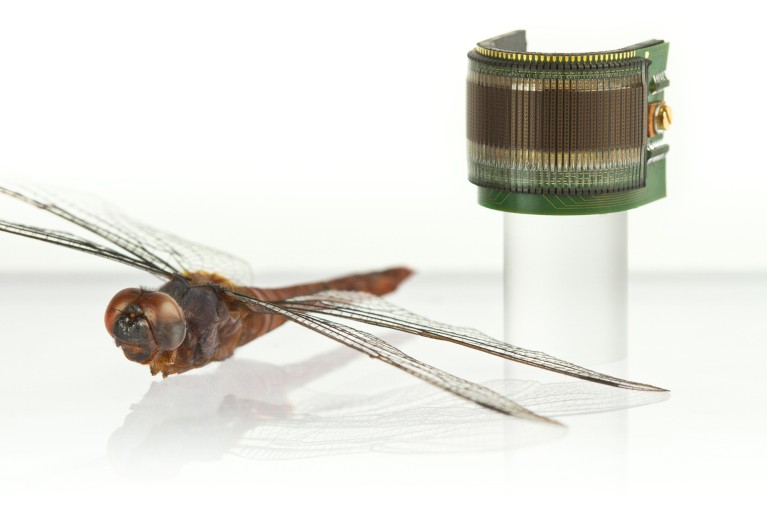
Professor Song Young-min is joining the Department of Electrical Engineering at Korea Advanced Institute of Science and Technology (KAIST) as a Professor, with his appointment beginning July 1, 2025. His research focuses on developing innovative bio-inspired optical systems for robotics, with particular expertise in biomimetic cameras and neuromorphic vision systems. Professor Song's research interests span flexible optoelectronic devices and nanophotonics, with specific applications in biomimetic cameras for intelligent robots , optoneuromorphic devices and systems , nanophotonics-based reflective displays , and infrared-controlled radiative cooling devices . His work bridges electrical engineering, materials science, and biological inspiration to create energy-efficient vision systems that reduce computational demands. His recent publications demonstrate significant advancements in bio-inspired vision technology, particularly in feline-inspired vertical pupil systems that improve object tracking stability and cuttlefish-inspired W-shaped pupil designs for uneven lighting conditions. These innovations show how hardware improvements can substantially reduce energy consumption in robotic vision systems. Professor Song has established significant research collaborations with institutions including MIT (working with Frédo Durand on the Artificial Compound Eyes with Artificial Intelligence project), EPFL, and Northwestern University. His work has been published in high-impact journals including Nature, Science Robotics, and Science Advances. His laboratory focuses on developing next-generation vision systems that integrate biological inspiration with cutting-edge optical engineering, with applications ranging from surveillance robots to autonomous vehicles. Current projects include improving wide-angle imaging capabilities and developing more efficient optic flow processing systems for drone navigation.
Elham Kowsari is a Postdoctoral Researcher specializing in Automation Technology and Mechanical Engineering. Her research focuses on advanced control systems, particularly in forestry machinery automation and sway motion reduction in cranes. She explores nonlinear control strategies for DC microgrids and develops fault detection algorithms for electrical systems, including induction motors and continuous stirred-tank reactors. Her work integrates techniques like Kalman filtering, Gaussian processes, and model predictive control to address real-world engineering challenges. Key research areas include: Motion control and vibration suppression in forestry cranes Stabilization of DC microgrids with complex loads Fault diagnosis in electrical and mechanical systems Elham has collaborated internationally on sensor calibration (Star Tracker-Fiber Optic Gyroscope integration) and nonlinear system analysis. Her 12 peer-reviewed articles since 2014 demonstrate expertise in both theoretical control methodologies and practical industrial applications.