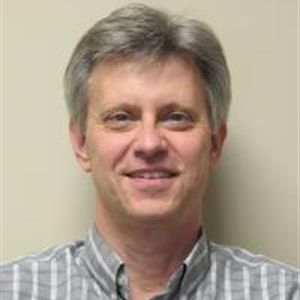
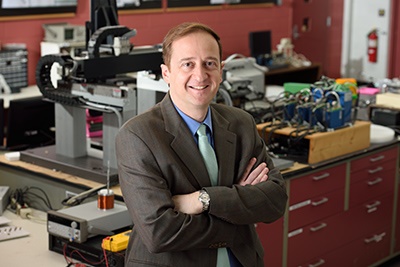
Edmund R. Nowak is a Professor and Department Chair in the Department of Physics & Astronomy at the University of Delaware . His research focuses on spintronic nanostructures , magnetic tunnel junctions , vortex dynamics in superconductors , and granular media dynamics . He has contributed significantly to understanding noise mechanisms in magnetic devices and the development of ultra-sensitive magnetic field sensors. His work also spans material synthesis and characterization of novel semiconductor compounds, such as gallium pnictides and layered materials like BaGa₂Pn₂. His academic leadership includes chairing the Physics & Astronomy department, where he oversees both educational and research initiatives. His research has been published widely, with a focus on experimental and theoretical studies of magnetic nanodevices and their applications in spintronics and sensor technology. Notable contributions include advancing techniques to suppress noise in magnetic tunnel junctions, optimizing sensor performance for picoTesla-level detection, and investigating the effects of annealing on magnetic materials. His interdisciplinary approach bridges condensed matter physics, materials science, and device engineering. Edmund R. Nowak collaborates with industry and academic partners to translate fundamental research into practical applications, such as biodetection systems and low-power magnetometers. His lab at the University of Delaware is equipped for advanced material fabrication, magnetic characterization, and noise analysis.
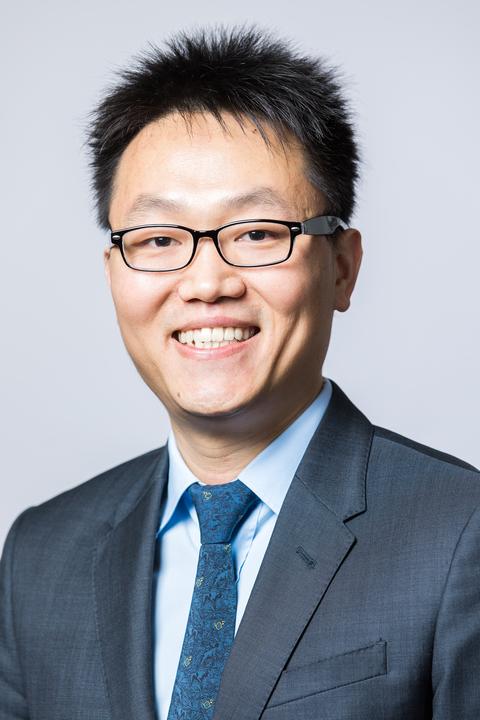
Stella Kapodistria is an Associate Professor at Eindhoven University of Technology's Department of Mathematics and Computer Science, specializing in Stochastic Operations Research. She holds roles as EAISI High Tech Systems Associate Professor and editorial board member of journals like MCAP and PEIS. Her research focuses on data-driven decision-making, stochastic systems optimization, and maintenance policies, with applications in renewable energy, critical infrastructure, and cryptocurrency networks. She has secured grants including NWA-ORC, NWO Big Data, and TKI WoZ, and collaborates with industry partners in the Brainport region. Education: BSc (2003), MSc (2006, Hons.), and PhD (2009, summa cum laude) in Mathematics from the University of Athens. Postdoc at TU/e, followed by roles at Groningen University and TU/e's Stochastic Operations Research group. Teaching includes courses on Optimal Decision Making, Stochastic Performance Modeling, and Financial Mathematics. Research interests emphasize real-time learning, system resilience, and scalable algorithms for complex networks. Recent work addresses maintenance logistics, blockchain confirmation times, and wind energy prediction. She has published over 40 peer-reviewed articles and contributed to the 4TU Resilience Engineering Center. Awards include editorial leadership roles and grant funding. Advised 32 academic works and oversees industrial projects bridging theory and practice. Her labs and collaborations focus on adaptive systems, predictive analytics, and sustainable engineering solutions.
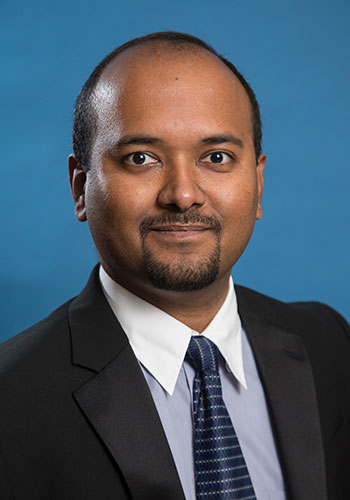
Prof. Ferdinanda Ponci is a Professor at RWTH Aachen University, leading the Department of Monitoring and Distributed Control for Energy Systems. Her work focuses on smart grid technologies, renewable energy integration, and control systems for modern power networks. She actively contributes to advancing grid resilience, EV charging infrastructure, and cybersecurity in energy systems. Key research interests include hybrid AC-DC grids, distributed energy resources coordination, and application of AI in grid management. She has pioneered frameworks like datafev for EV charging management and SMU platforms for synchronized measurements. Her interdisciplinary approach also addresses diversity in engineering and societal impacts of energy systems. Prof. Ponci’s laboratory activities involve hardware-in-the-loop testing, blockchain-based grid solutions, and development of educational toolboxes for emerging technologies. She collaborates on projects such as submarine transmission systems and grid interoperability testing, contributing to both academic and industrial advancements in power systems engineering.
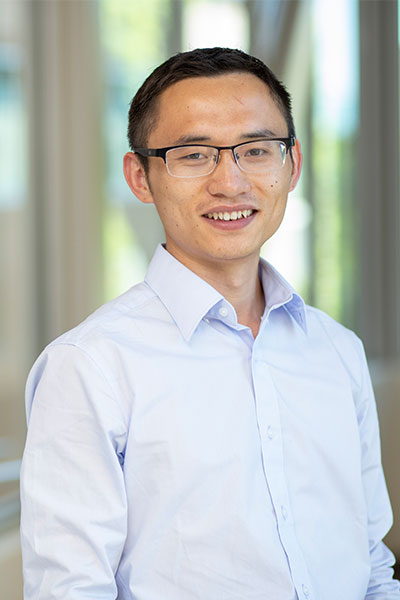
Dr. Wei Sun is a Chancellor's Fellow (equivalent to Assistant Professor) in Energy Systems Integration at the University of Edinburgh's School of Engineering. His research specializes in low-carbon energy systems with high renewable penetration, utilizing data science and optimization techniques. He contributes to major initiatives like the National Centre for Energy Systems Integration (CESI) and Hydrogen’s Value in Energy Systems (HYVE). Research encompasses network integration of distributed energy resources, climate impacts on renewables, and multi-vector energy systems. Recent publications focus on hybrid energy storage, hydrogen integration, and machine learning applications for system optimization. He holds professional credentials as a Chartered Engineer (CEng) with memberships in IET and IEEE. Teaching includes Hydropower Design Projects and Renewable Energy Fundamentals. Visiting research affiliations include University College London, enhancing collaborative networks in energy systems research.
Dr. Harish Sarma Krishnamoorthy serves as Associate Professor in the Department of Electrical and Computer Engineering at the University of Houston, College of Engineering. He holds concurrent roles as Associate Director of the PEMSEC Consortium and Associate Editor of IEEE Transactions on Power Electronics. Ph.D. in Electrical and Computer Engineering (2015), Texas A&M University B.Tech. in Electrical and Electronics Engineering (2008), National Institute of Technology Tiruchirappalli, India His research focuses on high-density power conversion systems with particular emphasis on solid-state transformers for renewable energy integration, machine learning-driven health analytics for power electronics, and converter solutions for extreme environments in aerospace, defense, and subsea applications. Current projects include NSF CAREER-funded work on Edge Intelligence for power converters and DOE ARPA-E OPEN 2021 Mini-PulPS initiative for pulsed power systems. Recent publications highlight advancements in GaN HEMT reliability testing, resonant circuit breaker topologies, and multiport energy routers for hybrid renewable-oil & gas systems. His work spans converter design for 5G communication, NMR metrology, and electric aircraft propulsion architectures. NSF CAREER Award recipient (2023) IEEE PELS Young Professional Exceptional Service Award OTC Emerging Leader recognition (2022) GE 6-Sigma Green Belt Certification Best Presentation Awards at IEEE APEC He teaches graduate courses on power converters, modeling, and renewable energy systems while leading industry-funded research programs with applications in electric vehicles, data centers, and offshore energy systems.
John F. Shortle is a Professor and Chair in the Department of Systems Engineering and Operations Research at George Mason University (GMU), part of the Volgenau School of Engineering. He specializes in applying queueing theory and stochastic processes to aviation safety, air transportation systems, and energy systems. Shortle has led major research initiatives funded by the FAA, NASA, and the Department of Energy, focusing on improving air traffic safety through advanced simulation and risk analysis techniques. Affiliations: Center for Air Transportation Systems Research (CATSR), GMU Education: PhD (UC Berkeley), MS (UC Berkeley), BS (Harvey Mudd College) Research Interests Shortle’s work emphasizes simulation methodologies, queueing theory applications, and stochastic modeling for critical infrastructure systems. Key areas include: Collision risk analysis in air transportation Aviation safety modeling (e.g., wake turbulence, event tree analysis) Energy systems reliability (e.g., blackout analysis) Autonomous systems validation Publications & Awards He co-authored the widely used textbook Fundamentals of Queueing Theory (5th ed., Wiley, 2018) and holds over 100 peer-reviewed publications. Notable awards include the Daniel H. Wagner Prize (2000) and the Military Operations Research Journal Award (2016). Leadership & Service President, INFORMS Simulation Society (2016–2018) Board Member, Winter Simulation Conference (2023–present) Editorial roles: IEEE Transactions on Reliability , Journal of Probability and Statistical Science Teaching Teaches advanced courses in stochastic processes (OR 645), queueing theory (OR 647), and dynamic systems (SYST 320).
Hongjie Wang is an Assistant Professor in Electrical and Computer Engineering at Utah State University, where he serves as co-director of the Utah State University Power Electronics Laboratory and leads the NSF ASPIRE ERC Charging Stations of the Future project. His research focuses on power electronics for transportation electrification, particularly extreme fast charging systems and dynamic wireless power transfer. Research domains include: High-efficiency resonant converter design Grid integration of EV charging infrastructure Second-life battery applications in energy storage Dynamic wireless power transfer for in-motion charging Thermal management of power electronics Recent publications demonstrate innovations in unfolding-based AC-DC converters, load modeling for large-scale charging infrastructure, and reinforcement learning approaches for grid-integrated charging optimization. His work has received multiple best paper awards including recognition from IEEE ECCE and IEEE IAS.
Prof. Victor Grigoras is a faculty member at the Technical University of Iași, holding the rank of Professor. He specializes in electrical engineering and computer science, focusing on signal processing, parallel architectures, and nonlinear dynamics in power systems. His research interests include smart grid technologies, renewable energy integration, and data-driven methodologies for grid optimization. He teaches courses such as 'Semnale, Circuite și Sisteme' and 'Algoritmi și Structuri Paralele de Calcul.' His research spans over 15 recent articles (2021–2025), emphasizing advancements in smart grid automation, machine learning applications in voltage quality analysis, and optimal power flow solutions for renewable integration. Notable trends include SCADA system improvements, energy storage strategies for prosumer grids, and IoT-based energy management. His work addresses challenges in grid reliability, power quality, and future urban grid resilience under high EV adoption scenarios. Prof. Grigoras has contributed to frameworks for electric vehicle charging station placement, hydropower plant optimization via data mining, and demand response mechanisms using smart metering. His methodologies often combine clustering techniques with fuzzy logic or metaheuristic algorithms to solve complex grid problems.
Antonios Papaemmanouil is the Head of the Institute of Electrical Engineering and the Competence Center for Digital Energy and Electric Power at the Lucerne School of Engineering and Architecture (HSLU). He holds an MSc from the University of Patras, Greece, and a PhD from ETH Zurich. His academic rank is Lecturer in the field of Digital Energy and Electric Power. His work focuses on digitalization of power systems, e-mobility integration, and local energy markets. Education: MSc in Electrical Engineering and Information Technology, University of Patras PhD in Power Systems Planning, ETH Zurich Research interests include smart grids, data-driven power systems, digital infrastructure management, and decentralized AI applications. He leads projects such as SWEET RECIPE, LANTERN, and ENFLATE, which address energy transition challenges. His work emphasizes grid analytics, asset management, and innovation in energy systems. Key projects include studies on e-mobility aggregation, federated learning for load forecasting, and stability validation of hydropower plants using Hardware-in-the-Loop. His research outputs span peer-reviewed articles on topics like fault detection in distribution networks and decarbonization strategies for local electricity systems. Professional roles include Track Chair at IEEE Smart Cities Conference 2022 and Co-Guest Editor for Journal MDPI Energies . He actively contributes to Swiss energy initiatives via SwissT.Net and IEEE PES Schweiz.
Ioannis John Papapolymerou serves as the interim dean of Michigan State University's College of Engineering, effective October 2024. He is also an MSU Research Foundation Professor in the Department of Electrical and Computer Engineering (ECE) and director of the MSU Space Electronics Initiative. With a career spanning over two decades, he previously chaired the ECE department for nine years, driving significant expansion and fostering diversity and inclusion. His leadership roles include participation in the Big Ten Academic Leadership Program and the Committee on Institutional Cooperation Department Executive Officer Program. Education: Ph.D. and M.S. in Electrical Engineering from the University of Michigan (1999 and 1994), and a B.S. in Electrical Engineering from the National Technical University of Athens (1993). Research Interests: Focus on RF/microwave/mm-wave/THz circuits, antennas, and packaging for wireless communication systems, sensors, and radars. He pioneered additive manufacturing techniques for RF components and has contributed to the development of flexible antennas and high-power modules. His work integrates nanomagnetic films, aerosol jet printing, and 3D-printed substrates to advance electronics. Awards: Notable recognitions include IEEE Fellow (2011), H.A. Wheeler Prize (2012), and NSF CAREER Award (2002). His research has been supported by federal agencies and industry, yielding over 450 publications, six patents, and co-founding two start-ups in RF electronics and flexible antennas. Labs & Initiatives: Leads the MSU Space Electronics Initiative, collaborating with the Facility for Rare Isotope Beams (FRIB). His lab focuses on innovations in high-frequency electronics, additive manufacturing, and vehicular communication systems.
Haitham Abu-Rub is a Professor at Texas A&M University at Qatar specializing in power systems, renewable energy integration, and power electronics. His research focuses on developing innovative solutions for grid stability, EV charging infrastructure, and intelligent control systems. He has published extensively in IEEE journals and conferences, addressing challenges in smart grids and sustainable energy systems. His work spans power converter design, fault diagnosis, and AI applications in energy management. Recent projects include decentralized PV trading systems, resilient inverter networks, and physics-informed neural networks for insulation diagnostics. Dr. Abu-Rub collaborates internationally on projects involving grid-interactive buildings, digital twins for power converters, and adaptive control techniques for electric vehicle charging.
Vladimir V. Terzija is a prominent researcher specializing in power systems engineering with a focus on smart grid technologies, synchronized measurement systems, and power system protection. His extensive publication record spans over two decades, demonstrating continuous contributions to the field of electrical power engineering across numerous IEEE journals and conferences. Terzija's research primarily centers on advanced power system monitoring, protection, and control methodologies. His work has significantly contributed to the development of synchronized measurement technology applications, fault analysis algorithms, and state estimation techniques for modern power systems. He has pioneered approaches for wide-area monitoring systems, transmission line fault analysis, and integrating renewable energy resources into power grids while maintaining stability and reliability. His research spans from fundamental power system theory to practical implementations addressing contemporary challenges in grid operation. Analysis of his recent publications reveals a strong focus on integrating artificial intelligence and machine learning techniques into power system applications, particularly for condition monitoring, anomaly detection, and predictive maintenance. His work increasingly addresses challenges posed by the energy transition, including grid stability with high renewable penetration, multi-energy system integration, and advanced control strategies for low-inertia power systems. The interdisciplinary nature of his research connects power engineering with data science, optimization theory, and cybersecurity. Throughout his career, Terzija has collaborated extensively with researchers across Europe and internationally, as evidenced by his numerous co-authored publications with institutions worldwide. His work appears consistently in top-tier IEEE publications, indicating recognition by the power engineering community. While specific awards aren't documented in the available publication records, his sustained research productivity and influence in the field suggest significant professional recognition. Terzija has supervised numerous research projects focused on power system monitoring and control, with particular emphasis on practical implementations that bridge theoretical developments with real-world grid applications. His work on WAMS (Wide Area Monitoring Systems), fault location algorithms, and state estimation techniques has contributed to advancing grid operational capabilities. The research trajectory shows increasing focus on addressing challenges associated with renewable energy integration, grid digitalization, and maintaining stability in modern power systems. His research group appears to focus on developing advanced monitoring and control systems for power networks, with particular expertise in synchrophasor technology applications. The collaborative nature of his work suggests involvement in international research consortia addressing contemporary power system challenges, particularly those related to grid stability in systems with high renewable penetration and the development of intelligent monitoring solutions for power infrastructure.
Michael Fowler is a Professor in the Department of Chemical Engineering at the University of Waterloo, cross-appointed to the Department of Mechanical and Mechatronics Engineering. His research focuses on electrochemical power systems, including battery degradation analysis, fuel cell reliability, and clean energy hubs. He leads projects like ChallengeX and EcoCar, developing fuel cell and hybrid vehicles. He teaches CHE 331 (Electrochemical Engineering) and actively supervises graduate students. His work integrates hydrogen economy concepts, renewable energy incentives, and Power-to-Gas energy storage. Key interests span polymer science, interfacial phenomena, and battery thermal management systems. Education: Ph.D. in Chemical and Materials Engineering (2003, Royal Military College of Canada), M.Sc. in Engineering Chemistry (1988, Queen's University), B.Sc. in Fuels and Materials Engineering (1986, Royal Military College of Canada). Research emphasizes modeling fuel cells, battery performance, and electrolyte materials. Recent articles explore lithium-ion battery diagnostics, aluminum-air batteries, and thermal runaway prevention. He collaborates with industries on sustainable energy solutions and advises student teams in green energy systems. His lab focuses on advanced materials for electrochemical systems and energy storage innovations. Current roles include co-faculty supervisor of vehicle design teams and director of the Waterloo Fuel Cell Research Network. He welcomes graduate applications and is involved in developing Canada’s hydrogen transition strategies. His work bridges academic research with practical applications in automotive, renewable energy, and material science sectors.
Moharram Challenger is a tenure-track Assistant Professor in the Department of Computer Science at the University of Antwerp's Faculty of Sciences. Previously, he served as an assistant professor at Ege University (2017-2018) and as a post-doctoral researcher at the University of Antwerp (2019-2020) working on Flanders Make projects PACo and DTDesign. His academic journey includes R&D leadership roles at UNIT IT Ltd. (2012-2016), post-doctoral research at Wageningen University (2016-2017), and tenure-track faculty positions at IAU-Shabestar University (2005-2009). His research spans Cyber-physical Systems , Multi-agent Systems , and Domain-specific Modeling Languages , with recent publications focusing on quantum machine learning, digital twinning, and IoT optimization. Key projects include ITEA ModelWriter, ITEA Assume, and Flanders Make initiatives. His work demonstrates strong integration of model-driven engineering with emerging technologies like quantum computing and reinforcement learning. Challenger actively contributes to the academic community as a member of IEEE and ACM . His publication record shows consistent output across top venues, with 2025 featuring significant work in quantum-enhanced learning and CPS security. Current research emphasizes practical applications in drone energy modeling, medical diagnostics, and industrial IoT systems. His advising activities focus on cyber-physical systems and agent-based modeling, supported by grants from TUBITAK and Flanders Innovation & Entrepreneurship. Key collaborations include European ITEA projects and partnerships with industrial entities through UNIT IT Ltd. Challenger maintains active development through GitHub repositories related to code refactoring, model-driven engineering, and legacy system modernization, reflecting his commitment to practical software engineering solutions.
Professor Nicol McGruer is a Professor in the Department of Electrical and Computer Engineering at Northeastern University, with an affiliation to the Mechanical and Industrial Engineering department. His primary research focuses on MEMS, NEMS, micro/nanofabrication, and related technologies such as RF MEMS, microrelays, and nanoswitches. He directs the Microfabrication Laboratory and Scanning Electron Microscopy Facility. McGruer earned his B.S. in Physics and M.S./Ph.D. in Electrical Engineering from Michigan State University. Notable awards include the Søren Buus Outstanding Research Award and the Joel and Spira Excellence in Teaching Award. His work spans projects like the PLASMID (Plasmonic Microelectromechanical Infrared Digitizer) and Zero-Power Sensor initiatives, funded by DARPA. He has authored numerous high-impact publications in journals like Nature Nanotechnology and IEEE Sensors Journal. Education: Ph.D. in Electrical Engineering, Michigan State University (1983). Research highlights include advancements in microfabrication processes, MEMS device design, and nanoscale material testing. Key collaborations include work with Prof. Matteo Rinaldi on zero-power sensor technologies.