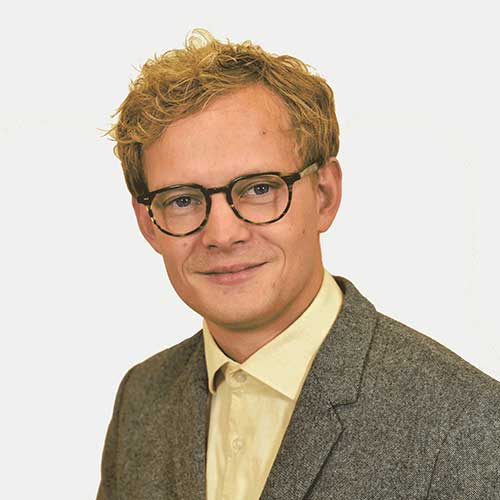
Dr. Sam Hanks is a Lecturer in Criminology at Swansea University's School of Social Sciences. He specializes in researching sex work governance, carceral abolition, and policing practices, with a focus on the Welsh context. Currently, he explores the symbolic power of concepts like protection and vulnerability as tools of social control. He co-directs the Centre for Social Change and runs a prison abolition reading group. His teaching includes criminological theory, research methods, and penal abolitionism modules. Research interests include socio-criminological theory, multi-agency governance, and the intersection of migration/xenophobia with sex work. His recent work critiques carceral systems and advocates for abolitionist frameworks. Key publications analyze sex work regulation, safeguarding delusions in policing, and vulnerabilities faced by migrant sex workers. Dr. Hanks supervises PhD candidates exploring topics like immigration control as a revenue regime, intersectionality in sex work, and female sexual deviance in criminal justice contexts. He is actively involved in collaborative research projects addressing domestic abuse and penal policy.
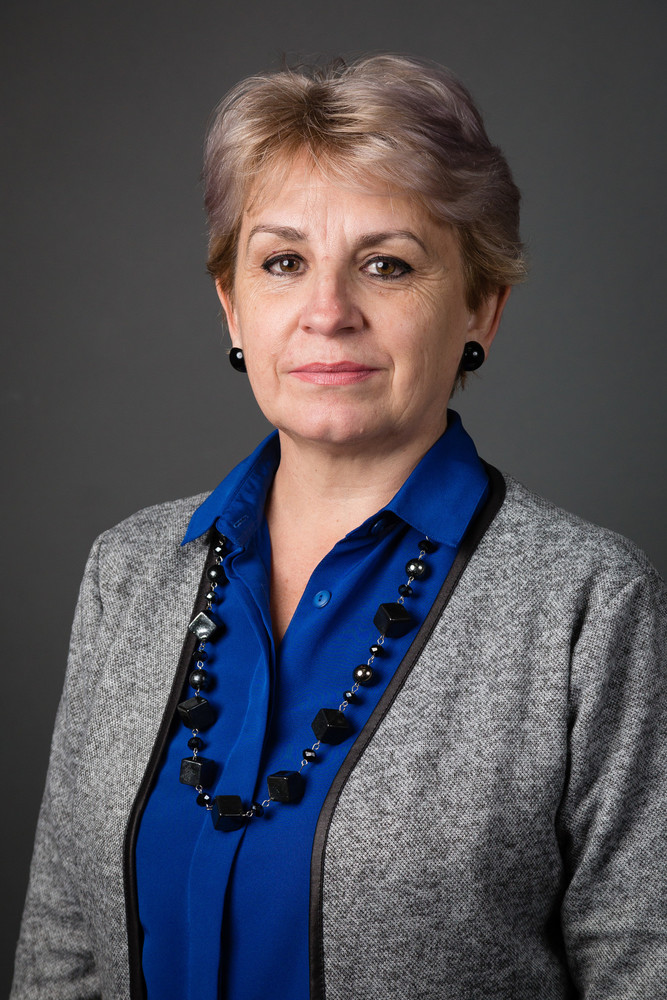
Associate Professor Dr. Camelia Badulescu is affiliated with the Department of Environmental Engineering and Geology at the Faculty of Mining, University of Petroșani. Her work focuses on environmental engineering, waste valorization, biotechnology applications in mineral processing, and sustainable development. She specializes in industrial waste management, circular economy strategies, and pollution control technologies. Research interests include coal desulphuration, heavy metal extraction from industrial byproducts, water treatment methodologies, and the ecological conversion of mining residues. Her work bridges environmental science with practical industrial solutions, emphasizing resource recovery and sustainable practices. Key research trends across her publications include: (1) innovative techniques for waste-to-resource conversion, (2) microbial applications in mineral processing, (3) advanced water treatment systems for industrial effluents, and (4) cross-sectoral approaches to circular economy implementation. These studies often involve interdisciplinary collaborations addressing regional environmental challenges like Jiu Valley mining pollution. No scientific awards have been listed in available materials. Her teaching includes laboratory指导 for water, air, and soil analysis, reflecting her commitment to practical environmental education. While no specific grants or advising data is provided, her extensive publication record indicates active involvement in applied research projects related to mining waste management and energy sustainability. Her work contributes to both academic and industrial sectors through innovations in ecological brick production, FGD gypsum agricultural use, and alternative energy systems from waste materials. Current research likely continues exploring synergies between environmental protection and industrial efficiency in mining regions.
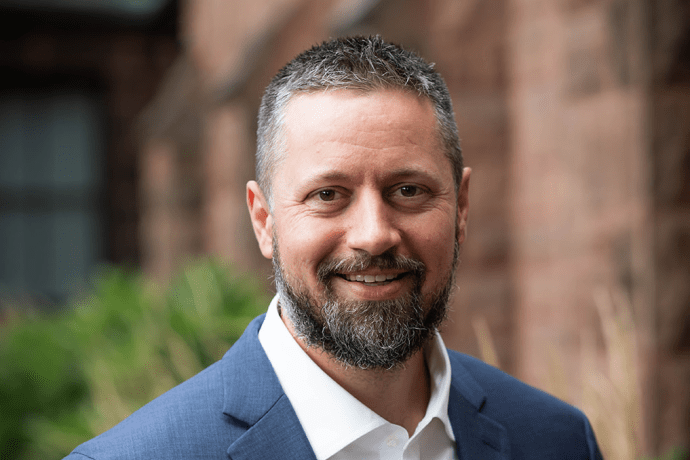
Chenguang Liu is a researcher at Institut Polytechnique de Paris , France, with a focus on computational methods, machine learning, and control systems. His work bridges theoretical and applied research across multiple domains including computer vision, signal processing, and operations research. Key research areas: Machine Learning, Computer Vision, Computational Physics, Control Theory Notable publication trends: Develops novel algorithms for parallel computing, peridynamic modeling, and real-time systems Recent contributions include Bayesian neural networks for gas-bearing prediction, multi-agent reinforcement learning for UAV swarms, and domain adaptation techniques in object detection. He collaborates extensively with researchers in electrical engineering and applied mathematics disciplines.
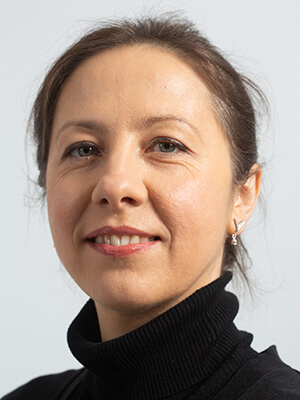
Dr. Ewa Kowalewska is a Professor at the Faculty of Law and Administration, University of Szczecin, specializing in financial market law, banking law, and tax law. She holds a doctoral degree in law from the same institution and has been affiliated with the university since 2012. Her research focuses on financial security frameworks, foreign exchange control, and local taxation systems. She leads the Financial Law Research Team and coordinates the Young Lawyer Academy program. She is also deputy editor-in-chief of the Acta Iuris Stetinensis and Studia Administracyjne journals. Education: Completed legal studies at University of Szczecin (Faculty of Law and Administration), defended doctoral thesis titled "Foreign exchange control exercised by the National Bank of Poland" (2015). She previously worked at the National Bank of Poland's Szczecin branch (1998-2012). Research interests include banking regulation, financial crisis management, tax incentives, and cross-border financial transactions. Her recent work analyzes administrative fines in banking frameworks and comparative central bank roles in foreign exchange oversight. She actively participates in academic councils and quality assurance bodies at both faculty and university levels.
Dr. Branislav Hredzak is a researcher at the Faculty of Engineering , University of New South Wales . His work focuses on power electronics, renewable energy systems, and advanced control strategies for energy storage and smart grids.
Penny Anderson serves as an Associate Tutor in the School of Education at the University of Glasgow, holding the academic rank of Tutor with active teaching and research responsibilities. Her research centers on critical examinations of gendered power structures in educational settings, with primary focus areas: Gender Studies Education Policy Sociology of Education Childhood Studies Discourse Analysis Scottish Education System Specializing in Foucauldian analysis of pastoral power, she investigates how protection discourses manifest in Scottish school-age childcare systems, revealing tensions between nurturing care and institutional control. Her methodology emphasizes critical discourse analysis to unpack gendered power dynamics in educational policy implementation. Her 2025 publication in Gender and Education represents a significant contribution to understanding how childcare frameworks navigate the fine line between supportive mothering practices and restrictive smothering tendencies within Scottish educational contexts. No scientific awards or professional honors are documented in her current institutional profile. Available information does not specify graduate student supervision activities or research grant acquisitions, though her active publication indicates ongoing scholarly engagement within the School of Education.
Feifei Tong is an Adjunct Senior Research Fellow in the School of Engineering at The University of Western Australia , specializing in Civil, Environmental and Mining Engineering . Their research focuses on computational fluid dynamics (CFD) , flow interference around structures , wave hydrodynamics , and coastal wave dynamics . They actively collaborate with international researchers, particularly in Australia and Asia-Pacific regions, addressing challenges in marine renewable energy systems and offshore engineering. Key research areas include hydrodynamic forces on submerged structures, vortex shedding suppression, and flow-structure interaction mechanisms. Their work contributes to sustainable development goals through innovations in subsea cable stabilization, offshore wind farm infrastructure, and underwater datacenter design. Tong holds a PhD in Engineering and has published extensively in top-tier journals like Physics of Fluids and Proceedings of the International Conference on Offshore Mechanics and Arctic Engineering (OMAE) . Recent studies analyze wake transitions, oscillating cylinder dynamics under various flow conditions, and hydrodynamic damping mechanisms. Their research bridges experimental tank testing and advanced CFD simulations, yielding practical solutions for marine energy transmission and coastal protection systems.
Alexander H. Montgomery is a Professor of Political Science at Reed College in Portland, Oregon. He serves as Chair of the International Affairs & Political Policy (IA&PP) program and the Center for Political and Policy Studies (CPPC). Additionally, he is a Nonresident Senior Fellow at New America, focusing on international relations, social network analysis, science and technology studies, and weapons of mass destruction. His research interests span nuclear politics, strategic stability, and the intersection of emerging technologies with international security. He has authored numerous publications analyzing proliferation networks, conflict escalation dynamics, and the role of norms in warfare. His work often employs network analysis methodologies to explore complex political systems. Montgomery teaches courses on WMD Proliferation and Network Analysis at Reed College. His academic contributions include critiques of futurism in defense policy and examinations of noncombatant immunity norms. He maintains an active presence on Bluesky, engaging with current events and energy policy discussions. He holds a PhD in Political Science and has held research affiliations with institutions such as the Center for International Security and Cooperation (CISAC) at Stanford University. His email is ahm@reed.edu, and his professional page is available at alexmontgomery.com.
Dr. Adriana Boersner Herrera is an Assistant Professor of Political Science at The Citadel since 2023. She teaches International Politics, Latin American Affairs, and Democracy and Dictatorship. Her academic background includes a Ph.D. in Political Science from the University of Missouri, an M.A. in Political Science from Universidad Simón Bolívar (with honors), and a B.A. in International Studies from Universidad Central de Venezuela. Her research focuses on Venezuelan politics , Russia-Latin America relations , authoritarian regimes , and comparative foreign policy . Recent work explores Maduro's foreign policy strategies, Russian influence in Latin America, and the intersection of domestic and international factors in authoritarian consolidation. Her publications (2020–2025) analyze topics such as Venezuelan authoritarianism, Russian strategic alliances, and regional geopolitical dynamics. Articles often combine historical analysis with contemporary case studies, emphasizing how authoritarian states leverage international ties to survive domestic crises. No scientific awards or grants are explicitly mentioned in the provided texts. She has no listed advisees, though her research areas suggest potential supervision of students focusing on Latin American politics, authoritarianism, or Russian foreign policy. Dr. Boersner Herrera’s work bridges academic rigor with real-world policy implications, offering critical insights into how authoritarian regimes navigate global systems despite economic and political sanctions.
Cristina Fernández Bessa is a faculty member at the University of A Coruña (UDC), specifically in the Faculty of Law's Department of Criminal Law. She holds a research-focused academic position (PDI Investigación) and teaches Criminology in the Law Degree program as well as Migration Policies and Migration Law in the Master's Degree in Social Policies and Socio-Community Intervention. Her research interests center around criminology, migration control, police practices, prison systems, and human rights. She has developed a substantial body of work examining the intersection of migration governance and criminal justice systems, with particular attention to border control mechanisms and their human rights implications. Her recent publications (2021-2024) reveal a consistent research trajectory focused on migration governance, border control, and human rights within criminal justice frameworks. These works appear in respected journals across criminology, criminal justice, and social sciences, demonstrating interdisciplinary engagement with migration studies, penal policies, and human rights frameworks. As a principal investigator, she leads multiple research projects funded by the Ministry of Education, Science, Universities and Vocational Training; the Ministry of Science, Innovation and Universities; the Xunta de Galicia; and the European Commission. Her research team collaborates extensively with international scholars across Europe and Latin America. Dr. Fernández Bessa actively supervises bachelor's and master's theses on topics including migration policies, human rights protection, and criminal justice systems. Her students work on contemporary issues such as temporary protection programs for human rights defenders, migratory processes, and collective resistance practices.
Jonathan Remy Nash serves as the Robert Howell Hall Professor of Law at Emory University School of Law in Atlanta, Georgia. With an extensive scholarly record including 52 publications and significant impact in legal academia (ranked 11,737 in total papers downloads with 8,909 total downloads), Professor Nash has established himself as a prominent legal scholar with expertise spanning constitutional law, criminal procedure, federal courts, and administrative law. His work frequently appears in top-tier law journals including the Yale Law Journal, Virginia Law Review, and Northwestern University Law Review. Professor Nash's research interests demonstrate remarkable breadth and depth across multiple legal domains. His scholarship on constitutional law examines the unconstitutional conditions doctrine, standing doctrine, and federalism issues, while his criminal procedure work addresses prosecutorial discretion, bad faith prosecution, and the intersection of constitutional rights with criminal justice. In administrative law, he has made significant contributions to understanding Chevron deference, agency budgets, and regulatory production. His environmental law scholarship focuses on grandfathering provisions, transition relief, and pollution control mechanisms. Notably, Professor Nash frequently employs empirical methods to analyze judicial behavior, collegiality, and decision-making processes across various legal contexts. Analysis of Professor Nash's recent publications reveals a sophisticated interdisciplinary approach that bridges traditional doctrinal analysis with empirical and economic perspectives. His work increasingly examines the intersection of constitutional doctrine with practical enforcement mechanisms, particularly in criminal procedure and federal courts contexts. There's a clear trend toward examining how theoretical legal principles operate in real-world settings, with particular attention to vulnerable populations and the practical impacts of legal doctrines. His scholarship demonstrates consistent engagement with both foundational legal principles and emerging contemporary challenges in the legal system. Professor Nash has maintained a robust collaborative research agenda, frequently working with prominent scholars including Richard L. Revesz, Michael G. Collins, Kay L. Levine, Robert A. Schapiro, and Jonathan S. Masur. His research has been supported through institutional affiliations that provide the resources necessary for rigorous legal scholarship. While specific grant information isn't detailed in the available materials, his extensive publication record suggests sustained research support. Professor Nash maintains active engagement with the legal community through amicus brief submissions, including work on significant cases like Ford Motor Co. v. Montana Eighth Judicial District Court. His scholarship demonstrates consistent relevance to contemporary legal debates and judicial decision-making across multiple domains of law.
Andrew G. Reiter is a Professor of Politics and International Relations at Mount Holyoke College , specializing in political violence, transitional justice, and civil-military relations. His work bridges academic research with real-world policy through consulting for international organizations like the United Nations and governments including Colombia. Education: Ph.D. and M.A. from the University of Wisconsin-Madison; B.A. from Loras College Reiter’s research explores democratic transitions , focusing on how societies address historical human rights violations through mechanisms like war crimes trials, truth commissions, and amnesty laws . He co-founded the Transitional Justice Data Base Project, which produced the first global dataset on transitional justice mechanisms. Key trends in his publications include comparative analysis of military courts across Latin America, the effectiveness of transitional justice in post-conflict democracies, and the strategic use of violence in peace agreement implementation. His 2023 article Military Legal Power, Unchecked examines institutional power struggles in democratic governance. Scientific Awards: Choice Outstanding Academic Title for Military Courts, Civil-Military Relations, and the Legal Battle for Democracy (2022) Reiter has received grants from the National Science Foundation (NSF) , United States Institute of Peace (USIP) , and Smith Richardson Foundation . He co-teaches courses on World Politics, Transitional Justice , and Ending War and Securing Peace . His media presence includes appearances on PBS Nova and contributions to outlets like The Washington Post and The Boston Globe .
Elena Atienza Macias is a Ramón y Cajal Researcher and Constitutional Law Lecturer at the University of Deusto, affiliated with the Faculty of Law. She also teaches at the Deusto Business School and the Faculty of Social and Human Sciences. Her research is deeply interdisciplinary, spanning sports law, bioethics, health law, and human rights, with a particular focus on doping in sport, genetic interventions, and transgender rights. She has been a long-term member of the 'Cátedra de Derecho y Genoma Humano' at the University of the Basque Country (UPV/EHU), a research group recognized as 'Excellent' by the Basque Government. Ph.D. in Law, University of Deusto, Universidad Pontificia Comillas (ICADE), Universidad Ramón Llull-ESADE (2016) Master's in Fundamental Rights and Public Powers, University of the Basque Country (2012) Law Degree, University of Deusto, Specialization in Private and Business Law (2005) Her research interests lie at the intersection of law, ethics, and science, particularly in bioethics , constitutional law , and sports regulation . She explores legal responses to emerging technologies such as genetic doping, end-of-life decisions, and environmental chemical regulation. Her work emphasizes the protection of fundamental rights, including athlete privacy, mental health, and the rights of marginalized communities like transgender individuals. The 15 most recent articles reflect a strong thematic continuity in doping regulation , bioethical implications of biotechnology , and health law . Her publications span journals in law, sports, public health, and bioethics, demonstrating interdisciplinary reach. Key subfields include genetic doping, mental health in sports, anti-doping controls, privacy rights, and legal frameworks for human enhancement. Thesis awarded Outstanding Cum Laude and International Mention XVI Andalusian Association of Sports Law Legal Award Premio 2013 Law & Science Young Scholar ECLT Prize Premio a la Mejor Comunicación at XX Jornadas sobre Derecho y Genoma Humano (2013) Elena Atienza has secured competitive research grants, including a postdoctoral fellowship from the Basque Government (ranked #1 in Law) and a national Juan de la Cierva postdoctoral grant. Since 2023, she holds a prestigious Ramón y Cajal research position at the University of Deusto, funded by the Ministry of Science and Innovation. She has also been involved in international research collaborations, including stays at the University of Coimbra and participation in networks like the International Network of Humanistic Doping Research (Aarhus University). She has directed the Expert Diploma in Health Law and served in editorial leadership roles, including as Coordinator of the Revista de Derecho y Genoma Humano . She is a member of the research group 'European Integration and Property Law in a global context' at the University of Deusto and has been part of the 'Cátedra de Derecho y Genoma Humano' at UPV/EHU. She has also been involved in organizing major academic conferences such as the REMEDiE Closing Conference and EURSAFE 2010. Currently, she leads research projects on the legal protection of transgender individuals, funded by the Basque Government.
Iryna Yevseyeva is an Associate Professor in Computer Science at De Montfort University, affiliated with the Faculty of Computing, Engineering and Media and the School of Computer Science and Informatics. She leads the Cyber Security subject group and serves as Deputy Director of the Cyber Technology Institute. Her academic journey includes research roles at Newcastle University, the University of Leiden, Polytechnic Institute of Leiria, INESC Porto, and the University of Algarve. PhD in Multicriteria Decision Aiding, University of Jyväskylä, Finland Postdoctoral experience in the Netherlands, Portugal, and the UK Fellow of the Higher Education Academy (FHEA) Her research focuses on the application of operational research methods—particularly multi-criteria decision analysis and multiobjective optimization—to critical challenges in cyber security, including risk assessment, investment decisions, threat intelligence, and human behavior. She integrates decision science with cybersecurity to develop practical, data-driven frameworks for security governance and incident response. The recent publications highlight a strong trajectory in applying advanced computational and optimization techniques to cybersecurity problems. Themes include evolutionary optimization for privacy metrics, gamified training for incident response, human error modeling (IS-CHEC), and portfolio optimization in both drug discovery and security controls. The interdisciplinary nature spans computer science, operational research, behavioral psychology, and healthcare informatics. DMU Commercialisation Award (2018) Academy of Finland Grant (2008) Erasmus Mundus Grant (2008) Iryna has supervised 4 PhD students to completion and currently co-supervises 5 others. She has led over 10 research projects and secured more than 10 small grants as Principal Investigator, along with industrial grants from Innovate UK and Airbus. Her academic service is extensive, including guest editing for Springer journals, organizing international workshops (LeGO 2018, EMO 2023 track), and peer reviewing for top-tier journals and funding councils like EPSRC, MRC, and Horizon2020. She is actively involved in the Cyber Technology Institute and leads research within the Multi-Criteria Decision Making and optimization domain. Her collaborations span Brazil (Unijuí), Finland, the Netherlands, and Portugal, reflecting a globally connected research profile.
Maria Jenisha Charles Thanasingh Packiaraj is a Lecturer in Electrical Engineering at the School of Computing, Engineering and Digital Technologies, Teesside University, UK, where she has been serving since October 2022. She leads the Electrical Power Systems module at Level 6 and tutors in Electronic Principles and Microgrid courses, while also supervising undergraduate and postgraduate dissertation projects. Post Graduate Certificate in Learning and Teaching in Higher Education (PgCLTHE), Teesside University (Awarded: 29 Aug 2024) PhD in Power Electronics Applications in Renewable Energy Systems, National Institute of Technology Tiruchirappalli (Awarded: 24 Aug 2019) Master of Engineering in Power Electronics and Drives, Infant Jesus College of Engineering, India (Awarded: 31 May 2014) Bachelor of Engineering in Electrical and Electronics Engineering, PSG College of Technology, India (Awarded: 31 May 2012) Her research spans renewable energy integration , power electronics , microgrids , smart grids , energy storage , and electric vehicle charging . She focuses on advanced control techniques like Fuzzy-PID controllers , unintentional islanding detection , and AI-driven battery management , contributing to sustainable and resilient energy systems. The recent publications highlight a strong trend in grid-connected renewable systems , islanding detection without communication , offshore wind turbine control , and AI-enhanced charging technologies . These works reflect expertise in both theoretical modeling and practical implementation, particularly in power conversion, control algorithms, and system resilience. Dr. Charles Thanasingh Packiaraj is actively involved in research funding and supervision. She serves as Co-Investigator on the Royal Academy of Engineering-funded project AI-Driven Adaptive Fast Charging for Electrical Vehicles – Empowering Skills and Curriculum Development , which also emphasizes education and workforce development. She is open to PhD supervision and collaborative research projects in her domain. Her research contributes to key themes in modern power systems, including decentralized energy , smart control , and sustainable electrification . She collaborates with researchers in power electronics, renewable integration, and intelligent transportation systems, forming part of a dynamic network advancing clean energy technologies.