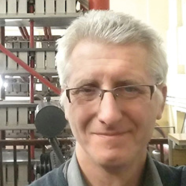
Dr. Marek Olesz is a Professor at the Department of Electrical Power Engineering, Faculty of Electrical and Automation Engineering, Gdańsk University of Technology. His research encompasses high-voltage engineering, insulation diagnostics, partial discharges, and electromagnetic compatibility. He holds leadership roles in organizations including the Polish Society of Theoretical and Applied Electrical Engineering (Chairman) and the Polish Committee for Lightning Protection (Vice-Chairman). Research interests include: Quality of electricity and electromagnetic compatibility in power systems Degradation mechanisms in polyethylene insulation Partial discharge measurement techniques for cable and transformer diagnostics Innovations in surge arrester testing and high-voltage line design His recent publications (2023-2025) focus on AI-driven transformer lifetime prediction, CNN-based corrosion classification in cables, and safety enhancements for photovoltaic systems. Notable projects include: Pylon 2 : Developing innovative structures for high-voltage lines with integrated communication systems. Stratus : Creating high-power electromagnetic pulse systems for UAV countermeasures. Dr. Olesz is an active member of the High Voltage Team , which researches short-circuit dynamics, insulation degradation, and power quality. He has supervised 200+ teaching activities but no specific advisees are listed.
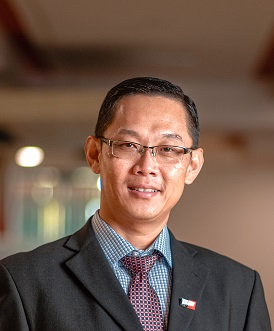
Professor Su Hieng Tiong serves as Dean and Professor of the Faculty of Engineering, Computing and Science at Swinburne University of Technology Sarawak Campus. With a PhD from the University of Birmingham and BEng (Hons) from Liverpool, he brings over 25 years of combined industry and academic expertise in electrical engineering. Education PhD in Electronic and Electrical Engineering, University of Birmingham, UK (2001) BEng (Hons) in Electrical Engineering and Electronics, University of Liverpool, UK (1994) Research Focus : Professor Su's work centers on RF and Microwave Engineering , with pioneering contributions to RF energy harvesting systems , compact multimode resonator filters , and substrate integrated waveguide technology . His research bridges theoretical microwave principles with practical implementations for next-generation communication systems, particularly addressing challenges in spectrum efficiency and rural connectivity. Publication Trends : Recent publications (2020-2022) demonstrate strategic expansion into real-world applications including TV white space antennas for rural Sarawak and cost modeling for internet infrastructure. Earlier work (2012-2015) established foundational innovations in multimode filter design, showing consistent progression from component-level research to system-level implementations. Research Leadership : Professor Su has secured major grants including Principal Investigator roles for Digital Sarawak's rural infrastructure project (2019-2021) and Ministry of Education's ultra-compact filter study (2011-2013). His active supervision of research students focuses on translating theoretical microwave concepts into deployable communication solutions.
Vivita Pukite is a Professor at the Latvia University of Life Sciences and Technologies within the Department of Land Management and Geodesy. She obtained her Dr.oec. degree from the same institution. Her research focuses on sustainable land management and geospatial solutions, with particular emphasis on: Geospatial analysis of degraded lands and rehabilitation strategies Innovative property valuation techniques using AI and fuzzy logic Infrastructure impact assessments (energy, transportation) Urban development and green territory planning Cadastral surveying and land use optimization Her recent publications (2019-2025) demonstrate strong focus on geospatial applications in land science, with increasing emphasis on renewable energy siting (wind/solar) and cross-national valuation methodologies. Research frequently employs GIS, remote sensing, and computational modeling approaches. Collaborative works indicate active partnerships with European and Brazilian researchers. No research laboratory, student advising relationships, or scientific awards are documented in available records. All affiliations remain centered at Latvia University of Life Sciences and Technologies without indication of part-time status or additional appointments.
Professor Andrzej Demenko is a distinguished academic at Poznań University of Technology, where he holds a position in the Institute of Electrical Engineering and Industrial Electronics within the Faculty of Automatic Control, Robotics and Electrical Engineering. He serves as Chairman of the Committee on Electrical Engineering of the Polish Academy of Sciences, demonstrating his significant standing in the national academic community. His career spans several decades, beginning with his doctoral dissertation in 1975 on modeling magnetic circuits of electrical machines using potential field analyzers. Professor Demenko's research focuses on computational electromagnetics, electrical machine analysis and design, finite element methods, and power system safety. His work particularly emphasizes permanent magnet synchronous motors, field-circuit coupling approaches, and electromagnetic phenomena in nonlinear circuits. He has made significant contributions to understanding squirrel cage design in motors, temperature effects on motor performance, and the development of numerical methods for electromagnetic field calculations. Analysis of his recent publications (2015-2024) reveals a continued focus on advanced electrical machine design, particularly permanent magnet synchronous motors, with increasing attention to optimization techniques, thermal effects, and control strategies. His work consistently combines theoretical developments with experimental validation, demonstrating practical relevance alongside theoretical rigor. Professor Demenko has supervised five doctoral dissertations to completion and has reviewed numerous others, indicating his commitment to academic mentorship. His publication record is substantial, with 65 articles, 61 book chapters, and 11 books or edited volumes spanning several decades of research. As an active researcher, Professor Demenko continues to contribute to the field through ongoing projects, editorial work for international conferences like the Electromagnetic Phenomena in Nonlinear Circuits (EPNC) symposium series, and collaborations with researchers worldwide. His work bridges theoretical developments in computational electromagnetics with practical applications in electrical machine design and power system safety.
Bogdan State is a Lecturer (Teaching) at the School of Information Management, Victoria University of Wellington. He specializes in computational social science with a focus on the intersection between computer science and social sciences. His academic journey includes MA and PhD degrees in Sociology and an MS in Computer Science from Stanford University, plus a BA in History and Sociology from Amherst College. After 12 years working as a data scientist in Silicon Valley companies, he returned to academia full-time in 2025. His research interests center on the complex interaction between computers and social systems. Key areas include using digital trace data to understand social phenomena like migration, examining the geography of social networks, analyzing social ties at micro-sociological levels, developing socio-technical perspectives on recommender systems, and investigating human-AI interaction differences. Recently, he has developed interest in information behavior and risk management in wilderness settings through his involvement in New Zealand's outdoor community. His publication record demonstrates a consistent focus on digital methods for understanding social phenomena. His work spans computational social science, network analysis, migration studies, and digital demography. His most recent research shows increasing application of advanced computational methods to ecological monitoring and forest canopy analysis, while maintaining his core focus on social network structures and digital communication patterns. At Victoria University of Wellington, Dr. State teaches in the Master of Professional Business Analytics (MBUA) programme, focusing on courses that build real-world analytical skills and introduce students to data science. His teaching portfolio includes courses such as Data, Analytics & Insights; Business Analysis Project; Digital Innovation and Strategy; and Communication and Critical Thinking in Information Management. He returned to academia full-time in 2025 after his industry experience, bringing practical data science expertise to his teaching. Dr. State maintains an active presence in computational social science research, with publications appearing in journals like Social Networks, Social Psychology Quarterly, and PLOS ONE, as well as major conference proceedings including WWW and ICWSM. His work bridges theoretical social science with practical computational methods, making significant contributions to understanding how digital technologies shape and reflect social structures.
Dr. Adam Lamęcki serves as an Associate Professor at Gdańsk University of Technology within the Faculty of Electronics, Telecommunications and Informatics. His primary affiliation is with the Department of Microwave and Antenna Engineering, where he conducts research on advanced microwave components and electromagnetic systems. Contact information includes email adalamec@pg.edu.pl and phone +48 58 347 2917. His research focuses on microwave filter design , antenna engineering , and computational electromagnetics , with particular expertise in 3D-printed components, dispersive-delay structures, and multipactor simulation. Recent work demonstrates innovation in coaxial-line filters for Earth observation systems, compact beam-switching antennas for ISM bands, and self-equalized Chebyshev microwave filters using frequency-variant coupling networks. Analysis of his 2024-2025 publications reveals strong emphasis on practical RF component implementation and open-source simulation tools , with applications spanning telecommunications, satellite systems, and industrial microwave devices. His work consistently bridges theoretical microwave theory with experimental validation. Lamęcki leads significant research projects funded through Poland's National Science Center, including PRELUDIUM BIS and OPUS grants focused on advanced mesh deformation techniques for electromagnetic structure optimization. His projects operate within the Faculty of Electronics, Telecommunications and Informatics under agreements UMO-2020/39/O/ST7/02897 and UMO-2013/09/B/ST7/04202.
Prof. Dr. Alfred Höß is a Professor of Electrical Engineering at the Amberg-Weiden University of Applied Sciences, where he has served since 1995. He chairs the examination committee for multiple engineering programs including Electrical and Information Technology, Software Systems Technology, and Industrial IT. His academic leadership extends through over a decade of service on the university senate and various planning committees. Dr. Höß completed his electrical engineering studies at Friedrich-Alexander-Universität Erlangen-Nürnberg (1983-1987), earning his diploma with distinction in 1988. He earned his PhD from Ruhr-Universität Bochum in 1991 with distinction, followed by industry experience at Siemens AG in both medical and automotive divisions before joining academia. Friedrich-Alexander-Universität Erlangen-Nürnberg: Electrical Engineering (1983-1987) Ruhr-Universität Bochum: PhD in High-Frequency Technology (1988-1991) His research spans cutting-edge automotive technologies with particular focus on autonomous driving systems, electric mobility solutions, and wireless communication architectures. Dr. Höß leads multiple EU-funded research projects including Archimedes, AI4CSM, AUTBUS, and Powerized, with emphasis on practical implementations for real-world transportation challenges. His work integrates artificial intelligence with edge computing to solve complex problems in vehicle communication, battery management, and autonomous navigation systems. His publication portfolio demonstrates strong emphasis on practical applications of machine learning in automotive contexts, particularly in range prediction for electric vehicles, federated learning for battery management, and communication systems for autonomous vehicles operating in challenging environments. His research shows consistent progression from fundamental electrical engineering principles to advanced AI integration in transportation systems. Dr. Höß has received notable academic recognition including the Diplompreis Elektrotechnik in 1988 and the Gebrüder-Eickhoff-Preis in 1992 for his doctoral work. Diplompreis Elektrotechnik (1988) Gebrüder-Eickhoff-Preis (1992) He actively mentors numerous graduate students across multiple research projects, supervising master's theses and research assistantships. His laboratory for electrical measurement technology serves as the foundation for hands-on student research. Dr. Höß secures substantial research funding through EU projects and industry collaborations, focusing on practical implementations of advanced automotive technologies. His administrative leadership includes chairing examination committees for multiple engineering programs, demonstrating his commitment to academic excellence and curriculum development. Dr. Höß directs the Electrical Measurement Technology Laboratory at Amberg-Weiden UAS, which serves as the primary research facility for his automotive electronics work. His research teams collaborate across multiple EU-funded projects including ADACORSA for drone communications, PRYSTINE for programmable automotive intelligence systems, and AUTBUS for rural autonomous transportation solutions. These interdisciplinary teams combine expertise in electrical engineering, computer science, and applied mathematics to tackle complex challenges in modern mobility systems.
Xinlei Chen serves as Professor of Marketing at Cheung Kong Graduate School of Business (CKGSB), with prior faculty appointments at Shanghai Advanced Institute of Finance (SAIF) and University of British Columbia. His academic foundation includes a B.E. from Tsinghua University and Ph.D. in Marketing from University of Minnesota. His educational background features: B.E. in Engineering, Tsinghua University Ph.D. in Marketing, University of Minnesota (Carlson School) Chen's research centers on empirical industrial organization and consumer decision modeling, with specific expertise in pricing strategy, advertising effectiveness, channel management, and entertainment economics. His work bridges theoretical structural modeling with real-world applications in digital platforms, video gaming, and social networks, emphasizing how consumers process information and firms optimize competitive strategies in dynamic markets. Recent investigations examine gender dynamics in online competition and advertising spillovers in short-form video ecosystems. Analysis of his publication trajectory reveals consistent focus on marketing science fundamentals while evolving toward digital economy applications. Early work established foundations in movie economics and private label competition, transitioning to contemporary investigations of platform markets, mobile advertising fraud, and social network effects. His methodology combines rigorous econometric techniques with field experiments, particularly evident in 2025 ByteDance research and mobile ad fraud studies. His scientific recognition includes: MSI Young Scholar (2009) Two-time Long Term Impact Award Finalist (Society for Marketing Science, 2018 & 2020) Carlson School Dissertation Award (2003-2004) Multiple doctoral consortium fellowships (INFORMS, AMA-Sheth) Chen demonstrates extensive teaching impact across executive education, MBA, and doctoral programs at CKGSB, SAIF, and UBC, complemented by industry experience as project manager at ABB and China-Machine Building International. His business-oriented scholarship extends to authored books on Chinese internet markets and regular commentary in major business media. Current research activities include field experiments on cross-media advertising and pandemic exercise behavior through digital platforms.
Dr. David G. Smith is an Associate Professor at Johns Hopkins University's Carey Business School with expertise in social psychology, inclusive leadership, and gender dynamics in the workplace. A former Navy pilot with 30 years of service including combat missions in Iraq and Afghanistan, he brings unique practical experience to his academic work. His research focuses on critical workplace issues including: Male allyship in gender equity initiatives Inclusive mentoring and sponsorship across gender lines Bias in performance evaluations Retention and advancement of women in professional fields Dual career families, particularly in military contexts Dr. Smith is the co-author of two influential books: Good Guys: How Men Can Be Better Allies for Women in the Workplace (2020), which won the Axiom Business Book Award, and Athena Rising: How and Why Men Should Mentor Women (2016). His recent publications show a consistent focus on practical applications of gender equity research with increasing attention to intersectional approaches that consider race alongside gender. His scholarly recognition includes: 2021 Axiom Business Book Award Gold Medalist Charles H. Coates Awards for Military Sociology research (2017, 2010) Omicron Delta Kappa and Alpha Kappa Delta honors 2024 appointment to the Defense Advisory Committee on Women in the Services Dr. Smith teaches courses in Behavioral Science, Strategic Management, and Organizational Leadership at Johns Hopkins, drawing on both his military command experience and academic research. Through Workplace Allies, his partnership with Dr. Brad Johnson, he works with major organizations to implement effective gender inclusion programs that deliberately engage men as allies in workplace equity initiatives. His research lab, Workplace Allies, focuses on translating academic findings into practical tools for organizational change, with particular emphasis on how men can effectively support women's advancement in professional settings.
Line Jespersgaard Jakobsen serves as a Research Fellow at the Department of Food and Resource Economics within the Faculty of Science at the University of Copenhagen, specializing in the Section for Global Development. Based at Rolighedsvej 23 in Frederiksberg, Denmark, her work bridges academic research and practical development challenges with regional expertise in Colombia. Contact details include email line@ifro.ku.dk and phone +4535329420. Her research program critically examines: Transitional justice implementation in post-conflict societies, particularly Colombia's adaptation of global norms Corporate complicity in conflict through counterinsurgency practices and extractive industry operations Ethnographic analyses of coal mining sites, corporate complaints mechanisms, and community-corporate power dynamics Land dispossession risks facing artisanal miners and alternative livelihood frameworks Political ecology of resource extraction and corporate social responsibility ambiguities Analysis of her 2023-2025 publications reveals a methodological commitment to ethnographic fieldwork combined with critical policy analysis. Her work demonstrates how global transitional justice scripts are negotiated locally while exposing corporate strategies in conflict-affected extractive zones. Key thematic clusters include corporate accountability in post-conflict settings, subjectivity formation in mining communities, and tension between global norms and local realities. No scientific awards, fellowships, or major prizes were documented in available sources. Information regarding graduate student supervision, research grant acquisition, or dedicated laboratory facilities remains unspecified beyond her affiliation with the Section for Global Development.