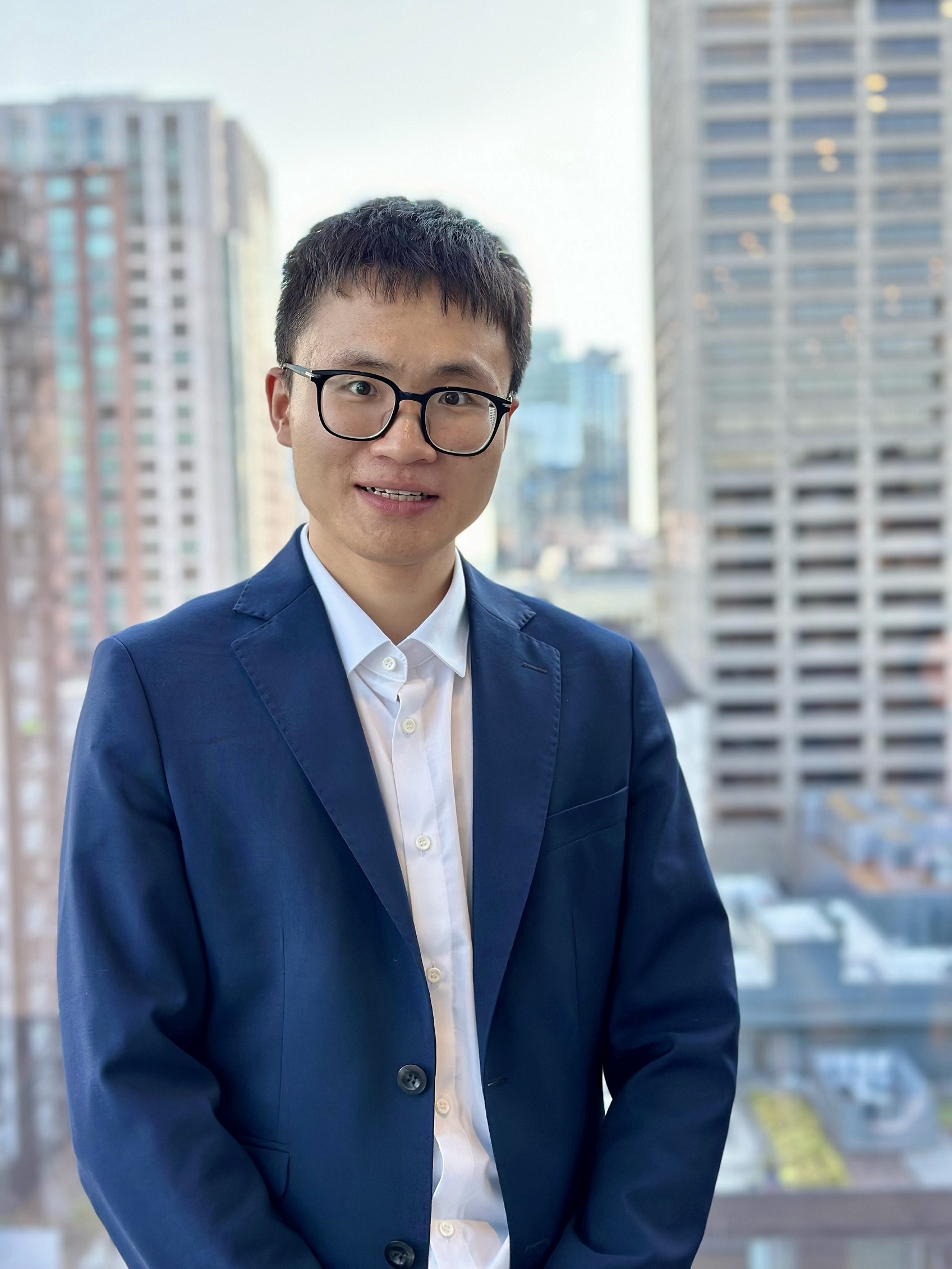
Zhineng Fei is a Doctoral Researcher at the Department of Electrical Engineering and Automation , Aalto University, affiliated with the Multi-energy System Planning and Operation research group. Their work focuses on optimizing energy systems for maritime applications, integrating renewable energy, hydrogen technologies, and desalination processes. Research Areas: Multi-energy systems, smart grids, hydrogen energy, and stochastic optimization Recent publications highlight robust planning and coordinated operation of green ship microgrids , leveraging thermal inertia, noise control, and distributed stochastic methods. These works are aligned with advancing sustainable maritime energy solutions and hybrid power systems. Zhineng Fei collaborates with researchers such as Zhengmao Li, Josep M. Guerrero, and Yuehua Huang. Their findings are published in journals like IEEE Transactions on Smart Grid and conferences including the IEEE Power and Energy Society General Meeting .
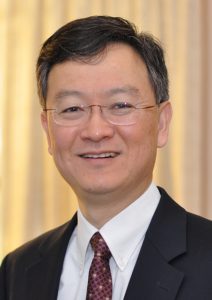
Maria Elena Martin Cañadas is an Associate Professor at the Department of Electrical Engineering within the Barcelona East School of Engineering (EEBE) at Universitat Politècnica de Catalunya (UPC). She leads research at the SEPIC group (Power Electronics and Control Systems), focusing on renewable energy integration and power systems optimization. Research Interests: Her work spans power electronics, microgrid design, energy policy analysis, and control systems for distributed generation. Key research areas include: Regulatory frameworks for renewable energy adoption Uncertainty modeling in energy systems High-temperature heat pump technologies Economic optimization of microgrids Solar energy integration and policy analysis Publication Trends: Recent articles (2020-2025) demonstrate strong focus on regulatory impacts in energy systems, with methodologies addressing uncertainty through stochastic modeling and probabilistic analysis. Dominant themes include microgrid optimization, solar policy evolution, and decarbonization strategies for industrial applications. Student Advising & Projects: Supervised doctoral candidates include Alonso (microgrid design), Coronas (distributed generation), and El Mariachet (power quality). Actively leads competitive R&D projects such as: Decarbonization of energy-intensive industries Power quality improvement in remote systems Regulatory framework development for Latin American biogas projects Research Group: Core member of SEPIC laboratory specializing in power electronics applications for sustainable energy systems, collaborating with industrial and international partners.
Ning Yu serves as an Associate Professor in the Department of Computing Sciences within the School of Arts & Science at State University of New York Brockport. He earned his Ph.D. in Computer Science from Georgia State University and joined SUNY Brockport in 2017 after serving as a Tenure-Track Assistant Professor at the University of South Carolina Upstate. Georgia State University, Computer Science, Ph.D. Southern Illinois University Carbondale, Computer Science, M.S. Dr. Yu's research spans artificial intelligence, network and information security, big data analytics, deep learning, and cloud computing with significant applications in bioinformatics. His work demonstrates a clear progression from foundational AI and security research toward specialized applications in healthcare and energy systems. The most recent publications show increased focus on graph-based deep learning approaches for biomedical problems, particularly in cancer genomics and drug response prediction. His scholarly impact includes over 40 publications in prestigious venues including ACM/IEEE Transactions, BMC, PLoS, and Information Sciences. The publication trend reveals consistent output with increasing emphasis on interdisciplinary applications, particularly at the intersection of AI and biomedical research. Teacher of The Year, School of Science and Art, SUNY Brockport 2022-2023 Influential Professor 2022, SUNY Brockport, Fall 2023 Provost Post-Tenure Scholarship Award, $3,500, SUNY Brockport, Spring 2024 Google Research Credits Grants (2018, 2020-2021) WORLDWIDE TOP 10 FINALISTS, IBM 2017 Watson Analytics Global Competition As an educator, Dr. Yu has mentored numerous undergraduate researchers who have presented at national conferences including NCUR and SURC. He founded SUNY Brockport's first ACM SIGAI Student Chapter and has secured significant funding including a multi-campus SUNY IITG grant for AI education development. His research group actively recruits students for projects involving cloud development (Azure/GCP/AWS), CI/CD, Docker/K8s, and software architecture. Prior to academia, Dr. Yu accumulated 10 years of professional experience in software development and system networking with certifications from Cisco, Microsoft, and Google.
Moshfeka Rahman is a Research Fellow at the University of Waterloo. Her work focuses on enhancing cybersecurity in smart grids through adversarial artificial intelligence and optimization techniques. She investigates methods to detect and mitigate false data injection attacks in power systems, contributing to the resilience of critical infrastructure. Research interests include cybersecurity, smart grid security, adversarial machine learning, and optimization algorithms. Her work addresses vulnerabilities in cyber-physical systems and develops robust defense mechanisms against sophisticated attacks. Lacking information on academic advising or grants, but her research emphasizes undetectable attack analysis and resource-constrained scenarios in smart grid security.
Delibra Giovanni is an Associate Professor at Sapienza University of Rome, specializing in aerodynamics, aeroacoustics, and renewable energy systems. His research focuses on optimizing turbomachinery performance, including axial fans, wind turbines, and hydrogen storage systems. He employs advanced computational fluid dynamics (CFD) and machine learning techniques to address challenges in renewable energy integration, thermal management, and noise reduction. Key research areas include: Wind energy systems and offshore wind farm design Hydrogen storage and safety in green energy applications Aeroacoustic control in industrial fans and turbines CFD-based optimization of heat exchangers and cooling systems Recent work emphasizes the integration of photovoltaic and biomass systems in renewable energy communities, as well as experimental validation of wave energy turbines. His publications highlight innovations in fan blade design, leakage modeling, and multi-objective optimization frameworks for sustainable energy infrastructure. Collaborations involve both academic institutions and industry partners, focusing on real-world applications such as tunnel ventilation systems and Mediterranean island energy solutions. Giovanni's contributions bridge theoretical modeling with practical engineering challenges in the transition to clean energy.
Mulu Bayray Kahsay is a Researcher at the Department of Electric Energy, Norwegian University of Science and Technology (NTNU). Previously, he served as an Associate Professor at Mekelle University, Ethiopia. He holds a PhD (Dr. techn.) from Vienna University of Technology, Austria. His research focuses on renewable energy technologies, including solar energy systems in Nordic climates, thermal energy storage integration, and optimizing wind farm performance. He is a core member of the Team Solar Energy Technology Network (EnergyNET), a NORHED II project advancing off-grid energy solutions for heating and cooling with thermal storage. His teaching includes courses like ELDI 1001 Renewable Energy Informatics and specialized graduate courses in Wind Energy, Solar Technologies, and Experimental Methods. Supervision activities include MSc theses on renewable energy systems for schools/farms and PhD projects addressing wind turbine aerodynamics, solar industrial heat systems, and wind farm performance analysis. Research collaborations span validation of wind climatology models in Ethiopia, biomass stove efficiency studies, and solar fryer innovations for sustainable cooking. His work bridges laboratory solutions with field applications, emphasizing cost-effective renewable energy deployment in diverse contexts.
Dr. Barry Hayes is a Senior Lecturer (Associate Professor) in Power Systems Engineering at University College Cork (UCC), Ireland. He leads a research team focusing on grid integration of sustainable energy technologies and future power system operation/planning. Previously held roles include Lecturer at University of Galway (2016-2018) and Marie Sklodowska-Curie Research Fellow at IMDEA Energy (2013-2016). Holds a PhD in Electrical Power Systems Engineering from University of Edinburgh (2013). Research interests include smart grids, distribution network management, demand-side flexibility, non-intrusive load monitoring, and energy communities. Active in IEEE standards development (P2030 smart grid interoperability) and serves as Associate Editor for IEEE Transactions on Energy Markets, Policy and Regulation. Has secured €1.03M SFI grant (2024-2029) for disruptive energy tech research, plus other grants including €506K from Disruptive Technologies Innovation Fund. Supervised PhD students in power systems and energy markets. Collaborates with Irish energy industry and international partners through MaREI Centre. Publications emphasize grid integration challenges, P2P energy trading, and smart meter applications. Notable recognition includes Elsevier's Most-Cited Article award (2022). Engages in public science communication via RTÉ and advises community-owned renewable energy projects.
Jose Miguel Reynolds Barredo is an Associate Professor and Director of the Doctorate in Plasmas and Nuclear Fusion at Carlos III University of Madrid. His research focuses on plasma physics, magnetohydrodynamics (MHD), and energy systems resilience. He leads studies on stellarator reactor design, plasma confinement optimization, and the integration of renewable energy into power grids. His work spans advanced MHD equilibrium solvers (e.g., SIESTA, FLIPEC) and fusion device optimization for ITER and Wendelstein 7-X. He also investigates climate impacts on renewable energy efficiency and power grid stability under high renewable penetration. Notable contributions include HVDC grid segmentation strategies and non-axisymmetric plasma transport modeling. Key Areas: Fusion reactor design, MHD stability, power grid resilience, climate-energy interactions Tools: SIESTA, FLIPEC, GENE, OPA cascading blackout model Projects: Doctorate in Plasmas and Nuclear Fusion, W7-X bootstrap current studies, climate-energy system interdependencies Research emphasizes computational plasma physics and interdisciplinary energy solutions, blending theoretical, numerical, and applied engineering approaches.
Mateja Novak is an Assistant Professor at AAU Energy, Aalborg University, Denmark, within the Department of Applied Power Electronic Systems under the Faculty of Engineering and Science. Her research focuses on model predictive control, multilevel converters, machine learning, and reliability of power electronic systems, contributing to sustainable energy systems and renewable energy integration. She holds a Ph.D. from Aalborg University (2020) and an M.Sc. from Zagreb University (2014). Previously, she was a Postdoc at AAU Energy (2020-2023) and a visiting researcher at Kiel University (2018) and Danfoss (2023). Notable achievements include the EPE Outstanding Young EPE Member Award (2019) and 2nd place in the 2021 IEEE-IES Student and YP Competition. Her work spans projects like ALL2GaN (2023-2026) and AI-Power (2022-2027), addressing GaN IC solutions and AI-driven power electronics advancements. She is actively involved with IEEE societies including the Power Electronics Society and IEEE Women in Engineering. Her research outputs emphasize control strategies for power electronics, reliability analysis, and optimization techniques. Key areas of exploration include thermal stress balancing in converters, statistical model checking, and multiobjective control algorithms. Collaborations with industry partners like Danfoss and academic institutions like Kiel University underscore her interdisciplinary approach to advancing power electronics technology.
Jennifer Scheib is an Associate Teaching Professor in the Department of Civil, Environmental and Architectural Engineering at the University of Colorado Boulder. She holds a BS and MS in Architectural and Civil Engineering from the same institution. Her work focuses on daylighting, zero-energy building implementation, and occupant wellbeing evaluation in buildings. Scheib has a joint appointment at the National Renewable Energy Laboratory (NREL) and is a member of the Illuminating Engineering Society of North America. Education: BS in Architectural Engineering, University of Colorado Boulder (2004) MS in Civil (Building Systems) Engineering, University of Colorado Boulder (2004) Research Interests: Her technical expertise spans daylighting systems, electric lighting control modeling, and strategies for achieving zero-energy buildings. She also investigates how building designs impact occupant health and productivity. Scheib’s applied research emphasizes practical solutions for energy efficiency, bridging gaps between theoretical models and real-world implementation in commercial and institutional settings. Publications and Impact: Her recent work highlights advancements in building energy modeling, procurement strategies for sustainable construction, and occupant-centric design. Key themes include microgrid energy systems, daylighting analysis, and policy frameworks for high-performance buildings. Awards: 2021 Solar Decathlon Build Challenge (First Place, Faculty Lead) 2020 Teaching Award from Civil, Environmental & Architectural Engineering Department 2015 NREL Outstanding New Partnership Award Collaborations and Roles: Serves as faculty lead on interdisciplinary projects, integrating academic research with NREL’s industry partnerships. Active in developing procurement guidelines that align construction budgets with high-performance goals. Advises on federal energy roadmap initiatives like NASA’s Net Zero Buildings program. Labs/Teams: Collaborates with NREL’s Commercial Buildings Group and leads university-industry partnerships focused on smart building technologies.
Mo-Yuen Chow is a Professor in the Department of Electrical and Computer Engineering at North Carolina State University (NCSU), holding the position since July 1999. He also serves as a Qiushi Chair Professor at Zhejiang University, China, and a Chang Jiang Visiting Chair Professor (2010–2013). His research focuses on Micro/Smart Grids Energy Management, Collaborative Distributed Control, and Battery Modeling. He holds significant IEEE awards, including Fellow status (2007) and the Dr.-Ing. Eugene Mittelmann Achievement Award (2020). Chow earned his Ph.D. in Electrical Engineering from Cornell University (1987), following an M.Eng. (1983) and B.S. (1982) from the University of Wisconsin-Madison. His work spans battery health monitoring, distributed control systems, and cyber-physical security in smart grids. Notable contributions include innovations in battery state-of-charge estimation and resilient microgrid management frameworks. His publications emphasize cybersecurity in distributed energy systems, AI-driven energy management, and fault diagnosis in battery systems. He has pioneered frameworks like the DEED-ADMM algorithm for multi-energy systems and developed models for solid electrolyte interface growth in lithium-ion batteries. Awards: Over 10 major IEEE awards, including recognition for service and education. Research Themes: Smart grids, distributed control, battery systems, and cyber-physical resilience. Labs/Projects: DC microgrid testbeds and collaborative distributed energy management systems.
Enrico Fabrizio is an Assistant Professor at the Department of Agricultural, Forest, and Food Sciences (University of Turin). His research focuses on building energy performance, indoor environmental quality, and sustainable design. Key areas include PCM-based thermal energy storage, multi-energy system optimization, and low-temperature heating systems. He has contributed to advancing methodologies for nearly Zero Energy Buildings (nZEBs) and energy-efficient livestock housing. Research domains include HVAC systems, energy-efficient building design, and dynamic simulation tools for energy performance assessment. His work integrates renewable energy technologies, such as solar thermal and photovoltaic systems, with district heating networks and smart grid applications. He has developed frameworks for personalized environmental control systems (PECS) and energy certification protocols for agricultural buildings like pig houses. His recent publications emphasize decarbonization strategies for heat pumps, cryocooler prototypes, and zero-power building paradigms. Collaborations span academic and industry partners, addressing challenges in energy poverty, climate control in greenhouses, and retrofitting historic buildings to nZEB standards.
Lars Magne Lundheim is a Professor at the Department of Electronic Systems at Norwegian University of Science and Technology (NTNU). He holds an MSc and PhD in electrical engineering from NTNU. His career includes roles as Associate Professor (2002–2010), Research Scientist at SINTEF, and part-time academic positions. He belongs to the Signal Processing Group and focuses on signal processing for radar systems, power consumption optimization, and engineering education. His research spans technical domains like multicarrier communication systems and pedagogical innovations such as project-based learning and curriculum design. Notable contributions include work on sustainability integration in STEM education and competency development through active learning strategies. Lundheim is a Senior Member of IEEE and has reviewed for major journals/conferences including IEEE Transactions on Signal Processing. Recent publications emphasize educational frameworks linking mathematics with engineering practice, while earlier works address technical challenges in radar distortion correction and power-efficient multiplier design. He has contributed to 16 PhD examination committees and teaches courses like TTT4270 (Electronic System Design) and TTT4260 (Electronic System Design and Analysis). Lundheim’s outreach includes presenting at events like the Læringsfestivalen and collaborating on national initiatives like the 'Fremtidens teknologistudier' educational strategy report. His interdisciplinary work bridges technical innovation with pedagogical excellence in electrical engineering education.
Tim Green is a Professor and Head of the Department of Electrical and Electronic Engineering at Imperial College London, part of the Faculty of Engineering. His research focuses on developing zero-carbon electricity systems dominated by renewable energy and inverter-based resources (IBR). He leads initiatives in grid stability, fault detection, and control innovations to ensure reliable energy systems. His work bridges physics-led and data-led modeling approaches to address challenges in frequency and voltage regulation. Education: PhD from Heriot-Watt University (1990) and BSc from Imperial College London (1986). Affiliations: Energy Futures Lab, Control and Power Research Group. Research interests include renewable power systems, grid resilience, and inverter-driven oscillations. His projects are funded by EPSRC, National Energy System Operator, and Hitachi Energy. He teaches power engineering modules and mentors postdoctoral researchers and PhD students. Awards include Fellowships from the Royal Academy of Engineering, IEEE, IET, and the Chinese Society for Electrical Engineering.
Syed Muhammad Danish is a researcher specializing in Blockchain Technology and its applications in Internet of Things (IoT) , Cybersecurity , and Smart Grids . His work focuses on integrating blockchain for security, data privacy, and efficient resource allocation in large-scale systems. Research Interests : Blockchain, IoT, Federated Learning, Electric Vehicles, Cybersecurity, Data Privacy Key Collaborations : Kaiwen Zhang, Hans-Arno Jacobsen, Aroosa Hameed, Ali Ranjha Publication Trends : Recent articles (2025) address privacy-preserving techniques in renewable energy forecasting and electric vehicle charging load optimization using blockchain and federated learning. 2024 studies explore blockchain-as-a-service architectures and energy credit management via distributed ledgers. 2023-2018 works focus on IoT security, blockchain middleware, and defense mechanisms against jamming attacks in LoRaWAN systems.