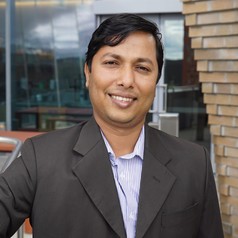
Prof. Jan Magott holds a research position at the Faculty of Information and Communication Technology of Wrocław University of Science and Technology , specifically within the Department of Computer Engineering . His work bridges formal methods in computer science with safety engineering applications. Focus on safety-critical systems across railway and aviation domains Expertise in computational intelligence and dependability analysis Research interests span: Formal verification of time-dependent systems Fault tree modeling with temporal constraints Functional Resonance Analysis Method (FRAM) applications Hospital safety and medical diagnostics optimization Urban transport reliability analysis Human factors in safety systems Recent publications show increasing focus on: Railway safety protocols and traffic management (2023) Medical error prevention in primary care (2021-2020) Formal timing analysis in software engineering (2016) Aviation incident modeling with fuzzy logic (2016) Key methodological contributions include: Time-dependent fault tree analysis Execution time modeling for real-time systems Fuzzy probability applications in safety engineering FRAM framework for complex system analysis
Ali DURUSU is a researcher at Yıldız Technical University, College of Engineering , with a focus on Renewable Energy Systems and Photovoltaic Power Plants . His work spans techno-economic modeling, energy optimization, and smart grid integration. Research Interests : Solar power plant design, grid integration, energy economics, MPPT algorithms, hybrid systems, and smart grid technologies Advisory : Has advised 25 theses on renewable energy topics Projects : Involved in 15 research initiatives Recent publications emphasize peer-to-peer energy trading, distributed storage, and optimization techniques. He has contributed to 80 WoS-indexed publications with significant citations (H-Index: 8 in WoS, 11 in Scopus) and participated in 43 peer-reviewed conferences.
Levy F. Costa is an Assistant Professor in the Electromechanics and Power Electronics group at the Department of Electrical Engineering, Eindhoven University of Technology (TU/e). He holds a PhD in Electrical Engineering from Kiel University (2019), an M.Sc. from the Federal University of Santa Catarina (2013), and a B.Sc. from the Federal University of Ceara (2010). His expertise spans high-power electronics, modular converter designs, and solid-state transformers for industrial and renewable energy systems. Academic Background: B.Sc., Federal University of Ceara (2010) M.Sc., Federal University of Santa Catarina (2013) PhD, Christian-Albrechts University of Kiel (2019) His research focuses on advancing high-efficiency power converter topologies, with specific emphasis on solid-state transformers and DC-DC converters. Recent work explores modular multilevel converter architectures, resonant converter designs for electrolyzer power supplies, and semiconductor material trade-offs in three-level resonant converters. He also investigates constrained power flow control strategies for grid-tied converters. Key projects include RelSST (Reliable Solid-State Transformer for Smart Grids) and HiVECAF (Highly Versatile Efficient & Compact Active Filters), addressing challenges in power electronics reliability, compactness, and control algorithms. Collaborations span institutions in Brazil, Germany, Switzerland, and the Netherlands. His publications highlight innovations in modular converter designs, semiconductor optimization, and power flow control for renewable energy integration. Current research aligns with UN Sustainable Development Goals related to clean energy and climate action, focusing on technologies to enhance grid stability and energy efficiency.
Dr. Almas Shintemirov is a Research Fellow at Aalto University's Department of Electrical Engineering and Automation, specializing in robotics, control systems, and human-robot interaction. His research focuses on intelligent robotics, with emphasis on Real-time motion prediction for collaborative robots Nonlinear control algorithms for safe human-robot interaction Open-source robotic hardware design Deep learning applications in autonomous systems
Prof. Dr.-Ing. Stefan Lechner has been full Professor of Energy Economics and Energy Systems at the Technical University of Central Hesse (THM) , Giessen, since March 2015. He is affiliated with the Department of Mechanical Engineering and Energy Technology and the Institute THESA – Institute of Thermodynamics, Energy Process Engineering and Systems Analysis . Additionally, he leads the Laboratory for Energy Economics and is a core member of the Competence Center for Energy Technology and Energy Management (etem.THM) . Education & Career Dr.-Ing., Brandenburg University of Technology (BTU) Cottbus, 2012 – Dissertation on steam-fluidized-bed drying of lignite. Dipl.-Ing. (FH) Mechanical Engineering, Georg Agricola University of Applied Sciences Bochum, 2002 – specialising in Future Energies. Supplementary doctoral studies & economics coursework at BTU Cottbus and FernUniversität Hagen. Professional experience at Vattenfall (plant management, power-plant planning & R&D) and Kreisel Umwelttechnik (Head of Development) before entering academia. Research Interests Prof. Lechner’s work centres on the techno-economic analysis and optimisation of energy systems in transition . Core themes include renewable energy integration , thermal energy storage (particularly Carnot batteries using ceramic high-temperature stores), sector coupling between electricity, heat and mobility, and 5th-generation cold district-heating networks (5GDHC). Methodologically, he combines experimental thermal engineering with open-source simulation frameworks , agent-based demand modelling , and electricity-market modelling . Recent activities expand into waste-heat recovery from data centres and transcritical CO₂ heat-pump systems for low-temperature district heating, always targeting cost-effective, grid-friendly and sustainable solutions . Publication Trends Between 2017 and 2024 his output highlights a clear evolution from fundamental studies on pressurized steam fluidized-bed drying and lignite heat-transfer toward system-level analyses of storage-based sector coupling . A dominant cluster addresses Carnot batteries , covering high-temperature storage materials, gas-turbine re-conversion concepts, and demonstration results. Parallel streams examine GIS-based rooftop PV potential , agent-based settlement energy-demand modelling , and regulatory frameworks for cross-sector energy markets. Scientific Awards & Honours No specific awards are mentioned in the provided material. Research Funding & Teams Prof. Lechner has secured and coordinates projects worth > €10 million (THM share ≈ €6.5 million) funded by BMBF, BMWK/BMWi, Hessian ministries (HMWK, HMWEVW), WI-Bank and ERDF : LOEWE 3 DUWä (2025-2027) – transcritical CO₂ dual-use heat pumps for cold district heating. EnEff:Stadt FlexQuartier2 (2023-2027) – hybrid storage optimisation in Giessen’s Philosophenhöhe district. KNW-Plus (2022-2023) – design & online tool for cold local heating networks. Innovative waste-heat use from data centres (2022-2023). FlexQuartier Gießen (2018-2023) – integrated hybrid storage & sector coupling in a new-build district. Kommun:E (2018-2022) – municipal energy-supply transformation under Germany’s Energiewende. High-T-Stor (2017-2019) – cross-sector high-temperature storage for renewable balancing. FES (2019-2021) – Research Center for Energy Storage and Sector Coupling. These projects involve interdisciplinary consortia including municipalities, grid operators, SMEs, and research partners across Germany. Teaching & Academic Leadership He lectures in Energy Economics and Sector Coupling, Energy Markets, Heat Transfer, Renewable Energy Technology and Energy System Analysis . He also serves as Programme Manager for the part-time continuing-education M.Sc. Energy Efficiency Management (StudiumPlus, Wetzlar) and contributes to advanced master’s courses on energy law and thermodynamics.
Geir Mathisen serves as a Professor within the Department of Technical Cybernetics, Faculty of Information Technology and Electrical Engineering at the Norwegian University of Science and Technology (NTNU). He is an active member of the Group for Industrial Computer and Instrumentation Systems, focusing on real-time systems integration and cyber-physical applications across industrial and energy domains. His educational background includes a Civil Engineering degree and a Doctorate (PhD), both earned from NTNU's Department of Technical Cybernetics, establishing foundational expertise in control systems and technical cybernetics. Professor Mathisen's research spans cyber-physical systems, deterministic networking, and distributed real-time systems with significant applications in smart grids and industrial automation. His work pioneers magnetic field energy harvesting for railway systems, edge-based fault detection for photovoltaic panels, and multi-robot coordination in sewing automation. Current investigations focus on power system state estimation, optimal power flow in smart grids, and deterministic communication channels for latency-sensitive applications. Analysis of his 2020-2024 publications reveals a strategic convergence of real-time computing with energy systems, particularly in railway energy harvesting and photovoltaic monitoring. His research consistently bridges theoretical advances in networking protocols with practical industrial implementations, emphasizing determinism and composability in distributed cyber-physical environments. Scientific Awards: No specific awards or fellowships were documented in the provided materials. Professor Mathisen actively supervises doctoral and master's students, including Johannes Schrimpf (2013 PhD thesis on industrial robot control), and offers project assignments as noted for fall 2021. His research is conducted through Norwegian collaborative projects on flexible distribution grids and smart grid services, though specific grant mechanisms remain unspecified in the source material. He contributes significantly to the Group for Industrial Computer and Instrumentation Systems at NTNU, which develops advanced solutions for industrial control, measurement systems, and cyber-physical integration, particularly in energy and manufacturing contexts.
Gerd Vandersteen is a Professor at the Vrije Universiteit Brussel (VUB) in the Department of Electronics and Informatics within the Faculty of Engineering. He serves as part-time Director (30%) of the Doctoral School of Natural Science and (Bio)Engineering (NSE) at VUB. His career spans academic research and industry collaboration, with significant contributions to nonlinear systems analysis and RF circuit design. His research interests focus on Nonlinear Systems Analysis , RF Circuit Design , System Identification , and Microwave Engineering . Vandersteen combines theoretical expertise in modeling nonlinear systems with practical experience in analog and RF design. His work emphasizes simulation-based analysis techniques, particularly using the Best-Linear-Approximation method for nonlinear system characterization. Vandersteen's publication record shows consistent output with 363 research outputs, including 103 articles and 164 conference papers. His recent work spans diverse areas from Arabic language processing to advanced RF measurement techniques, demonstrating interdisciplinary reach while maintaining core expertise in electronic systems. Key trends include nonlinear distortion analysis, frequency response characterization, and system identification methodologies. Best Paper Award (2002) Best Paper Award for 'Synchronizing modulated NVNA measurements on a dense spectral grid' (2012) IEEE Senior Member (2007) IEEE Instrumentation and Measurement Society Outstanding Reviewer (2014) As an educator, Vandersteen teaches CAE tools for electronic design, microwave design, and telecommunication techniques at VUB. He mentors PhD students through the international spring school on system identification and modeling techniques. His research is supported by multiple active projects including SRP78 (Center for Model-Based Systems Improvement), HERC61 (110 GHz real-time oscilloscope development), and VLOV106 (Flemish AI Academy establishment).
Prof. Dr.-Ing. Thomas Stetz is a Professor for Electrical Power Engineering at the Technical University of Mittelhessen (Gießen, Germany), specializing in Smart Grids and Energy Storage . He is a Scientific Director of the Institute for Transformation Tasks in Energy Economics and Energy Technology (ITEE) and Project Group Leader at TransMIT GmbH, Gießen. PhD in Electrical Power Engineering (University of Kassel, 2013) Former Research Group Leader at Fraunhofer IWES (Kassel, Germany) His research focuses on technical and economic aspects of voltage control , grid integration of photovoltaics , and smart grid technologies . He has led international projects with partners like the University of Costa Rica and Ingolstadt University of Applied Sciences, funded by BMBF , BMWi , and DFG . Key article trends include reactive power optimization , automated grid planning , and storage system integration for renewable-heavy grids. His scientific awards highlight his contributions to global PV grid integration research. Best Presentation Award (CIER 2017, Havana) Science Award (German Chamber of Industry and Commerce Kassel, 2014) Prof. Stetz supervises PhD and undergraduate students and contributes to industry-standard guidelines through collaborations with Stadtwerke Gießen AG and Bayernwerk. His work bridges technical innovation and policy development for the energy transition.
Hakan Ergun serves as an Associate Professor at KU Leuven's Faculty of Engineering Science within the Department of Electrical Engineering (ESAT). He leads the Subdivisie EnergyVille Electa - Ergun and holds key roles in EnergyVille initiatives, including membership in the Division EnergyVille and the Council of the Faculty of Engineering Science. His research focuses on power systems engineering with specialization in HVDC grid technology, renewable energy integration, and stochastic optimization. Current projects include predictive maintenance for wind farms, congestion management for offshore HVDC grids, and development of hybrid AC/DC grid software tools. His work addresses critical challenges in grid resilience, uncertainty modeling, and multi-national offshore grid coordination. Recent publications demonstrate strong trends in hybrid AC/DC grid optimization under uncertainty, with emphasis on stochastic programming, polynomial chaos expansion, and risk-based operational models. Key themes include offshore grid protection, frequency stability with energy storage, and spatio-temporal variability in power system planning. Ergun actively supervises doctoral candidates including K. Phillips and C.K. Jat. His research portfolio includes significant EU-funded projects such as CROCODILE (Cross-border Coordination of Offshore Grids) and advanced HVDC grid development initiatives with multi-year funding through 2028-2029. He directs the EnergyVille Electa subdivision focused on electrical energy systems applications, collaborating with industry partners on real-world grid implementation challenges. Current work emphasizes practical solutions for multi-GW offshore energy hubs and resilient power systems leveraging HVDC transmission flexibility.
Thorsten A. Kern is Professor and Director of the Institute of Mechatronics in Mechanical Engineering at Hamburg University of Technology (TUHH). He joined TUHH in January 2019 after serving as R&D manager for interior components at Continental, leading a team of 300 engineers worldwide. From January 2023 to January 2025, he served as Dean of the Faculty of Mechanical Engineering, and is elected to serve as Vice President for Teaching and Learning from October 2025 to October 2028. Since 2022, he has been Vice President of the EuroHaptics Society. Dipl.-Ing. (2002), Darmstadt University of Technology Dr.-Ing. (2006), Darmstadt University of Technology Prof. Kern's research focuses on electromagnetic sensors and actuators, particularly their system integration in high-dynamic applications. His work spans human-machine interfaces, haptic devices, and the intersection of technology with arts. He has a strong interest in medical applications including robotic rehabilitation systems, wearable exoskeletons, and telemanipulation systems. His research also extends to maritime applications, including ship energy systems and ocean monitoring technologies. Prof. Kern's recent publications reveal a strong focus on haptic interfaces, rehabilitation robotics, and maritime energy systems. His work combines theoretical modeling with practical implementation, often involving interdisciplinary teams. There's a clear trajectory toward tele-rehabilitation systems with haptic feedback, maritime power systems optimization, and novel sensor development. His research demonstrates consistent integration of mechanical, electrical, and control engineering principles to solve complex real-world problems. Over 30 patent families with >120 patent applications worldwide Main editor of "Engineering Haptic Devices" (3rd edition) Vice President of EuroHaptics Society (since 2022) Prof. Kern shows a strong passion for entrepreneurship and mentors young people through the Impossible Founders network. He actively supports students in IP-oriented exploitation of research findings, leveraging his extensive patent experience. His research is supported by various projects in haptics, mechatronics, and rehabilitation engineering, with collaborations spanning academia and industry. Prof. Kern leads the Institute of Mechatronics in Mechanical Engineering (M-4) at TUHH, which houses specialized laboratories including the Haptics Lab, PHiLsLab (Power Hardware-in-the-Loop Laboratory), and Optics Lab (Goniometer Laboratory for Measuring Light Fields). His research team includes multiple research assistants and doctoral students working on electrical measuring systems, autonomous multi-sensor drifters, SMART Sensor Particles, and human-machine collaboration projects.
Sanjoy Paul is an Associate Professor at the University of Technology Sydney (UTS) Business School, specializing in supply chain management and operations research. He holds roles as Associate Editor of Business Strategy and the Environment and Global Journal of Flexible Systems Management . His research focuses on supply chain resilience, risk modeling, and sustainable practices, with applications to global disruptions like pandemics and IT outages. Paul has published in top-tier journals such as the European Journal of Operational Research and secured grants from government bodies including the Department of Defence. Education and Career: Prior to UTS, he worked at RMIT University and Bangladesh University of Engineering and Technology. He holds a PhD from UNSW, recognized with the Stephen Fester Prize for outstanding thesis. His career spans academic roles from Lecturer (2017) to Senior Lecturer (2019) before his current position since 2023. Research Contributions: Paul’s work bridges theoretical models and real-world applications, including recovery frameworks for supply chains during crises and strategies for sustainable practices in post-pandemic contexts. He frequently advises media on supermarket pricing, supply chain disruptions, and business strategies, appearing in outlets like The Guardian and ABC News . Awards and Recognition: His honors include the ASOR Rising Star Award, Research with Relevance Award, and inclusion in the top 2% global scientists (2020–2023). He has contributed to policy debates on supermarket competition, EV market dynamics, and Australia’s industrial strategies.
Na (Luna) Lu is a Professor of Civil and Construction Engineering at Purdue University, with a courtesy appointment in Materials Engineering. She also serves as Vice President for Industry Partnerships and holds the Indiana ACPA Professorship in Concrete Paving and Materials Science. Her research focuses on power systems, inverter-based resources, microgrid control, grid resilience, and smart grid technologies. Key areas include stability analysis, renewable energy integration, and advanced control strategies for resilient distribution systems. Dr. Lu’s work bridges academia and industry, emphasizing practical applications of power electronics and cyber-physical systems. She has contributed extensively to topics like inverter dynamics, hybrid AC/DC microgrids, and real-time charging infrastructure. Her research highlights include AI-driven black-box modeling for photovoltaic systems, region-based stability analysis using machine learning, and optimal power flow in inverter-dominated grids. She has also explored resilience-enhancing strategies for coastal communities using marine energy resources and dynamic microgrids. Dr. Lu’s interdisciplinary approach combines electrical engineering, materials science, and computational methods to address challenges in modern power systems. Publications emphasize data-driven approaches, stability augmentation, and control system optimization. Awards include her endowed professorship reflecting industry recognition. Her administrative role underscores her commitment to industry-academia collaboration, fostering innovation in energy and infrastructure sectors.
Eckhard A. Groll is the William E. and Florence E. Perry Head of Mechanical Engineering and Reilly Distinguished Professor at Purdue University's School of Mechanical Engineering. His leadership spans academic administration and cutting-edge research in thermal sciences, HVAC&R systems, and sustainable energy technologies. Education: Doctor of Engineering (Doktor-Ingenieur), Mechanical Engineering, University of Hannover (1994) Master of Engineering (Diplom-Ingenieur), Ruhr-University Bochum (1989) Pre-Diploma in Mechanical Engineering (Diplom-Vorprüfung), Ruhr-University Bochum (1986) Research focuses on thermal systems optimization , refrigeration technology , and high-performance building solutions . His work integrates experimental analysis, numerical modeling, and system-level optimization to advance energy-efficient technologies. Notable contributions include innovations in chemical looping heat pumps , CO2-based refrigeration cycles , and smart grid integration . Recent publications explore predictive control in HVAC systems, low-GWP refrigerants, and microgravity thermal systems. Awards include the J&E Hall International Gold Medal , Purdue Innovator Hall of Fame , and multiple recognitions for teaching and service. He has advised over 50 graduate students and holds leadership roles in ASHRAE and the International Institute of Refrigeration. Current initiatives include DC nanogrid systems , electrochemical heat pumps , and spacecraft thermal management . Active collaborations span Purdue’s Center for High Performance Buildings and global institutions like Shanghai Jiao Tong University.
Kevin Kircher is an Assistant Professor of Mechanical Engineering at Purdue University's West Lafayette School of Mechanical Engineering. He holds a PhD in Mechanical Engineering from Cornell University (2019). His research focuses on building electrification, grid integration of flexible loads, and advanced control strategies for energy systems. He leads the Kircher Research Group and is affiliated with Purdue's Center for High Performance Buildings. Key research areas include optimizing heat pump systems, model predictive control for HVAC, and mitigating grid strain through demand response. Recent work includes field studies on thermostat behavior, residential electrical infrastructure protection, and DC lighting systems for buildings. His contributions span 70+ peer-reviewed publications in journals like Applied Energy and Building and Environment , and conferences such as the International High Performance Buildings Conference. He has pioneered open-source tools like the BLDG toolbox and EDGIE simulation framework. Current projects address building-grid interactions, occupant behavior impacts, and decarbonization strategies for commercial/residential sectors. His work bridges mechanical engineering with data-driven control methodologies to advance sustainable energy systems.
Luna Lu serves as the Indiana ACPA Professor in Concrete Paving and Materials Science at Purdue University's Lyles School of Civil Engineering, with a courtesy appointment in the School of Materials Engineering. She concurrently holds the position of Vice President for Industry Partnerships and founded the Center for Intelligent Infrastructure, driving industry-academia collaboration in smart infrastructure solutions. Her research spans novel nanomaterials for infrastructure sensing and IoT-enabled energy harvesting systems, with recent work pivoting toward power systems engineering. Current investigations focus on stability analysis, control algorithms, and resilience in inverter-dominated microgrids, particularly addressing grid-forming/grid-following inverter interactions and AI-driven modeling techniques. This evolution reflects her dual expertise in materials science and electrical engineering, manifested through both academic publications and commercial ventures. Analysis of her 15 most recent publications reveals a concentrated focus on microgrid stability (73% of articles), inverter control strategies (60%), and data-driven/AI methodologies (47%). Key trends include seamless transition protocols between grid modes, quantifiable trade-offs in voltage regulation, and resilience assurance through hydrogen integration—all critical for renewable energy adoption. Her scientific recognition includes: National Science Foundation CAREER Award (2014) Purdue Faculty Scholar (2019) ASCE Alfred Noble Prize (2022) TIME Magazine Best Invention (2023) Edison Award (2024) Fellow of the Royal Society of Arts Dr. Lu has successfully translated research into practice through Wavelogix Inc., where she serves as CEO, commercializing REBEL IoT sensors for infrastructure monitoring. Her portfolio includes over 150 peer-reviewed publications, two books, six book chapters, and 10 patents, demonstrating consistent funding success and technology transfer. The Center for Intelligent Infrastructure under her direction facilitates industry partnerships focused on real-world deployment of sensing technologies. As founding director of the Center for Intelligent Infrastructure, she leads multidisciplinary teams developing integrated solutions for infrastructure health monitoring. Current initiatives combine nanomaterials, wireless sensor networks, and power electronics to create self-powered sensing systems for bridges, roads, and energy infrastructure, with field deployments across Indiana's transportation network.