Pierre JaïsView profile
Professor
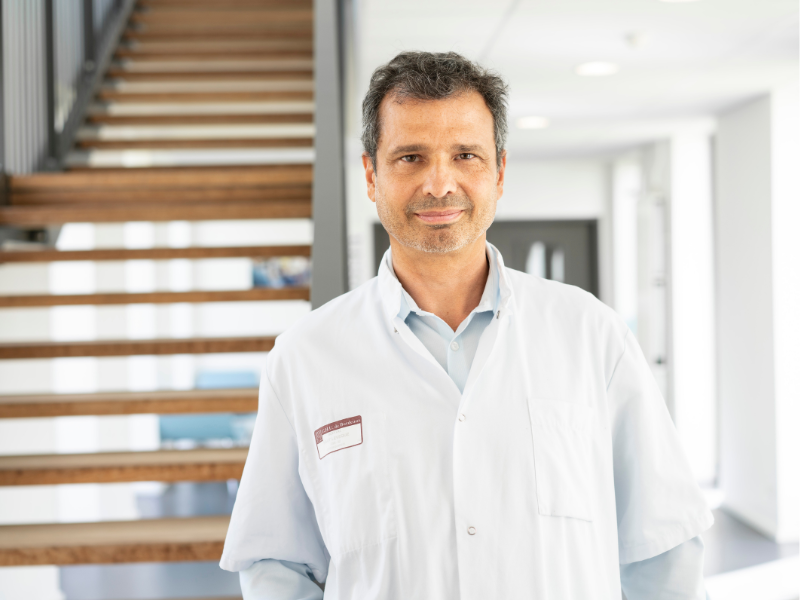
Prof. Pierre Jaïs serves as University Professor in Cardiology and Cardiac Electrophysiology at the University of Bordeaux and Head of the Electrophysiology Unit at Bordeaux University Hospital. He concurrently leads the Electrophysiology and Heart Modeling Institute (LIRYC) as CEO since 2021, driving innovation in cardiac rhythm disorder treatments through multidisciplinary research. His research revolutionized cardiac electrophysiology by identifying pulmonary veins as primary sources of atrial fibrillation, establishing pulmonary vein isolation as the global treatment standard. Current work focuses on pulsed field ablation—a non-thermal technique with potential to replace conventional ablation—and developing advanced imaging for precise arrhythmia targeting, reflecting his commitment to translating scientific discovery into clinical solutions. Analysis of recent publications (2017-2021) reveals dominant trends in pulsed field ablation optimization, comparative ablation techniques, and AI integration in cardiovascular imaging. These works consistently address atrial fibrillation treatment efficacy, safety profiles, and technological innovation, positioning him at the forefront of electrophysiology advancement. His distinguished contributions are recognized through prestigious awards including: 2019: Eli S. Gang Most Innovative Abstract Award (Heart Rhythm Society) 2018: Eric N. Prystowsky Lectureship Award 2012: Academy of Medicine Membership (Paris) 2009: Circulation Best Paper Award Multiple National Academy of Medicine honors Prof. Jaïs actively mentors electrophysiology trainees and secures substantial research funding, notably leading an EU-funded randomized trial comparing pulsed field versus thermal ablation. His LIRYC institute integrates cardiology, engineering, and computational expertise to accelerate therapeutic innovation. The LIRYC institute operates as a collaborative hub where clinicians, biomedical engineers, and data scientists develop next-generation electrophysiology tools. Current projects include real-time arrhythmia mapping systems, tissue-selective ablation protocols, and AI-driven predictive models for treatment personalization, fostering seamless translation from bench to bedside.