Jakub Grela is a Lecturer at AGH University of Science and Technology, affiliated with the Department of Power Electronics and Automation of Energy Conversion Systems within the Faculty of Electrical Engineering, Automatics, Computer Science, and Biomedical Engineering. His work focuses on building automation systems, IoT applications in energy management, and renewable energy integration. Current faculty member at AGH University Specializes in energy efficiency and smart grid technologies Active in IoT-driven building automation research Research interests include hybrid energy storage systems, thermal modeling for heating optimization, and demand response solutions in smart grids. His publications emphasize practical implementations of IoT in consumer electronics and energy management systems. His recent work explores trends in transactive energy systems, human-centric building automation, and heat recovery simulations. Articles highlight case studies across university infrastructure, street lighting, and residential energy systems, demonstrating cross-disciplinary applications of IoT in energy efficiency.
Graeme Burt is a Professor of Particle Accelerator Engineering at Lancaster University's School of Engineering, where he also serves as Associate Director. He is affiliated with the RF Engineering of Accelerators at Lancaster (REAL) group, the Cockcroft Institute, and Security Lancaster. His research spans multiple interdisciplinary areas connecting particle accelerator physics with medical applications and security technologies. Professor Burt's research interests focus on the development of novel particle accelerator technologies, with particular expertise in RF engineering for accelerators, terahertz technology applications in beam manipulation, superconducting materials for accelerator cavities, and beam physics. His work bridges fundamental accelerator research with practical applications in medical physics and security. He has made significant contributions to international accelerator projects including CompactLight, the High Luminosity LHC, and AWAKE (proton-driven plasma wakefield acceleration). His recent publications demonstrate a strong focus on terahertz-driven particle acceleration techniques, high-efficiency RF components like klystrons, and superconducting materials characterization. His research shows a clear trajectory toward compact accelerator technologies with applications in medicine and security, while maintaining strong connections to fundamental accelerator physics for high-energy physics applications. Professor Burt actively supervises postgraduate research, currently guiding 11 PhD students through their research projects. His leadership extends to major international collaborations, including contributions to the CompactLight Design Study and the AWAKE experiment at CERN. He leads the RF Engineering of Accelerators at Lancaster (REAL) group, which focuses on developing next-generation accelerator technologies. His team collaborates extensively with the Cockcroft Institute and international facilities including CERN, contributing to major global accelerator projects while developing novel approaches to accelerator design and implementation.
Ziya DEMİRKOL is a full-time Lecturer at Kastamonu University's Tosya Vocational School, Department of Electronics and Automation, holding this position since 2012 while also serving as Department Head since 2015. His academic work bridges theoretical control systems with practical biomedical and energy applications. His educational qualifications include: PhD in Electrical-Electronics and Computer Engineering, Düzce University (2017-2023) Master's in Electronics and Computer Education, Selçuk University (2008-2013) BSc in Electrical and Electronics Engineering, Karabük University (2014-2016) BSc in Electronics Education, Fırat University (2001-2005) Dr. Demirkol's research centers on Biomedical Device Technology within medical instrumentation, advanced Control Theory applications for electromechanical systems, Electrical Machine design focusing on linear motors, and Renewable Energy Systems analysis. His work demonstrates strong integration between control engineering principles and real-world medical/energy solutions, particularly in motor control systems and sustainable energy assessment. His recent publications (2023-2025) reveal two dominant research streams: precision control systems for novel permanent magnet linear motors and AI-driven techno-economic analysis of wind power generation. These studies consistently address practical engineering challenges while advancing theoretical frameworks in electromechanical control and sustainable energy economics. No scientific awards or recognitions are documented in available records. He served as researcher for the 'Tübüler DC Lineer Motor Tasarımı ve Denetimi' project (2020-2021) but has not supervised any theses. His primary collaborations involve Uğur Hasırcı (Düzce University) and Faruk Dayı (Kastamonu University), reflecting institutional partnerships in motor control research.
Alexander Zaslavsky is a Professor of Engineering and Physics at Brown University, where he has been a faculty member since 1994. He received his Ph.D. in electrical engineering from Princeton University in 1991 and completed postdoctoral work at IBM Research. His research spans semiconductor device physics with focus on novel device concepts that could supplement silicon transistor technology. He maintains active collaborations with institutions in France and has served as editor of Solid State Electronics since 2003. PhD in Electrical Engineering, Princeton University (1991) MS in Electrical Engineering, Princeton University (1988) BA, Harvard University (1986) Professor Zaslavsky's research focuses on developing alternative semiconductor devices that could supplement conventional silicon technology. His work spans five main areas: (1) quantum transport in silicon-based nanostructures and resonant tunneling; (2) tunneling-based semiconductor devices in silicon-on-insulator and germanium-on-insulator technology; (3) thin film transistors based on conducting oxides and iodides; (4) flexible metallic interconnects for flexible electronics; and (5) probabilistic computing implemented in silicon technology. His research bridges fundamental physics with practical device applications, particularly in low-power electronics and novel sensing mechanisms. Analysis of Professor Zaslavsky's recent publications reveals a strong focus on cryogenic electronics for quantum computing interfaces, novel memory architectures, and germanium-based photodetectors. His work increasingly intersects with quantum computing needs, particularly in developing cryo-CMOS circuitry and memory solutions. There's also continued emphasis on sharp-switching devices for ultra-low power applications and exploration of alternative materials like copper iodide for transparent electronics. The research demonstrates a strategic evolution from fundamental device physics toward applications in emerging computing paradigms. Alfred P. Sloan Fellowship (1995) Office of Naval Research Young Investigator Award (1995) National Science Foundation Career Award (1997) Editor of Solid State Electronics international journal (2003-present) Visiting Senior Chair of Excellence at Nanosciences Foundation, Grenoble (2009-2012) Professor Zaslavsky has mentored numerous students whose alumni have gone on to semiconductor companies (Micron, Applied Materials, GlobalFoundries, Synopsys), government labs (NIST, CNRS, Paul Scherrer Institute), and major industrial companies (EMC, Apple). His research has been supported by extensive funding including: Alfred P. Sloan Foundation ($30,000, 1995-1999); Office of Naval Research Young Investigator award ($265,750, 1995-1998); multiple NSF grants totaling over $1.5 million; Semiconductor Research Corporation subcontract ($95,000, 1998-2002); and Air Force Office of Scientific Research MURI award (sharing $350,000 annually, 2000-2005). Professor Zaslavsky leads an active research laboratory at Brown University focused on semiconductor device physics and engineering. Current projects include Cryo-CMOS and magnetic sensing (with Xiao lab at Brown, Tufts, NIST-Gaithersburg, CoolCAD Electronics, and MIT-Lincoln Laboratory); and Germanium quantum dot photodetectors (with Pacifici lab at Brown). The lab has previously worked on nitride hot electron and tunneling transistors, amorphous indium-zinc-oxide devices, tunneling devices in SOI, noise-immune CMOS design, Si and SiGe nanowire tunneling transistors, carbon nanotube devices, and flexible metal interconnects. The lab emphasizes comprehensive training from device fabrication to characterization and modeling.
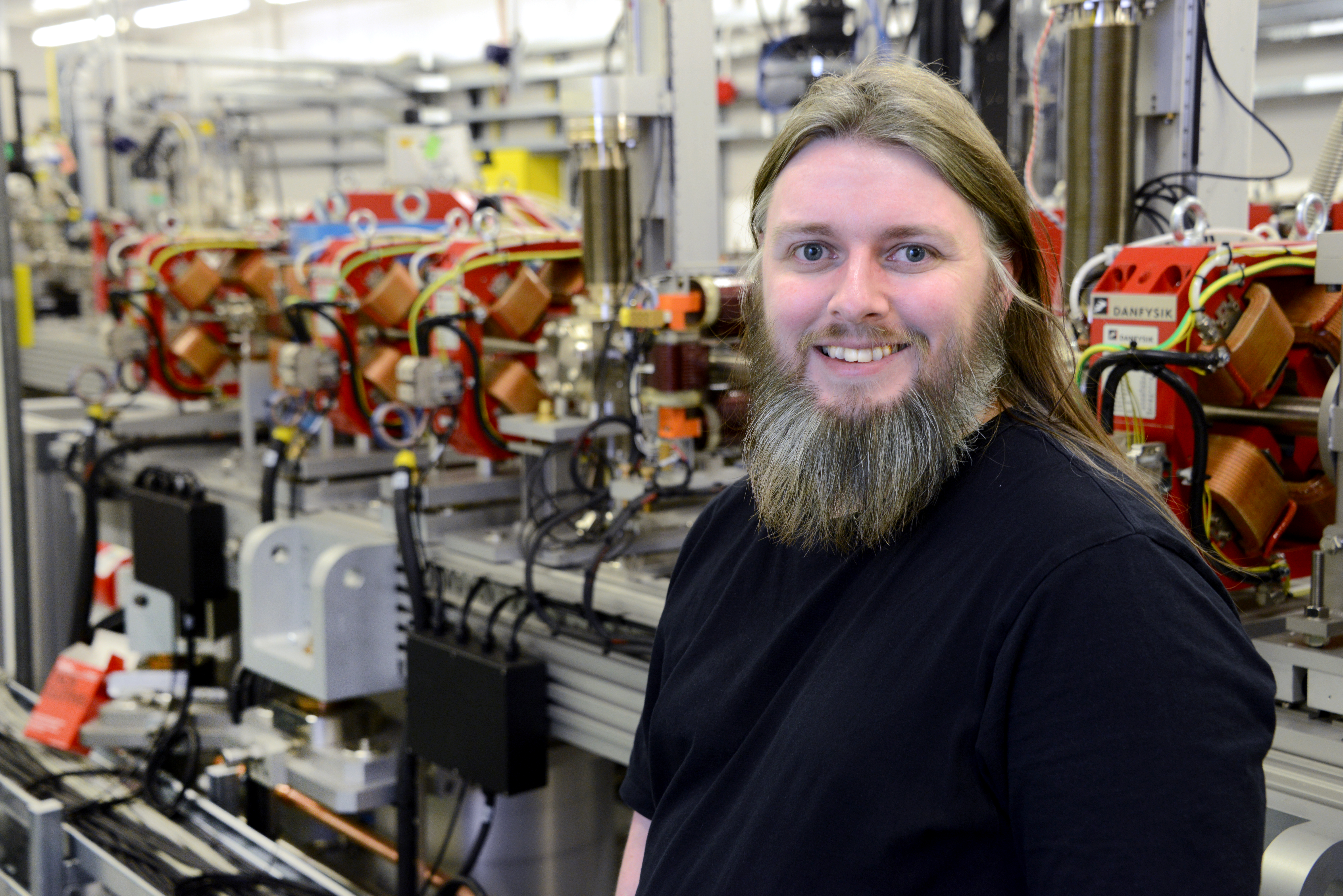
Kent Bertilsson is a Professor and Director of Studies at the Department of Computer and Electrical Engineering (DET) at Mid Sweden University . He serves as a Deputy Prefect and specializes in Power Electronics , with a focus on Embedded Systems , Power Converters , and Fiber Installation Equipment . His research includes projects like DeHigh (electrification of work vehicles) and STORE (electrical energy storage). His work spans High-Frequency Converters , Planar Magnetics , and Multilevel Inverters , with applications in Electric Vehicles and Renewable Energy Systems . He has extensively published in journals like IEEE Transactions on Power Electronics and Energies , emphasizing component optimization and energy efficiency. Notable projects include 48 V Drive Systems and Smart Industry Sweden .
Amir Babaki is an Assistant Professor at the Institute of Mechanical and Electrical Engineering, University of Southern Denmark. His research focuses on power electronics, wireless power transfer, and high-efficiency converter design for electric vehicle applications. University: University of Southern Denmark School: Institute of Mechanical and Electrical Engineering Rank: Assistant Professor Email: amirbabaki@sdu.dk Research Interests Babaki's work centers on power electronics, specifically front-end converters, wireless power transfer (WPT), and high-frequency resonant converters. His research explores efficiency optimization in dynamic WPT systems for electric vehicles (EVs), including control strategies for power factor correction and voltage regulation. He also investigates integrated magnetic structures for misalignment tolerance and develops predictive control methods without communication or model dependencies. Research Projects He contributes to projects like HiCoMMID (2021-2024) on motor integrated drives and HPC (2024-2027) for ultra-high efficiency DC-DC converters in high-power charging. These projects intersect with automotive engineering, energy efficiency, and converter design optimization. Teaching Babaki supervises Master's theses and teaches courses in power electronics and electrical engineering, including PE2 and ELTR3 modules related to converter technologies and wireless power systems.
Sangyoung Park is an Assistant Professor of Smart Mobility Systems at the Faculty of Mechanical Engineering and Transport Systems, Technical University of Berlin, and is co-affiliated with the Einstein Center for Digital Future. His research focuses on two main areas: enhancing vehicle safety through digitalization and connectivity, and advancing the electrification of the transport sector with emphasis on electric vehicle battery systems design and management. He leads the Chair of Smart Mobility Systems at TU Berlin, where his team investigates how vehicle connectivity can improve energy efficiency, traffic flow, and safety in autonomous vehicle systems. Dr. Park completed his PhD in Electrical Engineering and Computer Science at Seoul National University in Korea, where he focused on energy management techniques for hybrid energy storage systems in electric vehicles. Before joining TU Berlin in 2018, he conducted postdoctoral research at the Technical University of Munich, working on energy management for smartphones in collaboration with Google and studying battery aging processes. His research interests span smart mobility systems, electric vehicle battery management, energy consumption optimization, vehicle connectivity, and autonomous driving systems. Park's work bridges the gap between design engineers and software engineers, investigating how different energy storage components (fuel cells, supercapacitors, lithium-ion batteries) should be interconnected and managed together for maximum efficiency. His research also addresses the design of charging infrastructure for electric vehicles. Analysis of Dr. Park's recent publications reveals a strong focus on digital twin technology for teleoperated driving, battery management systems for electric vehicles, and vehicle connectivity for improved safety and efficiency. His research increasingly integrates cybersecurity aspects of connected vehicles and explores novel approaches to extend battery lifespan through advanced cell balancing techniques. The interdisciplinary nature of his work connects electrical engineering, computer science, transportation systems, and urban infrastructure planning. Dr. Park supervises multiple doctoral students, including Philipp Kremer, Ongun Türkçüoglu, Kil Young Lee, Maria Claudia Miguel de Priego, Muzaffer Citir, Andrea Reindl, Subhendu Bhadra, and Hueseyin Türkyilmaz. His research is supported by various funding sources including the ECDF grant, DAAD projects (ide3a), and government scholarships. He collaborates with institutions including OTH Regensburg and Siemens Mobility. His laboratory, the Smart Mobility Systems group, focuses on developing system-level approaches for measuring, analyzing, and balancing energy consumption in battery-powered mobile systems. The team investigates how direct communication among autonomous vehicles can enable control scenarios that improve energy efficiency, traffic flow, and safety beyond what human drivers or isolated autonomous vehicles can achieve.
Jun Wu is a Professor in the Department of Public Health at the University of California, Irvine. Her research focuses on air pollution exposure assessment and air pollution epidemiology, particularly in reproductive health, aiming to improve exposure characterization and assess health impacts. Ph.D. in Environmental Health from University of California, Los Angeles Her exposure assessment work employs geographical information systems (GIS), atmospheric dispersion models, and statistical techniques to quantify population and individual air pollution exposures, including studies on vehicle-related pollution, naphthalene, wildfires, and traffic pollutants. Her epidemiology research links air pollution to adverse pregnancy outcomes like preeclampsia, preterm births, and early pregnancy loss. The Google Scholar articles reflect interdisciplinary work in photonics, semiconductor devices, and optical systems, featuring advancements in microwave photonic oscillators, photodiodes, and color-tunable organic light-emitting diodes. These studies emphasize low phase noise, thermal dissipation, and high-efficiency device design across microwave and optoelectronic domains. Health Effect Institute Walter A. Rosenblith New Investigator Award, 2010 International Society of Exposure Analysis Young Investigator Award, 2005 Samuel J. Tibbitts Fellowship, School of Public Health, UCLA, 2003 Chancellor’s Fellowship, UCLA, 2000, 2003 PWEA Student Research Award, Pennsylvania Water Environment Association, 2000 Jun Wu's laboratory (https://drwulab.net/) develops exposure models and investigates environmental health impacts, combining GIS with atmospheric modeling. Her research bridges environmental science and public health, targeting pollution-related health risks.
Peyman Afzali Gorouh is a Postdoctoral Researcher in the Applied Power Electronic Systems group within the Faculty of Engineering and Science at Aalborg University, Denmark. His research focuses on developing innovative models for energy communities, smart grids, and renewable energy integration. Dr. Afzali's research interests span power engineering, smart grid technologies, renewable energy systems, and energy communities. His work particularly emphasizes prosumer economics, peer-to-peer energy trading, risk modeling in power systems, and energy democracy frameworks. He has developed novel approaches for optimizing energy communities while considering socio-economic-environmental factors, demand response, and uncertainty management. His recent publications (2020-2024) demonstrate a consistent focus on energy community modeling, with particular emphasis on peer-to-peer trading mechanisms, risk-constrained optimization, and multi-objective planning. His work bridges technical power system challenges with socio-economic considerations, creating integrated models that address both engineering and human aspects of modern energy systems. Dr. Afzali maintains an active research profile with numerous publications in high-impact journals including IEEE Transactions on Engineering Management, Energy and Buildings, Applied Sciences, and Sustainable Cities and Society. His research shows strong international collaboration, particularly with researchers from Iranian institutions.
Dr Xiandong Ma is a Reader in Power and Energy Systems at Lancaster University's School of Engineering, where he has been a faculty member since December 2008. His research focuses on intelligent condition monitoring and fault diagnosis of power systems, with particular expertise in wind energy systems and smart grid technologies. His educational background includes: BEng in Electrical Engineering from Jiangsu University (1986) MSc in Power Systems and Automation from Nanjing Automation Research Institute (1989) PhD in Partial Discharge based High-voltage Plant Condition Monitoring from Glasgow Caledonian University (2002) Dr Ma's research spans intelligent condition monitoring and fault diagnosis/prognosis of wind power systems and electrical assets, condition-based operations and maintenance of power and energy systems, modeling, optimization, and control of smart/micro grids with renewable energy resources, power conversion and renewable energy integration, and associated machine learning and AI technologies and digital twin solutions. His work bridges theoretical advances with practical engineering applications in the renewable energy sector. His recent publications demonstrate a strong focus on quantum machine learning applications for wind turbine monitoring, electric vehicle-grid integration challenges, wave energy conversion systems, and nuclear fuel inspection technologies. The research shows a clear trajectory toward more sophisticated AI-driven solutions for energy systems, with increasing emphasis on multi-physics modeling and cross-domain applications. Dr Ma has received several prestigious recognitions: Chartered Engineer Fellow of the Institution of Engineering and Technology (FIET) Fellow of the Higher Education Academy (FHEA) Member of EPSRC Peer Review College KTP Fellowship awarded by University of Technology Sydney (2018) Ranked in the world's top 2% scientists by Stanford University He actively supervises numerous PhD students and postdoctoral researchers, with current projects including the Leverhulme Trust-funded "Self-Aware Power Networks: Autonomous Operation at Scale" and several EPSRC-funded initiatives. Dr Ma has secured significant research funding and collaborates extensively with industry partners to translate research into practical applications. Dr Ma leads research within Lancaster's Energy research group, focusing on the integration of advanced sensing, AI, and control techniques for next-generation power and energy systems. His team works closely with industrial partners including ALSTOM Power and various renewable energy companies to develop innovative solutions for real-world energy challenges.
Professor Nebojsa Mitrović is a distinguished faculty member at the Electronic Faculty of the University of Niš, Serbia, where he serves as a Professor in the Department of Power Engineering. With decades of academic and research experience, he has established himself as a leading expert in electric motor drives and power electronics. His work bridges theoretical research with practical industrial applications, particularly in crane systems and power quality issues. Professor Mitrović's research interests span electric motor drives, power electronics, control systems for electrical machines, induction motors, voltage sag effects on electrical drives, crane applications, renewable energy systems, and electromechanical energy conversion. His work demonstrates a consistent focus on improving the performance and reliability of electrical drive systems, particularly in industrial settings where power quality issues can significantly impact operations. He has made substantial contributions to understanding how voltage sags affect various types of motor drives and has developed innovative control strategies to mitigate these effects. His extensive publication record shows a clear research trajectory focusing on electric motor drives and power electronics. The most recent publications (2020-2023) demonstrate continued innovation in grid-connected converters, microgrid stability, and modern testing methodologies for electric drives. Earlier works (2006-2017) established foundational knowledge in direct torque control, multi-motor drive systems for cranes, and voltage sag effects on industrial drives. His research consistently addresses practical engineering challenges while advancing theoretical understanding in the field. Professor Mitrović has contributed significantly to academic literature through numerous journal articles, conference papers, and book chapters. His 2009 monograph "Implementacija algoritama za upravljanje momentom i fluksom asinhronih motora" (Implementation of Algorithms for Torque and Flux Control of Induction Motors) and the 2012 book chapter "Electrical Drives for Crane Application" in Mechanical Engineering published by InTech represent substantial contributions to the field. He has also co-authored educational materials including solved problem collections and laboratory exercises for electric motor drives courses. Professor Mitrović actively supervises student research and has been involved in numerous technical projects, including the development of laboratory setups for testing vector controlled induction motor drives. His work has practical applications in various industries, particularly in crane systems and industrial drive applications. He has collaborated extensively with colleagues including Vojkan Kostić, Milutin Petronijević, and Bojan Banković on research projects funded by various Serbian research initiatives. His laboratory work includes the development of testing systems for electric drives and the implementation of advanced control algorithms for industrial applications. Professor Mitrović is associated with the Power Engineering Department at the University of Niš, where he teaches courses including Electric Motor Drives, Selected Topics in Electric Motor Drives, Electrical Machines, Electromechanical Energy Conversion, and Modeling of Electrical Machines and Drives. His teaching reflects his research expertise and provides students with both theoretical knowledge and practical skills in electric drive systems.
Dr. Ali Nabavi is a Reader in Energy Systems and Head of the Centre for Energy Decarbonisation and Recovery at Cranfield University . He serves as Director of the Advanced Chemical Engineering Course and has made significant contributions to low-carbon energy systems through experimental and computational research. PhD in Energy (Cranfield, 2016) MSc in Thermal Power and Fluid Engineering (Manchester, 2012) Research Areas: Carbon capture, utilization, and storage (CCUS) Reversible solid oxide fuel cells Hydrogen purification technologies Process intensification for energy efficiency Microfluidic particle formulation Hydrogen social acceptance modeling Recent Publications: Focus on sorption-enhanced reforming, hydrogen social dynamics, and catalyst development for gas processing. His work spans experimental validation and computational modeling across multiple energy systems. Scientific Contributions: Development of novel adsorbents for CO2 capture and optimization of solid oxide fuel cell integration in transportation applications. Facilities: Utilizes Cranfield's High-Performance Computing (HPC) systems and advanced material synthesis labs with pilot-scale reactor infrastructure.
Muhammet Kayfeci is a Professor at Karabük University , Faculty of Technology, Department of Energy Systems Engineering, Turkey. He holds a PhD in Mechanical Engineering from Süleyman Demirel University (2011) and a Master's in Mechanical Education from Zonguldak Karaelmas University (2005). His academic career spans roles from Instructor (2008-2011) to Associate Professor (2016-2021) and Professor (since 2021), with administrative roles including Dean (2021-2024) . Education : PhD (Mechanical Engineering) - Süleyman Demirel University (2006-2011) Master's (Mechanical Education) - Zonguldak Karaelmas University (2004-2005) BSc (Mechanical Engineering) - Bartın University (2014-2016) Kayfeci’s research focuses on thermodynamics , renewable energy systems , and hydrogen storage , particularly through metal hydride reactors and nanofluid applications . His work integrates computational modeling and experimental validation for energy efficiency improvements in photovoltaic/thermal (PV/T) systems and hydrogen storage technologies. Recent publications indicate a strong trend in nanofluid-enhanced cooling systems for solar panels, metal hydride reactor optimization , and machine learning applications for energy systems. He has supervised 13 theses (PhD and Master’s) and secured funding for projects like "Biomimetic Flow Channels in PEM Electrolysis Development" (2025-2026). Scientific Awards : TÜBİTAK-ULAKBİM International Scientific Publications Encouragement (UBYT) Award (2009-2014) He teaches courses including Fuel Cells and Electricity Production (Doctoral), Heat Exchangers , and Thermodynamics at undergraduate and graduate levels.
Alexander Alexandrovich Kharlamov serves as a Professor at the National Research University Higher School of Economics (HSE), specifically within the Faculty of Computer Science and Department of Software Engineering. He joined HSE in 2015 and has accumulated 42 years of scientific and teaching experience. His academic profile includes prominent identifiers such as ORCID: 0000-0003-2942-5101, ResearcherID: E-3760-2014, and Scopus AuthorID: 57193909855. He maintains an office at the Pokrovsky Boulevard campus (AUK "Pokrovsky Boulevard", Pokrovsky blvd, 11, office S913) and serves as the Editor-in-chief of the journal "Speech Technologies" since 2008. Doctor of Technical Sciences (2010) from Moscow State Institute of Electronics and Mathematics Candidate of Technical Sciences (1983) from Moscow State Technical University named after N.E. Bauman Postgraduate study (1980) at Moscow State Technical University named after N.E. Bauman Mathematics degree (1976) from Lomonosov Moscow State University Thermal Physics degree (1970) from Moscow Power Engineering Institute Professor Kharlamov's research focuses primarily on neuroinformatics, with significant contributions to neural networks, semantic representations, and intelligent information systems. His work bridges computational approaches with cognitive modeling, exploring how semantic networks can be used for text analysis, speech recognition, and situation monitoring. His research interests span both theoretical foundations of neuroinformatics and practical applications in areas such as social media analysis, smart city development, and digital transformation. He has developed the TextAnalyst technology for automatic semantic analysis of text and has made significant contributions to understanding how humans process information through neural network models. His recent scholarly output demonstrates a clear trajectory toward multimodal systems, digital transformation in urban environments, and advanced semantic analysis techniques. The publications reveal a consistent focus on applying neuroinformatics principles to real-world problems, particularly in analyzing social dynamics through digital footprints, developing intelligent monitoring systems, and creating semantic frameworks for information processing. His work increasingly addresses contemporary challenges such as pandemic response, social stress analysis, and digital conflict zones, showing adaptability to emerging societal needs while maintaining theoretical rigor. Corresponding Member of the International Academy of Informatization (1994) Professor Kharlamov has secured significant research funding through grants from the Russian Foundation for Basic Research (No. 14-06-00363) and the Russian Humanitarian Science Foundation (No. 15-03-00860). His research leadership spans decades, with documented projects from 1996 to present, covering areas such as neural network modeling, speech recognition systems, semantic analysis technologies, and intelligent information systems. He has served as principal investigator for numerous projects, often collaborating with institutions like IITP RAS and Bauman Moscow State Technical University. His teaching portfolio includes advanced courses in neuroinformatics, neuromathematics, and neural network theory for both bachelor's and minor programs at HSE. As Editor-in-chief of the journal "Speech Technologies" since 2008, Professor Kharlamov has shaped discourse in his field while continuing his own research on semantic networks and neural modeling. His work on homogeneous semantic networks represents a significant contribution to the field, providing frameworks for text analysis, situation monitoring, and knowledge representation. The integration of his theoretical work on neural networks with practical applications in information systems demonstrates a career-long commitment to bridging theoretical computer science with real-world implementation challenges.
Keiji Kimura is a Professor in the Department of Computer Science and Engineering at Waseda University's Faculty of Science and Engineering, School of Fundamental Science and Engineering. He earned his Doctor of Engineering from Waseda University and has held academic positions at the university since 1999, progressing from Research Associate to Assistant Professor (2004-2005), Associate Professor (2005-2012), and Professor (2012-present). He is affiliated with multiple professional organizations including ACM, IEEE Computer Society, The Institute of Electronics, Information and Communication Engineers, and Information Processing Society of Japan. His research focuses on computer architecture, particularly parallel computing systems and compiler technology. Kimura has made significant contributions to the development of the OSCAR (Optimally Scheduled Advanced Multiprocessor) automatic parallelizing compiler framework. His work spans multiple areas including multicore processor architecture, power reduction techniques for embedded systems, non-volatile memory systems, and parallelization methods for heterogeneous architectures. His research interests specifically include Multiprocessor Architecture and Parallelizing Compiler development, with applications in real-time systems and energy-efficient computing. Analysis of his recent publications reveals a strong focus on practical implementations of parallel computing technologies across diverse hardware platforms including RISC-V, ARM, and heterogeneous multicore systems. His work demonstrates a consistent trajectory from theoretical compiler development toward practical applications in embedded systems, security, and non-volatile memory technologies. The publications show increasing emphasis on RISC-V architecture, persistent memory programming, and power-efficient computing solutions. MEXT Award for Science and Technology (Research category), 2014.04 Ministry of Education, Culture, Sports, Science and Technology (MEXT) Kimura has served on numerous prestigious conference program committees including PACT, IPDPS, HPCA, and LCPC. His research has been supported through collaborations with major technology companies and government initiatives such as the METI/NEDO project entitled "Multicore Technology for Realtime Consumer Electronics." His work with the OSCAR compiler framework has demonstrated significant performance improvements and power reductions in real-world applications. He leads research in the APAL laboratory (http://www.apal.cs.waseda.ac.jp/) at Waseda University, focusing on advanced parallel processing technologies. His team works on compiler-directed approaches to solve challenges in heterogeneous multicore architectures, with particular emphasis on making parallel programming more accessible while optimizing for both performance and power efficiency. Current research directions include RISC-V secure boot verification, non-volatile memory systems, and GPU-based persistent memory solutions.