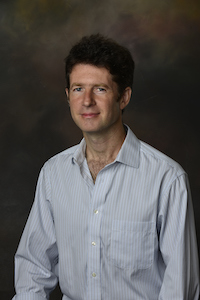
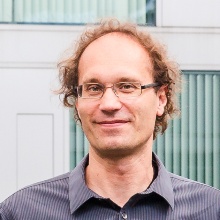
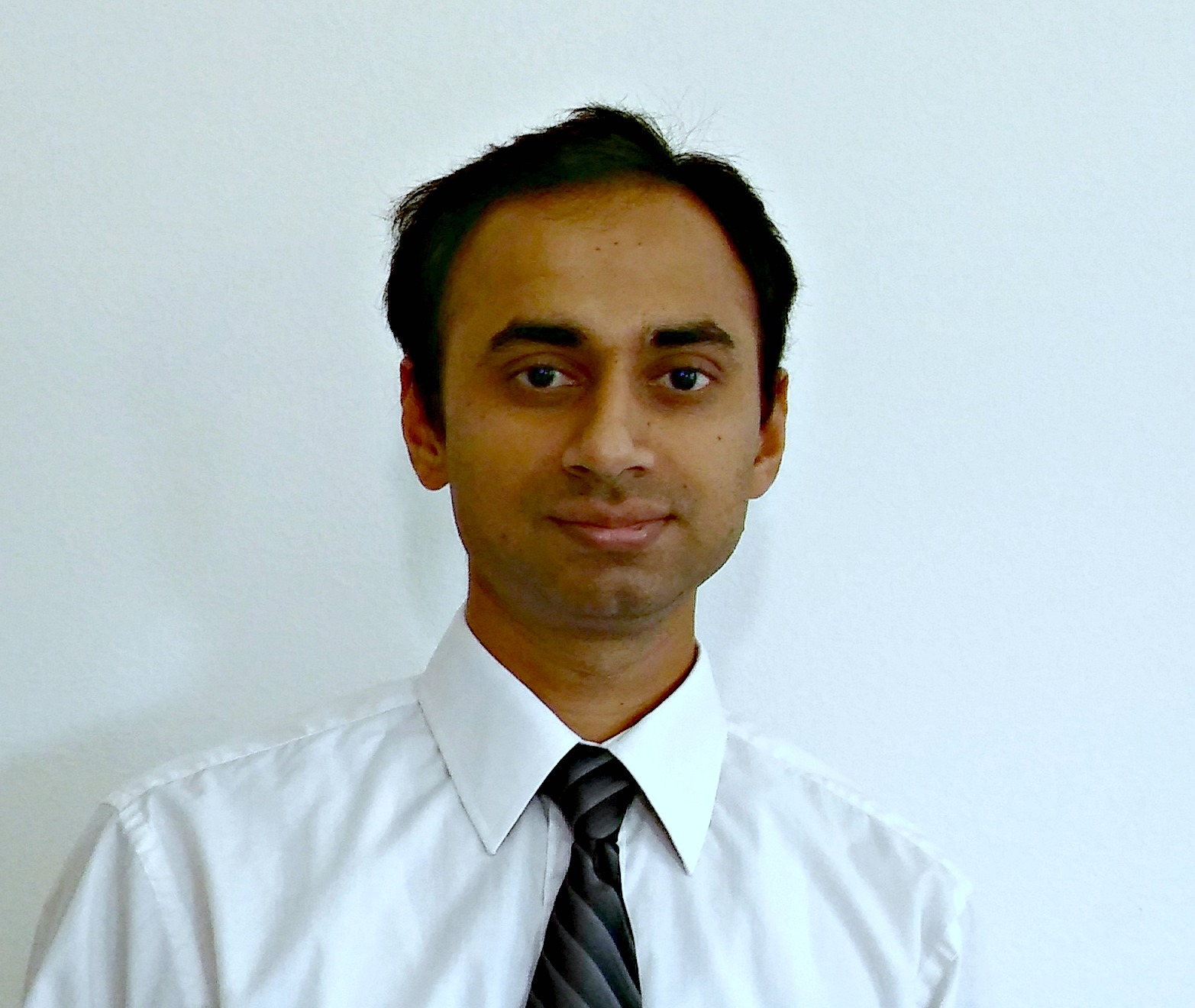
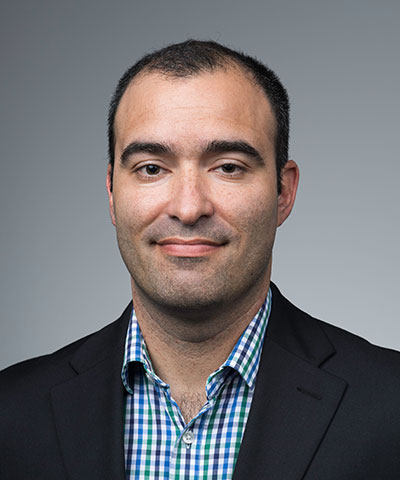
Dr. Nariman Farvardin serves as President and Professor of Electrical and Computer Engineering at Stevens Institute of Technology. Previously Senior Vice Provost at University of Maryland, he holds a PhD from Rensselaer Polytechnic Institute. His research focuses on data compression, wireless communications, and image processing. He has led major projects including a $5.5M Army Research Laboratory initiative on telecommunications and received honors including the Presidential Young Investigator Award and Academic Leadership Award from Carnegie Corporation. His patented inventions include image compression algorithms and wireless protocols. Funded by agencies including NSF, NASA and Mitsubishi, his work spans theoretical foundations to practical implementations like VLSI-based compression and CDMA network optimization. He has supervised over 30 graduate students and published 100+ works on communication systems.
Mark Yampolskiy is an Associate Professor in the Department of Computer Science and Software Engineering at Auburn University's Samuel Ginn College of Engineering. His research focuses on cybersecurity in additive manufacturing (AM), internet of things (IoT), and computer networks. Yampolskiy leads efforts to secure AM processes against cyber-physical attacks, including sabotage and data theft. He has received prestigious awards such as the ASTM International Additive Manufacturing Young Professor Award and led high-profile grants totaling over $685,000. Education: Ph.D. in Computer Science, Ludwig Maximilian University M.S. in Computer Science, Technical University Munich B.S. in Applied Mathematics, Moscow State Institute of Radiotechnics, Electronics and Automation Research Interests: Cybersecurity of digital & additive manufacturing IoT security and network defense Cyber-physical system vulnerabilities 3D printing integrity and sabotage detection Key Contributions: Developed frameworks for AM security awareness and threat modeling Pioneered studies on side-channel attacks in manufacturing Co-organized ASTM AM Security Working Groups and AMSec workshops Advocated for legal standards in AM intellectual property protection Awards: ASTM International Additive Manufacturing Young Professor Award America Makes Award ($260k+ for cybersecurity training) NSF Grant ($425k for sabotage prevention research) Labs/Initiatives: Active in Auburn's National Center for Additive Manufacturing Excellence (NCAME), McCrary Institute for Cyber and Critical Infrastructure Security.
Prof. Daniel Weiskopf is a Professor at the University of Stuttgart's Faculty of Computer Science, Electrical Engineering and Information Technology, affiliated with the Institute of Parallel and Distributed Systems. His research focuses on visualization techniques, eye tracking, and human-computer interaction, with applications in virtual/augmented reality (VR/AR), data analysis, and uncertainty modeling. He has contributed to advancements in scientific visualization, including ML-driven flow visualization, energy-efficient rendering, and gaze-aware interfaces. His work emphasizes empirical methodologies, such as eye-tracking studies for evaluating visualization literacy and collaborative learning in AR environments. Research interests include: Scientific Visualization and Uncertainty Representation Eye Tracking Methodologies and Human Factors VR/AR Systems and Immersive Analytics Machine Learning Applications in Visualization Recent publications highlight trends in optimizing visualization performance, improving data interpretation through gaze-aware systems, and integrating advanced visualization into gaming and engineering contexts. His work bridges computational methods with user-centric design principles. He leads efforts in the Institute of Parallel and Distributed Systems , collaborating on tools like Gazealytics for exploratory gaze analysis and mint for VR visualization integration. No awards or grants are explicitly listed in the provided information.
Dr. Martin Collier is an Associate Professor in the School of Electronic Engineering at Dublin City University and director of the Entwine Centre, focusing on IoT infrastructure. His research spans data and computer communications, network security, energy-efficient networking, and SDN/NFV. He leads projects like Horizon 2020's INPUT and FP7's ECONET, collaborating with IBM on data centre network design. His work emphasizes switch fabrics, green routers, and optical technologies. Research Interests: Switching/Routing, SDN, NFV, IoT, Energy Efficiency, Data Centre Networks. Recent Projects: INPUT (SDN/NFV personal cloud services), ECONET (energy efficiency), and IBM-funded data centre design. Laboratory activities include NetFPGA-based testing and SDN implementations. Teaching: Modules include Broadband Networks (EE552), Network Programming (EE562), and Communications Theory (EE450). Supervises final-year and MEng projects. Labs/Teams: Switching & Systems Lab (NetFPGA testbed), Entwine Centre (IoT infrastructure).
Longfei Shangguan is an Assistant Professor in the Department of Computer Science at the University of Pittsburgh's School of Computing and Information. He leads the Pittsburgh Experimental Research Group (PERG), focusing on hardware/software systems to advance computing, sensing, and communication in sensor/wireless technologies. Previously, he was a postdoc at Princeton and a senior researcher at Microsoft. He holds a PhD from HKUST (2015) under Professors Yunhao Liu and Ke Yi. Research Interests: Mobile/wireless systems, IoT, edge computing, and hardware/software co-design for sensor networks. Key areas include novel IoT applications, low-power hardware, and wireless protocol optimization. Key Projects Sensor-in-the-loop AI agents leveraging multimodal sensors Human-centric sensing using acoustic/vision modalities Wireless Digital Twin via neural ray tracing Professional Contributions Editor: IEEE Pervasive Computing, ACM GetMobile PC Member for top conferences including MobiCom, NSDI, SenSys Organized Dagstuhl Seminar on IoT Wireless Scenarios Awards NSF CAREER Award (2024) Google Research Scholar Award (2023) Best Paper Awards at MobiCom 2024 and MobiCom 2021 Advising & Grants Supervises 5 PhD students, 3 MS students, and undergraduate researchers Recipient of MassAITC Pilot Award (2025), NSF CAREER (2024) Labs/Teams: PERG lab focuses on experimental systems research with hands-on prototyping.
Nam Bui is an Assistant Professor in the Department of Electrical Engineering at the University of Colorado Denver, where he founded and directs the Intelligent Networked Systems and Cybernetics Laboratory (InsCy Lab). His research focuses on developing intelligent cybernetic systems at the intersection of AI, machine learning, and embedded systems, with applications in mobile/wearable health monitoring and physiological sensing. His research interests span: Innovative sensing techniques for health monitoring Embedded intelligent systems leveraging AI/ML Wearable technology for physiological measurement Multidisciplinary approaches to medical cybernetics Analysis of recent publications reveals consistent themes in wearable health technology development, particularly focusing on non-invasive monitoring techniques for vital signs (blood pressure, respiration, glucose) using ear-worn and behind-ear devices. Key technical innovations include compressed sensing frameworks, closed-loop acoustic stimulation systems, and novel sensing modalities like polarization-based optical detection. Awards and Honors: Best Paper Awards at ACM MobiCom (2019, 2017) ACM SigMobile Research Highlights (2020) Communication of ACM Research Highlights (2021) Colorado OEDIT Award (2024) NASA MUREP Program Award (2024) NSF Sense Award (2024) DoD STTR Grant (2024) Teaching Innovation Award (2023) Dr. Bui actively advises graduate students including Anh-Huy Dinh and undergraduate researchers including Luis Carlos Gutierrez and Alejandro Cordova. His laboratory has secured multiple grants from NSF, NASA, DoD, and Colorado economic development programs. He directs the Intelligent Networked Systems and Cybernetics Laboratory (InsCy Lab), which focuses on practical intelligent systems for health monitoring. The lab emphasizes multidisciplinary collaboration and has developed technologies like in-ear blood pressure monitors and closed-loop sleep aid devices.
Sanket Tavarageri is an Assistant Professor in the Computer Engineering Department at San José State University. He holds a Ph.D. in Computer Science and Engineering from The Ohio State University and a B.Tech from National Institute of Technology Karnataka. His research encompasses big data systems, machine learning infrastructure, and high-performance compiler technologies. Research areas include: Polyhedral compilation techniques for deep learning workloads Automatic parallelization and optimization frameworks Hardware-software co-design for computational efficiency Scalable machine learning systems His publication portfolio demonstrates consistent innovation in compiler architecture and parallel systems from 2013-2021. Recent work focuses on AI-enhanced compilation, automatic parallelism for deep learning models, and hardware-aware optimizations. Publications appear in ACM TACO, IEEE Big Data, IPDPS, and PLDI conferences. Tavarageri maintains an active industry connection as a researcher at Google. Tools developed through his BRIGHT laboratory are available on GitHub and Bitbucket. His teaching covers compiler technology, parallel computing, and systems design with emphasis on practical implementation.
Gregory D. Abowd is the Dean of the College of Engineering and Professor of Electrical and Computer Engineering at Northeastern University. He previously held roles at Georgia Tech, including Regents’ Professor and Associate Dean of Research. His research focuses on Human-Computer Interaction (HCI), Ubiquitous Computing, and Software Engineering, with notable contributions like the Aware Home and autism technology initiatives. Abowd has advised 30 PhD students and received prestigious awards including ACM SIGCHI Lifetime Research Award and the ACM Eugene Lawler Humanitarian Award. Education: D.Phil. (1991) and M.Sc. (1987) in Computation from the University of Oxford, B.S. in Mathematics (1986) from the University of Notre Dame. Research interests span HCI, ubiquitous computing systems, and their societal impact. His work emphasizes technologies for education, healthcare, and sustainability. Recent projects include self-powered interfaces (e.g., SPIN, SATURN) and computational materials. He is affiliated with Northeastern’s Khoury College of Computer Sciences and Health Sciences programs. Awards highlight his mentorship and innovation, with recognition from ACM, IEEE, and the American Academy of Arts and Sciences. His academic leadership includes roles at Georgia Tech and Northeastern, fostering interdisciplinary collaboration and engineering education.
Gonzalo Mateos is an Associate Professor in the Department of Electrical and Computer Engineering and holds a secondary appointment in the Department of Computer Science at the University of Rochester. He is also the Asaro Biggar Family Fellow in Data Science and a member of the Goergen Institute for Data Science and Artificial Intelligence. Additionally, he serves as an Associate Editor for IEEE Transactions on Signal Processing and IEEE Transactions on Signal and Information Processing over Networks , and is part of the IEEE SigPort Editorial Board. Dr. Mateos earned his B.Sc. in Electrical Engineering from Universidad de la Republica, Uruguay in 2005. He then pursued graduate studies at the University of Minnesota, Twin Cities, where he received his M.Sc. in 2009 and Ph.D. in 2011. Prior to joining the University of Rochester in 2014, he worked as a Systems Engineer at Asea Brown Boveri (ABB) in Uruguay from 2004 to 2006 and served as a visiting scholar at Carnegie Mellon University's Computer Science Department during the 2013 academic year. His research interests focus on statistical learning from Big Data , network science , decentralized optimization , and graph signal processing , with applications in dynamic network health monitoring , social networks , power grid analysis , and large-scale data analytics . His work emphasizes blind deconvolution, graph topology inference, fairness-aware methodologies, and explainable AI for medical and engineering systems. Dr. Mateos has been honored with the NSF CAREER Award (2018), the IEEE Young Author Best Paper Award (2017), and multiple conference best paper awards including ICASSP 2018, SSP Workshop 2016, and SPAWC 2012. His doctoral research was recognized with the University of Minnesota's Best Dissertation Award (2013, Honorable Mention) in Physical Sciences and Engineering. In advising, he mentors graduate students in his research areas, though specific names are not listed here. His grants include the NSF CAREER Award, and he collaborates on projects like fairness-aware graph filter design and dynamic network monitoring. His research teams and labs operate within the Goergen Institute, focusing on interdisciplinary data science and AI applications. He actively contributes to the Hajim School of Engineering and the broader University of Rochester community, fostering innovation at the intersection of electrical engineering and computer science. His industry experience and academic roles reflect a commitment to both theoretical and practical advancements in networked systems and machine learning.
Daniel Holcomb is an Associate Professor in the Department of Electrical and Computer Engineering at the University of Massachusetts Amherst, part of the College of Engineering. He specializes in secure and reliable embedded systems, with research interests spanning embedded systems security, hardware security, formal verification, VLSI design, and cryptography. Education : B.S. Electrical & Computer Engineering, University of Massachusetts (2005) M.S. Electrical & Computer Engineering, University of Massachusetts (2007) Ph.D. Electrical Engineering and Computer Sciences, University of California, Berkeley (2013) His research focuses on mitigating hardware vulnerabilities in FPGAs and chiplet-based systems, including countermeasures against side-channel attacks, voltage attacks, and IP theft via reverse engineering. He has contributed to the development of secure design methodologies, PUF-based authentication, and fault-resistant cryptographic implementations. His publications highlight advancements in FPGA security, such as defeating memory protection units (MPUs), preventing trojan insertion during fabrication, and mitigating power distribution attacks in multi-tenant environments. Holcomb is an active member of IEEE and Tau Beta Pi Honor Society. Labs & Teams : His work aligns with the College of Engineering’s research strengths in hardware security, including collaborations with labs focused on embedded systems and VLSI design.
Sabrina M. Neuman is an Assistant Professor of Computer Science at Boston University, specializing in computer architecture design informed by domain-specific insights, particularly for robotics applications. She holds a PhD in Electrical Engineering and Computer Science from MIT and was a postdoctoral NSF Computing Innovation Fellow at Harvard University. Her research focuses on closing computational gaps in robotics through domain-specific accelerators, leveraging robot morphology for hardware design. She has received honors including the 2021 EECS Rising Star and the Boston University Innovation Career Development Professorship (2023-2026). Education: PhD in Electrical Engineering and Computer Science, MIT M.Eng. in Electrical Engineering and Computer Science, MIT S.B. in Electrical Engineering and Computer Science, MIT Research Interests: Her work emphasizes domain-specific computing for robotics, including automated hardware design flows, FPGA/ASIC acceleration for motion planning, and scalable accelerator deployment across robot platforms. She develops methodologies like Robomorphic Computing, which translates robot morphology into customized hardware accelerators, achieving significant speedups in critical robotics kernels. Awards & Recognition: 2021 EECS Rising Star IEEE Micro Top Picks Honorable Mentions (2022, 2023) 2023-2026 Boston University Innovation Career Development Professorship Grants & Contributions: Developed RobotPerf, an open-source benchmarking suite for robotics computing systems Worked on Grid (GPU-accelerated rigid body dynamics) and RobotCore (ROS 2 hardware acceleration) Labs & Teams: While no specific lab name is mentioned, her work integrates closely with Boston University's robotics and computer architecture groups, emphasizing open collaboration with industry and academia.
Benedetta Piantella is an Industry Associate Professor at the NYU Tandon School of Engineering, affiliated with the Integrated Design & Media Program (IDM). She holds a dual role as an educator and humanitarian technologist, with over two decades of experience in international development, STEM education, and sustainable technology design. Her work focuses on participatory design methodologies to address global challenges in resource equity, climate resilience, and community-driven innovation. Education & Experience: Former Technologist in Residence at Cornell Tech (Connected Experiences Lab, Social Technologies Lab) Technology Architect at Columbia University’s Earth Institute and Quadracci Sustainable Engineering Lab Founder of two R&D companies focused on sustainable solutions for global problems Research Interests: Benedetta’s work bridges technology and society through projects like the Solar Protocol initiative, which explores energy-positive internet infrastructure, and the Low Power Lab’s development of off-grid systems. She emphasizes participatory design, user-centered approaches, and open-source collaboration to create resilient networks and IoT solutions for underserved communities. Key Contributions: Her research addresses equitable access to life-sustaining resources through solar microgrids, real-time monitoring systems, and distributed infrastructure. Recent projects include deploying 24/7 water kiosks in Africa and developing decentralized energy networks for disaster resilience. Labs & Affiliations: Center for Urban Science + Progress (CUSP) Low Power Lab Partnerships with UNICEF, UN, and Millennium Villages Project
Maged Elkashlan is a Professor in the Department of Electronic Engineering at Queen Mary University of London, UK. He specializes in wireless communications, with a focus on 5G/6G systems, massive MIMO, reconfigurable intelligent surfaces (RIS), and ultra-reliable low-latency communication (URLLC). His research spans physical layer security, energy-efficient networks, and non-orthogonal multiple access (NOMA). He has authored over 200 papers in top-tier journals and conferences and holds editorial roles in IEEE Transactions on Communications, IEEE Transactions on Vehicular Technology, and others. He has supervised numerous PhD students, including current scholars working on RIS and cell-free MIMO. His teaching includes courses on digital signal processing, communication theory, and wireless communications at Queen Mary, the University of Sydney, and the University of New South Wales. He has organized major symposiums at IEEE ICC and VTC, and his work has been recognized through best paper awards and industry collaborations. Editorships: IEEE Transactions on Communications, IEEE Transactions on Vehicular Technology, IEEE Transactions on Molecular, Biological and Multi-Scale Communications Key Research Areas: Cell-Free Massive MIMO, RIS-aided systems, NOMA, URLLC, physical layer security Recent Activities: Symposium co-chair for IEEE VTC 2018 and ICC 2018, guest editor of IEEE Communications Magazine special issues on millimeter-wave and green media Grants & Funding: China Scholarship Council (CSC) for PhD students, various research grants supporting RIS and URLLC projects
Giuseppe Belgioioso is an Assistant Professor at the Division of Decision and Control Systems within the Digital Futures Faculty at KTH Royal Institute of Technology. His research focuses on control systems, game theory, and optimization algorithms applied to complex systems such as smart grids, data centers, and multi-agent networks. He collaborates with Stockholm University and RISE Research Institutes of Sweden through the Digital Futures initiative. His work bridges theoretical foundations with practical applications in energy markets, networked systems, and algorithmic fairness. Belgioioso’s research interests include distributed optimization, equilibrium seeking in games, and data-driven control methodologies. He explores carbon-aware computing strategies for sustainable data centers and designs algorithms to mitigate polarization in recommendation systems. His contributions often integrate game-theoretic models with feedback control principles to address real-world challenges in energy systems, traffic routing, and peer-to-peer energy trading. His recent work emphasizes online learning and model-free approaches for dynamic systems, with applications to multi-area power grids and autonomous decision-making. He has published extensively on topics such as hypergradient-based optimization, decentralized equilibrium seeking, and stability analysis of distributed algorithms. His research is characterized by a strong interdisciplinary approach, combining systems theory with practical engineering solutions.
Luis Gerhorst is a Researcher at the Department of Computer Science 4 (Distributed Systems and Operating Systems) at Friedrich-Alexander-Universität Erlangen-Nürnberg. He focuses on systems software, embedded systems, energy-efficient computing, and security mitigations against transient execution attacks like Spectre. His work spans kernel-level optimizations, carbon-aware cloud systems, and embedded system resilience. Education: Completed Bachelor's and Master's theses in system software at FAU, focusing on system-call aggregation and Linux kernel interrupt handling. Research Interests: His primary areas include operating systems, distributed systems, and energy-aware resource management. Notable contributions include the AnyCall system-call aggregation framework and VeriFence , a Spectre defense mechanism for BPF programs. He also explores carbon footprint modeling in cloud environments through projects like carbond . Publications: Recent work addresses energy-efficient embedded systems (vNV-Heap), power-failure resilient network stacks (PfIP), and reverse-engineering Wi-Fi drivers for energy analysis. His research often bridges hardware-software co-design and environmental sustainability. Grants/Advising: Supervised over 10+ theses on topics like carbon-aware timers, BPF sandboxing, and Rust-based alternatives to BPF. Active in open-source projects like Linux kernel contributions and GitHub repositories for systems research. Labs/Teams: Member of Lehrstuhl für Informatik 4, collaborating on projects related to system software and embedded systems resilience. Maintains active GitLab/ GitHub repositories for research tools and prototypes.