Emilio Frazzoli is a Full Professor at ETH Zurich’s Department of Mechanical and Process Engineering. He leads the Institute for Dynamic Systems and Control and the Center for Sustainable Future Mobility, focusing on autonomous systems, robotics, and socio-technical control frameworks. Current affiliations: ETH Zurich (Dynamic Systems and Control, Sustainable Future Mobility) Research: Autonomous mobility-on-demand, game theory for resource allocation, and safety verification in multi-agent systems His work bridges robotics, control theory, and economics, with projects like the open-source AMoDeus simulation framework for autonomous taxis and karma-based resource allocation systems. Recent publications emphasize trustworthy AI, reproducibility in autonomous vehicle control, and human-robot interaction challenges. Notable projects include nuReality (VR-based pedestrian interaction studies) and CARSI II (context-driven vehicle interfaces).
Professor Tulika Mitra is the Dean of the School of Computing and Vice Provost (Special Projects) at the National University of Singapore (NUS). She holds the Provost’s Chair Professor in the Department of Computer Science and has been instrumental in shaping academic policies and strategic initiatives at NUS since joining in 2001. PhD in Computer Science, Stony Brook University (2000) M.E. in Computer Science, Indian Institute of Science (1997) B.E. in Computer Science, Jadavpur University (1995) Her research focuses on hardware-software co-design for energy-efficient computing systems, particularly in real-time embedded systems, heterogeneous architectures, and AI accelerators. She leads major research programs such as the NRF Competitive Research Programme on Low-Power Edge Accelerators and the MOE Tier-3 Programme on Green AI , collaborating with industry leaders like ARM, AMD, and Meta. Her recent publications highlight innovations in CGRA optimization , sparse attention mechanisms , photonic-digital hybrid architectures , and low-power ML inference . These works often integrate compiler techniques, architectural design, and real-time constraints for edge computing applications. Scientific Awards : ESWEEK Test-of-Time Award (2022), ACM SIGDA Distinguished Service Award, IEEE CEDA Outstanding Service Recognition Award, Teaching Excellence Award (2006), and multiple best paper recognitions. Education Leadership : Spearheaded the Computer Engineering (CEG) Programme at NUS, a joint initiative between Engineering and Computing. As a mentor , she has supervised over 25 PhD students , many now in prominent academic or industrial roles. Her research group eCO Lab focuses on embedded computing challenges, while her grant collaborations include projects on 5G base stations, reconfigurable architectures, and IoT-optimized SoCs.
François Guimbretière is a Professor in the Department of Information Science at Cornell University, with affiliations to the Department of Design & Technology. He holds a PhD in Computer Science from Stanford University and previously served on the faculty at the University of Maryland before joining Cornell in 2009. His research centers on human-computer interaction, human-robot interaction, and interface design, with a strong emphasis on hardware/software co-design to create seamless, sustainable, and innovative interactive systems. His work spans multiple domains including interactive fabrication, remote collaboration, and low-power interfaces. Guimbretière's recent research explores novel fabrication methods such as interactive printing and yarn-based electronics, as well as immersive remote embodiment systems that reduce reliance on physical travel. These efforts reflect a broader trend toward sustainable and accessible interaction technologies. His publications demonstrate consistent contributions to top-tier venues in HCI and ubiquitous computing, focusing on tangible, wearable, and environmentally conscious interfaces. Scientific Recognition: He advises graduate and undergraduate researchers in the development of next-generation interactive systems. His lab supports projects in digital fabrication, remote presence, and sustainable design, often involving interdisciplinary collaboration. While specific grants are not listed, his research trajectory suggests sustained funding in human-centered technology innovation. He leads a research group focused on building practical, user-centered systems that bridge the digital and physical worlds through creative engineering and design. The lab emphasizes hands-on prototyping, real-world deployment, and the integration of traditional craft with advanced technologies.
Jelle Hellings is an Assistant Professor in the Department of Computing and Software at McMaster University , Canada. His research focuses on high-performance large-scale data management systems with a strong theoretical and algorithmic component, including resilient systems (blockchains) , graph databases , and external-memory algorithms . He previously worked as a Postdoc Scholar at the University of California, Davis and earned his PhD from Hasselt University in Belgium. Education: Doctor of Sciences in Computer Science (2018), Hasselt University Master of Science in Computer Science and Engineering (2011), Eindhoven University of Technology His research interests include scalable resilient systems with Byzantine fault tolerance, database theory, graph query languages, constraints on graph data, and external-memory algorithms for large graph datasets. He has authored numerous high-impact publications on blockchain-based resilient systems, query optimization in graph databases, and theoretical advancements in relation algebra expressiveness. Hellings actively contributes to academic service through program committee memberships and tutorial organization, and he currently teaches courses on future resilient databases and foundational computer science topics.
Professor Bharat Bhuva is a faculty member in the School of Engineering at Vanderbilt University, holding the position of Professor of Electrical Engineering and Computer Engineering . His research focuses on radiation effects on integrated circuits, semiconductor device modeling, and VLSI design, with an emphasis on advancing the resilience of nanoscale electronics against single-event effects and total-ionizing-dose damage. He also investigates emerging technologies like FinFET and FDSOI for improved radiation hardness and performance. Education: Ph.D. in Electrical Engineering, North Carolina State University M.S. in Electrical Engineering, North Carolina State University B.S. in Electrical Engineering, Maharaja Sayajirao University Research Interests: Professor Bhuva’s work spans computer-aided design tools, semiconductor process modeling, and the mitigation of radiation-induced failures in advanced integrated circuits. His studies address challenges posed by scaling to smaller technology nodes (e.g., 3-nm FinFET) and the impact of environmental factors like temperature, bias conditions, and neutron exposure on circuit reliability. Key areas include multicell upsets, single-event upset (SEU) cross-section analysis, and the efficacy of radiation-hardened-by-design (RHBD) techniques. Awards & Recognition: None explicitly listed in the provided text. However, his extensive publications in top-tier journals like IEEE Transactions on Nuclear Science highlight his contributions to the field. Grants & Advising: Advises on projects related to advanced semiconductor technologies and radiation effects. His research has been supported by grants from institutions focusing on space electronics and nanotechnology. No specific grant details or student advisees are listed. Labs & Teams: Likely affiliated with Vanderbilt’s Cyber-physical Systems and Nano Science and Technology research neighborhoods, though specific lab names are not mentioned in the text.
Dr. Yuzhang Lin is an Assistant Professor in the Department of Electrical and Computer Engineering at NYU Tandon School of Engineering. Previously, he held an Assistant Professor position at the University of Massachusetts Lowell (2018–2023). He earned his Ph.D. from Northeastern University and B.Eng./M.S. from Tsinghua University. His research focuses on smart grids, renewable energy systems, cyber-physical resilience, and machine learning applications. He leads editorial roles for IEEE Transactions on Power Systems and chairs IEEE PES Task Forces on standard test cases and distribution system operations. Dr. Lin’s research has been funded by NSF, DOE, ONR, and others. He is a recipient of the NSF CAREER Award and Northeastern’s Graduate Student Outstanding Research Award. His work emphasizes data-driven solutions for grid resilience, including state estimation, cyber-physical defense, and distributed energy integration. The Lin Group actively seeks PhD candidates interested in advancing smart grid technologies. Education: Ph.D. (Northeastern University), B.Eng./M.S. (Tsinghua University) Grants: NSF, DOE OE/EECE/CESER, ONR, NYSERDA, MassCEC Service Roles: IEEE PES Task Force Co-chair (Standard Test Cases), Secretary (Distribution System Operations Subcommittee) Publications span top journals/conferences, focusing on state estimation, inverter-based resource control, and machine learning for grid systems. His lab develops cutting-edge tools for power system resilience and renewable energy integration.
Hailong Jiao is an Assistant Professor in the Department of Electrical Engineering at Eindhoven University of Technology (TU/e) and an Associate Professor at Peking University Shenzhen Graduate School's School of Electronic and Computer Engineering. He is also a Visiting Assistant Professor with TU/e's Electronic Systems group. His research focuses on low-power and variations-resilient VLSI circuit and system design , including error-resilient systems, approximate computing, machine learning in VLSI, ultra-low voltage circuits, and emerging devices like 3D integration and carbon electronics. Education : BSc (highest honor, 2004, Shandong University), MSc (2008, Institute of Microelectronics, Chinese Academy of Sciences), PhD (2012, HKUST). Collaborations : BrainWave project (TU/e and Radboud University Nijmegen) developing wearable brainwave processing for epilepsy/Parkinson's healthcare. Editorial Roles : Associate Editor for Elsevier Microelectronics Journal and World Scientific Journal of Circuits, Systems, and Computers. Committee Memberships : HiPEAC, MemoCiS, ACM/SIGDA, and six IEEE committees. Research Trends : Recent articles emphasize energy-efficient IoT networks , voltage stacking , sensitivity control , and scan flip-flop design , aligning with UN SDGs for energy engineering and healthcare innovation. Scientific awards include highest honor at BSc .
Brandon Lucia is a Professor in the Department of Electrical and Computer Engineering at Carnegie Mellon University's College of Engineering. He holds the Kavčić-Moura Professorship and leads the Abstract research group. As CEO and co-founder of Efficient Computer Corp., he bridges academic research with commercial applications in energy-efficient computing. Dr. Lucia received his Ph.D. in Computer Science and Engineering from the University of Washington in 2013, following an MS from the same institution in 2010 and a BS in Computer Science from Tufts University in 2007. His research focuses on the intersection of computer architecture, computer systems, and programming languages, particularly in energy-constrained environments. His primary research interests include intermittent computing, energy harvesting computers, orbital edge computing, and parallel computing systems. Lucia's work addresses fundamental challenges in creating programmable, reliable computing devices that operate without batteries by harvesting energy from their environments, with applications in sensing, medical implants, and space systems. He also investigates software systems and architectures for making parallel computing correct, reliable, and efficient in the post-Moore's Law era. Lucia's publication record shows a clear trajectory toward orbital edge computing and nanosatellite systems, with recent work focusing on computational constellations, visual navigation for satellites, and energy-efficient processing in space. His research spans both theoretical foundations of intermittent computing and practical implementations in hardware and software. 2021 Sloan Research Fellowship 2018 NSF CAREER Award 2018 ASPLOS Best Paper Award IEEE MICRO Top Picks in Computer Architecture (2009, 2010, 2016) 2015 OOPSLA Best Paper Award 2019 IEEE TCCA Young Computer Architect Award 2022 Engineering Faculty Award As an advisor, Lucia has mentored numerous graduate students including Brad Denby, Zhuo Cheng, and Kyle McCleary, many of whom have become co-authors on his significant publications. His lab developed the world's first batteryless PocketQube nanosatellite (Tartan-Artibeus-1), which was deployed to low-Earth orbit aboard the SpaceX Transporter-3 Rocket. Lucia's research has received funding from sources including NSF, DARPA, Google, and VMware, supporting both fundamental research and practical implementations of energy-harvesting computing systems.
Ozcan Ozturk is a Professor in the Computer Science and Engineering and Electronics Engineering programs at Sabancı University's Faculty of Engineering and Natural Sciences. Previously, he held professorships at Bilkent University and adjunct roles at North Carolina State University. His expertise spans heterogeneous computing, parallel systems, processor architecture, and compiler optimization. He earned his Ph.D. from Penn State University, with prior academic roles at the University of Florida and internships at Intel and Marvell. Education: Ph.D. in Computer Science and Engineering (2007), Pennsylvania State University M.S. in Computer Engineering (2002), University of Florida B.Sc. in Computer Engineering (2000), Bogazici University Research interests include accelerator technologies, GPU-based systems, multicore processors, and compiler optimizations. His work focuses on improving parallelization efficiency, energy optimization, and reliability in heterogeneous architectures. He leads funded projects like 'Machine Learning for Compiler Flags' and 'Graph Accelerator Design'. Notable awards include the Bilkent Teaching Award (2019), BAGEP (2018), and HiPEAC Paper Award (2016). He serves on editorial boards of IEEE and ACM journals and chairs major conferences like ASPLOS and ICS. Grants and collaborations include partnerships with Huawei, Intel, NVIDIA, and TÜBİTAK. He advises over 20 students and has supervised projects in safety-critical systems, FPGA accelerators, and compiler-directed optimizations. His lab develops domain-specific architectures, including RISC-V extensions for graph processing.
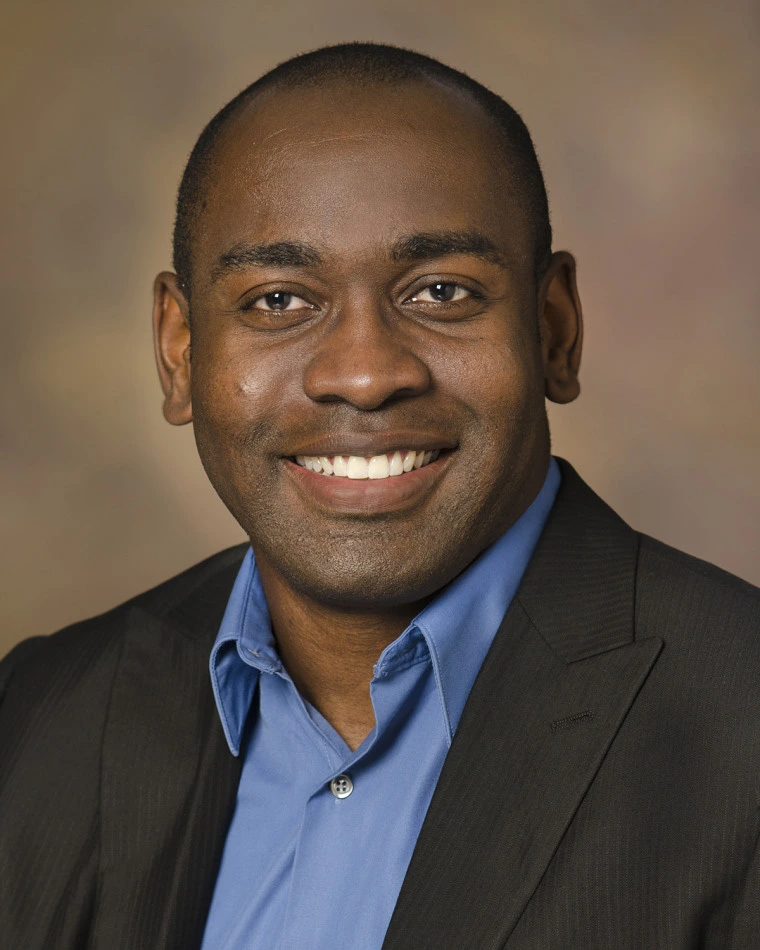
Tosiron Adegbija is an Associate Professor in the Department of Electrical and Computer Engineering at the University of Arizona, where he serves as Director of Graduate Studies and Thomas R. Brown Endowed Fellow. He is a member of the Graduate Faculty and actively contributes to research and teaching in computer architecture and embedded systems. Education: PhD in Electrical and Computer Engineering, University of Florida, 2015 MS in Electrical and Computer Engineering, University of Florida, 2011 BS in Electrical Engineering, University of Ilorin, Nigeria, 2005 His research centers on energy-efficient computing with a focus on bio-inspired computer architecture , including spiking neural network (SNN) accelerators and in-memory computing. He also explores domain-specific architectures , adaptable memory systems , and microprocessor optimizations for IoT . His work leverages novel memory technologies like STT-RAM to enhance performance and reduce energy consumption in embedded and resource-constrained systems. Recent publications highlight trends in hybrid SNN acceleration, domain-specific accelerator generation, and system-level design space exploration. His research is increasingly focused on neuromorphic computing, automated hardware design, and ultra-efficient architectures using emerging materials like antiferromagnetic tunnel junctions. Scientific Awards: National Science Foundation (NSF) CAREER Award (2019) Elected IEEE Senior Member (2020) Best Paper Award at IEEE ISVLSI (2014) Teaching Award, University of Arizona (2018) ACM GLSVLSI Travel Award (2015) He advises numerous graduate and undergraduate students, many of whom have pursued careers at institutions like Pacific Northwest National Labs, Micron Technology, and Amazon. He has secured significant funding, including a $1.9M NSF FuSE2 grant for energy-efficient computing. His lab collaborates with UA Physics, CMU, and UNL. He has also developed educational tools for Chipyard and RISC-V, supporting hands-on learning in computer architecture. Labs and Research Teams: Leads a research group focused on bio-inspired and domain-specific computing, fostering innovation in energy-efficient hardware. The lab emphasizes hardware/software co-design, neuromorphic engineering, and real-world deployment in IoT and biomedical applications.
Anil Madhavapeddy serves as Professor of Planetary Computing at the University of Cambridge's Department of Computer Science and Technology and directs the Cambridge Centre for Carbon Credits (4C). A Fellow of Pembroke College, he integrates systems research with environmental conservation through the Computer Laboratory's Environment and Energy Group. His career spans industry leadership (NetApp, Citrix, Intel), academic appointments (Cambridge, Imperial, UCLA), and entrepreneurial ventures (XenSource, Unikernel Systems, Docker). Madhavapeddy earned his PhD at Cambridge's Computer Laboratory in 2006. His research bridges computational systems and planetary-scale environmental challenges, with deep expertise in open-source development (OCaml, Xen, Docker, OpenBSD) and technology strategy advising for organizations including Zededa, Tezos Foundation, and Tarides. His work centers on environmental computing and climate informatics, leveraging distributed systems and functional programming to develop sensing infrastructure for conservation. Recent projects focus on carbon credit systems, AI-driven biodiversity monitoring, and sustainable computing architectures that minimize ecological footprints while maximizing analytical capability. Analysis of his 2025 publications reveals a concentrated effort on AI-integrated conservation tools, privacy-preserving carbon accounting, and energy-efficient computing. Key themes include spatial networking for ecological data, LLM-enhanced evidence retrieval in conservation science, and novel metrics for extinction risk assessment—demonstrating computational innovation applied to urgent planetary boundaries. No scientific awards were documented in the source material. Madhavapeddy advises multiple technology firms on strategic development while leading the Cambridge Centre for Carbon Credits, though specific grant funding details remain unreported. He actively contributes to the Environment and Energy Group at Cambridge's Computer Laboratory and directs the interdisciplinary Cambridge Centre for Carbon Credits (4C). His open-source leadership spans critical infrastructure projects including OCaml, Xen, and Docker, fostering collaborative development communities that underpin modern cloud and container technologies.
Robert Dick is a Professor in the Department of Electrical Engineering and Computer Science at the University of Michigan, part of the College of Engineering. He previously held roles as Associate Professor at Northwestern University and Visiting Professor at Tsinghua University. He earned his Ph.D. from Princeton University and a Bachelor's degree from Clarkson University. His research focuses on Embedded Systems, Learning Dynamics, Efficient Machine Learning, Privacy, and Censorship Resistance. Key themes include defining problems with correct costs/constraints, broadening access to information technology, mitigating negative tech impacts, and solving inference problems with limited resources. He leads the Embedded Systems Graduate Program and is a member of the Michigan Integrated Circuits Laboratory (MICL). His work spans thermal management, energy-efficient computing, and low-power wireless networks. Notable contributions include innovations in embedded system design, machine vision frameworks, and sensor networks. Courses taught include EECS 507 (Embedded Systems Research), EECS 373 (Embedded System Design), and ENGR 100 (Autonomous Systems). His recent publications emphasize AI model analysis, energy-efficient networks, and environmental sensing. Projects include MemX (attention-aware wearable tech) and LoRa-based LPWAN protocols. Dick co-founded Stryd, a company commercializing embedded systems innovations.
Professor Marta Zofia Kwiatkowska is Professor of Computing Systems and Fellow of Trinity College at the University of Oxford, where she has held a faculty position since 2007. She previously served as Professor of Computer Science at the University of Birmingham (2001–2007), Reader and Lecturer at the University of Birmingham (1994–2001), and Lecturer at the University of Leicester (1986–1994). Her academic career began as Assistant Professor at the Jagiellonian University in Kraków, Poland (1980–1988). Education: BSc/MSc in Computer Science, Jagiellonian University, Kraków MA, University of Oxford PhD, University of Leicester Research Interests: Professor Kwiatkowska spearheaded the development of probabilistic and quantitative verification methods on the international stage. Her work bridges theory and practice through the PRISM model checker—the leading software tool in probabilistic model checking—used worldwide for research and teaching. Application domains include communication and security protocols , nanotechnology designs , power management , ubiquitous computing and systems biology . She investigates automated verification , temporal logics , semantic models for concurrency , real-time systems , and biological process modelling . Current grant funding exceeds £3.7 million from EPSRC, EU and ERC, including the prestigious ERC Advanced Grant VERIWARE. Scientific Awards & Honours: Fellow of the Royal Society Fellow of the ACM Fellow of the European Association for Theoretical Computer Science (EATCS) Fellow of the British Computer Society (BCS) Fellow of the Polish Society of Arts & Sciences Abroad ERC Advanced Grant VERIWARE (€2.046 M, 2010–2015) Top Cited Article Award, Theoretical Computer Science (2005–2010) Best Paper Award, QEST 2006 Doctoral Supervision & Grants: Professor Kwiatkowska actively supervises doctoral students (D.Phil. at Oxford) and post-doctoral researchers. She welcomes applications in areas aligned with her research interests, detailed here . Current students include Charlie Griffin, Daqian Shao, Matthew Yuan and Minghao Liu; past students and researchers number over twenty, many now in faculty or industry leadership roles. Laboratory & Teams: She leads the Oxford Quantitative Verification group within the Department of Computer Science. Ongoing projects include FUN2MODEL, ELSA, FAIR and the flagship PRISM probabilistic model checker. The group maintains strong collaborations with biological, robotics and engineering teams worldwide.
Dr. Yujie Tang is an Assistant Professor in the Faculty of Computer Science at Dalhousie University, Canada, where she has been serving since September 2022. Prior to this, she was an Assistant Professor at Algoma University (2019–2022) and a Post-Doctoral Fellow at the University of Waterloo (2017–2019). Her academic journey includes a PhD from the University of Waterloo and earlier degrees from Harbin Institute of Technology and Lanzhou Jiaotong University. PhD – University of Waterloo (2017) M.E. – Harbin Institute of Technology, Shenzhen, China B.E. – Lanzhou Jiaotong University, Lanzhou, China Her research focuses on intelligent networking and computing technologies for future IoT and 5G/6G systems. Key areas include Internet of Vehicles (IoV), AI-empowered edge computing, resource management in heterogeneous networks, software-defined networking, and UAV-assisted communications. She employs machine learning and optimization techniques to design energy-efficient and high-performance network protocols. The most recent publications reflect a strong trend in applying AI and machine learning to solve complex problems in vehicular networks, edge caching, and spectrum management. Her work spans top-tier IEEE journals such as IEEE Transactions on Vehicular Technology , IEEE Internet of Things Journal , and IEEE JSAC , with a clear emphasis on real-world deployable solutions for next-generation wireless systems. Faculty Research Startup Fund, Dalhousie University, 2022 NSERC Discovery Grant, 2021–2026 Algoma University Research Fund, 2021 Faculty Research Startup Fund, Algoma University, 2019 Best Speaker Award, University of Waterloo, 2017 Faculty of Engineering Award (4 times), University of Waterloo, 2013–2017 University of Waterloo Graduate Scholarship, 2013–2015 International Doctoral Student Award, 2012–2016 Graduate Research Studentship (twice), 2011–2012 Provost Doctoral Entrance Award for Women, 2011 Dr. Tang actively supervises graduate and undergraduate students and has secured competitive research grants, including the NSERC Discovery Grant. She serves on the technical program committees of major IEEE conferences such as INFOCOM, GLOBECOM, and ICC, and regularly reviews for top journals like IEEE JSAC , IEEE TWC , and IEEE TVT . She currently leads a research group focusing on B5G/6G networks, IoV, and edge computing, and she is actively recruiting new students and visiting scholars. Her research group operates within the Faculty of Computer Science at Dalhousie University, where she leads projects in intelligent resource management, AI-driven networking, and integration of space-air-ground networks. She is a member of IEEE, IEEE Communications Society, and IEEE Vehicular Technology Society.
Professor Peter Y. K. Cheung is a Professor of Digital Systems at Imperial College London, holding dual affiliations within the Department of Electrical and Electronic Engineering and the Dyson School of Design Engineering. His work focuses on reconfigurable systems, FPGA architectures, and high-level synthesis tools. He co-founded one of the UK's leading FPGA research groups with Professor Wayne Luk, addressing challenges in variability mitigation, reliability, and application-specific FPGA deployments. His research spans Field-Programmable Gate Arrays (FPGAs) Reconfigurable computing Neural network acceleration Cryptographic protocols Embedded systems He has pioneered techniques such as logic shrinkage for FPGA-based neural networks and developed frameworks like LUTNet for efficient inference. His contributions also include fault-tolerant FPGA designs and methodologies for distributed computation protocols. Key collaborations include work with the Department of Computing on FPGA-based AI acceleration and cybersecurity applications. His recent work explores edge computing, secure decentralized systems, and pandemic modeling using adaptive control strategies. Notable projects include the DSCS protocol for secure distributed computation, acceleration of gravitational wave detection algorithms, and energy-efficient CNN implementations. His research bridges hardware-software co-design with real-world applications in healthcare, finance, and aerospace.