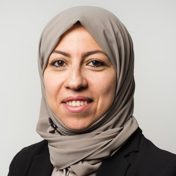
Azza Mahmoud is a Senior Lecturer in Chemical Engineering at Canterbury Christ Church University (CCCU), where she has been a faculty member since 2021. She is affiliated with the Sustainable Engineering and the Built Environment unit. Her educational background includes: Bachelor's degree in Physics Master's degree in Physics PhD in Chemical Engineering (research on powder flowability measurement for cohesive powders) Specializing in Powder Technology, Dr. Mahmoud's research focuses on powder flowability and the behavior of cohesive powders. Her work applies principles of physics to chemical engineering challenges, contributing to sustainable engineering practices in powder processing and industrial applications. She maintains an active role in Chemical Engineering education at CCCU, teaching courses within her department while advancing research in powder mechanics.
Véronique FALK is a Professor and Deputy Director at ENSGSI (Groupe INP) in Nancy, France. She coordinates the Pharma+ Track and oversees 2nd-year engineering studies. Her academic roles include Deputy Director of Studies and leadership in chemical engineering education. She holds a 1991 Engineering diploma from ENSIC and a DEA in Process Engineering from LSGC. Her research at the LRGP laboratory focuses on product engineering, powder technology, mixing, granulation, compression, and flow behavior . Key areas include pharmaceutical processes, sustainable development, and material science applications in cosmetics and energy storage. Recent work explores silica nanoparticles' impact on dustiness, 3D printing for soil science, and ontology-based decision systems for emulsion design. Dr. FALK teaches core engineering courses such as Physics/Chemistry, Process Design, and Chemical Reaction Engineering. She actively contributes to curriculum development in systems innovation and pharmacist engineering programs. Her research bridges theoretical mechanics (e.g., granular material modeling) with practical applications like battery electrode design and cosmetic formulation 4.0.
Bernardo Castro Dominguez is a Senior Lecturer in Chemical Engineering at the University of Bath, leading the Smart Process Engineering Lab. His research integrates engineering, chemistry, robotics, and computer science to develop sustainable materials and processes for pharmaceuticals, sensing, and waste recycling. He holds a Ph.D. in Chemical Engineering from the University of Tokyo and M.S./B.S. degrees from the University of Utah. Dominguez's work focuses on digital process engineering, machine learning for materials discovery, and sustainable manufacturing. His lab develops innovative methods like electrospinning for membrane fabrication and AI-guided material design, emphasizing environmental sustainability. He collaborates on projects including hydrochar production, CO2 conversion, and biomedical manufacturing. Publications show strong emphasis on membrane technology, additive manufacturing, and computational modeling for industrial applications.
Faisal Abbas is a Research Fellow at the Strathclyde Institute of Pharmacy and Biomedical Sciences, University of Strathclyde. His work focuses on Robotics, Automation, Control, and Instrumentation, with current research on automated microscale medicine manufacturing systems under the Made Smarter Innovation project. He holds a PhD in Electronic Engineering from the University of Kent (2022), where he specialized in data-driven modeling of mass flow in pneumatic systems. Abbas has prior experience as an Associate Lecturer in Electrical Engineering at the National University of Computer and Emerging Sciences (NUCES). Education: Bachelor's in Electrical Engineering (2014) - NUCES Master's in Electrical Engineering (2017) - NUCES PhD in Electronic Engineering (2022) - University of Kent Research Interests: Robotics and automation in pharmaceutical manufacturing, control systems, data-driven modeling, and sustainable drug production aligned with UN SDGs. His expertise bridges engineering and biomedical sciences, addressing challenges in dosage form validation and particle dynamics. Notable Projects: Leading the development of an automated microscale medicine manufacturing system (DM² project) Co-investigator on the Industrial CASE Account project (EPSRC-funded) Awards: Recipient of the Vice Chancellor’s Award (2018) from the University of Kent for academic excellence. Collaborations: Involved in multidisciplinary teams including the Centre for Continuous Manufacturing and Advanced Crystallization. Presented research at conferences like the 2022 Invited Talk on Sensor Enabled Automation.
Associate Professor Runyu Yang is a faculty member at the School of Materials Science & Engineering, University of New South Wales (UNSW), where he has served since 2003. His academic progression at UNSW includes positions as ARC-CSIRO Postdoctoral Fellow (2003-2006), Lecturer (2006-2008), Senior Lecturer (2008-2011), and Associate Professor (2012-present). His research focuses on particle/powder science and technology, with particular expertise in numerical modeling of particulate systems. Dr. Yang's research interests center on discrete element method (DEM) modeling, granular flow dynamics, particle packing, and multi-phase flow systems. His work has significantly advanced understanding in powder dispersion mechanisms, particularly in pharmaceutical applications such as dry powder inhalers. He has developed improved DEM models by incorporating rolling friction and van der Waals forces, and demonstrated that the loosest state of mechanically stable random packings does not exist—a finding published in Physical Review Letters. His research spans both fundamental particle science and practical applications in pharmaceuticals, mineral processing, and energy systems. Analysis of Dr. Yang's recent publications (2023-2025) reveals a strong focus on computational modeling of particulate systems across diverse applications. His work demonstrates a clear trajectory toward increasingly sophisticated multi-physics approaches, combining DEM with CFD, VOF, and GPU acceleration techniques. The research spans pharmaceutical aerosols (particularly dry powder inhalers), mineral processing (HPGR and SAG mills), metallurgical applications (blast furnace slag), and fundamental particle science. This interdisciplinary approach connects fundamental particle physics with practical engineering applications across multiple industries. Dr. Yang has published over 60 high-quality, peer-reviewed journal and conference papers in prestigious journals including Physical Review Letters/E, Journal of Applied Physics, Journal of Colloid and Interface Science, and AIChE Journal. His work has been cited over 460 times with an h-index of 12, reflecting significant impact in his field. Dr. Yang has attracted more than $1 million in research funding from the Australian Research Council (ARC), CSIRO, and industry partners. He is currently supervising 1 postdoctoral fellow and 6 postgraduate students. His teaching contributions include courses on Material Balance and Heat Transfer, Heat, Fluid and Mass Flow, Modelling in Material Engineering, and Pollution Control in Materials Processing.
Dr. Marcin Kot serves as a Professor at the Department of Machine Design and Operation within the Faculty of Mechanical Engineering and Robotics at AGH University of Science and Technology in Kraków, Poland. His academic position and extensive research output establish him as a leading figure in surface engineering and materials science. His primary research focuses on tribology and surface modification, specializing in advanced protective coatings including Diamond-Like Carbon (DLC), ceramic composites, and nanomaterials. Kot investigates microstructure-property relationships under extreme conditions such as high-temperature wear, biomedical environments, and industrial forming processes. His work bridges fundamental materials characterization with practical applications in tooling, medical implants, and additive manufacturing. Analysis of his 50+ publications (2015-2025) reveals three dominant research trajectories: (1) Development of adaptive multilayer coatings with self-lubricating properties for industrial tools, (2) Biomedical surface engineering for implants and cardiovascular devices with emphasis on hemocompatibility and in vivo performance, and (3) Advanced characterization of wear mechanisms at micro/nanoscale using SEM/TEM. His recent work increasingly integrates additive manufacturing techniques like LPBF with traditional coating processes. Professor Kot's collaborative research spans mechanical engineering, materials science, and biomedical disciplines, addressing critical challenges in wear resistance, corrosion protection, and biocompatibility. His laboratory likely maintains strong industry partnerships in tool manufacturing and medical device development, though specific team structures aren't documented in available sources.
Roberto Pisano is a Full Professor of Chemical Engineering at the Department of Applied Science and Technology (DISAT) at the Polytechnic University of Turin. He serves as Coordinator of the Academic Board for the Ph.D. programme in Chemical Engineering and is a member of both the Interdepartmental Center PolitoBIOMed Lab and the Doctoral School Board. With over a decade of academic leadership, Professor Pisano has established himself as a prominent figure in pharmaceutical engineering and bioprocessing. Professor Pisano earned his B.Sc., M.Sc., and Ph.D. in Chemical Engineering from Politecnico di Torino. His research focuses on the application of computational and experimental methods to chemical product and process engineering, with particular emphasis on pharmaceutical processing and formulation. His expertise spans freeze-drying of pharmaceuticals, continuous manufacturing, advanced drug delivery systems, and molecular simulations. His work has significant implications for biopharmaceutical stability and manufacturing efficiency. Professor Pisano's recent publications demonstrate a strong trend toward innovative pharmaceutical manufacturing technologies, particularly in continuous freeze-drying, spray freeze-drying for inhalable biologics, and computational modeling of pharmaceutical processes. His research bridges fundamental science with industrial application, addressing critical challenges in biopharmaceutical manufacturing, protein stability, and advanced drug delivery systems. Prof. Louis Rey Award by International Society of Lyophilization - Freeze Drying Inc. (2013) National Scientific Qualification as Full Professor - Competition Sector 09-D2 (2018) National Scientific Qualification - Competition sector 09/D2 - II band (2014) Professor Pisano actively supervises numerous PhD students across multiple cycles of the Chemical Engineering program and has secured substantial research funding through competitive national grants (PRIN), regional innovation projects, and commercial contracts with pharmaceutical companies. His research group has developed significant expertise in lyophilization process optimization, scale-up, and continuous manufacturing technologies. Professor Pisano leads research activities within the Molecular Engineering Lab (MolE), Multiscale modelling group, and Process System Engineering team at DISAT. His laboratory facilities include the Biopharmaceutical Technology Laboratory, Pharmaceutical Technology Lab, and the specialized Lyophilization Laboratory (LYOLAB), which support his research in advanced pharmaceutical manufacturing technologies.
Geir Grasmo is a Professor at the University of Agder (UiA) within the Department of Engineering, specializing in materials engineering and applied materials technology. He holds leadership roles, including Head of UiA's Offshore Wind initiative and former Head of the Department of Engineering (2017–2021). His academic journey includes a Doctor of Engineering (1995) from NTNU and a Civil Engineer degree in Technical Physics (1985) from NTH. Grasmo’s research focuses on materials science and engineering, particularly in additive manufacturing, nickel silicide alloys, and condition monitoring of materials like HMPE ropes and steel wires. His work bridges fundamental materials science with industrial applications, emphasizing energy transition and sustainable technologies. He has supervised PhD students in materials technology and contributed to projects involving machine learning for predictive maintenance and structural health monitoring. His teaching experience includes courses on materials engineering, mechanical metallurgy, and quality management at both undergraduate and graduate levels.
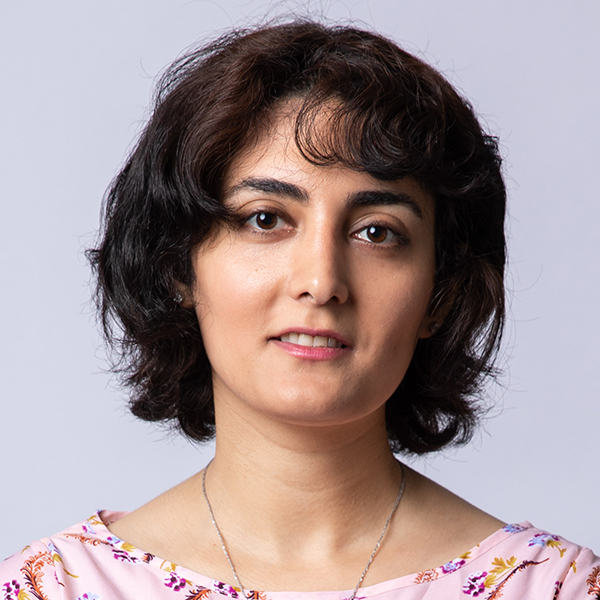
Dr. Sara Moghtadernejad is an Associate Professor and Undergraduate Advisor in the Department of Chemical Engineering at California State University Long Beach (CSULB), where she has held the position since Fall 2018. In Fall 2023, she was granted early tenure and promoted. She holds a PhD in Mechanical Engineering from Concordia University (Canada), an MS from the University of Queensland (Australia), and a BS in Chemical Engineering from Sharif University of Technology (Iran). Prior to CSULB, she held postdoctoral roles at McGill University’s Biomimetic Surface Engineering Lab and Rutgers University’s NSF Engineering Research Center on Structured Organic Particulate Systems (CSOPS). Her research focuses on multiphase flow, powder technology, additive manufacturing, and pharmaceutical manufacturing, addressing industrial challenges through interdisciplinary approaches. The Multiphase Flow Lab (MFL) she directs emphasizes practical applications, employing advanced experimental setups and numerical/statistical analyses. Key collaborators include the FDA, AFRL, and companies like Johnson & Johnson and 3M. Her work spans pharmaceutical process optimization, metal powder characterization for automotive/aerospace 3D printing, aerospace icing prevention, and oil/gas industry corrosion mitigation. Moghtadernejad’s expertise extends to regulatory affairs and HSE (Health, Safety, Environment), with contributions to risk management frameworks and compliance documentation. She has been recognized as a Beach Mentor (2021) and holds certifications in advanced simulation tools and professional engineering. Her lab collaborates with industries across aerospace, pharmaceuticals, and energy sectors, emphasizing sustainable solutions and technological innovation. Her educational background includes training in HAZOP studies, process simulation (HYSYS), and multiphysics modeling. She has supervised industry partnerships and training programs for FDA and pharmaceutical companies, emphasizing continuous manufacturing and process development. The MFL’s research outputs aim to enhance material performance, operational efficiency, and safety standards across multiple industries.
Alejandro López García is a Lecturer at the University of Deusto, with additional affiliations as a Visiting Scholar at the University of Leeds and the University of Strathclyde. His academic background includes a Master's Degree in Mechanical Engineering from the University of The Basque Country (2010) and concurrent pursuit of a Ph.D. in Mechanical and Aerospace Engineering and a Master's in Industrial Engineering since 2012. His research centers on fluid dynamics, erosion processes, and computational modeling techniques. Key projects include: Investigating geometric impacts on fluid flow during erosion (Ph.D. focus) Modeling Vertical Roller Mills using CFD and DEM for IIT Analyzing cohesive powder flowability in the ADDoPT pharmaceutical project He is an active member of the Ghadiri Research Group at Leeds University. Office hours at Deusto: Monday: 12:00–13:00 (Room 590-D) Tuesday: 12:00–13:00 (Room 590-D) Wednesday: 9:00–10:00 (Room 590-D)
Dr. Michael Carr is a Lecturer in Mechanical Engineering at the University of Newcastle's School of Engineering. He holds a PhD and Bachelor of Engineering (Mechanical) from the same institution. His research focuses on bulk materials handling, conveyor systems, and discrete element modelling. He is affiliated with TUNRA Bulk Solids and the Centre for Bulk Solids and Particulate Technologies (CBSPT). Dr. Carr's academic career includes roles as a Professional Officer and lecturer in mechanical engineering design courses. He has contributed to over 40 publications and secured over $2.7M in research funding. His work spans rail-running conveyor innovation, friction analysis, and material handling efficiency. Key achievements include the 2022 Citations for Outstanding Early Career Contributions to Engineering Education and multiple finalist awards in teaching and industry engagement. His research collaborations span global partners, with a focus on Australia and Germany.
Alastair Florence is a Professor at the University of Strathclyde, leading the EPSRC Centre for Innovative Manufacturing in Continuous Manufacturing and Crystallisation (CMAC). He oversees the CMAC National Facility within the Technology and Innovation Centre (TIC), offering advanced processing and analytical capabilities to academic and industrial users. His expertise includes crystallization, pharmaceutical solids characterization, and continuous manufacturing. He holds leadership roles such as Chairman of the British Association of Crystal Growth and advisory positions at Imperial College and Leeds University. Research focuses on crystallization processes, pharmaceutical particle formation, and the application of advanced technologies like X-ray diffraction for phase analysis. He has supervised a multidisciplinary team and published over 120 peer-reviewed papers. His work contributes to UN Sustainable Development Goals through innovations in sustainable medicines manufacturing. Education: Not explicitly stated in text Grants/Projects: Leads EPSRC MediForge Hub, SHARPEN, and other initiatives totaling 80+ projects Labs/Teams: Heads CMAC and collaborates internationally Key awards include the Best Poster Award (2018) and Royal Pharmaceutical Society Fellowship (2024). His research spans 213 publications, 29 datasets, and equipment including advanced crystallizers and analytical tools.
Associate Professor Banu Koç currently serves at Gaziantep University's Faculty of Tourism, Gastronomy and Culinary Arts after being promoted from Doctor Lecturer roles (2015-2023) across multiple faculties including Fine Arts and Social Sciences Institute. Holding a PhD in Food Engineering from Ege University (2014), she has 20+ years of academic experience in food processing technologies. Education: PhD (Food Engineering) - Ege University (2014), MSc (Food Technology) - Ege University (2008), BSc (Food Engineering) - Ege University (2004) Her research focuses on drying technologies , food microencapsulation , and gastronomy science , particularly examining spray drying, freeze-drying, and stabilization of food enzymes like transglutaminase. Recent work explores alternative starch sources , sustainable ingredient utilization , and traditional Turkish sherbets . Scientific contributions include 36 peer-reviewed articles, 44 conference papers, 16 research projects (including TÜBİTAK-funded studies), and 2 food-related patents. Key awards: 2018 Gaziantep University Science Award (2018) and Best Paper Award in Food Engineering (2011) from Indian Food Scientists Association. She supervises graduate research on topics like legume-based probiotics , traditional beverage preservation , and cultural gastronomy , with notable theses completed on loquat seed starch, red meat marination, and Samsun Georgian cuisine.
Christopher Hulme is an Associate Professor of Powder Metallurgy and Rapid Solidification at the Department of Materials Science and Engineering, KTH Royal Institute of Technology. His research focuses on understanding the physical mechanisms of metal powder atomization, including droplet formation and solidification, and linking production conditions to powder properties. He employs computational fluid dynamics, stochastic modelling, and thermodynamic analysis, supported by experimental techniques like shadowgraphy and water modelling. His work also examines powder behavior, developing new testing methods for flow and spreading properties, and explores sustainability and equality in engineering education. Key research areas include atomization process optimization, powder flow dynamics, additive manufacturing feedstock development, and X-ray source innovation. His teaching responsibilities span courses such as Casting Processing, Material Selection, and Metal Powder Characterization, emphasizing practical methods and ethical engineering practices. He has contributed to over 50 peer-reviewed publications, with recent work addressing rotating anode X-ray erosion, nickel silicide alloy optimization, and humidity effects on steel powder flowability. Teaching Roles: Course responsible for Metal Powder Production, Materials Processes I, and Material Selection Research Themes: Atomization Science, Powder Behavior Modelling, Sustainable Manufacturing
Amin Farshchi is a Lecturer in Food Science at the School of Health & Life Sciences, Teesside University since August 2020. He holds a PhD in Chemical and Process Engineering (University of Leeds, 2018) and an MSc in Food Biotechnology (University of Leeds). His research focuses on food hydrocolloids, emulsions, foams, and biopolymer-based packaging, with expertise in food powder technology and processing optimization. He has contributed to Procter & Gamble collaborations and post-doctoral roles at the University of Leeds and Pfizer. Education: PhD in Chemical and Process Engineering, University of Leeds, UK MSc in Food Biotechnology, University of Leeds, UK His research interests emphasize the development of functional food products and optimization of food processing methods. Key themes include colloidal stability, powder flowability, and hydrophobic starch modification. Recent work explores sucrose crystal caking behavior, detergent powder structure, and emulsion stabilization under varying environmental conditions. His publications span food and material science, addressing challenges in emulsion stability, powder microstructure, and additive manufacturing applications. He serves as a Review Editor for Frontiers in Food Science and Technology and actively mentors students in academic and professional development.