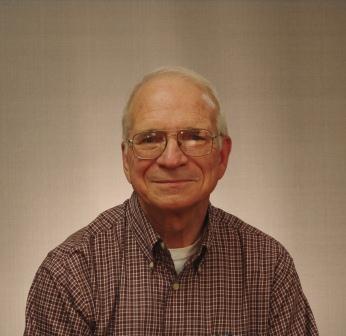
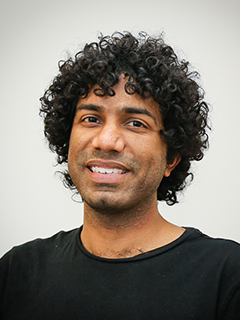
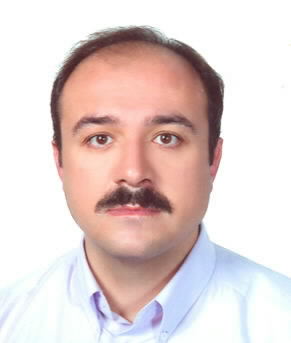
Behrad Khamesee is a Professor in the Department of Mechanical and Mechatronics Engineering at the University of Waterloo, Canada. He is a full-time faculty member leading the Maglev Microrobotics Laboratory, specializing in magnetic levitation systems, microrobotics, and their applications in manufacturing and biomedical fields. His work integrates mechatronics, control systems, and advanced materials to develop innovative solutions for precision motion, non-destructive testing, and smart manufacturing. Research Interests: Magnetic Levitation Systems and Microrobotics Additive Manufacturing and Quality Assurance Control Systems for Industrial Automation Energy Harvesting via Nanogenerators Bio-Medical Robotics and Surgical Applications Key Projects: His lab has developed platforms like MagFloor and MagTable for flexible manufacturing, and pioneered the use of magnetic levitation in precision tasks such as additive manufacturing defect detection. Recent work emphasizes AI-driven control systems and modular magnetic levitation architectures. Labs/Teams: Director of the Maglev Microrobotics Laboratory, focusing on interdisciplinary projects involving robotics, materials science, and automation.
Sami Khan is an Assistant Professor in the Department of Sustainable Energy Engineering at Simon Fraser University's Faculty of Applied Sciences. His research focuses on surface and interfacial engineering, electrochemical energy systems, and technoeconomic assessments for energy technologies. He holds a Ph.D. in Mechanical Engineering from MIT (2020), with additional graduate degrees in Technology and Policy and Mechanical Engineering from MIT (2016), and a B.A.Sc. in Chemical Engineering from the University of Toronto (2012). His research interests include corrosion-resistant coatings, CO2 electrocatalytic conversion, and scalable manufacturing techniques. Notable work includes developing lubricant-impregnated surfaces for corrosion protection and 3D printing of fluoropolymer powders on metal substrates. He teaches courses in statics, sustainable energy engineering, and directed studies. Recent publications explore microtextured surfaces for soot oxidation, scandium recovery via silicon substrates, and compact xerographic additive manufacturing systems. His work bridges fundamental material science with industrial applications, emphasizing sustainability and economic feasibility. Dr. Khan is affiliated with the Sustainable Energy Engineering Research Labs and has contributed to patent innovations in hydrophobic materials. His interdisciplinary approach integrates chemical thermodynamics, catalysis, and policy analysis to address energy and environmental challenges.
Mehrdad Mousapour is a Visitor (Faculty) in the Department of Energy and Mechanical Engineering at Aalto University, affiliated with the Materials to Products school. He holds a Tekn. toht. (Doctor of Technology) in Engineering from Aalto University (2024) and a Dipl.ins. (Diploma) in Chemical Technology (2020). His research focuses on additive manufacturing, 3D printing of composite and multi-metal materials, and advanced powder metallurgy techniques. Key areas include vat photopolymerization, material extrusion, and the development of biobased composites using digital light processing (DLP). His work addresses topics like copper oxidation, pore evolution in sintering processes, and alloy fabrication from elemental powders. Notable contributions include studies on NiTiCu alloy production via additive manufacturing and the feasibility of multi-metal parts using fused filament fabrication (FFF). Recent research highlights include biobased composite integration and advanced 3D printing methodologies. No scientific awards or grants are explicitly mentioned in the provided texts. His academic contributions span over 15 peer-reviewed articles from 2016 to 2025, with a strong emphasis on experimental and computational analysis of material behavior during manufacturing processes. Mehrdad advises no listed students but collaborates with researchers in materials science and mechanical engineering.
Dr. Ken Devine is the Chief Technical Officer at the School of Pharmacy, University College Cork (UCC). His research focuses on pharmaceutical science, drug delivery systems, and nematology, with a particular emphasis on plant-nematode interactions and controlled release technologies. He has contributed to advancements in understanding hatching factors of potato cyst nematodes and developed novel drug delivery mechanisms using mesoporous silica systems. Dr. Devine’s work spans multiple disciplines, including chemical synthesis of anti-cancer agents and lipidic dispersions to modulate drug bioavailability. He has secured grants such as the Embark Initiative Basic Research Grant (€100,000) and contributed to interdisciplinary projects through collaborations with institutions like the Environmental Research Institute and the Analytical Biological Chemistry Research Facility. His publications highlight contributions to pharmaceutical analysis, biotechnology, and nematology, with recent work focusing on regulatory approvals for medical devices like glass microneedles. He actively engages in community outreach, promoting pharmacy education through school workshops. Dr. Devine is a member of professional societies including the European Society of Nematologists and the Association of Applied Biology, reflecting his dedication to advancing both fundamental and applied research in his fields.
Sam Rolland is a Senior Lecturer in Aerospace Engineering at Swansea University's School of Aerospace, Civil, Electrical and Mechanical Engineering. He holds a MEng (2003) and PhD (2008) from Swansea. His research focuses on numerical methods validation for industrial applications, including Computational Fluid Dynamics (CFD), wind energy, and biomedical engineering. He led ASTUTE at Swansea (2013–2016) and currently oversees the College's Year in Industry program, emphasizing industry-academia collaboration across all education levels. Education: MEng (2003) PhD (2008) Research Interests: Dr. Rolland specializes in CFD applications for wind energy systems, blood flow dynamics, and powder metallurgy. His work bridges academic research and industrial challenges, with notable contributions to ozone disinfection modeling during the pandemic and optimizing vertical-axis wind turbines. He also explores the impact of industry placements on engineering education outcomes. Articles Trends: Recent work spans thermoacoustic energy systems (2024), engineering education (2023), airborne disease transmission modeling (2022), and CFD-aided design improvements in biomedical and renewable energy sectors. Awards: IMechE Frederic Barnes Waldron Best Student Prize (2003). Advising & Grants: Supervised postgraduate and doctoral research in collaboration with industry partners. Active in securing funding for projects like ASTUTE and the Year in Industry initiative. Labs/Teams: Leads Swansea's industrial collaboration teams, particularly in renewable energy and biomedical device modeling.
Dr. Rajesh Ransing is an Associate Professor in Mechanical Engineering at Swansea University's School of Aerospace, Civil, Electrical and Mechanical Engineering. His research focuses on manufacturing analytics, process optimization, and computational modelling of gait analysis and prosthetic design. He has contributed to risk-based manufacturing strategies and uncertainty quantification, with over 20 years of academic and industry collaboration. Expertise: Nanoscale fluid dynamics, thermal systems, and industrial sustainability Leadership: Supervised 10+ postgraduate researchers Affiliations: Faculty of Science and Engineering, Morgan Advanced Studies Institute His work bridges computational methods with real-world applications, including Industry 4.0 integration in foundries and prosthetic biomechanics. Recent publications emphasize data-driven approaches in heat transfer and fluid dynamics.
Professor Vinod Narayanan is a faculty member in the Department of Mechanical and Aerospace Engineering at the University of California, Davis. He serves as the Associate Director of the UC Davis Western Cooling Efficiency Center (WCEC) and leads the Supercritical carbon dioxide Thermal Energy Enhancement Laboratory (STEEL) and Microscale Thermal Energy Enhancement Laboratory (𝜇TEEL). His research focuses on energy efficiency, microscale heat transfer, and solar thermal energy applications. Key areas include designing compact heat exchangers for high-temperature systems, enhancing boiling and condensation in microscale environments, and optimizing energy efficiency in buildings and industrial processes. Research interests span thermal management for electronics and avionics, solar thermal power generation using supercritical CO2, and additive manufacturing of heat exchangers. Collaborations with institutions like Carnegie Mellon University and funding from the Department of Energy highlight his work's impact. Awards include the IEEE ITherm Best Poster Award and ASHRAE's Best Paper Award. His labs develop technologies to reduce energy consumption in thermal systems, with applications in decarbonizing food processing and livestock cooling. Major grants include a $4.6M DOE grant for heat exchanger optimization and a $2.4M ARPA-E award for 3D-printed heat exchangers. He has contributed to numerous high-impact publications since 2013, with recent work emphasizing additive manufacturing and solar thermal systems. His interdisciplinary approach bridges thermal science, materials engineering, and sustainable energy solutions.
Dr. Sung Kun Kim is a Professor in the Department of Chemistry at Northeastern State University , currently serving as Program Chair for the Natural Sciences Graduate Program since 2020. His academic career spans institutions including Baylor University and Texas Tech University, with postdoctoral research at Texas Tech University (2002-2007) and the University of Pennsylvania (2007). He holds a PhD in Biochemistry (2002, Texas Tech University), an MS in Chemistry (1996, Hanyang University), and a BS in Chemistry (1994, Hanyang University).
Peter Satzer is a Senior Lecturer (Privatdozent) at the Institute of Bioprocess Science and Engineering, Department of Biotechnology and Food Science, University of Natural Resources and Life Sciences, Vienna (BOKU). He currently serves as Group Lead for Bioprocessing of Advanced Medicines and is the CO-Founder of p4b GmbH, a company focused on 3D printing for biotechnology. Dr. Satzer completed his PhD in Biomolecular Technology of Proteins (BioToP) from 2011 to 2015, followed by postdoctoral research in Next Biopharmaceutical Downstream Processes from 2016 to 2019. His academic journey began with a Master's program in Biotechnology from 2008 to 2011. Dr. Satzer's research focuses on bioprocess technology , with particular expertise in industrial biotechnology , medical biotechnology , fermentation , circular economy , sustainable technologies , waste prevention , and energy saving . His work bridges the gap between fundamental bioprocess engineering and practical industrial applications, with a strong emphasis on sustainability and process intensification. He is particularly known for his contributions to continuous bioprocessing, viral vector production, and innovative applications of 3D printing in biotechnology. An analysis of Dr. Satzer's recent publications reveals a strong focus on advancing biomanufacturing technologies. His work spans multiple areas including continuous downstream processing, viral vector production systems, 3D printing applications for bioprocessing equipment, and sustainable manufacturing practices. A notable trend is his increasing focus on integrating digital tools and sustainable practices into bioprocess design, with significant contributions to open-source platforms for techno-economic analysis and resource-efficient manufacturing approaches. Dr. Satzer has received the following scientific awards: aws preseed company funding price (2023) Merck Life Science Award in Bioseparations (2015) Dr. Satzer has supervised seven theses, including doctoral and master's level research, focusing on areas such as virus-like particle vaccines, continuous bioprocessing, and advanced monitoring techniques. He is currently involved in two significant research projects: "Sustainable chromatography by design and rational sustainable buffer selection" (2024-2025) and the "Christian Doppler Laboratory for Knowledge-based Production of Gene Therapy Vectors" (2023-2029), where he contributes his expertise in bioprocess engineering for advanced therapeutic manufacturing. As Group Lead for Bioprocessing of Advanced Medicines, Dr. Satzer oversees research activities focused on next-generation biopharmaceutical manufacturing, particularly for advanced therapies including viral vectors and virus-like particles. His team works at the intersection of traditional bioprocessing and emerging technologies, with a strong emphasis on sustainability and process innovation.
Wayne Elban is a Professor at Loyola University Maryland, specializing in the mechanical behavior and characterization of engineering materials. Education Ph.D. 1977 – University of Delaware Research Interests Professor Elban’s work centers on understanding and measuring the mechanical properties of materials across multiple length scales. His investigations span indentation hardness testing, ultrasonic non-destructive evaluation, the compaction mechanics of powder systems, and detailed microstructural characterization using optical microscopy and classical metallographic techniques. He also maintains a scholarly interest in historical metallurgy, integrating modern analytical methods with the study of ancient metallic artifacts. Across these themes, he employs experimental approaches that link processing history to microstructure and ultimately to mechanical performance, providing critical insights for both contemporary engineering alloys and historically significant metals.
Howard Kuhn is an Adjunct Professor in the Department of Industrial Engineering at the Swanson School of Engineering, University of Pittsburgh. He holds a PhD in Mechanical Engineering from Carnegie-Mellon University (1966), along with prior degrees from the same institution (MS, 1963; BS, 1962). His research focuses on 3D Printing Additive Manufacturing Fracture Mechanics Mechanical Behavior of Materials Workability Analysis Powder Metallurgy .
Prannoy Suraneni serves as an Associate Professor in the Department of Civil, Architectural and Environmental Engineering at the University of Miami's College of Engineering. His academic position places him at the forefront of concrete technology research with a strong emphasis on sustainable construction materials and innovative engineering solutions. Dr. Suraneni's research spans multiple critical areas in concrete science, with particular expertise in supplementary cementitious materials, sustainable alternatives for traditional concrete components, and advanced concrete processing techniques. His work addresses pressing industry challenges including carbon reduction in concrete production, durability enhancement under extreme conditions, and the development of novel construction methods like 3D concrete printing for specialized applications such as marine infrastructure. Analysis of his recent publications reveals a strong focus on sustainable concrete technologies, with particular emphasis on waste material utilization (eggshells, basaltic fines), advanced characterization of cementitious systems, and performance optimization for challenging environments. His research demonstrates consistent innovation in both fundamental material science and practical engineering applications, with significant contributions to understanding structure-property relationships in complex cementitious systems. Dr. Suraneni maintains active collaborations across multiple institutions as evidenced by his co-authorship on numerous publications. His research program addresses critical industry needs including carbon footprint reduction in concrete production, enhanced durability mechanisms, and innovative material processing techniques that push the boundaries of conventional concrete technology.
Professor Nihat Atmaca is a distinguished academic at Gaziantep University's Faculty of Engineering, Department of Civil Engineering, where he currently holds the position of Professor since 2023. Previously, he served as Associate Professor (2017-2023), Doctor Lecturer (2008-2017), and Lecturer at various institutions including Gaziantep University Vocational School and Mustafa Kemal University. His academic journey spans nearly three decades with progressive responsibilities in teaching and research. Dr. Atmaca earned his Doctorate from Gaziantep University's Institute of Science, Department of Mechanical Engineering (2000-2007), followed by a Master's degree in Civil Engineering from Çukurova University (1996-1999), and completed his undergraduate studies in Civil Engineering at Gaziantep University (1990-1994). His educational background provides a strong foundation for his interdisciplinary research approach. His research interests focus on sustainable construction materials, particularly geopolymer composites using recycled brick waste, fiber-reinforced concrete, and nano-enhanced concrete technologies. He investigates the mechanical properties of innovative construction materials while emphasizing environmental impact through life cycle assessment methodologies. His work bridges traditional civil engineering with modern sustainability requirements, addressing critical challenges in earthquake-resistant construction and energy-efficient building design. Professor Atmaca has received recognition for his scholarly contributions, most notably the University Best Publication Presentation award in 2016. His editorial work includes significant contributions to The International Journal of Energy Engineering Sciences and other prominent publications in the field. University Best Publication Presentation (2016) He has supervised 3 doctoral and 13 master's theses, mentoring the next generation of civil engineers. His research portfolio includes 10 substantial projects, such as the Sustainable Green Prefabricated Building Prototype Application and the Human Resources Development through Vocational Education Project. These projects demonstrate his commitment to practical applications of engineering research with societal impact. Professor Atmaca has also contributed to infrastructure development through the Improvement of the Existing Infrastructure of the Building Laboratory project. His leadership extends to administrative roles as Department Head (2009-2018) and Head of the Main Science Branch (2018-present), where he has shaped academic programs and research directions. His international experience includes research at Ruhr University Bochum (2011) focusing on smart systems and non-destructive testing methods for structural elements.
Kaustubh Kulkarni is a Professor in the Department of Materials Science & Engineering at the Indian Institute of Technology Kanpur (IIT Kanpur). He holds a PhD in Materials Engineering from Purdue University (2008) and a B.E. in Metallurgical Engineering from Govt. College of Engineering Pune (2002). Dr. Kulkarni's research focuses on Alloy and Process Development, Lightweight Alloys, Precipitation Kinetics, and High Temperature Materials . His work bridges fundamental understanding of materials behavior with practical applications in automotive and aerospace industries, particularly in developing cost-effective processing routes and safety-critical components. His recent publications demonstrate expertise in diffusion phenomena in metallic systems, sintering processes, and development of advanced titanium alloys. His research has both technological significance in alloy development and societal impact through automotive safety innovations like the Energy Absorbing Rare Under-run Protection Device. Henry Ford Scholarship for the best graduate student in engineering (2007) Magoon Award for Excellence in Teaching (Spring 2005) Reviewer for Metallurgical and Materials Transactions A and Materials Science and Engineering Dr. Kulkarni has held leadership positions including President of MSEGSA at Purdue University (2005-2006) and Senator in Purdue University Graduate Student Government (2005-2006), demonstrating both academic excellence and commitment to community service.
Academic Profile Assoc. Prof. Ulaş Matik is a full-time faculty member at Karabük University's Tobb Technical Sciences Vocational School, where he has served as Department Head of Machinery and Metal Technologies since 2010 and previously as Assistant Dean (2011–2015). He holds a PhD in Metal Education from Gazi University (2010), a master's from Bülent Ecevit University (2003), and a bachelor's in Metal Teaching (2000). Research Focus His research centers on Coating Technology and Powder Metallurgy , with emphasis on composite materials for enhanced wear/corrosion resistance. Key areas include electroless plating (Ni-P, Ni-B), metal matrix composites (aluminum/steel-based), and hydrogen storage materials. His work bridges industrial applications and materials science innovation. Publications Overview Recent articles (2015–2024) demonstrate consistent focus on surface-engineered materials, particularly nickel/copper-based coatings and aluminum/steel composites. Tribology and corrosion dynamics under thermal/mechanical stress are recurring themes, with methodologies spanning powder metallurgy, hot extrusion, and nanocomposite synthesis. Awards & Recognition TÜBİTAK Publication Incentive Award (2015, 2017) Best Paper Award, Selçuk University (2016) Supervision & Projects He has supervised master's students in manufacturing engineering and teaches courses including Material Inspection Methods, Coating Technology, and Occupational Safety. He leads multiple active grants, including investigations into Cu/Ag-coated metal hydrides (2024) and Fe-Ni-Cu/TiC composites.