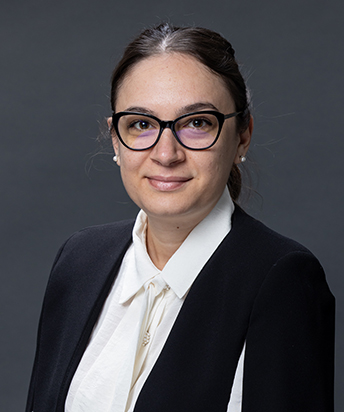
Dr. Myriam Nafte is an Adjunct Assistant Professor in the Department of Anthropology at McMaster University. Her scholarly work bridges forensic anthropology with medical anthropology, focusing on corporeal agency, death studies, and bioethics. She has authored publications on topics including postmortem spatial theory and forensic measurement methodologies. Teaches courses on death and dying, health narratives, and illness representation Active in forensic anthropology research with publications from 2008-2015 Specializes in postmortem ethics and human skeletal identification Her research encompasses both theoretical and applied approaches to death studies, with particular emphasis on forensic methodologies and narrative analysis in healthcare contexts. While her publication record shows concentrated output between 2008 and 2015, her teaching activity has been consistently documented through 2021.
Denise Donlon is a Senior Lecturer in Anatomy & Histology at the University of Sydney's School of Medical Sciences, and Curator of the J.L. Shellshear Museum of Comparative Anatomy and Physical Anthropology. Her work bridges forensic anthropology, biological anthropology, and archaeology, with a focus on human-nonhuman bone differentiation, dental anthropology, and historical remains analysis. Education: BSc, DipEd, BA(Hons), PhD, Fellow of the Royal College of Pathologists of Australasia (FFSc(RCPA)) Her research explores healthy ageing , lifespan studies , and forensic methodologies. Recent publications highlight cortical bone thickness comparisons, enamel hypoplasia as health indicators, and forensic applications of CT imaging. She contributed to military remains recovery initiatives and museum curation ethics. Notable grants include the 2014 Australian Facility for Taphonomic Experimental Research (ARC/LIEF). Her affiliations span the Bosch Institute and forensic-legal collaborations.
Oliver Krebs is a Researcher at the Institute of Forensic Medicine within the University Medical Center Hamburg-Eppendorf. His work focuses on forensic pediatric pathology , with case studies involving child deaths from traffic accidents, drowning, and exhumation after decades. He also investigates forensic entomology (blow fly monitoring) and biometric evidence tampering (fingerprint manipulation). Key Research Areas : Forensic Pediatrics, Postmortem Interval Estimation, DNA Analysis of Crime Scene Evidence, Forensic Ethics. Recent Articles highlight his interdisciplinary approach, combining pathology, entomology, and legal medicine. Notable trends include studies on exhumation protocols , forensic identification of infants , and digital tools for medical education . Infrastructure links to UKE's research facilities, including forensic labs and collaborations with institutions like the Vice Dean's Office for Research.
Dr. Lavinia Iancu is an Assistant Professor and Director of the Forensic Science Program at the University of North Dakota's College of Arts & Sciences. Specializing in forensic entomology and microbiology, her research focuses on identifying novel biomarkers for postmortem interval (PMI) estimation through the study of necrophagous insects and bacterial dynamics in extreme climates. Education : B.Sc. in Biology (University of Bucharest); two master's degrees (European Master of Forensic Sciences, Medical Biology); Ph.D. in Biology (Romanian Academy, Institute of Biology Bucharest) Her work spans decomposition ecology in cold and warm seasons, forensic microbiome analysis, and insect colonization patterns on remains. Key publications highlight microbial dynamics in Lucilia sericata , buried remains studies, and temperature-dependent forensic models. Scientific awards include: Fulbright Senior Award AAFS Outstanding Early Career Achievement Award Romanian Academy 'Grigore Antipa' Award Itterman Faculty Professional Development Award Dr. Iancu teaches courses such as Forensic Entomology (FS 499), Forensic Microbiology (FS 490), and Courtroom Proceedings for Forensic Scientists (FS 498), while leading international collaborations in decomposition research.
Clara Alfsdotter is a researcher affiliated with Linnaeus University and the Graduate School in Contract Archaeology (GRASCA). Her work bridges bioarchaeology, forensic archaeology, and taphonomy, focusing on postmortem processes and human remains analysis. Current affiliation: Linnaeus University Research school: GRASCA (Graduate School in Contract Archaeology) Research focus: Bioarchaeological analysis of violence Taphonomic studies of human decomposition Forensic applications in archaeological contexts Her research explores the intersection of natural decay processes and cultural practices surrounding death. Key projects include studies of the Sandby Borg massacre and experimental taphonomic investigations into decomposition patterns. Clara contributes to advancements in forensic archaeology through interdisciplinary collaborations, particularly in understanding postmortem interval estimation and environmental interactions with human remains. Her publications demonstrate expertise in both terrestrial and aquatic decomposition contexts. She co-founded and participates in the Archaeothanatology Working Group , which develops standardized methodologies for analyzing human remains in archaeological contexts.
Nathalie Zahra is a Senior Lecturer at Anglia Ruskin University (ARU), based in the Faculty of Science and Engineering within the Life Sciences school. Her expertise lies in forensic science, particularly forensic genetics and fingerprint comparison. She joined ARU in 2016 and teaches modules in forensic biology, including BSc (Hons) Forensic Science and MSc Forensic Science programs. Education: BSc (Hons) Biology and Chemistry, University of Malta (2002) MSc DNA Profiling, University of Central Lancashire (2005) PhD Forensic Genetics, University of Central Lancashire (2009) Research focuses on human identification methods, DNA profiling, and fingerprint comparison. She has contributed to projects such as developing internal amplification controls for DNA profiling kits and advancing sequencing technologies in forensic genetics. She is a court-certified fingerprint expert and member of professional bodies including the International Society of Forensic Genetics (ISFG) and the International Association for Identification (IAI). Her work bridges academic research and industry applications, with prior roles as a Research Associate at the Wellcome Trust Centre for Human Genetics (WTCHG) and Post-Doc positions at the University of Leicester. She leads teaching in forensic methodologies and mass disaster identification techniques, reflecting her commitment to advancing forensic science education and practice.
Dr. Jonathan Parrott is an Assistant Professor in the School of Interdisciplinary Forensics at Arizona State University (ASU). He holds additional affiliations as a Senior Global Futures Scholar and member of the Global Futures Scientists and Scholars. Previously, he taught at the University of Strathclyde and Staffordshire University. His research focuses on forensic entomology, molecular techniques, and genomic studies of insects in criminal investigations. Education: PhD in Biology, University of Portsmouth, UK (2013) BSc (Hons) in Forensic Biology, University of Portsmouth, UK (2008) Research Interests: Dr. Parrott investigates genomic, phenotypic, and developmental variations in forensically significant blowflies to enhance evidence reliability. His lab explores error sources in insect evidence, genomic techniques for postmortem interval estimation, and DNA identification protocols. Key areas include molecular analysis of ancient insect remains, population genetics of blowflies, and DNA mixture interpretation in courts. Teaching: Courses include Forensic Biology , Techniques in Forensic Bio Lab , and Forensic Entomology Fundamentals . He mentors students through individualized research projects and honors theses. Labs & Teams: The Laboratory of Interdisciplinary Forensic Entomology (LIFFE) addresses challenges in insect-based forensic investigations. Research emphasizes genomic tools and standard operating procedures for DNA analysis.
Gail Anderson is an Adjunct Professor in the Department of Biological Sciences at Simon Fraser University (SFU), holding roles as Associate Member of the Faculty of Arts and Social Sciences (FASS) and Associate Director of the SFU School of Criminology's Undergraduate Programs. Her work bridges forensic science, entomology, and criminal justice, focusing on applications of insect ecology to legal investigations. She specializes in decomposition studies, forensic entomology, and wrongful conviction analysis. Research interests include human and animal decomposition processes, insect succession patterns, and the impact of environmental factors (e.g., temperature, submersion, urbanization) on forensic evidence. She has pioneered studies in marine taphonomy and carrion scavenging dynamics. Her work also addresses systemic issues in criminal justice systems, particularly wrongful convictions and pandemic-related disruptions to forensic practices. Publications span over three decades, with notable contributions to forensic entomology methodologies, decomposition in aquatic environments, and legal reforms. She has advised on high-profile cases involving entomological evidence and collaborates internationally on transnational forensic challenges. Her research often integrates multidisciplinary approaches, combining biological sciences with legal and social sciences. Anderson's work emphasizes practical applications, such as improving death investigation protocols and educating the public on postmortem processes. She maintains an active research laboratory and frequently engages in public outreach through media and academic conferences.
Michael Whitehead is a Senior Lecturer at the University of Wolverhampton within the Faculty of Science and Engineering . His expertise bridges forensic biology, microbiology, and molecular genetics, with a focus on postmortem changes and fungal genetics. PhD from the University of St Andrews (1989) His research spans microbiological taphonomic changes , forensic applications of cartilage degradation, and fungal gene sequences. Publications highlight interdisciplinary work in forensic science , polyphosphate kinases , and plant pathology , often with implications for biotechnology and education. Teaching interests include Introductory Genetics , Bioinformatics , and Plant Pathology . He has contributed to data-mining pedagogy and postgraduate student development. Professional roles include membership in the LSEC committee (2018).
Dr. Wera Schmerer is a Senior Lecturer in Forensic and Molecular Science at the University of Wolverhampton, affiliated with the School of Biology, Chemistry and Forensic Science within the Faculty of Science and Engineering. She has been a core academic member since 2006, contributing significantly to teaching and research in forensic genetics and anthropology. Her educational background includes: Biology studies at Georg August University Göttingen, Germany (1990–1996), specializing in Physical Anthropology, Human Genetics, and Cultural Anthropology Diploma (Dipl. Biol., equivalent to MPhil) in ancient DNA research (1996) Doctorate (Dr. rer. nat.) in ancient DNA optimization from the University of Göttingen (2000) Dr. Schmerer's research is centered on the development and optimization of methodologies for analyzing highly degraded and trace DNA, with applications in both forensic and ancient DNA contexts. Her work bridges physical and forensic anthropology, focusing on DNA degradation, postmortem decomposition, bone diagenesis, and hard tissue histology. She has pioneered techniques to improve STR genotyping reproducibility and reduce PCR artifacts in degraded samples. Analysis of her recent publications reveals a consistent focus on forensic and anthropological applications of molecular biology. Her work spans method development in DNA extraction, PCR optimization for degraded DNA, postmortem tissue analysis, and sex determination in sub-adult remains. Key trends include the application of mini-STRs, SNP detection, and interdisciplinary approaches combining osteology with molecular genetics, particularly in challenging forensic and archaeological contexts. She has received notable scientific support and recognition through awards such as: Research scholarship grant from the state of Lower Saxony Funding to attend the NATO Advanced Study Institute on human evolution (1998) Support for participation in the European Science Foundation Research Conference on inherited disorders (1999) Dr. Schmerer has actively supervised research students, including Deutschmann FMN and Oleiwi AA, and contributed to academic governance as a module leader for key forensic science courses and as a member of the University's Bioscience Ethics Board. Her work at institutions such as Lakehead University, the Armed Forces DNA Identification Laboratory, UC Berkeley, and Trace Genetics Inc. underscores her strong research trajectory and industry-academia linkage. She continues to lead in forensic genetics education and research at Wolverhampton. She is involved in research groups and collaborations related to forensic anthropology and DNA analysis, contributing to both academic and applied forensic science through her membership in the Chartered Society of Forensic Sciences and the UK Home Office’s Forensic DNA Expert Community (CAST).
Paola A. Magni is an Associate Professor of Forensic Science at Murdoch University's School of Medical and Molecular Sciences in Western Australia. With extensive expertise in forensic biology, she specializes in applying natural sciences including entomology, taphonomy, and aquatic biology to crime scene investigation. She is recognized as a forensic expert by Italian Courts and the international scientific community, and has been involved in forensic cases in Western Australia and Tasmania. Her research focuses on forensic entomology, aquatic and marine forensics, microbial forensics, and crime scene reconstruction. She has developed innovative tools including the 'SmartInsects – Forensic Entomology' smartphone app with over 10,000 downloads worldwide. Her work spans multiple disciplines, from analyzing barnacle colonization on shoes to studying microbial fingerprints on clothing for individual identification. Dr. Magni has served as an expert forensic witness in homicide, suspicious death, animal cruelty, wildlife, food forensic, and stored products security cases. She has authored numerous scientific papers and book chapters, and was senior editor of a forensic entomology book in 2008. Her recent research includes studies on stabbing crime reconstruction using robotic simulations, marine forensics related to the Melissa Caddick case, and microbial evidence on clothing that can survive for months. Among her notable achievements is the Order of the Star of Italy award. She has also been involved with media production, serving as a forensic character and screenplay consultant for the Italian version of 'C.S.I. Crime Scene Investigation' ('R.I.S. Delitti Imperfetti'), and has presented at TEDx events in Sydney and Fremantle. Forensic entomology and insect succession patterns Marine and aquatic forensics Taphonomic processes in different environments Microbial forensics and touch microbiome analysis Crime scene reconstruction, particularly for stabbing incidents Development of forensic tools and applications Her research demonstrates a consistent pattern of bridging theoretical forensic science with practical applications in criminal investigations. Recent work shows increasing focus on interdisciplinary approaches combining entomology with marine biology, microbiology, and engineering solutions for forensic challenges. She frequently collaborates with international researchers, reflecting the global nature of forensic science challenges. Order of the Star of Italy Developer of 'SmartInsects – Forensic Entomology' app (2013), recognized as one of the 'Fantastic 4 apps created by scientists' at Western Australian Universities Dr. Magni actively supervises research students and has been involved in forensic education through student mobility programs in the Indo-Pacific region. Her work has practical applications in crime scene investigation, with several studies directly addressing challenges faced by forensic practitioners. She has collaborated with various forensic laboratories including ChemCentre in Western Australia. Her research has established important protocols for analyzing human remains found in aquatic environments, studying how marine organisms colonize items connected to victims. This work has been applied in high-profile cases like the Melissa Caddick investigation and has been featured in international documentaries.
Katherine Weisensee serves as Department Chair and Associate Professor in the Department of Sociology, Anthropology and Criminal Justice at Clemson University's College of Behavioral, Social and Health Sciences. A biological anthropologist specializing in human skeletal biology, she leads research on forensic anthropology methods, craniofacial morphology, and human decomposition processes while providing consultation services to South Carolina law enforcement. Her educational background includes: Ph.D. in Anthropology from the University of Tennessee (2008) M.A. in Anthropology from the University of Tennessee (2001) B.A. in Anthropology, cum laude with high honors, from Brandeis University (1999) Dr. Weisensee's research program focuses on estimating time of death using the geoFOR application, examining craniofacial morphology changes over the past 200 years, and analyzing skeletal remains for law enforcement. Her work integrates quantitative methods to understand environmental impacts on human populations, with significant contributions to understanding craniofacial asymmetry as a socioeconomic marker and epidemiological transition effects on cranial morphology. She has published extensively on forensic anthropology methods and secular trends in human skeletal biology. Analysis of her recent publications reveals a strong emphasis on human decomposition modeling through Bayesian approaches and the geoFOR database system, addressing critical challenges in postmortem interval estimation. Her work consistently bridges forensic science with anthropology while examining craniofacial morphology changes across populations and time periods, connecting biological anthropology with social determinants of health. Her scientific achievements include: Clemson University of Health Research Faculty Scholar Clemson Thinks2 Faculty Scholar Dr. Weisensee actively mentors students through Creative Inquiry projects, including the 'Examination of Death in Pickens County, SC' which creates a GIS database of death investigation records. She has developed innovative international field experiences in Rome and Hungary where students engage in human skeletal analysis and cultural anthropology. Her forensic anthropology consulting provides valuable service to South Carolina law enforcement agencies, assisting with identification of human remains through analysis of thousands of skeletal specimens. She leads research initiatives utilizing the geoFOR application for postmortem interval prediction and maintains active collaborations through forensic anthropology workshops and international research projects. Her work connects classroom instruction with real-world forensic applications, creating a comprehensive educational experience for students interested in biological and forensic anthropology.
Dr. Maiken Ueland is an Associate Professor at the University of Technology Sydney , serving as Director of the Australian Facility for Taphonomic Experimental Research (AFTER) . With a B.Sc. in Forensic Science (University of Ontario Institute of Technology) and a PhD at UTS , her research focuses on forensic taphonomy using analytical chemistry and biochemical techniques . Specializes in human decomposition chemistry and VOC profiling Develops electronic nose technology for disaster victim recovery Conducts wildlife crime and conservation research Her work bridges forensic science and analytical chemistry , emphasizing postmortem interval estimation and mass disaster response . Recent publications (2023-2025) highlight multi-omics analysis , nanosensor development , and wildlife trafficking detection . Key contributions include: Chancellor's Postdoctoral Research Fellowship ARC Discovery Early Career Researcher Award Leading AFTER - Australia's only human body donation facility for decomposition research She supervises PhD candidates and collaborates with institutions like Royal Australian Chemical Institute , while also engaging in public science communication through media appearances.
Kunihiro Inai is a Professor at the University of Fukui , specializing in medical imaging, pathology, and artificial intelligence applications. He holds a Doctor of Medicine from Fukui Medical University (1997) and has a long academic career spanning over three decades. Education: Graduated from Fukui Medical University Faculty of Medicine (1988), completed doctoral course at Fukui Medical University Graduate School (1997). Research Focus: Medical imaging AI, postmortem CT analysis, pancreatic tissue mechanics, sepsis diagnostics, and computational anatomy. Publication Trends: Recent work emphasizes AI-driven image analysis for thyroid/pancreatic/lung diagnostics, super-resolution CT techniques, and postmortem imaging-pathology correlation. Collaborative studies span radiology, pathology, and biomedical engineering. Academic Leadership: Principal investigator for multiple JSPS grants (total >48 million yen) and industry collaborations (e.g., Panasonic). Active in Japan Society of Medical Imaging Technology program committees and peer review. Teaching: Taught pathology, immunology, and medical diagnostics at institutions including University of Fukui, Nagoya Institute of Technology, and Tokyo University of Agriculture and Technology.
Louise Robinson is a Senior Lecturer in Forensic Science at the University of Derby's College of Science and Engineering. Her research focuses on innovative educational methodologies, particularly gamification, and forensic entomology. She has contributed to interdisciplinary studies blending tabletop gaming with wildlife conservation and disease education. Her work spans both theoretical and applied forensic science, including studies on blowfly behavior in forensic investigations. Robinson has published widely on educational technologies and their impact on employability skills in higher education. Research Institute: College of Science and Engineering Key Areas: Gamification in Education, Forensic Entomology, Role-Playing Games in Pedagogy Her publications highlight a dual commitment to advancing forensic science research and reimagining teaching strategies. Notable outputs include studies on tabletop games for employability skills (2023) and blowfly developmental patterns (2018).