Arnaud LACAN is a Permanent Professor at KEDGE Business School , specializing in Management . With a Doctor of Economics and Political Science background, he combines 15 years of managerial experience in insurance (MAIF Group) with academic work since 2017. His expertise focuses on postmodern management , collaborative management practices , and social and solidarity economy (SSE) . Education : Doctor of Economics Graduate in Political Science Research trends from his 15 most recent publications (2016-2024) emphasize managerial transformation , value-based governance in SSE organizations, and workplace wellbeing . Key themes include occupational health policies , collaborative leadership , and sustainable management across 18 works. Awards : DISC Certified He contributes to academic discourse through publications with keywords spanning organizational ethics , psychosocial risks , and innovative governance . His work bridges theory and practice through executive education programs on team management and leadership .
Luísa Santos Silva is an Assistant Professor and Assistant Researcher in Culture Studies / Artistic Studies at the Faculty of Human Sciences (FCH-Católica) of Universidade Católica Portuguesa. She holds a Ph.D. in Culture Studies from Humboldt & Viadrina School of Governance and an M.A. in Curating Contemporary Art from the Royal College of Art. Her research focuses on contemporary art and social systems, curating practices, and cultural institutions. Luísa coordinates the 4Cs: From Conflict to Conviviality through Creativity and Culture research initiative and is a research fellow at the European School of Governance (EUSG). She contributes to editorial boards of journals like Estúdio and Croma , and collaborates on projects such as the York University’s Arts-based participatory research on Asian-Canadian youth identities. Her academic roles include teaching modules like Curatorial Cultures and Management of Cultural Projects . Key publications include works on curatorial practices, art and society intersections, and exhibitions such as Silence in Pieces and Miguel Palma: A-Z .
Catarina Grácio de Moura is an Associate Professor at the Department of Arts, Faculty of Arts, University of Beira Interior (UBI). She serves as a researcher at the iA* Arts Research Unit and Researcher Director for Media Arts courses. Her academic work spans fashion design, cultural heritage, and contemporary art. Her research focuses on: Preservation of cultural heritage through design Post-pandemic branding and visual merchandising Critical analysis of fashion neutrality Memory studies in material culture Recent publications examine industrial anti-hegemony in design, pandemic-era branding strategies, and storytelling in post-pandemic retail environments. She collaborates with researchers like Gisele Nepomuceno and Fernando Oliveira on interdisciplinary design projects.
Luís M. Figueiredo Rodrigues is an Associate Professor at the Universidade Católica Portuguesa , specializing in Theology and Religious Studies . He holds a PhD in Practical Theology and a Master's in Educational Sciences with a focus on e-Learning Pedagogy. His academic work bridges theology with digital culture through publications addressing faith transmission in networked societies and technological pastoral challenges. PhD in Practical Theology (Universidade Católica Portuguesa) Master's in Educational Sciences (e-Learning Pedagogy, Universidade Aberta) Canonical Degree in Catechetical Theology (Facultad de Teología "San Dámaso", Madrid) His research interests include: Digital theology and media ecology Religious education in networked environments Contemporary catechetical practices Ecclesial response to globalization Mental health in pastoral ministry Dr. Rodrigues has produced 27 publications since 1996, with recent works examining digital faith mediation, burnout in clergy, and digital identity formation. He contributes to the UCP-CITER research center and teaches modules on communication technologies in education and practical theology. Key themes in his 2024-2025 works include: Digital theological symbolism Anthropological faith transformations Religious dynamics in political contexts Fraternality in global theology His career spans both academic and pastoral roles, with a focus on adapting religious education to digital cultures while maintaining theological authenticity.
Lusophone University of Humanities and TechnologiesPortugal
Mário Caneva De Magalhães Moutinho is a Professor and Coordinator of the Museology Department at Lusófona University. He holds a Doctorate in Cultural Anthropology (University of Paris VII-Jussieu, 1978) and an architecture degree from the Higher School of Fine Arts in Paris (1972). Previously, he served as Vice-Rector for Research (1996–2007) and Rector (2007–2022), and currently presides over the Superior Academic Council (2022–present). He is a member of the UNESCO Chair - Education, Citizenship and Cultural Diversity and founded the journal Cadernos de Sociomuseologia . His research focuses on Sociomuseology, emphasizing Local Museums , Community Museums , and decolonial approaches to cultural heritage. He pioneered academic programs in Museology, establishing the Master's in Museology (1999) and co-creating the Doctorate in Museology (2007). His publications predominantly explore museological theory, cultural representation, and urban studies, with recent works addressing decoloniality in Portuguese museums. He has supervised 28 doctoral theses and 47 Master's dissertations. Key affiliations include: Board Member: UNESCO Chair - Education, Citizenship and Cultural Diversity Senior Advisor: National Museum of Natural History, Lisbon (1998–2007) Vice-President: MINOM - International Movement for a New Museology
José Maria Silva Rosa is a Full Professor at the University of Beira Interior (UBI) , Faculty of Arts and Letters, with a career spanning over 25 years. Holding a PhD in Medieval Philosophy (2005) and Habilitation in Medieval Political Philosophy (2020), his work bridges classical thought with contemporary philosophical and theological debates. Education: Bachelor's (1992), Master's (1997), and PhD (2005) from the Catholic University of Portugal (UCP, Lisbon) His research focuses on Medieval Political Philosophy , Phenomenology , and Philosophy of Religion , with particular emphasis on Saint Augustine's theological-political thought. He has contributed to discussions on secularization, religious violence, and the interplay between faith and institutional power. Recent publications reveal a thematic concentration on European political dynamics , theological ethics , and medieval conceptual frameworks applied to modern governance challenges. Collaborations with research centers and scientific associations highlight his interdisciplinary influence. As a former Librarian Professor (2013-2017) and President of UBI's Faculty of Arts and Letters (2017-2021), he has shaped academic infrastructure while maintaining teaching and research commitments.
Paulo Barroso is an Assistant Professor at the Polytechnic Institute of Viseu , with prior roles at institutions including Polytechnic Institute of Guarda and University of Algarve. He holds a Ph.D. in Philosophy from the University of Santiago de Compostela, Spain. Doctor of Philosophy (2007), University of Santiago de Compostela, Spain His research spans communication studies, semiotics, and media ethics, focusing on topics such as digital literacy, ideological representation in advertising, and the philosophical implications of media. He has extensively published on the interplay between ethics, religion, and communication, including works on Wittgenstein’s philosophy of psychology, Baudrillard’s hyperreality, and Lotman’s semiosphere. His recent publications (2022-2023) emphasize crisis communication, visual rhetoric, and the ethical challenges of misinformation. Articles like "Governmental communication strategies in crisis management: the COVID-19 pandemic in Portugal and Brazil" and "Digital literacy in the brave new e-sphere" highlight his engagement with contemporary societal issues. He has supervised Master’s theses on media impacts, including "The consumption of animal protein (meat) and the environmental impacts on private Portuguese television channels" and "The importance of using color in advertising communication."
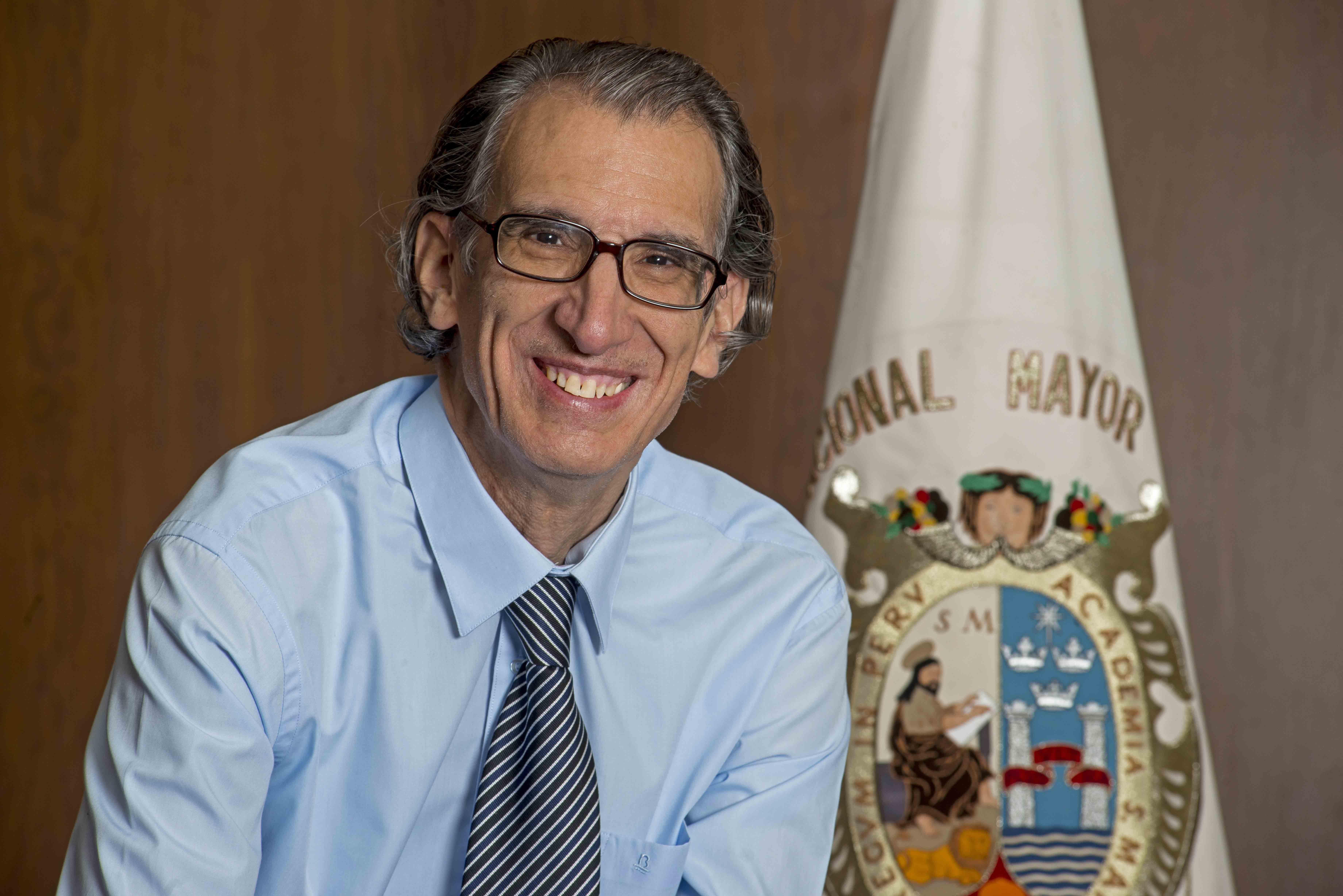
Dr. Carlos García-Bedoya Maguiña is a Professor at the Department of Literature of the National University of San Marcos (UNMSM). He holds a Ph.D. in Literature from the University of Pittsburgh, USA. His academic career includes visiting appointments at Université de Montréal (Canada) and Dartmouth College (USA), alongside extensive international lecture and research engagements across Europe, the Americas, and Spain. He has held leadership roles such as Dean of the Faculty of Letters and Human Sciences (2016-2017), Coordinator of the Department of Literature (2001-2004), and Senior Advisor to the Vice-Rectorate for Research (2006-2011). Currently, he directs the Research Unit of the Faculty of Letters and Human Sciences. His research focuses on Peruvian and Latin American literature, with special attention to colonial and postcolonial discourse, cultural studies, and literary theory. He has authored seminal works like For a Periodization of Peruvian Literature (1990/2004) and Peruvian Literature in the Period of Colonial Stabilization (2000), alongside over 50 articles in peer-reviewed journals. His work bridges historical analysis with contemporary critical theory, emphasizing intercultural dialogues and decolonial perspectives. As a member of the Scientific Advisory Committee of Telar (Argentina) and the Editorial Board of Acta Literaria (Chile), he contributes to shaping Latin American literary scholarship. His publications explore topics ranging from Cervantes’ influence on modern narrative to the representation of marginalized voices in colonial texts. He has also collaborated on institutional projects, including Quality Management Indicators at UNMSM (2006). García-Bedoya has served as a jury member for prestigious awards such as the Casa de las Américas Prize (2011), the José Donoso Ibero-American Prize (2015), and Peru’s National Cultural Prize (2016). His teaching spans undergraduate and graduate courses in literary analysis, French literature, and comparative studies, reflecting his commitment to both traditional and innovative pedagogical practices. His research unit at UNMSM fosters collaborative projects on literary history and cultural dynamics. While no personal awards are explicitly mentioned, his contributions to academic governance and scholarly production underscore his influence in Peruvian and Latin American intellectual circles.