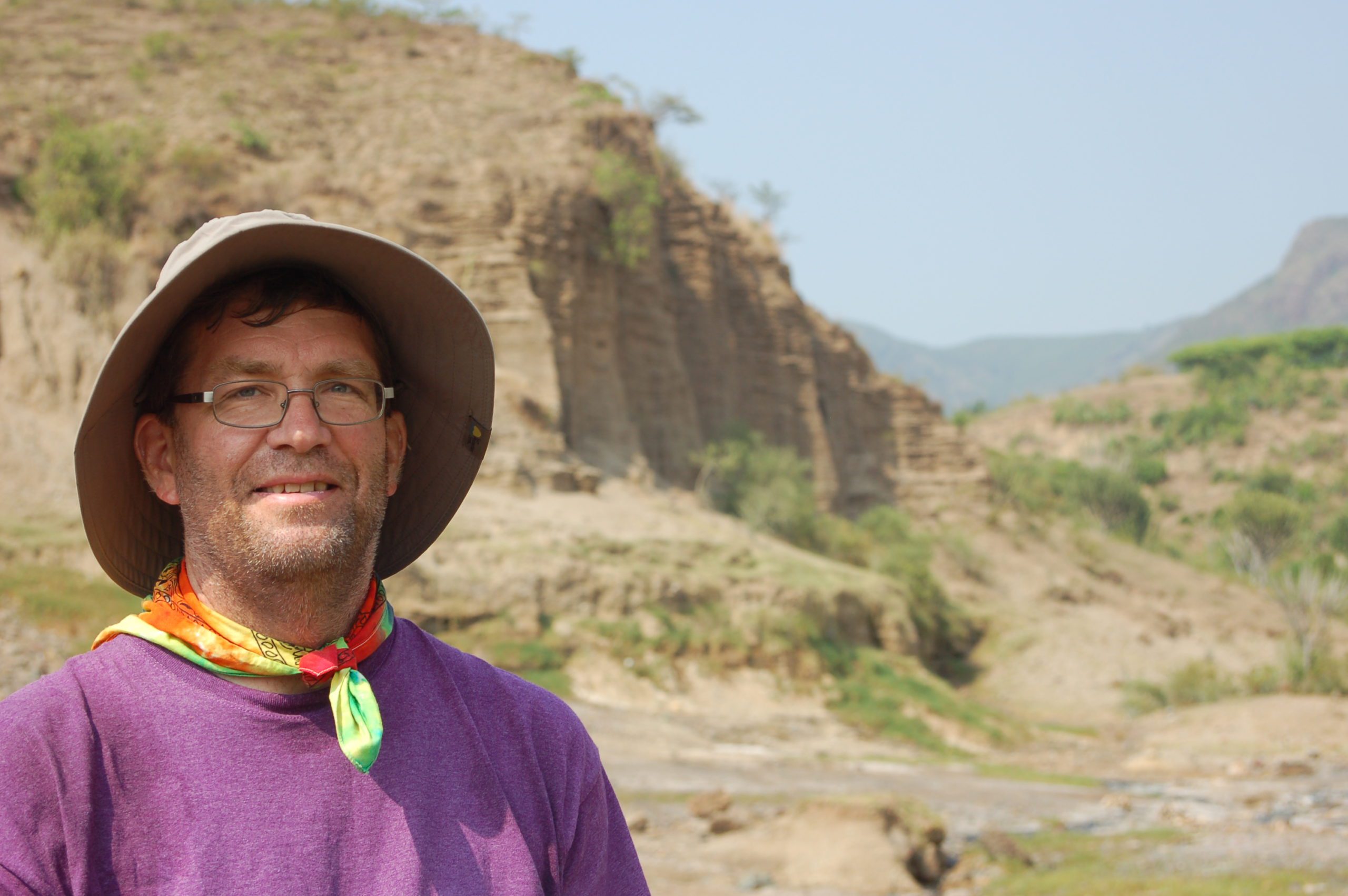
Noreen von Cramon-Taubadel is a Professor in the Department of Anthropology at the University at Buffalo, College of Arts and Sciences, and serves as Director of Undergraduate Studies. She holds a PhD from the University of Cambridge, an MSc from University College London, and a BSc from the University of Galway. Her research focuses on Biological Anthropology, Human Evolution, and Evolutionary Morphology, with a specialization in modern human variation, craniometrics, and geometric morphometrics. She investigates how environmental, dietary, and cultural factors influence cranial and skeletal diversity, particularly in relation to the transition to agriculture and human adaptation. Her work spans global populations and time periods, including analyses of prehistoric and historical skeletal remains. Courses she teaches include 'Introduction to Physical Anthropology' and 'Advanced Research in Physical Anthropology.' Her research employs cutting-edge quantitative methods, such as geometric morphometrics and evolutionary quantitative genetics, to explore questions in human and primate evolution. Notable projects include studies on macaque taxonomy, craniofacial evolution, and the biological consequences of subsistence strategies.
Ashley Hammond serves as an Associate Curator and Chair of Anthropology at the American Museum of Natural History (AMNH) and holds the position of Associate Professor in the museum's Richard Gilder Graduate School. She is also primary faculty in the New York Consortium of Evolutionary Primatology (NYCEP). Her institutional affiliations include significant involvement in AMNH Anthropology collections acquisitions, research, repatriation, and stewardship activities, with fieldwork centered on the east side of Lake Turkana in Kenya. University of Missouri, Ph.D., 2013 Florida Atlantic University, M.A., 2008 Florida Atlantic University, B.A., 2006 Dr. Hammond's research focuses on the fossil record for hominoid (ape and human) evolution in East Africa, with particular emphasis on the evolution of locomotor behaviors, especially bipedal locomotion which is the hallmark of the human lineage. She concentrates on the postcranium, especially the pelvis, as an indicator of locomotor evolution through time. Her field work has centered on Plio-Pleistocene hominin-bearing deposits around Lake Turkana ranging from about 1 million to nearly 4 million years in age, and she also conducts work at Late Miocene paleontological sites in Kenya. In the laboratory , she develops novel techniques including nonlandmark-based morphometrics and digital modeling techniques for studying fragmentary fossils. Analysis of Dr. Hammond's publications reveals a consistent focus on hominin pelvic morphology and locomotor evolution, with significant contributions to understanding the origins of the genus Homo . Her research spans multiple disciplines including paleontology, physical anthropology, and evolutionary biology, with field sites concentrated in East Africa. The temporal scope of her work covers critical periods in human evolution from the Late Miocene through the Early Pleistocene, addressing fundamental questions about when and how bipedalism evolved. Dr. Hammond serves on graduate committees at George Washington University for students Lawrence Fatica and Vance Powell. Her teaching experience includes positions as Assistant Curator of Biological Anthropology at AMNH (2018-present), Visiting Assistant Professor at George Washington University (2017-2018), Instructor at Howard University College of Medicine (2015-2016), and Research Instructor at Stony Brook University (2013-2015). She has taught courses including Koobi Fora Field School, Human Functional Anatomy, Structure and Function, Regional Human Gross Anatomy, and Research in Ecology and Evolution. While conducting paleontological research in collaboration with the National Museums of Kenya, Dr. Hammond has recovered hominin fossils relevant to the origins of the genus Homo and continues to explore critical but poorly sampled time periods in ape and hominin evolution. Her work combines traditional field paleontology with innovative laboratory techniques to address fundamental questions in human evolutionary history.
Thomas Plummer is a Professor at Queens College, City University of New York (CUNY), specializing in hominid paleontology and Oldowan archaeology. His research focuses on reconstructing the behavior and ecology of extinct hominids, with a particular emphasis on the Oldowan stone tool industry. He is affiliated with the CUNY Advanced Research Collaborative and leads fieldwork on the Homa Peninsula in Kenya, investigating late Pliocene and Pleistocene sites like Kanjera South. Plummer earned his Ph.D. in 1991 from Yale University. His work integrates paleoecology with archaeological analysis to understand adaptive shifts in hominids, such as the emergence of bipedalism and stone tool use. Key projects include excavations at Kanjera South, yielding significant Oldowan artifacts and faunal remains. His research interests span hominid behavior, early stone tool technology, vertebrate paleontology, and human osteology. He teaches courses on human evolution, biological anthropology, and faunal analysis. Plummer has received the CUNY Advanced Research Collaborative award, recognizing his contributions to interdisciplinary research. Publications highlight his expertise in Oldowan technology, paleoenvironmental reconstruction, and the analysis of bone modification patterns. Collaborative efforts with institutions like the Smithsonian and international researchers underscore his global impact in paleoanthropology.