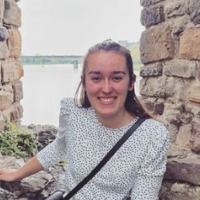
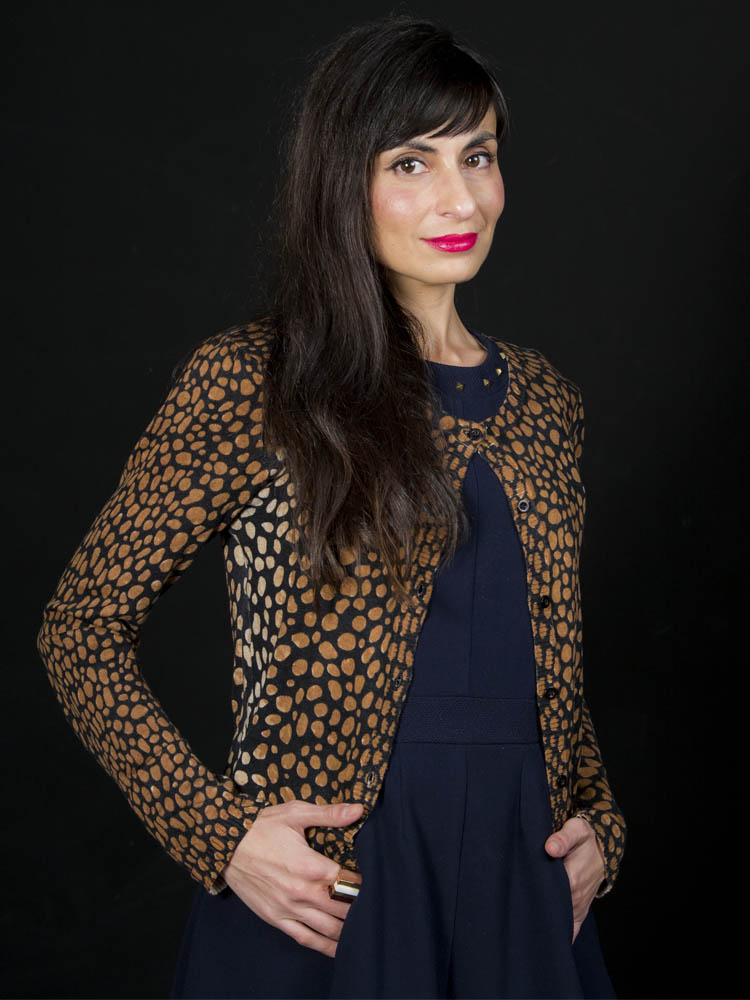
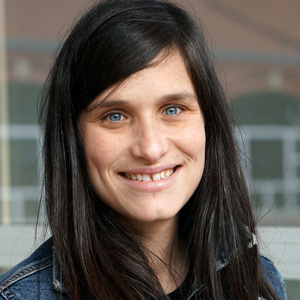
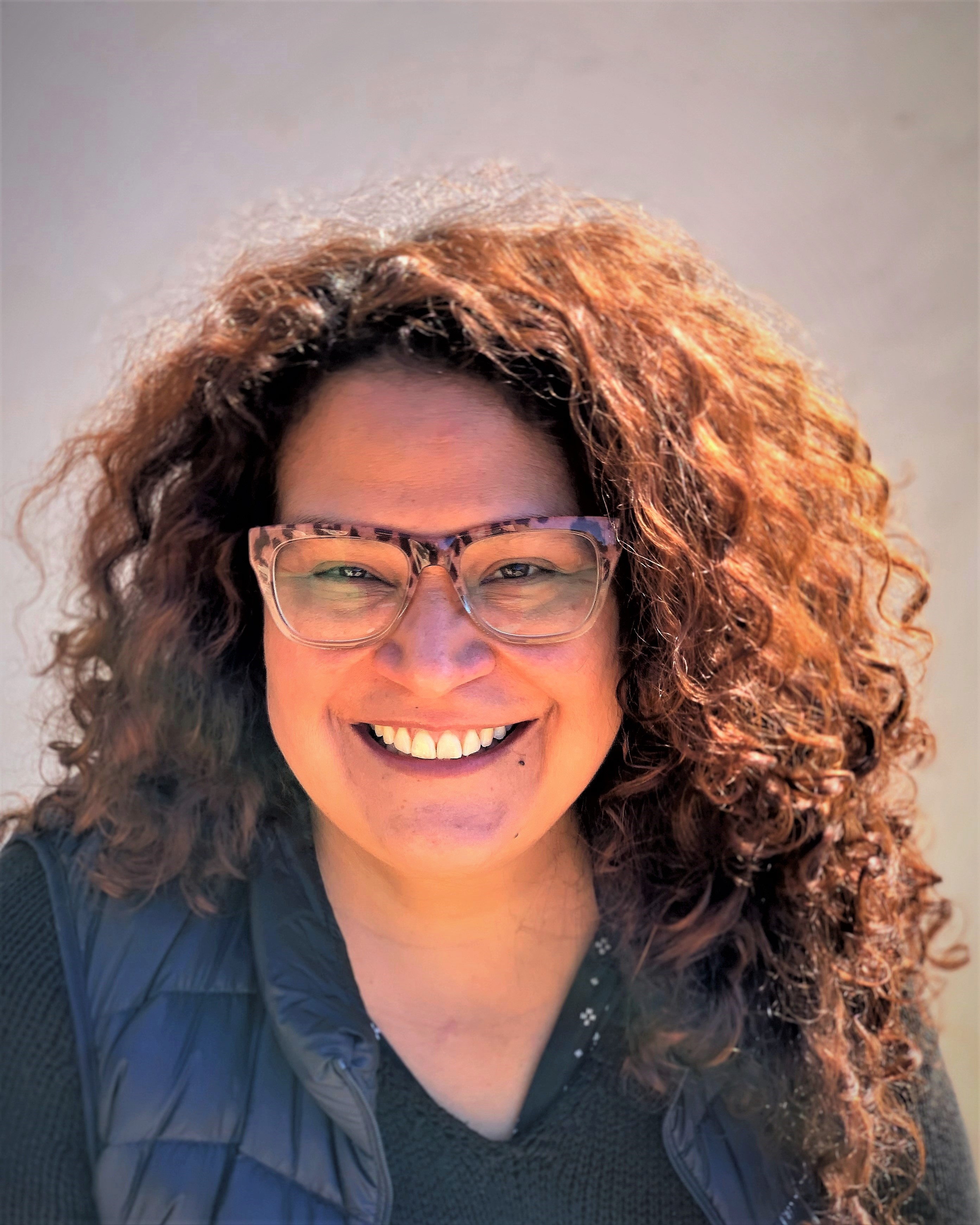
María Soledad Morales Ladrón es Catedrático/a de Universidad en el Departamento de Filología Moderna de la Universidad de Alcalá. Su trabajo académico se centra en literatura irlandesa contemporánea, estudios de género, teoría postcolonial y literatura comparada. Coordinadora del Grupo de Investigación en Estudios Irlandeses Participa en el grupo Literaturas y Culturas en Lengua Inglesa Investigadora principal en múltiples proyectos sobre Irlanda Áreas de investigación incluyen: Diaspora irlandesa y multiculturalismo Estudios de género en contexto irlandés Memoria histórica en literatura Traducción y recepción literaria Relaciones entre literatura irlandesa y española Estética joyceana en literatura hispánica Publicaciones recientes abordan temas como: Ética en ficción histórica británica e irlandesa Vulnerabilidad en obras de Anna Burns Resistencia femenina en reinterpretaciones bíblicas Impacto de la crisis ecológica en narrativa irlandesa
María Teresa Vera Rojas is an Associate Professor in the Department of Spanish, Modern, and Classical Languages at Universitat de les Illes Balears, specializing in Spanish and Latin American literature within the Spanish Language and Literature degree program. She is also a researcher at ADHUC (Research Center for Theory, Gender, and Sexuality) at the Universitat de Barcelona and serves as Chair of the Section on Venezuelan Studies of LASA (Latin American Studies Association). Education: PhD in Cultural and Gender Studies, Universitat de Barcelona (2016) PhD in Hispanic Studies, University of Houston (2007) MA in Latin American Literature, Universidad Simón Bolívar (Caracas, Venezuela) MA in Gender Studies, Universitat de Barcelona Degree in Literature, Universidad Católica Andrés Bello (Caracas, Venezuela) Her interdisciplinary research bridges gender and sexuality studies, queer theory, post/decolonial feminism, anti-racism, and cultural/literary analysis. She focuses on contemporary Hispanic Caribbean, Venezuelan, and Spanish literature, alongside early twentieth-century Latinx feminism in New York City. Current projects include: GRESEL-DH : Analyzing postcolonial debates in Spanish-language newspapers from Asia, Spain, and the Caribbean (2024–2027). GIMA : Investigating materiality and modernity in literary culture (1880s–1930s) (2023–2027). She has edited volumes such as Feminismos antirracistas: relecturas para el siglo XXI (Icaria, 2024) and co-edited New Perspectives on Hispanic Caribbean Studies (Palgrave Macmillan, 2020). Her work appears in journals like Revista Iberoamericana and Bulletin of Latin American Research . Scientific Awards: Victoria Urbano Award 2020 for 'Se conoce que usted es ‘Moderna’' She teaches courses on Hispanic literature from the 18th century to avant-garde movements, as well as interdisciplinary topics in gender and cultural studies, across multiple degree programs including Spanish Language and Literature, Catalan Language and Literature, English Studies, History of Art, and Education.
Araitz Peña Mallona is a PhD researcher at the University of Deusto's Faculty of Social and Human Sciences and the Instituto de Derechos Humanos Pedro Arrupe . She holds a degree in International Relations and Law from the University of Deusto and a Master's in Spanish Legal Practice from the Bar Association of Bizkaia and the same university. Current focus on Human Rights research Specializes in international protection and social group membership Professional experience in migration law and asylum seeker legal advising Her research examines how Spanish asylum law creates internal borders through administrative practices that regulate migrant lives. Using decolonial feminism, she analyzes exclusion zones, waiting periods, and inclusion mechanisms that reproduce systemic discrimination based on race, gender, and sexual orientation. Her work addresses legal gaps in subsidiary protection for Colombian asylum seekers and changes in social group definitions post-European Regulation 2024/1347. Araitz has presented at conferences like Ikergazte 2025 and contributed to journals such as Criticism and Resistance . Her publications focus on theoretical approaches to bordering processes, gender invisibility in refugee status determination, and legal persecution of migrant rights defenders in European border contexts.
Johanna Moreno Caplliure is a Researcher at the Department of Metaphysics and Theory of Knowledge , University of Valencia , with a focus on cultural criticism, curatorship, and philosophy. She holds degrees in Philosophy (2012) and Art History (2003) from the University of Valencia. Fields of Interest : Cultural criticism, discourse theory, postcolonial theory, subaltern thought, gender studies (feminism/queer theory), autobiography/autofiction, border epistemologies. Notable Publications (2016–2017) explore intersections of gender, postcolonial thought, and autobiographical practices in visual arts. Her curatorial projects include Distopía general (2017) and A Revolutionary Love/Un amor revolucionari (2017), addressing social and political themes. Scientific Awards : International Postgraduate Program at UQAM (2016), ERASMUS Programme (2011), collaboration grants at UVEG (2010–2012). Her research connects cultural studies with feminist and queer theories, emphasizing affective labor and community resistance. She maintains personal websites and blogs as platforms for disseminating her work.
María Rocio Cobo Piñero is a researcher at the University of Seville in the School of English Philology , specializing in African American Literature and African Diaspora Studies . Her work critically examines intersections of race, gender, and cultural identity through postcolonial and transatlantic frameworks. PhD in English Philology (2014) on 'The influence of Blues and Jazz on three African-American authors' Key collaborators: Dr. Stelamaris Coser, Dr. Juan Ignacio Guijarro González Research Focus Investigates queer representations in African arts, gender dynamics in jazz traditions, transnational narratives in Afrodiasporic literature, and decolonial epistemologies in visual arts. Recent work analyzes Zanele Muholi and Akwaeke Emezi through the lens of trans-embodiments and Black counter-archives . Publications Her scholarship traces musical influences on literary production, postcolonial science fiction , and afrodiasporic consciousness in contemporary travelogues. Notable works include analyses of Claudia Rankine's affect theories and Toni Morrison's interdisciplinary legacy .
Iker Zirion is a Professor of Public International Law at the University of the Basque Country (UPV/EHU) and a researcher at Hegoa, the Institute for Development and International Cooperation Studies. He is affiliated with the Department of Public Law and Historical-Legal Sciences and of Political Thought History. His research focuses on peacebuilding, gender analysis in conflict zones, post-conflict societies, and the Democratic Republic of the Congo. He holds a PhD in International Studies and has been a member of Hegoa’s 'feminism and conflict' research group. Education: PhD in International Studies Research Interests: Peacebuilding and gender dynamics Post-conflict contexts and transitional justice Critical approaches to liberal peace Violence against women in armed conflicts Gender and international law Masculinity studies in humanitarian action Recent Projects: Strengthening women defenders of truth, justice, and reparation (2022) Analysis of food insecurity in armed conflicts (2020) Psychosocial care for women human rights defenders in Kivu (2022) Key Themes in Publications: His work critiques liberal peace paradigms, examines gender mainstreaming in DDR programs, and analyzes feminist approaches to transitional justice. He emphasizes the intersection of masculinity, humanitarian action, and conflict resolution. He has supervised doctoral theses on peacebuilding policies in the DRC and contributed to international debates on UN Security Council Resolution 1325 implementation. His academic contributions bridge critical legal theory with practical policy analysis in conflict-affected regions.
Dr. Carmen Maria Astrid Agenjo Calderón is a Senior Lecturer in the Department of Economic History and Institutions at Universidad Pablo de Olavide. With a PhD in Social Sciences and a Master's in International Economics and Development, her work bridges feminist economics, gender studies, and political economy. University: Universidad Pablo de Olavide School: School of Economics, Quantitative Methods and Economic History Department: Department of Economic History and Institutions Academic Rank: Senior Lecturer Her research focuses on feminist economics , gendered labor dynamics , and social reproduction . Key areas include: Critique of androcentric economic paradigms Intersectional analysis of care work and capitalism Post-crisis gender inequality Decolonial economic frameworks Policy impacts on life sustainability Recent publications address neoliberal economization of life, feminist genealogies, and gendered responses to austerity. She actively connects academic research with social movements like Spain's 15-M, advocating for politicized economic scholarship. Her work spans empirical studies in Andalusia, Latin America, and European contexts, emphasizing unpaid labor, care provision, and systemic gender bias in economic models.
Alejandra Cubero Val is an Associate Professor at the Universidad Carlos III de Madrid . Her work focuses on global cinema studies with a particular emphasis on North African and South Asian contexts. She investigates gender representation in film, postcolonial cultural dynamics, and the intersection of media with political movements and social change. Her research spans topics ranging from feminist film activism in Algeria to the role of documentary cinema in documenting revolutionary movements across the Middle East and South Asia. Her academic contributions emphasize the analysis of marginalized voices in film and media, particularly focusing on women’s roles as filmmakers and subjects of representation. She has conducted extensive studies on Algerian and Tunisian cinema, exploring how these mediums challenge political and social norms. Her work also delves into the cultural and political landscapes of Afghanistan, India, and Equatorial Guinea, addressing issues such as media evolution in conflict zones, gendered professionalization in architecture, and the legacy of colonialism in contemporary media. Cubero Val has published widely on transnational cinema, feminist theory, and postcolonial studies, with a notable focus on the documentary genre as a tool for memory preservation and cultural resistance. She has also explored the interplay between media, politics, and identity in transitional societies, including Spain’s post-dictatorship era and India’s modernization processes. Despite her prolific output, her profile does not mention awards or grants, though her extensive publication record reflects sustained academic engagement. She teaches at the University Carlos III de Madrid and maintains active research collaborations in cultural studies across multiple continents.
Maria Belen Martin Lucas serves as a full-time Professor in the Department of English, French and German Philology at the Faculty of Philology and Translation, University of Vigo. She maintains dual research affiliations with the Research Center on Atlantic Cultural Landscapes and the BiFeGa Research Group in Literary and Cultural Studies, Translation and Interpretation. Education : She earned her Doctorate from the University of Oviedo in 1996 with the thesis 'The Cycle of Stories by Canadian Anglophone Authors: Literary Gender/Female Gender', supervised by Dr. Isabel Carrera Suarez. Research Focus : Dr. Martin Lucas specializes in Canadian literature through intersecting lenses of gender studies, postcolonial theory, and transnational cultural analysis. Her scholarship critically examines race-gender-nationalism dynamics in Anglophone Canadian writing, with recent expansion into decolonial ethics and Indigenous feminisms. Key publications address transnational fiction, gender violence, and cultural representation across 25+ years of academic work. Publication Evolution : Her research trajectory reveals a progression from early analyses of Canadian literary cycles (1990s-2000s) toward contemporary engagements with decolonial theory and posthumanism. Recent works (2022-2024) demonstrate heightened focus on ethical relationality, necropolitics, and resilience frameworks while maintaining core commitments to feminist and transnational perspectives. Collaborative Infrastructure : As leader of the BiFeGa Research Group, she coordinates interdisciplinary projects examining literary translation, cultural landscapes, and Atlantic intellectual exchanges. Her work with the Interuniversity Research Center facilitates cross-institutional studies on cultural memory and identity formation within globalized contexts.
Itziar Mujika is a Professor in the Department of Public International Law, International Relations and History of Law at the University of the Basque Country and a Postdoctoral Researcher at the Hegoa Institute. She holds a PhD focused on women's organizations in Kosovo during civil resistance and peacebuilding (1989-2014). Her research explores conflicts, peacebuilding, feminist perspectives on security, and non-violent resistance movements. Key interests include gender dynamics in war/peace transitions, UN Security Council Resolution 1325 implementation, and transnational feminist networks in post-conflict societies, with regional expertise in the Balkans and Kosovo. Mujika's publications consistently examine critical approaches to peace and security through feminist and decolonial lenses, analyzing how grassroots movements influence international policy frameworks. She leads research projects including: Strengthening defenders of Truth, Justice and Reparation (2022) Strategic support for women human rights defenders in conflict zones (2020) Critical feminist transitional justice resources (2018)
Carmen María Astrid Agenjo Calderón is a Professor at the Department of Economics, Quantitative Methods and Economic History, Pablo de Olavide University, specializing in Economic History , Feminist Economics , and Gender Studies . She serves as Gender and Equality Coordinator for the university's Master's program and contributes to interdisciplinary research on social reproduction and economic institutions. Educational Background : PhD in Social Sciences Master's degree in International Economics and Development Economist (specific university not mentioned) Her research focuses on feminist critiques of economic thought, the historical invisibilization of women in economic theory, and the gendered impacts of austerity policies in post-crisis Spain. She examines the commodification of life under neoliberal capitalism and explores decolonial approaches to economic analysis. Recent publications analyze 21st-century neoliberalism , care work in Andalusia, and intersections between the 15-M movement and feminist economics. She emphasizes social sustainability and care ecosystem platformization in policy contexts. Scientific Awards : Extraordinary Doctorate Award (2018-2019) Mention of Teaching Excellence (2016-2020 period) She actively participates in feminist economics conferences and serves as a Research Fellow on projects like "Platformization of the Care Ecosystem" (2024/00265/001). Her work bridges academic research with social movement engagement , particularly through Feminism Committees in the 15-M movement.
María Teresa Vera-Rojas is an Assistant Professor in Hispanic Studies at the Universitat de les Illes Balears and a researcher at the ADHUC—Research Center Theory, Gender, Sexuality (Universitat de Barcelona). She holds dual PhDs in Cultural and Gender Studies (Universitat de Barcelona, 2016) and Hispanic Studies (University of Houston, 2007). Research Interests : Queer theory, post/decolonial feminism, Hispanic Caribbean studies, Latinx cultural history, and intersections of modernity with marginalized identities. Notable Publications : Author of “Se conoce que usted es ‘Moderna’” (Victoria Urbano Award 2020), editor of Nuevas Subjetividades/Sexualidades Literarias , and co-editor of New Perspectives on Hispanic Caribbean Studies . Her work appears in journals like Revista Iberoamericana and Centro: Journal of Puerto Rican Studies . Scientific Awards : Victoria Urbano Award (2020) FI Scholarship (2010-2013, Generalitat de Catalunya) Collaboration Grant (2008-2009, Universitat de Barcelona) Research Networks : Member of the Consolidated Research Group on Women's Creation and Thought (2021 SGR 01097), and the UNESCO Chair Women, Development, and Cultures.
Dr. María Teresa Vera Rojas is a Professor of Spanish Philology and Literature at the University of the Balearic Islands (UIB) since 2021. She holds dual PhDs in Cultural/Gender Studies (UB, 2016) and Hispanic Studies (University of Houston, 2007). Her affiliations include ADHUC Research Centre (UB) and presidency of the Venezuelan Studies Section at LASA. Education: Licenciatura en Letras (UCAB, Venezuela) MA in Latin American Literature (USB, Venezuela) Official MA in Gender Studies (UB) Research Focus: Contemporary Hispanic Caribbean/Venezuelan literature Interwar-era Latin American colonial communities in New York Feminist and queer theoretical frameworks Post/decolonial methodologies Her teaching spans 20+ courses across Spanish/Hispanic American literature, feminist theory, and cultural studies. Recent publications include award-winning monographs on antiracist feminisms and modernist women’s writing. Awards: Victoria Urbano Prize (2020) for critical monograph excellence Grants/Leadership: Co-edited volumes on Caribbean studies and feminist historiography Actively involved in LGBTQ+ theory and antiracist academic initiatives, she directs the UIB’s literature program and collaborates with international research networks.