Peter Brodersen is a Professor at the Department of Biology, University of Copenhagen , specializing in Bioinformatics and RNA Biology . His research focuses on RNA modification (m6A), YTHDF proteins, and small RNA pathways in plants. Recent research trends from his group include: (1) molecular mechanisms of ARGONAUTE-small RNA interactions, (2) m6A-YTHDF regulatory systems in plant development, and (3) RNAi-independent roles of DICER-LIKE proteins in antiviral defense. Collaborations span Denmark and international institutions. Publications highlight cross-disciplinary work bridging computational biology and experimental plant genetics. Key subfields include RNA structure, epigenetic regulation, and antiviral immunity.
Anders Damgaard is an Associate Professor and Head of BSc studies at the Department of Environmental and Resource Engineering (DTU Sustain), Technical University of Denmark. His research focuses on environmental assessment methodologies, particularly Life Cycle Assessment (LCA), and their application to waste management systems, resource recovery, and policy development. He leads the development of LCA models like EASEWASTE/EASETECH and collaborates with institutions such as the Danish EPA and Nordic Council of Ministers. Key research areas include carbon footprints of waste treatment, textile waste composition, and additive impacts in plastics recycling. Education: Not explicitly stated in provided texts. Research Interests: Waste management optimization, circular economy frameworks, sustainable technologies, and policy-driven environmental assessments. His recent publications address topics such as carbon footprints of sewage sludge treatments, Nordic textile waste composition, and challenges in plastic additive inclusion in LCA studies. He supervises PhD students in projects involving lifecycle modeling, construction waste recycling, and consumer practices in circular economies. As part of DTU Sustain, he contributes to interdisciplinary teams advancing sustainable resource management and policy solutions.
Alena Thiel is an Associate Professor at the Centre of African Studies within the Faculty of Social Sciences at the University of Copenhagen. Her research examines digital technologies' impact on state formation and knowledge systems across Africa, with primary field sites in Ghana, Senegal, Botswana, and Kenya. Her core research areas include: State knowledge systems (biometric ID, census histories, DHIS2 health records) Digital governance (addressing systems, payment solutions, disaster risk datafication) African/feminist AI development and implementation Anthropology of the state through Science and Technology Studies (STS) frameworks Recent publications (2024-2025) reveal concentrated analysis of health data infrastructures in Ghana, trust dynamics in Africa's global networks, and critical sociological examinations of digital identification. Her work consistently bridges anthropological theory with practical governance challenges in African contexts. As an active member of the Centre of African Studies, she maintains interdisciplinary collaborations across multiple African countries and European institutions, with particular emphasis on Ghanaian research partnerships and editorial leadership for Africa Spectrum journal.
Charlotte Jacobsen is a Professor and Head of the Research Group for Bioactives – Analysis and Application at the National Food Institute, Technical University of Denmark (DTU). Her research focuses on lipid oxidation, antioxidants, and sustainable utilization of marine resources. She leads multiple interdisciplinary projects and supervises PhD students in food science and technology. Research Interests: Antioxidant chemistry in food systems Oxidative stability of omega-3 fatty acids Valorization of fish and seafood by-products Microalgae as sustainable sources of bioactives Functional foods and nutraceuticals Green extraction technologies Recent Research Trends: Her recent publications (2021–2025) reflect a strong focus on sustainable food systems, including the recovery of bioactive compounds from fish side-streams, stabilization of omega-3 lipids, development of anti-obesity peptides from seaweed, and cultivation of microalgae using industrial waste streams. The work spans food chemistry, marine biotechnology, and green processing, with applications in functional foods and nutrition. Scientific Awards: Danisco Award, 2003 Edwin Frankel Best Paper Award, 2010 and 2011 La Médaille Chevreul, 2010 Marcuse Lecturer grant, 1999 Advising and Grants: Professor Jacobsen actively supervises PhD students and leads multiple funded research projects, including 'Utilization of fish side-streams for production of novel food ingredients' and 'Sustainable Production of Microalgae Proteins'. She is involved in national and international collaborations, securing research funding for projects on omega-3 extraction, microalgae cultivation, and seafood quality. Labs and Teams: She leads the Research Group for Bioactives – Analysis and Application at DTU, which is part of the DTU Microbes Initiative. The group specializes in analytical methods for bioactive compounds, lipid oxidation analysis, and development of sustainable food ingredients.
Professor John W. Edmunds is a leading academic in Infectious Disease Modelling at the London School of Hygiene and Tropical Medicine (LSHTM). Holding a Professor position since 2013 and serving as Dean of the Faculty of Epidemiology and Population Health (2013-2019), he combines mathematical, statistical, and economic models to inform public health policy. His part-time role at the Health Protection Agency (HPA) since 2008 underscores his policy advisory contributions. PhD in Infectious Disease Modelling (Imperial College, 1994) MSc in Health Economics (University of York, 1995) BSc in Biology (Imperial College, 1989) His research focuses on understanding disease transmission and optimizing control strategies. He has pioneered methods integrating social contact surveys , participatory surveillance (e.g., Influenzanet), and economic analysis to evaluate vaccines and interventions. Recent work includes SARS-CoV-2 dynamics , Ebola spatial forecasting , and typhoid vaccine prioritization . His 15 most recent publications highlight social contact patterns (Reconnect, CoMix studies), vaccine impact (HPV, typhoid), and real-time outbreak analytics (Ebola, cholera). Key trends include digital epidemiology , behavioral surveillance , and cross-country modeling for global health. Knighthood (2024) for services to epidemiology Weldon Memorial Prize (2022) for biostatistics contributions FMedSci (2018) for medical science excellence OBE (2016) for public service As an educator, he teaches "Modelling and the Dynamics of Infectious Diseases" and co-organizes "Pandemics: Emergence, Spread and Response" . Current grants include National Institute for Health and Care Research projects on post-pandemic surveillance and Bill & Melinda Gates Foundation funding for polio eradication. He leads collaborations with the Centre for Mathematical Modelling of Infectious Diseases , Vaccine Centre , and Health in Humanitarian Crises Centre , while advising UK and WHO committees on zoonotic influenza , variants , and testing programs .
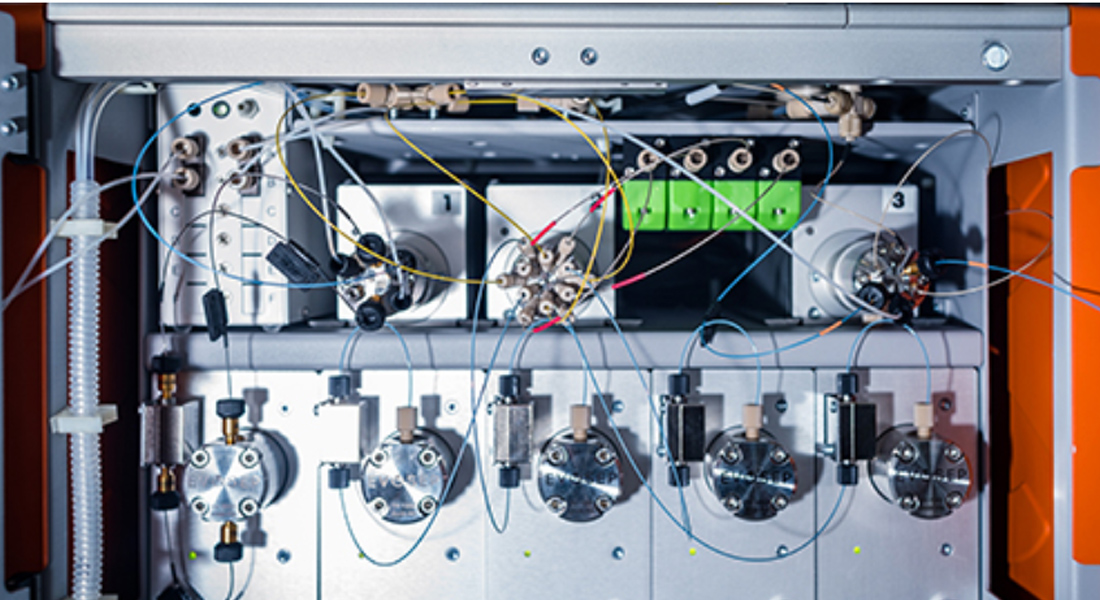
Jens S. Andersen is a Professor in the Department of Biochemistry and Molecular Biology at the University of Southern Denmark, where he leads research in Biomedical Mass Spectrometry and Systems Biology. His work is centered on the development and application of quantitative mass spectrometry and microscopy-based proteomics to study human cell biology, particularly the structure and function of organelles such as centrosomes, cilia, autophagosomes, and mitochondria. His research focuses on determining the protein composition and dynamic properties of cellular organelles, the roles of specific protein groups, and their contributions to biological processes and diseases. He investigates cell signaling mediated by post-translational modifications, especially within the DNA damage response, autophagy, and immune systems. His lab, the Jens S. Andersen Lab, is part of the Research Section of Biomedical Mass Spectrometry. The analysis of his recent publications reveals a strong interdisciplinary trend combining proteomics, structural biology, and cell signaling. His work spans cilia biology, RNA metabolism, DNA repair, and cancer mechanisms, with frequent use of advanced techniques like mass spectrometry, CRISPR, and live-cell imaging. The integration of systems biology approaches is evident across his research outputs. Professor, Department of Biochemistry and Molecular Biology, University of Southern Denmark Head of Research, Biomedical Mass Spectrometry and Systems Biology Principal Investigator, Jens S. Andersen Lab ORCID: 0000-0002-6091-140X While no specific scientific awards are mentioned in the provided texts, his extensive publication record in high-impact journals such as Science , Nature Communications , Molecular Cell , and EMBO Journal reflects significant scholarly contributions. He has supervised research projects and collaborated widely across Europe, though specific names of students are not listed. His research is supported by multiple ongoing projects, reflecting sustained funding and academic leadership. The Jens S. Andersen Lab operates at the intersection of proteomics and cell biology, contributing to fundamental understanding of organelle dynamics and disease mechanisms. The lab's work is highly collaborative, involving partnerships with groups in structural biology, RNA research, and cancer biology.
Konstantinos Kalogeropoulos is an Assistant Professor at the Department of Biotechnology and Biomedicine, Technical University of Denmark (DTU), leading research at the Cell Diversity Lab. His work bridges proteomics, computational biology, and snake venom research. Current projects: "The Proteomic Landscape during Influenza Infection" (2022-2025) Supervisor for PhD projects on protease network rewiring in psoriasis and wound exudate degradomics Research interests include: Proteomic analysis of inflammatory diseases Snake venom toxin structure prediction Extracellular matrix biomechanics De novo peptide sequencing algorithms Computational modeling of protease networks Recent article trends demonstrate his work in • Database-free proteomics (InstaNovo/InstaNexus) • Snake venom pathophysiology (V-ToCs clustering) • Inflammatory disease biomarkers (psoriasis, impaired healing) • Extracellular matrix mechanics (fibronectin tension, gut inflammation) Advising: Supervises PhD students Polhaus, C. J. M. and Haack, A. M., focusing on protease networks and wound healing.
Anne Jamison serves as a Tenure track adjunct faculty in the Department of International Economics, Government and Business at Copenhagen Business School. Her research aligns with UN Sustainable Development Goals, particularly SDG 16 (Peace, Justice and Strong Institutions). Her primary research areas include: International Political Economy Political Risk and Sovereign Credit Populism and Ideational Systems Foreign Direct Investment and Indigenous Communities Energy Projects and Violent Conflict in Fragile States Recent publications (2024-2025) reveal a focus on integrating high-frequency political, environmental, social, and governance (ESG) data to model sovereign credit risk, and examining cross-national variation in populist support through demand-side explanations. She investigates how World Bank-funded infrastructure projects correlate with violent conflict in fragile contexts, advocating for systemic reform in international development finance. Dr. Jamison has supervised three research projects and engaged with global media to disseminate findings on corporate accountability in conflict zones, emphasizing practical policy implications for multilateral institutions.
Ole Wæver is a Professor of International Relations at the Department of Political Science, University of Copenhagen. He founded the Centre for Advanced Security Theory (CAST) and directs the Centre for Resolution of International Conflicts (CRIC) . His work spans security theory, conceptual history, and sociology of science, with global recognition for developing the Copenhagen School of securitization theory. Primary Research Areas: International Relations, Security Studies, Climate Change, Religion/Secularism, Conflict Analysis Notable Contributions: Pioneering securitization theory, interdisciplinary analysis of security concepts, and theoretical developments in regional security complexes. His recent work explores the intersection of technology, philosophy of language, and security. Scientific Awards: Royal Danish Academy of Sciences and Letters (2007) Carlsberg Foundation Research Prize (2012) Knight of the Order of Dannebrog (2014) Hesbjerg Foundation Peace Prize (2015) Honorary Doctorate, University of Turku (2015) Publications: Authored and co-authored influential books such as Security: A New Framework for Analysis and Regions and Powers , and contributed to leading journals including International Organization , Security Dialogue , and Millennium .
James A. Evans is the Max Palevsky Professor of Sociology and Data Science at the University of Chicago, where he is a faculty member in the Department of Sociology within the Division of the Social Sciences. He is the director of Knowledge Lab and the Faculty Director of the Masters Program in Computational Social Science . He holds additional affiliations as an External Professor at the Santa Fe Institute , External Faculty at the Complexity Science Hub, Vienna , and Visiting Faculty Researcher at Google . Education: B.A. in Anthropology, Brigham Young University (1994) M.A. in Sociology, Stanford University (1999) Ph.D. in Sociology, Stanford University (2004) His research centers on the collective system of thinking and knowing , exploring how ideas emerge, spread, and evolve through social and technical systems. He investigates innovation, collective intelligence, and the science of science , using large-scale data modeling, machine learning, generative AI, and network analysis to study knowledge creation. His work spans domains including science, technology, law, and religion, with a focus on how AI is reshaping discovery processes. The most recent publications highlight trends in AI and scientific discovery , with a strong emphasis on innovation, knowledge systems, and human-machine intelligence . His research increasingly explores AI as a transformative agent in science , including the concept of 'alien intelligence' and the development of complementary AI to augment human capacity. Projects like the $20M NSF-funded APTO initiative aim to build language models that predict technological outcomes by analyzing historical data. Scientific Recognition and Funding: Research supported by the National Science Foundation (NSF) , National Institutes of Health (NIH) , Air Force Office of Scientific Research (AFOSR) , and philanthropic sources Work published in Nature, Science, PNAS , and leading social science journals Featured in The New York Times, The Economist, The Atlantic, Wired, NPR, BBC, Le Monde , and others James Evans advises on science policy and funding strategies, emphasizing the importance of diversity, interdisciplinary collaboration, and demographic balance in fostering innovation. He critiques current academic incentives and proposes alternative discovery regimes. He leads Knowledge Lab , a collaborative research environment that conducts seminars, grants, and employment opportunities in computational social science and AI.
Erwin Schoof is an Associate Professor at the Department of Biotechnology and Biomedicine , Technical University of Denmark. He leads the Cell Diversity Lab and focuses on advancing proteomics and mass spectrometry technologies. Expertise in single-cell proteomics , stem cell niches , and bioinformatics . Active in myelofibrosis and leukemia research , with applications in UN Sustainable Development Goals . Research Trends from 2025–2024 include: Machine learning-driven peptide sequencing (InstaNovo, InstaNexus). Single-cell resolution tools for mapping hematopoietic stem cells and tumor microenvironments . Biomarker discovery in chronic diseases and respiratory conditions . Supervision : Mentors multiple PhD students on single-cell proteomics , omics data analysis , and biotherapeutic production . Labs & Collaborations : Collaborates with international teams on plasma proteomics , 3D bioengineering , and advanced mass spectrometry workflows .
Atreyee Sen is Professor in the Department of Anthropology at the University of Copenhagen , Faculty of Social Sciences, a position she assumed on 1 February 2025 after serving as Associate Professor since 2015. She holds a PhD in Social Anthropology from SOAS, University of London (2003), and previously held academic roles at the University of Sussex and the University of Manchester. BA in Sociology, University of Calcutta (1994) MA in Sociology, Jawaharlal Nehru University (1996) PhD in Social Anthropology, SOAS, University of London (2003) Her research centers on urban South Asia , particularly India, with a focus on gender, violence, political mobilization, and subaltern communities . She investigates how marginalized groups—such as women in Mumbai slums, Muslim youth in Hyderabad, and former Maoist guerrillas in Calcutta—navigate and resist structural violence through political activism and cultural production. Her ethnographic work explores themes of prisons, moral policing, custodial disappearances, and urban poverty , challenging reductive narratives about the 'poor' and 'violent' in non-Western contexts. The recent articles in her publication record reveal a sustained engagement with political violence, urban precarity, and resistance . Her work spans ethnographic studies of child vigilantes, anti-Romeo squads, and informal economies in Indian cities, often highlighting the intersection of gender, state power, and everyday survival . She employs comparative frameworks, such as between Chicago and Mumbai, to broaden anthropological theory. Her research is deeply interdisciplinary, drawing from political science, sociology, and gender studies. Sutasoma Award for Outstanding Research Towards a PhD (2002) NirmalChunder Basu Ray Memorial Award, University of Calcutta (1994) Atreyee Sen has been actively involved in public scholarship through media engagements, including interviews and documentaries with BBC Radio 4 on topics such as the Delhi rape case, women vigilantes, and Indian elections. She has also led major research projects, including an ERC Advanced Grant on global political anger and a project on cashless economies and urban debt. She is currently writing a monograph titled ‘Morgue tags and body bags’ -- Ethno-histories, custodial death/disappearances and state torture in urban India . She has served in leadership roles in international academic bodies, including the Association of Social Anthropologists (ASA) and the World Council of Anthropological Associations (WCAA). While no formal lab or team is specified, her collaborative research outputs and network suggest active engagement with global academic communities. She has not indicated any future work beyond her current monograph and ongoing projects.
Alex Arenas is a Full Professor in the Department of Computer Engineering and Mathematics at Universitat Rovira i Virgili (URV), Tarragona, Spain. He is also an External Faculty member at the Complexity Science Hub in Vienna and Chief of Complex Systems Science at the Pacific Northwest National Laboratory, USA. His research spans complex systems, network science, computational epidemiology, and multilayer dynamics, with applications in public health, neuroscience, and social systems. Research Interests: His work focuses on the physics of multilayer networked systems, particularly the interplay between structure and function in complex networks. Key areas include synchronization, epidemic modeling, network medicine, the physics of the microbiome, and higher-order interactions in spreading processes. He investigates dynamic transitions using functional multilayer frameworks and develops models for real-world systems like urban mobility and misinformation diffusion. The recent articles highlight a strong trend in computational epidemiology, especially post-COVID modeling of vaccination strategies, rebound dynamics, and wastewater surveillance. There is also significant work on synchronization in oscillator networks, chimera states, and higher-order network effects, reflecting a deep engagement with nonlinear dynamics and theoretical network science. Applications span medicine, urban planning, and social systems. Scientific Awards: Fellow, American Physical Society (2018) Fellow, Network Science Society (2020) ICREA Academia (2011, 2017, 2022) Narcís Monturiol Medal (2022) Web Science Trust Test of Time Award (2024) Complex Systems Society Senior Award (2024) Advising and Grants: Arenas has supervised numerous PhD students and postdoctoral researchers, though specific names are not listed. He has been Principal Investigator on 47 research projects, including EU FP7 projects, a James S. McDonnell Foundation grant, and Horizon Europe's CREXDATA project. He has served as an editor for Physical Review E , Journal of Complex Networks , and Network Neuroscience , and has reviewed for major funding agencies including ERC, MINECO, and international bodies. Labs and Teams: He leads the Alephsys Lab at URV, which develops tools like Radatools for network analysis and community detection. His team focuses on interdisciplinary modeling of real-world complex systems using data-driven and theoretical approaches.
Jesper Velgaard Olsen is a Professor and Deputy Center Director at the University of Copenhagen's Novo Nordisk Foundation Center for Protein Research (CPR) and leads the Olsen Group. His research focuses on quantitative, high-resolution mass spectrometry-based proteomics, particularly in characterizing signaling networks regulated by phosphorylation and other post-translational modifications. The group develops advanced offline peptide fractionation and enrichment methods combined with high-resolution Orbitrap tandem mass spectrometry to improve robustness and reproducibility in proteomic analysis. The Olsen Group investigates functional selectivity in cell signaling, where different growth factors binding to the same receptor activate distinct pathways. They identified tyrosine phosphorylated residues as molecular switches determining cell fate and optimized workflows enabling deep human proteome analysis comparable to RNA-seq. Their work spans technology development and biological applications in diseases like acute myeloid leukemia. Key group members include PhD Fellows, PhD Students, and Researchers such as Agnete Witness Præst Jensen, Charlotte Hjort, and Kristina Bennet Emdal. For collaboration or inquiries, contact Olsen via email jesper.olsen@cpr.ku.dk .
Professor Riikka Rinnan (University of Copenhagen) is a leading expert in ecosystem-atmosphere interactions, focusing on volatile organic compounds (VOCs) in Arctic environments. Her groundbreaking discovery of VOCs in permafrost has advanced climate prediction models, revealing complex interactions between climate warming, insect herbivory, microbial activity, and vegetation shifts. Current position: Professor, Department of Biology, University of Copenhagen Major research themes: Permafrost VOCs, Arctic climate feedbacks, plant-insect-microbial interactions International collaborations: China, Germany, Russia Her work combines field expeditions in extreme Arctic conditions with laboratory experiments and advanced VOC analysis. Climate warming experiments show VOC emissions could increase 40-fold with combined warming and insect attacks, while Arctic soils may act as unexpected VOC sinks. Key publications appear in Nature Communications , Nature Geoscience , and Global Change Biology . Riikka Rinnan has received prestigious awards including the EliteForsk Award, European Research Council Consolidator Grant, and Sapere Aude Research Leader. She leads international research teams, advises five PhD candidates, and supervises four postdocs (including two Marie Curie fellows). Her Siberian expedition plans demonstrate commitment to real-world scientific challenges.