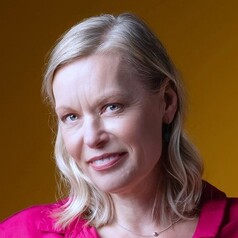
Professor Helen Finch (University of Leeds) is a leading scholar in German Literature , with a focus on Holocaust Studies , Queer Memory , and German-Jewish Cultural Production . Affiliated with the School of Languages, Cultures and Societies and the Centre for Jewish Studies , she co-leads the LCS Queer Area Studies Network and contributes to equality initiatives through the LGBT+ staff network . Research: Holocaust representation in German works, queer identity in postwar literature, transnational memory studies, curriculum design in German studies Awards: Fellow of the Higher Education Academy (2014) Academic Output : Her 15 most recent publications span Holocaust poetics , queer life writing , translation ethics , and Sebaldian intertextuality , with a particular focus on intersections between trauma , identity , and intergenerational testimony . Supervision : Currently guides PhD research on topics including transnational transphobia , queer art practices , and LGBTQ+ cross-cultural representation . Her students explore areas from German exile photography to postcolonial queer narratives .
Max Planck Institute for the History of ScienceGermany
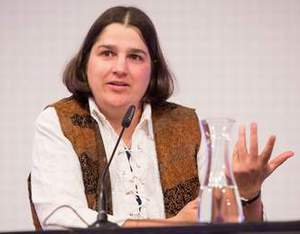
Martina Beate Geissler is an Associate Professor of Art at the University of Illinois at Chicago. She collaborates with Oliver Sann, focusing on the intersections of knowledge, power, and technology in Western culture, particularly how humans are transformed through technological systems. Their work critically examines the boundaries between factual documentation and constructed realities, engaging with media and technology's inherent biases. At the Max Planck Institute for the History of Science (MPIWG), Department I, they are developing the project Hopium Economy , which contextualizes the opioid crisis in the Midwestern USA within broader socio-political frameworks, including public health systems, pharmaceutical industries, racial tensions, and de-industrialization. The project redefines addiction as a core existential mode linked to the Anthropocene's challenges. They have received notable awards such as the Videonale Award and Herman-Claasen-Award, alongside grants from the Graham Foundation and Humanities without Walls. Their artistic work has been exhibited internationally in institutions like the Museum of Contemporary Photography (Chicago), Fotomuseum Antwerp, and the German Pavilion at the Photography Biennial Dubai, UAE. Scientific Awards & Grants Videonale Award, Bonn, Germany Herman-Claasen-Award, Cologne, Germany Graham Foundation Production Grant, Chicago Humanities without Walls Grant
Eric Rentschler is the Arthur Kingsley Porter Professor of Germanic Languages and Literatures at Harvard University, affiliated with the Film and Visual Studies Program. He holds a PhD from the University of Washington with academic training in German literature, history, and European intellectual history across Stuttgart, Bonn, and Prague. A leading scholar in German cinema and cultural studies, his work spans from Weimar-era films to contemporary German cinema, focusing on historical memory, political representation, and transnational cultural exchanges. Director of Harvard’s annual Berlin Film Program (coordinated with Deutsche Film- und Fernsehakademie Berlin) Editor of New German Critique and co-director of the German Film Institute Recipient of major grants including Guggenheim, Humboldt, ACLS, DAAD, and Fulbright fellowships His research integrates film theory with historical analysis, examining cinematic representations of Nazism’s legacy, post-wall German society, and transnational art movements. Notable publications include The Ministry of Illusion: Nazi Cinema and Its Afterlife (Harvard UP, 1996) and The Use and Abuse of Cinema: German Legacies from the Weimar Era to the Present (Columbia UP, 2015). Current projects explore German cinema during Helmut Kohl’s chancellorship. Award-winning educator, Rentschler has received Harvard’s Levenson Teaching Prize (2001) and Cabot Fellowship (2003). He organizes the monthly Film and Visual Studies Colloquium, fostering interdisciplinary dialogue between scholars and filmmakers.
Lea Rees is Lady Wallis Budge Junior Research Fellow in Egyptology at University College, Oxford, and an Associate Member of the University’s Faculty of Asian and Middle Eastern Studies. She leads and collaborates on fieldwork at Dahshur with the German Archaeological Institute in Cairo and on conservation and publication in the tomb of Ramesses III (KV 11). Research interests span Egyptian settlement and landscape archaeology, cultural interactions, archaeological theory, and the history of Egyptology. She employs phenomenological, sociological, and archival perspectives to investigate ancient lived environments and their modern reception. Egyptian settlement archaeology Landscape biography and phenomenology Cross-cultural iconography (e.g., Bes in the Achaemenid Empire) Archaeological theory and spatial sociology Conservation and epigraphy in the Valley of the Kings Her recent publications concentrate on two major arenas: the Valley of the Kings , where multi-year conservation and documentation campaigns in KV 11 have yielded richly illustrated reports and new insights into Ramesside burial equipment; and Dahshur , where she interrogates long-term landscape transformations from Early Dynastic encampments to Old Kingdom pyramid towns and their subsequent deconstruction. Scientific recognition includes the competitive Lady Wallis Budge Junior Research Fellowship and ongoing collaboration with the German Archaeological Institute, the Ramesses III Conservation Project, and international scholarly networks. Current projects & teams : Post-doctoral project ‘Historicising phenomenology: A landscape biography of Dahshur’ at Oxford Field director, Dahshur excavations (German Archaeological Institute Cairo) Research collaborator, Ramesses III (KV 11) Publication and Conservation Project
Norwegian University of Science and TechnologyNorway
Ingvild Folkvord is a Professor at NTNU's Department of Language and Literature within the Faculty of Humanities. She leads the NTNU-based research group 'Literature as a Social Resource' and serves on the supervisory board of the International Research Training Group 'Baltic Peripeties'. Her research focuses on modern literary theory, intersections between literature and law, hermeneutical listening approaches, and translation studies. She has authored/co-edited influential works such as Stemmene etter 22. juli (2020) and Ernst Cassirer on Form and Technology (2012). Her work prominently engages with post-2011 Norwegian trauma narratives, analyzing how literature constructs collective memory around events like the July 22 attacks. She explores legal and literary symbolic forms in terrorism response, and has written extensively on authors like Ingeborg Bachmann, Bertolt Brecht, and Kamel Daoud. Her pedagogical research includes studies on academic writing processes and supervisory practices in PhD education. Recent publications analyze ambiguous temporalities in Kathrin Röggla's NSU-trial narratives, migration themes in Jenny Erpenbeck's fiction, and the power of voice in Cassirer/Brechtian theory. She regularly contributes essays to platforms like Prosa and Klassekampen , discussing contemporary literary responses to crises such as the Ukraine war. Folkvord's interdisciplinary approach connects literary analysis with legal discourse, cultural memory, and migration studies. Her research emphasizes how narrative forms mediate collective trauma and societal transformation, particularly through Germanic/Nordic literary traditions.
Dr Alexandra Lloyd is Lecturer in German at the University of Oxford, Fellow by Special Election in German at St Edmund Hall, and Stipendiary Lecturer in German at Magdalen College and University College. She specializes in German language and literature from the mid-eighteenth to the twenty-first century, with a focus on post-1945 literature and film. Education: DPhil, University of Oxford (2012) MSt, University of Oxford PGCE, University of Oxford BA, University of Oxford Research Interests: Her research centers on post-1945 German literature and film, cultural memory, childhood and youth under Nazism, and intersections between literature and visual culture. She explores how contemporary German culture engages with traumatic pasts, particularly through the lens of childhood and memory. Her work also delves into translation studies, especially the relationship between language, music, and performance. Publications Overview: Lloyd has published extensively on German literature, film, and cultural memory. Her recent articles examine themes such as war trauma in graphic novels, cinematic representations of childhood, and the role of museums in shaping narratives of National Socialism. Her work often bridges literary analysis with visual culture and material history. Awards and Recognition: Teaching Excellence Award, Oxford University Humanities Division (2019) Teaching and Mentoring: Lloyd teaches German language and literature across a wide historical range, with particular emphasis on post-1945 works. She has designed courses on post-Wende literature, women's writing, and cultural memory. She is actively involved in mentoring and collaborating with students, including through translation workshops and research projects like the Oxford German Network and the White Rose awards. Collaborations and Outreach: She is a member of the Oxford Bach Soloists and has collaborated on projects such as Music in Monasteries and Leaping from the Edge of the World , a film about German writer Ulrike Draesner. She also contributes to public engagement through University of Oxford podcasts and short films.
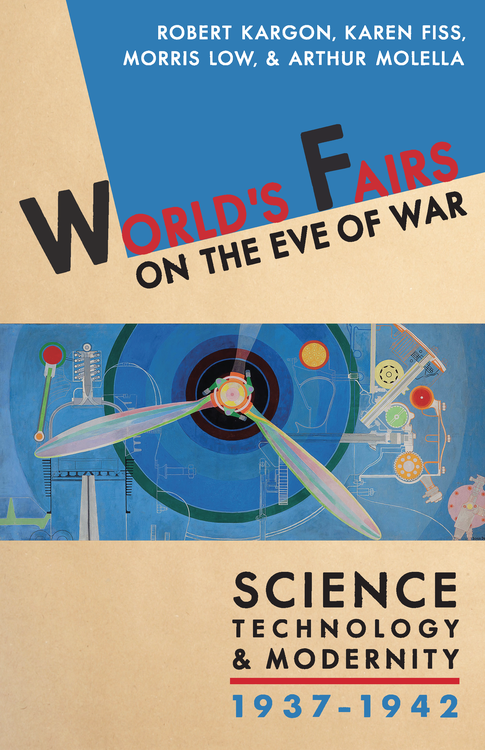
Karen Fiss is a Professor in the History of Art and Visual Culture Program at California College of the Arts, specializing in the visual production of national identity from the 1930s to contemporary nation branding practices. Her research examines how soft power mechanisms shape social, artistic and built environments, with particular focus on the commodification of citizenship and historical memory. Fiss holds a PhD from Yale University and a BA from Brown University. Her academic journey includes previous positions as Assistant Professor of Modern and Contemporary Art at Washington University St. Louis, and curatorial roles at The New Museum of Contemporary Art in New York and the Institute for Contemporary Arts in London. Her research interests explore the intersections of visual culture, political power, and national identity formation. Fiss investigates how nation branding practices relate to globalization mechanisms in the contemporary art world, examining case studies from Vietnam, Germany, and South Africa following the Cold War. Her work critically analyzes how cultural exchange shifts toward political collaboration, and how historical narratives are commodified in postcolonial emerging economies. Her publications reveal consistent engagement with postcolonial visual culture, nation branding, and political representation. The most recent works demonstrate increasing focus on transgender rights, legal representation of gender identity, and the visual politics of post-conflict societies, while maintaining her foundational research on historical propaganda and contemporary branding practices. Graham Foundation Grant Getty Grant Program National Endowment for the Humanities Fellowship Deutscher Akademischer Austauschdienst (DAAD) Grant Center for Advanced Study in the Visual Arts Fellowship Fiss has served as Jury Chair for USA Artists Awards in Architecture and Design (2010) and on selection panels for USA fellowships (2009). Her curatorial work includes co-curating Necessary Force: Art in a Police State (2015) and serving as film curator for Encounters with the 1930s at Madrid's Museo Nacional Centro de Arte Reina Sofia (2012-2013), where she curated the film program Cinema of the 1930s: Blue Flowers in a Catastrophic Landscape. Fiss maintains active engagement with international artistic communities through residencies such as her 2015 residency at Sàn Art in Ho Chi Minh City, Vietnam, and collaborations with institutions including Columbia University, University of California Berkeley, and Berlin's Schwules Museum.
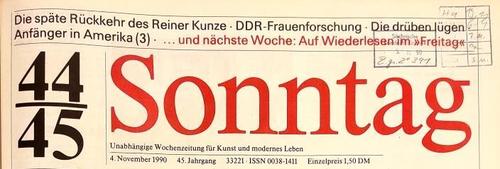
Bénédicte Terrisse is an Associate Professor in Germanic Literature at the University of Nantes, Faculty of Foreign Languages and Cultures, Department of Germanic Studies. She specializes in contemporary German-language literature with a particular focus on East German and post-East German literary production, working within the CRINI research center. Her educational background includes: Doctorate in Germanic Studies from Paris IV-Sorbonne University (2008-2012) under Bernard Banoun External Agrégation in German (2007) Master's degree in Germanic Studies from Paris IV-Sorbonne University (2005) Admission to École Normale Supérieure (2003) Preparatory literary classes at Lycée Chateaubriand in Rennes (2000-2003) Professor Terrisse's research focuses on contemporary German-language literature, particularly East German and post-East German literary production. Her work examines cultural transfers between France and Germany, editorial phenomena including collections and anthologies, literary history writing and canon theories, library studies, and the history of German studies as a discipline. She has developed significant expertise in the literary production of the German Democratic Republic, with special attention to poetic collections like the "Poesiealbum" series, the cultural weekly "Sonntag," and authors such as Wolfgang Hilbig, Thomas Brasch, and Sarah Kirsch. Her current Humboldt Fellowship research examines transnational models of literary history writing through the lens of the East German poetry series "Poesiealbum." Her recent publications demonstrate a consistent focus on East German literary production, particularly examining how literary canons were formed in the GDR through editorial practices. She has published extensively on Wolfgang Hilbig, exploring authorship models, literary transfers, and the relationship between literature and political systems. Her work increasingly incorporates digital humanities approaches to analyze literary collections and periodicals from the East German context, as evidenced by her involvement in the PERARTEM research program. Her notable awards and recognitions include: Humboldt Foundation Research Fellowship (2023-2025) Louis Forest/Thiessé de Rosemont Prize from the Chancellery of the Universities of Paris DAAD Research Mission grant CIERA mobility grant for research at the Academy of Arts in Berlin Doctoral grant from École Normale Supérieure, Paris Prime d'Encadrement Doctoral et de Recherche Professor Terrisse has supervised doctoral students and has been actively involved in research projects examining East German literary production. She currently leads research on the "Poesiealbum" collection and co-organizes an international conference on literary canons in the transnational context. She serves as deputy director of CRINI (2019-2023) and has held various administrative responsibilities including head of German aggregation and German literature courses at the University of Nantes. She is an active member of several scholarly societies including the Wolfgang-Hilbig-Gesellschaft, the Association of Germanists in Higher Education (where she served as general secretary 2018-2021), the International Association for German Studies, and the KOF - Koordinationsstelle Ostdeutschland - Frankreich. She serves on the editorial board of the journal Germanica and provides expertise for multiple academic publications.
Dr. Olga Springer is an Assistant Professor at Dublin City University's School of Applied Language & Intercultural Studies. She holds a Magister Artium and PhD in English Literature from the University of Tübingen. Her professional roles include DAAD Lektorin at DCU (2010–2012), Teacher of German at Sevenoaks School (2016–2019), and Postgraduate Certificate in Education from the University of Buckingham. Her research focuses on literary urban studies, gender/sexuality studies, intertextuality, and Victorian literature. She authored Ambiguity in Charlotte Brontë’s Villette (2020) and co-edited Shipwreck and Island Motifs in Literature and the Arts (2015). She serves on the Executive Committee of the European Society of Comparative Literature (ESCL), the DCU-based EROSS research network, and the Scientific Committee of CompLit . Her work explores liminal spaces in literature, such as urban environments and border narratives, as seen in conference presentations on Murakami and Atwood. Dr. Springer’s academic affiliations include roles as Newsletter Editor for ESCL (2015–2022) and Assessment Author for the International Baccalaureate (2020–2021). Her research spans comparative literature frameworks, textual ambiguity, and interdisciplinary approaches to literary analysis.
Dr. Chris Homewood is an Associate Professor in World Cinemas and German at the University of Leeds' School of Languages, Cultures and Societies. He joined the institution in 2007 after completing his PhD at Leeds, preceded by an MA from the University of Nottingham and a BA from the University of Bangor. As Programme Manager for the MA Film Studies, he oversees postgraduate education in cinematic studies. His research explores three primary domains: German cinematic traditions spanning Weimar era to contemporary Berlin School, with special focus on representations of left-wing terrorism (RAF) and cultural memory of '1968' Popular geopolitics and orientalism , particularly analyzing Hollywood-China relations through frameworks of soft power and neo-colonial discourse Genre theory in World Cinemas , examining transnational narrative patterns and aesthetic developments His publication portfolio (2005-2021) demonstrates consistent focus on German film history, terrorism representation, and cinematic geopolitics, with recent work increasingly examining Sino-Hollywood dynamics. Thematically, his scholarship interrogates how cinema shapes collective memory, negotiates political trauma, and mediates cross-cultural power relations. He has successfully supervised five postgraduate researchers to completion, with projects covering German/Austrian cinema, Gothic horror, music biopics, and gender studies. As co-editor of New Cinemas: Journal of Contemporary Film and advisory board member for Studies in European Cinema , he actively shapes academic discourse. He has organized significant conferences including 'Cinema, Soft Power, and Geopolitical Change' (2017) and the German Screen Studies Network meeting (2014).
Aleks Szczerbiak is a Professor of Politics at the University of Sussex, specifically within the School of Law, Politics and Sociology and Head of the Department of Politics since 2022. He co-convenes the European Parties Elections and Referendums Network (EPERN) and serves as Associate Editor for Party Politics journal. His academic journey includes a University of Sheffield undergraduate degree, followed by a MSc at Birkbeck College and PhD at University of London's School of Slavonic and East European Studies . Research Interests : Central/East European politics, political parties, electoral systems, Polish political sociology, European integration's domestic impact, lustration/transitional justice, and post-Communist religion-politics intersections Supervision : Currently advising Dragomir Stoyanov (Bulgarian democracy/Euroscepticism) and has previously supervised 15 doctoral students covering topics from Polish EU attitudes to Balkan party systems Grants & Leadership : Directed ESRC 'One Europe Or Several' Programme (2001-03), UK in a Changing Europe project (2017), and EU research on coalition formation and educational cleavages Media Engagement : Regular commentator for BBC, CNN, Bloomberg, Financial Times, Wall Street Journal, and The Guardian, with frequent appearances on Monocle Radio and TVP World Service Recent Research Trends : Analysis of Polish political polarization, Eurosceptic party evolution, Catholic Church influence, and post-transition institutional legitimacy. His 2025 work explores the Church's role in contemporary Polish politics and election dynamics around the 'post-transition divide.' Scientific Recognition : Recipient of Political Studies Association's prestigious Sir Bernard Crick Prize for Teaching Excellence (2004) Public Engagement : Maintains Polish Politics Blog and contributes to policy debates through think tanks like UK in a Changing Europe
Prof. Owen Evans is a Professor of Film in the Department of English & Creative Arts at Edge Hill University. He holds a PhD and BA in German Studies from Swansea University. Previously, he served as a Lektor at Johannes Gutenberg University Mainz (1994-1995), lecturer at Bangor University (1995-2005), and returned to Swansea University (2005-2011) before joining Edge Hill in 2011. His research focuses on European Cinema, cultural memory, German film, and the intersection of arts with health/wellbeing. He co-edits Studies in European Cinema and Journal of European Popular Culture . Education: German Studies PhD (Swansea, 1995), German Studies BA (Swansea, 1990). Research interests include: European Cinema, cultural memory, multiculturalism, German film/TV, East German history, and representations of totalitarianism. He currently co-leads the AHRC-funded Everyday Creativity Research Network (2022-24). Recent publications (2023–2025) explore themes like migration in German cinema, post-pandemic cultural shifts, and Berlin's cinematic legacy. His work bridges film studies with broader cultural and historical contexts. Awards and roles: AHRC Peer Review College member, Fellow of RSA/HEA, editorial board member of Modern Languages Open , consultant on Culture Cures (2017-2018). Professional activities include PhD examinations, conference organization, and consultancy for creative projects. He collaborates internationally on cultural memory and creativity initiatives.
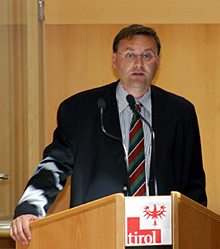
Michael Gehler is a Professor and head of the Institute of History at the University of Hildesheim Foundation, appointed in 2006. He holds a Jean Monnet Chair for European History awarded by the European Commission (2006, 2011) and serves as chairman of the Historical Commission of the Austrian Academy of Sciences since 2011. His academic career includes positions as Associate Professor at Leopold Franzens University of Innsbruck (1999-2006), Alexander von Humboldt Fellow (2001-2002), and Permanent Senior Fellow at the Center for European Integration Studies (ZEI) at the University of Bonn. He has also served as Visiting Professor at the Universities of Rostock, Salzburg, and Leuven. Gehler's research focuses on European history and integration, with particular expertise in Austrian and German history, Cold War studies, and the South Tyrol question. His scholarly work examines the complex interplay between national identities, regional autonomy movements, and European integration processes. He has made significant contributions to understanding the historical development of European institutions and the transnational networks that shaped post-war Europe. His extensive publication record demonstrates consistent engagement with European integration history, with recent works including biographies of key European figures, analyses of German division and reunification, and detailed studies of regional autonomy arrangements. His research shows a clear trajectory from national histories toward transnational and European perspectives, reflecting broader trends in historical scholarship. Austrian Cross of Honour for Science and Art Karl von Vogelsang State Prize Prize of the City of Innsbruck for scientific research Cardinal Innitzer Prize Prize for the Promotion of Science and Art of the Theodor Körner Fund Gehler has received significant research funding through his Jean Monnet Chairs and has been actively involved in numerous international research networks focused on European integration history. His work bridges academic research and policy relevance, particularly through his engagement with European historical institutions and his role in shaping historical narratives relevant to contemporary European integration.
Urmila Goel is an acting Professor of European Ethnology at Humboldt University of Berlin's Faculty of Philosophy, Institute for European Ethnology, having held this position since January 2024 (previously from 2016-2021). She is also an associate member of the Center for Transdisciplinary Gender Studies and has held visiting positions at institutions including Alpen-Adria University in Klagenfurt, European University Viadrina, and various international research centers. Her educational background includes a doctorate in economics from the University of Kiel (1997), a master's in economics and econometrics from the University of Southampton, and a second master's in South Asian Area Studies from SOAS, London. She completed her habilitation in cultural anthropology at European University Viadrina in 2017 with the thesis 'The Internet – an Ethnography' and was granted a teaching license at Humboldt University in 2020. Professor Goel's research focuses on migration (particularly nurse migration from India to Germany and migration to the GDR), racism, gender and sexuality, and the interrelationships of power relations. Her work takes an intersectional approach, examining how categories like gender, race, and nationality intersect to shape social experiences and power dynamics. She is particularly interested in anti-racist research methodologies and the critical examination of migration histories. Her extensive publication record shows a clear trajectory from early work on economic theory to her current focus on migration, intersectionality, and digital ethnography. Her most recent work examines skilled worker recruitment from India, non-heteronormative desire, and the digital everyday, while maintaining her longstanding interest in migration histories and care work. The publications demonstrate her commitment to applying intersectional frameworks across diverse topics. Her scientific recognition includes: Price for Outstanding Lecturing 2018, Humboldt University Berlin Price of the Faculty for Outstanding Lecturing 2010, Faculty of Philosophy 3, Humboldt University Berlin Professor Goel has supervised student research projects including 'Students born after the fall of the Wall and the GDR/East' and has been involved in significant research projects such as 'WHO CARED' and 'Recruiting trainees from India.' Her grant history includes fellowships from ICAS:MP in Delhi, Max Weber Center for Advanced Studies, Jacobs Foundation, and Deutsche Forschungsgemeinschaft (DFG). She leads the 'West-East Working Group Migration to the GDR' and coordinates the 'Study project Doing Transport. Ethnographic Explorations' for the 2024/25 academic year. Her research team includes collaborators across multiple institutions working on projects related to migration, gender, and intersectionality.
Claudia Sandberg is a Senior Lecturer in Technology in Culture and Society at the University of Melbourne. A film historian, her work examines migration and marginality in cinema, socialist/Third cinema dynamics, and technology's ethical intersections with film art. Key Themes : Europe-Global South cultural-political relations, engineering's ideological implications in media, and audiovisual memory of dictatorships. Projects : Author of Peter Lilienthal. A Cinema of Exile and Resistance (2021), co-editor of Contemporary Latin American Cinema: Resisting Neoliberalism? (2018) and The German Cinema Book (2020). Research Focus : Analyzes how films across eras and cultures depict technology, with particular attention to inclusion/exclusion dynamics in engineering projects. Explores Argentine, German, and global media landscapes through political allegory and resistance narratives. Recent Work includes analysis of Netflix's The Eternaut (top non-English series in 24 countries) and AppleTV+'s Murderbot , connecting sci-fi narratives to real-world social justice movements and ethical dilemmas. Academic Leadership : Coordinates the annual Faculty of Engineering and Information Technology Film Festival, which explores intersections between cinema, engineering, and technology through screenings and academic discussions.