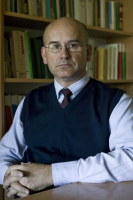
Thomas BrodieView profile
Assistant Professor
Dr. Thomas Brodie is an Assistant Professor in 20th Century European History at the Department of History, University of Birmingham. His academic career spans prestigious institutions including Oxford University, University of Leeds, and Jesus College, Oxford before joining Birmingham in 2018. Education: DPhil in History (The University of Oxford, 2014) MSt in Modern British and European History (The University of Oxford, 2010) BA in History (The University of Oxford, 2009) Fellowship of the Higher Education Academy (2020) Postgraduate Certificate in Higher Education (University of Birmingham, 2020) Dr. Brodie specializes in Modern European history with particular focus on Germany during the Nazi era and post-war periods. His research examines the intersection of religion, society, and war, with special attention to Catholic communities in Germany during WWII and the subsequent evolution of mourning practices and memory culture. His work combines theological analysis with social and cultural history using previously unused archival materials from church, state, and private collections. His recent publications demonstrate a clear trajectory from examining wartime religious communities to post-war memory practices, showing his evolving scholarly interests in how societies process mass bereavement and construct collective memory. The articles primarily focus on German religious history during and after WWII, with increasing attention to spatial dimensions of mourning and commemoration. Scientific Awards: Runner-up award for the Wiener Library's Fraenkel Prize (2014) AHRC award for doctoral research Hanseatic Scholarship for archival research in Berlin and German cities Dr. Brodie teaches a range of undergraduate and postgraduate courses including 'The Rise and Fall of the Third Reich' and 'Life After Death: Culture, Memory and Power in Postwar Europe.' He supervises BA dissertations and welcomes PhD students working on Modern German history or thematic interests in religion, war, and memory in European contexts since 1800. His current research project examines German society's responses to bereavement during WWII and its aftermaths through personal diaries, letters, artistic representations, and war memorials.