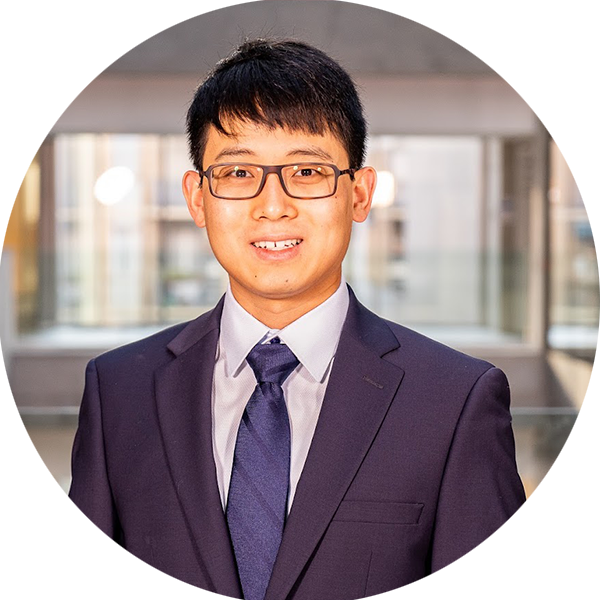
Dr. John Moore is an Assistant Professor in the Department of Mechanical Engineering at Marquette University . He leads the Computational Mechanics of Materials Laboratory, focusing on computational mechanics, materials science, and high-performance computing. His research spans alloys, polymers, and biomedical devices. Education Ph.D., Mechanical Engineering, Northwestern University (2015) M.S.E., Civil Engineering, University of Washington (2007) B.S., Aeronautical and Astronautical Engineering, University of Washington (2005) Research Focus Dr. Moore's work combines computational modeling with experimental validation to understand material behavior under extreme conditions. Key areas include: Crystal plasticity modeling of metallic alloys Nonlocal damage mechanics for fatigue prediction Dynamic spallation and porosity evolution High-throughput X-ray imaging of additively manufactured materials UV-sensitive resin material modeling Recent Publications His recent work focuses on advanced computational techniques for material failure analysis, including: Nonlocal approaches for statistical fatigue prediction Microinertia effects in spall modeling Betatron X-ray tomography applications UV resin optimization studies Phase transformation fatigue mechanisms Contact Email: john.a.moore@marquette.edu | Phone: (414) 288-6641 Location: Haggerty Hall, 225, Marquette University, Milwaukee, WI 53201
Salman Nazir is Professor at the University of South-Eastern Norway (USN) , Faculty of Technology, Natural Sciences and Maritime Sciences, Department of Maritime Operations. He heads the Training and Assessment Research Group (TARG) and is Scientific Leader of the national Centre of Excellence in Maritime Simulator Training and Assessment (COAST). Since 2019 he has held the rank of Professor, after serving as Associate Professor from 2015 and earlier post-doctoral and lecturer roles in Norway, Italy, South Korea and Pakistan. Education PhD in Industrial Chemistry and Chemical Engineering ( cum laude ), Politecnico di Milano, Italy, 2011–2013 MSc in Chemical Engineering (Process System Engineering), Hanyang University, South Korea, 2007–2009 BSc in Chemical Engineering, Bahauddin Zakariya University, Pakistan, 2002–2006 Research Interests Prof. Nazir’s work sits at the intersection of Human Factors, Safety and Simulation Technology . He investigates how immersive virtual- and augmented-reality simulators, novel training syllabi and evidence-based performance indices can enhance operator competence and safety in complex maritime and process-industry systems. Concepts such as Distributed Situation Awareness , multi-criteria decision making , accident analysis and learning process optimisation are central to his multidisciplinary agenda, which actively involves cognitive scientists, computer scientists, maritime practitioners and industrial stakeholders. Research Trends & Article Overview Across more than 80 peer-reviewed outputs, a clear trajectory emerges: early focus on process-industry training simulators and KPI development evolved into maritime-centric studies on simulator fidelity, VR-based education, and human-automation interaction in autonomous shipping. Recent work (2019–2021) emphasises systematic reviews and comparative European studies, validating VR-headset efficacy, performance-assessment frameworks, and sociotechnical implications of increased automation. Honours & Awards COAST designated one of 12 national Centres of Excellence in Education (SFU) by DIKU, Norway Coordinator/Leader, EU Horizon 2020 project ENHANCE (multi-million NOK) 400 000 NOK MARKOM 2020 Workshop grant PhD cum laude , Politecnico di Milano Young-researcher grants, Politecnico di Milano (2011 & 2013) Merit scholarships, Hanyang University & Korean Government Advising & Grant Portfolio Prof. Nazir currently supervises 6 master students and 1 PhD candidate in “Automated Performance Assessment in Maritime Operations”, while co-supervising additional PhD students at Liverpool John Moores University. He has successfully graduated 3 master and 6 bachelor students . External funding includes EU Horizon 2020, Norwegian SFU scheme, MARKOM 2020, Maritime Technology and Innovation (MTDI) and multiple Italian national grants. Labs & Collaborative Networks He leads TARG at USN, acts as Scientific Leader of COAST , and collaborates with leading international scholars such as Prof. Zaili Yang (Liverpool John Moores), Prof. Annette Kluge (University of Duisburg-Essen), Prof. Davide Manca (Politecnico di Milano) and Prof. Paulo Carvalho (UFRJ, Brazil). These partnerships span computer science, cognitive psychology, maritime logistics and safety engineering, ensuring a truly interdisciplinary research ecosystem.
Erin Bachynski-Polić is a Professor in the Department of Marine Technology at the Norwegian University of Science and Technology (NTNU). Her research focuses on offshore renewable energy systems, particularly the design and analysis of fixed and floating support structures for wind turbines, hydroelasticity, and optimization of marine systems. She leads several major projects including WAS-XL, Green Energy at Sea, and WINDMOOR, addressing challenges in mooring systems, extreme loading, and floating wind farm layouts. Education includes a Ph.D. from NTNU (2014), an M.S. and B.S.E. from the University of Michigan (2010 and 2009), specializing in Naval Architecture and Marine Engineering with a mathematics minor. Her teaching spans marine dynamics, ocean structure design, and offshore wind courses. Research interests emphasize advancing hydrodynamic and structural models for floating turbines, wake steering techniques, and environmental load analysis. Notable contributions include validation of Morison force formulations, mooring optimization, and storm impact studies. Projects like SFI BLUES and FLOAWER aim to develop next-generation floating support structures for large-scale offshore wind energy.
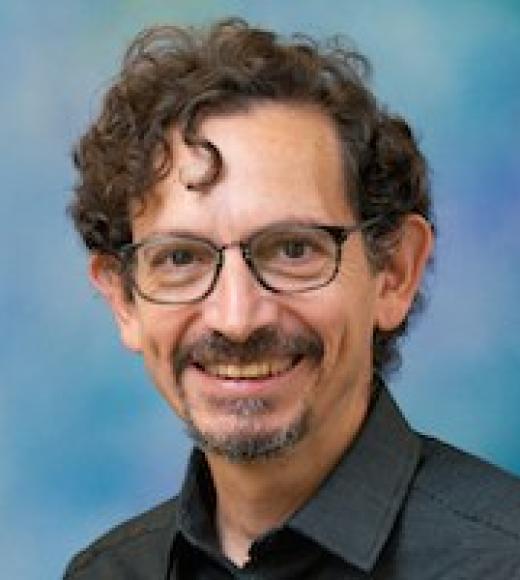
Hyunseok Kim is an Assistant Professor in the Department of Electrical and Computer Engineering at the University of Illinois at Urbana-Champaign. He leads the Hyunseok Kim Research Group, focusing on heterogeneous integration technologies for future electronics. Prior to this role, he served as a Postdoctoral Associate and Research Scientist at MIT (2019-2023). His research emphasizes low-dimensional materials, 3D integration, and semiconductor devices for microelectronics and photonics. Education: Ph.D., Electrical and Computer Engineering, UCLA (2018) B.S., Electrical Engineering and Computer Science, Seoul National University (2011) Research Interests: 2D materials-based layer transfer processes Epitaxial membrane manufacturing Vertical micro-LEDs and optoelectronics Wafer-scale semiconductor integration His work bridges advanced materials science with scalable manufacturing, targeting next-generation electronics and photonics. Grants: Secured a Samsung grant to advance semiconductor integration research. Labs/Teams: Directs the Hyunseok Kim Research Group, collaborating with industry partners to develop practical applications of novel materials and integration techniques.
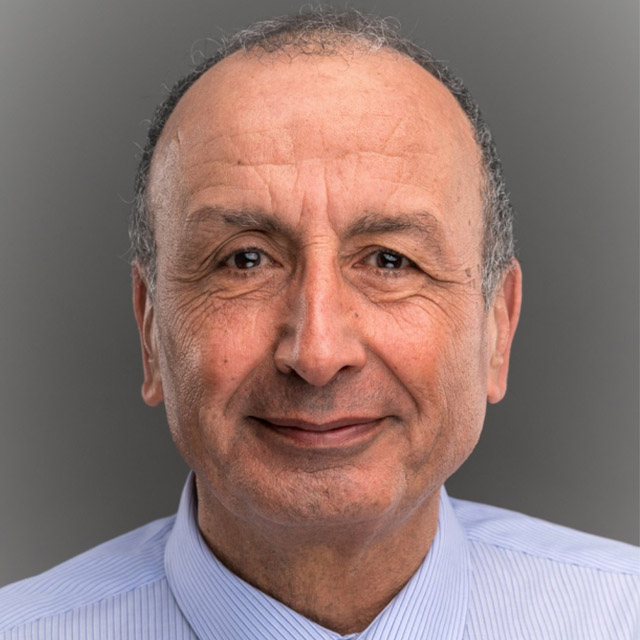
Dr. QUAN Chen is an Associate Professor at the School of Microelectronics, Southern University of Science and Technology (SUSTech), holding this position since May 2025 after serving as Assistant Professor (2019-2025) and Research Assistant Professor at the University of Hong Kong (2012-2018). A Shenzhen high-level overseas talent, he earned his PhD from the University of Hong Kong and conducts cutting-edge research in electronic design automation. His academic credentials include: Ph.D. from The University of Hong Kong (2010) Master's degree from The University of Hong Kong (2007) Bachelor's degree from Sun Yat-Sen University (2005) Dr. Chen's research pioneers advanced EDA algorithms for large-scale analog/RF circuit simulation, post-Moore multi-physics analysis, and AI-assisted design technologies. His work addresses critical challenges in nanodevice modeling and quantum computing circuits, resulting in over 50 publications in top venues like IEEE TCAD and DAC, plus four Chinese patents. Analysis of his recent publications reveals dominant trends in exponential integrator methods for transient simulation, model order reduction techniques, and physics-informed machine learning for reliability analysis. His work bridges numerical mathematics with practical EDA applications across analog circuits, quantum hardware, and emerging memory technologies. Key recognitions include: Wu Wenjun Artificial Intelligence Science and Technology Award, Second Prize (2020) ICCAD Best Paper Award Nomination (2012) Dr. Chen actively recruits Postdoctoral Fellows, Research Assistants, and Graduate Students while leading major funded projects including NSFC key/general programs and Guangdong Provincial R&D initiatives. His industry partnerships with Huawei, Empyrean, and Guowei Group translate theoretical advances into real-world EDA solutions. He directs a specialized research group at SUSTech focused on computational methods for next-generation circuit design, fostering innovation in simulation algorithms and multi-physics analysis through academic-industry collaboration.
Professor Penny Moore is the South African Research Chair of Virus-Host Dynamics, Research Professor, and Academic Head of the Divisions of Virology and Immunology at the University of the Witwatersrand and the National Institute for Communicable Diseases (NICD) in South Africa. She also serves as Director of the Antibody Immunity Research Unit, an extramural unit of the SA Medical Research Council, and holds a joint appointment as Honorary Senior Scientist in Virus-Host Dynamics at the Centre for the AIDS Programme of Research (CAPRISA), University of KwaZulu-Natal. Professor Moore earned her PhD from University College London and has established herself as a leading researcher in viral immunology. Her educational background has provided the foundation for her extensive work in understanding virus-host interactions, particularly in the context of HIV and emerging pathogens like SARS-CoV-2. Her research focuses on HIV and SARS-CoV-2 vaccine discovery, combining expertise in Virology, Immunology, and Bioinformatics. Moore's work centers on understanding neutralizing antibodies and their interplay with evolving viruses, with particular emphasis on how these antibodies can be harnessed for vaccine development. Her laboratory investigates the complex dynamics between viral pathogens and host immune responses, seeking to identify vulnerabilities that can be targeted for therapeutic and preventive interventions. An analysis of Professor Moore's recent publications reveals a strong focus on both HIV and SARS-CoV-2 research, with particular attention to neutralizing antibody responses, vaccine development, and viral evolution. Her work spans basic science investigations of antibody-virus interactions to clinical studies evaluating vaccine efficacy against emerging variants. A notable trend is her laboratory's contribution to understanding how prior infection and vaccination shape immune responses to new viral variants. NRF B1 Research Rating South African Research Chair in Virus-Host Dynamics Professor Moore has secured significant research funding from multiple prestigious sources including the NIH, South African Medical Research Council, International AIDS Vaccine Initiative, SA National Research Foundation, and Bill and Melinda Gates Foundation. She supervises numerous postgraduate students and post-doctoral fellows, demonstrating a strong commitment to mentorship and capacity development in scientific research. Her laboratory serves as a training ground for the next generation of virologists and immunologists in South Africa. Moore directs a substantial research operation comprising more than 15 scientists and 10 postgraduate students working collaboratively across multiple institutions. Her Antibody Immunity Research Unit functions as a hub for cutting-edge research on viral pathogens, with particular expertise in characterizing antibody responses to HIV and SARS-CoV-2. The team's multidisciplinary approach integrates wet lab virology with computational analysis to tackle complex questions in viral immunology.
Jessica Keim-Malpass is a Professor at the University of Virginia and practicing acute care pediatric nurse practitioner in hematology-oncology. She integrates clinical expertise with research at the intersection of health economics, artificial intelligence, and implementation science. Her federally funded program focuses on improving care for children and families facing serious illnesses including pediatric sepsis, acute myeloid leukemia, end-of-life trajectories, and cancer survivorship. Education includes: MSc Health Economics & Pharmacoeconomics from Universitat Pompeu Fabra/Barcelona School of Management (2021) MSc Regulatory Science (Biotechnology) from Johns Hopkins University (2018) Post-Doctoral Research Fellow at Wake Forest University School of Medicine (2013) PhD in Nursing from University of Virginia (2011) MSN and Pediatric Nurse Practitioner certification from University of Virginia MS in Health Evaluation Sciences from University of Virginia (2005) BS in Biology from Wake Forest University (2004) Her research develops microsimulation models, decision-support tools, and health communication strategies to reduce uncertainty and support patient-centered decision-making. She leads NIH- and AHRQ-funded projects advancing predictive monitoring in acute care settings and healthcare innovation. Publications demonstrate strong focus on pediatric palliative care, health policy analysis, predictive analytics implementation, and health equity research. Recent work examines AI applications in clinical settings, economic evaluations of healthcare interventions, and barriers to care access for vulnerable populations. Honors include: Fellow of the American Academy of Nursing Betty Irene Moore Nurse Innovator Fellow She leads significant federally funded research including: AHRQ R01 on predictive monitoring in acute care cardiology (2022-2025) Gordon and Betty Moore Foundation grant for computational approaches to pediatric sepsis (2020-2023) NSF grant on decision models for drug allocation during shortages (2020-2021) Multiple NIH grants on end-of-life care and pediatric health outcomes As a mentor, she guides PhD nursing students and advances nursing science through interdisciplinary collaborations.
Jonathan Kearney is a Senior Lecturer and Course Leader for the MA Fine Art Digital program at Central Saint Martins, University of the Arts London, where he has pioneered online learning since 2004. As a UAL Teaching Scholar, he explores blended practices integrating physical and digital media, with a focus on digital pedagogy and theological engagement in contemporary art. His international experience spans teaching, curation, and exhibitions across China, Europe, and Brazil. Education: PhD candidate at Liverpool John Moores University. His research investigates how digital environments expand art practice and learning. He has curated exhibitions at institutions like the ICA London, Art Electronica (Austria), and Tremenheere Sculpture Gardens (UK), emphasizing cross-cultural dialogue and experimental technologies. His work includes AI art experiments, augmented reality installations, and noise reduction in digital media. The 15 most recent articles highlight his contributions to digital art, online pedagogy, and interdisciplinary research, spanning topics like AI ethics, AR sculpture, and post-pandemic teaching. He has received the UAL Teaching Award eight times for his innovative approaches to fine art education. Notable collaborations include the Shared Language project with Oxford University and UAL, focusing on transdisciplinary dialogue through images.
Tian Zhong is an Assistant Professor of Molecular Engineering at the University of Chicago's Pritzker School of Molecular Engineering. His research focuses on quantum photonics and solid-state quantum technologies, particularly leveraging rare-earth doped materials for quantum networks and optical quantum memory. He completed his PhD in Electrical Engineering at MIT (2013) and a postdoc at Caltech’s Institute of Quantum Information and Matter. Key roles include pioneering rare-earth quantum nanophotonics and developing scalable quantum optical networks. Research interests include quantum entanglement purification, epitaxial thin films for quantum devices, and hardware-software co-design for quantum computing. Notable achievements include a DoD ARO Young Investigator Award (2020) and an NSF CAREER Award (2020). His lab, Zhong Quantum Lab, explores quantum interconnects and hybrid systems, with recent grants from the Betty Moore Foundation for novel quantum matter projects. Publications span quantum networking protocols, coherence properties of rare-earth ions, and interdisciplinary studies in microbiome-gut-brain interactions. Advising focuses on training students in quantum device fabrication and theoretical modeling, with active projects on dilution fridge setups and quantum repeater networks.
Tangren Feng is an Assistant Professor at Bocconi University's Department of Decision Sciences since 2020, specializing in Economic Theory with research focus on mechanism design and social choice. He is also a research affiliate of IGIER (Innocenzo Gasparini Institute for Economic Research). Education : B.S. in Mathematics (Wuhan University), M.A. in Economics (multiple), and Ph.D. in Economics (2020, University of Michigan). His research explores foundational economic theory topics including: Mechanism design for efficient resource allocation Social choice theory and collective decision-making Intergenerational equity and social discounting Ex post implementation without transfers Infinite-horizon welfare analysis Normative economics frameworks Recent publications in Theoretical Economics and Journal of Mathematical Economics demonstrate methodological innovations in mechanism design and intergenerational welfare theory, with applications to public policy and economic ethics. Scientific Achievements: PRIN National Research Funding (2023) Michael Moore Dissertation Prize (2023) Rackham Dissertation Fellowship (2020) Best Graduate Instructor (2018) Additional Highlights: Active IGIER research affiliate Recipient of Bocconi's High Computing Power Grant (2022)
Cristopher Moore is a Professor at the Santa Fe Institute, where he explores interdisciplinary research at the intersection of physics, computer science, and mathematics. His work focuses on phase transitions in computational problems, social network analysis, quantum algorithms, and algorithmic fairness in consequential decisions like criminal justice risk assessment. Organized decarbonization workshops for New Mexico's energy transition Developed topological classifications for n-body orbital dynamics Co-founded Journal of Weird-Ass Shit and Journal of Unpublished Results Research interests span from transparency in AI to quantum computing and social network theory . His recent work analyzes phase transitions in machine learning and the computational limits of pattern detection in noisy data. Key article trends include quantum computation ( Graph Isomorphism , Quantum Walks ), complex systems ( Sandpiles , Cellular Automata ), and algorithmic justice frameworks. All work emphasizes both theoretical barriers and practical policy implications.
Raul Aranovich is an Associate Professor in the Department of Linguistics at the University of California, Davis, where he has been a faculty member since 2001. Prior to his appointment at UC Davis, he held faculty positions at the Ohio State University and the University of Texas in San Antonio. He received his Ph.D. in Linguistics from UC San Diego in 1996 under the direction of Professors S.-Y. Kuroda and John Moore. Professor Aranovich is a theoretical linguist whose research focuses on the interfaces between syntax, morphology, and semantics, with particular attention to grammatical mismatches across these linguistic levels. His work spans both theoretical and empirical approaches, utilizing natural language processing and corpus linguistics tools. His primary language specializations include Spanish and other Romance languages, as well as Fijian and Shona, representing significant cross-linguistic diversity in his research portfolio. His recent publications demonstrate an expanding interdisciplinary focus, bridging traditional linguistic theory with computational applications, including work in cybersecurity and neural machine translation. This reflects his evolving research trajectory from purely theoretical syntax and morphology toward computational and applied linguistics. His work on computer-mediated communication represents a contemporary extension of his longstanding interest in language structure and variation. Among his notable recognitions is being named a Fellow of the Linguistic Society of America, highlighting his contributions to the field. Fellow, Linguistic Society of America Professor Aranovich's research demonstrates remarkable breadth across linguistic subfields and languages, connecting historical linguistic theory with contemporary computational approaches. His work on Romance languages maintains a strong theoretical foundation while his more recent cybersecurity and machine translation publications show successful adaptation to emerging interdisciplinary opportunities. His continued publication record through 2024 indicates active ongoing research contributions across multiple linguistic domains.
Dani Or is the Nevada Engineering Distinguished Professor in the Department of Civil & Environmental Engineering at the University of Nevada, Reno. His research focuses on mass and energy transport in porous media, landslide mechanics, evaporation dynamics from porous surfaces, and biophysical processes in soil. He has held roles such as Editor-in-Chief of the Vadose Zone Journal and chairs major conferences like the Gordon Research Conference on Flow and Transport (2008). Dr. Or’s work bridges soil physics, environmental engineering, and geophysics, with a strong emphasis on global-scale applications such as ecosystem water limitation and wildfire impacts. His contributions include pioneering studies on soil hydraulic conductivity, evaporation suppression technologies, and the integration of machine learning for soil moisture prediction. Awards: John Dalton Medal (2017), National Academy of Engineering (2022), Caltech Moore Scholar (2023). Grants & Advising: Leads interdisciplinary projects on soil structure dynamics, wildfire modeling, and geothermal engineering. No specific advisee list is provided in the text. Labs/Teams: Collaborates with global teams on soil parameterization databases (e.g., GSHP) and wildfire-soil interaction frameworks.
Dr Panos Sergouniotis is a Wellcome Clinician Scientist and Clinical Senior Lecturer at the University of Manchester, serving as an Honorary Consultant in Ophthalmology and Genetics at the Manchester Royal Eye Hospital and the Manchester Centre for Genomic Medicine, UK. His academic journey includes medical training at the University of Athens, ophthalmology specialization in London, Cambridge and the North West Deanery, and PhD studies at University College London under Andrew Webster and Tony Moore. Medical Degree: 2007 (University of Athens) PhD: 2012 (University College London) FEBO: 2016 FRCOphth: 2018 CCT Ophthalmology: 2021 Sergouniotis leads research focused on the fovea, the central retinal area critical for visual acuity. His multidisciplinary approach combines genetic association studies , retinal imaging , and stem cell biology to understand foveal development and its role in retinal disorders like age-related macular degeneration and albinism. His work aims to develop frameworks for preserving and restoring high-resolution vision. His recent publications demonstrate a strong trend toward integrating genomics , advanced imaging , and machine learning in ophthalmic research. The articles span topics from macular dystrophy genetics to deep learning applications in retinal imaging, reflecting his commitment to translational research at the intersection of multiple disciplines. Moorfields Research Medal EURETINA Ophthalmologica award 2nd place, European Board of Ophthalmology Diploma Examination Academy of Medical Sciences Young Investigator Competition Runner-up Prize Andrew Tullo Prize Daniel Turnberg Cup Sergouniotis has supervised over 15 pre- and post-doctoral researchers and more than 5 NIHR academic clinical trainees, resulting in 2 completed PhDs and 12 early-career postgraduate degrees. He holds a Wellcome Trust Clinical Research Career Development Fellowship awarded in 2021, which supports his multidisciplinary research group. His work also contributes to the UN Sustainable Development Goals through genomic medicine applications. His laboratory operates at the interface of genomics, stem cell biology, and advanced ophthalmic imaging, with collaborations spanning multiple institutions including the UK Biobank Eye and Vision Consortium. Current projects include the Oxford Nanopore PromethION initiative, which runs from 2023-2026.
Dr Jasmine Lay-Cheng Lim is a Senior Lecturer at Ulster University's Faculty of Computing, Engineering and the Built Environment. She serves as Director of the MSc Real Estate programme and maintains active professional affiliations, including her chartered membership with the Royal Institution of Chartered Surveyors (RICS). Lim has held visiting lecturer positions through the ERAMUS programme at the University of Alicante and extensive external examiner appointments across Ireland and the UK. Director, MSc Real Estate Programme Chartered RICS Member Visiting Lecturer, University of Alicante (ERAMUS) External Examiner, Limerick Institute of Technology External Examiner, Society of Chartered Surveyors/Dublin Institute of Technology External Examiner, University of West England PhD Examiner, Liverpool John Moores University Her research focuses on real estate valuation systems, taxation policies, and market analysis across both established and emerging economies. Key projects include work on Northern Ireland's rating systems, land value taxation, and the EU FD7 BESECURE project. She contributes to journals like Journal of Property Valuation and Services and Journal of Property Tax Assessment and Administration . Recent publications examine global capital flows into London's office market post-Brexit, development land valuation practices in China, and performance factors in listed real estate companies. Her scholarly work spans property economics, investment analysis, and valuation standards across multiple continents. Scientific Awards & Distinctions: European Real Estate Society Annual Conference Award (2010) UUSU Learning and Teaching Award (2017) Lim has received research funding from government departments and local councils. She supervises PhD researchers and maintains active participation in the Built Environment Research Institute (BERI). Her work aligns with UN Sustainable Development Goals related to sustainable cities and economic development.