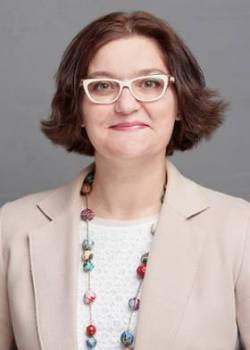
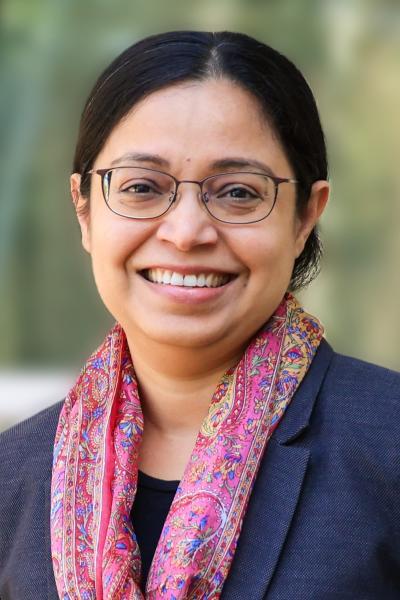
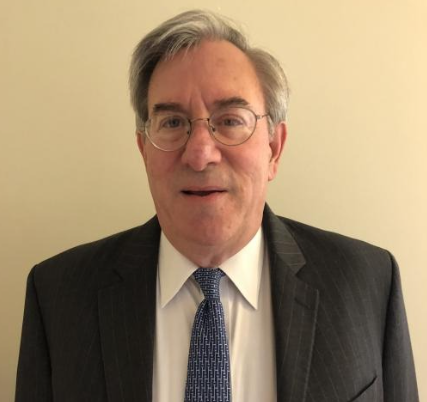
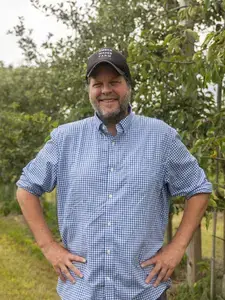
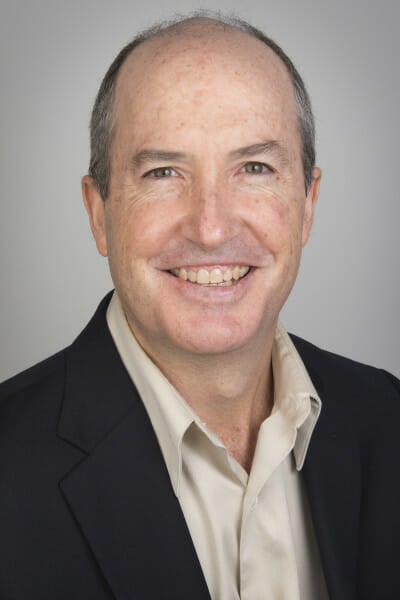
Nicole Detraz is Professor and Chair of the Political Science department at the University of Memphis. She specializes in international relations and environmental politics, with research focusing on the intersections of security, environment, and gender. Dr. Detraz earned her PhD from Colorado State University in 2009 and has received multiple awards including the Dunavant Professorship (2017) and W. Russell Smith Award for Teaching Excellence (2015). Her research explores: Gender dimensions of climate change and environmental policies International security frameworks through feminist perspectives Human rights impacts of economic policies and natural disasters Dr. Detraz has extensive leadership experience serving as department chair, director of international studies programs, and graduate coordinator. Her publications demonstrate consistent focus on gender analysis in environmental security and global governance.
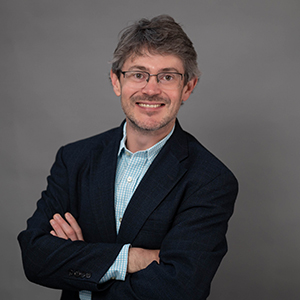
Dr. Joah Landon Williams is an Associate Professor in the Department of Psychology at the University of Memphis. His research focuses on assessing and preventing trauma-related mental health issues among victims of violence, developing transdiagnostic early interventions, and addressing health disparities linked to community violence and traumatic loss. He holds a Ph.D. and M.S. from the University of Memphis and a B.A. from Sewanee: The University of the South. Dr. Williams leads the Stress and Trauma Evaluation and Prevention Science (STEPS) Lab, collaborating with local and national partners to translate research into actionable interventions. He plans to admit a doctoral student for Fall 2025 and is actively involved in community-based studies on trauma treatment and prevention. Recent work includes evaluating hospital-based early interventions for gunshot survivors, exploring cultural factors in grief experiences, and analyzing healthcare utilization post-supportive housing placement. His publications emphasize evidence-based approaches to mental health, such as Skills for Psychological Recovery (SPR) for sudden loss survivors and modular treatment strategies for violent loss. He has also addressed disparities in mental health care access among marginalized populations, including young Black men and victims of intrafamilial homicide. Dr. Williams advises students in the Clinical Psychology Doctoral Program and collaborates on grants focused on trauma intervention dissemination, such as the ECHO model for disaster mental health response. His lab maintains strong ties with community organizations to ensure research aligns with real-world needs.
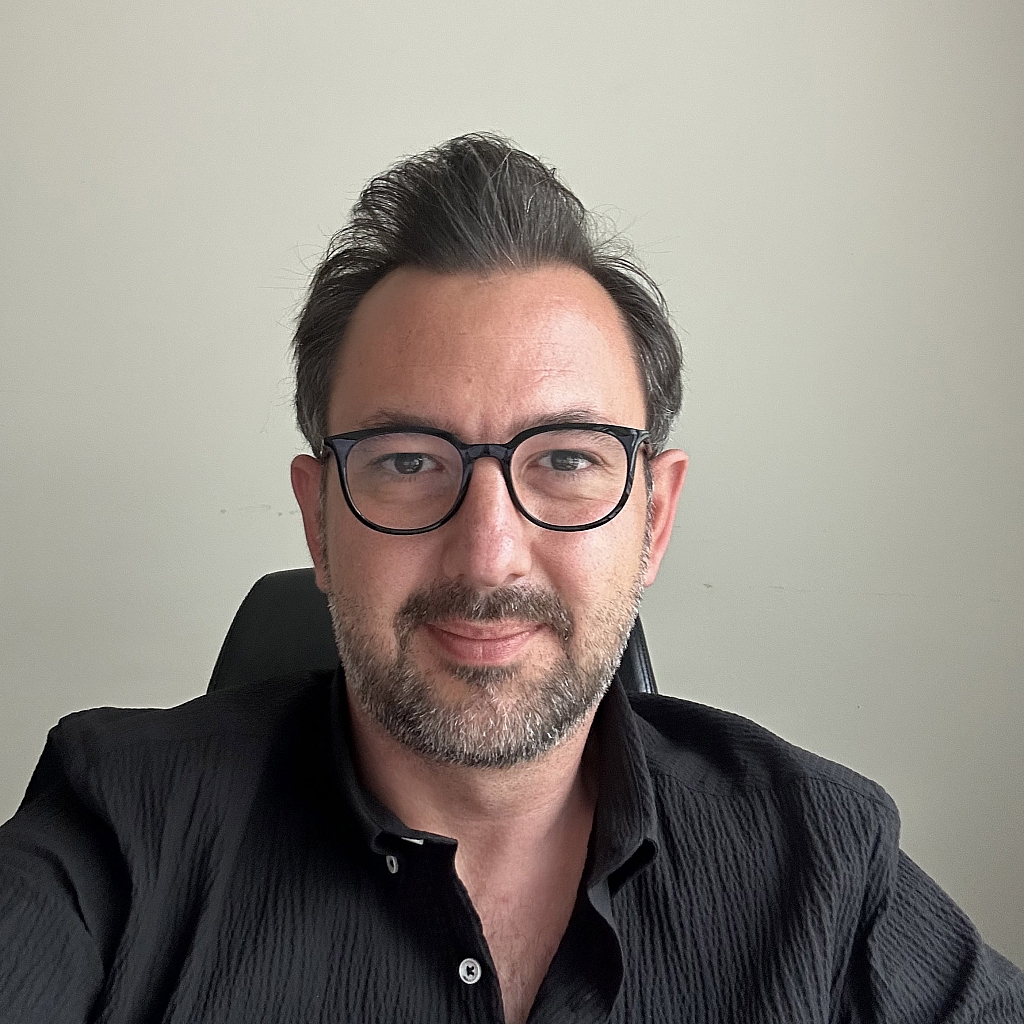
Fatih Cura is an Assistant Professor of Business Administration at Jönköping University, affiliated with the Media, Management and Transformation Centre (MMTC). His research focuses on logistics challenges faced by service providers, SME export performance analysis, and international trade dynamics. He explores topics like pandemic logistics resilience, disaster response strategies, and the impact of EU policies on Turkey's logistics sector. Research Interests: Logistics optimization in crisis scenarios Export competencies of small and medium enterprises Supply chain resilience during disruptions Technology adoption in global trade processes Economic impacts of trade policies Recent articles highlight trends in disaster logistics management, pandemic-induced supply chain challenges, and Industry 4.0 applications in trade. His work emphasizes practical solutions for SMEs facing logistical bottlenecks and regulatory barriers. Fatih has contributed to studies on Turkey's export strategies, regional competitiveness analysis in Konya, and the role of brand awareness in global markets. He focuses on actionable insights for businesses navigating international markets, with particular attention to logistics service providers' operational challenges and adaptation strategies in turbulent environments.
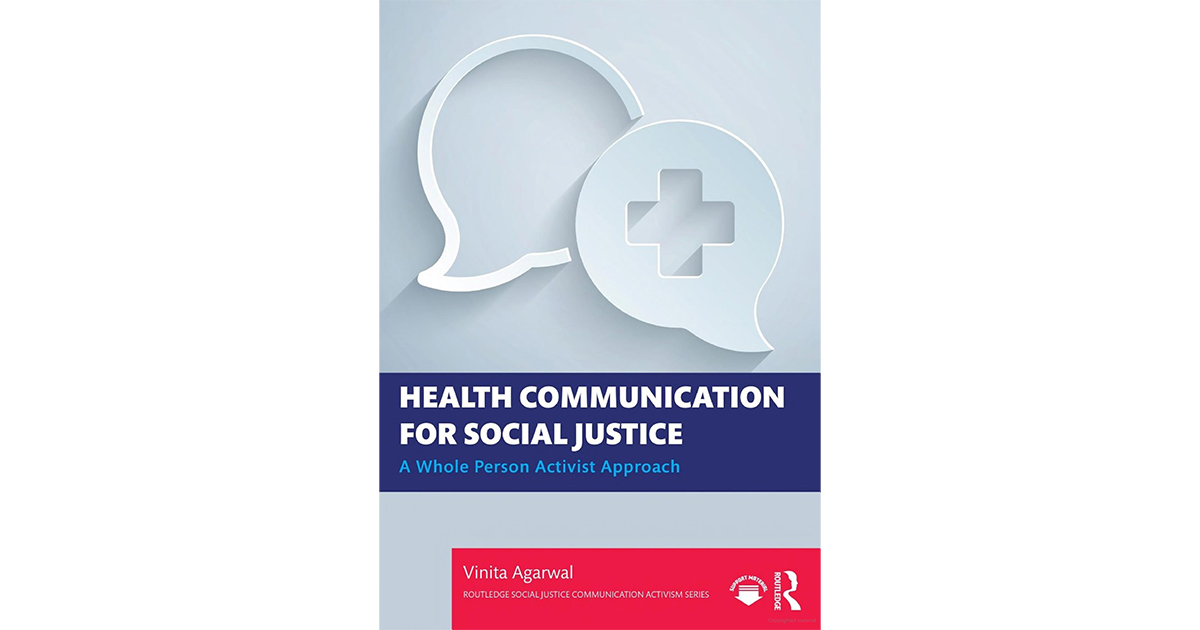
Dr. Vinita Agarwal, Professor of Communication at Salisbury University, is a leading voice in health communication and social justice. Her work bridges whole-person healthcare with advocacy for marginalized populations through titles like Health Communication for Social Justice: A Whole Person Activist Approach (2023) and Medical Humanism, Chronic Illness, and the Body in Pain (2020). Research Interests: Social justice, health equity, chronic illness narratives, and complementary medicine epistemologies. Key Contributions: Founded Whole Person Health Consulting, LLC, and co-edited Communicating for Social Justice in Health Contexts (2022). The 15 most recent publications reveal a focus on integrating social justice into health communication, exploring embodiment in CAM practices, and addressing health disparities through Ayurveda, community engagement, and critical discourse analysis. Themes span from pandemic response (2014) to ecosystemic health (2024), emphasizing interdisciplinary approaches to person-centered care.
Dr. Sonia Akter is an Associate Professor at the Crawford School of Public Policy (Australian National University), specializing in the nexus of agriculture, environment, and development in the Asia-Pacific region. She previously held roles as Assistant Professor at the Lee Kuan Yew School of Public Policy (2015-2022), Scientist at the International Rice Research Institute (2014-2015), and Senior Researcher at Helmholtz Centre for Environmental Research (2011-2013). Her research focuses on socio-economic vulnerability to natural hazards, gender equity, and climate change adaptation. Education: PhD in Environmental Management and Development (ANU, 2010); MS in Economics (York University, 2007). She teaches courses on environmental markets and climate policy (EMDV8011, EMDV8080). Research interests span agricultural policy, disaster resilience, and gender empowerment. Over 150 publications appear in journals like Global Environmental Change and Ecological Economics . She serves as Senior Editor for Food Security and Associate Editor for Australian Journal of Agricultural and Resource Economics . Expertise includes environmental economics, disaster risk management, and gender-inclusive policy design. Advisory roles include the World Bank, Asian Development Bank, and Singapore’s Ministry of Environment. Her work emphasizes valuing water resources, women’s participation in agriculture, and gender-differentiated disaster impacts.
Dr. Alastair Ager is an Adjunct Professor at Columbia University's Mailman School of Public Health and Director of the Institute for Global Health and Development at Queen Margaret University. He holds dual roles as Director of the NIHR Research Unit on Health in Situations of Fragility and previously served as Deputy Chief Scientific Adviser to the UK Department for International Development (2017–2020). His career spans over 30 years in global health and development, with expertise in humanitarian health systems, psychosocial support for refugees, and faith community engagement in crises. Education: BA (1978, Keele University), PhD (1983, University College), MSc (1985, University of Birmingham). Academic leadership roles include former Head of Psychology at University of Malawi and Executive Director of Columbia's Global Health Initiative. He has advised UN agencies, NGOs, and governments across Africa, Asia, Europe, and the Middle East. Research focuses on health systems resilience, evaluation of humanitarian programs (especially child protection and psychosocial support), and faith-based humanitarian collaboration. His work emphasizes policy development and public engagement with science, reflected in over 100 scholarly publications. Key awards include Royal Society of Edinburgh Fellowship (2019). Current projects include research on child-friendly spaces in emergencies (with World Vision), maternal-neonatal health systems in Nigeria, and cholera biosensor technology development funded by the Gates Foundation. Advising and grants involve technical support to global health programs like PRINN-MNCH in northern Nigeria, focusing on health governance and clinical service strengthening. Collaborates with interdisciplinary teams across Columbia's departments and international institutions.
Dr. Elizabeth Shay is an Associate Professor and Planning Program Director in the Department of Geography and Planning at Appalachian State University. She also serves as Associate Director for the NCDOT Center of Excellence in Transportation Safety and Policy (TSAP), a multi-university consortium led by the Highway Safety Research Center in Chapel Hill, NC. Her current project focuses on CAV-ready infrastructure impacts on vulnerable road users in North Carolina. Her research explores transportation equity, land use policy, automated vehicles, and resilient rural communities. Notable projects include studies on flood mitigation in Western NC and pandemic-era physical distancing strategies on greenways. Teaching includes courses on transportation planning, sustainable development, and planning techniques. She leads the Sustainable Community Development graduate course and advises projects at the intersection of social work and urban planning. Recent publications highlight interdisciplinary approaches to planning education, active travel promotion, and disaster resilience strategies. Current affiliations include the NCDOT TSAP Center and the Geography and Planning Department at Appalachian State.
Dr. Joshua Sinai is a Professor of Practice in the Department of Intelligence and Global Security Studies at Capitol Technology University, based in the Washington, D.C. area. He holds a Ph.D. and M.A. from Columbia University’s Political Science/Comparative Politics program, and a B.A. from SUNY New Paltz. His career spans over 35 years in international/national security with U.S. government agencies, academia, and private sector firms. He has served as a senior intelligence analyst at the Library of Congress, worked with the FBI’s Foreign Terrorist Tracking Task Force, and contributed to Virginia Tech’s Center for Technology, Security, and Policy in developing counterterrorism educational programs. Dr. Sinai’s research focuses on terrorism/counterterrorism, intelligence methodologies, and security policy. His notable works include the Active Shooter: A Handbook on Prevention and over 50 peer-reviewed articles analyzing topics like lone-actor terrorism, future warfare trends, and critical infrastructure resilience. He emphasizes proactive prevention strategies and has developed frameworks for assessing and mitigating emerging threats. His professional affiliations include ASIS International, AFCEA International, and the Middle East Institute. Sinai advises on counterterrorism measures for businesses and governments, blending academic rigor with practical field experience. His work bridges theoretical analysis and actionable security solutions for modern threats.
Daina Cheyenne Harvey is an Associate Professor and Department Chair in the Department of Sociology & Anthropology at the College of the Holy Cross. She holds a B.B.A. (Finance), Double B.A. (Philosophy and Economics) from the University of Texas-Austin, an M.A. (Sociology) from the University of Houston, and a Ph.D. (Sociology) from Rutgers University. Her work focuses on social disruption, environmental precarity, urban marginality, and symbolic interaction, with a particular emphasis on food geographies and social justice. Her research interests include the intersection of environmental studies and urban sociology, post-pastoral societies, and the socio-cultural dimensions of food systems. She has authored/co-edited influential works such as Beer Places: The Micro-Geographies of Craft Beer (2023) and contributed chapters to volumes like Urban Food Mapping (2024) and The Oxford Handbook of Symbolic Interactionism (2023). Dr. Harvey teaches courses such as Food Justice - Racial Justice , Worcester Eats , and Environmental Racism , integrating interdisciplinary approaches to address systemic inequities. Her work often examines disaster recovery, urban sustainability, and the cultural politics of marginalized communities.
Dr. Rosemary Hohnen is an Adjunct Research Fellow at the Faculty of Science and Technology, Charles Darwin University, specializing in Threatened Species Ecology and Wildlife Conservation . Her work addresses Australian biodiversity challenges through: Landscape-scale threat analysis Camera trap methodology development Post-fire ecosystem recovery Invasive species management Key research themes include: Quantifying genomic diversity for declining mammals Analyzing fire-feral cat interactions in Australian ecosystems Mapping habitat complexity for marsupials Her publications demonstrate strong interdisciplinary collaboration with institutions like CSIRO and NESP Threatened Species Recovery Hub. Current methodology integrates artificial intelligence with camera trap data for continental-scale wildlife monitoring, contributing to SDG 15 (Life on Land).
Dr. Duke W. Austin is a Professor of Sociology at California State University, East Bay (CSUEB), where he currently serves as Chair of the Faculty Affairs Committee. Previously, he held the position of Department Chair. He is also a Senior Fellow at Yale University’s Urban Ethnography Project, a consultant on an NIH grant at the University of Southern California, and a Board member of the Pacific Sociological Association. His academic journey includes a PhD in Sociology , followed by roles such as Lead Wilderness Instructor at Outward Bound, Ski Instructor at Steamboat Ski Resort, and Summer Camp Director at Quarterman Ranch. He served as a Peace Corps Teacher Trainer in Paraguay and is fluent in Spanish, Portuguese, and Guarani. Dr. Austin acknowledges the unceded land of the Muwekma Ohlone Tribe on CSUEB’s Hayward campus and advocates for Indigenous sovereignty. Research Interests focus on critical race studies , particularly in contexts of immigration, education, and environmental sociology. His work explores how systemic racism impacts marginalized communities, including White Americans’ evolving racial consciousness in the Trump era. He emphasizes community-based ethnography and experiential learning to address social justice gaps. Publications reflect a commitment to social justice and ethnographic rigor, including seminal works like Impacts of Racism on White Americans in the Age of Trump (2021) and Bringing Fieldwork Back In (2012). His writing bridges theory and practice, examining issues like immigrant student rights, hyper-masculinity in disasters, and inclusive pedagogy. Awards & Recognition include the 2023 Outstanding Contributor to Community Engagement and 2016 Outstanding Scholar on Diversity, Social Justice, and Multiculturalism. These honors underscore his dedication to both academic excellence and societal impact. Teaching Philosophy centers on learner-centered pedagogy , empowering students to apply critical thinking to societal challenges. He prepares future civic leaders through experiential education and culturally relevant curricula, aiming to close achievement gaps at CSUEB. Affiliations & Impact extend beyond academia to community initiatives and policy advising. His NIH consultation and board roles highlight interdisciplinary collaboration in addressing systemic inequities.
Dr. Sumadhur Shakya is an Associate Professor at California State University, Monterey Bay, specializing in agribusiness, supply chain management, and logistics systems. He holds degrees from Punjab Agricultural University (BSc Honors in Crop Science), North Dakota State University (MSc in International Agribusiness and PhD in Transportation and Logistics). His research focuses on stochastic spatial optimization in agribusiness supply chains, particularly nitrogenous fertilizer industries and perishable food networks. He previously worked in high-tech logistics at Dell Corporation. Education Background: Bachelor of Science (Honors) in Crop Science, Punjab Agricultural University, India (Plant Breeding & Genetics) Masters in International Agribusiness, North Dakota State University PhD in Transportation and Logistics, North Dakota State University (Specializing in logistics systems in agribusiness) Research Interests: Optimization of supply chain networks Risk analysis in fertilizer plant locations Impact of geopolitical events on agricultural trade GIS-based facility location modeling Biotechnology valuations in crops Publications Highlight Trends in: Geopolitical impacts on agricultural supply chains Perishable food distribution networks GM crop economic valuations Environmental sustainability in energy sectors No awards/grants or advising students are explicitly listed in the provided information.
Laura Grube is an Associate Professor of Economics and Neese Chair at Beloit College, located within the School of Business. She holds a B.A. from Beloit College and an M.A. and Ph.D. in Economics from George Mason University. Her teaching focuses on Principles of Economics, Comparative Economic Systems, Austrian School Economics, and Business Management, complemented by her role in organizing the Upton Forum and the annual Business Networking Summit. She co-advises Belmark Associates, a student-run market research group, and serves on the Beloit College Alumni Board Association. Her research explores how communities overcome collective action challenges in post-disaster scenarios, emphasizing cultural influences, entrepreneurship, and institutional dynamics. Notable works include Community Revival in the Wake of Disaster (2015) and contributions to journals like The Review of Austrian Economics and Entrepreneurship and Regional Development . She has also examined school choice policies and liberal education curricula. Education: B.A., Beloit College M.A. and Ph.D. in Economics, George Mason University Professional Activities: Organizes the Upton Forum and Business Networking Summit Co-advisor of Belmark Associates Former Fulbright Scholar in South Africa (Free Market Foundation) Prior professional experience at Deloitte Consulting and Perficient, Inc. Her work integrates Austrian School methodologies with empirical studies of disaster recovery, emphasizing the role of social capital, cultural norms, and decentralized decision-making in rebuilding communities.
Marc Veletzos is a Professor of Civil Engineering at Merrimack College, specializing in earthquake engineering, disaster recovery, and resilient infrastructure design. He holds additional roles as a Fulbright Senior Scholar (Nepal, 2018), Director-at-Large of the Earthquake Engineering Research Institute’s New England Chapter, and Structures Specialist with FEMA’s Massachusetts Task Force 1. Veletzos earned his Ph.D., M.S., and B.S. in Structural Engineering from the University of California, San Diego. His research focuses on three core areas: 1) improving bridge resilience in extreme events through emergency response planning and rapid restoration techniques, 2) developing earthquake-resistant designs for vernacular buildings in developing countries (e.g., Nepal), and 3) advancing understanding of seismic behavior in segmental bridges through large-scale testing and simulations. His work is supported by organizations like Caltrans and the National Cooperative Highway Research Program (NCHRP). His publications highlight contributions to bridge assessment guidelines, smart app development for emergency situations, and innovative seismic retrofitting methods. Recent work emphasizes global collaboration, including workshops in Hawaii and Nepal to transfer knowledge to local communities. He has also pioneered service-learning initiatives linking academic programs with real-world disaster response efforts. Awards: BSCES College Educator of the Year (2023) McKniff Service Award (2017) ExCEEd Teaching Fellow (2009) James Cooper Best Paper Award (2008) Grants & Partnerships: NCHRP, Caltrans, U.S. Education Foundation/Nepal, FEMA Veletzos leads Merrimack College’s efforts in STEM education innovation, integrating national best practices into a liberal arts environment to enhance student retention and engagement. His work bridges academic research, community service, and policy development to create sustainable solutions for global challenges.
Kerryanne Donohue-Couch is a Visiting Lecturer in the Civil & Environmental Engineering department at Manhattan College. Her research focuses on stormwater treatment, ecosystem restoration, and shoreline stabilization, with a particular emphasis on community engagement and environmental education. Prior to academia, she served as a hydraulic engineer at the US Army Corps of Engineers (1998–2009), leading projects in Jamaica Bay and Hackensack Meadowlands. She holds a BS from Manhattan College and an MS from the University of Florida in Coastal and Oceanographic Engineering. Education: BS in Civil Engineering (Manhattan College), MS in Coastal & Oceanographic Engineering (University of Florida), Secondary Education Certification (Pace University). Global Experience: 2 years as a structural engineer, 2 years in environmental education with the Peace Corps in Seychelles. Her research interests include: water quality solutions for urban areas, nature-based infrastructure (e.g., living shorelines), and community-driven environmental stewardship . She has pioneered projects like the EPA-funded 'Living Shorelines, Living Classrooms' initiative (2022–2024), which integrates technology and education to address stormwater issues in environmental justice areas. Recent projects include partnerships with non-profits and community groups to restore water quality in Bronx lakes and study stream barriers' impact on American eel populations. Her work emphasizes bridging engineering solutions with ecological and social outcomes. Grants & Projects: US EPA: $500K for 'Living Shorelines, Living Classrooms' (2022–2024) National Fish & Wildlife Federation: Lake restoration in Bronx (2022–2024) Estuary Education Outreach: Ongoing since 2020 Teaching: Courses include Hydraulic Design, Fluid Mechanics Lab, and Introduction to Civil Engineering. She actively mentors students in lab and fieldwork, such as the Jasper Scholars project on Van Cortlandt Park's shoreline design.