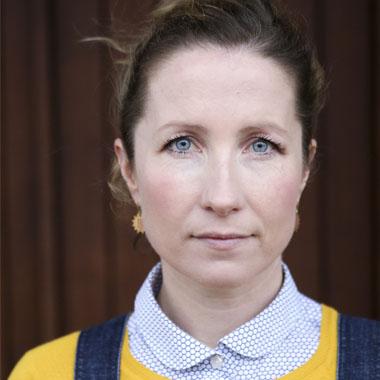
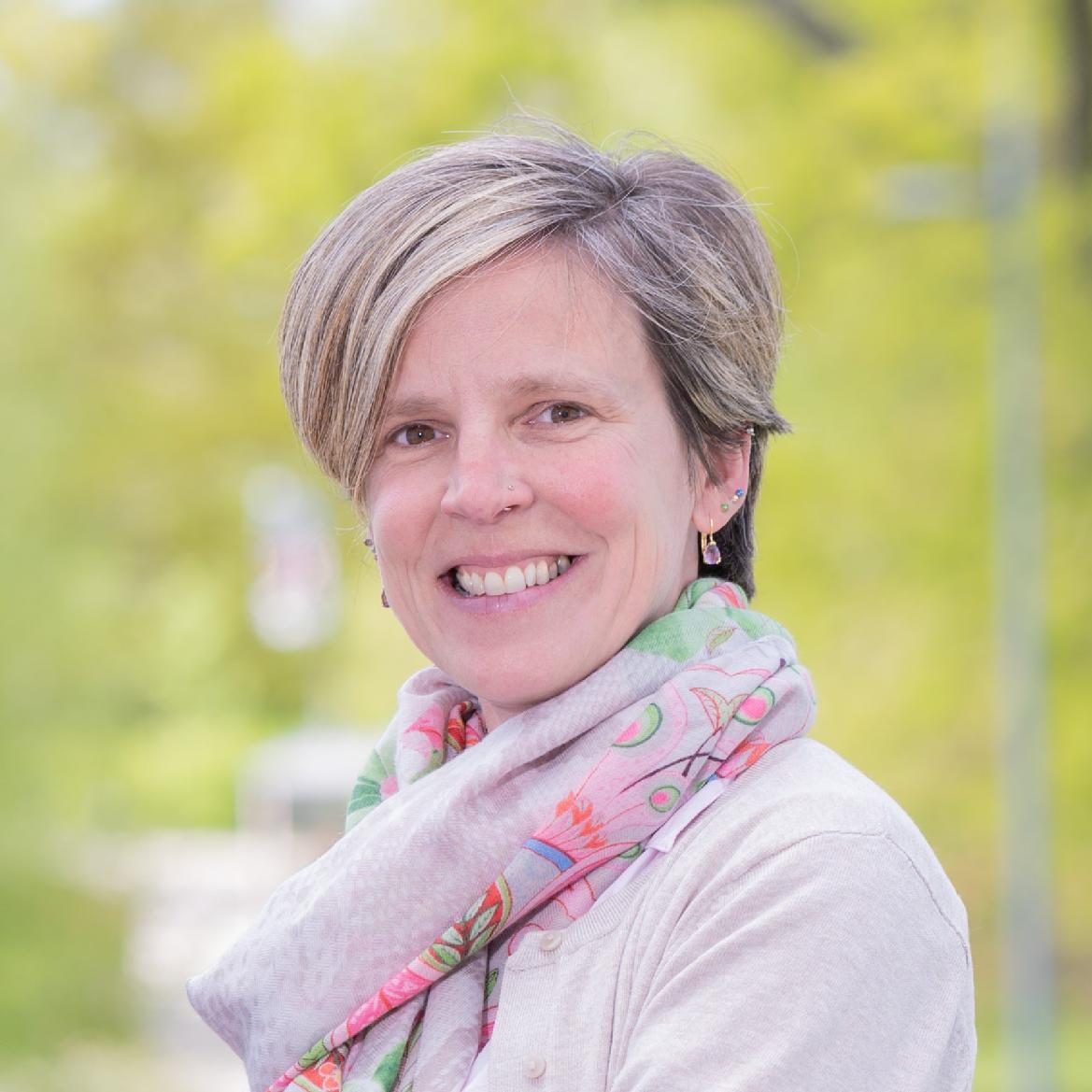
Dr Isobel Harbison is a Senior Lecturer in Critical Studies at Goldsmiths, University of London, specializing in contemporary performance and moving image art. She holds a PhD in Art Theory (2015) and an MFA in Curating (2008) from Goldsmiths, along with a BA in History of Art and Architecture from Trinity College Dublin (2004). Research Focus: Her work interrogates the intersection of images, media, and politics, with particular attention to feminist and anti-racist art histories. She explores how performance art and moving image challenge corporate media structures and technology capitalism, as detailed in her monograph Performing Image (MIT Press, 2019). Projects: She leads the 2025-2026 Recording History initiative with the Irish Museum of Modern Art, focusing on independent film in Northern Ireland (1968-1990). This project, funded by the Shared Island Fund, will result in an oral history archive at PRONI. Awards: 2024 Eadington Fellow, UNLV 2024 Eccles Fellow, British Library 2019 Rauschenberg Foundation Resident 2014 Arts Foundation Fellow Curatorial Work: Guest curator, Tate Modern (2025) Exhibition projects at Royal Hibernian Academy, Ulster Museum Writing: Regularly contributes to Frieze , Art Monthly , and Financial Times . Her work has been shortlisted for the Hay Festival Writers' Award (2024) and nominated for the Pushcart Prize.
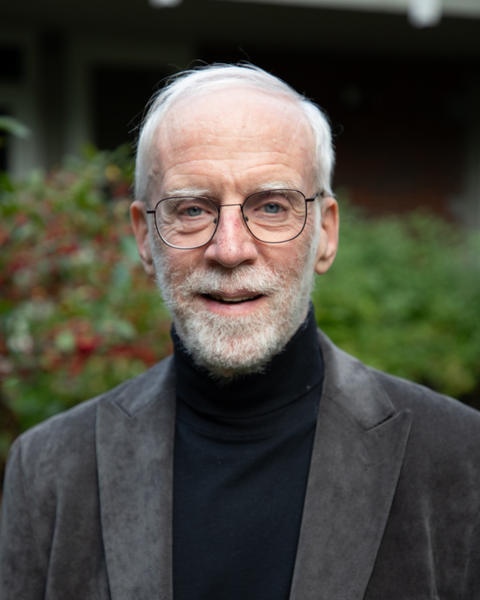
Francis X. Clooney, S.J., is the Parkman Professor of Divinity and Professor of Comparative Theology at Harvard Divinity School. He has served as Director of Harvard’s Center for the Study of World Religions (2010–2017) and currently works on Hindu ritual theology and interfaith studies. Educated with a BA from Fordham University, MDiv from Weston School of Theology, and PhD in South Asian Languages and Civilizations (University of Chicago, 1984), Clooney bridges Hindu and Christian traditions as a Roman Catholic priest, Jesuit for 55+ years, and active parish celebrant. Education: BA, Fordham University MDiv, Weston School of Theology PhD, University of Chicago (1984) His scholarship focuses on comparative theology , Sanskrit and Tamil Hindu theological commentaries, and Jesuit missionary discourse in Asia. He has published 15+ books and articles including studies on Vedanta Desika, Ramanuja, and Hindu-Christian dialogue. His 2023 festschrift and 2024 honorary doctorates mark his global influence. Recent projects include translating Tamil ālvār hymns and exploring interfaith studies futures. Research Trends: 2010–2024: Hindu-Christian theological parallels 2013: Divine absence in religious traditions 2020–2022: Jesuit mission in South India 1990–2013: Mimamsa and Vedanta theological frameworks Scientific Honors: Fellow of the British Academy (2010) Wiley Blackwell festschrift (2023) Honorary doctorates (Scranton 2023, Le Moyne 2024) American Academy of Arts and Sciences (2025) As 2022–2023 President of the Catholic Theological Society of America, he advanced interfaith dialogue. His pandemic-era homilies and 50-year vegetarian advocacy reflect personal commitments to lived theology.
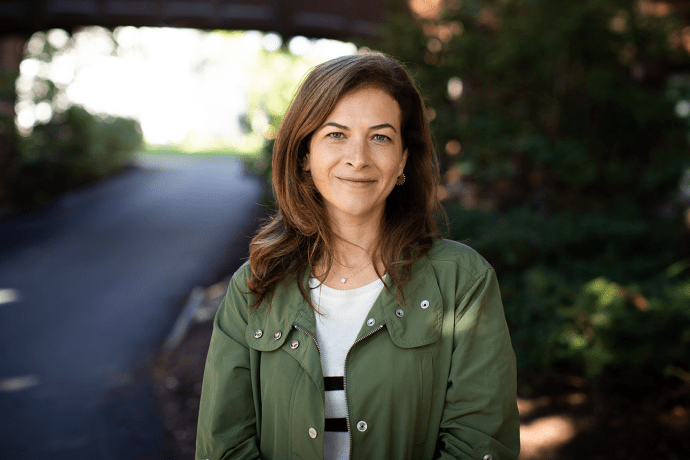
Elif Babül is a Professor of Anthropology and Nexus Track Chair for Law, Public Policy, and Human Rights at Mount Holyoke College. She holds affiliations with the Department of Sociology and Anthropology, Department of Asian Studies, and The Nexus Program. Her work focuses on political and legal anthropology, migration management, and human rights politics in Turkey. Ph.D., Stanford University M.A., Boğaziçi University B.A., Ankara University Dr. Babül's research examines transnational bureaucracies and the complexities of EU-Turkey harmonization processes. She analyzes how legal frameworks intersect with migration policies in Turkish courts and investigates knowledge production in the "post-truth" era through her co-edited volume project. Her recent publications explore topics including compulsory guesthood and authoritarian control of academia . Funded by prestigious organizations like Wenner-Gren Foundation and American Research Institute in Turkey, her work has appeared in top journals including American Ethnologist and Journal of Royal Anthropological Institute. William A. Douglass Prize (2018) for Bureaucratic Intimacies AAA Middle East Section Honorable Mention (2019) Dr. Babül actively contributes to public discourse through media appearances (KPFA Radio) and academic panels on Turkish sociopolitical issues. She teaches courses in ethnographic methods, Middle Eastern societies, and human rights anthropology.
Karen Frostig is an Associate Professor at Lesley University and a Resident Scholar at the Women's Studies Research Center at Brandeis University. As an interdisciplinary artist, author, and cultural historian, she is deeply engaged in international activist projects exploring traumatic memory, inherited erasures, and innovative forms of testimony. Her work is exhibited widely across the US and Europe, and she is a frequent speaker at international conferences on heritage, memory, and citizenship. Her research interests center on the intersections of art, memory, and identity. She investigates how traumatic histories are remembered and re-performed in public spaces, particularly through interdisciplinary and performative methods. Her work combines feminist theory, cultural history, and artistic practice to challenge dominant narratives of belonging and citizenship. She has contributed extensively to discourse on how art activism can materialize memory and create new forms of public engagement with historical trauma. The trends in her publications reveal a consistent focus on memory, performance, and feminist interventions in public space. From digital memory projects to street performances in Vienna, her work spans media and geography, emphasizing embodied and participatory forms of remembrance. Her recent and forthcoming articles highlight the role of art in redefining citizenship and public spheres in post-genocide contexts. Massachusetts Cultural Council Grants National Fund grant Zukunftsfond grant Austrian Federal Ministry grants for Arts & Culture, and Education Puffin Foundation grant Shelley Tyre grant Numerous Lesley University grants and fellowships Karen Frostig has secured significant research funding from national and international sources, supporting her innovative projects in art and memory. She mentors students through her academic position at Lesley University and leads major interdisciplinary initiatives such as The Vienna Project and the upcoming Staging Memory. While specific grant amounts and student names are not listed, her sustained funding and leadership roles indicate an active advising and research profile. She is the Founding Director of The Vienna Project, a major public art and memorial initiative that was exhibited from 2013 to 2014. Her current project, Staging Memory, is an international endeavor spanning Europe and concluding in New York City in 2020, indicating ongoing leadership in transnational memory projects.
Nushelle de Silva is an Assistant Professor of Art History at Fordham University's Lincoln Center Campus, affiliated with the Department of Art History. Her research explores the intersections of architecture, mobility, and cultural exchange, particularly in the Global South during the 19th and 20th centuries. Her educational background includes a PhD and SMArchS from the Massachusetts Institute of Technology and an AB from Princeton University. These qualifications underscore her interdisciplinary training in architecture and art history. Her research focuses on portable architectures, infrastructures of movement, and the spatial dimensions of preserving cultural objects in transit. A central theme is how global exhibition exchanges have shaped museum architecture and conservation practices. She is currently developing a book titled Conveying Culture: Traveling Museum Exhibitions and the Technopolitics of Care , which examines the evolution of preventive conservation in tandem with post-WWII international exhibitions. The selected publications reflect a strong engagement with transnational exhibition histories, Cold War cultural diplomacy, and postcolonial museum practices. Her work bridges architectural history, museology, and material culture studies, emphasizing the movement of people, objects, and ideas. Fellowship from MIT Grant from Ithaca College Fellowship from Winterthur Museum Fellowship from Paul Mellon Centre for British Art Fellowship from Society for Architectural Historians Fellowship from Design History Society Fellowship from Association for Art History Grant from Towards Equity in Publishing (Dedalus Foundation/American Art journal) Nushelle de Silva has secured research funding from major institutions in art, architecture, and design history. While no formal advisees are listed, her teaching includes foundational and advanced courses such as Introduction to Art History: Architecture , Global Modern Architecture , and Can Museums Be Decolonized? , indicating mentorship and pedagogical leadership in critical areas of contemporary art historical discourse. No specific lab or research team is mentioned, though her work implies collaboration with museum professionals, conservation experts, and international institutions involved in exhibition exchange.
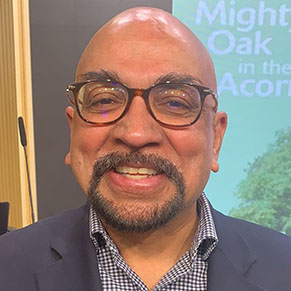
Tojo Thatchenkery is a Professor and Director of the Organization Development and Knowledge Management Program at the Schar School of Policy & Government, George Mason University, where he has been a leading figure for over 25 years. He is also affiliated with the NTL Institute of Applied Behavioral Science and the Taos Institute, contributing to the global discourse on organizational change. Research Interests: His work centers on Appreciative Inquiry, Appreciative Intelligence®, leadership, knowledge management, and organizational transformation. He explores how positive frameworks can drive innovation, sustainability, and resilience in both public and private sectors. His research extends into circular economy, entrepreneurship, nonprofit management, and South Asia contexts. Publications and Influence: A prolific author, Thatchenkery has written over a dozen books and 100 articles, including a feature in the Harvard Business Review . His seminal works such as Appreciative Intelligence and Making the Invisible Visible have shaped modern leadership and change theory. The articles reflect strong trends in positive organizational development, cognitive leadership, and sustainable innovation. Featured in the Palgrave Handbook of Organizational Change Thinkers Past Program Chair, Research Methods Division, Academy of Management Editorial Board, Journal of Applied Behavioral Sciences Editorial Board, Journal of Organizational Change Management Advising and Grants: He founded the Organization Development and Knowledge Management graduate program, mentoring generations of practitioners and scholars. His research has been supported by the National Science Foundation, NSA, and U.S. Postal Service. He brings extensive consulting experience across global institutions including the World Bank, IMF, IBM, 3M, and Tata Consulting Services. Labs and Teams: He founded and directed the Organizational Learning Laboratory at George Mason’s Johnson Learning Center (1995–2000), recognized by the Academy of Management and Project Management Journal as a pioneering facility in organizational learning and knowledge management, serving clients like Fannie Mae.
Dr. Chris Homewood is an Associate Professor in World Cinemas and German at the University of Leeds' School of Languages, Cultures and Societies. He joined the institution in 2007 after completing his PhD at Leeds, preceded by an MA from the University of Nottingham and a BA from the University of Bangor. As Programme Manager for the MA Film Studies, he oversees postgraduate education in cinematic studies. His research explores three primary domains: German cinematic traditions spanning Weimar era to contemporary Berlin School, with special focus on representations of left-wing terrorism (RAF) and cultural memory of '1968' Popular geopolitics and orientalism , particularly analyzing Hollywood-China relations through frameworks of soft power and neo-colonial discourse Genre theory in World Cinemas , examining transnational narrative patterns and aesthetic developments His publication portfolio (2005-2021) demonstrates consistent focus on German film history, terrorism representation, and cinematic geopolitics, with recent work increasingly examining Sino-Hollywood dynamics. Thematically, his scholarship interrogates how cinema shapes collective memory, negotiates political trauma, and mediates cross-cultural power relations. He has successfully supervised five postgraduate researchers to completion, with projects covering German/Austrian cinema, Gothic horror, music biopics, and gender studies. As co-editor of New Cinemas: Journal of Contemporary Film and advisory board member for Studies in European Cinema , he actively shapes academic discourse. He has organized significant conferences including 'Cinema, Soft Power, and Geopolitical Change' (2017) and the German Screen Studies Network meeting (2014).
Professor Stéphanie Panichelli-Batalla is a leading academic at the University of Warwick, where she serves as Head of the School for Cross-Faculty Studies, Academic Director for Global Sustainable Development and Liberal Arts, and Academic Director for Sustainability. She is based in the Global Sustainable Development department within the School for Cross-Faculty Studies and is a HEA Principal Fellow, reflecting her excellence in higher education pedagogy. Her research is centered on Caribbean Studies, particularly Cuba, with interdisciplinary approaches drawing from Cultural Studies, Sociology, and Oral History. Her work critically examines Cuban internationalist healthcare professionals, medical diplomacy, and the socio-political dimensions of Cuba’s global health initiatives. She has made significant contributions to the understanding of oral histories in politically sensitive contexts and the role of humor in narratives of displacement and resilience. The recent publications reflect a strong focus on medical diplomacy, sustainable development, and oral history, with a thematic emphasis on Cuba, South-South cooperation, and global health. Her work spans historical, literary, and development studies perspectives, often integrating personal narratives with broader socio-political analysis. She frequently collaborates with scholars across disciplines and institutions, contributing to journals in history, sustainability, and cultural studies. Scientific Awards and Recognition: British Council Researcher Links grant Higher Education Academy Principal Fellow (Advance HE) Professor Panichelli-Batalla is actively involved in mentoring and supervision, particularly in postgraduate research related to Latin American human rights, Cuban culture, oral history, and Education for Sustainable Development. She co-directs the Oral History Network and the ESD Network at Warwick, playing a pivotal role in advancing institutional strategies on sustainability and interdisciplinary research. Her leadership has been instrumental in expanding undergraduate and postgraduate programs and establishing new academic divisions such as Design Studies. She previously held academic positions at Aston University, Wingate University, and Princeton University, bringing extensive international experience to her current role. Her work continues to shape both academic discourse and institutional policy on global sustainable development and interdisciplinary education.
Hal Langfur is a Professor of History at the University at Buffalo, specializing in Latin American and Brazilian colonial history. He holds a PhD from the University of Texas (1999), an MA from the same institution (1995), and an AB from Harvard University (1982, magna cum laude). His research focuses on colonial Brazil, racialization processes, Indigenous history, and transnational dynamics. Langfur’s current book project examines early racial pedagogies in colonial Brazil, exploring how violence was systematized along racial lines. His notable publications include Adrift on an Inland Sea (2023), which won multiple prizes, and The Forbidden Lands (2006). He has taught courses such as HIS 328 (History of Brazil) and HIS 433 (Latin American Native Peoples). Langfur has held prestigious fellowships, including a National Endowment for the Humanities grant and a Fulbright Lecturing/Research Grant in Brazil. His research interests span colonial and post-independence Brazil, early modern racial formation, and cross-cultural encounters. He has investigated topics like Indigenous resistance, colonial violence, and the intersection of science and empire. Langfur’s work bridges historical analysis with contemporary debates on race, colonial legacies, and transnational history.
Irene González-López is a Lecturer in Japanese Studies at Birkbeck, University of London, serving as Programme Director for BA Japanese Studies with International Experience. She holds a PhD in Film Studies from SOAS, University of London, and additional degrees from Kyoto University and Tenri University. Her research focuses on Japanese cinema, gender studies, and representations of sex work, with a specialization in postwar film and female authorship. Key research projects include analyzing Japanese filmmaker Haneda Sumiko’s documentaries and exploring the trope of prostitution in postwar cinema. She has co-edited volumes on Tanaka Kinuyo and Haneda Sumiko, and her forthcoming monograph Selling Sex in Japanese Cinema examines the socio-political dimensions of prostitution narratives. Irene collaborates with institutions like the BFI, Barbican Centre, and Japan Foundation, and serves on advisory boards for journals and film festivals. Education: PhD in Film Studies, SOAS, University of London MA Film Studies, Kyoto University BA Japanese Studies, Tenri University BA Media Studies and Communication, Universidad Pontificia de Salamanca Her teaching spans modules on Japanese cinema, memory studies, and cultural crisis, and she supervises PhD students in Japanese visual cultures and gender studies. Irene has received grants from the Lady Marks Charitable Trust, JSPS, and the Great Britain Sasakawa Foundation, among others.
Dr. Barbara Henkes is an Associated Researcher at the University of Groningen’s History Department within the Faculty of Arts. She holds a PhD (cum laude) from the University of Amsterdam and has held academic positions spanning three decades, including roles as a postdoc, assistant professor, and fellow at the Royal Netherlands Academy of Arts and Sciences. Her research focuses on transnational networks, migration policies, and the intersections of colonialism, nationalism, and memory. Key projects include studies on Dutch-South African relations, the legacy of slavery in the Netherlands, and the colonial histories of multinational family businesses. Education: M.A. and doctorat in History from the University of Groningen (1980), with additional research training at the University of Amsterdam and the Meertens Institute. She has also held visiting positions at the University of Oldenburg and the University of Münster. Research interests include contemporary history, oral history methodologies, and the politics of memory. She explores how national identities are constructed through inclusion/exclusion dynamics, particularly in post-colonial and post-Nazi contexts. Current projects investigate the colonial roots of Dutch-South African ties and the material traces of slavery in Groningen and Friesland. Her publications span academic articles, public-facing essays, and edited volumes, emphasizing accessible historical narratives. She has led initiatives like the ‘Bitterzoet Erfgoed’ cultural project and contributes to editorial boards in history and migration studies.
Ulrike Krause is Professor of Political Science with a focus on the constitution and politics of gender relations at the Institute of Political Science, University of Münster, a position she has held since August 2024. She is also an Affiliated Research Associate at the Refugee Studies Centre and the Oxford Department of International Development, University of Oxford, since June 2017. Her academic journey includes prior positions at Münster University of Applied Sciences, Osnabrück University, Ruhr University Bochum, and Philipps-University Marburg. She earned her doctorate from Magdeburg University in 2012 and has professional experience in international cooperation (2008–2013) with organizations such as UNICEF, GIZ, DED, and World Vision, focusing on gender mainstreaming, refugee protection, and human rights. PhD, Otto-von-Guericke University Magdeburg (2012) Positions in international cooperation: Gender Mainstreaming, Refugee Protection, Human Rights (2008–2013) Her research centers on gendered and postcolonial power relations in global and local politics, with a focus on conflict, displacement, and violence. She investigates intersectional perspectives on political agency, research ethics, and the production of (non-)knowledge in humanitarian contexts. Her regional focus spans global developments and African states, particularly Uganda. Her work critically engages with the colonial roots of the 1951 Refugee Convention, gender-based and sexualized violence, humanitarian policies, and refugee resilience. Her recent publications reveal a strong thematic trajectory in feminist and postcolonial critiques of refugee governance, ethical field research, LGBTQ+ displacement, and peacebuilding from below. She consistently publishes in high-impact journals and contributes to policy debates through edited volumes and open-access platforms. She leads a research team and mentors PhD students, including Nadine Segadlo and Hannah Edler. She has been instrumental in founding and editing key academic platforms such as the FluchtforschungsBlog and the Zeitschrift für Flucht- und Flüchtlingsforschung . She has also co-edited major publications like Externalizing Asylum and Report Globale Flucht . Her advisory and grant-related work includes coordinating interdisciplinary research projects, developing ethical guidelines for forced migration studies, and contributing to public scholarship through blogs, policy briefs, and media engagement. She is deeply committed to participatory and ethically responsible research with displaced populations. She is actively involved in research teams and editorial boards, including leadership of the work area on gender and forced migration at Münster. She also contributes to knowledge transfer through networks such as the German Network for Forced Migration Studies.
Luise von Flotow is a Full Professor in the School of Translation and Interpretation at the University of Ottawa. She has been a leading figure in feminist translation studies since 1995, focusing on gender issues, cultural diplomacy, audiovisual translation, and transnational feminist discourse. Ph.D. in French, University of Michigan (1991) M.A. in French, University of Windsor (1985) Post-Graduate Certificate in Education, University of London (1975) B.A. in French and German, University of London (1974) Her research bridges feminist theory, translation pedagogy, and cultural diplomacy, with a focus on how translation shapes gender narratives and political discourse. She has pioneered studies on literalist Bible translations by women and gender awareness in audiovisual contexts. Their 15 most recent works explore transnational feminist translation, cultural diplomacy in China, gender in Brazilian documentaries, and historical feminist biblical scholarship, reflecting a trajectory of activism and scholarly innovation. No scientific awards are explicitly mentioned in the provided texts. They supervise Mojde Yaqubi and have led summer programs like CETIP (Chinese-English Translation) and TTPP (Translation Pedagogy). Their biography highlights a Canadian-German identity, academic contributions during gaps in formal employment due to motherhood, and a commitment to feminist and transnational scholarship.
Radityo Dharmaputra is a Lecturer in Foreign Policy Analysis and Russian-Eastern European-Eurasian Studies at the Department of International Relations, Faculty of Social and Political Sciences, Universitas Airlangga, Indonesia, where he also heads the Centre for European and Eurasian Studies. Since 2021, he has been a Junior Research Fellow in Political Science at the Johan Skytte Institute of Political Studies, University of Tartu, Estonia, and is currently completing his Ph.D. there. Education: Ph.D. in Political Science (final year) – Johan Skytte Institute of Political Studies, University of Tartu, Estonia MA in Russian, Central & East European Studies (RCEES, Int.M.) – University of Glasgow & University of Tartu, 2016 MA in Baltic Sea Region Studies – University of Tartu, 2016 MA in International Relations – Universitas Airlangga, 2011 Research Interests: His work explores the intersection of identity, strategic culture, and foreign policy, with a regional focus on Russia, Eurasia, and Southeast Asia. He investigates how states craft narratives to manage geopolitical challenges, employing discourse analysis and strategic-culture theory. Additional interests include cyber-security, nation-branding, and the role of information warfare in contemporary conflicts. Publication Trends: Across 15 recent publications, Dharmaputra interrogates shifting great-power dynamics—especially China–Russia cooperation, Russian identity reconstruction after 2014, and Indonesian strategic continuity under President Yudhoyono. His COVID-19 study of Russia’s “laid-back” yet deceptive strategy illustrates how domestic legitimacy concerns shape crisis governance. Comparative pieces on Danish nation-branding, Swedish identity toward migrants, and Central Asian water security further demonstrate his cross-regional reach and theoretical versatility. Scientific Awards & Fellowships: While no specific prizes are listed, he has held the following appointments: Junior Research Fellow in Political Science, Johan Skytte Institute of Political Studies, University of Tartu (2021–present) Head, Centre for European and Eurasian Studies, Universitas Airlangga (ongoing) Teaching & Supervision: At Universitas Airlangga he teaches Comparative Strategic Culture, Foreign Policy Analysis, Geopolitics & Geostrategy, Society/Culture/Politics of Russia, and International Relations in Eurasia. At the University of Tartu he delivers courses on Political Development in East and Southeast Asia and Security Challenges in the Asia-Pacific. No specific Ph.D. or Master’s advisees are named in the provided text. Labs, Teams & Collaborations: He leads the Centre for European and Eurasian Studies at Universitas Airlangga, fostering research networks on Europe-Eurasia-Indonesia linkages. The centre likely hosts collaborative projects, seminars, and policy dialogues, although explicit grants or team structures are not detailed.
Dr. Clifton van der Linden is an Associate Professor of Political Science at McMaster University, where he serves as Director of the Digital Society Lab and Academic Director of the Master of Public Policy in Digital Society program. He is also a Visiting Fellow at the Oxford Internet Institute, exploring the interplay between digital technologies and democratic processes. PhD in Political Science (University of Toronto, 2019) MA in Journalism (Western University, 2005) Bachelor of Arts in Economics and Political Science (McMaster University, 2004) His research centers on how digital technologies like artificial intelligence reshape democratic participation, political behavior, and public opinion. He specializes in voting advice applications (e.g., Vox Pop Labs ), electoral politics, and the ethical implications of data-driven governance. Dr. van der Linden’s scholarly output includes 15 recent articles spanning public health policy, political methodology, and transnational integration. His work has been featured in journals like Philosophy & Technology and European Union Politics , with themes ranging from pandemic behavioral analysis to Brexit trade-offs. Adel S. Sedra Distinguished Graduate Award (University of Toronto) Clarkson Laureateship for Public Service (Massey College) Arch Alumni Award (McMaster University) Toronto Region Board of Trade's Entrepreneur of the Year As a serial entrepreneur, Dr. van der Linden has founded multiple tech ventures, including Vox Pop Labs , creator of Vote Compass —a tool used in over 50 elections worldwide. He advises governments on technology policy and frequently contributes to media discussions on elections.