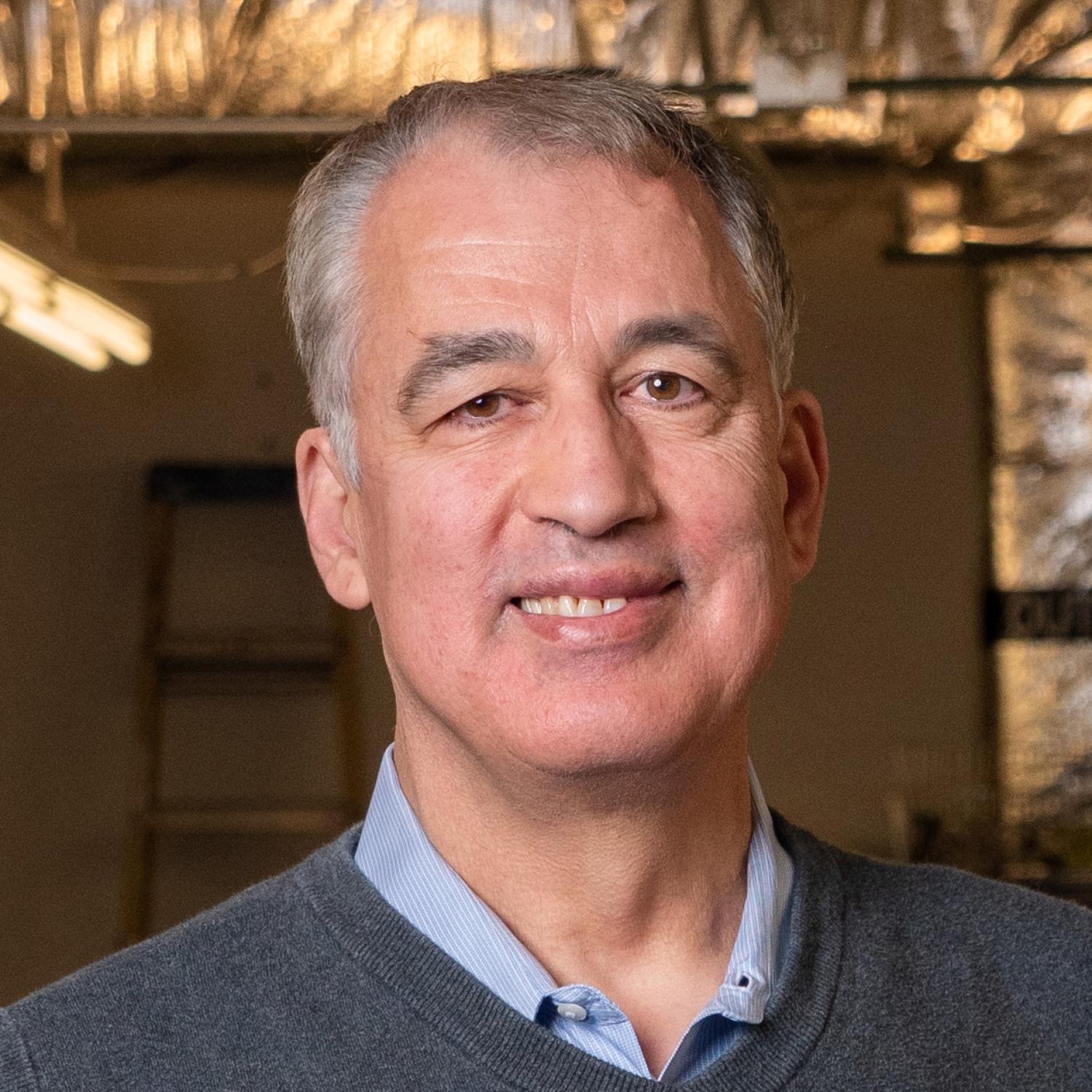
David Noyce is a Professor and Executive Director of the Traffic Operations and Safety (TOPS) Laboratory at the University of Wisconsin-Madison's Department of Civil & Environmental Engineering. He also serves as Associate Director of the Safety Research Using Simulation (SaferSIM) Center, a University Transportation Center. His work focuses on transportation safety, traffic operations, and automated/connected vehicle systems. Key roles include leading over $35M in research since 2003 through the TOPS Lab and advancing technologies like V2V/V2I communication, winter maintenance strategies, and work zone safety. Education: PhD (Texas A&M, 1999), MS (Civil Engineering, UW-Madison, 1995), MBA (UW-Whitewater, 1994), BS (UW-Madison, 1984). Research interests span traffic control devices, driver behavior analysis, crash reconstruction, and multi-modal transportation systems. He pioneered the national implementation of flashing yellow arrow signals and developed the Wisconsin Connected and Automated Transportation Consortium. Current projects include C-V2X localization frameworks, automated vehicle safety testing, and winter maintenance efficiency. Recognized with 20+ awards, including ITE and ASCE Fellowships and the Dr. Arthur F. Hawnn Professorship. His labs offer full-scale driving simulators and field-testing capabilities for real-world validation of innovations.
Professor Maria Craig is a distinguished academic and researcher at the University of New South Wales, Faculty of Medicine & Health, specializing in childhood diabetes research. She holds a prominent position as a Professor with extensive contributions to the field of pediatric endocrinology and diabetes, particularly focusing on type 1 diabetes in children. Professor Craig's educational background includes: MB BS from the University of Melbourne MMedSc(ClinEpid) from the University of Newcastle PhD from the University of Sydney FRACP (Fellow of the Royal Australasian College of Physicians) Professor Craig's research primarily focuses on childhood diabetes, with special emphasis on prediction and prevention of type 1 diabetes. She has a significant interest in the association between viruses and type 1 diabetes, collaborating with the Virology Research Group at Prince of Wales Hospital (POWH). Together with Professor Bill Rawlinson, she leads the viral theme for the multicentre ENDIA study (endia.org.au). As principal investigator for the CoRD trial, she is conducting a world-first phase 1 study using autologous cord blood for prevention of type 1 diabetes in children with islet autoimmunity. Additionally, she serves as principal investigator for the Australasian Diabetes Data Network (ADDN). Her research portfolio also encompasses the epidemiology of various forms of childhood diabetes (type 1, type 2, cystic fibrosis related diabetes and monogenic diabetes) and diabetes complications, in collaboration with Professor Kim Donaghue at the Children's Hospital at Westmead. Professor Craig's extensive publication record, including over 361 journal articles, demonstrates her leadership in advancing our understanding of childhood diabetes. Her recent work shows increasing focus on early detection methods, risk prediction models, technological interventions for diabetes management, and the complex interplay between viral infections and autoimmune diabetes development. She has been instrumental in developing clinical practice guidelines through her role as co-editor of the International Society for Pediatric and Adolescent Diabetes (ISPAD) guidelines. Professor Craig has received numerous prestigious awards recognizing her contributions to pediatric endocrinology and diabetes research: Australian Paediatric Endocrine Group Young Investigator's Award (1997) Asia Pacific Paediatric Endocrine Society Clinical Teaching Award (2008) Lifetime Honorary Member, Caring and Living as Neighbours (2013) Australian Diabetes Society Jeff Flack Diabetes Data Award (2019) Australian Paediatric Endocrine Group Norman Wettenhall Award for Research and Innovation (2019) Throughout her career, Professor Craig has demonstrated exceptional leadership in professional societies, having served as former president/treasurer of the Australasian Paediatric Endocrine Group (APEG) and currently as Scientific Convenor of the Asia Pacific Paediatric Endocrine Society Fellows school. Her work with the ENDIA study and Australasian Diabetes Data Network represents significant collaborative research efforts involving multiple institutions across Australia and internationally. Her principal investigator roles for major studies indicate substantial research funding support. Professor Craig leads several important research initiatives including the ENDIA study, the CoRD trial, and the Australasian Diabetes Data Network. These programs involve multidisciplinary teams of researchers, clinicians, and support staff working collaboratively to advance understanding and treatment of childhood diabetes. Her work at the intersection of virology and diabetes represents a unique and innovative approach to understanding the environmental triggers of type 1 diabetes.
Dr. Jimeng Sun is a Health Innovation Professor at the Siebel School of Computing and Data Science and Carle Illinois College of Medicine at the University of Illinois Urbana-Champaign. Co-founder of Keiji AI , he leads groundbreaking research at the intersection of artificial intelligence and healthcare, actively deploying clinical AI systems and developing frameworks like PyHealth and Therapeutics Data Commons . His research spans four major areas: Clinical AI Systems : Developing interpretable models (e.g., RETAIN) for patient similarity, temporal event prediction, medication recommendation, and clinical outcome forecasting Drug Discovery : Creating molecular optimization frameworks, drug-target interaction models, and AI-driven platforms Clinical Trials : Pioneering patient-trial matching, outcome prediction, and optimization frameworks using deep learning and graph neural networks Biosignal Analysis : Advancing sleep staging, seizure classification, and automated EEG/Cardiac monitoring systems With over 500 top-tier publications (including in Nature , NEJM AI , and leading AI conferences) and an h-index of 99, his work has been recognized with the Top 100 AI Leaders in Drug Discovery and Advanced Healthcare award. He maintains active collaborations with institutions like Massachusetts General Hospital , Medidata Solutions , and OSF Healthcare . His recent publications reveal a strong focus on: Reinforcement learning applications in medical data analysis Large language model adaptation for clinical tasks Knowledge graph integration with AI systems Synthetic data generation for healthcare Multi-modal learning in clinical contexts Explainable AI for medical applications Dr. Sun's lab ( Sunlab ) emphasizes practical impact over theoretical work, actively collaborating with hospitals and healthtech companies. He welcomes contributions from clinicians, researchers, and industry partners through initiatives like his AI for Health webinar series .
Professor Nancy W. Y. Law is a leading scholar in Learning Sciences and Technology at the University of Hong Kong's Faculty of Education . She has served as Founding Director of the Centre for Information Technology in Education (CITE) (1998-2013) and currently holds the Chair of Learning Sciences and Technology . Her career spans over 25 years of international comparative studies, policy analysis, and large-scale educational innovation. Current roles: Associate Dean (Strategic Development), HKU Key affiliations: Sciences of Learning Strategic Research Theme (co-convener) Research Expertise Her work focuses on technology-enhanced learning , digital literacy , knowledge building communities , and multilevel educational change . She pioneered network models of teacher innovation and socio-technical frameworks for sustainable pedagogical transformation, particularly in STEM education and Cyberbullying prevention . Scientific Leadership With over 25 major research grants (2000-2023) exceeding HK$50 million, she leads projects like: Learning and Assessment for Digital Citizenship Jockey Club Self-directed Learning in STEM Design-Aware Learning Analytics A Fellow of the International Society of Learning Sciences and recipient of the HKSAR Humanities and Social Sciences Prestigious Fellowship , she has supervised numerous international comparative studies including SITES 2006, ICILS 2013, and longitudinal digital citizenship research (2019-2021).
Pawan Adhikari is a Professor of Accounting at Essex Business School, University of Essex , where he serves as Director of Impact and Enterprise and Director of Essex Accounting Centre . He is an Associate Editor of the Journal of Public Budgeting, Accounting and Financial Management and a Executive Board Member of the Comparative International Governmental Accounting Research Network (CIGAR) . Previously, he led accounting reforms at Nepal’s Accounting and Auditing Standards Board and lectured at Nord University, Norway. PhD, Nord University Business School Fellow of the Higher Education Academy His research focuses on public sector accounting in developing countries, particularly accounting reforms , public value creation , and climate accountability . He explores how accrual accounting and participatory budgeting can enhance transparency in South Asian and African contexts. His work has influenced policy-making in Nepal and is recognized with the 2023 Best International Research Impact award by the University of Essex. Recent publications analyze wellbeing economies (2025), NGO accountability in disasters (2024), and climate budgeting (2023). He collaborates with institutions like the World Bank , European Commission , and British Academy , focusing on projects related to financial resilience , circular economy , and health sector accountability . Supervising 8 current PhD students, his advisees have produced work on topics like accrual accounting in Bangladesh and NGO accountability in Palestine . World Bank/PEFA Research Award African Accounting and Financial Association (AAFA) Award ESRC IIA Impact Fund GCRF and SeNSS Grants 2019 Best Postgraduate Supervisor (Essex)
Ben Fisch is an Assistant Professor of Computer Science at Yale University's School of Engineering & Applied Science. He is also the co-founder of Espresso Systems, a company focused on blockchain infrastructure. His research focuses on privacy and verifiability in decentralized systems like Bitcoin and Ethereum, with applications in digital finance and healthcare. Dr. Fisch received his B.A. from the University of Pennsylvania and completed his Ph.D. at Stanford University, where he worked with Dan Boneh in the applied cryptography research group. His educational background provided the foundation for his work at the intersection of cryptography, distributed systems, and economics. His research centers on leveraging cryptographic tools such as succinct non-interactive zero-knowledge proofs (zk-SNARKs), private information retrieval, and homomorphic encryption to address challenges in verifiable computation, verifiable storage, and verifiable fairness. He has made significant contributions to verifiable delay functions (VDFs) and proofs of replication, which have been adopted by major blockchain projects including Ethereum 2.0, Chia, and Filecoin. His work on Filecoin's Proofs of Replication has helped the network reach over 1.5 exabytes of storage capacity. His publication record shows a clear trend toward increasingly sophisticated cryptographic protocols for blockchain applications, with recent work focusing on data availability for Bitcoin rollups, efficient folding schemes for pairing-based arguments, and privacy pools with proof-carrying disclosures. His research bridges theoretical cryptography with practical implementations that have real-world impact in decentralized systems. His notable recognition includes: Best Paper Finalist at ACM CCS 2017 for 'Iron: Functional Encryption using Intel SGX' Dr. Fisch's research has led to significant technology transfer, most notably with his work on Verifiable Delay Functions (VDFs) sparking a multimillion dollar industry initiative through the VDF Alliance. His research on Proofs of Replication forms the basis of Filecoin's incentive layer and consensus protocol. His newer SNARK system Basefold is being used by several commercial products. He maintains active collaborations across academia and industry, with publications spanning top conferences in cryptography and security. As co-founder of Espresso Systems, Dr. Fisch leads a team developing next-generation blockchain infrastructure, particularly focusing on sequencing layers for rollups. His work bridges academic research with practical implementation, ensuring that theoretical advances in cryptography find real-world applications in decentralized systems.
Dr. Edward Wei is a Research Fellow at the University of Sydney Business School's Institute of Transport and Logistics Studies (ITLS), where he has been since 2018. His work focuses on transport modeling, urban mobility, and policy analysis, with an emphasis on post-pandemic commuting patterns and sustainable transport initiatives. He holds a PhD from the University of Technology Sydney (UTS), an MBus from Queensland University of Technology (QUT), and a BEc from UIBE in China. Dr. Wei's research explores the intersection of work arrangements (e.g., hybrid work, flexi-time) and their impacts on transportation demand, urban planning, and environmental sustainability. His recent projects include developing state-wide transport models, analyzing micro-mobility adoption, and assessing the role of non-traditional mobility service providers in MaaS frameworks. Key areas of expertise include discrete choice modeling, transport demand forecasting, and policy evaluation. His publications span over 30 peer-reviewed articles, with recent contributions emphasizing post-pandemic commuting behavior, zero-emission truck transitions, and sustainable university travel strategies. His academic contributions bridge theoretical transport economics with practical policy applications, addressing challenges such as car tolling regimes, public transport patronage optimization, and the integration of remote work patterns into urban planning frameworks.
Dr Sue Caton is a Senior Lecturer in the Department of Social Care and Social Work at Manchester Metropolitan University, within the Faculty of Health and Education. Her research focuses on social and health inequalities affecting people with intellectual disabilities, particularly digital inclusion, mental health medication decision-making, and pandemic impacts. She leads projects such as Digital Lifeline (NIHR-funded), Medications and My Mental Health (NIHR RfPB), and co-leads Our Digital Health (NIHR RfSC), emphasizing co-produced methodologies. Research Projects: Digital Lifeline: Evaluating tablet impact on social connections post-pandemic. Medications and My Mental Health: Empowering informed medication decisions for people with learning disabilities. Our Digital Health: Assessing digital health participation barriers. Key Expertise: Qualitative research, health inequalities, inclusive research design, and participatory methodologies. Her work addresses pandemic-related challenges faced by marginalized groups, including access to healthcare and social support. She has supervised four completed PhD students and currently mentors four PhD candidates exploring topics such as digital inclusion, animal-assisted interventions, and familial perspectives in parenting support. Dr Caton has led evaluations for initiatives like the Shared Lives 16+ project and the Us Too project on domestic abuse, demonstrating expertise in policy-informed research. Her contributions include over 50 peer-reviewed articles, focusing on digital participation, mental health, and pandemic resilience among people with intellectual disabilities. Awards: No specific scientific awards mentioned, though her work is funded by prestigious bodies like NIHR and UKRI. Labs/Teams: Collaborates with interdisciplinary teams including Dudley Voices for Choice, Liverpool John Moores University, and the Universities of Dundee, Warwick, and Birmingham City.
Associate Professor Bambang Trigunarsyah holds a position at RMIT University since 2018, affiliated with the School of Property, Construction and Project Management (PCPM). He earned his BSc in Civil Engineering from Colorado School of Mines, a Master's in Civil Engineering (Construction Management) from the University of Indonesia, and a PhD in Engineering Project Management from the University of Melbourne. His career spans industry roles, including project engineering in Indonesia's oil and gas sector, academic leadership at the University of Indonesia, and international teaching/research appointments at Queensland University of Technology (QUT) and King Fahd University of Petroleum and Minerals in Saudi Arabia. Research interests focus on post-disaster reconstruction, infrastructure project governance, constructability of infrastructure, and project management in developing countries. Notable projects include risk management frameworks using blockchain, circular economy in Saudi construction, and BIPV energy solutions. He actively supervises HDR students in areas like public-sector project success determinants and thermal environment studies. Bambang serves as Higher Degree Research Delegate Authority (HDR DA) for the School of PCPM and teaches postgraduate project management programs. Professional memberships include AIPM, PMI, and ASCE. His industry advisory roles include Indonesia's National Construction Service Development Board (2002-2007) and Australia-Indonesia Centre's Infrastructure Cluster (2016-2018). Recent research emphasizes BIM applications in infrastructure preservation, risk assessment methodologies, and climate-resilient construction. His work bridges theory and practice, addressing challenges in emerging economies and complex project environments.
Pedro Ferreira is a Full Professor at Carnegie Mellon University (CMU), holding a joint appointment in the School of Information Systems & Management at the Heinz College and the Department of Engineering and Public Policy within the College of Engineering. His research focuses on how technology influences education, media consumption, and peer effects, leveraging large datasets from randomized experiments. Ferreira has been recognized with the 2018 INFORMS Early Career Award and Top 17th worldwide research scholar ranking (2020–2022). He co-founded CMU's Initiative for Teaching and Education Analytics (iTEA) and advises numerous students in areas like AI/ML in education and media analytics. Education: BSc in Computer Science (IST), MSc in Electrical Engineering and Computer Science & Technology Policy (MIT), PhD in Telecommunications Policy (CMU). He has taught at MIT, IST, and invited roles at Católica-Lisbon and the University of Cambridge. Research Interests: Impact of digital technologies on education outcomes (e.g., smartphones in classrooms, video analytics), peer influence in media industries (e.g., binge-watching, recommender systems), and empirical methods using randomized experiments. Current projects include AI-driven education improvement and policy implications of AI/ML technologies. Notable Achievements: Over 15 peer-reviewed articles in top journals like Management Science and MIS Quarterly. Key grants include Gates Foundation funding for video-based education research and Koch Foundation support for online certification studies. He serves as Associate Editor for Management Science and previously for MIS Quarterly. Advising & Grants: Advised 23 PhD students, many now in academia and industry. Current students research facial recognition in education and hybrid recommender systems. Ferreira has led grants totaling millions, including studies on GDPR's impact on piracy tracking and worldwide VoD availability. Professional Service: Organized conferences like the Symposium on Statistical Challenges in eCommerce Research (SCECR). Served on NSF review panels and CMU’s Portugal PhD program steering committee.曾参与葡萄牙知识社会局(UMIC)的国家级政策制定,推动宽带学校项目。
Niels van Oort is an Associate Professor of Public Transport at Delft University of Technology (TU Delft), co-director of the Smart Public Transport Lab, and affiliated with the Department of Transport & Planning within the Faculty of Civil Engineering and Geosciences. His work focuses on public transport planning, data-driven design, and societal impacts including inclusiveness, land-use, and sustainability. He holds a dual role as a part-time consultant via his company Van Oort Mobility Consultancy since 2020. Education: MSc in Public Transport from TU Delft (2003), PhD in Service Reliability in Public Transport (2011). Professional experience includes roles at HTM (public transport operator), MIT (2009), and Goudappel Coffeng consultants (2007–2012). Transitioned to academia as a part-time assistant professor at TU Delft in 2012, becoming full-time in 2018. Research emphasizes network optimization, timetable reliability, micromobility, and first/last mile solutions. Key areas include pandemic impacts on transport behavior, digital inequality in mobility access, and sustainable transport policies. Supervises PhD students on integrated networks and passenger behavior. Teaching includes courses on public transport operations, advanced modelling, and transport networks. Active in academic publishing and conferences, with over 20 peer-reviewed articles since 2010. Engaged in interdisciplinary labs like SUM Lab (Smart Urban Mobility) and contributes to public discourse through media and consultancy. Labs/Teams: Smart Public Transport Lab (co-director), SUM Lab, and Delft Transport Modelling Group. Grants and projects focus on data-driven solutions for public transport efficiency and equity.
Ben McWilliams is a Research Fellow at Bruegel, focusing on Energy and Climate Policy . His work combines data-driven analysis to critique and inform European public policy, with particular emphasis on energy sector decarbonisation , industrial policy , and hydrogen-based economic geography . Recently, he has analyzed European energy crises and proposed policy responses , while tracking clean tech trends and natural gas dynamics across Europe. Education : MSc in Economic Policy (Utrecht University, thesis on carbon taxation in British Columbia); BSc in Economics (University of Warwick) with exchange year at Monash University Research Focus : Energy Security , Climate Policy , Hydrogen Economics , and Industrial Decarbonisation Key Contributions : Co-authored 15 major analyses (2021-2025) on topics including EU-Russia energy divorce , transatlantic clean investment , and hydrogen strategy Awards : No scientific awards mentioned in available records Affiliations : Bruegel (Affiliate Fellow), dual citizenship (British/Dutch)
Brian D. Taylor is a Professor of Urban Planning and Public Policy at UCLA’s Luskin School of Public Affairs, and a Research Fellow at the Institute of Transportation Studies. His academic roles include Director of the UCLA Institute of Transportation Studies and former leadership of the Lewis Center for Regional Policy Studies. Education: PhD in Urban Planning (UCLA), MCP in City and Regional Planning (UC Berkeley), MS in Civil Engineering (UC Berkeley), and BA in Geography (UCLA). Research focuses on transportation equity, finance, policy, and behavior. Key areas include post-pandemic travel trends, transit ridership decline, transportation pricing, and the socio-political dimensions of urban mobility. Recent work explores falling public transit use, pandemic-induced activity changes, and equity impacts of new mobility systems. Publications highlight studies such as The Drive for Dollars (Oxford Press, 2023), analyzing freeway financing and urban transformation, and influential papers on congestion economics and transit fiscal challenges. Over 50 students advised, many now leading academics and practitioners. Awards include the YPT Excellence in Innovation Award (2021) and recognition as a Top 10 Transportation Thought Leader (2016). Teaching includes courses on transportation economics, land-use integration, and shared mobility policy. Administrative leadership roles span institutes and transportation centers across California.
Moncef Krarti is a Professor in the Department of Architectural Engineering at the University of Colorado Boulder, within the College of Engineering and Applied Science. His professional affiliations include roles as a Professional Engineer (PE) and LEED-AP. Krarti holds a Ph.D. (1987), M.Sc. (1985), and two Diplôme d'Ingénieur degrees (France, 1984/1982). His research focuses on evaluating energy efficiency technologies, optimizing building designs, and analyzing renewable energy systems. Key interests include HVAC controls, building retrofit strategies, and multi-benefit energy programs. Krarti has authored influential textbooks like Energy Audit for Building Systems and Energy Efficient Building Electrical Systems . Recent articles emphasize smart glazing systems, dynamic insulation, and geothermal heat pumps. His work addresses global challenges like urban heat islands and net-zero communities. Krarti has received prestigious awards including ASME Fellow (2015) and a 2023 Fulbright U.S. Scholarship. His research spans residential and commercial sectors, with case studies in Saudi Arabia, France, and the U.S.
Prof. Dr. Mareike Kühne is a full-time Professor of Business Administration at the Department of Business and Management, Brandenburg University of Technology. With a unique interdisciplinary background spanning economics, business administration, philosophy, and neuroscience, she bridges affective dimensions with economic rationality to develop holistic decision-making frameworks. Doctorate in Economics, Otto von Guericke University Magdeburg (1992-1997) Fulbright Scholar, San Diego State University (1997-1998) Studies in Philosophy, Humboldt University (2007-2011) Doctoral and Master’s in Neuroscience, Berlin School of Mind and Brain (2011-2013) Her research integrates insights from psychology and neuroscience into capital market-oriented corporate reporting, corporate governance, and normative rationality frameworks. She critiques current economic models for neglecting the embodied nature of cognition, advocating for a more nuanced understanding of rationality that incorporates lived experience. Her 15 most recent works span sustainability reporting (2025), neuroeconomics (2021), M&A disputes (2017), and IFRS standard evolution (2005-2012). These publications highlight her focus on reconciling traditional accounting principles with interdisciplinary approaches to decision-making. Fulbright Scholar (1997-1998) Prof. Kühne has taught at Humboldt University, HHL Leipzig, and the Berlin School of Mind and Brain. She actively participates in professional organizations including the German Society for Philosophy, European Accounting Association, and European Financial Reporting Advisory Group. Her work emphasizes the practical impact of neuroscientific findings on economic policy and standard-setting.