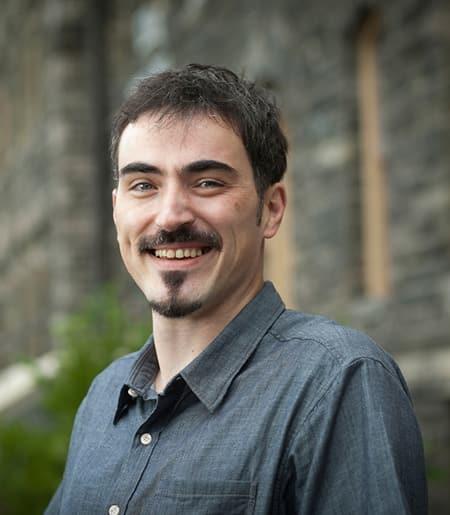
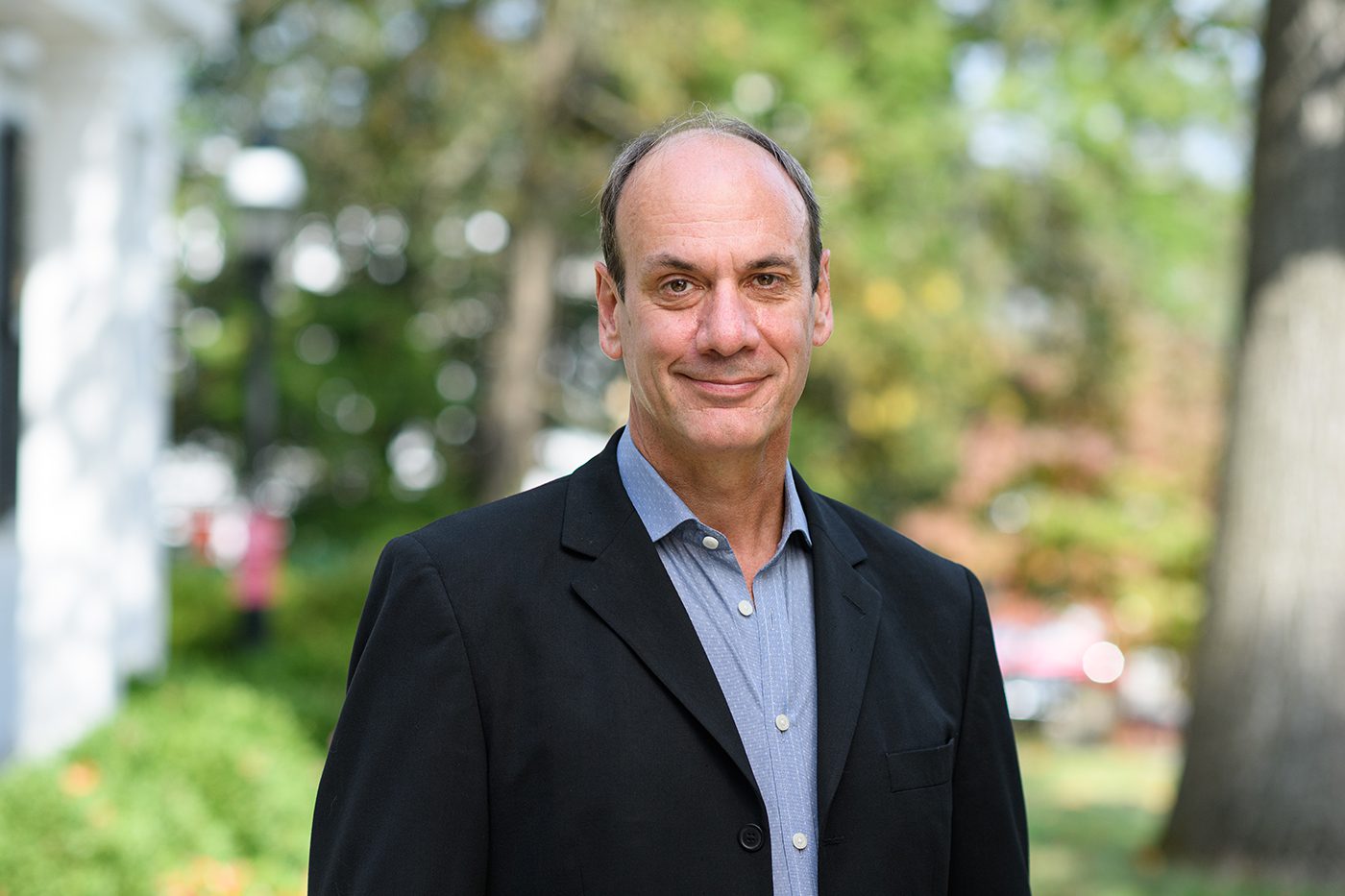
Miloje Despic is an Associate Professor in the Department of Linguistics at Cornell University , affiliated with the College of Arts and Sciences . His research spans theoretical syntax , morphology , and semantics , focusing on cross-linguistic variation and the syntax-morphology interface. Research Focus : Cross-linguistic variation in functional elements (e.g., articles), syntax-morphology interactions (e.g., hybrid agreement, clitic-affix distinction). Languages Studied : Slavic (Serbian, BCMS), Turkic, Algonquian (Cheyenne). Publication Trends : Recent work addresses reflexive possessive agreement in Mongolian, nominal ellipsis in Serbian, cyclic and multiple agreement in Cheyenne, markedness in Algonquian theme signs, and non-intersective adjectives. His research intersects syntactic theory , morphological anomalies , and semantic interpretation .
Prof. Stefan Müller is a Professor at the Institute for German Language and Linguistics , part of the Faculty of Languages and Literature at Humboldt University. His research focuses on syntax, formal grammar theories (especially Head-Driven Phrase Structure Grammar), and computational linguistics. He leads the CoreGram Project , developing cross-linguistic grammars using HPSG formalisms. His work includes analyses of German syntax, constituent order, anaphoric binding, and register phenomena. He is also involved in open-access publishing initiatives through Language Science Press . Contact: St.Mueller@hu-berlin.de . Education and academic background details are not explicitly stated in the provided text, but his professional trajectory indicates deep expertise in theoretical linguistics. His research spans multiple languages including German, Mandarin, and Persian, with a focus on grammar implementation and syntax-semantics interfaces. Key contributions include the Head-Driven Phrase Structure Grammar Handbook (2024), analyses of headless nominal structures in German (2022), and exploration of large language models' theoretical implications (2024). He actively engages in interdisciplinary projects bridging formal grammar and computational methods.
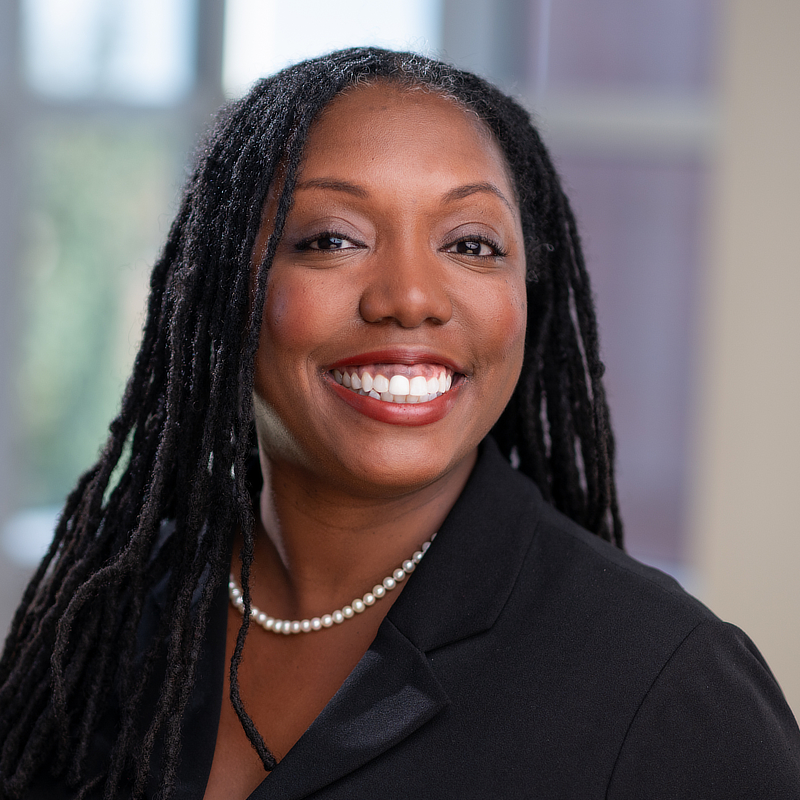
Danielle T. Cooper is an Associate Professor at the University of New Haven , affiliated with the Henry C. Lee College of Criminal Justice and Forensic Sciences and the Criminal Justice Department . She also serves as the Director of Research for the Tow Youth Justice Institute and Chair of the Criminal Justice Undergraduate Committee . Education Ph.D. in Criminology, Law, & Society, University of Florida, 2015 M.A. in Criminology, Law, & Society, University of Florida, 2011 B.S. in Justice Systems, Truman State University, 2009 Dr. Cooper’s research focuses on youths and young adults , juvenile justice policy reform , sex offender registration policies , and police-community dynamics . Her work emphasizes restorative justice , systemic equity , and prevention strategies for marginalized communities. Recent publications explore diversion programs , economic impacts of sex offender registries , and media narratives in criminal justice . Her awards highlight contributions to diversity, equity, and inclusion , as well as leadership development . Scientific Awards 2019 Faculty of the Year Award 2021 MO-KAN-NE TRIO Achiever Alumni Award 2021 Faculty Excellence in DEI 2022 Martin Luther King, Jr. Vision Faculty Award 2024 RAND Pardee Fellowship She has secured grants for diversionary services and youth-police relations , and her media commentary addresses youth violence , census participation , and social justice .
Professor Adam Yuet Chau is a Fellow and Director of Studies at St John's College and holds the Professor of the Anthropology of China position at the Faculty of Asian and Middle Eastern Studies, University of Cambridge . His academic journey includes training at Stanford University (PhD in Anthropology, 2001) and teaching roles at Oxford and SOAS before joining Cambridge in 2008. Focus on Chinese religions and their social dimensions Specializes in ritual theory and cultural transformations Develops comparative frameworks for understanding religious practices His research spans religion under socialism , hosting in political/religious contexts , and ritual polytropy . Recent projects include editing Chinese Religious Culture in 100 Objects and analyzing 'spheres' (界) in Chinese society . Publications like Miraculous Response (2006) and Religion in Contemporary China (2011) establish him as a key figure in religious anthropology. Current and past PhD/MPhil students explore topics from temple festivals in Taiwan to religious subjectification . He actively reviews for leading presses (Cambridge, Oxford, Harvard) and journals ( Ethnos , Modern China ), and participates in international academic workshops.
Emily A. Gasser is an Associate Professor in the Linguistics Department at Swarthmore College , specializing in Austronesian languages , Wallacea & northwest New Guinea , and language documentation . Her research spans phonology, morphology, typology , and language contact , with a focus on endangered languages and computational phylogenetics . She is currently on sabbatical for the 2025-26 academic year, conducting fieldwork in Manokwari, writing a Wamesa grammar, and developing new courses. Research Interests include: Language documentation and fieldwork in Austronesian and Papuan-speaking regions Phonological variation and vowel harmony systems Typological surveys of adnominal possession and morphological structures Interaction between prosodic features in media speech and socio-phonetics Computational tools for historical linguistics and classifier system analysis Recent publications focus on vowel harmony , prosodic perception , and possessive constructions across Wallacea and Northwest New Guinea. She edits volumes on Austronesian-Papuan language contact and contributes to open-access research initiatives.
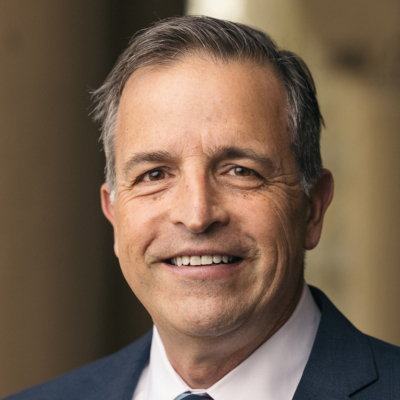
George Triantis is the Richard E. Lang Professor of Law and Dean of Stanford Law School. He joined Stanford's faculty in 2011 and has held leadership roles including Senior Associate Vice Provost for Research (2020–2024), Charles J. Meyers Professor of Law and Business (2015–present), and inaugural director of the Stanford Cyber Initiative (2014–2017). Prior to Stanford, he was the Eli Golston Professor of Law at Harvard Law School and held positions at the University of Chicago, University of Virginia, and University of Toronto. His expertise lies in contracts, commercial law, bankruptcy, and the intersection of law with economics and business. Education: B.A. (University of Toronto, 1980), LL.B. (University of Toronto, 1983), LL.M. (University of Virginia, 1986), J.S.D. (Stanford Law School, 1989). Research focuses on contract design principles, bankruptcy processes, and bargaining power dynamics. He has pioneered applying options theory to contracts and authored foundational work on debtor-in-possession financing. His scholarship addresses how economic theories influence legal frameworks in commercial transactions and public policy. Awarded memberships include the American Academy of Arts & Sciences, World Commerce and Contracting Association, and American Law Institute. He taught courses such as bankruptcy law, contract design, and global legal practices, including a program in São Paulo with FGV Brazil. Led initiatives in research integrity, international engagements, and risk management at Stanford. Collaborates with the Rock Center for Corporate Governance and contributes to legal policy debates on innovation and disruption in transactional law.
Bonnie Effros is Professor and Head of the Department of History at the University of British Columbia since 2022. With a PhD from UCLA and BA from Brandeis, her academic journey spans prestigious roles at University of Liverpool, University of Florida, Binghamton University, and Southern Illinois University. A Fellow of the Royal Historical Society and recipient of the French Colonial Historical Society’s Alf Andrew Heggoy Book Prize, she shapes historical discourse through her work on archaeology, gender, and colonial legacies. PhD, History, UCLA (1994) MA, History, UCLA (1990) BA, History, Brandeis University (1987) Her research bridges late antique/early medieval archaeology and 19th-century antiquarianism , focusing on France and its colonial possessions. Recent projects examine Père Camille de la Croix ’s contested Christian archaeology in France and Salomon Reinach ’s assimilation politics. She connects material culture to gender dynamics, Christian conversion debates, and colonial power structures through extensive fieldwork in Vatican archives and French/British collections. Key trends in her 15 most recent publications include: analyzing 19th-century museum-building in Algeria; investigating gender through Merovingian burial practices; and exploring colonial narratives via artifact circulation. Her work often intersects with museum studies , gender archaeology , and historiographical critique . French Colonial Historical Society’s Alf Andrew Heggoy Book Prize (2019) SSHRC Insight Development Grants (2023-2025, 2025-2027) Royal Historical Society Fellowship University of Florida’s International Educator of the Year (2014) As a graduate supervisor, Effros mentors students in late antique/early medieval European history with colonial contexts, emphasizing Latin proficiency and multilingual research. She co-edits the Brill Series on the Early Middle Ages and Studies in Late Antiquity , while serving on the Medieval Academy of America’s Council. Her pandemic-era work on Liverpool silversmith Joseph Mayer’s collections demonstrates continued engagement with cultural patronage and museum provenance issues.
Oliver Bond is a Reader in Linguistics (Associate Professor) at the University of Surrey, affiliated with the Surrey Morphology Group (SMG) within the School of Literature & Languages. He holds a PhD from the University of Manchester and specializes in linguistic typology, morphology, syntax, and language documentation. His research focuses on the systemic properties of language, particularly in African and Himalayan languages, exploring features like agreement systems, case marking, and morphological complexity. Key roles include Deputy Director of SMG and PhD Coordinator. His research projects include studies on Nuer (South Sudan/Ethiopia), Tibeto-Burman languages of Nepal, and prominent internal possessors. He has received a prestigious British Academy Award for his work on language evolution and analogy in morphological change. Bond supervises PhD students in areas such as morphology, syntax, and language documentation. Notable former students include Dávid Győrfi and Tatiana Reid. His publications span typological studies, language documentation, and theoretical morphology, with recent work on contact effects in Tibeto-Burman languages and negation systems in African languages. Bond’s contributions include collaborative projects like the Nuer Literacy Initiative and the Manang Languages Project. He actively publishes in journals like Journal of Linguistics and Linguistic Typology , and maintains a comprehensive resource, the Nuer Lexicon .
Dr. Vikram Nanda is the O.P. Jindal Distinguished Chair Professor of Finance at the Naveen Jindal School of Management, University of Texas at Dallas. He holds a PhD in Finance from the University of Chicago, MBA from Yale University, and a Bachelor of Technology from Indian Institute of Technology Kanpur. His research focuses on corporate finance, financial institutions, and behavioral finance, with emphasis on topics like hedge fund strategies, managerial overconfidence, and corruption's economic impacts. Key research highlights include studies on multi-market trading (best paper award), litigation risk effects on contracting, and cryptocurrency bubble detection. He has served on editorial boards for Journal of Financial Research and Financial Letters , and contributed to non-academic publications like Barron’s . His work spans 30+ years across top-tier institutions including USC, University of Michigan, and Georgia Tech. Current research explores AI's role in investment management, gender diversity in executive roles, and legal frameworks affecting corporate behavior. Awards include Smith Breeden Prize nominations and Q-Group research grants. Educations: PhD (Chicago), MBA (Yale), B.Tech (IIT Kanpur) Affiliations: Financial Intermediation Research Society, European Finance Association Labs/Teams: Behavioral Finance Research Group, Corporate Governance Initiative He advises on strategic financial decisions and has authored/coauthored over 50 publications. Recent work examines environmental, social, and governance (ESG) investment strategies and the impact of trade secret laws on financial opacity.
David Kazanjian is a Professor of English and Comparative Literature at the University of Pennsylvania's School of Arts & Sciences. He serves as Graduate Chair for the Comparative Literature and Literary Theory program (2024-25, 2026-2028), and has held prestigious fellowships including the Institute for Advanced Study (Princeton, 2026), Vartan Gregorian Center (NYPL, 2025), and Berlin Prize. His scholarship bridges transnational American studies, Armenian diaspora studies, political philosophy, and postcolonial theory. PhD in Rhetoric, University of California, Berkeley M.A. in Critical Theory, University of Sussex B.A. in Modern Thought and Literature, Stanford University Kazanjian's research examines dispossession through legal archives, transnational Armenian cultural politics, and 19th-century social movements. His work spans early American literature, Latin American colonialism, trauma theory, and Marxist analysis of freedom discourses. Recent publications address dispossession in colonial New England/Yucatán, Armenian diaspora representation, and improvisational freedom practices in the Atlantic world. His editorial roles include co-editing NYU Press's America and the Long 19th Century series and Social Text journal. 2022 Penn Provost's Award for Outstanding Mentorship of Ph.D. Students Berlin Prize, American Academy of Berlin As co-director of the Tepoztlán Institute for Transnational History of the Americas (2017-19) and affiliations with Penn's Gender & Sexuality Studies, Latin American Studies, and Middle East Center, Kazanjian fosters interdisciplinary scholarship. He teaches courses on capitalism theories, early American literature, and critical theory. His lab and collective work includes the Tepoztlán Institute and Social Text editorial collective, focusing on transnational historical methods and diasporic cultural analysis.
Prof. Dr. Karin Polit is a full professor and head of the Department of Social and Cultural Anthropology at the Asia-Orient-Institut, Faculty of Humanities, University of Tübingen. She has been in this position since April 2018 and is actively involved in research, teaching, and academic supervision. Her work is deeply rooted in ethnographic fieldwork in South Asia, particularly India. Education: B.A. in Anthropology, James Cook University, Australia (1998) Magister Artium in Anthropology (2001) Promotion (Ph.D.), University of Heidelberg (2006), topic: 'Ethnographic Reflections on Practices of Gender and Agency among Dalit Women in the Central Himalayas' Habilitation and Venia Legendi in Anthropology, University of Heidelberg (2015) Her research focuses on ritual, performance, gender, caste, medical anthropology, youth culture, and cultural heritage . She explores how global and local inequalities shape education, art, and resistance, with special attention to mental health, reproductive loss, and media in New Delhi and the Himalayas. Her interdisciplinary approach integrates ethnography, film, and sensory studies. The recent publications reflect a strong trend in ritual dynamics, embodiment, heritage politics, and youth agency in South Asia. Her work often examines how tradition and modernity intersect in religious festivals, political contexts, and personal identity. She frequently collaborates with scholars such as Prof. Gabriele Alex and Christiane Brosius. Scientific Awards and Recognitions: Venia Legendi Award, University of Heidelberg (2015) Margarete von Wrangell Fellow, South Asia Institute (2014–2018) Fellow, Jawaharlal Nehru Institute of Advanced Study, JNU, New Delhi (2012–2013) Baden-Württemberg Certificate for University Didactics (since 2012) Prof. Polit has supervised numerous Master’s and PhD students, including Pallabi Roy and Gaurav Lamichhane, and has led research projects funded by the DFG and international networks like AROGYAM. She has also contributed to academic service through editorial roles and guest professorships at institutions in Germany, India, and the Netherlands. Her audiovisual work, including ethnographic films, enhances public engagement with anthropological knowledge. She leads the department's research on South Asian societies and continues to expand collaborative networks across Europe and South Asia.
PD Dr. Lutz Rzehak is an academic staff member at the Institute for Asian and African Studies (IAAW) within the Faculty of Humanities at Humboldt University of Berlin, serving as a Teacher for special tasks specializing in Modern Iranian languages and the ethnography and cultural history of Afghanistan and Central Asia. His educational background includes: Oriental Studies/History from the State University of Leningrad (1985) Doctorate in Iranian Studies, Humboldt University of Berlin (1991) Habilitation in Central Asian Studies / Iranian Studies, Humboldt University of Berlin (2001) Dr. Rzehak's research spans Central Asian Studies , Iranian Studies , Ethnography , and Linguistics , with fieldwork focusing on Baloch, Pashtun, and Tajik communities. His work examines language evolution, social structures, and cultural practices through historical and contemporary lenses, particularly regarding Soviet influence and post-Taliban Afghanistan. Key contributions include grammatical analyses of Iranian languages and ethnographic studies of religious rituals and tribal systems. His recent publications (2016-2021) reveal consistent focus on Iranian language dynamics (especially Dari and Pashto), ethnic identity politics in Afghanistan, and cultural history of Central Asia. These works address language change mechanisms, ethnic consolidation strategies, and the interplay between tradition and modernity, often utilizing comparative linguistic and ethnographic methodologies. His scientific awards include: Heisenberg Fellow of the German Research Foundation Dr. Rzehak has held significant research positions including Research Associate in the Crossroads Asia Competence Network (2011-2016) and Heisenberg Fellow (2002-2011). While his CV does not list formal PhD advisees, his language lecturing and research supervision have mentored numerous students in Central Asian and Iranian studies through course instruction and fieldwork guidance. He has been actively involved in the Crossroads Asia Competence Network, a major interdisciplinary research initiative examining transregional connections and historical trajectories across Central, South, and West Asia.
Dr. D. Vance Smith is a Professor at Princeton University, affiliated with the Humanities Council. He specializes in medieval literature, postcolonial theory, and African studies, with a focus on the intersections between medieval European thought and African colonial and postcolonial contexts. His work bridges anthropology, philosophy, and literary studies, examining themes such as colonial structures, ecocriticism, and decolonial thought. Smith’s research explores the African foundations of European intellectual history, as seen in his upcoming book Atlas’s Bones: The African Foundations of Europe . He also investigates environmental and human impacts of African conservation practices and medieval legal frameworks. His earlier works include Arts of Dying and Arts of Possession , analyzing medieval concepts of mortality and dwelling. His current projects include Blood Flowers (on African environmental policies) and Love Without Object (on mysticism). His articles span topics like medieval grammatical theory, Piers Plowman analysis, Chaucerian tragedy, and gender studies. Smith has edited volumes on medieval cultural studies and co-authored works on theoretical legacies of the Middle Ages. He holds awards including the Guggenheim Fellowship and Old Dominion Professorship. Smith engages in community work in Trenton, serving on arts and theater boards. He emphasizes radical pedagogy and decolonial praxis, reflecting his dual heritage of growing up in Africa and training in Western medieval studies. His interdisciplinary approach challenges traditional boundaries between medieval and postcolonial studies.
Professor Julia Schlüter is a distinguished academic in the Chair of English Linguistics within the Humanities Faculty at the University of Bamberg, Germany. She has served as Senior Lecturer at the Chair of English Linguistics and Language History under Prof. Manfred Krug since June 2008, holding the title of Professor following her habilitation in 2008. Her institutional profile demonstrates deep commitment to both research and teaching innovation, particularly through her leadership of the KorPLUS project and development of open educational resources for corpus linguistics. Her research interests span corpus linguistics for English language learners, empirical methods for studying language variation and change, and the application of corpus methods to teaching. She specializes in examining grammatical, phonological, and lexical differences between British and American English across historical periods from Middle English to present-day usage. Her work investigates phonological variation (particularly phonotactically controlled alternations), morphological change, and syntactic variation through corpus analysis, with special attention to functional grammar and grammaticalization theory. Professor Schlüter's recent publications (2022-2025) reveal a strategic evolution in her research focus, with increasing emphasis on the intersection of corpus linguistics and digital education. While maintaining her foundational work in historical English linguistics, she has developed significant expertise in applying corpus methods to language teacher education and evaluating AI writing tools. Her work demonstrates consistent methodological innovation, moving from traditional corpus analysis to blended learning approaches and digital educational resource development. Her scientific recognition includes: Winner of the 2025 Teaching Innovation Prize from the International Society for the Linguistics of English for the KorPLUS project University of Bamberg Prize for outstanding habilitation (2009) Lise Meitner Programme post-doctoral scholarship (2005-2006) Rectorate Prize from University of Paderborn for outstanding Ph.D. thesis (2005) Multiple DAAD scholarships for international study Professor Schlüter actively supervises doctoral research, currently guiding three Ph.D. candidates (Katharina Deckert, Aklima Nahar, and Nikolai Beland) while having successfully completed supervision for several others. She leads the KorPLUS project (2021-2025), funded by the Stiftung Innovation in der Hochschullehre, which develops open educational resources for corpus linguistics. Her research has been consistently supported by the German Research Foundation (DFG) and other funding bodies throughout her career. She heads the KorPLUS team (with Carina Großmann and Katharina Deckert) which develops the interactive Open Educational Resource platform for corpus linguistics. Her YouTube channel offers video tutorials on corpus basics, and she has created the Video Podcast Series "How to Update your Grammar" for English teachers. She regularly organizes in-service teacher trainings and collaborates with the Virtual Linguistics Campus at RWTH Aachen University to deliver her educational materials globally.
Yanliu Huang is a Professor and Department Head of Marketing at LeBow College of Business, Drexel University. She holds a PhD in Marketing from the Wharton School, University of Pennsylvania, and combines field and lab studies to address critical marketing and consumer behavior questions. Education: PhD in Marketing (Wharton School, University of Pennsylvania) Her research focuses on new technology in marketing , in-store decision making , consumer planning , and consumer welfare . She explores how digital interfaces influence planning, the psychology of indulgent choices, and the impact of store layouts on unplanned purchases. Recent publications examine voice-based shopping interactions , emoji usage in communication , and technology’s role in financial decision making . Her work bridges marketing science , neuroscience , and behavioral economics . Scientific Awards: MSI/H. Paul Root Award, Dean’s Excellence in Research Award, ExCITe Research Funding Award, Best Retail Proposal Award (Society for Marketing Advances) Editorial Roles: Associate Editor at Service Science; Editorial Review Board member at Journal of the Academy of Marketing Science, Journal of Consumer Psychology, and Journal of Retailing Dr. Huang’s research has been featured in Harvard Business Review , Wall Street Journal , and The Economist , with grants supporting studies on digital interfaces and consumer welfare.