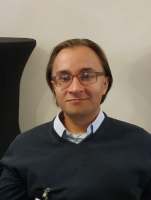
Łukasz Remisiewicz is a Lecturer at the Department of Sociological Theory and Social Research Methodology , Institute of Sociology , Faculty of Social Sciences , University of Gdańsk . He serves as the Editorial Secretary of the journal Miscellanea Anthropologica et Sociologica . His research spans multiple interdisciplinary domains , including sociology of science, philosophy of science, sociology of education, neurosociology, and sociology of examination. He explores the social contexts of academic assessment, cognitive development, and biological dimensions in sociological theory. His 15 most recent publications (2025-2017) focus on evaluative cultures, academic metrics, habilitation processes, family rituals, climate change discourse, disability marginalization, and biology-sociology interfaces. These works reflect his commitment to merging sociological theory with empirical and interdisciplinary analysis. Scientific Awards & Grants : Florian Znaniecki Award, 1st degree (2014) Honorable Mention, Polish Academy of Sciences (2016) Rector's Awards (1st, 2nd, 4th degrees, 2016/17–2024/25) Ministry of Science and Higher Education Scholarship (2017/18) Fulbright Junior Research Award (2018–2019) Mayor of Gdańsk & Gdańsk Scientific Society Award (2024) Florian Awards for 'Discovery of the Year' (2023) and 'Captain of Sociology' (2024) He is an active participant in international conferences, including ESA , Neurodidactics Symposium , and CHER Annual Conferences , presenting on topics ranging from emotional stratification to neurosociological models.
SWPS University of Social Sciences and HumanitiesPoland
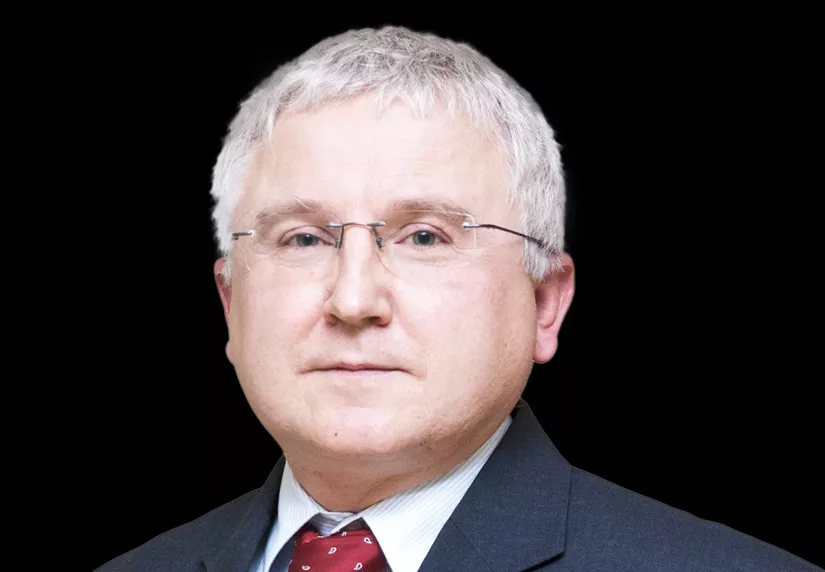
Professor Marek Piechowiak is a distinguished academic at SWPS University of Social Sciences and Humanities, where he serves as Head of the Department of Public Law and Legal Theory within the Faculty of Psychology and Law in Poznań. A renowned lawyer and philosopher, he specializes in philosophy of law and international and constitutional protection of human rights. With extensive experience in human rights institutions and visiting professorships across Europe, Professor Piechowiak has established himself as a leading expert in constitutional law, dignity theory, and human rights frameworks. Professor Piechowiak's research interests focus on the philosophical foundations of law, with particular emphasis on human dignity, constitutional theory, and the relationship between morality and law. His work explores the concept of dignity from multiple perspectives, analyzing its role in constitutional interpretation and human rights protection. He has made significant contributions to understanding the axiological basis of Polish law, the concept of the common good in constitutionalism, and the philosophical underpinnings of natural law theory. His scholarship bridges legal theory with practical human rights applications, examining how constitutional frameworks can address social exclusion and protect fundamental rights. His extensive publication record, comprising over 120 academic articles, reveals a consistent focus on dignity as a central concept in constitutional law and human rights. Professor Piechowiak's recent work has increasingly examined the philosophical dimensions of dignity, its various interpretations in constitutional contexts, and its relationship to justice and legal theory. His scholarship demonstrates a progression from practical human rights applications to deeper philosophical inquiries into the foundations of legal systems, with notable contributions on Plato's philosophy, Thomas Aquinas' natural law theory, and contemporary constitutional dilemmas. Ad hoc judge of the European Court of Human Rights Research fellowships at Netherlands Institute for Advanced Study Hague Academy of International Law Netherlands Institute of Human Rights International Institute of Human Rights in Strasbourg Professor Piechowiak has made significant contributions to legal education, having previously served as the first Commissioner for Children's Rights in Poland after the position was established in 2000. He teaches constitutional law, human rights, and theory and philosophy of law at the Faculty of Psychology and Law in Poznań, and doctoral courses in axiology of law and philosophy at SWPS University in Warsaw. His academic career reflects a commitment to bridging theoretical legal scholarship with practical human rights applications.
Małgorzata Augustyniak serves as a Professor in the Department of Constitutional Law and State Theory at the Faculty of Law and Administration, University of Warmia and Mazury in Olsztyn, Poland. Her academic profile reflects deep engagement with legal theory, constitutional frameworks, and political philosophy, with particular emphasis on the philosophical underpinnings of legal systems and human rights. She maintains an active scholarly presence through the university's research repository and international academic databases. Her research interests span constitutional law, political philosophy, and human rights theory, with notable focus on French legal traditions, environmental protection jurisprudence, and the conceptual foundations of solidarity in legal systems. Her work frequently examines Hannah Arendt's political thought, natural law theories, and the interplay between constitutional freedoms and state obligations. The recurring themes in her scholarship demonstrate consistent exploration of duty, protection mechanisms, and the role of legal institutions in safeguarding societal values. Professor Augustyniak's publication trends reveal sustained scholarly productivity across multiple domains, with recent work addressing contemporary challenges including pandemic-era legal adaptations, sustainability frameworks, and direct democracy mechanisms in Poland. Her interdisciplinary approach connects legal theory with philosophical inquiry, particularly evident in her analyses of French jurisprudence and constitutional interpretation methodologies. The thematic evolution shows increasing attention to environmental law and future-oriented legal concerns while maintaining foundational work in constitutional theory. She has supervised 12 doctoral theses, indicating substantial commitment to academic mentorship and the development of next-generation legal scholars. Her academic service includes participation in international conferences such as the Polish-Lithuanian Colloquium addressing state and legal challenges during the Covid-19 pandemic, reflecting active engagement with current global issues affecting legal systems.
Prof. Dr. Hab. Krzysztof Biliński is a distinguished academic at the University of Wrocław's Institute of Polish Philology, serving as a Full Professor since 2008. He specializes in the history of Polish literature, particularly focusing on Romanticism, Positivism, and Young Poland eras. His research emphasizes religious themes, especially the influence of Emanuel Swedenborg's thought on poets like Adam Mickiewicz and Juliusz Słowacki. He also explores literary theory, including the works of Yuri Lotman and Charles Sanders Peirce, and has collaborated internationally. Affiliations: Head of the Department of the History of Positivism and Young Poland Literature (since 2011), member of the University Senate since 2008, and lecturer at the Old Catholic Church's theological seminary. Education: Doctorate and habilitation from the University of Wrocław, with prior teaching experience at high schools in Wrocław. Research Interests: Biliński's work bridges literary history and religious studies, analyzing biblical motifs in Polish literature and the interplay between theology and art. He has published extensively on figures like Maria Konopnicka, exploring their spiritual and cultural contexts. His theoretical contributions include semiotics and comparative literature studies. Publications: Over 150 works, including monographs like Literary Manifestations of Catholic Modernism in Poland and numerous articles in journals like Prace Literackie and Orbis Linguarum . Recent works address Vaslav Nijinsky, Adventism, and cultural critiques. Academic Service: Editor of scholarly volumes, reviewer for literary journals, and contributor to international conferences. His research extends to interdisciplinary topics like cognitive linguistics and mountain culture studies through the Institute's specialized workshops.
Prof. Pasquale Policastro is a full-time Professor at the University of Szczecin's Faculty of Law and Administration. His research focuses on constitutional law, comparative constitutionalism, legal philosophy, European Union law, and environmental legal frameworks. He holds a habilitation in legal sciences and a Doctor honoris causa from Alba Iulia University. His work bridges constitutional theory with interdisciplinary approaches, addressing contemporary challenges like climate migration and biosphere protection. Teaching activities include doctoral seminars and contributions to legal pedagogy. He serves in academic governance bodies and the State Forests College. Research interests span legal archaeology, cultural jurisprudence, and transnational constitutional values. Recent publications explore legal personhood for natural entities and EU fundamental rights frameworks. Awards include academic distinctions recognizing his contributions to legal scholarship. His work emphasizes global justice, human dignity in globalization, and multi-level constitutional governance structures.
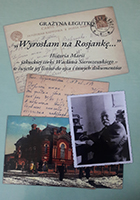
Professor Grażyna Legutko is a distinguished scholar at the Jan Kochanowski University in Kielce, where she serves in the Institute of Literary Studies and Linguistics within the Department of Polish Literature. With a career spanning several decades, Professor Legutko has established herself as a leading expert on Polish literature at the turn of the 19th and 20th centuries, particularly focusing on the works of key figures such as Wacław Sieroszewski, Gustaw Daniłowski, and Zenon Przesmycki (Miriam). Professor Legutko earned her degree in Polish Studies from the University of Warsaw, where she completed her master's thesis analyzing the evolution of narrative in Wacław Berent's prose. Her doctoral dissertation, supervised by Professor Andrzej Makowiecki at the Faculty of Polish Studies, University of Warsaw, focused on interpreting the literary criticism and translation work of Zenon Przesmycki (Miriam). In 2011, she published a dissertation on Gustaw Daniłowski that formed the basis for her habilitation, awarded by the Council of the Faculty of Humanities of the Catholic University of Lublin. Professor Legutko's research primarily centers on Young Poland literature and positivism, literary criticism at the turn of the 19th and 20th centuries, literary biography, and editorial work. Her scholarly interests encompass modernist narratives, the Europeanization of Young Poland culture, biblical motifs and erotic themes in Polish literature, revolutionary and independence journalism from 1898 to 1926, modernist myths, and the connections between historical politics and literature. She has compiled and published numerous source documents, including letters from Zenon Przesmycki to various correspondents and mutual correspondence between literary figures of the era. Her recent scholarly output demonstrates a continued focus on Polish literary history, particularly concerning Wacław Sieroszewski and his family, as well as critical editions and biographical studies of figures from the Young Poland period. Professor Legutko's work bridges literary analysis with historical context, often exploring the intersections between personal experience, political engagement, and artistic creation in early 20th century Poland. Professor Legutko has authored multiple monographs including "Zenon Przesmycki (Miriam) – propagator of European literature" (2000), "The Sacred in the Eyes of a Revolutionary. On Gustaw Daniłowski's 'Mary Magdalene'" (2005), "Fighters of the Polish Cause. Wacław Sieroszewski and Gustaw Daniłowski on the Thought and Deeds of Józef Piłsudski" (2007), "The Restless Flame. The Life and Work of Gustaw Daniłowski" (2011), and "From Metaphysics to Existence. On the Themes and Figures of Polish Literature at the Turn of the 19th and 20th Centuries" (2014). Currently, Professor Legutko is preparing a critical edition of Wacław Sieroszewski's diary written between 1939-1944, continuing her longstanding scholarly engagement with this important Polish writer, ethnographer, and political activist who spent significant time in Siberian exile.
Dr. hab. Justyna Bajda is a Professor at the University of Wrocław's Faculty of Philology, affiliated with the Department of the History of Positivist and Young Poland Literature. A literary scholar and art historian, she specializes in interdisciplinary research at the intersection of literature, visual arts, and material culture during the Young Poland period and European Modernism. Her research explores: Aesthetic trends and artistic correspondences in fin-de-siècle Europe French cultural influences on Polish literature and art Color symbolism in cultural production (notably her 2023 monograph on blue in Young Poland) Intersemiotic relationships between text and image Comparative studies of Polish and French modernist movements She maintains active international collaborations, particularly with France's University of Poitiers where she previously taught Polish literature and civilization. Publications show consistent focus on: French-Polish cultural exchange, visual-textual analysis, Young Poland aesthetics, and symbolic representations in literature. Recent works demonstrate deepened engagement with color theory and cross-media artistic transpositions.
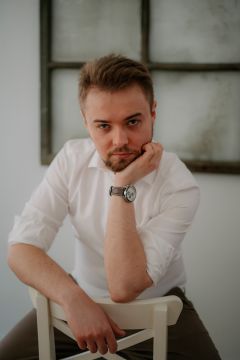
Ariel Krzysztof Orzełek is an Assistant Professor with a habilitation degree (dr hab.) at the Department of Methodology and Research on the 20th-21st Centuries , Institute of History , Faculty of History and Archaeology at the University of Maria Curie-Skłodowska (UMCS) in Lublin. His academic career began at UMCS in 2009–2014 (BA, MA), followed by a PhD in 2018 and habilitation in 2025 for his monograph Czerwoni katolicy . His research focuses on political realism , conservative Catholic movements , and biographical analysis within 20th-21st century Polish political thought .
Dr. Joanna Lekan-Mrzewka is an Assistant Professor at the Department of Positivist and Young Polish Literature within the Faculty of Humanities at John Paul II Catholic University of Lublin. A literary historian and editor, her research centers on Polish literary and cultural life in the second half of the 19th century, focusing on epistolary traditions, editorial practices, and the role of institutions like the Lviv-based Macierz Polska Foundation. Specializes in 19th-century epistolography and textual scholarship Principal investigator for the National Programme for the Development of Humanities project on Eliza Orzeszkowa's collected works Key publications include critical editions of letters and monographs on Adam Pług Research Trends : Her recent publications emphasize the intersection of editorial work with cultural modernization, Polish-Italian intellectual exchanges, and the textual preservation of literary positivism. She frequently analyzes correspondence networks and periodical studies. Notable projects include critical editions of Eliza Orzeszkowa's letters and Bolesław Prus's weekly chronicles. Scientific Recognition includes the National Education Commission Medal (2020) and multiple Erasmus+ scholarships for international collaboration. She serves on the Editorial Committee of the Adam Mickiewicz Literary Society and has supervised numerous diploma theses focused on 19th-century Polish literature. Her work spans textual criticism , cultural periodical analysis , and editorial history , often contextualized within the activities of the Macierz Polska Foundation. Current projects involve critical editions of Eliza Orzeszkowa's correspondence and Bolesław Prus's complete writings.
Cardinal Stefan Wyszyński University in WarsawPoland
Natalia Dzięcielska serves as a Researcher at the Faculty of Law and Administration, Cardinal Stefan Wyszyński University in Warsaw, where she contributes to academic instruction and scholarly research within Poland's legal education framework. Her research centers exclusively on European Union Law (100% of documented output), with specialized focus on the Treaty on the European Union, Union law frameworks, and the axiology (value systems) underpinning European integration. This work bridges legal theory and philosophical analysis of EU governance structures, examining how foundational values shape legislative interpretation and institutional development within the Union. With four documented publications, her scholarly output demonstrates sustained engagement in EU legal discourse, particularly regarding treaty implementation and normative foundations of Union policies. While specific publication titles remain undisclosed in the profile, thematic consistency indicates deep specialization in the intersection of legal positivism and ethical dimensions of European integration. Her institutional profile reflects active participation in the university's research ecosystem, with no indications of collaborative grants, advisory roles, or laboratory affiliations beyond core faculty responsibilities. The persistent emphasis on axiological dimensions suggests a distinctive methodological approach distinguishing her contributions within European legal scholarship.
Fryderyk Nguyen is an Assistant Professor at the Department of the History of Positivism and Young Poland Literature, University of Wrocław. His research focuses on psychology in literature, literary myths/symbols, and hauntology, with notable work on Tadeusz Miciński and Stanisław Ignacy Witkiewicz. He also analyzes contemporary popular music, including rock and lyric studies. Education: No explicit academic credentials listed in text. Affiliation: Faculty of Philology, University of Wrocław. His research explores intersections between psychology and literary analysis, examining how concepts like mysticism, dreams, and creative strategies manifest in Polish literature and modern music. Recent publications span 19th-century Polish literary figures to contemporary cultural studies. No scientific awards or grants mentioned. His work bridges traditional philology with modern interdisciplinary approaches.
Małgorzata Łuszczyńska is a Professor at the Faculty of Law and Administration of Maria Curie-Skłodowska University , specializing in legal philosophy, medieval political thought, and Catholic social teaching. She earned her PhD in 2006 with a dissertation on Czesław Martyniak's legal philosophy and habilitated in 2013 with a monograph on Aquinas' legal doctrine. Academic Affiliation: Department of Political and Legal Doctrines and Roman Law Key Research Areas: Thomism, natural law, social contract theory, environmental ethics in Catholicism Her scholarly work bridges medieval jurisprudence (especially Aquinas) with modern constitutional law, analyzing concepts like ius et lex , social justice, and the evolution of political doctrines. Recent publications examine environmental protection in Catholic teachings, comparative constitutional studies, and critiques of legal positivism. She serves as an editor for Annales UMCS sekcja G (Ius) and contributes to academic societies including the Lublin Scientific Society and Polish Society of Political Thought . Her research on natural law and medieval theories continues to influence contemporary debates in legal and political philosophy.
Dr Piotr Koprowski is an Adjunct Professor at the Institute of History , Faculty of History , University of Gdańsk, specializing in Russian and Polish socio-philosophical thought, 20th-century Catholic Church history, pedagogical implications, and contemporary poetry. Employed since 2006, he holds a Master's (2000) and PhD (2005) in history from the University of Gdańsk. Research Focus: His work bridges intellectual history and philosophical analysis , particularly examining ideological shifts in Eastern Europe. He has contributed to understanding Turgenev's worldview, Catholic intellectuals' roles, and the interplay between individual agency and societal influence. Scientific Awards: Rector’s Team Award of the Second Degree (2009) SEDN Quality Category A (2022) Rector’s Team Award of the Third Degree (2023) Finalist of the Jarosław Zieliński Literary Award 'Golden Rose' (2018) 2nd place in 'April Meeting with Poetry' (2024) Literary Contributions: Authored poetry collections and an unpublished novel, with nominations for literary prizes like the Orpheus Award (2015).
Rev. Prof. Józef Krukowski has been a towering figure in Polish canon law and Church-State studies for more than half a century. Ordained in 1959 after theological studies at the John Paul II Catholic University of Lublin (KUL), he obtained doctorates in canon law (1968) and advanced to full professor (1985). From 1978 to 1987 he served as Dean of the Faculty of Canon Law and from 1984 to 2009 as Head of the Department of Public and Constitutional Church Law, guiding the re-activation of the Law Section in 1981. Beyond KUL he has taught at the Academy of Catholic Theology, Cardinal Stefan Wyszyński University, the University of Prešov, and as visiting professor at universities in the United States, Canada and Ukraine. Education Master of Theology, Catholic University of Lublin, 1959 Master & Bachelor of Canon Law, Catholic University of Lublin, 1964 Doctor of Canon Law, 1968 Habilitation (post-doctoral degree) in Canon Law, 1973 Research Focus Professor Krukowski’s scholarship centres on the juridical structure of the Church, ecclesiastical administrative procedure, and the legal relationship between Church and State. His monographs on Church-State relations in post-war Poland, the Polish concordat, and the constitutional status of religious freedom have become standard references. He has likewise explored canonical marriage law, penal law, and the rights of the faithful, always integrating historical, theological and comparative-legal perspectives. Publications Trajectory Across more than 230 publications, his work evidences a steady progression from detailed canonical analyses of administrative acts and marriage jurisprudence in the 1970s, through wide-ranging studies on human rights and religious freedom in the 1980s, to major comparative investigations of Church-State models after 1989. The 1993 Polish concordat and its legislative implementation have remained dominant themes since the mid-1990s. Awards & Distinctions Consultor to the Pontifical Council for Legislative Texts (appointed by Pope John Paul II, 1985–present) Member of the Polish Academy of Sciences – Lublin Branch (since 2003) Founder & President, Association of Polish Canon Lawyers (1989–present) Founder & President, Association of Alumni and Friends of the Faculty of Law of KUL (2004–present) Co-chairman, Polish-German Foundation “Stiftung Gesellschaft für Religion und Religionsfreiheit in EU” (2002–present) Doctoral Supervision & Grants At KUL and Cardinal Stefan Wyszyński University he has directed 46 doctoral dissertations and 203 master’s theses—record numbers for both institutions—covering Polish, German, Ukrainian and Slovak candidates. His research has been supported by Polish national grants, the Lublin Scientific Society, and the Polish-German foundation he co-founded. Laboratories & Scholarly Networks He chairs the Scientific Council of “Roczniki Nauk Prawnych” and the Faculty of Legal Sciences of the KUL Scientific Society. He also serves on the editorial boards of several canon-law series and encyclopaedias, and maintains active collaboration with the Canon Law Society of America, the Pontifical Oriental Institute, and the American Bar Association.
Aleksandra Kuligowska is a researcher at the Adam Mickiewicz University in Poznań, specializing in the Auxiliary Sciences of History. She holds a Ph.D. in History (2011) and has conducted research on historical methodologies, semiotics, and regional Wielkopolska history during WWII and the Stalinist era. Her work bridges theoretical historiography with empirical studies of source criticism and 19th-century cultural analysis. Education: Master’s in History (2006, Adam Mickiewicz University), Doctorate in Humanities (2011) Research interests include the theory of history, history of historical methods, semiotics of 19th-century culture, and the socio-political dimensions of Wielkopolska’s 20th-century experiences. Her projects have addressed Ernst Bernheim’s historiographical framework and the Volksdeutscher Selbstschutz’s role in Nazi-occupied Poland. Current projects focus on methodological debates in Polish historiography, including the Joachim Lelewel-Nikolai Karamzin controversy. She has led grants such as „The concept of Auffassung...” (2008–2010) and educational initiatives on Stalinist crimes in Wielkopolska.