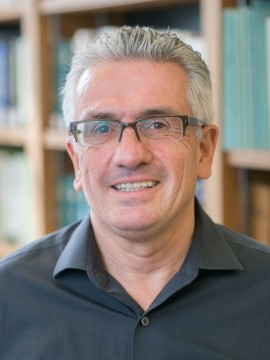
Joel Andreas is a Professor of Sociology at Johns Hopkins University since 2003, serving as Program Director of the East Asian Studies Program. His research focuses on political contention, social inequality, and social change in contemporary China. He holds a PhD in Sociology from UCLA and teaches social theory, political sociology, and courses on Chinese society. He has held visiting positions at universities including the University of Sydney, Hong Kong University, and Ningxia University. His work examines labor movements, rural land policies, and class dynamics in China. Recent research includes analyses of staff-worker congresses, rural land dispossession, and the persistence of militarism in U.S. policy. He critiques market reforms and explores the legacy of the Cultural Revolution. Andreas has contributed to debates on China’s transition to capitalism and the decline of socialist systems. His publications span topics from urbanization to state coercion in rural development. He maintains an active role in academic exchanges and policy-relevant research on China’s socio-political landscape.
Janine O'Flynn is the Director of the Crawford School of Public Policy at the Australian National University (ANU) since 2023. Previously, she held the position of Professor of Public Management at the University of Melbourne and served as a visiting professor at institutions like City University Hong Kong and Fudan University. Her research focuses on public management reform, governance relationships, and ethical policy-making. Notable contributions include work on public value creation, performance management systems, and positive public administration. She has authored over 75 publications, including Pathways to Positive Public Administration (2024) and co-edited the Research Handbook on Public Management and COVID-19 (2024). O'Flynn has received prestigious awards such as the National Academy of Public Administration Fellowship (2022) and the Best Book Award at the Academy of Management (2013). She actively advises governments globally and chairs research committees for organizations like the Centre for Public Impact. Education: PhD (Melbourne), Bachelor of Commerce (Hons., Melbourne). Key Roles: Editorial Board Member: Public Administration , Public Management Review , and others Board of Directors, Public Management Research Association Advisory Board, Victorian Public Sector Commission Research Focus: Public sector reform, governance ethics, policy complexity, and agile government frameworks.
Rutgers, The State University of New JerseyUnited States
Emily C. Bartels is a Professor of English at Rutgers University specializing in early modern literature and culture, with particular expertise in Shakespearean and non-Shakespearean drama. She has served as director, and is now dean, of the Middlebury Bread Loaf School of English since 2010, a summer Master's program designed for K-12 English teachers. Professor Bartels received her BA from Yale University and both her MA and PhD from Harvard University. Her academic background positioned her to become a leading scholar in Renaissance literature studies. Her research examines questions of race, cross-cultural relations, gender, genre, and performance in early modern English drama. Professor Bartels is renowned for her groundbreaking work on Shakespeare's Othello and Christopher Marlowe's plays, analyzing how these texts represent cultural and racial difference. She has significantly contributed to postcolonial approaches to early modern literature, revealing how English drama engaged with global encounters and representations of the 'other' during the Renaissance period. Her scholarship demonstrates how early modern writers both reflected and shaped contemporary attitudes toward difference, particularly regarding race, religion, and national identity. Professor Bartels' publications reveal a consistent scholarly trajectory examining racial and cultural representation in early modern England. Her work spans from detailed analyses of specific plays like Hamlet and Julius Caesar to broader studies of how England conceptualized Africa and non-Christian cultures during the Renaissance. A recurring theme throughout her career is the analysis of how early English drama both reflected and shaped contemporary attitudes toward difference, particularly regarding race, religion, and national identity. Roma Gill Prize for Best Work on Christopher Marlowe (1993-94) for Spectacles of Strangeness: Imperialism, Alienation, and Marlowe Board of Trustees Fellowship for Scholarly Excellence (1993) School of Arts and Sciences Award for Distinguished Contributors to Undergraduate Education (2008 & 1993) Warren I. Susman Award for Excellence in Teaching (2008) Solmsen Fellowship at the Institute of Research in the Humanities, University of Wisconsin (1995) Black Atlantic Project fellowship from the Rutgers Center for Historical Analysis Professor Bartels has demonstrated exceptional commitment to both research and teaching excellence. She has developed innovative courses exploring the intersections of literature, history, and cultural studies, including undergraduate seminars on Othello and Hamlet, and graduate courses on Shakespeare Page and Stage. Her administrative role as dean of the Middlebury Bread Loaf School of English demonstrates her commitment to education beyond traditional university settings. Her fellowships from prestigious institutions indicate successful grant acquisition throughout her distinguished career. Professor Bartels has been actively involved with the Shakespeare Association of America and has collaborated with international scholars like Emma Smith of the University of Oxford. Her work has positioned her at the forefront of conversations about early modern literature, race studies, and postcolonial approaches to Renaissance drama, influencing how scholars understand the intersections of literature, race, and cultural identity in the early modern period.
Professor Jamie Peck is a University Killam Professor and Professor of Geography at the University of British Columbia, Faculty of Arts, Department of Geography. He holds the prestigious title of Distinguished University Scholar at UBC and maintains significant international academic affiliations including Visiting Professor at Oxford University's School of Geography and the Environment, Honorary Professorial Fellow at the University of Manchester, and Honorary Professor at the University of Nottingham. Peck received his PhD in Geography from the University of Manchester in 1988 following his BA (Hons) in Geography from the same institution. His distinguished academic career spans positions at the University of Manchester (1989-2000), University of Wisconsin-Madison (2000-2008), and his current position at UBC where he has been a central figure in economic geography and interdisciplinary social science. As an institutional political economist, Professor Peck's research critically examines the spatial dimensions of economic processes, with particular attention to how global phenomena like neoliberalization are constituted through local practices. His work bridges economic geography, urban studies, political economy, and social theory, consistently challenging conventional understandings of market processes and statecraft. Recent research focuses on Chinese state capitalism, especially the Greater Bay Area and Hong Kong's evolving political status, alongside methodological innovations in conjunctural analysis as demonstrated in his 2023 book Variegated Economies . His scholarly output reveals a sustained engagement with the variegated nature of capitalist development across different spatial contexts. Recent publications demonstrate a sophisticated methodological approach combining institutional analysis with extended case methods, emphasizing historical context and spatial specificity while challenging universalizing theoretical claims. His work on Chinese political economy represents a significant departure from conventional Western-centric analyses. University Killam Professor (2025) Lauréat Prix International de Géographie Vautrin Lud ("Nobel de Géographie") (2023) Corresponding Fellow of the British Academy Fellow of the Royal Society of Canada Clarivate Highly Cited, Social Sciences (2014-2024) Distinguished University Scholar, UBC (2017-present) Canada Research Chair in Urban & Regional Political Economy (2008-2022) Professor Peck has supervised numerous doctoral students whose dissertations examine diverse topics including global urban solutions industries, US-Mexico border economies, Rio de Janeiro's 'PACification' processes, and China's experimental economic zones. His supervision approach emphasizes theoretically sophisticated empirical work that connects local case studies to broader political economic processes. His Canada Research Chair position supported extensive research on urban and regional political economy, while his current Killam Professorship funds ongoing work on Chinese political economy and conjunctural analysis methodologies. While not formally affiliated with a specific laboratory, Professor Peck is deeply engaged with multiple scholarly networks through his editorial leadership as Managing Editor of EPA: Economy & Space and co-editor of the Economic Transformations book series. His role as Convenor of the Summer Institute in Economic Geography demonstrates his commitment to fostering scholarly exchange and theoretical development in economic geography as a discipline.
Prof. Dr. Oktay KIZILKAYA is a full-time Professor at Kirsehir Ahi Evran University, Faculty of Economics and Administrative Sciences, Department of Economics , Turkey. He has held academic positions since 2004, including Associate Professor (2019-2024) and Assistant Professor (2012-2018). Education: PhD and MA in Economics (2007-2012, 2004-2007), BA in Economics (1999-2004) from Selçuk University. Research Areas: International Political Economy, International Trade, International Investments, and International Economic Theories. His research focuses on the interplay between economic policies, foreign direct investment (FDI), energy consumption, environmental sustainability, and growth dynamics. Key themes include panel data analysis , co-integration , and policy implications for Turkey and emerging economies like BRICS-T. Recent publications analyze topics such as pandemic-induced uncertainty on tourism demand, eco-innovation in Germany, and the impact of political institutions on FDI. His work often employs time-series econometrics and panel causality methods . Scientific Awards: Publication Encouragement Award (2023) Publication Encouragement Award (2020) Best Researcher Award (2017, International Conference on Strategic Research in Social Science and Education) Award of 2017 (Strategic Researches Academy) Key Projects: Led 13 research projects on FDI, economic growth, environmental sustainability, and energy policy, all as principal investigator.
Hans Beck serves as Professor of Greek History at the University of Münster (Westfälische Wilhelms-Universität) since 2018, with an additional appointment as Adjunct Professor in the Faculty of Arts at McGill University. His academic career includes previous positions as Professor of Ancient History and Director of Classical Studies at McGill University (2005-2018), Heisenberg Fellow at Goethe-Universität Frankfurt (2004-2005), and Research Assistant at the University of Cologne (1997-2004). Beck earned his academic training through doctoral studies at the Universities of Erlangen, Canterbury, and Cambridge (1989-1996), followed by a fellowship at the Center for Hellenic Studies in Washington, DC (2001-2002). His educational background reflects a strong international foundation in classical studies. His research spans multiple interconnected fields within ancient history, with particular emphasis on the history and culture of ancient Greece, historical geography of Greece, environmental studies of the ancient Greek world, political culture of the Roman Republic, and ancient historiography. Beck's work consistently explores themes of localism, federalism, and political structures across ancient societies, with notable contributions to understanding Greek city-states, regional identities, and comparative political systems. His approach often bridges geographical, historical, and cultural perspectives to examine how ancient communities organized themselves politically and maintained regional identities within larger frameworks. Analyzing his recent publications reveals a sustained focus on local political structures within broader contexts, particularly examining how Greek city-states maintained autonomy while participating in federal leagues. His work increasingly incorporates comparative approaches, connecting Greek political structures with those of Rome and even ancient China, reflecting his editorial work on cross-cultural studies. Beck demonstrates particular expertise in analyzing how physical landscapes shaped political organization and how religious practices reinforced regional identities. Fellow of the Royal Society of Canada (2018) Anneliese Maier Research Award from Alexander von Humboldt Foundation (2014) Heisenberg Fellowship from Deutsche Forschungsgemeinschaft (2004) Doctoral scholarship from German Academic Exchange Service (1995) Doctoral scholarship from Hanns Seidel Foundation (1994) Beck has supervised numerous doctoral students including Jordan Christopher (2022), Chandra Giroux (2021), Wentian Fu (2020), Rebecca Robinson (2017), Alex McAuley (2015), and François Gauthier (2015), covering diverse topics from ancient Qin and Macedon to cult practices in ancient empires. His academic leadership extends to directing research projects B3-49 'Belonging in/to Lakonia' and B3-40 'Localism and Religion in Ancient Greece' within the Excellence Cluster focusing on 'Religious Diversity and Legal-Political Unity.' As head of the project 'Belonging in/to Lakonia' and 'Localism and Religion in Ancient Greece,' Beck leads interdisciplinary research teams examining archaeological and historical evidence from the Sanctuary of Apollo at Amyklai and its surroundings. His work integrates textual analysis with material culture studies, creating comprehensive approaches to understanding ancient regional identities and religious practices. Beck's leadership in these projects demonstrates his commitment to bridging traditional disciplinary boundaries in classical studies.
London School of Economics and Political Science (LSE)United Kingdom
Professor Andrew Murray is a leading academic in Law with expertise in New Media and Technology Law. He holds the position of Professor of Law at the LSE Law School and directs the LSE Law, Society and Technology Group. His research focuses on digital rights, AI ethics, and regulatory frameworks for emerging technologies. Murray has held roles including Fellow of the Royal Society for the Arts and advisor to the Saudi Arabian government on e-commerce law. He has advised parliamentary committees, including the House of Lords Communications Committee on digital regulation, and delivered the prestigious TMC Asser Lecture on AI and human agency. Education: LL.B. Hons from Edinburgh University (1994), followed by academic roles at Stirling University and LSE since 2000. Professional memberships include the Society of Computers and Law (SCL) and the Higher Education Academy (HEA). He has been a visiting professor at Amsterdam Law and Technology Institute and Sciences Po Paris. Research interests span cyberspace regulation, AI governance, and the intersection of technology with human rights. Key publications include Human Rights in the Digital Age (2004) and The Regulation of Cyberspace (2007). Awards include recognition as an Independent Expert in Nominet UK dispute resolution (2001–2008) and a 2024 Leibniz Prize reviewer. Advocacy includes contributions to EU e-commerce directives and UK surveillance law debates. His work emphasizes balancing innovation with legal accountability in digital spaces.
Subhasish Mitra is the William E. Ayer Professor of Electrical Engineering and Computer Science at Stanford University, holding dual appointments in both departments. He leads the Stanford Robust Systems Group and serves on the leadership team of the Microelectronics Commons AI Hardware Hub under the US CHIPS and Science Act. His research spans Robust Computing, NanoSystems, Electronic Design Automation (EDA), and Neurosciences, with breakthroughs in X-Compact test compression, carbon nanotube computing, and 3D integration. He has held international roles like the Carnot Chair at CEA-LETI and Visiting Professorships globally. Education & Honors: Recipient of over 40 awards including the IEEE Computer Society’s Harry H. Goode Memorial Award, ACM/IEEE’s A. Richard Newton Technical Impact Award, and the Intel Achievement Award. He earned top academic accolades from IIT Kharagpur and Jadavpur University, and is a Fellow of ACM and IEEE. Research Impact: Pioneered first-of-their-kind systems like the carbon nanotube computer and monolithic 3D integration. His work on robust computing techniques like QED validation and X-Compact compression has industry-wide adoption, saving billions in manufacturing costs. Collaborates with industry leaders like Intel, Google, and Samsung. Publications & Grants: Over 400 publications, including award-winning papers in DAC, ISSCC, and IEEE journals. Leads grants from NSF, DoE, and industry partnerships. His lab explores cutting-edge topics like neuromorphic computing, 3D thermal scaffolding, and AI hardware acceleration. Administration & Outreach: Serves as Associate Chair (Faculty Affairs) for Stanford’s Computer Science Department. Recognized by students for mentorship, and frequently invited to global forums like the World Economic Forum and National Academy of Engineering.
Rahul Mukherji is a Professor at the Department of Political Science, South Asia Institute, Heidelberg University. He has held visiting positions at institutions including the University of Goa, Tata Institute of Social Sciences, and Fudan University. His research spans Indian politics, political economy, international relations, and climate policy. Education: PhD in Political Science, Columbia University (1999) M.Phil and MA in South Asian Studies, Jawaharlal Nehru University (1992, 1990) Bachelor in Economics (Honours), Delhi University (1988) Mukherji examines democratic backsliding , climate governance , and political economy of reforms in India. His recent work explores the intersection of COVID-19 and authoritarian trends , alongside state capacity in welfare delivery. Scientific Awards NUS Award for Research Excellence (2014, 2012) President’s Fellow, Columbia University (1997-1999) Ambedkar Overseas Fellow in International Relations (1993-1996) Mukherji serves on the editorial boards of journals like India Review , Pacific Affairs , and Governance . He is series editor for Oxford Institutions and Development in South Asia and editor of Indian Politics and Policy .
Dr. Regina Enjuto Martinez is a Lecturer in International Development at King’s College London, based in the Department of International Development within the School of Global Affairs. She joined the university in 2021 and previously held positions at the London School of Economics (LSE), SOAS, and taught at Peking University. Her research focuses on welfare governance in China, particularly disability rights, HIV/AIDS policies, and migrant workers' welfare, examining state-society relations and NGO roles in welfare provision. Education: PhD in Development Studies (LSE, 2016), MSc in Sociology (National Chengchi University, Taiwan). Research Interests: Chinese politics, social welfare, civil society, migration, labor rights, project management and evaluation. Her work bridges international development theory and China’s unique policy contexts, analyzing how authoritarian governance structures influence welfare service delivery through contracting mechanisms. Collaborations with scholars like Yanchu Qu and Janet A. Howell highlight her engagement in cross-disciplinary research. She has contributed to debates on NGO autonomy, labor rights advocacy, and the convergence/divergence of China’s welfare practices with global models.
Clemens Otto is a Full-time Associate Professor of Finance at the Lee Kong Chian School of Business, Singapore Management University. He holds a Ph.D. (Finance) from London Business School (2012), an M.Res. (Finance) from London Business School (2009), and a CEMS Master (International Management) and Dipl.-Kfm. (Business Administration) from the University of Cologne and HEC Paris (2006). His research focuses on Financial Contracting, Corporate Disclosure Practices, Behavioral Finance, and Strategic Investment Decisions. Key research interests include analyzing how disclosure policies impact capital markets, the behavioral drivers of corporate investment, and the effects of regulatory frameworks on firm behavior. His work integrates theoretical finance with empirical evidence from supply chains, healthcare disclosures, and debt markets. Notable awards include the Michael J. Brennan Award (2022) and the SAC Capital Ph.D. Award (2012). His publications span journals such as the Review of Financial Studies , Management Science , and The Accounting Review . Current research explores disclosure externalities in supply chains and the strategic implications of peer disclosures in clinical trials. Prof. Otto has been affiliated with SMU since 2017, advancing through roles from Assistant Professor (2017–2021) to his current position. His expertise aligns with SMU’s strategic priorities in Asia-focused finance and sustainable living through informed corporate governance frameworks.
Colleen Conley is a Clinical Professor in the Department of Psychology at Loyola University Chicago, specializing in clinical psychology with a focus on adolescent and emerging adult mental health. She directs the IMPACT (Improving Mental-health and Promoting Adjustment through Critical Transitions) Lab, which conducts research on psychological well-being during developmental transition periods. Dr. Conley earned her Ph.D. from the University of Illinois at Urbana-Champaign and her B.A. from Lawrence University. Her research program blends observational studies, meta-analyses, and intervention development to improve well-being, particularly during critical life transitions like the college years. Her work examines psychological trajectories in adolescence and emerging adulthood, with special attention to gender issues and LGBTQIA+ well-being. Her research interests center on developmental psychopathology, examining the interplay between individuals and their contexts over time. She investigates how biological, psychological, cognitive, and social factors interact to influence psychological distress and well-being. Much of her work focuses on college student mental health, including trajectories of well-being during the transition to college and interventions to address mental health challenges. Analysis of her recent publications reveals a strong focus on college student mental health, with emphasis on developmental trajectories, intervention effectiveness (particularly peer-led and technology-delivered approaches), and the impact of transition periods on psychological functioning. Her work increasingly incorporates digital interventions and examines moderators of intervention effectiveness across diverse student populations. Research Mentoring Award Program recognition for mentoring award-winning students Heckler Summer Research Fellowship recognition for mentoring fellowship recipients Dr. Conley mentors numerous graduate students in the clinical psychology program, with many completing dissertations on topics related to mental health interventions, student well-being, and developmental transitions. Her IMPACT Lab collaborates with university staff, administrators, and other researchers to develop practical interventions that address student mental health needs. Current projects include Honest, Open, Proud (HOP) for stigma reduction, Wellness Advising with Motivational Interviewing (WAMI), Students Taking on Effective Post-Graduate Skills (STEPS), and Supportive Accountability Methods for Mentoring Young Adults (SAMMY-A). The lab also partners with commercial entities like Headspace for mindfulness research.
Jean C. Oi serves as the William Haas Professor of Chinese Politics in Stanford University's Department of Political Science and holds multiple leadership positions including Senior Fellow at the Freeman Spogli Institute for International Studies, Director of the China Program, and Lee Shau Kee Director of the Stanford Center at Peking University. Professor Oi earned her PhD from the University of Michigan and previously taught at Lehigh University and Harvard University before joining Stanford in 1997. Her research centers on comparative politics with specialized expertise in Chinese political economy and reform processes in transitional systems. She has made seminal contributions to understanding rural politics in China, introducing the influential concept of 'local state corporatism' to describe China's development model in her award-winning book Rural China Takes Off (1999). Her current research examines China's Belt and Road Initiative, fiscal politics and central-local relations, and structural change in China. Professor Oi maintains an active publication record with works spanning four decades, including her most recent 2025 article 'A Perfect Storm: Fiscal Discipline, COVID, and Local Government Debt in China' which analyzes how pandemic-era policies exposed China's fiscal vulnerabilities. Choice Outstanding Academic Title (1999) for Rural China Takes Off Professor Oi leads significant collaborative research initiatives, including directing the Stanford China Program at the Walter H. Shorenstein Asia-Pacific Research Center. Her fieldwork with Chinese scholars has examined rural community organization, public goods provision, and fiscal pressures from rapid urbanization, culminating in works like Challenges in the Process of China's Urbanization (2017).
Nancy M. Wells is a Professor in the Department of Human Centered Design and serves as the Senior Associate Dean for Research and Graduate Education in the College of Human Ecology at Cornell University. Her work bridges environmental psychology and public health, examining how built and natural environments impact human health and behavior across the lifespan. Dr. Wells received a joint PhD in Psychology and Architecture from the University of Michigan and completed National Institute of Mental Health (NIMH) post-doctoral training at the University of California, Irvine. Her educational background uniquely positions her to investigate the intersection of physical environments and human wellbeing through both psychological and architectural lenses. Her research focuses on how environmental contexts—from homes to neighborhoods to schools—affect health outcomes, cognitive functioning, and resilience. A central theme examines nature's role in human resilience, particularly how natural environments buffer against adversity and challenge. She has conducted influential work on school gardens and their effects on children's physical activity, dietary habits, and learning. More recently, she has pioneered research on nature and autism, conducting a randomized controlled trial examining natural environments' effects on autistic youth wellbeing. Analysis of Dr. Wells' recent publications reveals consistent focus on nature's health benefits, with strong emphasis on experimental methodologies including randomized controlled trials and natural experiments. Her work spans environmental psychology, public health, and education, with particular attention to vulnerable populations including low-income communities and children of color. NSF Funding for environmental health research USDA Funding for school garden studies Robert Wood Johnson Foundation Funding MacArthur Foundation Funding Senior Associate Editor of Environment and Behavior (4 years) Research Advisory Board of Children and Nature Network Board of Directors for reDirect Dr. Wells actively mentors undergraduate and graduate students through the Wells Lab, involving them in all research stages from data collection to publication. Her research has been supported by multiple significant grants examining housing quality effects on mental health, neighborhood design impacts on physical activity, and school garden interventions. She leads interdisciplinary research teams that integrate perspectives from environmental psychology, public health, landscape architecture, and education. The Wells Lab operates as an integrated research-teaching-outreach unit that develops practical yet rigorous studies to assess causal relations between environment and health, creates valid measurement tools, and identifies causal pathways. Current projects include examining nature's effects on autistic youth wellbeing in partnership with The Center for Discovery in New York, and investigating multi-sensory design in urban public spaces.
London School of Economics and Political Science (LSE)United Kingdom
Professor Torun Dewan is a Professor of Political Science and Deputy Head of Department for Research in the Department of Government at the London School of Economics and Political Science (LSE). Her expertise lies in Political Economy, Political Parties, and Coalitions. She holds a position in CBG 4.22 and can be contacted at t.dewan@lse.ac.uk. Her work spans historical and contemporary political analysis, including studies on Victorian voting patterns, electoral competition dynamics, and ministerial tenure in the UK. Key research interests include the origins of party orientation, class alignment, and coalition formation. Her research also explores topics such as refugee protection policies and implicit burden-sharing mechanisms. She has contributed to edited volumes on rational choice theory and political behavior. No scientific awards or grants are explicitly mentioned in the provided texts. Her advising record is not detailed here. She is affiliated with the LSE's Department of Government, contributing to both research and administrative leadership roles.