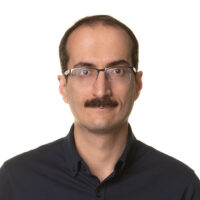
Dr. Ameer Abdelhadi is an Assistant Professor in the Department of Electrical and Computer Engineering at McMaster University. His research focuses on application-specific custom-tailored computer architectures, hardware-efficient deep learning, neurotechnology, and reconfigurable computing. He holds a PhD from the University of British Columbia and has held academic positions at the University of Toronto, Imperial College London, and Simon Fraser University, alongside industry experience in semiconductor design. Education: PhD in Computer Engineering (University of British Columbia, 2016). Research Interests: Hardware acceleration for machine learning and neurotechnology Reconfigurable computing and FPGAs/ASICs Asynchronous circuits and synchronization protocols VLSI physical design and CAD algorithms Publications span high-impact venues such as IEEE Journal of Solid-State Circuits, IEEE Hot Chips, and IEEE Micro. Notable achievements include the 2017 Best Paper Award at ASYNC for work on synchronization FIFOs. Teaching includes COMPENG 4DV4 (VLSI System Design) and ELECENG 4OI6B (Engineering Design). His lab focuses on advancing hardware systems for next-generation applications in AI and biomedical engineering.
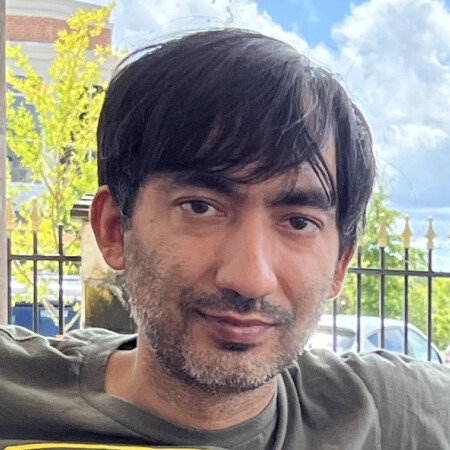
Dr. Hassan Ashtiani is an Associate Professor in the Department of Computing and Software at McMaster University and a faculty affiliate at the Vector Institute. He holds a PhD in Computer Science from the University of Waterloo (2018), a master’s in AI and Robotics, and a bachelor’s in computer engineering from the University of Tehran. His research focuses on machine learning, statistical learning theory, and theoretical computer science, with emphasis on adversarial robustness, privacy-preserving algorithms, and sample-efficient learning. Current projects include differentially private machine learning, robustness against adversarial perturbations, and distribution shifts. Recent work highlights include NeurIPS 2018 best paper award for pioneering distribution compression schemes in Gaussian mixtures. He routinely serves as an area chair for NeurIPS and other ML conferences. His CAS 775 course explores modern distribution learning theory, covering topics like PAC learning, computational complexity, and differential privacy. Awards: NeurIPS Best Paper Award (2018) Advising: Open PhD/MSc positions are listed on his homepage. His research group collaborates with the Vector Institute, focusing on advancing theoretical foundations of machine learning with practical applications.
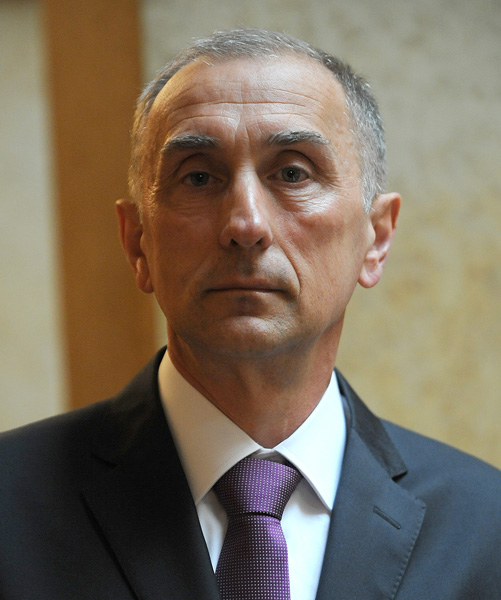
David Blaauw is the Kensall D. Wise Collegiate Professor of Electrical Engineering and Computer Science (EECS) at the University of Michigan. His research focuses on ultra-low-power analog/mixed-signal circuits, mm-scale sensors, neural networks, and biomedical applications. He leads the Blaauw Lab, which has pioneered innovations like the Michigan Micro Mote (M^3) and neural recording probes. His work emphasizes real-world deployability, with applications in environmental monitoring (e.g., monarch butterflies), medical devices, and robotics. Education: B.S. in Physics and Computer Science, Duke University (1986) Ph.D. in Computer Science, University of Illinois Urbana-Champaign (1991) Research Interests: Blaauw’s lab explores ultra-low-power computing, mm-scale systems, RF communication, in-memory computing, and genomics acceleration. Key projects include: Millimeter-scale computers (e.g., 0.04mm³ temperature sensors) Wireless neural interfaces for brain-machine communication Energy-efficient accelerators for edge AI and genomics Micro-robotics with sensing/actuation/computation Awards: IEEE Fellow 2016 SIA-SRC Faculty Award Motorola Innovation Award Best Paper Awards at ISSCC, ISCA, and RFIC Advising & Impact: Over 600 publications, 65 patents, and 4 startup companies spun from his lab. Current research includes genome sequencing accelerators (GenAx) and neural recording dust for brain mapping. He directs the Michigan Integrated Circuits Lab and chairs major conferences like ISSCC and DAC. Labs/Teams: Blaauw Lab (University of Michigan) Michigan Integrated Circuits Lab (MICAL)
Gunnar Blohm is an Assistant Professor in the Department of Biomedical and Molecular Sciences at Queen's University, affiliated with the School of Medicine and Faculty of Health Sciences. His research focuses on sensorimotor neuroscience, particularly 3D sensorimotor control, eye-hand coordination, and computational modeling of neural processes. He holds a Ph.D. from Université Catholique de Louvain and has held postdoctoral positions at York University and his alma mater. Cross-appointed to the School of Computing, Department of Psychology, and Department of Mathematics and Statistics, he is also Vice-Director of the Connected Minds initiative. His research integrates behavioral experiments, brain imaging (MEG/EEG), and patient studies to understand how sensory information is transformed into goal-directed actions. Key areas include visuomotor transformations, multisensory integration, and Bayesian processes in neural computations. Blohm leads the Computational Sensorimotor Neuroscience Lab, emphasizing collaborative projects like Neuromatch Academy and contributions to open science initiatives. Affiliated with Queen's Centre for Neuroscience Studies and Ingenuity Labs, his work bridges computational approaches with clinical applications, aiming to develop frameworks for understanding brain dysfunction and clinical tools. His recent articles explore topics like saccade dynamics, pupil responses, and generative adversarial collaborations in scientific discourse.
Rizwanur Khan is an Assistant Professor in the Department of Mathematical Sciences at the University of Texas at Dallas (UT Dallas), affiliated with the School of Natural Sciences and Mathematics. His research focuses on analytic number theory, automorphic forms, and L-functions, with notable contributions to the study of moments of L-functions and elliptic curves. Education: Ph.D. in Mathematics, University of Michigan, Ann Arbor (2007) B.A. in Mathematics, University of Cambridge (2002) Research Interests: Khan’s work bridges analytic number theory and automorphic forms, emphasizing L-functions’ properties, such as moments, subconvexity bounds, and their applications to elliptic curves and modular forms. His research explores reciprocity relations, truncation techniques, and spectral analysis in these contexts. Publications Trends: Recent publications address moment estimates of L-functions, elliptic curve ranks over cyclotomic fields, and hybrid subconvexity bounds. His work often involves collaboration with experts in automorphic forms and spectral theory, reflecting a focus on advancing computational and theoretical tools in number theory. Awards: NSF CAREER Grant (2022–2027) NSF Standard Grant (2020–2024) Simons Collaboration Grant for Mathematicians (2019–2023) NSF CBMS Conference Grant (2018–2020) NSF Postdoctoral Fellowship (2007–2010) Grants and Advising: Khan has secured significant NSF and Simons Foundation funding to support research on L-functions and subconvexity. While no students are explicitly listed, his postdoctoral and faculty roles suggest mentorship in mathematical research. He has held positions at UCLA, University of Göttingen, Texas A&M at Qatar, and the University of Mississippi before joining UT Dallas in 2023. Labs/Teams: No specific labs or teams are mentioned, though his work likely intersects with number theory groups at UT Dallas and collaborating institutions.
Dario Vretenar is a Professor of Physics at the Department of Physics, Faculty of Sciences, University of Zagreb (since 2001). He has held academic roles including Associate Professor (1997-2001) and Assistant Professor (1993-1997). His research focuses on theoretical nuclear physics, particularly energy density functional theory, nuclear weak interactions, and computational physics. He has held visiting positions at institutions such as Technical University Munich (Visiting Professor, 1999-2000) and University of Tokyo (2010). Education: Ph.D. in Theoretical Nuclear Physics (University of Zagreb, 1988); M.Sc. in Physics (University of Zagreb, 1982). Postdoctoral fellowships included Yale University (1990) and Alexander von Humboldt Fellowships at Technical University Munich (1991-1993, 1997). Research Interests: Algebraic structure models for high-angular momentum states Low-energy nuclear effective field theory Nuclear astrophysical applications Development of relativistic energy density functionals Publications: Over 210 peer-reviewed articles (h-index 43, 7,000+ citations), 8 books, and 100+ conference contributions. Notable works include studies on nuclear clustering, quantum phase transitions, and neutron skin structure. Awards: Croatian Academy of Science and Arts Award for Science and Mathematics (2002) Croatian National Award for Science (2003) Fellow of the Croatian Academy of Sciences and Arts (2012) Service Roles: President of the Croatian Science Foundation (2013–present) Chair of the Physics Committee, Agency for Science and Higher Education, Croatia (2009–present) Board Member of Euroschool on Exotic Beams (2012–present) Teaching: Courses include Quantum Physics, Nuclear Structure, and Nuclear Astrophysics at undergraduate and graduate levels. Supervised numerous students in theoretical nuclear physics.
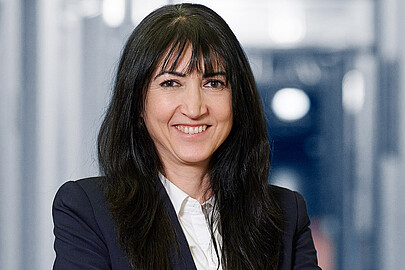
Prof. Dr.-Ing. Selin Kara is a Professor at the Institute of Technical Chemistry, Faculty of Natural Sciences, Leibniz University Hannover. She leads research in biocatalysis and bioprocessing, with a focus on sustainable and innovative enzyme-based technologies. Her leadership roles include Spokesperson of the Curriculum and Teaching Committee for Life Science and Chairperson of the Admissions Board for MSc Life Science. Full Name: Selin Kara Institution: Leibniz University Hannover Faculty: Faculty of Natural Sciences Department: Institute of Technical Chemistry Academic Rank: Professor Email: selin.kara@iftc.uni-hannover.de Her research interests center on biocatalysis and bioprocessing , particularly in redox biocatalysis , enzyme immobilization , non-conventional media such as deep eutectic solvents, biocatalytic cascades , and flow biocatalysis . She explores enzyme kinetics and process engineering to enhance efficiency and sustainability in chemical synthesis. Her group develops novel reactor systems and materials, including hydrogels and 3D-printed microfluidics, for advanced biocatalytic applications. She emphasizes green chemistry principles, aiming to replace traditional chemical processes with eco-friendly enzymatic alternatives. The most recent publications (2024–2025) demonstrate a strong trend in deep eutectic solvents , fusion enzymes , immobilization techniques , and sustainable synthesis of bio-based chemicals . Her work integrates experimental and computational methods to understand enzyme behavior and optimize reaction systems. Key themes include process intensification, solvent engineering, and industrial scalability, with applications in pharmaceuticals, fragrances, and sustainable materials. She holds leadership positions in academic governance, including: Spokesperson, Curriculum and Teaching Committee, Life Science (BSc/MSc) Chairperson, Admissions Board for MSc Life Science Executive Board Member, Institute of Technical Chemistry Deputy Representative for Professors in Faculty Council and Examination Boards Her research is highly collaborative, involving interdisciplinary teams and international partners, and is consistently published in high-impact journals such as Green Chemistry , ACS Catalysis , and ChemSusChem . While specific scientific awards and student advisees are not listed in the provided text, her extensive publication record and leadership roles reflect significant academic contributions.
David E Speyer is a Professor in the Department of Mathematics at the University of Michigan . His research focuses on algebraic problems with combinatorial flavors , particularly in tropical geometry , cluster algebras , and geometry of Lie groups . He has supervised multiple PhD students, including Shelby Cox, Will Dana, and John Wiltshire-Gordon, and collaborated on projects with undergraduates like Grant Barkley and Benjamin Branman. Education: PhD in Mathematics from UC Berkeley under Bernd Sturmfels; undergraduate at Harvard. Research: Key areas include tropical geometry , cluster algebras , and flag manifolds . His work often bridges combinatorics, algebraic geometry, and representation theory. Publications: Over 40 papers, including breakthroughs in cluster algebras , affine weak order , and braid variety cluster structures . Awards: Clay Research Fellow (2005-2010). Teaching: Coordinates courses like Math 593 (graduate algebra) and Math 214 , with a focus on inquiry-based learning .
Rayadurgam Srikant is the Fredric G. and Elizabeth H. Nearing Endowed Professor of Electrical and Computer Engineering at the University of Illinois Urbana-Champaign, affiliated with the Coordinated Science Lab. He co-directs the C3.ai Digital Transformation Institute, focusing on AI-driven solutions for global challenges. His research spans machine learning, communication networks, stochastic systems, and game theory. Srikant has authored influential textbooks including Communication Networks: An Optimization, Control and Stochastic Networks Perspective . He holds IEEE Fellow status and has received prestigious awards like the ACM SIGMETRICS Achievement Award (2021) and IEEE Koji Kobayashi Award (2019). Over 20 of his advisees hold faculty positions globally. Education: PhD (1991), MS (1988) in Electrical Engineering from UIUC; B.Tech (1985) from IIT Madras. He has taught advanced courses on optimization, stochastic systems, and game theory. His work bridges theory and practice, with contributions to congestion control, cloud computing, and reinforcement learning. Current projects include AI applications for pandemic response and digital transformation initiatives. Research highlights include foundational work on Lyapunov drift methods for network stability and distributed algorithms. He serves as Area Editor for Mathematics of Operations Research and has led editorial roles for IEEE/ACM Transactions on Networking. His lab collaborates with industry leaders like Microsoft and C3.ai, leveraging supercomputing resources for societal impact.
Peter Brummund is an Associate Professor of Economics at the University of Alabama, holding a position in the Department of Economics, Finance, and Legal Studies within the Culverhouse College of Business. He is also an IZA Research Fellow since December 2023, having previously served as a Research Affiliate since October 2018. In 2021, he was a Visiting Professor at WU Wien (Vienna University of Economics and Business). Education: PhD in Economics from Cornell University (2012) MA in Economics from Cornell University (2010) MSc in Development Studies from the London School of Economics (2006) BS in Computer Science from Taylor University (1999) Peter Brummund's research focuses on labor and development economics, with particular emphasis on how labor markets can enable people to work their way out of poverty. His work examines incomplete labor markets, job creation and destruction, job quality, job stability, minimum wages, monopsony, occupational segregation, program and policy evaluation, trade and labor, and the wage-productivity gap. He utilizes high-resolution datasets from numerous countries including Brazil, Ethiopia, Indonesia, Malawi, Uganda, United States, and Tanzania. His recent publications reveal a strong focus on labor market dynamics in developing countries, with particular attention to agricultural labor markets in Africa, occupational segregation trends in the United States, and the impacts of minimum wage policies. His methodological approach combines rigorous econometric analysis with detailed institutional knowledge of the labor markets he studies. Scientific Awards: Ernst Liu Family Economics Outstanding Teaching Award, Cornell, 2008 IZA Research Fellow (since December 2023) Professor Brummund has advised numerous PhD students, including Laura Connolly (2018, now at Michigan Tech) and Chris Oconnor (2021, now at Holy Cross), and currently advises Klara Kinnl and Melanie Gräser at WU Wien. His undergraduate mentoring has led to placements at prestigious institutions like Stanford's Institute for Economic Policy Research and recognition through the Randall Research Scholars Program and University of Alabama Undergraduate Research Awards. He teaches courses in Labor Economics, Development Economics, Policy Evaluation Methods, and Microeconomics at both undergraduate and graduate levels.
Panayiotis Kolios is an Assistant Professor at the Department of Computer Science, University of Cyprus (UCY). Previously, he served as a Research Assistant Professor at the KIOS Research and Innovation Centre of Excellence (2013–2024) and a Visiting Lecturer at UCY. He holds a BEng and PhD in Telecommunications Engineering from King’s College London (2008 and 2012, respectively). His research focuses on networked intelligent systems, emergency management using AI and UAV technologies, and cyber-physical systems. Education: BEng in Telecommunications Engineering, King’s College London, 2008 PhD in Telecommunications Engineering, King’s College London, 2012 Research Interests: His work centers on autonomous systems, intelligent transportation, and emergency management. Key areas include AI-driven disaster response, UAV-based surveillance, and algorithmic optimization for critical infrastructure. He develops solutions for real-time situational awareness and decision-support in emergencies. Recent work trends show a focus on multi-UAV coordination, disaster management platforms (like AIDERS), and AI applications in emergency response. His team’s 2023 win in the Cooperative Aerial Robots Inspection Challenge highlights advancements in UAV inspection algorithms. Scientific Awards: First Prize in Cooperative Aerial Robots Inspection Challenge (CDC 2023) Grants and Advising: He has secured over €40 million in EU and industrial grants, leading projects like PREDICATE, SWIFTERS, and AIDERS. His team advises on emergency response strategies and has trained first responders through EU-funded programs such as the Exchange of Experts training. Labs and Teams: He leads the Security and Emergency Response Group at KIOS CoE and established the Cyprus Civil Defence Aerial Observation Unit. His team collaborates with institutions like the Cyprus Police and Fire Service to operationalize UAV technologies in disaster scenarios.
Prof. Raimon Jané Campos is a leading figure in biomedical signal processing at the Universitat Politècnica de Catalunya (UPC) and Universitat de Barcelona (UB). As co-director of UPC's Biomedical Signal and System Group (CREB) and coordinator of the Biomedical Engineering PhD Programme, he bridges engineering and clinical applications. His work focuses on respiratory and sleep disorder diagnostics, with significant contributions to COPD and sleep apnea monitoring through wearable devices and machine learning. PhD in Biomedical Engineering (UPC, 1989) Visiting researcher at Université de Nice-Sophia Antipolis Vice-president of Spanish Society of Biomedical Engineering Research spans respiratory mechanics , sleep-disordered breathing , acoustic biomarkers , bioimpedance , and machine learning in biomedical contexts . His 2025 work on microcalorimetric pathogen classification and 2024 spiking neural networks for apnea detection demonstrate cutting-edge integration of computational methods with physiological monitoring. Articles from 2017-2024 reveal consistent focus on non-invasive diagnostics , cardiorespiratory synchronization , and smartphone-based health solutions . Awarded the Barcelona City Technology Research Award (2005) and serving on the International Advisory Board for Physiological Measurement since 2010, his career combines academic leadership with real-world clinical translation through IBEC's technology transfer initiatives.
Ben Amor is a Full Professor in the Department of Civil Engineering at the Faculty of Engineering, Université de Sherbrooke, where he serves as Director and Founder of the CIRMIB (Integrated Research Center on Sustainable Materials, Infrastructure and Buildings) and Director of Sustainable Development for the Faculty of Engineering. Previously, he held associate professor positions at Université Laval and Université de Sherbrooke. His research focuses on Life Cycle Assessment (LCA) methodologies applied to sustainable construction, circular economy implementation in building sectors, and building decarbonization strategies. He has pioneered regionalized LCA approaches for Arctic regions and developed frameworks for carbon budgeting in building sectors. His work bridges environmental science with practical engineering solutions for sustainable infrastructure. His recent publications reveal strong trends in building decarbonization pathways, material circularity in construction, and the integration of biogenic carbon accounting. He emphasizes both technological solutions and behavioral change strategies for achieving net-zero emissions in the built environment. ACLCA 2018 Life Cycle Assessment Leadership Award Life Cycle Academy Awards 2019 (two awards) Quebec Public Administration Excellence Prize 2023 for Scientific Collaboration Multiple university teaching awards including the Jacques-Bazinet Merit Award Professor Amor leads significant research grants totaling over $20 million, including NSERC Alliance grants for sustainable building materials and a $2 million Research Chair on Net Zero Strategies and Life Cycle Assessment. He directs the CIRMIB research center and the LIRIDE (Interdisciplinary Research Laboratory in Sustainable Engineering and Eco-design), supervising multiple doctoral candidates. His work includes developing LCA tools for Quebec's construction industry and advising government bodies on sustainable procurement policies.
Burak Sunguralp Tekin is an Assistant Professor in the Department of Translation and Interpretation at the Faculty of Humanities and Social Sciences, Ankara Yıldırım Beyazıt University. His academic career includes positions as both Lecturer (2021-2022) and Assistant Professor (2022-present) at the same institution. Dr. Tekin's research primarily focuses on human sociality and the interplay of language, bodies, and technology, with particular emphasis on embodied interaction, social practices, and multimodal communication. Dr. Tekin's educational background includes: Doctorate (2014-2019) from University of Basel, Switzerland, with dissertation "Bodies at play: Exploring participation, spectatorship, and morality in videogaming activities" Postgraduate studies (2012-2013) from University of Newcastle Upon Tyne, United Kingdom, with thesis "Smiles and affective alignment in naturally occurring dyadic academic supervisions" Undergraduate degree (2006-2010) from Hacettepe University, Turkey Dr. Tekin's research interests center on social interaction, multimodal communication, and embodied practices. His work examines how people coordinate their actions, bodies, and language in various contexts including gaming, photography, public spaces, and pandemic-related social adaptations. He employs conversation analysis and multimodal interaction analysis to investigate the micro-details of human sociality, with particular attention to how technology mediates social practices. His research bridges sociology, linguistics, and human-computer interaction to understand the embodied nature of social organization. Analysis of Dr. Tekin's recent publications reveals a consistent focus on embodied social interaction across diverse contexts. His work demonstrates sophisticated methodological approaches to studying how people coordinate their movements, manage social spaces, and create meaning through multimodal resources. A notable trend is his examination of how social practices adapt during extraordinary circumstances like the COVID-19 pandemic, as well as his sustained interest in gaming activities and their social organization. His collaborative work with Lorenza Mondada is particularly prominent in the field of conversation analysis. Dr. Tekin has taught various courses including Multimodal Communication, Introduction to Applied Linguistics, Language and Communication, Language Acquisition, Consecutive Interpreting, Intercultural Communication, World Englishes, Applied Linguistics, Turkish Grammar, Language Culture and Society, and Discourse Analysis at both undergraduate and postgraduate levels. His teaching reflects his research expertise in communication, language, and social interaction.
Maria Elena Valcher is a Professor at the Department of Information Engineering, University of Padova, Italy. She is an IEEE Fellow (since 2012), IFAC Fellow (since 2023), Socio Effettivo of Istituto Veneto di Scienze, Lettere ed Arti (since 2017, previously Socio Corrispondente 2008-2017), and Socio Effettivo of Accademia Galieliana di Scienze, Lettere ed Arti in Padova (since 2022, previously Socio Corrispondente 2017-2022). She currently serves as Administrator of the Istituto Veneto and holds leadership positions including EUCA President (2024-2025) and IEEE Control Systems Society Past President. Her research focuses on control systems, systems theory, optimization, Boolean control networks, multi-agent systems, and consensus problems. She has made significant contributions in distributed control, data-driven methods, and network optimization, with recent work exploring applications in opinion dynamics and social networks. Recent publications demonstrate a strong emphasis on data-driven approaches to control systems, particularly in distributed state estimation, unknown-input observer design, and multi-agent coordination. Her work shows consistent development in theoretical frameworks for networked systems with practical applications. Awards and Honors: IEEE Fellow (2012) IFAC Fellow (2023) Socio Effettivo, Istituto Veneto di Scienze, Lettere ed Arti (2017-present) Socio Effettivo, Accademia Galieliana di Scienze, Lettere ed Arti in Padova (2022-present) She teaches 'Controlli Automatici' (Bachelor in Information Engineering) and 'Systems Theory' (Master in Control Systems Engineering) during the 2024/2025 academic year. She has chaired major conferences including the 61st IEEE Conference on Decision and Control (CDC 2022) and serves as Program Chair for ICSTCC 2025.