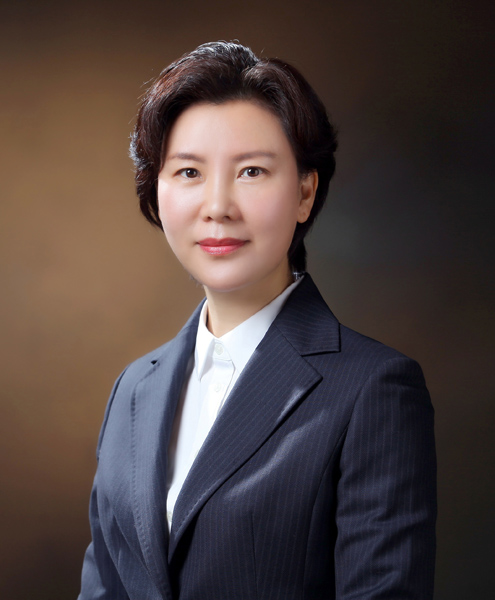
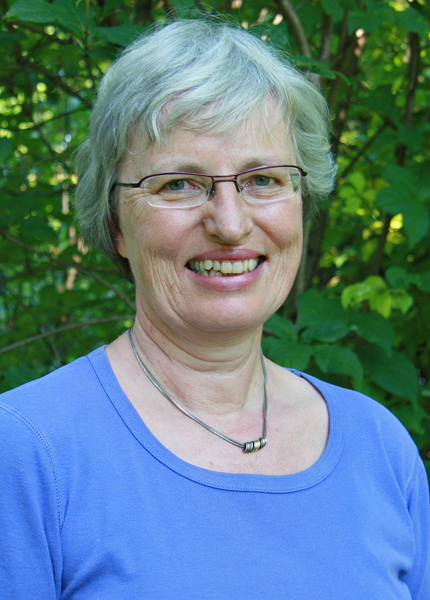
Prof. Yu Jihong is a full Professor at the Department of Chemistry, Jilin University, and serves as Director of the International Center of Future Science and Vice President of the Chinese Chemical Society. She leads the State Key Laboratory of Inorganic Synthesis and Preparative Chemistry. Her research focuses on designing nanoporous materials for energy and environmental applications, with over 320 publications in top journals like Science and Nature Communications. Education: BS (1989), MS (1992), PhD (1995) from Jilin University Postdoctoral: Hong Kong University of Science and Technology (1996–1997), Tohoku University (1997–1998) Research interests include inorganic synthesis, porous materials, catalytic materials, and environmental applications. Her work bridges computational methods with experimental synthesis, yielding innovations in zeolite structures and catalytic systems. Awards: IUPAC Distinguished Women in Chemistry Award (2017), TWAS Fellow (2016), Chinese Academy of Sciences Academician (2015), and multiple national science prizes. She is an Associate Editor of Chemical Science and leads editorial boards for Materials Horizons and others. Her articles emphasize novel synthetic methods, catalytic systems, and sustainable materials. Key themes include accelerating zeolite crystallization, designing nanocatalysts, and developing porous membranes for environmental applications.
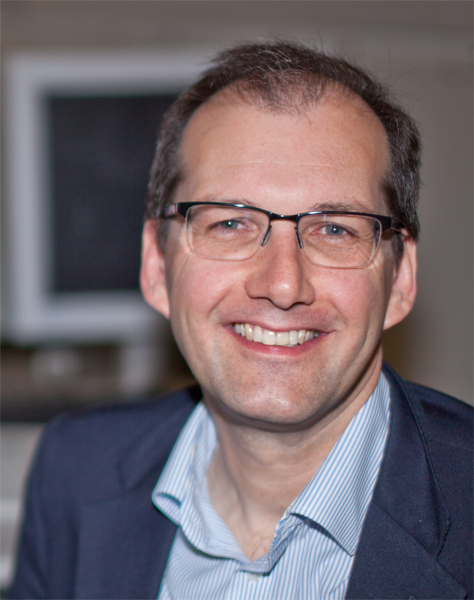
Professor Paul Midgley is a leading academic in Materials Science at the University of Cambridge's Department of Materials Science and Metallurgy, serving as Professor since 2007 and Head of Department from 2018–2020. He is a Fellow of Peterhouse College and holds multiple prestigious awards, including the Royal Society Fellowship and the Ernst Ruska Prize. Education: PhD in Physics (University of Bristol, 1991), MSc (Distinction) in Semiconductor Materials (1988), BSc (Hons) Physics (1987). Administration: Director of the Wolfson Electron Microscopy Suite, and active on various University committees including Research, Teaching, and REF. His research focuses on advanced electron microscopy techniques such as convergent beam diffraction, electron tomography, and nanostructure analysis, with applications in nanoscale materials science and 3D reconstruction using compressed sensing. He has pioneered methods like precession electron diffraction and multi-dimensional electron microscopy, contributing to fields like plasmonic nanoparticles and catalytic materials. Key Research Themes: Electron crystallography, nanomaterial characterization, energy materials, and defect analysis in perovskites. Midgley has delivered over 20 invited/plenary lectures globally, including at EUROMAT, the Welch Symposium, and the John Cowley Memorial Lecture. His grant income exceeds £16M as Principal Investigator. Labs/Teams: Leads the Wolfson Electron Microscopy Suite and collaborates internationally on microscopy advancements and materials innovation.
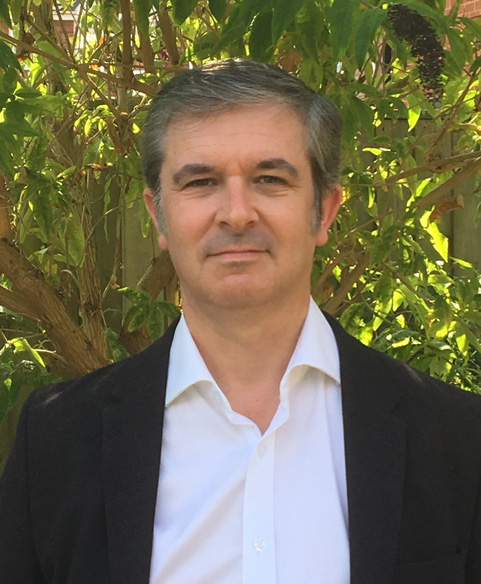
Neil Champness is the Norman Haworth Professor of Chemistry at the University of Birmingham. He holds a prestigious academic position following roles at the University of Nottingham, including Professor of Chemical Nanoscience (2004-2020). His research focuses on supramolecular chemistry, crystal engineering, and metal-organic frameworks (MOFs). Champness leads a group pioneering studies on molecular self-assembly, surface chemistry, and functional materials. Education & Career - Began academic career with Teaching Fellowships at the University of Nottingham (1995) and Southampton (1994). - Became Lecturer in Inorganic Chemistry at Nottingham (1998), progressing to Reader (2003) and full Professor (2004). - Currently heads the Champness Group at Birmingham, established in 2021. Research Interests Champness’s work spans: - Design of porous materials (MOFs, HOFs) for gas storage and catalysis. - Surface self-assembly of 2D supramolecular frameworks. - Photoresponsive materials and molecular rotaxanes. - Chemical synthesis under constrained conditions. His group emphasizes interdisciplinary approaches, linking chemistry with materials science and nanotechnology. Awards & Recognition 2019: Elected Fellow of the European Academy of Sciences 2020: EPSRC Established Career Fellowship 2016: Royal Society of Chemistry Surfaces & Interfaces Award 2011: Thomson Reuters Highly Cited Researcher 2006: Corday-Morgan Medal (Royal Society of Chemistry) Advisory Roles & Grants - Editorial roles include Chem, Crystals, and CrystEngComm. - Served on Royal Society panels, Irish Research Council, and IUPAC. - Secured major grants from EPSRC and Royal Society. Labs & Collaborations His Birmingham group collaborates globally, with visiting professorships in Japan, Australia, and Brazil. Research is supported by advanced facilities in crystallography and surface chemistry.
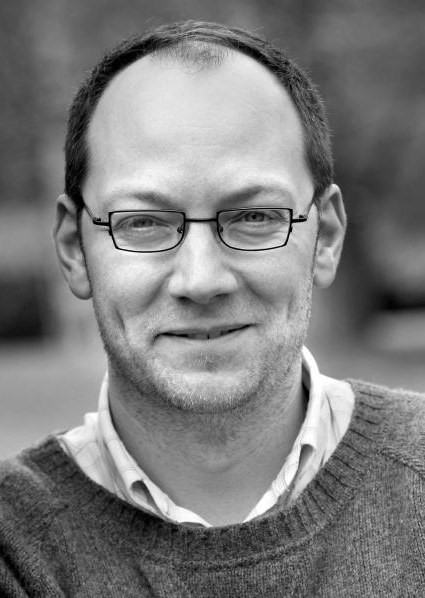
Bert F. Sels is a Full Professor at KU Leuven (Catholic University Leuven) in the Faculty of Bioscience Engineering, Department of Molecular and Microbiological Sciences, where he founded and heads the Center for Sustainable Catalysis and Engineering (CSCE). He is also a Visiting Professor at the Chinese Academy of Sciences in Guangzhou and co-founder of the spin-off company Zeopore. Previously, he directed the Centre for Surface Chemistry and Catalysis (COK) from 2016-2019 and served as Head of the Division Bio-refinery and Sustainable Chemistry (2015). He obtained his Ph.D. in 2000 from KU Leuven under Professor Pierre Jacobs, specializing in heterogeneous oxidation catalysis. His research focuses on heterogeneous catalysis for sustainable industrial processes, with expertise spanning: Biorefinery and biofactory systems for chemical production Design of hierarchically structured zeolites and carbon materials Spectroscopic characterization of catalytic active sites Methane activation and small molecule kinetics Renewable chemistry and biomass valorization His group has published 350+ papers (h-index 88) and holds 30 patents. Publications demonstrate strong focus on catalytic biomass conversion, zeolite engineering, and sustainable fuel production, with recent work emphasizing lignin valorization, carbohydrate upgrading, and low-carbon chemical synthesis. Key trends include hierarchical catalyst design and integrated biorefinery processes. Awards and Honors: Green Chemistry Award (2015) INEOS Research Award (2019) European Academy of Sciences and Arts Membership (2018) DSM Chemistry Award (2001) TOTAL Research Award (2013) UMICORE Research Award (2012) First Clean Tech Challenge (2009) He leads the CSCE research group and co-founded the European Research Institute of Catalysis (ERIC). As former co-chair of the International Zeolite Association's Catalysis Commission and associate editor of ACS Sustainable Chemistry & Engineering, he maintains extensive collaborative networks.
Professor Matthew Jonathan Rosseinsky holds the Chair of Inorganic Chemistry at the University of Liverpool, a position he has occupied since October 1999. His career includes significant appointments at the University of Oxford (1992-1999) and Bell Laboratories in New Jersey (1990-1992), following his DPhil at Merton College, Oxford. As a Fellow of the Royal Society and recipient of numerous prestigious awards, Professor Rosseinsky maintains an active research program and leadership roles in the international chemistry community. Professor Rosseinsky's educational background includes a First Class Honours degree in Chemistry with Quantum Chemistry from the University of Oxford (1987) and a DPhil in "Physical Properties of Superconducting Oxides and Radical Cation Salts" completed in 1990 under Professor P. Day FRS. His research focuses on the synthesis of new materials with applications in energy storage and generation, communications, separation, and catalysis. The Rosseinsky Group employs a broad range of synthesis and characterization techniques, including neutron and synchrotron X-ray diffraction, combined with computational methods in collaboration with Dr. George Darling. Current research areas include Dynapore, CO2 fuels, SOLBAT, and CATMAT projects that target specific material challenges. Professor Rosseinsky's publication record is exceptional, with 304 papers including 11 in Nature, 6 in Science, and 3 in Nature Materials, accumulating over 15,000 citations and an h-index of 56 as of 2012. His work demonstrates consistent excellence across materials chemistry, with particular emphasis on porous frameworks, electronic materials, and solid-state chemistry. Among his numerous accolades are the Harrison Memorial Prize (1991), Corday-Morgan Medal (2000), Royal Society Wolfson Research Merit Award (2002), De Gennes Prize (2009), and the prestigious Hughes Medal from the Royal Society (2011). He also holds an ERC Advanced Investigator Grant and has delivered distinguished lectures worldwide. Professor Rosseinsky has served in numerous editorial and advisory capacities, including as Associate Editor for Chemical Sciences, membership on the Royal Society Conference and Travel Grant Committee since 2007, and as a member of the International Advisory Board for the Max Planck Institut for Solid State Research since 2011. His professional activities extend to international review committees for research institutions in France, South Korea, and Saudi Arabia. The Rosseinsky Group operates within the Department of Chemistry at the University of Liverpool, collaborating extensively with researchers including Dr. John Claridge, Professor Andrew Cooper, and Professor Paul Chalker. The group maintains strong international partnerships and utilizes advanced facilities for materials synthesis and characterization to drive innovation in functional materials development.
Ion Tiginyanu is a prominent materials scientist and academic leader. Currently serving as President of the Academy of Sciences of Moldova since 2019, he previously held roles including Vice-President (2012-2019), and has been Director of the National Center for Materials Study and Testing at Technical University of Moldova since 2001. His academic career includes visiting professorships at the University of Michigan (USA) and Technical University Darmstadt (Germany). He holds a Doctor Honoris Causa from Gheorghe Asachi Technical University and is a Fellow of SPIE. Education: Graduated Moscow Institute of Physics and Engineering (1978), PhD in Semiconductor Physics from Lebedev Institute (1982), Habilitation from Institute of Applied Physics (1991), and became Full Professor in 1993. Research focuses on nanotechnologies, metamaterials, and nanoarchitectures with applications in photonics, electronics, and biomedical engineering. His work produced over 400 publications (H-index 42) and 52 patents. Key achievements include developing novel semiconductor compounds and aero-materials for electromagnetic applications. Grants & Awards: Over 20 major recognitions including National Prize in Science (2004), WIPO 'Outstanding Inventor' (2011), and Honorary Doctorates from Romania/Japan. Labs: Leads the National Center for Materials Study and Testing, and collaborates internationally with institutions like TU Darmstadt and University of Michigan.
Xinliang Feng is a W3 Chair Professor at Dresden University of Technology, where he heads the Chair of Molecular Functional Materials. He also holds an Adjunct Chair Professorship at Shanghai Jiao Tong University, China. Previously, he served as a Distinguished Group Leader at the Max Planck Institute for Polymer Research in Mainz, Germany (2012-2014), and as a Group Leader at the same institute (2007-2012). His educational background includes a Bachelor's degree in Analytic Chemistry (2001), a Master's degree in Organic Chemistry (2004), and a PhD from the Max Planck Institute for Polymer Research (2008). Feng's research focuses on the frontier areas of nanomaterials science, particularly on 2D nanomaterials and low-dimensional nanostructures for energy applications. His work spans from fundamental organic synthesis to applied energy technologies. Key research areas include: Bottom-up synthesis of carbon nanostructures and graphene nanoribbons 2D polymers and supramolecular polymers with tailored properties Mesoporous covalent-bonding organic frameworks for energy storage Organic synthetic methodology in aromatic coupling reactions 2D carbon-rich conjugated polymers for electronic and optoelectronic applications His extensive publication record includes over 436 journal papers with significant impact, featuring publications in top-tier journals including Nature (3 papers), Science (1 paper), Nature Materials (2 papers), and numerous papers in Advanced Materials, Angewandte Chemie, and Journal of the American Chemical Society. His work has garnered over 34,797 citations in Web of Science (H-index ≥88) and over 44,959 citations in Google Scholar (H-index ≥101). Feng has received numerous prestigious awards recognizing his contributions to materials science and chemistry: Member of the German National Academy of Sciences (Leopoldina, 2024) Member of the Academia Europaea (2019) Fellow of the European Academy of Sciences (2019) EU-40 Materials Prize (2018) ERC Consolidator Grant Award (2018) Multiple years as a Highly Cited Researcher (2014-2018) ERC Starting Grant Award (2012) IUPAC Prize for Young Chemists (2009) He serves on the international/editorial advisory boards of 12 international journals and has organized or co-organized 30 symposia, workshops, and conferences. As the Head of the ESF Young Research Group "Graphene Center Dresden" and Working Package Leader for the EU GRAPHENE FLAGSHIP project, he plays a significant role in European materials research initiatives.
Johan Hofkens is a full Professor at KU Leuven since 2008, with a career spanning over 25 years in advanced spectroscopy and microscopy development. His work bridges chemistry, materials science, and nanobioscience, focusing on optical spectroscopy techniques and superresolution microscopy applications. Current research integrates fluorescence/SEM microscopy (integrated microscopies) Specializes in single molecule detection (SMS) and perovskite synthesis Applies NASCA microscopy and RESOLFT techniques for nanoscale imaging His publications (>400) and high citation counts (H-index 69) reflect significant contributions to molecular (bio)materials and metal cluster spectroscopy. Awards include: ERC Advanced Grant (2012) Proteomass Scientific Society Award (2016) European Academy of Science membership Prof. Hofkens collaborates internationally through guest professorships at University of Parma and Hokkaido University, and has pioneered innovations in single molecule detection techniques.
Morris Russell is a renowned Professor of Chemistry holding dual roles as Professor at Charles University (Prague, Czech Republic) and Bishop Wardlaw Professor at the University of St Andrews (UK). He leads the Charles University Centre for Advanced Materials (CUCAM) and the School of Chemistry at St Andrews. His research focuses on porous materials, including zeolites, metal-organic frameworks (MOFs), and their medical applications. He has pioneered innovative synthesis methods like the ADOR principle and ionothermal chemistry, revolutionizing materials science. Education: D.Phil. and B.A. in Chemistry from the University of Oxford. Research Interests: Morris’s work spans materials synthesis (e.g., ADOR principle for zeolites, ionothermal methods), medical applications (gas storage for therapeutics), and advanced characterization (X-ray diffraction, NMR). His contributions include developing MOFs for drug delivery and antibacterial technologies, commercialized through spin-off companies like MOFgen Ltd. Awards: Fellowships from the Royal Society (FRS), Royal Society of Edinburgh (FRSE), and Learned Society of Wales (FLSW). Recipient of the Royal Society Brian Mercer Award, Royal Society of Chemistry Peter Day Award, and GEMI Award. Advising & Grants: PI of a €7M EU grant for CUCAM. Strategic leadership roles in the International Zeolite Association, including Council Member and Commission Chair. Organized over 15 conferences and reviewed for major journals and agencies worldwide. Labs/Teams: Leads the Advanced Materials group at Charles University and EaSTCHEM at St Andrews, focusing on cutting-edge research in materials science and medical applications.
Salvatore Coluccia is a Full Professor of Physical Chemistry at the Department of Chemistry, University of Turin, with appointments in the Faculty of Science, Faculty of Pharmacy, and Biotechnology School. He serves as Vice Rector of the University of Turin, President of ASP (Scientific and Technological Development of Piedmont), and Vice-President of COREP. Academy of Sciences of Turin Former Vice President, Italian Chemical Society Former Member, Ministry for University and Research Committee His research focuses on Chemistry of Materials , Surface Chemistry , and Nanosciences , emphasizing the synthesis/characterization of micro-mesoporous inorganic materials, nanocomposites, and catalysts for environmental applications. He applies surface chemistry to artworks and collaborates globally with scientists like Sir J.M. Thomas and E. Iglesia. Key article trends include photocatalysis , acid catalysts , nanohydroxyapatite , and surface modification in materials science. His work bridges environmental catalysis and green chemistry . Scientific Awards : Medal Cannizzaro, Italian Chemical Society (2011) He has authored 277 publications, edited books, co-edits Research on Chemical Intermediates , and promotes knowledge transfer through EU projects like FP6_FCA and FP7_INNOVASOL.
Prof. Cooper Andrew Ian is an international leader in materials chemistry at the University of Liverpool, where he holds a Personal Chair (since 2003). He has led major research initiatives, including the Materials Innovation Factory (£68M) and the Leverhulme Research Centre for Functional Materials Design (£10M). He has been a Royal Society University Research Fellow (1999–2003) and has served as Head of the School of Physical Sciences (2009–present). Education: B.Sc. (First Class), University of Nottingham (1988) Ph.D., University of Nottingham (1991), supervised by Prof. Sir M. Poliakoff FRS Research Interests: Prof. Cooper focuses on polymers, supramolecular chemistry, energy materials, and porous materials. His work includes photochemical water splitting, high-throughput methodology, and computationally-led materials design. His research bridges fundamental science and industrial applications, emphasizing sustainability and innovation. Awards and Grants: Fellow of the Royal Society (2015) ERC Advanced Investigator Grant (2013–2018) Leverhulme Centre for Functional Materials Design (2016–2026) Recipient of the Tilden Prize (2014), Doolittle Award (2014), and numerous other international accolades Advising and Leadership: He has mentored 30 PhD students, 60 postdoctoral researchers, and 10 technical staff. He pioneered the Materials Innovation Factory and Centre for Materials Discovery, fostering interdisciplinary collaboration. His seminars on research leadership are globally recognized. Labs and Initiatives: Directs the Materials Innovation Factory and the Leverhulme Centre for Functional Materials Design. His Cooper Group at the University of Liverpool is a hub for cutting-edge materials chemistry research.
Prof. Wen Dongsheng is the Chair Professor and Head of the Institute of Thermodynamics at Technical University of Munich (Germany). He holds adjunct professorships at the University of Leeds (UK) and Beihang University (China). His research focuses on multiscale heat transfer mechanisms in nanomaterials, with applications in energy and aerospace engineering. Key areas include solar energy systems, nanofuel combustion, and nanoparticle interactions with electromagnetic radiation. Education: BEng in Aeronautics (Beihang University), MSc in Thermophysics (Tsinghua University), DPhil in Engineering Science (University of Oxford). Research Interests: Heat production/transport/storage, multiscale experimentation/simulation, nanomaterial-based energy solutions. Specific applications include solar energy optimization, nanomedicine, and oil/gas engineering innovations via nanoparticle-driven technologies. Editorial Roles: Editor-in-Chief of Advance in Aerodynamics , Associate Editor of Applied Thermal Engineering . Awards include Fellowships from the Royal Society of Chemistry and Energy Institute, and the MIC-Particuology Award. Publications: Over 350 referred papers, 20 patents, with an H-index of 65. Research emphasizes cross-disciplinary applications of nanotechnology in energy systems and aerospace.
Andrea Heugenhauser is an Assistant Professor at the University of Salzburg, affiliated with the Department of Chemistry and Physics of Materials within the Faculty of Natural and Life Sciences. Her research focuses on advanced silicone-based materials and hybrid polymers. Research Interests: Flexible and highly porous polymethylsilsesquioxanes Stimuli-responsive polymethylsilsesquioxanes Functional silicones Her work lies at the intersection of inorganic and organic materials chemistry, aiming to develop novel hybrid systems with tunable porosity and responsiveness for potential applications in sensing, catalysis, or drug delivery. Although specific publications are not listed, her ORCID profile indicates active scholarly engagement. Contact Information: Email: andrea.heugenhauser@plus.ac.at Phone: +43-662-8044-6263 Address: Jakob-Haringer-Str. 2A, 5020 Salzburg, Austria
Malina Seyffertitz is a University Assistant and PhD candidate at the Department of Physics, Montanuniversität Leoben. Her research focuses on the role of water in electric double-layer formation for supercapacitors, employing advanced in-situ scattering techniques like SAXS and SANS at large-scale facilities. She also investigates nanoporous materials synthesis and science communication. Education: PhD candidate since 2021, M.Sc. in Materials Science (2020), B.Sc. in Materials Science (2018), and high school diploma (2015). Research Interests: Electrochemistry, energy storage materials, neutron/X-ray scattering, and nanoporous carbon characterization. Her work bridges fundamental physics with applied materials science, addressing challenges in sustainable energy and environmental technologies. Awards: NESY '24 Young Scientist Award (2024), Otto Kratky Award (2022), Best Poster Prize at ÖPG Annual Meeting (2022), and recognition at Faraday Discussions and Gordon Conferences. Teaching: Instructs Physics courses (STEM-Physics, Physics 1 VU, Physics 2 VU) and actively engages in science outreach, including the Nova Rock Festival's 'Montanuniversität Wissens-Line-Up' (2023). Labs & Groups: Associated with SyNergy_Mat Lab, SPMGroup, and 2D_Mat_Lab. Collaborates on projects like the 'Condensed Matter Physics and Chemistry (CMPC)' initiative and beamtime at ILL (Grenoble), DESY (Hamburg), and ELETTRA (Trieste).
Signe Kjelstrup is a Full Professor at the Department of Chemistry, Norwegian University of Science and Technology (NTNU), and holds a part-time professorship at TU Delft. She has held visiting positions at the University of Barcelona, University of Kyoto, University of Leiden, and Medical College of Ohio. Her career includes roles as Assistant Professor at the University of Rochester and NTNU. Her research focuses on non-equilibrium thermodynamics , energy optimization , and transport phenomena . Key areas include: Heat and mass transfer in biological, chemical, and energy systems Molecular dynamics simulations of ion pumps and membrane transport Thermodynamic efficiency in industrial processes and renewable energy Interfacial phenomena and phase equilibria Recent publications (2011-2012) emphasize molecular-scale thermodynamics , with applications in hydrogen purification, clathrate hydrates for energy storage, and biological ion pumps. Work frequently combines theoretical modeling with molecular simulations to analyze energy conversion and transport. Awards and honors: Nansen Foundation Award (1980) Honorary professorships in China, Japan, and Spain Major grants from Research Council of Norway Memberships in Norwegian Academy of Technology, Royal Norwegian Society of Science, and Norwegian Academy of Sciences She leads research on non-equilibrium thermodynamics at NTNU and collaborates internationally on projects involving sustainable energy and membrane technology.