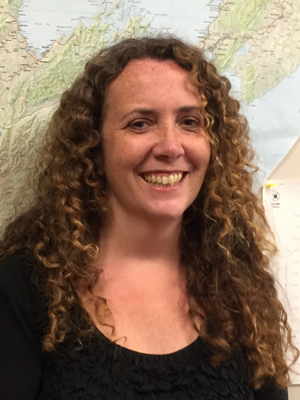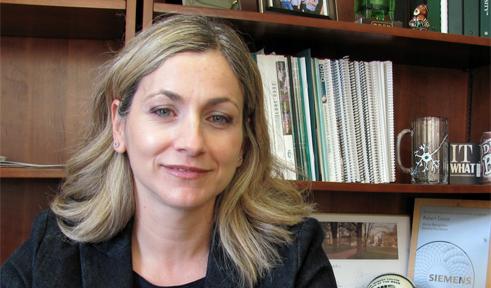
Maria Chatzidaki-Livanis is an Instructor in the Department of Biological Sciences at Ohio University, part of the College of Arts and Sciences. She previously held academic positions at Harvard Medical School, including Postdoctoral Research Associate (2006–2009) and Instructor in Medicine (2009–2018), following her Ph.D. from the University of Florida in 2004. Research Interests: Her work centers on the molecular biology of the human gut symbiont Bacteroides fragilis , exploring its dual role as both a mutualistic bacterium and an opportunistic pathogen. She investigates mechanisms of bacterial symbiosis, pathogenesis, and competition, with a focus on secretion systems, antimicrobial proteins, glycan synthesis, and host-microbe signaling. Publication Trends: Her research, published in top journals such as Cell , PNAS , and MBio , reveals a consistent focus on microbial adaptation in the gut, particularly how Bacteroides species utilize molecular mimicry, protein modification, and interbacterial competition to colonize and persist in the intestinal environment. The integration of genetics, biochemistry, and microbiology underscores a systems-level approach to understanding gut microbiota dynamics. Academic Background: Ph.D., University of Florida, 2004 Postdoctoral Research Associate, University of Florida, 2004–2006 Postdoctoral Research Associate, Harvard Medical School, 2006–2009 Instructor in Medicine, Harvard Medical School, 2009–2018 Instructor, Ohio University, College of Arts and Sciences Advising and Grants: While no formal students or grants are listed in the provided text, her extensive collaborative research, particularly with Dr. Laurie E. Comstock, suggests mentorship and leadership in laboratory settings. Her long-standing research program implies grant support, though specific funding sources are not mentioned. Laboratories and Teams: Her research has been conducted within prominent microbiology labs, particularly at Harvard Medical School and now at Ohio University, focusing on bacterial genetics and host-microbe interactions. She is part of a broader scientific network studying the human microbiome and its implications for health and disease.