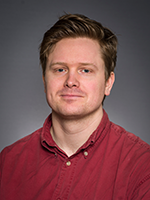
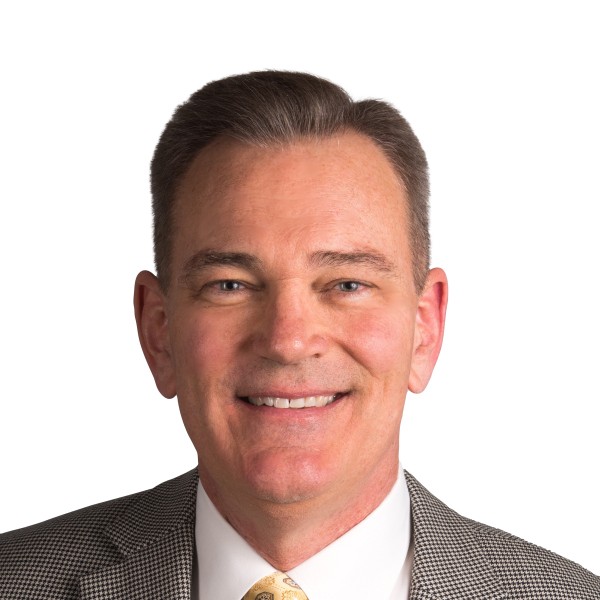
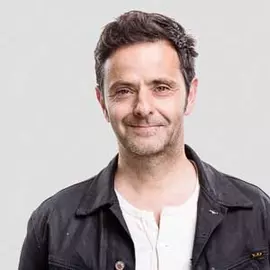
Dr. Gaute Linga is a Researcher at the NJORD Center for the Study of Earth Physics, University of Oslo , Norway. His work focuses on fluid dynamics in porous media , with applications to CO2 storage , geophysics , and electrohydrodynamics . He develops numerical frameworks like Bernaise for simulating multiphase systems and contributes to understanding chaos in fluid flows , solute dispersion , and mineral precipitation in subsurface environments. His research spans Computational Physics , Geophysical Fluid Dynamics , and Materials Science , often published in journals like Nature Physics , Advances in Water Resources , and Physical Review Fluids . He collaborates with teams at the VISTA Center for CO2 Storage in Volcanic-Sedimentary Systems (VICCO) and the Department of Geosciences . Contact: gaute.linga@mn.uio.no
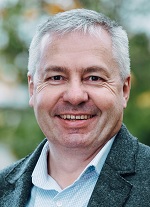
François Renard is a Professor at the University of Oslo in the Department of Geosciences and serves as the Center Director of the NJORD Center for the Study of Earth Physics . He also holds a Professor position in Earth Sciences at University Grenoble Alpes (France) and is a visiting researcher at the European Synchrotron Radiation Facility (ESRF) . His research spans geophysics, geochemistry, and geomechanics, focusing on crustal processes, fracture dynamics, and fluid-rock interactions.
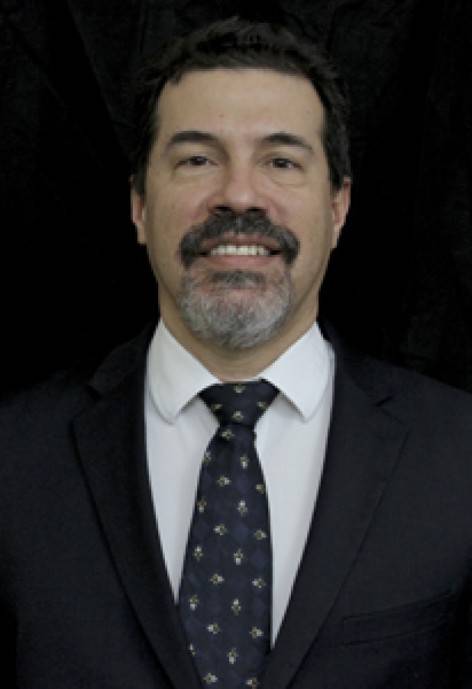
Tobias Gebäck is an Associate Professor at Chalmers University of Technology's Applied Mathematics and Statistics department, affiliated with the SuMo Biomaterials research center. His work focuses on mathematical modeling and numerical methods for mass transport in soft porous materials , with applications in drug delivery systems and absorbent product development . He also investigates charged particle transport mechanisms relevant to cancer radiation therapy . Key research areas: mathematical modeling, numerical methods, transport in porous media, radiation therapy applications Active collaborations: SuMo Biomaterials research center Recent publications emphasize stochastic modeling of 3D structures , Lattice Boltzmann simulations for transport phenomena in complex materials, and multi-scale diffusion analysis of bio-based systems. This work connects fundamental mathematics with industrial applications in pharmaceutical and consumer product development.
Anton Steen is an active researcher driving cutting-edge investigations in nuclear pore complex biology, nuclear transport mechanisms, and biomolecular condensates. His work fundamentally advances understanding of cellular organization, protein homeostasis, and membrane dynamics with direct relevance to UN Sustainable Development Goals in health and well-being. His research portfolio spans: Nuclear pore complex structure-function relationships (100% fingerprint relevance) FG-nucleoporin phase behavior and chaperone surveillance systems Biomolecular condensate quantification via advanced imaging Bacterial cell wall biology using Lactococcus Lactis models (85% fingerprint relevance) Peptidoglycan remodeling and autolysin mechanisms (72% relevance) Steen's methodological approach integrates quantitative imaging, computational protein design, and biochemical assays to dissect nuclear membrane dynamics and transport barriers. Recent publications reveal an evolving focus from bacterial cell wall systems toward eukaryotic nuclear pore complex biogenesis, highlighted by high-impact studies on DNAJB6 chaperone functions (Nature Cell Biology, 2022) and FG-nup phase state surveillance (Cell Reports, 2024). He maintains a robust collaborative network centered around the Veenhoff research group, evidenced by consistent co-authorship across 29 research outputs including articles, reviews, and patents. Geographical collaboration maps indicate extensive international partnerships spanning European and North American institutions.
Professor Jianqiao Ye is a distinguished academic at Lancaster University, where he joined in 2012 as a Professor and Chair of Mechanical Engineering. He is an active member of the Lancaster Intelligent, Robotic and Autonomous Systems Centre (LIRA), contributing significantly to research and teaching in engineering disciplines. His academic leadership extends beyond Lancaster University, as he serves as an Engineering Program Consultant at Blackpool & Fylde College and the external examiner for the UG Mechanical/Sustainable Energy Engineering program at Queen Mary University of London. Professor Ye's research spans a broad spectrum of academic and industrial interests with significant impact in multiple engineering fields. His work focuses on: Failure and damage mechanisms of fibre reinforced composites Advanced steel-concrete composite structures Geopolymer and green cementitious materials Cement and concrete carbonation processes Offshore oil and gas structures Vibration energy harvesting technologies His research methodology integrates traditional testing with cutting-edge numerical modeling and optimization techniques, extending to applications of modern analytical instruments such as X-CT, SEM, XRD, and EDS. More recently, he has incorporated data-driven approaches including metamodelling, machine learning, and digital twin technologies into his research portfolio, demonstrating adaptability to emerging technological trends. The analysis of Professor Ye's recent publications reveals a strong focus on sustainable construction materials, particularly ultra-high performance concrete (UHPC) and its variants. His work consistently addresses practical engineering challenges related to structural integrity under extreme conditions such as fire exposure, high temperatures, and mechanical loading. There's a clear trend toward integrating digital technologies with traditional engineering approaches, especially in the development of digital twin applications for construction equipment monitoring and structural analysis. His research shows increasing collaboration across disciplines, combining materials science, structural engineering, and computational techniques to solve complex problems in construction and infrastructure. Professor Ye's exceptional contributions to science have been recognized through prestigious awards: World's top 2% most influential scientist (Lifetime Scientific Influence Ranking) by Stanford University and Elsevier World's top 2% most influential scientist (2023 Global Scientists Influence Ranking) by Stanford University and Elsevier Professor Ye has successfully supervised multiple PhD students including Thamer Almotlaq, Kai Pang, Zhefeng Zhang, and Siyu Zhao, demonstrating his commitment to academic mentorship. His research has attracted substantial funding from leading organizations including the European Commission, EPSRC, Royal Society (RS), Royal Academy of Engineering (RAE), and major industrial partners such as Airbus, BAE Systems, Dunlop, DSTL, Force Technology, ITASCA, and QinetiQ. This diverse funding portfolio reflects the strong industrial relevance and academic excellence of his research program. As a key member of the Lancaster Intelligent, Robotic and Autonomous Systems Centre (LIRA), Professor Ye contributes to a vibrant research ecosystem that bridges traditional engineering disciplines with emerging technologies. His work on digital twin applications for construction equipment and his integration of machine learning with structural analysis position him at the forefront of the fourth industrial revolution in civil and mechanical engineering. The collaborative nature of his research, evidenced by partnerships with institutions worldwide including Sydney University, Australian National University, Nanyang Technological University, Stanford University, and leading Chinese universities, creates a rich environment for knowledge exchange and innovation.
Ignacia Echeverria Riesco is an Assistant Professor in the Department of Bioengineering and Therapeutic Sciences at the University of California San Francisco (UCSF), where she leads research at the intersection of structural biology and computational modeling. Her work focuses on integrative modeling of protein assemblies using in vivo , in situ , and solution data, with particular emphasis on host-pathogen interactions in HIV and structural dynamics of the nuclear pore complex. Research Themes : Structural diversity of protein complexes, genetic interaction data for structural modeling, host-pathogen interface analysis Methodologies : Integrative Modeling Platform (IMP), cross-linking mass spectrometry, molecular dynamics simulation Key Collaborations : Structural Biology and Computational Biology groups at UCSF, including partnerships with the Sali Lab and Krogan Lab Her publications (2011–2025) span structural characterization of HIV complexes, nuclear pore architecture, and transporter protein mechanisms. Recent work on SARS-CoV-2 host remodeling and yeast nuclear pore adaptations demonstrates her lab's methodological versatility in tackling heterogeneous biological systems.
Jose Eugenio Lopez Periago is a full-time researcher at the University of Vigo , affiliated with the Faculty of Sciences and the Department of Plant Biology and Soil Sciences . His work focuses on soil chemistry, environmental toxicology, and agroecology, particularly in vineyard soils and pesticide transport. Education: PhD in Environmental Science from the University of Santiago de Compostela (1993), thesis on groundwater contamination by cattle manure in Terra Chá under Dr. Francisco Díaz-Fierros Viqueira. Research Interests: His studies address copper dynamics in agricultural soils, pesticide transport mechanisms, soil structure analysis via computed tomography, and sustainable soil management practices. Key themes include heavy metal pollution, bioremediation, and soil ecosystem services. Article Trends: Recent publications emphasize Tenebrio molitor applications, allelopathic biomass for weed control, 3D-printed soil scaffolds, and soil pore network characterization. His work bridges environmental science , materials engineering , and agricultural sustainability . Labs & Teams: Affiliated with the Institute of Agroecology and Food , focusing on soil health and agrochemical impacts. Collaborates with researchers like P. Pérez-Rodríguez, M. Paradelo, and D. Soto-Gómez on interdisciplinary projects.
Vladimir Alvarado is a Professor and Interim Department Head at the Department of Chemical and Biomedical Engineering , University of Wyoming . His research focuses on Enhanced Oil Recovery (EOR) and transport in porous media , integrating data mining, analytical simulations, and experimental techniques. Education : Ph.D. in Chemical Engineering (University of Minnesota, 1996), Master in Exploration and Production (IFP School, 2002), B.S. in Physics (Universidad Central de Venezuela, 1987) Key research areas include CO2 sequestration , shale geomechanics , and nanoparticle applications in oil recovery . Recent publications highlight advancements in NMR methods for fluid characterization, stimulation fluid impacts on shale , and dynamic interfacial phenomena relevant to EOR and carbon storage. His work combines pore-scale modeling with reservoir simulation to optimize fluid recovery strategies.
Evren M. Ozbayoglu is the Jonathan B. Detwiler Endowed Chair Professor in Petroleum Engineering at The University of Tulsa, where he directs the TU Drilling Research Projects (TUDRP). Previously a faculty member at Middle East Technical University (METU) until 2009, he earned his B.Sc. (1996) and M.Sc. (1998) from METU and a Ph.D. in Petroleum Engineering from The University of Tulsa (2002). Research Focus : Drilling mechanics, wellbore stability, multiphase flow, non-Newtonian fluid dynamics, and machine learning applications in drilling operations. Notable Contributions : Co-author of specialized drilling engineering textbooks and over 200 peer-reviewed papers, with industry impact in underbalanced drilling, managed pressure drilling, and hole cleaning optimization. Recognition : Recipient of multiple SPE awards, Chevron Fellowships, and the Allen Chapman Distinguished Ph.D. Student Award. Expertise : Combines experimental and computational approaches to drilling challenges, with recent work on cement sheath integrity, thermal stability in HPHT drilling, and AI-driven drilling performance optimization. Current Projects emphasize real-time drilling data analysis, fluid dynamics modeling, and machine learning integration for predictive drilling solutions. His work bridges fundamental research with industrial applications through TUDRP.
Kathiravan Meeran is a Researcher at the University of Natural Resources and Life Sciences, Vienna (BOKU) , affiliated with the Institute of Soil Research and Institute of Forest Ecology . His research focuses on ecosystem carbon dynamics under global change , particularly examining greenhouse gas fluxes , stable isotope applications , and automated measurement systems across diverse environments including subarctic grasslands , temperate forests , urban areas , and tropical rainforests . He employs field experiments , isotope labeling , laser and mass spectrometry , and inverse modeling to study carbon cycling and source attribution. Recent projects address urban carbon footprints (funded by the City of Vienna), climate change impacts on bark beetle outbreaks in Lower Austrian forests (industry-funded), and carbon dynamics in mountain forests under EU climate change initiatives. His publications (2021–2025) reveal cross-system insights into drought effects on microbial carbon metabolism, tree-ring isotope responses, and urban CO2 monitoring via tall towers. He has collaborated on projects involving 10+ international institutions and presented at conferences like the Stable Isotope Network Austria Meeting and EGU General Assembly .
Eric Vincens is a University Professor in Civil Engineering at École Centrale de Lyon , where he has worked since 2004. He serves as Director of the Solid Mechanics - Mechanical Engineering - Civil Engineering department and co-heads the Ecological Transition & Territories option in engineering training. His academic background includes graduation from ENS Paris-Saclay , an agrégé in civil engineering, and a PhD from École Centrale de Lyon (1999) . Research Interests focus on: Soil and geotechnical structure behavior Sustainability of large strategic structures (dams, bridges) Vernacular construction with low environmental impact (raw earth, dry stone) Adaptive modeling approaches for filtration processes Publications Analysis : His work spans granular material filtration mechanisms , concrete modification with industrial byproducts , and seismic behavior of dry stone structures . Recent studies (2024-2025) emphasize: Comparative analysis of dry/wet filtration models Micro-mechanical characterization of void spaces Seismic stability of traditional masonry constructions Digital image correlation for material property determination
Christian Germain is a Professor of Computer Science at Bordeaux Sciences Agro, an engineering school specializing in agronomy. He focuses on information technologies and their applications to agriculture and environmental science, conducting research in image analysis at the IMS laboratory. His work spans remote sensing, embedded agricultural imaging, and digital tool development for vineyards. Key Roles: Co-holder of the AgroTIC business chair (29 corporate sponsors), Scientific Director of DigiLab (open platform for wine-growing experiments). Research Themes: Remote sensing, agricultural imaging systems, covariance pooling in machine learning, and texture analysis for material science. His recent publications highlight collaborations with industry and academic partners, emphasizing applications in vineyard health monitoring, carbon composite modeling, and vine disease detection. Germain’s team utilizes CNNs, Gaussian mixture models, and SAR imaging techniques to advance agricultural and materials engineering. He has contributed to international conferences and journals, integrating computational methods with real-world agricultural challenges, including proximal sensing for crop management and 3D microstructure simulation.
Gregory A. Voth serves as Haig P. Papazian Distinguished Service Professor in the Department of Chemistry at the University of Chicago, where he leads a highly productive research group focused on theoretical and computational approaches to complex biophysical and chemical systems. His work bridges multiple disciplines through innovative methodology development. Dr. Voth's research program centers on: Developing multiscale theoretical frameworks connecting quantum to classical mechanics Creating advanced coarse-graining techniques for biomolecular and materials systems Simulating charge transport phenomena in biological and synthetic systems Modeling viral infection mechanisms with atomic-level detail His group has pioneered computational approaches that reveal fundamental mechanisms in biological processes, most notably how HIV capsids exploit electrostatic ratcheting to enter cell nuclei. The Voth Group has also created the first comprehensive computational model of the entire SARS-CoV-2 virus. Recent methodological advances include entropy-based coarse-graining, machine learning integration with statistical mechanics, and the RAPTOR software package for proton transport simulations. Dr. Voth's scientific impact is recognized through numerous prestigious awards including the 2025 ACS Award in Theoretical Chemistry, the S F Boys-A Rahman Award (2019), and a Festschrift in The Journal of Physical Chemistry B celebrating his 65th birthday. His research is consistently funded by NIH and NSF, supporting a vibrant group of students and postdocs who regularly receive competitive fellowships and awards. Through extensive collaborations with experimental groups worldwide, Dr. Voth's theoretical work provides critical insights that guide experimental design and interpretation across virology, biophysics, and materials science.
Dr. Lukas Keller is a Researcher at the Zurich University of Applied Sciences (ZHAW), School of Engineering, within the Department of ICP Multiphysics Modeling and Imaging. He leads multiple projects focused on clay rock characterization, including ongoing work on fracture sealing in clay rock and completed studies on gas transport mechanisms in clay materials. His research centers on the geophysical and mechanical properties of clay formations, particularly Opalinus Clay. Key interests include 3D microstructure analysis using X-ray computed tomography (XCT), hydromechanical behavior of fractures, permeability modeling, and pore-scale simulations. His work bridges experimental data with computational approaches to understand fluid flow, elastic properties, and transport phenomena in geological materials. Keller's publications (2014-2023) demonstrate consistent focus on clay microstructure, digital rock physics, and multiscale modeling. Recent articles explore pore geometry effects on rock elasticity, anisotropy in shale mechanics, and advanced tomography techniques. His research provides critical insights for applications in nuclear waste containment and geotechnical engineering.
Dr. Sanjay Nimbalkar is an Associate Professor at the University of Technology Sydney's School of Civil and Environmental Engineering, with over two decades of experience in geotechnical engineering, railway infrastructure, and sustainable pavement design. As a Chartered Professional Civil Engineer (CPEng) and Fellow of Engineers Australia (FIEAust), he bridges theoretical research with practical applications in transport geotechnics. Developed pseudo-dynamic methods for earth-retaining structures Specializes in 3D finite element modeling, constitutive framework development, and field monitoring of infrastructure Recipient of multiple awards: Thomas Telford Premium (2014), Second Sussman Best Paper Prize (2019), and Editor's Choice Award (2020) His research examines nanomaterials for coastal infrastructure (Nano-MgO/SiO2), vibration isolation systems, and recycled materials for sustainable pavements. With over 225 research outputs and top 5% ranking in geotechnical engineering, his work addresses critical challenges in railway track stability, seawater corrosion resistance, and climate change mitigation. Supervising HDR candidates and serving as Adjunct Faculty at IIT Madras and Visiting Associate Professor at IIT Bombay, Nimbalkar leads contract research projects across Australia-India partnerships. His editorial roles span Frontiers in Built Environment, Canadian Geotechnical Journal, and Sustainability, while mentoring through Publons Academy and Engineers Without Borders Australia.