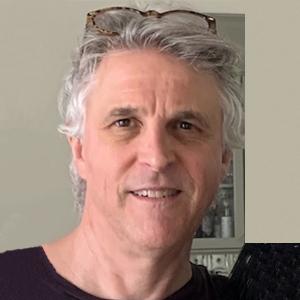
Phyllis Burns serves as an Associate Professor in the Department of English at Otterbein University, specializing in African American Literatures, Hip Hop Culture, Black Women’s Culture Studies, and Black Radical Theory. Her academic credentials include: B.A. from Western Michigan University (1984) M.A. from Western Michigan University (1998) Ph.D. from Michigan State University (2006) Dr. Burns' research examines intersections of Black cultural production with politics and media, focusing on literature, film, and popular culture. She teaches innovative courses including "Dystopias," "Women & Hip Hop," "Civil Rights & the Black Power Movements," and "African American Satire," exploring themes of resistance, identity, and sociopolitical commentary through literary and cultural analysis. She actively mentors senior projects across these domains and contributes scholarly perspectives on African American cinema, visual artists like Kehinde Wiley, and cultural institutions including Essence magazine through her column "Krik?" in Mainstream Press.
Bill Beuttler is an Associate Professor in the Department of Writing, Literature & Publishing at Emerson College, where he has taught since 2006 and currently directs the graduate program in Publishing and Writing. He holds a B.A. from the University of Illinois, Urbana-Champaign and an M.S. from Columbia University. A seasoned journalist, Beuttler contributes regularly to The Boston Globe and has held editorial positions at DownBeat , Men's Journal , and Boston Magazine . His research focuses on jazz studies, creative nonfiction, and publishing. Beuttler authored the critically acclaimed book Make It New: Reshaping Jazz in the 21st Century (Lever Press, 2019), analyzing contemporary jazz evolution through profiles of artists like Esperanza Spalding and Robert Glasper. His recent articles predominantly explore jazz innovation, cultural activism, and genre hybridization through musician profiles and performance critiques.
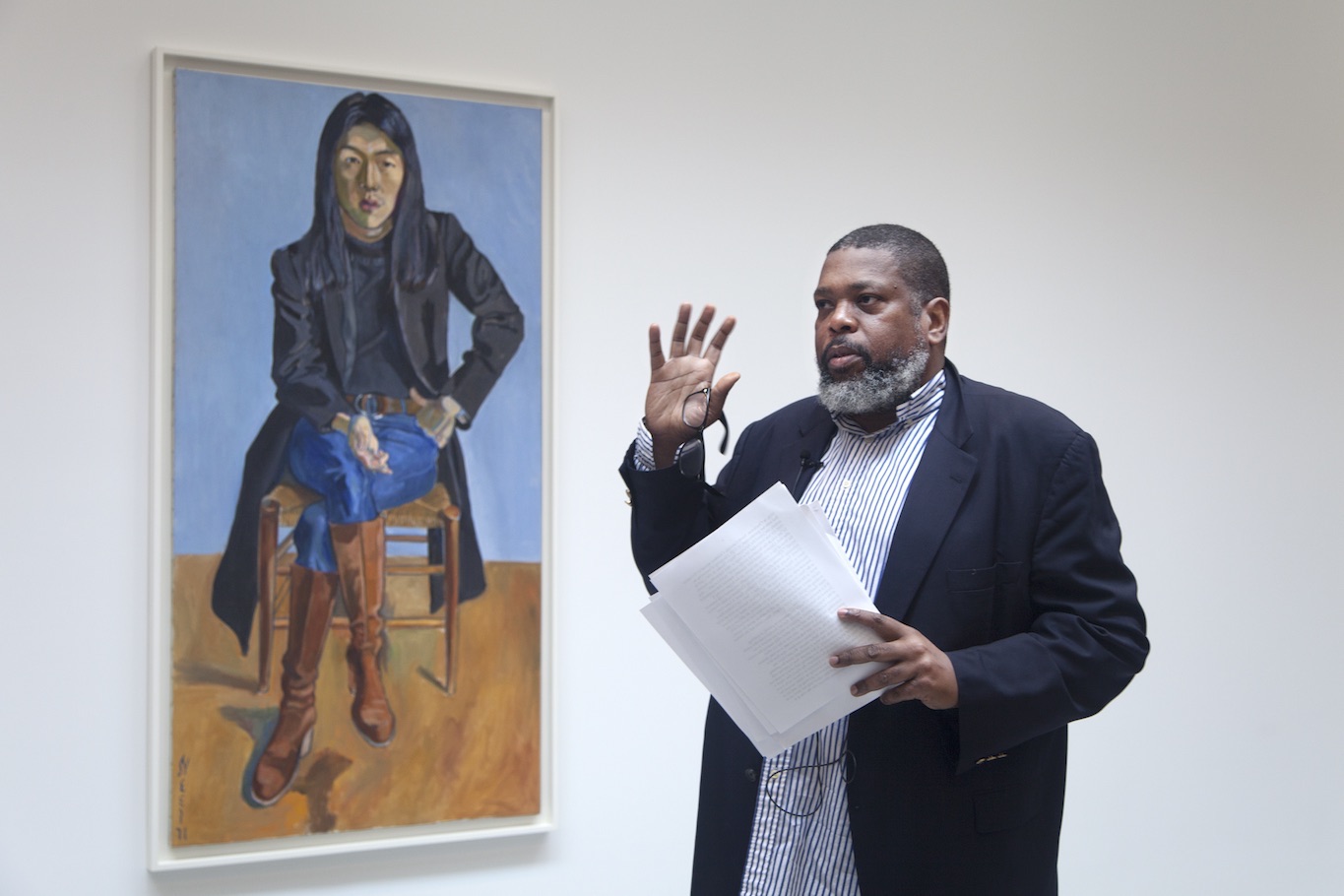
Hilton Als is an acclaimed American writer, critic, and associate professor of writing at Columbia University's School of the Arts. As a staff writer and theater critic for The New Yorker magazine, he has established himself as a significant voice in contemporary literary and cultural criticism. His work spans multiple domains including literary criticism, art criticism, African American studies, and creative writing, with a particular focus on the intersections of race, gender, and identity. Als' research interests center on the complexities of identity representation in American culture. His work explores The fluid boundaries between fiction and non-fiction Racial and gender representation in visual and literary arts The evolution of the essay form as a vehicle for complex identity exploration The cultural significance of figures like Alice Neel, James Baldwin, and Frederick Douglass The relationship between personal narrative and collective experience His writing emphasizes what he calls 'the delicacy of complication'—recognizing the multifaceted nature of human experience rather than simplistic categorizations. His major publications reveal a consistent engagement with themes of representation and identity. Works like White Girls (2014) and Alice Neel, Uptown (2017) demonstrate his ability to bridge literary and visual cultures while exploring complex questions of race and gender. His writing process reflects his belief that 'I don't really understand what I've said until I've written it,' emphasizing writing as a method of discovery rather than mere expression of pre-formed ideas. Als' recognition includes: Pulitzer Prize for Criticism (2017) National Book Critics Circle Award finalist (2014) Pulitzer Prize in Criticism finalist (2016) These accolades reflect the significance of his contributions to American letters and cultural criticism. As an educator, Als teaches the course 'Black Male' at Columbia University, bringing together students from diverse disciplines to explore the black male figure through literary and visual perspectives. He believes in the importance of 'cultural diversity in the class' and values how 'visual people often tend to actually read more or have a different perspective on reading.' His teaching philosophy emphasizes the interconnectedness of different artistic disciplines and the value of multiple perspectives in understanding complex cultural phenomena. Als' curatorial work, particularly the 'Alice Neel, Uptown' exhibition, extends his critical practice into the visual realm, demonstrating his commitment to interdisciplinary approaches to cultural analysis. His work across writing, teaching, and curating reflects a unified vision of cultural criticism as a practice of 'honoring the copyrights people have on their lives' while revealing deeper truths about the human condition.
Dr. Zeba Shahbaaz is an Assistant Professor in the Department of Languages, Literature and Philosophy at Tennessee State University's College of Arts & Sciences. She holds a Ph.D. in English and Africana Studies from Indiana University, Bloomington, an M.A. from North Carolina A&T State University, and a B.A. from Florida State University. Her research bridges African American literature, diaspora studies, and Black feminist theory, with an emphasis on cultural identity and pedagogical innovation. Research Focus: Dr. Shahbaaz investigates the complexities of Black life through literary and cultural analysis. Her work spans: African diasporic historical narratives Black feminist thought and self-care praxis Caribbean literary dystopias Intersections of music, popular culture, and identity Publications: Recent articles (2021–2024) explore transgenerational trauma in diaspora literature, Black women's representation in media, and critiques of racial exceptionalism, consistently applying interdisciplinary Africana Studies frameworks. Teaching & Service: She teaches foundational and specialized English courses, including Afrofuturism and Black literary studies. Dr. Shahbaaz actively contributes to university governance through roles on seven committees, such as the Africana Studies Committee and Faculty Senate Professional Development group.