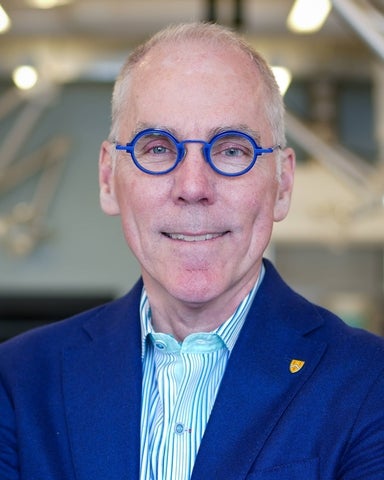
John Corrigan is a Professor and Chair of the Department of Chemistry at the University of Waterloo. His research focuses on the synthesis, functionalization, and characterization of nanoclusters, particularly those involving metal chalcogenides and surface-reactive platforms. He leads the Corrigan Research Group, exploring applications in materials science, nanotechnology, and surface chemistry. Affiliated with the Institute for Quantum Computing and the Waterloo Institute for Nanotechnology, his work bridges molecular chemistry and functional materials. Key research themes include the design of clickable azide-functionalized gold nanoclusters, polynuclear copper-chalcogenolate assemblies, and zinc-based phosphido clusters. His publications highlight advancements in cluster synthesis, luminescent properties, and interfacial modifications. Collaborations span organic, inorganic, and materials chemistry, with a focus on translating molecular-level insights into scalable materials solutions.
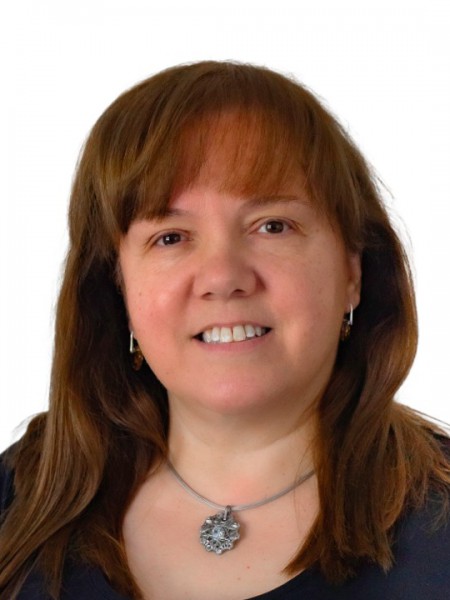
Melanie Pilkington is a Professor and former Canada Research Chair (Tier II) in Chemistry at Brock University. Her research integrates synthetic inorganic chemistry, molecular magnetism, and materials science, with emphasis on designing functional molecular materials. Key research areas include single-molecule magnets, supramolecular chemistry, organic conductors, and spin-crossover compounds. Her group develops novel ligands for polynuclear complexes and investigates their magnetic/conducting properties using X-ray crystallography, magnetometry, and electrochemistry. Recent work focuses on lanthanide-based single-molecule magnets with dual magneto-optical properties and high-nuclearity transition metal clusters. The group maintains collaborations with international partners in Europe and North America. Awards include the Canada Research Chair (Tier II) and Dean of FMS Distinguished Researcher Award (2021). She mentors graduate and undergraduate researchers in synthetic chemistry and crystallography. The lab features specialized equipment for air-sensitive synthesis and single-crystal X-ray diffraction. Research funding comes from NSERC, CRC, and other agencies.
Helena Isabel Seguro Nogueira is an Assistant Professor with Aggregation at the Department of Chemistry, University of Aveiro, Portugal, and a researcher at CICECO - Aveiro Institute of Materials. She holds a Ph.D. in Inorganic Chemistry from Imperial College, University of London, and is a Fellow of the Royal Society of Chemistry (FRSC). Her research focuses on polyoxometalate-based materials, nanotechnology, and surface-enhanced Raman spectroscopy (SERS). She has coordinated several national and international projects, including the Erasmus Mundus Joint Master Degree in Sustainable Catalysis (2020-2024) and led research groups in functional nanomaterials. Education: Licenciatura in Chemistry, University of Coimbra (1987) Mestrado in Materials Engineering, University of Aveiro (1992) Ph.D. in Chemistry, Imperial College London (1996) Agregação in Chemistry, University of Aveiro (2023) Her research interests include the design of luminescent nanocomposites, graphene-based materials, and SERS applications in biodetection. She has published over 120 papers, supervised 6 PhD students, and coordinated projects funded by FCT and the European Commission. Key achievements include the development of SERS substrates and polyoxometalate-functionalized nanomaterials. Awards include the FRSC (2014) and recognition for early-career research at ASPIC94. Her work bridges inorganic chemistry, nanotechnology, and analytical methods, with applications in environmental monitoring and biomedical diagnostics.
James P. Donahue is a Professor in the Department of Chemistry at Tulane University's School of Science & Engineering, where he leads the Donahue Group. His research focuses on synthesis-driven approaches to prepare novel compounds and develop improved methods for accessing important molecular structures. He maintains an active research program with laboratory facilities in Israel Hall 506 and collaborates extensively with researchers worldwide. Education: Ph.D., 1998, Harvard University Professor Donahue's research centers on inorganic synthesis, particularly coordination chemistry involving dithiolene ligands, metal clusters, and redox-active systems. His group investigates the structural, electronic, and catalytic properties of transition metal complexes, with significant focus on molybdenum, tungsten, nickel, and copper systems. Recent work explores hydrogen evolution catalysts, electron transfer processes, and the development of new synthetic methodologies for sulfur-containing compounds. The Donahue Group's recent publications demonstrate a consistent focus on crystallographic characterization of novel inorganic compounds, particularly dithiolene and dithiocarbamate complexes. Their research shows strong emphasis on understanding structure-property relationships in multi-metal systems, redox chemistry, and catalytic applications, particularly for energy-related processes like hydrogen evolution. The group frequently employs X-ray crystallography alongside spectroscopic and electrochemical methods to characterize their compounds. Advising and Research: Professor Donahue has successfully mentored numerous graduate students to completion of their PhD degrees, including recent graduates Che Wu (2024), Justin Barnes (2024), and Gayathri Ragunathan (2024). His research group maintains active collaborations with crystallographers and spectroscopists, particularly with Dr. John Mague and others. The Donahue Group regularly presents research at national meetings and maintains well-equipped synthetic and characterization facilities. The Donahue Group operates specialized laboratories for air-sensitive synthesis, crystallography, and electrochemical measurements. The group has developed expertise in handling dithiolene and dithiocarbamate ligands, metal cluster synthesis, and characterization of redox-active systems. Current research directions include developing molecular models of hydrogen-evolving materials and exploring new synthetic routes to complex sulfur-containing architectures.
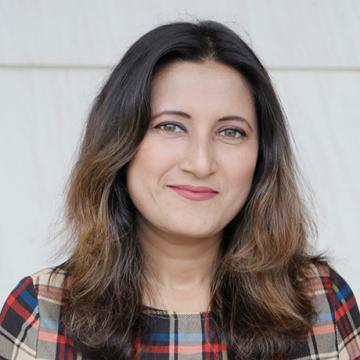
Dr. Arpita Saha is an Associate Professor in the Department of Chemistry and Physics at Simmons University. A synthetic chemist with expertise spanning material science, medicinal chemistry, and environmental chemistry, she develops metal complexes for cancer therapeutics, targeted drug delivery systems, and nanomaterials for environmental remediation. She directs the NASA-supported DREAM_WSTEM program and coordinates the SURPASs summer internship program, initiatives designed to support women and minority students in STEM fields through mentorship and research opportunities. Her educational background includes a PhD in Inorganic Chemistry from the University of Florida, postdoctoral research in Organometallic Chemistry at the University of Göttingen (Germany), an MS in Material Science from IIT Kanpur, and a BS in Chemistry from Presidency College (India). Research programs focus on: Designing coordination polymers for lanthanide-based cancer chemotherapy Developing nanomaterials for heavy metal and contaminant removal from water systems Synthesizing polynuclear metal complexes with magnetic properties Creating catalytic systems for sustainable energy applications Recent publications (2015-2022) reflect diverse applications of inorganic chemistry to environmental and biomedical challenges, including water purification technologies, pyrolysis oil production, and anticancer metallodrug development. Her scholarly output demonstrates consistent innovation in synthetic methodologies and materials characterization. Honors include: NASA MUREP Award ($749,126) for STEM gender gap research Felton Jenkins Jr. Hall of Fame Faculty Award Jean Dreyfus Lectureship ($18,500) Multiple NSF and USG grants supporting instrumentation and curriculum development At Simmons, she leads the DREAM_WSTEM program providing holistic four-year mentorship and funded summer research internships. Her pedagogical innovations include developing discovery-based laboratory courses (CUREs), creating open educational resources, and implementing undergraduate research frameworks that have been adopted by multiple institutions.
Professor Wolfgang Wernsdorfer is a leading physicist and Humboldt Professor at the Karlsruher Institut für Technologie (KIT), affiliated with the Physikalisches Institut. He leads a prominent research group focused on advancing quantum technologies through molecular systems. His career includes key roles as a research director at CNRS in Grenoble, France, and he holds a habilitation from Université Joseph Fourier. His work bridges physics and chemistry, aiming to realize quantum computing using molecular spintronics. His research interests center on molecular quantum spintronics , single-molecule magnets , and hybrid quantum devices . He pioneers the development of quantum bits encoded in magnetic molecules, utilizing their quantum properties for information processing. His group fabricates nanoscale devices using UHV deposition and STM/AFM techniques, exploring couplings between molecular spins and quantum dots, nanomechanical systems, superconducting circuits, and NV centers. This interdisciplinary approach leverages supramolecular chemistry to engineer complex molecular architectures for proof-of-principle quantum processors. The recent publications highlight a strong trend in quantum information science and advanced materials . His work spans from fundamental studies of quantum tunneling in dysprosium and holmium complexes to the engineering of superconducting qubits and hybrid quantum systems. Key themes include the electrical control of molecular spins, the development of high-impedance quantum circuits using granular aluminum, and the integration of molecular magnets with solid-state devices for scalable quantum technologies. Scientific Awards: Bronze Medal from CNRS (1998) Wohlfarth Prize Lecture (2002) Agilent Europhysics Prize (2002) International Olivier Kahn Award (2006) ERC Advanced Grant (2008) Prix Special from SFP (2012) Gutenberg Lecture Award (2012) Alexander von Humboldt Professorship (2016) CNRS Silver Medal (2016) Gottfried Wilhelm Leibniz Prize (2019) Professor Wernsdorfer actively advises students and postdoctoral researchers, fostering the next generation of quantum scientists. His group has received substantial research grants, including an ERC Advanced Grant, to support its ambitious work. He leads a large, collaborative research team and maintains extensive partnerships with chemists from KIT, University of Orsay, and University of Modena, as well as physics groups at Mainz and CNRS. This collaborative network is essential for synthesizing novel magnetic molecules and characterizing their quantum properties. His research group is at the forefront of building a unique low-temperature research platform for molecular quantum spintronics. The team works on cutting-edge projects involving the fabrication and measurement of molecular spin devices, quantum sensors, and hybrid quantum circuits. Their work on granular aluminum resonators and fluxonium qubits represents significant advancements in quantum hardware, aiming to overcome decoherence and scalability challenges in quantum computing.
Professor Jonathan Rittle is a faculty member at the University of California, Berkeley , in the Department of Chemistry . His research focuses on applying structural and spectroscopic methods to understand and enhance the reactivity of metalloenzymes and transition metal clusters, particularly in hydrocarbon activation and small-molecule reduction. Education: B.S., Pennsylvania State University (2010), advised by Prof. Michael T. Green Ph.D., Chemistry, California Institute of Technology (2016), advised by Prof. Jonas C. Peters Research Interests: Dr. Rittle's group investigates polynuclear inorganic active sites in metalloenzymes, such as diiron enzymes that convert alkanes into alcohols or alkenes/alkynes. His work bridges synthetic chemistry, structural biology, and computational methods to design cluster compounds that mimic or improve upon biological systems. Key applications include CO 2 and N 2 reduction, as well as hydrogen atom manipulation for catalysis. Scientific Awards: Herbert Newby McCoy Award (2016) NSF Predoctoral Fellowship (2011-2014) Caltech CEMI Predoctoral Fellowship (2014-2015) NIH Postdoctoral Fellowship (2016-2018) Current Role: As a faculty member, Dr. Rittle leads the Rittle Lab, which operates across labs 831, 817, 816, 807, and 811 in Latimer Hall. His team explores modular ligand frameworks to stabilize transition metal clusters in multiple redox and protonation states, aiming to create selective synthetic catalysts and inspire therapeutic strategies.
Marcelino Maneiro Maneiro is a Professor at the University of Santiago de Compostela, affiliated with the Faculty of Sciences and Department of Inorganic Chemistry. He leads the SUPRABIOIN research group in Bioinorganic and Supramolecular Chemistry. Education: Ph.D. from University of Santiago de Compostela (1998), thesis on Artificial photosynthesis: synthesis of new mimetic complexes , supervised by Dr. Manuel R. Bermejo and Dr. Antonio Sousa Alonso. His research focuses on coordination chemistry of metal complexes, particularly manganese and gold-based systems for artificial photosynthesis, catalytic antioxidants, and anticancer applications. He explores supramolecular assembly, ligand design, and redox-active materials. Recent work includes Inorganic Chemistry (2016) on electrochemical gold complex synthesis, Dalton Transactions (2016) on Pb(II) helicates, and PNAS (2003) on proton-coupled electron transfer in manganese-oxo systems. Collaborations span institutions like Universidade Lusófona, Universidad Nacional Autónoma de México, Cardiff University, and KAUST. His educational outreach includes liquid-liquid extraction demonstrations and historical science communication. Email: marcelino.maneiro@usc.es
Mª Dolores Santana Lario is a Professor at the Department of Inorganic Chemistry , Faculty of Chemistry , University of Murcia . Her academic career spans coordination chemistry, transition metal complexes, and supramolecular systems. Degree in Chemistry and Biochemistry from University of Murcia Master in Fine and Molecular Chemistry Research Interests: She focuses on: Coordination chemistry of transition metals Supramolecular assemblies via hydrogen bonding Photophysical properties of Ni(II) and Pd(II) complexes Modeling biological metalloproteins Catalytic applications Structural and magnetic studies of polynuclear complexes Recent Articles (2000-2013) highlight her work on: Crystal structures of pentacoordinated Ni(II) complexes Luminescent sensors for metal cations Phosphodiesterase and urease models Cross-coupling catalysis Magnetic exchange in bridged systems Hydrogen-bonded networks Teaching & Administration: Coordinated ECTS methodology adaptation for Chemistry degrees Directed tutorial action plans and quality assurance Principal researcher in educational innovation projects Supervised doctoral theses on Ni(II) complex reactivity
Dr. Julio Corredoira Vazquez is a Postdoctoral Researcher at the University of Santiago de Compostela , affiliated with the Faculty of Chemistry and the Department of Inorganic Chemistry . He is part of the Suprametal research group, focusing on coordination and supramolecular chemistry. Education PhD (2022) - University of Santiago de Compostela Thesis: Lanthanide complexes as potential magnet molecules Supervised by Dr. Matilde Fondo and Dr. Jesús Sanmartín Matalobos Research Interests Dr. Corredoira Vazquez specializes in the design and characterization of lanthanide-based materials for magnetic and luminescent applications. His work explores single-molecule magnets (SMMs), luminescence thermometry, and metal-organic frameworks (MOFs), with a focus on ligand engineering to modulate magnetic relaxation and optical properties. Recent Publication Trends His 2025-2024 research highlights include: (1) Developing coordination polymers with unconventional binding modes for dual magnetic/photoluminescent functions; (2) Investigating N5O2 ligands in dysprosium complexes to enhance SMM behavior; (3) Studying counterion effects on structural/magnetic properties; (4) Advancing luminescent thermometers using MOFs and lanthanide clusters. Labs & Teams He is actively involved in the Suprametal group, contributing to interdisciplinary projects at the intersection of inorganic chemistry, materials science, and molecular magnetism.
William Buratto is a Lecturer in the Department of Chemistry and Biochemistry at the University of California, Santa Barbara. He holds a B.S. (2015), Ph.D. (2023, University of Florida), and postdoctoral experience (2023-24, UCSB) focused on inorganic chemistry. His research emphasizes catalysis, nanocluster synthesis, organometallic chemistry, and biomimetic systems. He has expertise in advanced characterization techniques including NMR, XRD, electrochemistry, and chromatography. Education: B.S. in Chemistry, UCSB (2015) Ph.D. in Inorganic Chemistry, University of Florida (2023) Postdoctoral Researcher, UCSB (2023-24) Research interests include design of bimetallic Ni complexes, lignin oxidation catalysis, and synthesis of Fe-S clusters. His work bridges fundamental inorganic chemistry with applications in renewable energy and environmental catalysis. Publications span Dalton Transactions, Chemical Reviews, and Journal of the American Chemical Society, focusing on cluster chemistry, nitrogen activation, and catalytic mechanisms. He teaches CHEM 1AL/BL/CL (Introductory Chemistry Lab) and CHEM 173A (Advanced Inorganic Chemistry).
Miguel Mena Montoro is a Full Professor in the Department of Organic Chemistry and Inorganic Chemistry at the University of Alcalá. With a research career spanning over three decades, he leads the Metalocubanos - Metallocubanes research group, focusing on molecular metal nitrides, oxides, and sulfides. His work bridges fundamental inorganic chemistry with potential applications in catalytic nitrogen fixation. Professor Mena Montoro's research centers on molecular metal clusters, particularly titanium-based systems for dinitrogen activation and conversion to ammonia under ambient conditions. His work explores low-valent transition metal complexes, multinuclear structures, and the reactivity of bridging ligands in polynuclear systems. The research has evolved from fundamental studies of molecular nitrides to more applied work on developing alternatives to the energy-intensive Haber-Bosch process. His recent publications (2022-2018) demonstrate consistent high-impact output in journals such as Angewandte Chemie, Inorganic Chemistry, and Chemistry - A European Journal. The work shows a clear progression toward understanding and optimizing dinitrogen binding and conversion using titanium-based molecular systems. Key themes include the stabilization of low-valent species, small molecule activation, and the structural characterization of novel multinuclear complexes. Professor Mena Montoro has secured consistent research funding through multiple projects with Universidad de Alcalá and Spanish government agencies. His projects typically range from €3,000 to over €135,000, with recent work focusing on titanium complexes for nitrogen activation. The collaborative nature of his research is evident in the extensive co-authorship networks across Spanish institutions. The Metalocubanos - Metallocubanes research group provides students with hands-on experience in advanced synthetic inorganic chemistry, spectroscopic characterization, and structural analysis. The group actively participates in national and international scientific conferences, contributing to the broader field of molecular catalysis and small molecule activation.
Dr. George Kostakis is an Associate Professor in Physical/Inorganic Chemistry at the University of Sussex's School of Life Sciences, Department of Chemistry. He joined Sussex in 2013 following postdoctoral work at Karlsruhe Institute of Technology and a senior researcher position at the Institute of Nanotechnology. His research group pioneers innovative approaches in coordination chemistry, focusing on three pillars: 1) catalytic 3d/4f coordination clusters for sustainable synthesis, 2) benzotriazole-based coordination polymers, and 3) the Polynuclear Inorganic Clusters Database (PICD) for structural analysis. Key research interests include: Development of earth-abundant metal catalysts (Cu, Zn, Ni) for organic transformations Radical-triggered C-H activation methodologies Design of therapeutic metal chelators Functionalization of biomaterials like amyloid fibrils Green chemistry via solvent-free reactions His group has secured significant funding from the Royal Society, EPSRC, and Royal Society of Chemistry. Current grants support work on late-stage bioactive compound functionalization (2024-2026) and economical Cu(II) synthetic methodologies. Dr. Kostakis teaches extensively in inorganic chemistry, convenes PhD programs, and oversees industrial placements.