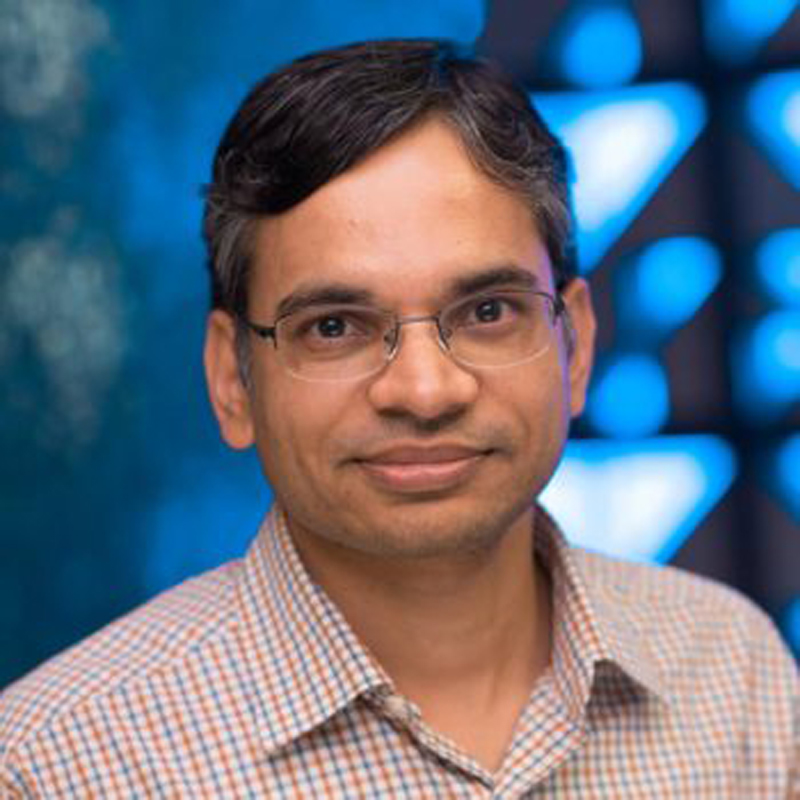
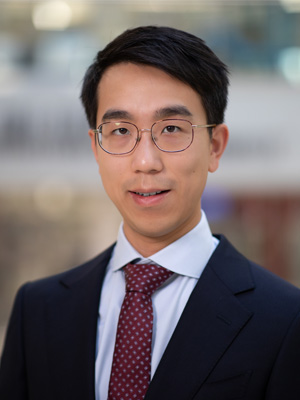
Rafael Oliveira is an Assistant Professor at the University of Waterloo's Cheriton School of Computer Science, conducting research from office DC 1313. His work explores fundamental connections between complexity theory, optimization, and geometry. Research spans: Algebraic complexity barriers Geometric combinatorics Efficient tensor algorithms Proof complexity frameworks His publications demonstrate consistent focus on mathematical foundations of computation , with recent advances in polynomial identity testing, interactive proofs, and geometric optimization. Article analysis shows recurring themes in algebraic complexity (40%), combinatorial geometry (30%), and optimization (30%).
Maxime Breden is a tenured Assistant Professor in the Department of Applied Mathematics at Ecole Polytechnique, France, where he is part of the CMAP research center. His work focuses on the analytical and numerical study of nonlinear PDEs and dynamical systems, with a particular emphasis on combining both approaches to develop computer-assisted proofs. Breden holds a PhD in Mathematics from ENS Cachan (France) and Université Laval (Canada), co-supervised by Laurent Desvillettes and Jean-Philippe Lessard. Prior to his current role, he completed a postdoctoral fellowship at the Technical University of Munich under Christian Kuehn's supervision. His research interests span nonlinear partial differential equations, dynamical systems, and numerical analysis. A key theme is leveraging computational methods to rigorously validate solutions and analyze complex systems, such as reaction-diffusion models in biology and physics, pattern formation, and fluid dynamics. His work frequently integrates advanced numerical techniques with theoretical analysis to ensure mathematical rigor. Breden's recent work emphasizes computer-assisted proofs for nonlinear systems, including studies of Turing instability in heterogeneous media, bifurcation analysis in stochastic flows, and validated numerical methods for PDEs. He has presented his research at leading conferences such as SIAM DS 23 and FoCM 2023. While no specific student or grant information is detailed in the provided text, his academic trajectory reflects a strong focus on interdisciplinary research at the intersection of pure and applied mathematics.
Dr. Eric Dubach is a Lecturer in Applied Mathematics at the University of Pau and the Pays de l'Adour, affiliated with the Laboratory of Mathematics and their Applications. Education: PhD in Numerical Analysis from University of Paris-XIII DEA in Numerical Analysis from University of Paris-VI MSc in Applied Mathematics from University of Paris-XIII His research focuses on numerical solutions for partial differential equations, with specific expertise in artificial boundary conditions, finite element formulations, and computational code development. He has developed pseudo-conforming finite element methods for complex geometries and advanced techniques for interface problems. Dr. Dubach co-supervised PhD candidate Nelly Barrau's thesis on non-conforming finite element methods. He teaches numerical methods and advanced mathematics courses while developing high-performance computational codes (C++, Python).
Bjarne André Grimstad is an Associate Professor at the Norwegian University of Science and Technology (NTNU). His work focuses on optimization, surrogate modeling, and data-driven approaches for complex systems in chemical and petroleum engineering. Key contributions include advancements in B-spline models, hybrid gray-box systems, and neural network applications for virtual flow metering. Research interests span optimization algorithms, machine learning integration with physical models, and industrial process control. Notable publications address multi-task learning frameworks, identifiability in hybrid models, and the efficacy of gray-box modeling in nonstationary environments. Publications (2024–2015) highlight interdisciplinary work combining mathematical programming with real-world applications in oil & gas production and flow measurement. His 2015 doctoral dissertation explored daily production optimization using surrogate modeling techniques. Outreach activities include academic lectures at international conferences (e.g., IFAC OOGP 2015) and poster presentations on hybrid modeling at Geilo Winter School 2021. Collaborations with industry partners like SINTEF and TU Delft underscore his applied research focus.
Prof. Etienne de Klerk is a Full Professor in the Department of Econometrics and Operations Research at Tilburg University, Netherlands. He holds affiliations with the Tilburg School of Economics and Management (TISEM) and has held academic positions at Nanyang Technological University (Singapore), University of Waterloo (Canada), and Delft University of Technology (Netherlands). His research focuses on mathematical programming, optimization, and operations research, with notable contributions to semidefinite programming, polynomial optimization, and interior point methods. Education & Career: PhD (exact title not specified) Assistant Professorships at TU Delft (1998–2003) Associate Professor at University of Waterloo (2003–2005) Full Professor at Tilburg University since 2009 Part-time Professor at TU Delft (2015–2019) Research Interests: Semidefinite programming, polynomial optimization, convex optimization, interior point methods, approximation theory, and algorithmic convergence analysis. His work bridges theoretical foundations with practical applications in engineering and machine learning. Awards & Grants: VIDI Grant (NWO) ENW-GROOT Grant (NWO) 2017 Best Paper Prize (Optimization Letters) Co-recipient of Canadian Foundation for Innovation’s New Opportunities Fund Recent Research Trends: Recent articles emphasize optimizing algorithms (e.g., DCA convergence analysis, predictor-corrector methods) and theoretical advancements in polynomial approximation and positivstellensatze. Collaborations span global institutions in optimization and applied mathematics. Supervision & Projects: Lead researcher on grants like POEMA and MINOA, focusing on polynomial optimization and training early-stage researchers. Actively involved in editorial roles for SIAM Journal on Optimization and INFORMS Journal on Computing. Labs & Teams: Research group in Operations Research at Tilburg University, collaborating on projects like semidefinite programming applications and machine learning optimization.
Nikos Stylianopoulos is a Professor in the Department of Mathematics and Statistics at the University of Cyprus, School of Natural and Applied Sciences. He has been serving in this position since 2010, following his progression through the academic ranks at the same institution from Lecturer (1993) to Assistant Professor (1996), Associate Professor (2002), and finally Professor (2010). He has also held visiting positions at the University of Crete (1999, 2007) and the National and Kapodistrian University of Athens (1992-1993). Ph.D. in Mathematics, Brunel University (1990) M.Sc. in Numerical Analysis, Brunel University (1987) Degree in Mathematics, University of Patras (1985) Professor Stylianopoulos specializes in Complex Analysis , particularly orthogonal polynomials and their applications, Numerical Analysis with focus on computational complex analysis and numerical methods for conformal mappings, and Potential Theory including harmonic functions and inverse potential problems. His research bridges theoretical mathematics with practical computational methods, with significant contributions to understanding the asymptotic behavior of orthogonal polynomials and developing numerical techniques for conformal mapping. His publication record shows a consistent focus on orthogonal polynomials in the complex plane, with particular emphasis on Bergman polynomials, their asymptotic behavior, and applications to image recovery and shape reconstruction. The research demonstrates strong connections between complex analysis, numerical methods, and potential theory, with practical applications in computational mathematics. Academy of Athens Prize (2014) for work on Bergman polynomials Multiple Research in Pairs programs at Mathematisches Forschungsinstitut Oberwolfach University of Cyprus research grants on Orthogonal Polynomials (2010-2015) Bursary from Brunel University (1987-1988) National Scholarship for Excellence (1986-1990) Professor Stylianopoulos has held significant administrative roles including Director of the Center for Teaching and Learning at the University of Cyprus (2016-2017), Chairman of the Editorial Board of Cyprus University Press (2019-2020), and membership on various evaluation committees for undergraduate and postgraduate programs across Greek universities. He serves on the editorial board of Computational Methods and Function Theory and has been involved in numerous research collaborations with prominent mathematicians including Ed Saff, Bjorn Gustafsson, and Mihai Putinar.
Bruno Buchberger is a Full Professor at the Research Institute for Symbolic Computation (RISC) of Johannes Kepler University in Linz, Austria. He has held leadership roles including Head of Softwarepark Hagenberg since 1989 and Chairman of RISC from 1987 to 1999. His academic career spans decades, with prior positions at RISC and the Mathematical Institute of Johannes Kepler University. Research Focus: Computer algebra, Groebner bases theory, automated theorem proving, and symbolic computation. Awards: ACM Kanellakis Award (2007), three honorary doctorates, and the Austrian Cross of Honors for Science and Arts, First Class. As a pioneer in mathematical education for computer scientists, he has contributed to logic-based pedagogical frameworks. His technical leadership at RISC and Softwarepark Hagenberg underscores his influence in computational mathematics and software development.
Matthew Newton is a DPhil (PhD) candidate in Engineering Science at the University of Oxford, affiliated with the Control Group. He is also a College Lecturer at Worcester College, teaching undergraduate students in their first and second years, and serves as a Departmental Teaching Assistant for third-year undergraduates. His research focuses on epidemic models and developing methods to verify the robustness of neural networks, with a particular interest in stability and optimisation. Matthew holds an MEng in Engineering Science from Oxford, where his master’s thesis under Prof. Stephen Duncan explored pipe flow stability. He also interned at the Oxford Man Institute of Quantitative Finance, analyzing financial datasets. His research interests span neural networks, control systems, and mathematical modeling of epidemics. His publications emphasize advancements in neural network verification through polynomial optimization, sparsity exploitation, and stability analysis of complex systems. He has contributed to both theoretical frameworks and applied methodologies in control systems and epidemic modeling.
Prof. Dr. Peter Bürgisser is a Professor at the Technical University of Berlin, affiliated with the Institute of Mathematics and the Algorithmic Algebra research group within Faculty II - Mathematics and Natural Sciences. His research focuses on algebraic complexity theory, computational algebra, and geometric methods in computer science. Bürgisser has made significant contributions to topics including invariant theory, numerical analysis of algorithms, and the computational complexity of algebraic problems. He has authored influential books such as *Algebraic Complexity Theory* and has published extensively in top-tier journals like the Journal of the ACM and SIAM Journal on Computing. His work includes developing polynomial-time algorithms for problems in invariant theory, analyzing the condition numbers of algebraic varieties, and studying the computational aspects of semialgebraic sets. Bürgisser's research also intersects with probability theory, particularly in understanding the statistical properties of zeros of random polynomials and the geometry of random algebraic varieties. Recent trends in his publications emphasize geometric complexity theory, non-commutative optimization, and the application of numerical methods to algebraic problems. He has collaborated with researchers such as Felipe Cucker, Michael Walter, and Avi Wigderson on foundational topics in computational mathematics and theoretical computer science. Bürgisser's office is located in room EB 116, and his contact information includes the email pbuerg@math.tu-berlin.de. His research has been supported through grants and collaborations, though specific grant details are not explicitly mentioned in the provided texts.
Laura Felicia Matusevich is a Professor in the Department of Mathematics at Texas A&M University, affiliated with the College of Arts & Sciences. She holds a Ph.D. from the University of California, Berkeley (2002) and a Licenciada en Matemática from the Universidad Nacional de Córdoba, Argentina (1997). Her research focuses on Algebraic Geometry, Combinatorics, and Discrete Geometry, with applications to hypergeometric functions and neural coding. Her work bridges theoretical and applied mathematics, exploring topics such as binomial ideals, local cohomology, and neural code analysis. Recent contributions include advancements in non-convex neural code criteria, hypergeometric systems, and sparse polynomial computations. She has published extensively in top-tier journals and conference proceedings, demonstrating expertise in both foundational and computational aspects of algebraic structures. Dr. Matusevich’s research also intersects with computational algebra, numerical methods, and interdisciplinary applications in neuroscience and data science. Her articles frequently address challenges in algebraic coding, monodromy analysis, and combinatorial optimization, reflecting her broad impact across mathematics.
Niraj Khare is an Associate Teaching Professor in the Department of Mathematics at Carnegie Mellon University Qatar, part of the Mellon College of Science. He holds a Ph.D. from Ohio State University. His research focuses on graph theory, hypergraphs, combinatorics, and permutation statistics, with emphasis on matching theory, extremal graph properties, and combinatorial enumeration. His work includes studies on Erdős–Gallai edge bounds, Gončarov polynomials, and structural analysis of hypergraphs. Khare's academic contributions span theoretical and applied combinatorics, with notable publications on permutation statistics, hypergraph size analysis, and edge partitioning in graphs. His teaching role emphasizes mathematics education at the university level. He can be contacted at nkhare@cmu.edu and is located in Office 2194 at CMU Qatar's Education City campus.
Zhang Shixuan is an Assistant Professor in the Department of Industrial & Systems Engineering at Texas A&M University. His research focuses on mathematical optimization theory and its applications to data science, operations research, and systems engineering. Education: Ph.D. in Operations Research from Georgia Institute of Technology Postdoctoral: Institute for Computational and Experimental Research in Mathematics (ICERM), Brown University His primary research areas include: Polynomial Optimization Integer Optimization Stochastic Optimization Robust Optimization His recent publications explore advances in distributionally robust optimization, security-constrained power flow algorithms, and theoretical aspects of multistage stochastic programming. Key trends in his work emphasize computational efficiency, algorithm design for nonconvex problems, and applications to energy systems and convex geometry. Doctoral Advisees: Jiamin Chen and Qi Xiao.
Nataliia Adukova is a researcher affiliated with the Department of Mathematics at Aberystwyth University. Her work focuses on advanced topics in matrix factorization and algorithmic development, particularly involving polynomial matrices and stability criteria. She collaborates with researchers like Vladimir M. Adukov and Gennady Mishuris, contributing to interdisciplinary fields such as mathematical physics and engineering sciences. Her research interests emphasize computational methods for matrix analysis, with applications in both theoretical and applied mathematics. Adukova has published in prestigious journals like Proceedings of the Royal Society A and presented at academic workshops on mechanics and solids engineering. Her recent studies explore factorization algorithms and their implementation through tools like the ExactMPF package.
Chiara Amorino is an Assistant Professor at the Department of Economics and Business, Universitat Pompeu Fabra (Barcelona, Spain), starting April 2024. Prior to this role, she was a postdoctoral researcher at the University of Luxembourg (2020–2024), working under Prof. Mark Podolskij. She holds a PhD in Mathematics from Université Paris-Saclay (2020), supervised by Prof. Arnaud Gloter. Her research focuses on statistical inference for stochastic differential equations (SDEs), with particular emphasis on high-frequency data, Malliavin calculus, volatility estimation, and minimax theory. She also investigates McKean-Vlasov equations, Hawkes processes, and local differential privacy. Her work bridges theoretical statistics, probability, and applications in mathematical finance and data science. Amorino has taught courses such as 'Probability and Statistics' at UPF and 'Continuous Time Models in Mathematical Finance' at the University of Luxembourg. She has supervised multiple Master's and Bachelor's theses, including projects on kernel density estimation and stochastic processes. Her recent publications (2023–2025) emphasize parameter estimation in complex stochastic systems, leveraging techniques like Malliavin calculus and deconvolution. She actively contributes to academic conferences, including the Bachelier World Congress and the European Young Statisticians Meeting, and reviews for journals like Annals of Statistics and Stochastic Processes and Applications. Amorino collaborates with institutions globally and leads research initiatives on topics like nonparametric estimation in McKean-Vlasov SDEs and privacy-aware statistical methods.
Jin-Yi Cai is a distinguished Professor of Computer Science and Steenbock Professor of Mathematical Sciences at the University of Wisconsin at Madison, where he has been a faculty member since 2000. Previously, he held academic positions at State University of New York at Buffalo (Professor 1996-2000, Associate Professor 1993-1996), Princeton University (Assistant Professor 1989-1993), and Yale University (Assistant Professor 1986-1989). He has also been a Radcliffe Institute Fellow at Harvard University (2007-2008) and a Guggenheim Fellow and Visiting Professor at the University of Toronto (1999-2000). Dr. Cai earned his Ph.D. in Computer Science from Cornell University in 1986, an M.A. in Mathematics from Temple University in 1983, and a Certificate in Mathematics from Fudan University in 1981. His academic journey spans prestigious institutions across the United States and demonstrates a consistent trajectory of scholarly excellence. Professor Cai's research focuses on theoretical computer science, particularly computational complexity theory, with significant contributions to holographic algorithms, counting constraint satisfaction problems, and graph homomorphisms. His work bridges computer science and mathematics, developing sophisticated algorithms and proving fundamental complexity results. His research has evolved from foundational work in structural complexity and oracle separations to specialized work in holographic algorithms and counting problems, demonstrating both depth and breadth in theoretical computer science. His publication record shows a consistent output of high-impact research, with major contributions spanning over three decades. His work on holographic algorithms represents a particularly innovative strand of research that has opened new avenues in computational complexity. The progression of his research demonstrates increasing specialization in counting problems while maintaining connections to broader theoretical frameworks in computer science and mathematics. 2022 Simons Fellowship 2022 CCF Award for Overseas Outstanding Contribution 2022 Fellow, American Mathematical Society (AMS) 2021 Fulkerson Prize in Discrete Mathematics 2021 Gödel Prize in Theoretical Computer Science 2014 Steenbock Professorship, UW Madison 2001 ACM Fellow 1998 John Simon Guggenheim Fellowship 1994 Sloan Fellowship Professor Cai has served as Editor of the Journal of Computer and System Sciences and Associate Editor of the Journal of Computational Complexity. His work has been recognized with numerous prestigious fellowships including the Guggenheim Fellowship, Sloan Fellowship, and Humboldt Research Award. His research has had significant impact in theoretical computer science, earning him the Gödel Prize and Fulkerson Prize, two of the most prestigious awards in theoretical computer science and discrete mathematics respectively.