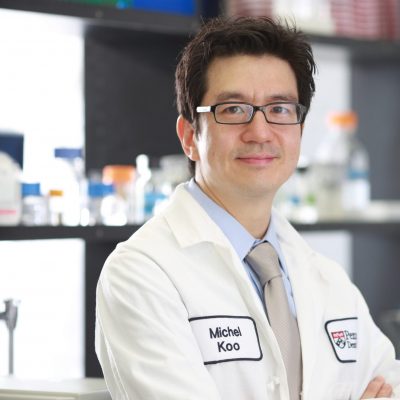
Hyun (Michel) Koo is a Professor at the University of Pennsylvania School of Dental Medicine , with affiliations in the Department of Orthodontics , Division of Community Oral Health , and Division of Pediatric Dentistry . As Co-Founder and Co-Director of the Center for Innovation & Precision Dentistry (CiPD) , he leads interdisciplinary efforts merging bioengineering, nanotechnology, and oral health research. Education : DDS and PhD Research Focus : Biofilms, bacterial-fungal interactions, and nanotechnology for oral disease prevention Leadership : Co-Director of CiPD; key roles in training programs like NIDCR-sponsored R90 and T90/R90 Dr. Koo’s research explores biofilm mechanisms in oral infectious diseases, particularly childhood caries, through engineering methods and microrobotics . His team developed micron-scale robots for automated biofilm eradication and FDA-approved nanoparticles for caries prevention. Collaborations with Penn Engineering, including Dr. Daeyeon Lee and Dr. Kacy Cullen, emphasize translational approaches. The 15 most recent publications highlight his work in nanorobotics , interkingdom biofilms , and precision diagnostics . Articles span 2025–2024 and address topics like adaptive micromotors , biofilm matrix degradation , and single-cell microbial interactions . These emphasize his focus on targeted therapies and biofilm microenvironment engineering . Key Awards : Elected Fellow, American Association for the Advancement of Science (AAAS) IADR Distinguished Scientist Award for innovative dental research Dr. Koo trains next-generation researchers through the CiPD NIDCR T90/R90 Postdoctoral Training Program , mentoring fellows like Smruti Nair (ACE2 Chewing Gum development) and Zhi Ren (K99 awardee). His work intersects with Penn Health-Tech, CT3N , and Penn Institute for Biomedical Informatics , fostering transdisciplinary innovation.
Andrew Currie is a Professor and Associate Dean (Research & Innovation) at Murdoch University's School of Medical, Molecular and Forensic Sciences, within the College of Environmental and Life Sciences. He leads the Sepsis Diagnostics Research Group at the Centre for Molecular Medicine and Innovative Therapeutics and co-heads the Neonatal Infection and Immunity Team with Clinical Professor Tobias Strunk at the Wesfarmers Centre of Vaccine & Infectious Diseases at Telethon Kids Institute. His research focuses on immunology and infectious diseases in pediatric populations, particularly sepsis diagnostics and neonatal immunity. Education: PhD (Immunology, University of Western Australia, 2001); BSc (Biotechnology with Honors, Murdoch University, 1997). Research Interests: Sepsis diagnostics, innate immunity mechanisms in neonates, medical biotechnology for diagnostics (e.g., biosensors), and translational research in pediatric infections. Collaborates internationally with institutions in Canada, Denmark, the UK, US, and China. Aims to reduce sepsis burden in vulnerable populations through advanced molecular methods and interdisciplinary partnerships. Key Affiliations: Lead of Sepsis Diagnostics Research Group (Murdoch University), Senior Lecturer in Immunology, Honorary Associate at Kids Research Institute Australia. Past roles include leadership in the Centre for Molecular Medicine and Innovative Therapeutics. Scientific Contributions: Over 100 peer-reviewed articles focusing on sepsis biomarkers, neonatal immunity, tick-borne diseases, and clinical trials for interventions like vitamin C and probiotics in critical illness. Active in developing precision medicine approaches for neonatal sepsis. Grants & Funding: Co-leads major projects on sepsis diagnostics and neonatal infection, supported by national and international grants. Collaborates on multi-institutional initiatives. Labs/Teams: Sepsis Diagnostics Research Group (Murdoch) and Neonatal Infection and Immunity Team (Telethon Kids Institute). Works closely with the Personalised Medicine Centre and Health Futures Institute.
Dr. F. Jerry Reen serves as a Senior Lecturer and Principal Investigator in the School of Microbiology at University College Cork (UCC), Ireland. With over two decades of academic experience since joining UCC's Department of Microbiology in 2002, he has established himself as a leading researcher in microbial communication systems and host-pathogen interactions. His research group operates within the BIOMERIT Research Centre, and he maintains active collaborations across multiple institutions in Ireland and internationally. Dr. Reen earned his BSc in Biochemistry at the National University of Ireland Galway (NUIG), followed by a PhD in the Molecular GlycoBiotechnology Group at NUIG, supported by an Enterprise Ireland Scholarship and an NUI Teaching Fellowship. His academic journey includes a postdoctoral position in the lab of Dr. E. Fidelma Boyd at UCC, during which he was a visiting scientist at the Sidney Kimmel Cancer Center in San Diego and received an IRCSET Postdoctoral Fellowship for bacteriophage-host interactions research. Dr. Reen's research focuses on deciphering communication systems underpinning polymicrobial-host interactions for human and ecosystem health, with particular emphasis on small molecule signaling in microbial communities. His work bridges fundamental microbiology with translational applications, targeting antimicrobial resistance through chemico-biological therapeutics and developing sustainable pharmaceutical production methods using marine biocatalysts. His research has evolved from early work on Vibrio species to current investigations of Pseudomonas aeruginosa signaling systems, bile acid interactions in cystic fibrosis, and marine enzyme applications in green chemistry. His laboratory's publication record demonstrates consistent productivity with over 80 peer-reviewed papers (h-index 26), spanning from foundational studies on LysR-type transcriptional regulators to recent innovations in virtual reality educational tools. The research trajectory reveals an expanding scope from molecular microbiology to systems-level understanding of microbial communities, with increasing emphasis on sustainable solutions for the pharmaceutical industry. Bronze LEAF Award (2022) - Green Campus University College Cork The Disciplinary Excellence in Learning, Teaching and Assessment (DELTA) Award (2021) - National Forum for the Enhancement of Teaching and Learning Purdy-Lucey UCC Life Sciences Invention of the Year 2015 (2016) Best Poster Exhibition (2012) - Royal Irish Academy National Researcher of the Year, Silver Medal (2011) - Roche BioSciences Researcher of the Year, Gold Medal (2011) - Roche Dr. Reen has successfully secured significant research funding from multiple sources including Science Foundation Ireland (SFI), Health Research Board (HRB), Enterprise Ireland, and Irish Research Council. His current projects include 'BioBloc' enhanced Contact LEns solutioNS (BBCLENS), HEACOVID19, SSPC3 Pharm5, and investigations into novel macrolides for cystic fibrosis management. He has mentored numerous graduate students, including Stephanie Flynn (PhD, 2019), Noelle McCarthy (PhD, 2009), and David Woods (MSc, 2008), with two doctoral students currently completing their research. His educational innovations, particularly student-partnered virtual reality simulations, have transformed how challenging molecular concepts are taught. Dr. Reen leads an interdisciplinary research group that combines microbiology, chemistry, bioinformatics, and education technology. His team collaborates with internal UCC colleagues including Dr. Gerard McGlacken and Prof. Anita Maguire, as well as external partners from institutions like the University of Warwick, Medical University of Graz, and University de Porto. The laboratory maintains strong connections with clinical researchers studying cystic fibrosis and has developed novel approaches for detecting bacterial signaling molecules using boron-doped diamond electrodes.
Professor Sarah Coulthurst is the Chair of Microbial Interactions and a Wellcome Trust Senior Research Fellow at the University of Dundee's School of Life Sciences. Her research focuses on understanding how Gram-negative bacterial pathogens cause disease, with a focus on protein secretion systems (especially the Type VI secretion system), inter-bacterial competition, and antimicrobial resistance mechanisms. She leads a molecular microbiology group using genetics, proteomics, and non-mammalian virulence models. Education: PhD in Molecular Microbiology from the University of Cambridge (2005), MSci in Natural Sciences (2000), and BA in Natural Sciences (1999), all from the University of Cambridge. Research Focus: Her work investigates the molecular mechanisms of the Type VI secretion system (T6SS), bacterial competition strategies, and antimicrobial peptide production. Key projects include studying Serratia marcescens's T6SS-mediated attacks and the role of lifestyle switches in clinical pathogen adaptation. Recent Work: Recent publications highlight discoveries in T6SS effector proteins, pore-forming mechanisms, and genomic regulation of bacterial competition. She also contributes to understanding antimicrobial resistance and Serratia's role in polymicrobial communities. Awards: Includes Fellow of the Royal Society of Edinburgh (2024), Wellcome Senior Research Fellowship (2020), and multiple prizes for contributions to microbiology and teaching excellence. Teaching & Supervision: Module manager for Advanced Molecular Microbiology and supervisor for PhD projects on T6SS mechanisms and bacterial adaptation. She also engages in public outreach and educational initiatives. Lab & Collaborations: Collaborates with institutions like the University of Newcastle and Heriot-Watt University. Her lab integrates cutting-edge omics approaches with traditional microbiology to study pathogen interactions.
Mohamed K. Fakhr, Ph.D., is a full-time Professor in the Department of Biological Sciences at The University of Tulsa, affiliated with the Oxley College of Health Sciences. His research focuses on molecular microbiology of foodborne pathogens, particularly Campylobacter and Staphylococcus aureus, examining antibiotic resistance mechanisms, plasmid characterization, and survival under extreme conditions. Ph.D., Oklahoma State University M.Sc., Zagazig University, Benha Branch B.Sc., Zagazig University, Benha Branch Research interests include: Molecular microbiology of foodborne pathogens Antimicrobial and heavy metal resistance Plasmid-mediated survival mechanisms Genomics and transcriptomics approaches Diversity of extremophilic actinomycetes Antimicrobial and antitumor metabolites His 2025 Google Scholar publications highlight advancements in Campylobacter aerotolerance, plasmid genomics, and extremophile metabolite discovery. Notable trends span food safety, bacterial stress response, and molecular typing methodologies. Scientific awards include: 2025 UTulsa Outstanding Teacher Award 2025 UTulsa Oxley College Teaching Excellence Award Dr. Fakhr's lab investigates polymicrobial interactions in retail meats, utilizes next-generation sequencing for plasmid analysis, and explores actinomycetes in extreme environments. His work bridges molecular biology and public health through pathogen characterization and teaching excellence.
David Goldblatt is a Professor of Vaccinology and Immunology at the UCL Great Ormond Street Institute of Child Health (UCL ICH) and Consultant Paediatric Immunologist at Great Ormond Street Hospital for Children NHS Trust. He serves as Deputy Director of NHS Engagement at UCLICH, Head of the Immunobiology Section, and Director of the WHO Reference Laboratory for Pneumococcal Serology. His academic journey includes roles as Reader (2000–2003), Senior Lecturer (1995–2000), and Clinical Lecturer (1991–1995) at UCL. Research focuses on pneumococcal immunity, vaccine development, and pediatric immunology. Notable contributions include establishing immune memory paradigms, standardizing pneumococcal serology assays, and evaluating vaccine efficacy. He led the £37 million NIHR GOSH/UCL Biomedical Research Centre (2007–2017) and advised WHO on conjugate vaccines. Key Honors: NIHR Senior Investigator (2012–2020), WHO Advisor Grants: £37M Biomedical Research Centre, multiple NIH-funded studies Labs/Teams: Immunobiology Section, WHO Reference Lab, Thailand Birth Cohort Study
José Lopez-Ribot is a Professor and Associate Dean for Research at the Department of Molecular Microbiology and Immunology, College of Sciences, The University of Texas at San Antonio (UTSA). He also holds the Margaret Batts Tobin Distinguished Chair in Biotechnology, reflecting his leadership and scholarly excellence in biotechnology and medical mycology. His research focuses on fungal pathogenesis , particularly of Candida albicans , with a multidisciplinary approach integrating microbiology, immunology, and biotechnology. Key areas include antifungal drug development, microbial biofilms, immunopathogenesis, high-throughput screening, and diagnostic innovation. His lab investigates virulence factors such as filamentation and biofilm formation, aiming to develop novel therapies that target pathogenic mechanisms rather than just inhibiting growth. The recent publications highlight a strong trend toward understanding biofilm dynamics, overcoming drug resistance, and developing novel platforms like microbial chips for nanoscale culture. These works are frequently published in high-impact journals and often take the form of reviews, indicating his role as a thought leader in the field. Margaret Batts Tobin Distinguished Chair in Biotechnology Dr. Lopez-Ribot mentors a diverse team of researchers, including doctoral students and postdoctoral fellows. His lab is actively involved in grant-funded research, though specific grants are not detailed in the provided text. He has advised students such as Gina Wall and Olabayo Harry Ajetunmobi, who contribute to publications on biofilm dispersal and antifungal therapy. The Lopez-Ribot Lab operates at UTSA and focuses on both fundamental and translational research in fungal infections. It includes research scientists, postdoctoral fellows, and students, working on projects ranging from genomics to diagnostic technologies. The lab's work has significant implications for hospital-acquired infections and the development of next-generation antifungals.
Carolyn Ibberson serves as an Assistant Professor of Microbiology at the University of Oklahoma, where she leads the Ibberson Lab focused on bacterial physiology in chronic human infections. Her research program addresses fundamental questions about how pathogens like Staphylococcus aureus establish and persist in chronic infections, with particular emphasis on polymicrobial interactions. B.S. in Biology from University of Wisconsin-Madison (2010) Ph.D. in Microbiology from University of Iowa (2015) Postdoctoral training at University of Texas at Austin (2015-2017) and Georgia Institute of Technology (2017-2021) Dr. Ibberson's research focuses on understanding bacterial physiology during human infection, particularly examining how co-infecting microbes influence S. aureus behavior and disease severity. Her work bridges classic microbiology with advanced genomic and computational approaches to address why chronic polymicrobial infections are notoriously difficult to treat, representing a significant healthcare burden costing over $20 billion annually in the United States. Her laboratory employs next-generation sequencing, microscopy, computational pipelines, and deep learning to investigate the molecular mechanisms of bacterial persistence and microbe-microbe interactions in chronic infection settings. Analysis of Dr. Ibberson's publications reveals a consistent focus on bacterial pathogenesis, particularly Staphylococcus aureus and Pseudomonas aeruginosa in human infections. Her work spans transcriptomics, biofilm formation, virulence factor regulation, and polymicrobial interactions, demonstrating an interdisciplinary approach that combines molecular microbiology with ecological and evolutionary perspectives. Her research trajectory shows increasing sophistication in methodologies, incorporating advanced genomic techniques and computational analysis to address complex questions in infection biology. Dr. Ibberson maintains an active research program through the Ibberson Lab at the University of Oklahoma, where she mentors students and collaborators in cutting-edge microbiological research. While specific grant information isn't detailed in the available materials, her publication record suggests successful funding for research on bacterial physiology in chronic infections, polymicrobial communities, and pathogen adaptation mechanisms. Her work has significant implications for developing new therapeutic approaches for difficult-to-treat chronic infections. The Ibberson Lab represents a dynamic research environment focused on understanding the fundamental biology of bacterial pathogens in clinically relevant contexts. The lab's work on spatial structure in microbial communities, host-pathogen interactions, and gene regulation during infection provides critical insights that could lead to novel antimicrobial strategies targeting the complex ecology of chronic infections.
Laura Knoll is a Professor in the Department of Medical Microbiology and Immunology at the University of Wisconsin–Madison, School of Medicine and Public Health. Her research focuses on the molecular mechanisms of protozoan parasite pathogenesis, particularly Toxoplasma gondii , Cryptosporidium parvum , and Entamoeba histolytica . She leads a dynamic research laboratory that employs cutting-edge technologies including next-generation sequencing, mass spectrometry, multi-omics, and organoid models. B.A. in Chemistry and Biology, Saint Olaf College (1989) Ph.D., Washington University School of Medicine (1994) Postdoctoral Research, Stanford University Dr. Knoll's research spans several key areas: host-pathogen interactions, chronic infection mechanisms, microbial metabolism, and the role of host immune genes such as IFN-γ and ZBP1 in infection outcomes. Her lab has pioneered the use of organoids to study parasite development and has developed novel animal models for Entamoeba histolytica infection. Her work integrates molecular, biochemical, and immunological approaches to dissect how parasite and host genes influence infection dynamics. The recent publications from her lab reflect a strong trend in understanding metabolic manipulation by parasites, host lipid signaling, and the development of advanced in vitro and in vivo models. Her work increasingly leverages multi-omics to uncover regulatory networks in both host and pathogen during acute and chronic stages of infection. Dr. Knoll has received numerous scientific awards recognizing her contributions to parasitology and infectious disease research: 2024: UW-Madison Kellett Mid-Career Award 2022: William Trager Award for Basic Parasitology (ACMCIP) 2012: WARF Romnes Faculty Fellow 2009: Hartwell Foundation Biomedical Research Award 2008: American Heart Association Established Investigator Award 2007: American Cancer Society Research Scholar Award 2003: Shaw Scientist Award 2000: Burroughs Wellcome Career Award She actively mentors graduate students through UW-Madison’s Microbiology, Cellular & Molecular Pathology, and Cellular & Molecular Biology programs. Her lab welcomes postdoctoral scholars and undergraduates, fostering a collaborative and inclusive research environment. Dr. Knoll’s work continues to advance the understanding of eukaryotic parasite biology and host defense mechanisms, with implications for therapeutics and vaccine development. Her laboratory is based in the Microbial Sciences Building, where she leads a team investigating the complex life cycles and pathogenic strategies of apicomplexan and amoebic parasites.
Wei Chao, MD, PhD , is a Professor at the University of Maryland School of Medicine with primary appointments in Anesthesiology and secondary appointments in Physiology . He serves as Vice Chair for Translational Research and Co-Director of the STAR Center . MD from Hunan Medical College, China PhD in Biochemistry, University of Texas Postdoc at University of California, San Diego Dr. Chao's research spans sepsis , trauma , and ischemic myocardial injury , focusing on innate immunity , microRNA , and bioinformatics . His work integrates mouse genetics , physiology , and machine learning to identify biomarkers and therapeutic targets. Recent publications highlight his team's discoveries in extracellular RNA sensing, TLR7 signaling , and coagulopathy in critical illnesses. His 15 most recent articles address topics like sepsis-induced organ injury, miRNA-based diagnostics, and inflammation mechanisms. Dr. Chao has received prestigious awards including the R35 Maximizing Investigators’ Research Award (NIGMS, 2021), Frontiers in Anesthesia Research Award (IARS, 2018-2021), and Colin Mackenzie & Cristina Imle Mentoring Prize (2021). He has been continuously funded by NIH for over 20 years, DoD since 2017, and holds grants from the Air Force and National Science Foundation .
Prof. Dr. Susanne Gebhard is a Full Professor of Molecular Biotechnology at the Institute for Molecular Physiology , Johannes Gutenberg University (JGU) Mainz, Germany, since 2023. Her career spans international institutions, including postdoctoral work in New Zealand and the UK, and a permanent research and teaching position at the University of Bath. She focuses on bacterial physiology, particularly antibiotic resistance mechanisms and microbially induced calcite precipitation for sustainable biotechnology applications. Education: Abitur (1996), University Degree (2003), PhD in Microbiology (2006, University of Otago, New Zealand), Habilitation (2014) Research Interests: Her work bridges two major themes: Antibiotic Resistance : Investigating how bacteria detect antibiotics and regulate resistance pathways, with implications for novel therapeutic strategies. Microbial Biomineralization : Exploring bacterial mineralization processes to reduce cement usage in construction, addressing CO 2 emissions through Solibacillus silvestris and related species. Publications & Collaborations highlight her expertise in Bacillus subtilis , Pseudomonas , and Neisseria systems, alongside contributions to journals like Nature Communications , Cell Reports , and Environmental Microbiology . She frequently collaborates with labs in Oxford, Cologne, and Australia. Scientific Engagement includes: Senior Editor for the Microbiology journal Deputy Spokesperson for the 'Regulation' specialist group of the Association for General and Applied Microbiology Active participation in international conferences and EMBO workshops Lab & Leadership : She leads the Gebhard Lab at JGU Mainz, mentoring students and postdocs while emphasizing interdisciplinary collaboration. Her hobbies include horseback riding, gardening, and exploring the intersection of science and sustainability.
Kangmin Duan, PhD, is a Professor at the Dr. Gerald Niznick College of Dentistry and cross-appointed to the Department of Medical Microbiology and Infectious Diseases at Max Rady College of Medicine, University of Manitoba. He serves as a scientist at the Children's Hospital Research Institute of Manitoba (CHRIM) and a principal investigator in the Manitoba Chemosensory Biology Research Group (MCSB). Education: Postdoctoral Fellowship, University of Calgary Doctor of Philosophy, University of New South Wales Master of Applied Science, University of New South Wales Master of Science, Northwest University (China) Doctor of Philosophy, Northwest University (China) Dr. Duan's research program focuses on bacterial pathogenicity, oral microbiome, antimicrobial drug resistance, and host-microbe interactions. His work explores how pathogens like Pseudomonas aeruginosa and Streptococcus mutans cause infectious diseases, interact within microbial communities, and develop resistance to antimicrobial agents. He integrates genetics, biochemistry, and multi-omics to investigate virulence systems like Type III and VI secretion, quorum sensing, and biofilm formation. Recent publications highlight trends in targeting Pseudomonas aeruginosa virulence through bitter taste receptor modulation, quorum sensing inhibition, and herbal compounds. His lab specializes in antimicrobial discovery, focusing on host-microbe interactions and cross-kingdom communication in polymicrobial environments. Teaching and Mentorship: Dr. Duan actively mentors graduate students, emphasizing rigorous, discovery-driven research. Ideal candidates possess motivation, logical thinking, and a background in biological sciences. Laboratory: Located at the Bannatyne Campus, Room D35B, the Duan Lab combines molecular microbiology and biotechnology to combat infectious diseases through novel chemical agents and therapeutic strategies.
Ms Chun Liu is a Researcher affiliated with the School of Dentistry at the University of Queensland. Her work focuses on biomaterials and regenerative medicine, particularly leveraging extracellular vesicles for clinical applications. She contributes to the Centre for Orofacial Regeneration, Reconstruction and Rehabilitation (COR3), exploring advanced materials for dental and biomedical purposes. Her research interests include the development of scaffold materials for tissue engineering, microbial biofilm analysis, and the application of extracellular vesicles in diagnostics and therapies. Recent studies involve optimizing osteoblast-derived vesicle yields and investigating salivary polymicrobial biofilms' microbial profiles. No scientific awards or grants are explicitly mentioned in the provided materials. She collaborates with researchers across disciplines, including Carlos Salomon and Pingping Han, on interdisciplinary projects combining materials science and microbiology.
Ping Xu is a Professor in the Department of Oral and Craniofacial Molecular Biology at Virginia Commonwealth University School of Dentistry. With a Ph.D. in Molecular Biology from Oxford University and Nanjing University, Dr. Xu has established himself as a leading researcher in microbial genomics and oral microbiology. His work bridges the gap between basic molecular biology and clinical applications in dentistry and infectious diseases. B.S. in Biology, Nanjing University, 1982 M.S. in Biology, Nanjing University, 1986 Ph.D. in Molecular Biology, Oxford University, Nanjing University, 1989 Dr. Xu's research primarily focuses on the human microbiome and microbial genomic research using next-generation DNA sequencing technology and bioinformatics. His laboratory also investigates biofilm and microbial interaction studies using systems biology approaches. His extensive publication record spans over two decades, demonstrating consistent contributions to understanding bacterial pathogenesis, particularly with Streptococcus species and other oral pathogens. His work has significant implications for understanding infectious endocarditis, periodontal disease, and developing novel antimicrobial strategies. Analysis of Dr. Xu's recent publications reveals a strong emphasis on molecular mechanisms of bacterial virulence, particularly in Streptococcus sanguinis, with applications to oral health and systemic diseases. His research integrates genomics, transcriptomics, and systems biology approaches to understand microbial interactions in complex communities. The interdisciplinary nature of his work connects dental research with broader microbiological and medical fields. Dr. Xu has contributed significantly to the development of genomic resources for bacterial pathogens, including the creation of ePath, an online database for essential gene annotation in prokaryotes. His work on bacterial fitness genes in human serum has potential implications for developing targeted antimicrobial therapies that specifically disrupt pathogen survival in the bloodstream without affecting commensal bacteria. His research group has made important contributions to understanding how oral bacteria interact in polymicrobial communities, particularly how hydrogen peroxide production by commensal streptococci affects periodontal pathogens. This work has implications for developing microbiome-based therapeutic approaches for periodontal diseases.
University Medical Center Hamburg-EppendorfGermany
Regine Dress is a Researcher at the Faculty of Medicine , University of Hamburg , affiliated with the Center for Molecular Neurobiology Hamburg (ZMNH) and the Institute of Systems Immunology . She is based at the University Medical Center Hamburg-Eppendorf (UKE) in Hamburg, Germany. Her research focuses on Immunology , Systems Immunology , and Neurobiology . She specializes in the development and function of Dendritic Cells and Mononuclear Phagocytes , including their roles in Inflammatory Diseases , Vaccine Development , and Neurodegenerative Disorders . Her work leverages Single-Cell RNA Sequencing and large-scale ImmGen datasets to explore cellular metabolism and differentiation. Regine has co-authored numerous high-impact studies in Nature Immunology , Nature Communications , and Immunity , with recent contributions to SARS-CoV-2 vaccine platforms and Biliary Atresia immunopathology . She collaborates with international teams and contributes to standardizing Flow Cytometry protocols in immunological research. Contact: r.dress@uke.de






/hsii/regine_dress_1_kontaktbild.jpg)