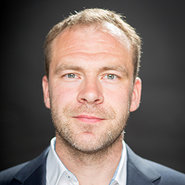
Alex BissemberView profile
Professor
Prof. Alex Bissember is a Professor of Chemistry at the University of Tasmania's School of Natural Sciences. His research focuses on organic, organometallic, inorganic, and natural products chemistry, with a strong emphasis on chemical education. He holds qualifications including a PhD (ANU, 2010) and BSc degrees from ANU (2004-2005). His career includes postdoctoral research at MIT and Caltech, supported by the American Australian Association Merck Fellowship. He has led independent research since 2013 and was an ARC Future Fellow. Education: PhD (Chemistry), Australian National University, 2010 BSc (1st Class Hons Chemistry), ANU, 2005 BSc (Chemistry & Physics majors), ANU, 2004 Research Interests: His work spans synthetic chemistry innovations, including transition metal catalysis, photoredox systems, and natural product total synthesis. He also explores sustainable materials (e.g., microplastic alternatives) and green chemistry. His recent studies highlight advancements in C-H functionalization, verdazyl radical applications, and energy storage materials. Article Trends: Recent publications focus on catalytic methodologies (e.g., copper/photoredox catalysts), sustainable chemistry innovations (e.g., bio-based plasticizers), and mechanistic studies in cross-coupling reactions. His work bridges fundamental organic chemistry with practical applications in materials science and environmental solutions. Awards & Honors: 2023 Royal Society of Tasmania M. R. Banks Medal 2021 RACI Fellowship 2017 Tasmanian STEM Innovation of the Year Multiple ARC grants (DP250100285, LP220100252) Advising & Grants: He leads funded projects on catalyst development, polymerizable eutectics, and natural product isolation. His team explores photoredox systems, electrosynthetic methods, and mechanistic studies of cross-coupling reactions. He mentors students in advanced synthetic chemistry and catalysis. Labs & Teams: Active in collaborative networks including the Southern Highlands Conference on Heterocyclic Chemistry and RACI committees. His lab focuses on interdisciplinary research at the interface of synthesis, catalysis, and sustainability.