University of California, Los AngelesUnited States
Louis S. Bouchard is an Associate Professor in the Department of Chemistry at the University of California, Los Angeles (UCLA). His interdisciplinary research spans physical chemistry, biomedical engineering, and quantum computing, with a focus on NMR/MRI technologies, immunotherapy, and materials science. He earned a B.Sc. in Physics and Business Management from McGill University, a M.Sc. in Medical Biophysics from the University of Toronto, and a Ph.D. in Chemistry from Princeton University. His postdoctoral work at UC Berkeley with Alex Pines advanced low-field NMR and hyperpolarization methods. Research Interests : Physical & analytical chemistry, materials for immunotherapy, MRI contrast agents, biosensors, quantum control, machine learning in biomedical imaging. Lab Focus : Operando NMR methods, molecular kinetics, tissue engineering, quantum computing, and machine learning algorithms. His group has developed groundbreaking technologies, including: NMR methods for topological insulator surface states 12% 15N hyperpolarization catalysts for MRI Operando NMR in catalytic reactors Multi-channel 3D tissue bioreactors Scientific awards include the Beckman Young Investigator Award (2012), Dreyfus New Faculty Award (2008), and multiple UCLA faculty development grants. Current projects recruit students in machine learning , molecular kinetics , and quantum computing applications to chemistry and biology.
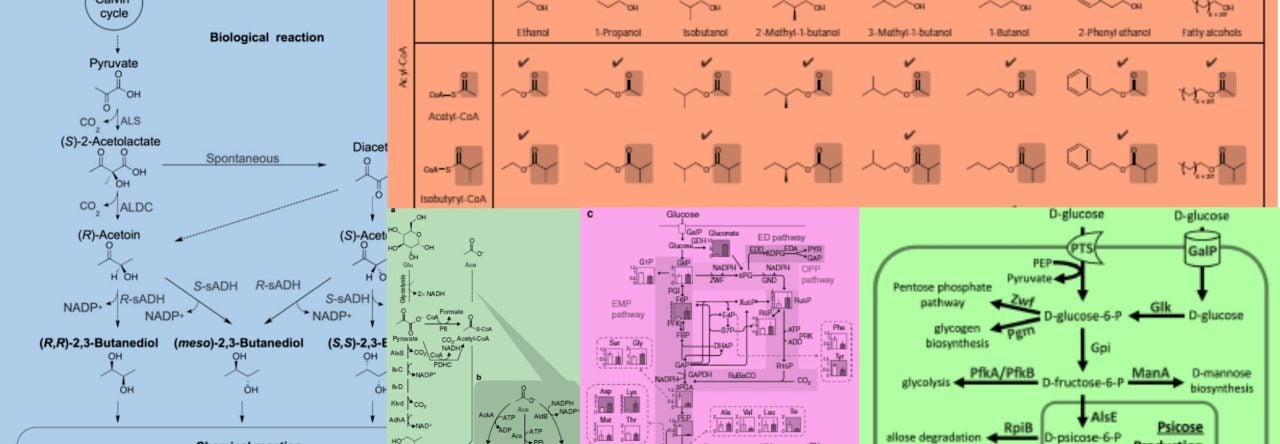
Professor Shota Atsumi is affiliated with the Department of Chemistry at the University of California, Davis . His research focuses on synthetic biology , metabolic engineering , and microbial chemical production , particularly for biofuels , rare sugars , and human milk oligosaccharides . He leads the Atsumi Lab, which has secured grants such as the NSF EFRI ELiS grant (award #2223537) for 3D-printed living materials and an NIGMS R01 grant for HMO production. His lab trains students and researchers in biocatalysis , carbon fixation , and microbial systems , with alumni like Jayce Taylor (PhD 2020-2024) and Jake Gonzales (PhD 2018-2023). He has served as an Associate Editor for Microbial Cell Factories and presented at conferences like the Metabolic Engineering Conference 16 (2025) and SynBioBeta 2024 . His work bridges synthetic biology with material science to address sustainability in construction and chemical production.
Laura Rijns is a Postdoctoral Fellow at Stanford University co-advised by Professors Zhenan Bao and Karl Deisseroth, developing innovative (opto)genetic, electrical, and chemical tools for neural modulation in vitro and in vivo. Her work bridges biomaterials engineering with neuroscience to create next-generation platforms for cellular and tissue engineering. Education PhD in Biomedical Engineering, cum laude (2023), Eindhoven University of Technology (TU/e), Netherlands, under Professors Patricia Dankers and E.W. (Bert) Meijer, focusing on supramolecular hydrogels as extracellular matrix mimics for organoid development. MSc in Biomedical Engineering (2019), Eindhoven University of Technology (TU/e), researching supramolecular assemblies in Professor Meijer's laboratory. BSc in Biomedical Engineering (2017), Eindhoven University of Technology (TU/e). Her research centers on designing dynamic supramolecular hydrogels that replicate extracellular matrix complexity to control cellular behavior. Key interests include tunable mechanical properties for mechanobiology studies, ligand presentation strategies for directing cell polarity, and engineering biomaterials for renal organoid development and neural interfaces. She integrates principles from polymer chemistry, cell biology, and bioengineering to create responsive platforms that bridge synthetic materials with biological systems, with particular emphasis on translating fundamental material properties into functional tissue engineering outcomes. Analysis of her 15 most recent publications (2021-2024) reveals a cohesive research trajectory focused on supramolecular hydrogels for tissue engineering. Dominant themes include stress-stiffening mechanics, cell-adhesive motif engineering, and dynamic control of hydrogel-cell interactions. Her work demonstrates consistent innovation in renal tissue models (glomerulogenesis, tubulogenesis) and neural applications, with increasing sophistication in material design—from basic supramolecular polymers to multi-dynamic systems that mimic extracellular complexity. This progression highlights her unique interdisciplinary approach combining biomaterials science with regenerative medicine. No scientific awards were documented in the provided materials. Laura has no listed advisees or grant funding in the available information. She operates within Stanford's collaborative ecosystem, leveraging resources from both Professor Bao's chemical engineering lab (focusing on biomaterials and electronics) and Professor Deisseroth's neuroengineering group (pioneering optogenetics), creating a powerful synergy for developing neural modulation tools.
Samuel H. Gellman is a Professor of Chemistry at the University of Wisconsin-Madison, holding the Irving Shain Chair and the Ralph F. Hirschmann Professorship. His research focuses on foldamer design, protein folding, GPCR signaling, and biopolymer assembly in condensed phases. Education: A.B. from Harvard (1981), Ph.D. from Columbia (1986), Postdoc at Caltech (1986-87) Research spans asymmetric synthesis, NMR/crystallography, and biomedical applications like antiviral agents and cancer therapeutics. Recent publications highlight innovations in β-amino acid incorporation, biased agonism, and racemic crystallization techniques. His scientific awards include the Vilas Research Professorship and Ralph F. Hirschmann Professor of Chemistry. The Gellman Group trains graduate students and postdocs in multidisciplinary approaches, mentoring former members now at Yale, Monash, and Bristol. Current projects include foldamer catalysis, anti-viral peptides, and elucidating liquid-liquid phase separation mechanisms. Collaborations involve structural biology, molecular dynamics, and clinical applications.
Ruilan Guo is a Freimann Collegiate Associate Professor in the Department of Chemical and Biomolecular Engineering at the University of Notre Dame, with research focusing on functional polymer and membrane materials for energy-efficient separations. Her work bridges chemical engineering, materials science, and polymer science. Ph.D., Polymer Science and Engineering, Georgia Institute of Technology (2008) M.E., Material Science and Engineering, Beijing University of Chemical Technology (2001) B.E., Polymer Engineering, Beijing University of Chemical Technology (1998) The Guo group develops advanced membranes for applications in carbon capture , fuel cells , hydrogen purification , water desalination , and energy conversion . Their work emphasizes structure-property relationships and nanophase-separated materials. Recent publications highlight innovations in microporous polymers , supramolecular interface engineering , and iptycene-based copolymers , with a focus on reducing energy consumption in industrial separation processes. Key keywords include polymer science , chemical engineering , and energy technology . Department of Energy Early Career Research Award Industrial & Engineering Chemistry 2017 Influential Researchers Guo teaches undergraduate materials courses and graduate polymer courses, while leading an interdisciplinary lab in the McCourtney Hall of Molecular Sciences and Engineering. Her research has secured NSF funding for next-generation refrigerant technologies through the Engineering Research Center.
Hamid Heravi serves as an Assistant Professor of Instruction in the Department of Mechanical Engineering within the College of Engineering at Temple University. His academic office is Engineering 915 and his contact email is heravihm@temple.edu. Dr. Heravi earned his Ph.D. in Combustion and Energy from Cardiff University in the United Kingdom. Before his appointment at Temple, he held leadership positions at Islamic Azad University, including Department Chair of Mechanical Engineering and Dean of the Faculty of Engineering. His research centers on combustion modeling, with specific expertise in premixed and non-premixed combustion systems, biofuel production, burning velocity analysis, and NOx reduction techniques. These interests are reflected in his publications in journals such as Polymer Research Journal and Thermal Science. Dr. Heravi instructs multiple courses spanning fluid mechanics, thermodynamics, and energy systems. Key courses include Mechanics of Fluids (ENGR 3553), Capstone Senior Design Project (ENGR 4296), Honors Capstone Senior Design Project (ENGR 4996), Thermofluids Systems (MEE 4177), Design and Realization of a Mechanical System (MEE 4177), Energy Conversion Laboratory (MEE 4506), Advanced Thermodynamics and Combustion (MEE 4571), Heat and Mass Transfer (MEE 4572), Heating, Ventilating, and Air Conditioning (MEE 4574), and the graduate-level Heating, Ventilation and Air Conditioning (MEE 5574).
Reika Katsumata is an Assistant Professor in the Department of Polymer Science and Engineering at the University of Massachusetts Amherst. Her research focuses on establishing design rules for extremely confined soft/hard interfaces, bridging precise polymer synthesis with nanoscale material miniaturization. She investigates how extreme confinement ( B.Eng. & M.Eng., Tokyo Institute of Technology (2009, 2011) Ph.D., Chemical Engineering, University of Texas at Austin (2016) Her work employs fluorescence spectroscopy, rapid thermal annealing, and film-stress measurements to address challenges in nanocomposites, ultra-thin coatings, and 2D materials. Recent studies explore defect healing in graphene, polymer-assisted porous carbon synthesis, and interfacial control of ferroelectric capacitors. She received an NSF CAREER award in 2021 for her work on multi-scale polymer dynamics. Key trends in her publications include polymer dynamics under nanoconfinement, interfacial interactions in hybrid materials, and scalable fabrication methods like roll-to-roll processing. Her research has implications for electronics, energy systems, and sustainable materials. Scientific Awards: NSF CAREER Award (2021)
Professor Kevin Kittilstved is a faculty member in the Department of Chemistry at Washington State University. His research focuses on chemically controlling the properties of inorganic materials through colloidal synthesis and advanced spectroscopic techniques. He earned his B.S. in Chemistry from Gonzaga University (2001), Ph.D. from the University of Washington (2006), and completed postdoctoral studies at the University of Washington (2010) and Université de Genève (2006–2010). Research interests include nanocrystal synthesis, semiconductor doping, and electronic structure analysis using techniques like X-ray diffraction and magneto-optical spectroscopy. His work explores applications in energy storage, electronics, and materials design. Key contributions include studies on ZnO nanocrystals, SrTiO3 systems, and molecular nanomagnets. Publications emphasize tunable electronic properties, dopant effects, and nanocrystal design. Advising has prepared students for careers in academia, industry, and engineering. His Kittilstved Lab supports interdisciplinary exploration of functional materials.
Virginia Polytechnic Institute and State UniversityUnited States
Sanket Deshmukh is an Associate Professor in the Department of Chemical Engineering at Virginia Tech. His research emphasizes computational materials science, combining molecular dynamics simulations, machine learning, and Bayesian statistical methods to study structure-property relationships in polymers, biomaterials, and nanomaterials. He focuses on developing coarse-grained models for predictive simulations of complex systems and advancing applications in energy storage, drug delivery, and tribology. Education: Ph.D., University College Dublin, Ireland (2009) M.Sc., University of Pune, India (2004) B.Sc., University of Pune, India (2002) Research Interests: Molecular dynamics on petascale supercomputers Nano- and meso-scale tribology Smart polymers and bio-materials Corrosion mechanisms and surface chemistry Machine learning for materials design His work bridges computational theory and experimental validation, with notable contributions to metal-organic frameworks (MOFs), thermoresponsive polymers, and graphene-based systems. Recent articles highlight advancements in AI-driven drug discovery, high-entropy alloys, and self-folding nanomaterials. Deshmukh’s research group actively explores applications in sustainable energy, biomedical engineering, and advanced materials. Lab activities include the Research Group Google Scholar , emphasizing interdisciplinary collaboration in materials innovation.
Dr. Srikanthan Ramesh serves as an Assistant Professor in the School of Industrial Engineering and Management within Oklahoma State University's College of Engineering, Architecture and Technology. Since establishing the Advanced Materials and Additive Manufacturing Laboratory in August 2022, he has led interdisciplinary research at the intersection of materials science, physical phenomena, and advanced manufacturing technologies, with applications spanning healthcare, aerospace, and electronics sectors. His educational foundation includes a Ph.D. in Mechanical and Industrial Engineering from Rochester Institute of Technology (2022) and an M.S. in Industrial and Manufacturing Systems Engineering from Iowa State University (2017). This academic background enables his innovative approach to manufacturing science. Dr. Ramesh's research program focuses on biological and micro-scale additive manufacturing (bio-AM), specializing in biomaterial development for tissue engineering and regenerative medicine. His work integrates computational fluid dynamics, machine learning, and real-time process monitoring to achieve precise control over mechanical, biological, and electrical properties of manufactured structures. He develops experimental tools and process frameworks for droplet-based and extrusion-based AM systems, with particular emphasis on wound healing applications and space-compatible microelectronics. Analysis of his 14 publications from 2020-2025 reveals a strong trajectory toward AI-driven manufacturing solutions, with increasing emphasis on multi-objective Bayesian optimization for bioink design, aerosol jet printing process refinement, and bioprinted tissue construct development. His recent work demonstrates sophisticated integration of machine learning with physical manufacturing processes to solve complex biomedical challenges. His scientific recognition includes: Doctoral Dissertation Pitch Competition (Runner-up), IISE, 2021 Best Oral Presentation, Graduate Showcase, Rochester Institute of Technology, 2019 Gilbreth Memorial Fellowship, IISE, 2018-2019 Wakonse College Teaching Fellowship, Iowa State University, 2018-2019 Graduate Research Excellence Award, Iowa State University, 2017 Best Overall Oral Presentation, Nano@IAstate, Iowa State University, 2017 Dr. Ramesh currently leads significant research initiatives including as Principal Investigator for an NSF REU Site on Additive Manufacturing and Cybersecurity ($464,606, 2025-2028) and a NASA EPSCoR Travel Grant for aerosol jet printing in space missions (2024-2025). As Co-PI on an NSF grant for Privacy-aware Collaborative Design in additive biofabrication ($599,981, 2025-2028), he develops frameworks for mass personalization in medical applications while addressing data security challenges. These projects support his lab's mission to advance manufacturing science through rigorous experimentation and computational innovation. The Advanced Materials and Additive Manufacturing Laboratory operates as a collaborative hub where Dr. Ramesh directs research teams in developing novel biomaterials, optimizing printing processes, and creating functional prototypes for wound dressings, liver tissue models, and space-rated microelectronics. The lab's interdisciplinary approach combines expertise in materials characterization, computational modeling, and machine learning to push the boundaries of what's possible in additive manufacturing for critical applications.
Steven M. George is a Professor of Chemistry at the University of Colorado at Boulder, affiliated with the College of Engineering and Applied Science. His research focuses on surface chemistry, nanotechnology, and thin film growth, with applications in semiconductor processing, energy storage, and renewable energy. He leads the George Lab, which develops atomic layer deposition (ALD) and molecular layer deposition (MLD) techniques for advanced material fabrication. Education: Ph.D. in Chemistry, University of California, Berkeley (1983) B.S. in Chemistry, Yale University (1977) Research Interests: George’s work bridges chemistry, physics, and engineering, emphasizing atomic-scale control of thin films and nanostructures. His lab explores ALD/MLD applications in lithium-ion batteries, solar cells, and flexible electronics. Key innovations include gas diffusion barriers for polymer substrates and ALD-coated catalytic materials. Professional Activities: He has held leadership roles in the American Vacuum Society, including Board Member and Chair, and co-founded ALD NanoSolutions. His editorial roles include the Surface Review and Letters and Coatings journals. Awards: George has received prestigious honors such as the DPS Nishizawa Award (2024), R&D 100 Award (2004), and Fellowships from the American Vacuum and Physical Societies. Labs/Teams: The George Lab collaborates with interdisciplinary teams across departments and institutions, leveraging advanced characterization tools like quartz crystal microbalance and X-ray photoelectron spectroscopy.
Robert McLeod is the Richard & Joy Dorf Endowed Professor in the Department of Photonics & Quantum Engineering at the University of Colorado. His research focuses on advanced materials and technologies for photonics, holography, and additive manufacturing. Key areas include the design of holographic photopolymers, volumetric 3D printing, and high-performance optical materials. He has pioneered innovations in thiol-ene chemistry for dynamic polymer networks and developed methodologies for precision manufacturing techniques like parallax manufacturing and latent image volumetric additive manufacturing. His work bridges materials science, optics, and engineering, with applications in biomedical devices, environmental sensors, and next-generation optical systems. Education details are not explicitly provided in the text. Current research emphasizes optimizing material properties for 3D printing, enhancing holographic storage, and creating bio-inspired materials for medical applications. McLeod’s contributions span over 50 peer-reviewed articles since 2018, with a strong focus on interdisciplinary approaches to manufacturing and photonics. His lab develops cutting-edge solutions for challenges in refractive index control, occlusion management in additive manufacturing, and high-precision optical component fabrication. Notable advancements include the suppression of parasitic reflections using elastomeric films, the integration of self-healing electronics for plant monitoring, and the synthesis of biodegradable resins for 3D-printed biomaterials. McLeod collaborates on projects such as photosensitive materials development and the creation of gradient-index lenses via digital light processing. His work is supported by strategic initiatives aligning with the University of Colorado’s focus on quantum engineering and advanced manufacturing technologies.
Virginia Polytechnic Institute and State UniversityUnited States
Patricia M. Dove is a University Distinguished Professor and C.P. Miles Professor of Science at Virginia Tech's College of Science, Department of Geosciences. Her research focuses on biomineralization, exploring how organisms form functional mineralized structures like shells and teeth. She investigates the interplay between organic molecules and mineral nucleation/kinetics, with applications in biomaterials and environmental science. Education: Ph.D. (Geochemistry, Princeton University, 1991), M.S. (Geochemistry, Virginia Tech, 1984), B.S. (Agronomy, Virginia Tech, 1980). Research interests include environmental geochemistry, biomaterials, and the thermodynamics of mineral-water interactions. Her work bridges fundamental science with applications in drug delivery, energy, and sustainable materials. Notable awards include the 2022 International Mineralogical Association Medal, 2017 Thomas Jefferson Medal, and 2012 election to the National Academy of Sciences. She chairs the National Academy of Sciences' Section 15 (Geology) and has held leadership roles in scientific organizations. Her lab, the Earth Materials Group, explores biomineralization mechanisms and their implications for Earth systems and technology. Collaborations span geochemistry, biology, and engineering.
Virginia Polytechnic Institute and State UniversityUnited States
Josh Worch is an Assistant Professor in the Department of Chemistry at Virginia Polytechnic Institute and State University (Virginia Tech), part of the College of Science. He leads the Worch Lab, focused on designing sustainable polymers from renewable sources to address ecological challenges. His research emphasizes recyclable materials, dynamic bonding, and green chemistry processes. Education: B.A. in Chemistry & Physics from Manchester University (2011), Ph.D. in Chemistry from Carnegie Mellon University (2016). Postdoctoral roles included a Marie Curie Research Fellowship at the University of Warwick/Birmingham (2017–2019) and Group Leader at the University of Birmingham (2020–2022). Research Interests: Creation of intrinsically recyclable polymers, biogenic feedstocks, additive manufacturing, and programmable material lifetimes. Key themes include stereochemical control, green synthesis, and circular economy principles. Awards: M. Zouhair Atassi Research Paper Prize (2021) Royal Society of Chemistry Outreach Grant (2019) School of Chemistry Public Engagement Award (2019) Marie Skłodowska-Curie Postdoctoral Fellowship (2017) Labs & Teams: Worch Lab at Virginia Tech explores sustainable polymer design, with a focus on recycling and additive manufacturing. Group members gain expertise in polymer synthesis, materials characterization, and degradation studies.
Pu Zhang is an Associate Professor and Undergraduate Studies Director in the Department of Mechanical Engineering at Binghamton University (State University of New York at Binghamton). He leads the Composite and Architected Materials Group, focusing on advanced materials research. Previously, he held postdoctoral positions at the University of Manchester and earned his PhD from the University of Pittsburgh, with earlier degrees from Hunan University. Education background includes a B.S. and M.S. in Mechanics from Hunan University (China), followed by a Ph.D. in Mechanical Engineering from the University of Pittsburgh (USA). His research interests revolve around the mechanics, design, and manufacturing of composite and architected materials, particularly those incorporating liquid metals. Key areas include: Development of soft conductive composites and metamaterials Advanced manufacturing techniques like additive manufacturing and hybrid methods Multiscale and multiphysics modeling for material behavior prediction Recent publications highlight advancements in liquid metal-based composites, additive manufacturing innovations, and multiscale modeling approaches. These works address challenges in material fabrication, characterization, and application in fields like soft robotics and wearable electronics. He has received notable recognitions, including the NSF CAREER Award (2022) and the Watson Early-Stage Distinguished Research Award (2024). Zhang has taught courses such as Intro to Solid Mechanics and Mechanics of Composites. He has mentored over seven PhD and MS students and holds multiple patents. His research is supported by NSF, IEEC, and industry partnerships. His lab, the Composite and Architected Materials Group, fosters interdisciplinary research in soft functional materials and advanced manufacturing technologies.