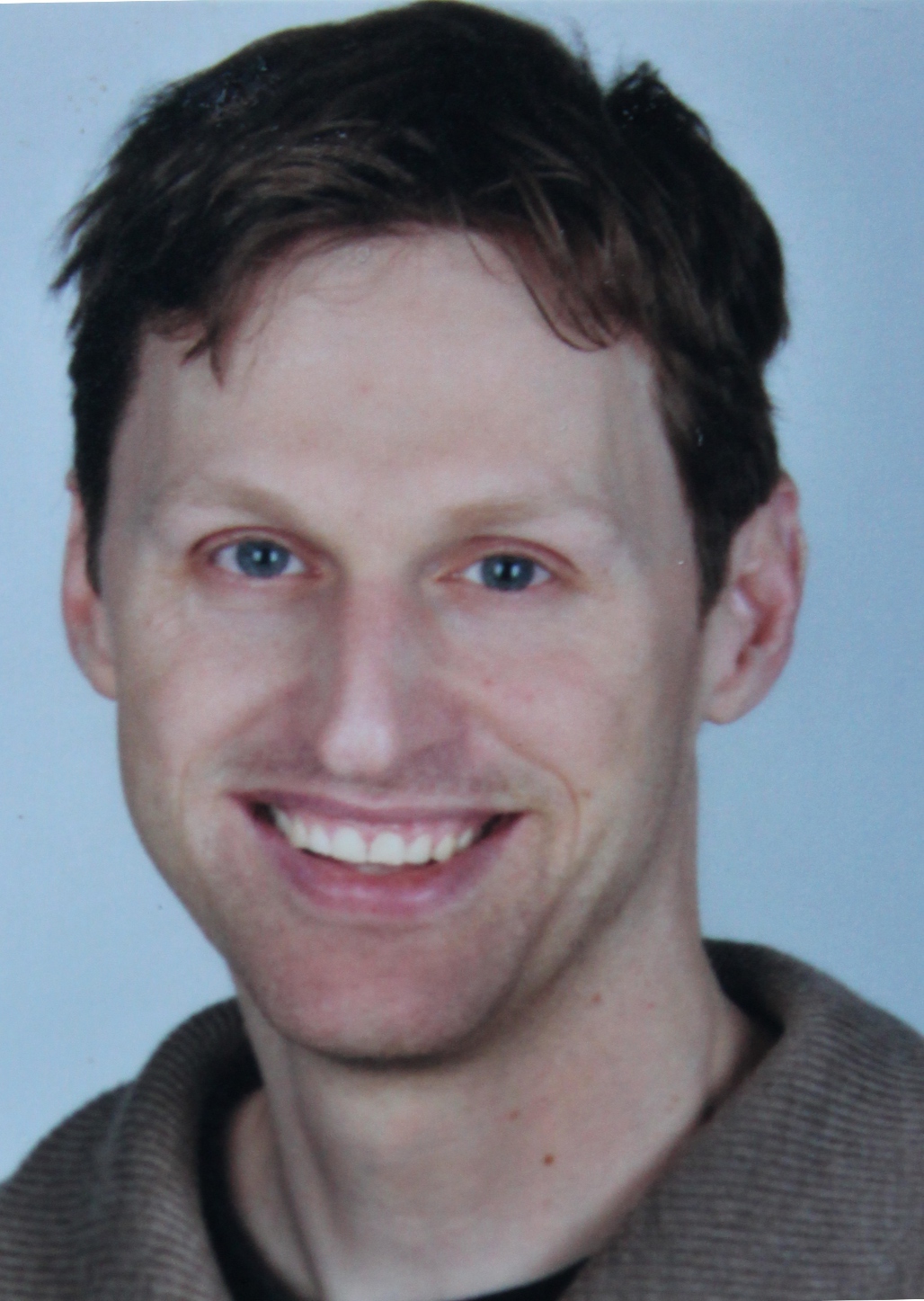
Prof. Bernhard Wolfrum is a Principal Investigator at the Institute for Medical Engineering (IMETUM) of the Technical University of Munich (TUM), developing advanced neuroelectronic interfaces. His work combines micro- and nanofabrication technologies with printing methods to create flexible, biocompatible devices for real-time electrochemical sensing and neural stimulation. Key research areas include cell-chip coupling, microfluidic cell culture systems, and lesion/degeneration models. He pioneers inkjet-printed 3D sensor arrays, redox-cycling techniques, and origami-inspired biohybrid devices. His group includes PostDoc Philipp Rinklin and PhD student Troung Ka My Dang. Scientific Approach: Utilizes rapid prototyping, direct integration of biomaterials, and electrochemical methods to map cellular chemical cues and design structured neuronal networks. Focuses on scalable fabrication techniques for medical applications like implantable electrodes and organ-on-chip systems. Recent Publications: Highlight trends in flexible bioelectronic interfaces, silver nanoparticle sensing, and laser-processed MOF-derived electrodes, emphasizing interdisciplinary integration of material science and neuroscience.
Leonid Dolgov is an Associate Professor in Spectroscopy and Sensorics at the Institute of Physics, Faculty of Science and Technology, University of Tartu. He has held this position since February 2024, working at 70% FTE. Previously, he served as an Associate Professor and Senior Research Fellow at the same institution since 2016. His academic journey began with a Doctor's Degree in 2007 from the Institute of Physics, National Academy of Sciences, Kyiv, Ukraine. His educational background includes postgraduate studies at the Institute of Physics, National Academy of Sciences (Kyiv, Ukraine) from 2001-2004, culminating in a PhD in 2007. He earned his Diploma in Physics and Mathematics from Chernihiv State University (Chernihiv, Ukraine) between 1993-1998. Dolgov's research interests span Physics, Optics, Spectroscopy, Sensorics, Nanomaterials, Luminescence, Plasmonics, and Quantum Computing . His work focuses on experimental physics of liquid crystals and polymers, with particular emphasis on spectroscopic studies of rare earth ions in various crystal structures, plasmonic enhancement of luminescence, and applications in quantum computing and biomedical imaging. His publication record includes 104 publications, with recent work focusing on laser spectroscopy of rare earth doped crystals, plasmon-enhanced luminescence, and applications in quantum information processing and biomedical engineering. His research demonstrates strong interdisciplinary connections between fundamental physics and practical applications. Among his scientific recognitions, Dolgov received an Appreciation from the Estonian Ministry of Education in 2012 for his supervision of Master student Ardi Loot, whose thesis 'Characterizing surface plasmons and thin gold film by Kretschmann configuration' won the first National Estonian award. Dolgov has supervised PhD student Laurits Puust, whose thesis 'Surface effects on impurity fluorescence in oxide nanomaterials for applications in sensing and phosphors' was in progress as of January 2025. He has also supervised Master's student Ardi Loot to completion. His research has been supported by multiple projects, including the current EU-funded project 'Antimicrobial surface coatings sustainability and functionality in real-life usage' (2024-2027). His work is conducted within the Institute of Physics at the University of Tartu, where he collaborates with researchers across disciplines to advance understanding of optical materials and their applications.
Raju Kumar Gupta is a Professor in the Department of Chemical Engineering at the Indian Institute of Technology Kanpur. His research focuses on nanomaterials and their applications in energy, electronics, and environmental fields. He leads a research group working on advanced nanomaterial synthesis and characterization techniques. PhD from National University of Singapore (2010) B.Tech from IIT Roorkee (2005) Professor Gupta's research interests include nanotechnology, surface modification, covalent assembly, and synthesis/characterization of nanomaterials for energy, electronic and environmental applications. His work spans Layer by Layer (LbL) assembly, design and engineering of nanostructures for energy applications, and self-assembly based nanosphere lithography & block copolymer lithography. His expertise lies at the intersection of materials science, chemical engineering, and nanotechnology. His recent publications demonstrate a strong focus on nanomaterials for energy storage, environmental applications, and electronic devices. The research shows progression from fundamental nanomaterial synthesis to practical applications in sensors, energy storage, and sustainable materials. Key themes include surface functionalization of nanomaterials, polymer-nanoparticle composites, and template-directed assembly techniques. DST Inspire Faculty Award 2013 Multiple editorial board memberships including Nanoscience and Technology: An International Journal Invited talks at international conferences on nano-composite structures and nanostructure applications Member of Materials Research Society (MRS) and American Institute of Chemical Engineers (AIChE) Professor Gupta leads research activities in LAB 303, NL-II at IIT Kanpur, focusing on nanomaterials synthesis and characterization. His work bridges fundamental research with practical applications in energy, electronics, and environmental technology sectors. The research group maintains strong collaborations with international institutions and regularly presents findings at major scientific conferences.
Dr. Ingrid Fritsch is a Professor of Analytical Chemistry in the Department of Chemistry and Biochemistry at the University of Arkansas, College of Arts & Sciences. She has pioneered the field of redox-magnetohydrodynamic microfluidics and developed multifunctional miniaturized analytical devices and sensors, including protein and DNA-hybridization microarrays interfaced to electrochemical detection. Her work is critical for developing portable devices for environmental and point-of-care chemical analysis. Education: B.S. in Chemistry, University of Utah, Salt Lake City Ph.D. in Chemistry, University of Illinois at Urbana-Champaign Postdoctoral Associate, Massachusetts Institute of Technology Dr. Fritsch's research focuses on the development of multifunctional, miniaturized analytical devices with integrated components on a single substrate. She pioneered the field of redox-magnetohydrodynamic (R-MHD) microfluidics, which applies astrophysical plasma principles to analytical chemistry. Her innovative approach enables picoliter-scale stirring, solution movement across chips for processing, and solvent forcing through channels for mixture separations. Her work spans ultrasmall volume analysis, novel microelectrode geometries, neurotransmitter differentiation via electrochemical methods, and interfacing micro/nano-scale electrochemistry with immunoassays and DNA-hybridization assays. Analysis of her recent publications reveals strong continuity in her research focus on redox-magnetohydrodynamics, with increasing sophistication in applications to biological systems, nanoparticle characterization, and neural analysis. Her group has expanded from fundamental fluid manipulation to specialized applications in neurotransmitter detection, cytometry, and bioelectronic interfaces. Scientific Awards: Society of Electroanalytical Chemistry Young Investigator Award (1997) National Science Foundation Career Award NSF Special Creativity Extension American Chemical Society Chemistry Ambassador (2013-2015) Fellow of the National Academy of Inventors (2014) University of Arkansas Golden Tusk Award (2015) Fellow of the American Association for the Advancement of Science (2015) University of Arkansas Alumni Distinguished Faculty Award in Research (2016) Dr. Fritsch has secured significant research funding including an NSF Career Award and Special Creativity Extension. She has co-founded two startup companies and holds ten issued U.S. patents, demonstrating strong translational impact. Her teaching spans undergraduate and graduate levels, with extensive outreach to middle and high school students. She has taught courses ranging from Chemistry I for Majors to specialized graduate courses in Electrochemical Methods of Analysis and Energy Conversion and Storage. Her research group investigates chemistry at ultrasmall volumes with materials having ultrasmall features, developing innovative approaches to solution movement for automated sequential reactions. They have made seminal contributions to redox-magnetohydrodynamics, creating methods for picoliter-scale stirring and channel-free fluid manipulation within microfluidic devices.
Javier Araujo Morera serves as an Assistant Professor within the Elastomer Technology and Engineering research group at the University of Twente's Faculty of Engineering Technology. His academic work focuses on advancing sustainable materials science through innovative elastomer technologies, particularly targeting tire industry applications with circular economy principles. His research program centers on self-healing rubber composites and sustainable tire development, investigating bio-based resins as alternatives to traditional plasticizers, recycled tire rubber integration, and performance optimization of eco-friendly tread compounds. Key interests include resolving the 'magic triangle' of tire performance (balancing abrasion resistance, rolling resistance, and wet grip) while incorporating circular economy strategies through repair, recycling, and material reduction approaches. His work bridges fundamental polymer science with industrial application requirements. Analysis of his publication record reveals a concentrated research trajectory toward sustainable elastomer systems, with increasing emphasis on life cycle assessment, bio-based material integration, and circular economy implementation since 2020. The majority of his work addresses critical industry challenges in tire sustainability through novel material formulations that maintain performance while reducing environmental impact. Dr. Araujo Morera operates within the internationally recognized Elastomer Technology and Engineering group, which specializes in rubber science and tire technology research. The group maintains strong industry collaborations focused on developing next-generation sustainable elastomer solutions, with particular expertise in self-healing materials and circular economy implementation for rubber products.
Yinghui Zhong serves as Associate Professor in Drexel University's School of Biomedical Engineering, Science and Health Systems, where her research bridges neural engineering and cardiovascular therapeutics through innovative biomaterial solutions. Her work focuses on developing regenerative strategies for spinal cord injury and novel nanoparticle systems for cardiovascular disease treatment. Her academic foundation includes: PhD in Biomedical Engineering from Georgia Institute of Technology, Atlanta, GA MS in Biological Sciences and Biotechnology from Tsinghua University, Beijing, China BS in Materials Science and Engineering from Tsinghua University, Beijing, China Dr. Zhong's research program centers on spinal cord injury repair , where she pioneers hydrogel-based drug delivery systems for neuroprotection and scarless healing using minocycline and stem cell therapies. Her cardiovascular work develops multifunctional nanoparticles for targeted therapy, while her neural interface research creates anti-inflammatory coatings for neural implants through layer-by-layer assembly techniques. This integrated approach addresses critical challenges in regenerative medicine through biomaterials innovation. Analysis of her publication record reveals three dominant research trajectories: (1) hydrogel-mediated delivery of neuroprotective agents (particularly minocycline) for spinal cord injury recovery, (2) development of neural implant coatings that simultaneously combat infection, inflammation, and neuronal loss, and (3) nanoparticle systems for cardiovascular applications. Her work consistently bridges fundamental biomaterials science with translational therapeutic outcomes, with increasing focus on combinatorial approaches that address multiple injury mechanisms simultaneously. Her scientific contributions have been recognized through: Journal of Neural Engineering Award (2005) 2021-2022 Drexel Faculty Award 2016 Commonwealth Universal Research Enhancement (CURE) Program Grant as principal investigator Dr. Zhong actively secures competitive research funding, exemplified by her leadership in the 2016 CURE Program Grant supporting Pennsylvania biomedical research. While specific student mentorship details aren't provided, her extensive publication record with multiple trainee co-authors indicates robust graduate student supervision in biomaterials design and neural engineering. Her collaborative network spans neuroscience, materials science, and clinical rehabilitation disciplines. Though not explicitly detailed in available materials, her research direction suggests leadership of a multidisciplinary laboratory focused on biomaterials synthesis, neural interface development, and preclinical testing of regenerative therapies, likely involving graduate students and postdoctoral researchers working across engineering and life science domains.
Dr. Ji-Guang Zhang is a Laboratory Fellow at the Pacific Northwest National Laboratory (PNNL) in the Energy Processes & Materials Division. He holds a PhD in experimental condensed matter physics from the University of Kentucky, an MS in theoretical physics from Dalian University of Technology, and a BS in applied physics from the same institution. As a principal investigator for the Department of Energy's Vehicle Technologies Office, he leads research on advanced energy storage systems. His research focuses on developing next-generation battery technologies, including lithium-metal batteries, lithium-ion batteries, solid-state electrolytes, and thin-film batteries. Key areas involve electrolyte design (e.g., localized high-concentration electrolytes), interface engineering, and materials optimization for enhanced stability and performance under extreme conditions. His work bridges electrochemistry, materials science, and solid-state physics to address fundamental and applied challenges in energy storage. Analysis of his recent publications reveals a strong emphasis on electrolyte innovation, lithium metal anode stabilization, and high-voltage battery systems. Trends include novel electrolyte formulations (e.g., fluorinated ethers), advanced characterization techniques (cryo-TEM), and 3D electrode architectures to suppress dendrite growth and extend battery lifespan. Scientific Awards: National Innovator of the Year Award (DOE/NAI, 2024) Fellow, National Academy of Inventors (2024) Distinguished Achievement Award (Vehicle Technologies Office, 2022) R&D 100 Awards (2010, 2012) Top 1% Highly Cited Researcher (Clarivate, multiple years) Dr. Zhang holds 41 U.S. patents and has secured DOE grants for lithium battery research. He advises postdoctoral researchers and collaborators at PNNL’s battery laboratories, focusing on projects such as anode-free configurations and high-energy-density systems. His team specializes in materials synthesis, in situ diagnostics, and battery prototyping.
Thorsten Hansen serves as Associate Professor in the Department of Chemistry at the University of Copenhagen, Denmark, with his office located at Universitetsparken 5, 2100 København Ø. His research profile includes 63 publications comprising 60 journal articles, 1 book chapter, 1 conference proceeding, and 1 poster, reflecting sustained scholarly activity through 2024. Hansen's research spans computational chemistry, quantum chemistry, and theoretical chemistry with specialized focus on molecular modeling of photosynthetic systems and photochemical processes. He employs advanced methodologies including density functional theory, multireference approaches, and machine learning to investigate electronic structures, energy transfer mechanisms, and reaction dynamics in complex molecular systems. His work bridges chemistry and physics with applications in renewable energy materials and molecular electronics. Analysis of his 2021-2024 publications reveals consistent emphasis on computational modeling of photosynthetic complexes, organic semiconductors (particularly Subphthalocyanine derivatives), and surface-molecule interactions. Key thematic trends include quantum mechanical studies of energy level variations, machine learning applications for predicting electronic properties, and photochemical reaction mechanisms. His collaborative network spans international institutions with co-authorship patterns indicating strong cross-disciplinary engagement in physical chemistry and materials science.
Jörg P. Kutter is a Professor in the Department of Pharmacy at the University of Copenhagen, where he leads the Microscale Analytical Systems research group. His work focuses on the design and development of lab-on-a-chip devices and microfluidic systems for analytical applications across biomedical, pharmaceutical, environmental and industrial fields. Professor Kutter's research expertise spans multiple areas of microfluidics and analytical chemistry. He specializes in chemical separation techniques including chromatography and electrophoresis, as well as FIA-based systems and integration of optical detection elements. His current work emphasizes microfabricated lab-on-a-chip systems with focus on separation and sample preparation techniques, and advanced micro and nano liquid handling. His research group has developed numerous applications using thiol-ene based microfluidic platforms, which have become a signature technology in his laboratory. Analysis of Professor Kutter's recent publications (2022-2024) reveals a strong progression from fundamental microfluidic techniques toward increasingly complex biological applications. His work now prominently features DNA analysis (particularly extrachromosomal circular DNA), olfactory mucus analysis using humanized yeast biosensors, pulmonary delivery of siRNA-loaded nanoparticles, glycopeptide enrichment for inflammation-related protein analysis, and microfluidic steroidogenesis assays. This evolution demonstrates the maturation of microfluidics technology and its growing impact on biomedical research and clinical diagnostics. Professor Kutter has secured several millions of Euros in funding support for national and international (EU) projects. He served as coordinator for a European STREP project (2007-2010) with seven partners and a European IP (2010-2015) with 16 partners. He has supervised 14 post-doctoral fellows, 20 PhD students, and 12 master's theses, demonstrating a strong commitment to academic mentoring and research training. He serves as Deputy editor for Electrophoresis and is a member of the Board of Directors of the Chemical and Biological Microsystems Society. He participates in technical program committees for major conferences including µ-TAS, MEMS, MSB and Transducers. Additionally, he acts as a scientific advisor for the Institute for Microtechnology in Mainz, Germany, and evaluates proposals for national and international funding agencies as well as educational accrediting agencies.
Prof. Dr. HURİYE İCİL serves as a full-time faculty member in the Chemistry Department at Eastern Mediterranean University's Faculty of Arts & Sciences. Her academic career spans over three decades with continuous research output and student supervision. Educational background includes: PhD in Chemistry from Ege University (1993) MS in Chemistry from Eastern Mediterranean University (1991-1993) BS in Chemistry from Middle East Technical University (1879-1884) Her research focuses on photochemistry and materials science, specializing in perylene and naphthalene diimides for applications in fluorescent sensors, dye-sensitized solar cells, and biopolymer functionalization. Recent work explores chitosan-based fluorescent polymers for DNA detection and computational drug repurposing for diabetes treatment. Her publications demonstrate consistent innovation in molecular engineering of chromophores with tailored photophysical and electrochemical properties. Scientific contributions include: Research Grant from CNRS, France (1994) NATO Science Scholarship from USA (1993) EMU Research Incentive Award (2021) Prof. İcil has supervised 14 PhD students to completion and currently mentors 3 ongoing doctoral candidates, alongside 27+ master's theses. Her research projects include water-soluble naphthalene diimide chemosensors and multicromophoric systems for solar cells. She leads collaborative work on perylene-based metal complexes for efficient dye-sensitized solar cells.
Prof. Dr. Zsuzsanna László PhD is a Professor and Institute Director at the University of Szeged Faculty of Engineering, Institute of Biological Systems Engineering. With over 25 years of academic experience, she has progressed from Assistant Professor to her current leadership position, contributing significantly to environmental engineering education and research. Dr. László earned her PhD in Environmental Science from the University of Szeged Faculty of Science in 2001 with Summa cum laude honors. Her educational background includes postgraduate studies in environmental protection and an undergraduate degree in chemistry-physics. She also completed a Magyary Zoltán postdoctoral fellowship. Her research focuses on advanced wastewater treatment technologies, particularly membrane separation processes combined with oxidation methods. Her work addresses critical environmental challenges including membrane fouling mitigation, resource recovery from wastewater, and development of self-cleaning membranes. She has pioneered research on combining membrane filtration with high-efficiency oxidation processes like ozonation, Fenton reaction, UV light, and heterogeneous photocatalysis to create more sustainable water treatment solutions. Dr. László's publication record demonstrates consistent contributions to environmental engineering, with recent work emphasizing practical applications in dairy wastewater treatment and oily water purification. Her research bridges fundamental science with industrial applications, particularly in the food industry sector where water management presents significant challenges. Dékáni Dicséret (2022) Scriptor díj (2019, 2013) Bolyai János Kutatási Ösztöndíj (2014) Magyary Zoltán Postdoctoral Fellowship (2002) Habilitáció (2016) As a dedicated mentor, Dr. László has supervised multiple PhD students including Zsolt László Kiss, Ildikó Kovács, Elias Jigar Sisay, and Liceth Pantoja Alvarez. She leads the Membrane and Environmental Technology Research Group at the University of Szeged and serves as Secretary of the Technical Committee of the Hungarian Academy of Sciences. Her current research is supported by significant grants including the development of self-cleaning membrane filters for wastewater treatment and sustainable raw material management networks. Dr. László directs the Institute of Biological Systems Engineering, where her research group focuses on developing innovative membrane technologies for environmental applications. The group maintains strong collaborations with international partners and industry stakeholders to translate research findings into practical solutions for water treatment challenges.
Dr. Magdalena Czemierska is a Lecturer at the Department of Biochemistry and Biotechnology, Faculty of Biology and Biotechnology, University of Maria Curie-Skłodowska (UMCS), Lublin, Poland. She conducts research on extracellular polymeric substances (EPS) produced by Rhodococcus strains and their applications in environmental science, particularly heavy metal sorption and bioflocculation processes. Current affiliation: UMCS (since at least 2015) Projects: 3 funded by National Science Centre (2013-2027) Research focus: EPS characterization, microbial biotechnology, environmental remediation Her publications (21 total) explore EPS interactions with heavy metals (lead, cadmium), calcium mineralization mechanisms, and polymer-based water purification systems. Key projects include: 2024-2027: Algae-bacteria EPS synergy for pollutant biodegradation 2017-2021: Exopolymer analysis from Rhodococcus opacus 2013-2016: Polysaccharides as bioflocculants/biosorbents She teaches biochemistry laboratory courses, applied biocatalysis, secondary metabolism, and supervises thesis workshops. Her work contributes to sustainable environmental technologies using microbial polymers.
Professor Annamaria Visco is an Associate Professor for the SSD ING-IND/22 (Materials Science and Technology) at the Department of Engineering of the University of Messina (UniMe). She belongs to the Ministerial area 09 - Industrial and information engineering as a Second level tenured professor in the Competition macro-sector 09/D - CHEMICAL AND MATERIALS ENGINEERING, specifically in the Competition sector 09/D1 - MATERIALS SCIENCE AND TECHNOLOGY. Education: Degree in Chemistry from the University of Messina (5/12/1991) with grade 110/110 cum laude Qualification to practice as a Chemist (April 1992) Specialization in "Chemical process technologies" (20/12/1993) with grade 50/50 PhD in "Chemistry of Materials for Special Uses" (01/07/1997) Professor Visco's research focuses on the modification and chemical-physical and mechanical characterization of polymeric materials, bioplastics, nano-composite materials, polymer blends and (nano) composite materials with a polymer matrix. Her work spans biomedical, environmental, and naval applications in the field of materials engineering, accompanied by the study of suitable production methods and technologies. Her specific research lines include polymer matrix coatings for environmental applications, nano composites and biopolymer blends for biomedical applications, nano-structured materials for nanomedicine, and recycling of materials with "green" plastics production from agri-food waste. Her recent publications demonstrate a strong focus on sustainable materials development, particularly in the areas of biocomposites from agri-food waste, bioplastics from renewable sources, and anti-corrosion coatings for marine applications. The research trends show an increasing emphasis on mathematical modeling of material properties and practical applications addressing Sustainable Development Goals 3 (Good health and well-being) and 9 (Industry, Innovation, and Infrastructure). Scientific Awards: Start Cup dell'Università degli Studi di Messina 2017 Professor Visco has served as scientific tutor for 10 PhD students and has been actively involved in numerous research projects. She has been Scientific Manager for several significant projects including THALASSA (PON 2014-2020), SI-MARE (PO FESR 2014-2020), and LIFE RESTART (LIFE 2021). Her editorial work includes serving as Associated Editor for the International Journal of Polymer Analysis and Characterization and as a member of the editorial board for Polymers journal. She is actively involved in multiple research groups including MTP-Mechanical Treatment Prototype, Laboratorio Polimeri, biopolimeri e composti, Laser plasmi e materiali innovativi, STrutture lIght-weight e biomateriaLi per applicazioni biomedichE (STILE), and progettazioNe grEen e lighTweight di navi e strutTUre off-shore.
Andrea Robinson is a Professor in the School of Chemistry at Monash University and a member of the Victorian Heart Institute (VHI). Her research focuses on chemical biology, catalysis, cyclic peptides, disulfide replacement, and renewable chemistry. She has led numerous high-impact projects, including advancements in drug-eluting medical devices, toxin structure-function analysis, and sustainable drug discovery. Notable achievements include the development of novel photo-angioplasty devices and dicarba peptide analogs with enhanced therapeutic efficacy. Research Interests Her work bridges organic synthesis, medicinal chemistry, and biotechnology. Key areas include: - Design of bioactive peptides and peptidomimetics for pain management and diabetes treatment - Sustainable chemical processes using renewable feedstocks - Metathesis-catalyzed peptide synthesis techniques - Development of photothermal cancer theranostics - Exploring fungal pigments and their industrial applications Awards - Dean’s Excellence in Teaching Awards (2017) - Faculty of Science, Dean's Excellence in Teaching Awards (2017) - From grave to cradle: Hunting new antimicrobials through sustainable drug discovery Award (2022) Grants & Projects - ARC Training Centre for Advanced Radiochemical Technologies (2024–2029) - Collaborations on 18F-radiolabeling for cancer diagnosis (University of Melbourne, Cyclotek) - Development of novel chelating agents for medical imaging (2025–2028) - Agricultural pest monitoring systems using night vision technology (DAFF-funded) Labs & Teams Dr. Robinson leads research teams within the School of Chemistry and collaborates with the Victorian Heart Institute. Her lab specializes in: - Peptide synthesis and characterization - Metathesis reaction development - Biomedical device prototyping - Sustainable chemical engineering processes
Dr. Du Hongjian is a Lecturer in the Department of Civil and Environmental Engineering at the National University of Singapore (NUS), affiliated with the College of Design and Engineering. He holds a BEng from Shanghai Jiao Tong University (2007) and a PhD from NUS (2012). His career includes roles as a Research Fellow and Senior Research Fellow at NUS and a Lecturer at Swinburne University of Technology. His research focuses on sustainable construction materials, 3D concrete printing, and low-carbon technologies. Notable awards include the Excellence Award in Structural Engineering Education (2024) and the ExCEEd Teaching Fellow recognition (2023). He co-founded CIRCRETE, a startup promoting decarbonization in construction. Du’s teaching innovations emphasize active learning and design competitions, enhancing student engagement. His research has led to patents on green cement and waste-upcycling technologies. Education: BEng, Shanghai Jiao Tong University, 2007 PhD, National University of Singapore, 2012 Research Interests: Digital fabrication of reinforced concrete Low-carbon building materials Waste valorization in construction 3D concrete printing Grants & Awards: Excellence Award in Structural Engineering Education (2024) ExCEEd Teaching Fellow (2023) Provost Young Educator Award (2020) Over 20 other teaching and research awards listed Labs & Initiatives: CIRCRETE startup (co-founder) Editorial roles in journals like Journal of Sustainable Cement-based Materials Member of technical committees on construction additive manufacturing