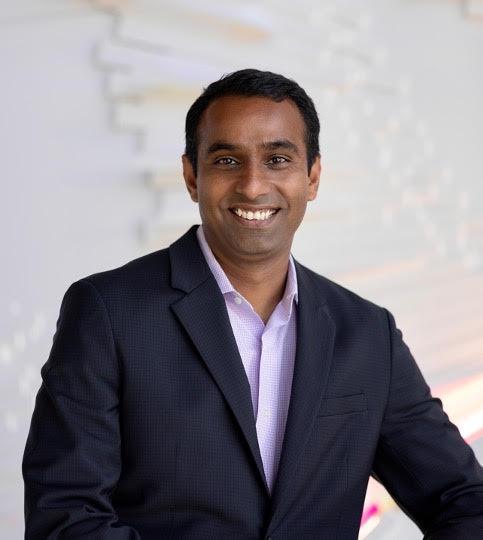
Dr. Prashanth Asuri is a Professor in the Department of Bioengineering at Santa Clara University's School of Engineering, where he has been teaching and researching since Fall 2011. His work focuses on developing biomaterial-based in vitro platforms to understand complex in vivo phenomena, combining biomaterials engineering, nanotechnology, and biology. Ph.D. in Chemical and Biological Engineering, Rensselaer Polytechnic Institute M.B.A. in Leading Innovative Organizations, Santa Clara University Research interests include hydrogel-based toxicity assessment, macromolecular crowding effects, and mechanical property optimization of nanocomposites. He has published over 50 scholarly works and teaches courses ranging from biomaterials science to healthcare marketing. Awards: Brutocao Family Foundation Award for Curriculum Innovation (2022) President’s Special Recognition Award (2019) School of Engineering Teaching Excellence Award (2018) School of Engineering Researcher of the Year (2016) As Director of the School of Engineering's Healthcare Innovation and Design Program, he bridges academic research with industry applications. His publications reveal sustained contributions to biomaterials engineering, nanoparticle toxicity, and mechanobiology.
Stig Pedersen-Bjergaard is a Professor at the Department of Pharmacy, University of Oslo since 2000 and holds a 20% position at the Department of Pharmacy, University of Copenhagen since 2008. His research focuses on pharmaceutical analytical chemistry , particularly the development of microextraction techniques like electromembrane extraction (EME) and liquid-phase microextraction (LPME). Specializes in isolating/concentrating drugs, metabolites, and peptides from biological samples Develops equipment (96-well plates, microchips) and theoretical frameworks for mass transport Authored two international textbooks in pharmaceutical analytical chemistry and bioanalysis (Wiley) Research Trends include optimizing extraction windows, commercializing microextraction technologies, and evaluating green chemistry metrics for sustainable pharmaceutical analysis. Publications emphasize deep eutectic solvents , agarose membranes , and nanomaterial integration in extraction systems. Teaching covers pharmaceutical raw material analysis, drug determination in biological samples, and general analytical chemistry. He serves as Editor for Advances in Sample Preparation and Associate Editor for Journal of Pharmaceutical Analysis .
Professor Alexander Bismarck serves as a full Professor and Head of the Institute of Material Chemistry at the University of Vienna. His academic career centers on pioneering sustainable materials solutions with emphasis on composite engineering, polymer science, and bioinspired material design. His primary research domains include: Composite Materials: Development of high-performance biocomposites using cellulose, lignin, and fungal biomass for structural applications Polymer Chemistry: Synthesis and characterization of sustainable polymers with tailored properties Porous Materials: Design of advanced porous systems for separation, filtration, and energy storage Sustainable Engineering: Circular economy approaches to waste valorization and eco-friendly manufacturing Recent publications (2024-2025) reveal a strategic research trajectory toward multifunctional sustainable materials. Dominant themes include fungal-based material innovation (mycomaterials), structural batteries for aerospace applications, lignin valorization from black liquor, and photothermal deicing technologies. His work consistently bridges fundamental material properties with practical environmental solutions, particularly in water treatment and renewable energy storage systems. Scientific Awards: No specific awards documented in available sources Professor Bismarck actively supervises research projects and bachelor/master theses through courses like 'Polymer and Composite Engineering Seminar' and 'Research Examples: Sustainable Materials'. His leadership of the Institute of Material Chemistry suggests substantial grant management responsibilities, though specific funding details remain unreported in current documentation. The research group operates within the Institute of Material Chemistry at Währinger Straße 42, Vienna. Current focus areas include mycomaterials development, structural battery engineering, nanocellulose water filters, and bioinspired deicing coatings - all reflecting a strong commitment to sustainable material innovation with real-world applicability.
Dr. Krishnarjun Banerjee is a UKRI Postdoctoral Fellow at the School of Engineering and Materials Science, Queen Mary University of London. His research focuses on lead-free ferroelectric materials for energy storage, electrocaloric applications, and piezoelectric properties. Recent studies include structural modifications in PZT ceramics, defect engineering in relaxor ferroelectrics, and thermal stability analysis of sodium bismuth titanate-based systems. His work explores correlations between composition, microstructure, and functional performance. UKRI Postdoctoral Fellowship He investigates energy storage mechanisms through experimental and computational approaches, collaborating on applications in biomedical and green energy technologies. Detailed supervisory roles and student advisement are not specified in the provided materials.
Dr. Yiqing Lu is a Senior Lecturer at Macquarie University's School of Engineering and a key researcher at the MQ Photonics Research Centre. With over 76 research outputs and 20 projects to their name, Dr. Lu has established themselves as a leading expert in nanophotonics and biomedical imaging technologies. Dr. Lu's research spans multiple cutting-edge areas in nanotechnology and photonics. Their primary focus includes developing advanced upconversion nanoparticles for biomedical imaging, creating time-gated luminescence microscopy techniques, and engineering nanoparticles for targeted drug delivery systems. Their work bridges fundamental physics with practical medical applications, particularly in cancer diagnostics and treatment. The extensive publication record of Dr. Lu demonstrates a clear trajectory from fundamental nanomaterial development toward increasingly sophisticated biomedical applications. Early work focused on establishing the basic principles of time-gated luminescence and upconversion microscopy, while more recent publications show a strong emphasis on clinical translation, particularly in cancer diagnostics and neuro-targeted therapies. Their research group has made significant contributions to super-resolution imaging, multiplexed detection systems, and nanoparticle-based theranostics. Dr. Lu has received recognition for their work including an h-index of 25 with over 4,247 citations and at least one major prize. Their research has been highlighted across multiple platforms including news outlets, social media, and academic networks. While specific grant information isn't detailed in the available text, Dr. Lu's extensive project portfolio (20 projects listed) suggests successful funding from multiple sources. Their collaborative approach is evident in the diverse range of co-authors spanning physics, engineering, biology, and medicine. The MQ Photonics Research Centre serves as Dr. Lu's primary research environment, providing state-of-the-art facilities for nanomaterial synthesis, optical characterization, and biological testing. This interdisciplinary environment fosters the translation of novel photonics technologies from bench to bedside.
Rex Kanu is an Associate Professor of Practice at Purdue University's Polytechnic Institute. His work focuses on manufacturing engineering, plastics engineering, and materials science, with a strong emphasis on pedagogical innovation, including flipped classrooms and 3D printing integration in engineering education. Research Interests: Injection molding, statistical process control, sustainability in manufacturing, rheology, and smart materials. Email: rkanu@purdue.edu The trends in his publications highlight a commitment to enhancing engineering education through practical methodologies (e.g., Design of Experiments, ASTM standards) and advancing manufacturing technologies, particularly in plastics and electrorheological fluids. His work spans decades, addressing both foundational and applied challenges in material behavior and process optimization.
Dania Olmos Diaz is Associate Professor at Universidad Carlos III de Madrid, specializing in polymeric nanocomposites and advanced manufacturing techniques. Leads research in the Polymer Composites and Interphases group. Key research areas: Solution blow spinning for biomedical materials Antibacterial polymer systems Nanocomposite consolidation techniques for heritage conservation Flexoelectric and piezoelectric material development Structure-property relationships in multiphase composites Recent publications focus on PLA-based fibrous materials for medical applications, airbrushed coatings for archaeological conservation, and ternary nanocomposites with enhanced electrical properties. Patents include innovations in material processing and characterization methods. Principal investigator for projects on sustainable packaging materials funded by Spanish research agencies. Research collaborations extend to industrial partners including Hempel A/S for coatings characterization and IMDEA Materials Institute for advanced microscopy.
Martti Toivakka is a Professor at the Laboratory of Natural Materials Technology within the Faculty of Natural Sciences and Engineering at Åbo Akademi University . His research focuses on sustainable materials engineering, particularly in bio-based polymers and advanced coating technologies. Nanocellulose and lignin-based materials Barrier coatings for packaging Emulsion polymerization techniques Phase change materials for thermal energy Polymerization kinetics and modeling His recent publications emphasize bio-based dispersions, functionalization of cellulose nanofibrils, and scalable production of antimicrobial biocomposites. Key projects include CIMANET (circular materials bioeconomy) and SUSBINCO (sustainable binders and coatings), supported by institutions like Business Finland and Finlands Akademi . Research trends highlight advancements in nanocellulose , lignin composites , antimicrobial packaging , and high-throughput coating processes , aligning with UN Sustainable Development Goals for eco-friendly materials. His work involves collaborations across disciplines, including Professor Chunlin Xu and experts in printed intelligence infrastructure , with applications in packaging , energy storage , and biocompatible materials .
Professor Craig E. Banks holds a Personal Chair in Chemistry at Manchester Metropolitan University, leading the Electrochemistry Group. His research focuses on electrochemistry, additive manufacturing, and sustainable materials, addressing global challenges like clean energy and circular economy principles. He has pioneered innovations in 3D-printed electrochemical sensors and recycled materials, contributing to over 660 publications with an h-index of 105. Education: BSc (Hons) Chemistry, DPhil (Oxford), PGCHE, FHEA, FRSC. Research interests include supercapacitors, batteries, 2D materials, electrosynthesis, and environmental sensing. Key projects include TRANSFORM-CE (plastic recycling), ShaREPAIR (electronic waste reduction), and CIRMAP (concrete waste reuse). Recipient of major awards: Royal Society of Chemistry Tilden Prize (2023), Harrison-Meldola Memorial Prize (2011), and multiple Research.com Leadership Awards. Editorial roles include Editor-in-Chief of Journal of Carbon Research and co-Editor-in-Chief of Talanta Open . Labs/Teams: Leads MMU Electrochemistry Group and collaborates internationally. Advises students like Dale Brownson (RSC Belcher Award winner). Active in PrintCity and Circular Economy Network initiatives.
Valentina Beghetto, Associate Professor at the Department of Molecular Sciences and Nanosystems, Ca' Foscari University of Venice, focuses on Green Chemistry , Homogeneous Catalysis , and Biopolymer Development . She coordinates a 12-member research group and teaches Polymers and Industrial Applications , Chemistry of the Tanning Industry , and Perfumes, Fragrances, Food, and Chemistry at undergraduate and graduate levels. Research Institute : Research Institute for Green and Blue Growth Safety Spin-off : President and Founder of Crossing Srl (Innovative SME with 20+ patents) Research Interests include: Waste valorization for biodegradable materials Development of metal-free tanning agents Asymmetric catalysis for fragrance synthesis Homogeneous catalysis with transition metals Recyclable polymers and circular economy strategies Her work has been funded by EU LIFE and POR-FESR programs, including projects like LIFE BIOPOL and ECO_DPI , with collaborations spanning institutions such as Kyoto University , RWTH Aachen , and Grenoble INP .
Alessandra Sutti is an Associate Professor at Deakin University's Institute for Frontier Materials , focusing on polymers, textiles, and sustainable material solutions. Her work bridges industry collaboration with environmental stewardship, particularly through microplastics research and STEM education initiatives. PhD in Materials Science from Universita' degli Studi di Parma (2007) Active in Australian Research Council-funded projects and industry partnerships
Dr. Reda M. El-Shishtawy is a Professor affiliated with multiple institutions including the National Research Centre (Egypt) , King Abdulaziz University (Saudi Arabia) , and Universidade da Beira Interior (Portugal) . His research spans catalysis, biocatalysis, and nanotechnology with emphasis on environmental sustainability. Key institutions: National Research Centre, King Abdulaziz University, Kyoto Institute of Technology Active since 1980s with 175 citations and 32 publications Research Focus: Development of advanced materials for environmental remediation, particularly enzyme immobilization matrices and graphene-based nanomaterials. Recent work includes Suzuki-Miyaura reaction applications for heterocyclic compounds (2023) and quantum energy transfer modeling (2017). Collaboration & Funding: Supported by international sponsors like the National Natural Science Foundation of China and European Regional Development Fund . His collaborations show strong institutional diversity across 9 institutions.
El-Rafie M. H. is a distinguished researcher affiliated with the National Research Centre in Egypt, specializing in Materials Science and Textile Engineering . He has held positions at institutions including Helwan University and Faculty of Science, Egypt , focusing on nanotechnology-driven textile functionalization. Current affiliation: Textile Research Division, National Research Centre Past institutions: Helwan University, Faculty of Science (Egypt) His research spans nanotechnology , polymer chemistry , and sustainable textile processing , with notable work on silver nanoparticles , cotton modification , and antimicrobial applications . Collaborations include partnerships with the National Research Foundation , National Institutes of Health , and international universities. Key publication trends (1976–2014) emphasize graft polymerization , cellulose chemistry , and eco-friendly textile treatments , as evidenced by top-cited papers in journals like Carbohydrate Polymers and Journal of Applied Polymer Science . With 176 publications and 3,715 citations , his work demonstrates significant academic influence. Sponsorship from diverse institutions, including the National Natural Science Foundation of China and Science and Technology Development Fund , highlights global recognition of his research impact.
Tim Prasun is a researcher at Bielefeld University, affiliated with the Faculty of Biology and the Center for Biotechnology (CeBiTec). He works in the Prokaryote Genetics group, focusing on microbial biotechnology and metabolic engineering. His research interests include: Microbial Biotechnology Metabolic Engineering Prokaryote Genetics Sugar Acid Production Corynebacterium glutamicum Research Dr. Prasun's recent work has centered on the catabolism and production of sugar acids by microorganisms, particularly Corynebacterium glutamicum. His research explores metabolic engineering approaches to optimize microbial strains for efficient sugar acid production, with applications in food, construction, medical, textile, and polymer industries. His publications demonstrate expertise in pathway engineering, deletion of competing metabolic pathways, cofactor balancing, and transporter engineering for precursor import and product export. His research leverages synthetic biology tools like CRISPR-Cas and dynamic regulatory circuits to improve strain development through precise genetic modifications and adaptive control of metabolic fluxes. The work has significant implications for sustainable production of sugar acids using plant biomass hydrolysates.
Robert S. Langer is an Institute Professor at the Massachusetts Institute of Technology, holding positions in both the Department of Chemical Engineering and the Department of Biological Engineering. He is also a faculty member of the Harvard-MIT Program in Health Sciences and Technology and the Koch Institute for Integrative Cancer Research. With over 1,400 granted or pending patents and more than 1,600 scientific papers, Langer is one of the world's most highly cited researchers with an h-index of 331 and over 450,000 citations. Dr. Langer's educational background includes: Bachelor's degree in Chemical Engineering from Cornell University Sc.D. in Chemical Engineering from Massachusetts Institute of Technology (1974) Postdoctoral fellowship at Children's Hospital Boston and Harvard Medical School under Judah Folkman (1974-1977) Langer is widely regarded as a pioneer in drug delivery systems and tissue engineering . His research focuses on developing innovative biomaterials for controlled drug release, creating engineered blood vessels and vascularized engineered muscle tissue, and advancing regenerative medicine. His work has led to the development of polymer systems that control the release of inhibitors for cancer treatment, microneedle tattoo patches for medical information storage, and implantable devices for diabetes treatment. Langer's laboratory at MIT is the largest biomedical engineering lab in the world, maintaining over $10 million in annual grants and over 100 researchers. Analysis of Langer's recent publications reveals a continued focus on advanced drug delivery systems, nanotechnology applications in medicine, and tissue engineering innovations. His work spans from fundamental biomaterials development to clinical applications, with particular emphasis on improving biocompatibility, developing targeted delivery systems for cancer and other diseases, and creating responsive materials that adapt to physiological conditions. Recent work shows significant contributions to mRNA delivery systems, which have become increasingly relevant for vaccine development. Langer has received numerous prestigious awards, including: National Medal of Science (2006) National Medal of Technology and Innovation (2011) Millennium Technology Prize (2008) Queen Elizabeth Prize for Engineering (2015) Kavli Prize in Nanoscience (2024) Double Helix Medal (2025) And over 220 other major awards throughout his career Dr. Langer has advised numerous students who have gone on to become leaders in biomedical engineering and related fields. His laboratory has been instrumental in training the next generation of researchers and entrepreneurs. Beyond academic mentorship, Langer has been involved in founding more than 40 biotechnology companies, including Moderna, demonstrating his commitment to translating research into real-world applications. His lab maintains substantial grant funding, with over $10 million in annual grants supporting innovative research in drug delivery and tissue engineering. The Langer Lab at MIT is the largest biomedical engineering laboratory in the world, with over 100 researchers working on cutting-edge projects in drug delivery, tissue engineering, and nanotechnology. The lab has developed numerous technologies that have been commercialized through startup companies, and continues to push the boundaries of what's possible in biomedical engineering. Langer's collaborative approach has led to partnerships with researchers across MIT, Harvard, and other institutions worldwide, creating a vibrant ecosystem for innovation in biotechnology.