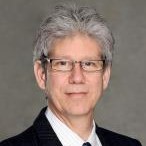
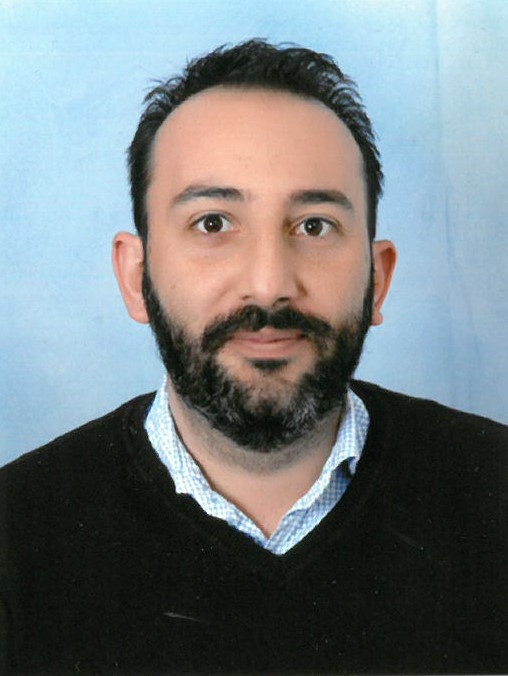
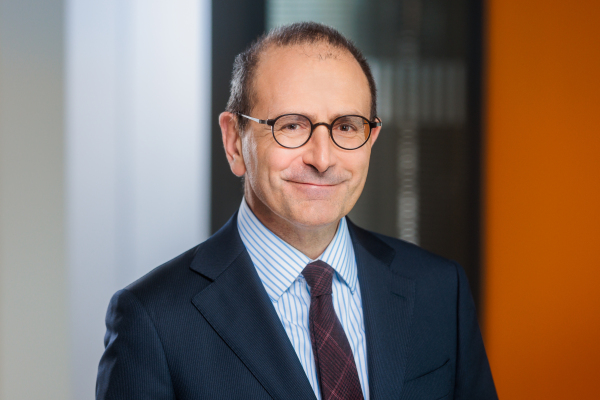
Dr. Woei Saw is an Associate Professor in the School of Chemical Engineering at the University of Adelaide, affiliated with the Faculty of Sciences, Engineering and Technology. He specializes in developing net-zero technologies for high-temperature industrial processes, including alumina calcination and cement production. His research integrates concentrated solar thermal (CST) energy with mineral processing and waste valorization. His work focuses on decarbonization strategies, such as solar-driven gasification of biomass and agricultural residues to produce biofuels and hydrogen. He leads the HILT-CRC project on low-carbon alumina calcination and has contributed to ARENA-funded CST research, including process integration and high-temperature storage systems. Key projects include solar expanding vortex receiver (SEVR) development, ash chemistry analysis, and torrefaction of biomass for high-value products. He advises on Masters and PhD students and collaborates on techno-economic assessments for industrial decarbonization.
Armin Shamaeizadeh is an Associate Tutor at the University of East Anglia, affiliated with the School of Engineering, Mathematics and Physics within the Faculty of Science. His work bridges renewable energy systems and advanced nanomaterials, with a focus on practical and sustainable engineering solutions. Research Interests: His primary research areas include Renewable Energies, Solar cells (particularly floating photovoltaics), Nanotechnology applications in energy and medicine, Mechanical Engineering, and Simulation techniques. His interdisciplinary work connects energy engineering with biomedical applications of nanomaterials. The recent publications reflect a strong trend in both sustainable energy systems and smart nanomaterials for medical applications. On one hand, his work explores solar-driven polygeneration, Rankine-ejector cycles, and nanoparticle-enhanced solar cells. On the other, he investigates advanced drug delivery systems using magnetic MOFs and nanobiomaterials for cancer therapy, indicating a unique dual focus on energy and biomedical engineering. Scientific Service: Peer reviewer for Materials Science and Engineering B (2024–present) Advising and Grants: There is no public information indicating student supervision or grant leadership. However, his collaborative research suggests involvement in team-based projects, particularly with researchers like A. Kasaeian and S. M. Naghib. Labs and Research Groups: He is a member of the Sustainable Energy research group at UEA, contributing to advancements in renewable technologies and energy system integration.
Jan Wissink is a Senior Lecturer in Aerospace Engineering and Senior Tutor at Brunel University London, within the College of Engineering, Design and Physical Sciences. His research focuses on environmental fluid mechanics, aerodynamics, and computational fluid dynamics, with expertise in heat and mass transfer across air-water interfaces, turbulent flow modeling, and transitional flow dynamics in turbine cascades. Education MSc in Applied Mathematics, University of Groningen (NL) PhD in Computational Methods to Fully Resolve Transitional and Turbulent Flows, University of Groningen (NL) His recent work examines unsteady fluid dynamics, Marangoni effects in buoyancy-driven flows, and DNS/LES simulations of open-channel and turbine blade flows. Publications highlight interdisciplinary applications in renewable energy and environmental engineering. Research Grants Nanofluid based solar PV/T technology for polygeneration He collaborates on advanced numerical methods for low-diffusivity scalar transport and contributes to projects integrating fluid dynamics with sustainable energy systems.
Carlo Roselli is a Full Professor in the Department of Engineering at the University of Sannio, Italy, specializing in Industrial Technical Physics (ING-IND/10). He has been a permanent faculty member since 2006, progressing from University Researcher to Full Professor in 2020. His research is centered on sustainable energy systems, with a focus on polygeneration, microcogeneration, trigeneration, and renewable energy integration. Full Professor, Department of Engineering, University of Sannio (2020–present) Associate Professor, Department of Engineering, University of Sannio (2017–2020) Confirmed Researcher, University of Sannio (2009–2017) University Researcher, University of Sannio (2006–2009) Carlo Roselli’s research interests include energy efficiency, dynamic simulation of energy systems, environmental impact assessment using metrics like TEWI and ETEWI, solar-assisted hybrid systems, heat pumps, and the development of tools for Positive Energy Districts. His work often involves experimental and simulation-based analysis under Mediterranean climate conditions, particularly in Southern Italy. The recent articles highlight a strong trend toward sustainable urban energy systems, with a focus on decarbonization, renewable integration, and smart energy communities. His publications span topics such as micro-trigeneration, geothermal plants, wind-driven CCHP systems, and innovative environmental indices like ETEWI. The research emphasizes real-world applications in residential, commercial, and community-level energy systems. Scientific awards and honors are not explicitly mentioned in the provided texts. Carlo Roselli has collaborated extensively with researchers including Maurizio Sasso, Elisa Marrasso, Giovanni Angrisani, and Francesco Tariello. His work is often supported by experimental facilities and simulation tools, contributing to national and European energy policy frameworks. While specific grants are not listed, his research aligns with EU climate and energy targets, particularly in primary energy savings and greenhouse gas reduction. He is part of a research team within the Department of Engineering at the University of Sannio that focuses on advanced energy systems, experimental validation, and sustainable technology implementation. The team conducts research on small-scale polygeneration, hybrid solar systems, and environmental performance metrics, operating under real-world Mediterranean climatic conditions.
Dr. Tom Hughes is a Senior Lecturer in the Department of Civil & Environmental Engineering at Monash University. His research focuses on high-accuracy thermophysical measurements for energy systems, including natural gas, liquefied natural gas (LNG), hydrogen production, and environmentally-friendly refrigerants. He contributes to UN Sustainable Development Goals by advancing sustainable energy technologies and reducing environmental impacts. Education: BEng (Hons) in Chemical Engineering, University of Canterbury, New Zealand PhD in Chemical Engineering, University of Canterbury (2009) Research Interests: Dr. Hughes specializes in thermophysical property measurements at extreme conditions, gas hydrate dissociation, and improving LNG/LH2 production and storage. His work spans carbon capture, hydrogen logistics, and eco-friendly refrigerants. Recent projects include: Integration of liquid air energy storage with LNG production Numerical modeling of liquid hydrogen sloshing in tanks Green methanol production via supercritical water electrolysis Advising & Grants: Accepting PhD students in energy systems, hydrogen technology, and thermodynamics. Projects funded by Mitsubishi Heavy Industries, Shell, Chevron, and the Australian Research Council. Labs/Teams: Member of the Fluid Science and Resources group, collaborating globally on energy sustainability.
Dr. Moein Shamoushaki is a Research Associate at the South Yorkshire Sustainability Centre (SYSC) within the Management School at the University of Sheffield. His work focuses on life cycle assessment (LCA) and supply chain innovation for energy systems, particularly aimed at reducing carbon emissions in South Yorkshire. He holds a PhD from the University of Florence (2022), where his research centered on thermodynamic and environmental assessments of geothermal power plants under the Horizon 2020-funded GECO and GEOENVI projects. Shamoushaki's academic background includes a BSc and MSc in Mechanical Engineering from Iran University of Science and Technology and Islamic Azad University, respectively. His research interests span renewable energy, exergy/exergo-economic analysis, and carbon capture technologies. He has contributed to over 20 peer-reviewed publications since 2017, focusing on optimizing energy systems' sustainability through multi-criteria analysis. His recent work emphasizes decarbonizing supply chains, integrating solar/geothermal systems, and developing hydrogen economy frameworks. Notable projects include net-zero heat pump assessments and feasibility studies for geothermal drilling. Shamoushaki collaborates with industry partners through SYSC to advance sustainable energy solutions, combining technical innovation with policy-oriented insights.
Dr. Marc Rosen is a Professor in the Department of Mechanical and Manufacturing Engineering at Ontario Tech University, part of the Faculty of Engineering and Applied Science. He holds multiple fellowships, including from the Canadian Academy of Engineering, American Society of Mechanical Engineers, and Engineering Institute of Canada. His research focuses on energy systems, thermodynamics, renewable energy, and sustainable development. Education: Ph.D., Mechanical Engineering (University of Toronto, 1987); MASc (1983) and BASc (1981), also from the University of Toronto. Research interests include polygeneration systems, district energy, geothermal energy, hydrogen fuel cells, and thermal energy storage. He has authored numerous books and over 1,000 publications. Notable awards include the John B. Stirling Medal (2016) and the Julian C. Smith Medal (2007). Rosen has served as Founding Dean of Ontario Tech’s Faculty of Engineering (2002–2008) and held leadership roles in national engineering societies. His recent work emphasizes exergy analysis, sustainable energy systems, and the energy-water-food nexus.
Lina Wang is a Postdoctoral Researcher at Aalborg University's Department of Chemistry and Bioscience within the Faculty of Engineering and Science. Her work focuses on solar energy systems and waste-to-energy technologies. Research Areas: Solar collector engineering, nanotechnology in solar cells, heat recovery, and polygeneration systems Publications: 2024 study on solar-waste hybrid systems; 2022 comprehensive review of nanotechnology in photovoltaics Her collaborations include researchers working on renewable energy technologies, with significant contributions to environmental sustainability and solar energy applications.
Pratim Biswas serves as Professor and Dean of the College of Engineering at the University of Miami, where he leads the Department of Chemical, Environmental & Materials Engineering. His academic leadership extends to directing the Aerosol and Air Quality Research Laboratory (AAQRL), which focuses on particulate matter characterization and mitigation strategies. His research spans multiple critical environmental domains with emphasis on aerosol science , air quality management , and CO 2 reduction technologies . Current investigations include advanced particulate matter source apportionment using machine learning, photocatalytic CO 2 conversion mechanisms, lunar dust monitoring for space exploration, and clean cooking solutions for developing nations. His laboratory employs sophisticated techniques like in-situ DRIFTS for reaction mechanism analysis and electrospray deposition for perovskite solar cell fabrication. Recent publication trends reveal strong interdisciplinary connections between environmental engineering, energy systems, and space applications. His work demonstrates particular expertise in translating fundamental aerosol science into practical solutions for air quality management and carbon mitigation. The research portfolio shows consistent output with multiple 2024-2025 publications addressing both terrestrial environmental challenges and extraterrestrial applications. Biswas actively mentors graduate students, with documented PhD completions including Dr. Sujit Modi whose research focused on "Single-step Aerosol Methods for Lignin Valorization." His laboratory maintains active collaborations across engineering disciplines and international boundaries, particularly evident in India-focused clean energy research. The AAQRL operates at the intersection of fundamental aerosol science and practical environmental solutions, with current projects spanning from community kitchen air quality assessments to lunar dust monitoring systems for NASA missions. This breadth demonstrates Biswas's ability to connect basic research with real-world applications across diverse environments.
Dr. Adrian Pugsley is a Lecturer in Electrical & Energy Engineering at the Belfast School of Architecture and the Built Environment , Ulster University. His expertise lies in Building Integrated Renewable Energy Systems , with a focus on photovoltaic-thermal (PV/T) technology, solar thermal systems, and energy storage solutions. Adrian's academic qualifications include a B.Eng in Electroacoustics (2000), an MSc in Renewable Energy and Energy Management (2013, with distinction and McBride Prize), and a PhD in Building Integrated Solar Collectors (2017). Key research areas include Phase Change Heat Transfer , Off-grid Energy Systems , Solar Desalination , and Nanocomposite Solar Water Heaters . He actively contributes to UN Sustainable Development Goals through projects like SolaFin2Go and SolaNetwork , which address rural electrification in sub-Saharan Africa and building energy efficiency. Adrian has received the McBride Prize (2013) and collaborates with industrial partners such as Unilever and Network Rail . A dedicated educator, he supervises student projects, lectures on Solar Energy and Building Acoustics , and engages in secondary school outreach to promote renewable energy courses. His work combines experimental testing , prototyping , and theoretical analysis , with recent projects involving Switchable Insulation Panels and Zero Emission Climate Control Systems . Adrian also serves as a technical reviewer for journals like Renewable Energy , ensuring quality in academic discourse.
Joel L. Cuello is a Professor of Agricultural and Biosystems Engineering and Director of the Global Initiative for Strategic Agriculture in Dry Lands (GISAD) at The University of Arizona. He also holds visiting professorships at Zhejiang University (China), De La Salle University (Philippines), and is a Faculty Fellow at the Ateneo de Manila University. His academic journey includes a Ph.D. from Penn State University (1994) with minors in Chemical Engineering and Plant Physiology. **Research Interests**: Dr. Cuello focuses on engineered systems for sustainable agriculture, including algal biofuel production, bioreactor design (e.g., patented Accordion photobioreactors), and vertical farming innovations like the Vertical Greenbox®. His work bridges engineering and biology to optimize resource efficiency and environmental protection in arid regions. Key themes include the Food-Water-Energy Nexus, bioregenerative space life support systems, and industrial-scale algal cultivation for nutraceuticals and biofuels. **Awards**: Highlights include the 2016 Severino and Paz Koh Lectureship Award, election to the National Academy of Science and Engineering (Philippines), and the 2015 Tech Launch Arizona Innovation Award. His contributions span 11 countries, emphasizing global partnerships in sustainable agriculture. **Teaching**: He teaches courses on sustainability, the Food-Water-Energy Nexus, and global agricultural innovation, reflecting his commitment to education and applied research.
Thomas Adams serves as an Adjunct Professor in the Department of Chemical Engineering at McMaster University. His research spans energy systems engineering and sustainable process design, with particular expertise in solid oxide fuel cells, semicontinuous distillation processes, and techno-economic analysis of clean energy systems. Coming from a family of engineers (third generation), Dr. Adams has maintained scholarly activity for over five decades with publications extending to 2025. Dr. Adams' research focuses on energy system integration and sustainable process design , addressing critical challenges in hydrogen production, waste-to-energy conversion, and carbon management. His work demonstrates particular strength in analyzing long-term degradation effects in fuel cell technologies and developing optimization methodologies for polygeneration systems. Recent research increasingly emphasizes techno-economic and environmental assessment of emerging energy technologies, with significant contributions to standardization frameworks in this field. Analysis of Dr. Adams' publication trends reveals a strong emphasis on system integration approaches that combine different energy conversion processes for maximum efficiency. His work spans from fundamental thermodynamic analyses to practical applications in steel manufacturing, plastic recycling, and maritime energy systems. The consistent application of process systems engineering principles across diverse energy challenges represents a hallmark of his scholarly contributions. Dr. Adams contributes significantly to chemical engineering education through courses including Chemical Process Design and Simulation (CHEMENG 3G04), Energy Systems Engineering (CHEMENG 4A03/6A03), and Advanced PSE Tools and Methods (CHEMENG 740). His 2024 publication 'Teaching Process Design – Quo Vadis?' reflects his ongoing engagement with pedagogical approaches in chemical engineering education. His scholarly impact is evident through consistent publication in top chemical engineering journals including Computers and Chemical Engineering , Industrial & Engineering Chemistry Research , and AIChE Journal . With research activity spanning from 1976 to the present, Dr. Adams has adapted his expertise to address evolving industry challenges from traditional chemical processes to contemporary sustainability concerns.
Dr. Dimitris Ipsakis is an Assistant Professor at the Technical University of Crete , affiliated with the School of Production Engineering and Management . He holds a Chemical Engineering Diploma from Aristotle University of Thessaloniki (2005), a PhD in Chemical Engineering (2011), and an MSc in Mathematics (2013). His research focuses on control systems for energy and environmental applications, process modeling, renewable energy systems, and techno-economic analysis. He has extensive experience in European and National projects, acting as an evaluator for research proposals. Education: Chemical Engineering Diploma (AUTH, 2005) PhD in Chemical Engineering (AUTH, 2011) MSc in Mathematics (AUTH, 2013) Research Interests: Control systems (conventional and advanced) for energy/environmental systems, process modeling/simulation, renewable energy integration, hydrogen production, and techno-economic assessments. His work emphasizes sustainable processes for energy systems and circular economy solutions. Key Contributions: Over 50 publications in prestigious journals/conferences, including studies on hydrogen production via electrolysis, biomass valorization, and smart grid management. He co-leads the Production Systems Laboratory and Industrial, Energy and Environmental Systems Laboratory , focusing on industrial process optimization and renewable energy systems. Labs/Teams: Active in two core laboratories at TUC, advancing research in production systems and energy sustainability. Collaborates with institutions like CERTH and Texas A&M University at Qatar.
Prof. Dr. Burak Atakan is a Full Professor of Thermodynamics at the Universität Duisburg-Essen , leading the Chair of Thermodynamics since 2002. He holds academic affiliations with the Faculty of Engineering , specifically within the Department of Mechanical and Process Engineering and the Institute for Energy and Materials Processes . His research focuses on combustion chemistry, laser diagnostics, high-temperature systems, and energy-efficient technologies, with notable contributions to polygeneration systems and thermographic phosphor sensor development. He has authored over 120 publications and supervised PhD students such as Daniel Stenders. Prof. Atakan has received prestigious awards including the 1997 Benningsen-Foerder-Preis and 2020 Fellowship from the Combustion Institute. Education: PhD (1993, Heidelberg University), Habilitation (2000, Bielefeld University). Professional roles include editorial board memberships for Applications in Energy and Combustion Science , and leadership in DFG-funded projects like Research Unit FOR1993 and SPP 2403. He is actively involved in academic governance, serving as Chair of the University Senate (2014–2016) and leading the UA Ruhr Energy System Transformation initiative. Research highlights include pioneering work on laser diagnostics in high-pressure combustion, thermodynamic analysis of gas turbine cycles, and exergoeconomic evaluations of polygeneration processes. His lab develops advanced materials for energy systems, including thin-film sensors and CVD-modified carbon materials. Current projects emphasize sustainable energy transitions and multi-functional energy conversion systems. Key memberships: Combustion Institute, VDI, GDCh, ProcessNet. He reviews for major funding bodies (DFG, DAAD) and journals such as Energy , Combustion and Flame , and Applied Thermal Engineering . His work bridges fundamental thermodynamics with applied engineering challenges in energy and materials.
Dr. Alessandro Romagnoli is an Associate Professor at Nanyang Technological University's School of Mechanical and Aerospace Engineering, and Co-Director of the NTU-Surbana Jurong Corporate Lab. His research focuses on sustainable energy systems including thermal energy conversion, cryogenic storage, and geothermal energy. He established the Thermal Energy Systems Lab and advises international organizations like the World Bank on energy projects. His research explores: Optimization of multi-energy systems for microgrids Advanced thermal storage technologies including packed bed and phase-change materials Geothermal energy extraction and reservoir management Integration of hydrogen and cryogenic storage in urban energy networks Thermal safety solutions for electric aviation batteries Recent publications demonstrate strong focus on computational modeling of energy systems (47% of articles), experimental validation of thermal storage (27%), and geothermal resource development (20%). Research consistently addresses energy efficiency optimization and renewable integration challenges. Dr. Romagnoli provides strategic guidance to the IFC, Asian Development Bank, and European Research Council on energy initiatives, and leads a S$60M urban sustainability research program.