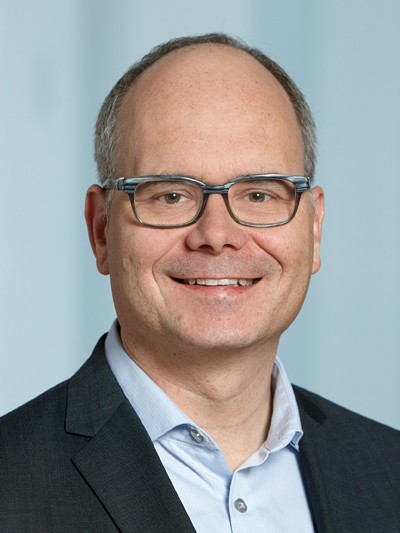
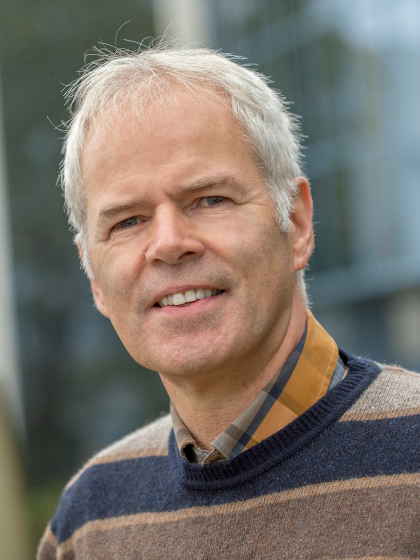
Christopher M. Kozak is a Professor of Chemistry at Memorial University, leading the Green Chemistry and Catalysis Group. His research develops sustainable catalytic processes for polymer synthesis and CO2 utilization. Research Focus: Designs earth-abundant metal catalysts (Cr, Zr, Fe) for ring-opening polymerizations, converting CO2/epoxides to polycarbonates and biomass to non-isocyanate polyurethanes. Emphasizes renewable feedstocks and waste valorization. Recent Publications: Highlights include zirconium-catalyzed copolymerization kinetics, chromium-mediated polycarbonate synthesis, and microwave-enhanced iron-catalyzed cross-couplings. Work bridges fundamental organometallic chemistry and green applications.
Manfred Zinn serves as a Professor at the University of Applied Sciences and Arts Western Switzerland (HES-SO), specifically within the School of Chemistry and Life Sciences. He leads the Biotechnology and Sustainable Chemistry research group at the Life Science Engineering department in Sion, Switzerland. His academic position includes significant research leadership responsibilities and active contributions to the field of bioplastics and sustainable materials. Professor Zinn's research focuses primarily on biotechnology applications for sustainable materials, with particular expertise in polyhydroxyalkanoates (PHAs) and other bioplastics. His work spans microbial biosynthesis, material characterization, and industrial applications of biodegradable polymers. He investigates the metabolic pathways of PHA-producing microorganisms, develops novel analytical methods for biopolymer characterization, and explores practical applications of bioplastics in medical and industrial contexts. His research integrates microbiology, polymer chemistry, and process engineering to address challenges in sustainable materials development. Analysis of his recent publications (2019-2024) reveals a strong focus on advancing the science and technology of bioplastics, particularly polyhydroxyalkanoates. His work addresses key challenges in monomer composition control, polymer characterization, biosynthesis optimization, and industrial applications. A significant trend in his research involves developing sophisticated analytical methods for biopolymer production monitoring and exploring novel applications for biodegradable materials in medical and industrial contexts. His collaborative work spans multiple countries and institutions, reflecting the international nature of bioplastics research. Professor Zinn has secured significant research funding through multiple competitive grants, including Innosuisse and Swiss National Science Foundation projects. His research portfolio includes projects on biosynthesis of Chlorella, electroplating processes for biodegradable materials, and online flow cytometry analysis for microbial bioplastic production. These projects demonstrate his ability to secure funding for interdisciplinary research at the intersection of biotechnology, materials science, and sustainable chemistry. His collaborations extend to institutions including the Frauenhofer Institute and Chulalongkorn University in Bangkok. The Biotechnology and Sustainable Chemistry research group led by Professor Zinn maintains strong laboratory facilities for microbial cultivation, biopolymer synthesis and characterization. The group utilizes advanced equipment including bioreactors, flow cytometry systems, and polymer analysis instrumentation. Their research bridges fundamental science with practical applications, focusing on developing sustainable alternatives to conventional plastics while addressing technical challenges in production, characterization, and implementation.
Paul Joshua Hurst is a Postdoctoral Scholar in the Department of Chemistry at Stanford University, affiliated with the School of Humanities and Sciences. His research focuses on advanced polymer chemistry, self-assembly mechanisms, and their biomedical applications. He explores topics such as drug delivery systems, nanomedicines, and cryo-electron microscopy for material characterization. His work integrates interdisciplinary approaches, combining organic synthesis, materials science, and biophysics. Key areas of investigation include the design of bioreducible polymers for mRNA delivery, chemically driven hydrogel systems, and the structural analysis of enzyme@metal-organic frameworks using cryo-EM. He is affiliated with the CMAD, ChEM-H, and SSRL research programs. Recent research trends show a focus on reaction-driven self-assembly, sustainable polymer synthesis, and dynamic materials with tunable properties. His studies emphasize both fundamental mechanisms and translational applications in drug delivery and nanotechnology. No scientific awards have been listed in the provided information. While no student advisees are mentioned, his research contributions span over 15 peer-reviewed articles from 2020 to 2025, reflecting a strong publication trajectory in top-tier journals. His work is supported through collaborations with Stanford’s affiliated programs.
Jean-François TAHON is a Researcher at the University of Lille , affiliated with the Materials and Transformations Unit (UMET), CNRS UMR 8207 . His primary affiliation is within the Polymer Systems Engineering department, where he focuses on advanced materials research. His research interests center on thermoelectric and piezoelectric polymers and composites , exploring structure-property relationships through techniques like X-ray diffraction and scattering. He leads instrumental activities including the Thin Film Analyzer , X-ray scattering/diffraction bench , and thermal/ electrical characterization systems. Key contributions include studies on P(VDF-co-TrFE) copolymer crystallography, photochromic supramolecular materials, and polymer-based energy conversion systems. His work emphasizes material characterization, processing-structure-property linkages, and advanced material applications in energy and environmental contexts. TAHON collaborates extensively on interdisciplinary projects, particularly in recycling and functionalization of polymers. He is involved in lab infrastructure management, contributing to experimental platforms for materials analysis.
Dr. Mark D. Soucek is a Professor and Interim Director at the University of Akron 's School of Polymer Science and Polymer Engineering . With over 140 publications, his work focuses on developing environmentally benign coatings, including UV-curable systems, nanotechnology-enabled smart coatings, and inorganic/organic hybrid materials. He previously served as President of the Cleveland Coating Society (2009) and has held academic positions at NASA-Langley (1990-1993), North Dakota State University (1993-2001), and currently at the University of Akron since 2001. Education : Ph.D. in Inorganic Chemistry (University of Texas, Austin, 1990) M.S. in Organic Chemistry (Illinois State University, 1986) B.S. in Chemistry (Eastern Illinois University, 1983) His research emphasizes crosslinked coating systems such as autoxidatively crosslinked , high solids , crosslinkable latexes , and UV-curable thermosets . Using Photo-DSC , Real-time IR , and DMTA , his group analyzes in situ crosslinking reactions to correlate molecular structure with coating properties like fracture toughness , abrasion resistance , and corrosion protection . Recent projects include creating a UV-Curable Powder Coatings Research Center to bridge industrial and academic collaborations. Dr. Soucek's publications span topics like smart ceramer coatings , seed oil-based reactive diluents , and hydrolytic stability of polyesters . His work has received multiple citations in areas such as environmental degradation and tire wear particle analysis . He has secured grants from the National Institute of Food and Agriculture and the Industry/University Cooperative Research Center in Coatings .
Christine Campagne is a full professor at ENSAIT since 2010, affiliated with the Multifunctional Textiles and Processes Group. Her research activities focus on advanced textile functionalization and polymer surface modification techniques, with significant contributions to sustainable textile technologies and smart materials development. Professor Campagne's research interests span multiple cutting-edge areas of textile science. Her primary focus involves physical surface treatments using atmospheric plasma technology for textile functionalization, chemical surface treatments to impart antibacterial, hydrophilic, and hydrophobic properties to textiles, and 3D printing applications for textile innovation. She also specializes in surface nanostructuration for self-cleaning textiles, physico-chemical characterization of polymer surfaces, and processing of polymer nanocomposites including conductive and antibacterial multifilaments. Her work extends to the characterization and study of climatic ageing of textile materials, ensuring durability in various environmental conditions. Analysis of Professor Campagne's recent publications reveals a strong trend toward sustainable and multifunctional textile development. Her work increasingly focuses on bio-based solutions (like milk casein for antimicrobial textiles), eco-friendly processing techniques (plasma treatments replacing chemical mordants), and multi-functional applications where single textile systems provide multiple benefits (UV protection, water detection, chemical hazard protection). The research demonstrates growing integration of nanotechnology with traditional textile processes and increasing emphasis on circular economy principles in textile development. Professor Campagne serves as Principal Investigator or co-PI on several significant research projects including Autonotex, MA(T)TISSE, Phototex, Autotherme, Duratex, and MONI2TEX. Her teaching portfolio encompasses advanced topics in polymer science including physico-chemical properties of polymers , polymer functionalization , ageing mechanisms of polymers , biopolymers , and surface characterization of textile materials , reflecting her comprehensive expertise across both fundamental and applied aspects of textile science.
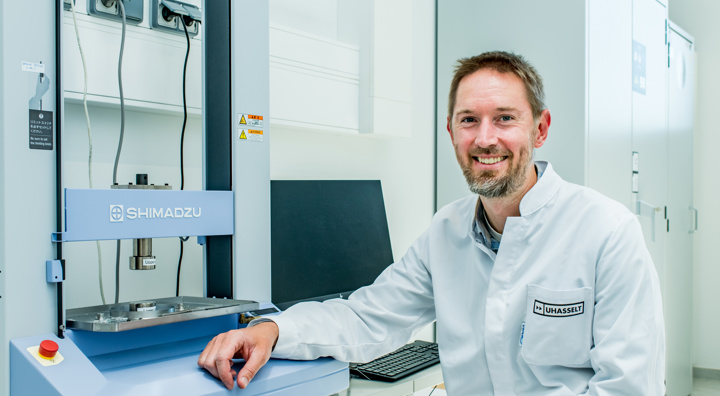
Prof. Louis Pitet is an Assistant Professor at Hasselt University in the Department of Chemistry and a member of the Institute for Materials Research (imo-imomec). He leads the AFP research group focused on advanced functional polymers and sustainable materials. Pitet's career began as an independent researcher in 2018 following postdoctoral work at Eindhoven University of Technology and industry experience at DSM. Education: Bachelor's in Chemistry (2005), Colorado School of Mines PhD in Polymer Chemistry (2011), University of Minnesota Research interests center on block copolymer design , hydrogel bioinks , and sustainable polymer upcycling . His work emphasizes functional materials for biomedical applications, energy storage, and environmental solutions. Key innovations include tough hybrid hydrogels, dynamic supramolecular networks, and methods for converting plastic waste into valuable materials. Recent publications highlight advancements in 3D-printable hydrogels, recyclable thermosets, and polyester upcycling strategies. His group actively explores biocompatible materials and smart responsive polymers with tunable mechanical properties. Labs/Teams: AFP Research Group (Hasselt University), Institute for Materials Research (imo-imomec). Collaborates across disciplines to bridge fundamental polymer science with real-world applications in healthcare and sustainability.
T. Randall Lee is the Cullen Distinguished University Chair and NSM Associate Dean for Research in the Department of Chemistry at the University of Houston. He holds a joint appointment in the William A. Brookshire Department of Chemical and Biomolecular Engineering. He earned his Ph.D. in Chemistry from Harvard University in 1991 and completed a postdoctoral fellowship at Caltech. His research focuses on nanoparticle synthesis, self-assembled monolayers (SAMs), biomedical materials, and photocatalytic systems. Key projects include developing magnetic nanoparticles for hyperthermia therapy, antifouling coatings, and smart drug delivery systems. His work spans collaborations with chemical engineers, physicists, and biomedical researchers to advance materials science and energy applications. Education: Ph.D., Harvard University, 1991 B.A., Rice University, Magna Cum Laude, 1985 NIH Postdoctoral Fellow, California Institute of Technology, 1991–1993 Research interests emphasize organic and materials research chemistry, with six core areas: fluorinated thin films, complex organic interfaces, biologically active surfaces, nanoparticle manipulation, polymer science, and catalysis. His group employs advanced techniques like AFM, SEM, and sum frequency generation spectroscopy. Current projects include SAM-based biomedical applications and plasmonic nanoparticle systems. Labs and teams collaborate on interdisciplinary projects, such as nanocomposites for energy harvesting and environmental remediation. Future work aims to expand applications in cancer therapy and sustainable materials.
Professor Richard Blackburn is a Professor of Sustainable Materials at the University of Leeds, School of Design. His research focuses on applying sustainability principles to materials science, textile coloration, and cosmetics. He leads the Sustainable Materials Research Group and co-founded Keracol Limited, a spin-out company developing natural cosmetic ingredients from plant extracts. His work includes innovations in dyeing technologies, reducing microfibre pollution, and sustainable textile processing. Education: BSc (Hons) and PhD in Colour Chemistry from the University of Leeds Professional Memberships: Fellow of the Royal Society of Arts, Royal Society of Chemistry, and Society of Dyers and Colourists. Key research interests span sustainable textile practices, natural dye extraction, polymer chemistry, and green chemistry applications. He has pioneered methods for extracting actives from food waste for cosmetics and developed fluorine-free repellent coatings for textiles. Awards: Silver Medal (Society of Dyers and Colourists, 2016) Fellowship (Society of Dyers and Colourists, 2017) Centenary Medal (2018 & 2019) Freedom of The City of London (2013) Advising & Grants: Leads multidisciplinary projects on textile sustainability, including FoodWasteNet and the Business of Fashion, Textiles and Technology partnership. His work bridges academia and industry through spin-offs like Keracol and RITE Group, focused on minimizing environmental impact. Labs & Teams: Head of the Sustainable Materials Research Group and collaborator with global industry partners to advance sustainable materials innovation.
Ramakrishnan S. is a Professor at the Indian Institute of Science (IISc) Bangalore, affiliated with the Department of Inorganic and Physical Chemistry. His research group focuses on Polymer Chemistry, operating from the Chemical Sciences Building (C304). His work spans two primary domains: (1) Development of novel synthetic methodologies for hyperbranched polymers (polyurethanes, polyesters, polyethers) and their application in solid polymer electrolytes, and (2) Molecular design of polymeric materials to control properties like luminescence, chain conformation, and nanostructure formation. Key research themes include conjugated polymer tuning, surfactant-driven nanostructuring (micelles/vesicles), and macromolecular folding via π-stacking, charge-transfer interactions, and solvophobic effects. Additional investigations cover molecularly imprinted polymers and functionalized colloidal systems. His recent publications (2008-2009) demonstrate consistent focus on hyperbranched polymer synthesis, functionalization via click chemistry, and conformational studies. Work includes comparative micelle formation analyses, thermosensitive PEGylated polymers, and fundamental explorations of synthetic polymer folding mechanisms using small-molecule agents. Collaborative efforts involve developing advanced characterization techniques like hyper-Rayleigh scattering to probe macromolecular conformations.
Dr. Huatse Gyal is an Assistant Professor in the Department of Anthropology at Rice University. A trained anthropologist, writer, and filmmaker, he holds a B.A. from Reed College and M.A./Ph.D. from the University of Michigan, Ann Arbor. Previously, he served as Assistant Professor of Anthropology and Museum Studies at Sichuan University. His work integrates three interrelated areas: Indigenous environmental and political movements, Tibetan pastoralist resilience amid climate change and state policies, and visual anthropology through documentary filmmaking. Education: B.A. in Anthropology (Reed College), M.A. & Ph.D. in Anthropology (University of Michigan, Ann Arbor) Dr. Gyal's environmental anthropology research critically examines Tibetan pastoralists' relationships with ancestral lands under threats like rangeland fencing, mass relocation, and climate change. Using Tibetan Indigenous storywork genres (origin stories, sacred place narratives, folktales) and long-term ethnographic fieldwork in eastern Tibet, he analyzes how communities theorize land stewardship and navigate ecological crises. His Khata: Purity or Poison? (2023) documentary investigates the environmental consequences of polyester khata production and disposal, revealing tensions between sacred symbolism and material harm. As co-founder of Rice Anthropology’s Ethnographic Design Co. Lab with Professor Cymene Howe, he develops multimedia approaches to anthropological inquiry. His recent co-edited volume (2024) addresses translation politics in Tibetan Studies, while his book manuscript "Restoring Indigenous Relations of Land: Rangeland Fencing, Resettlement, and the Resilience of Tibetan Pastoralists" expands on his ethnographic work. Teaching at Rice includes courses on: Conservation, Indigeneity, and Displacement (Anthro 357/557, Fall 2023) Introduction to Social/Cultural Anthropology (Anthro 201, Spring 2024) Global Indigenous Politics (Anthro 431/631, Fall 2024) Future courses will cover Global Indigenous Environmentalism, Environmental Anthropology, Anthropology of Property, and Ethnographic Films Body.
Prof. Kristopher McNeill is a Full Professor at ETH Zurich's Department of Environmental Systems Science, where he heads the Institute of Biogeochemistry and Pollutant Dynamics. Born in 1970 in Tucson, Arizona, he earned his BA in Chemistry from Reed College (1992) and PhD from UC Berkeley (1997), followed by postdoctoral work at MIT. His academic career includes positions as Assistant and Associate Professor at the University of Minnesota and Visiting Professorship at Stanford. McNeill's research focuses on environmentally relevant chemical reactions, particularly catalytic and photocatalytic transformations in aquatic systems. Key areas include environmental fate of emerging contaminants, photochemistry in surface waters, and metal-mediated dehalogenation reactions. His group emphasizes mechanistic studies using modern spectroscopic techniques like NMR and time-resolved laser spectroscopy to understand degradation pathways of contaminants. His publication trends show consistent focus on photochemical processes in environmental systems, with recent work expanding into polymer degradation, DNA photochemistry, and atmospheric chemistry. The research demonstrates increasing interdisciplinary integration of analytical chemistry, materials science, and environmental modeling. McNeill teaches multiple courses including: Introduction to Environmental Organic Chemistry Organic Chemistry Term Paper seminars Human Health, Nutrition and Environment
C.E. (Cor) Koning is an Honorary Professor at the University of Groningen's Faculty of Science and Engineering, holding a part-time appointment. He is also employed at Covestro (Netherlands) B.V. in Zwolle. His research focuses on polymer chemistry, polycondensation technology, coatings science, and sustainable materials. Education: Dr. in polymer chemistry from the University of Groningen (1987). Career highlights include roles at DSM Research (1987–2000), Eindhoven University of Technology (2000–2011), and Covestro (2021–present). He pioneered renewable polymers like bio-based polyamide 4.10 and carbon dioxide-based polycarbonates. Research emphasizes bio-based materials, recycling, and biodegradable polymers. His work spans over 250 peer-reviewed papers and 90 patents. He has supervised 46 PhD students, contributing significantly to polymer science and industry-academia collaboration. Key achievements include developing EcoPAxx® and advancing carbon nanotube-based composites. His current focus is sustainable coatings and high-performance bio-based polymers.
Audrey Favrelle-Huret is an Associate Professor (Maître de Conférences) at the University of Lille, specifically within the Institute of Technology A (IUT A) Department of Chemistry. She is affiliated with the Catalysis and Molecular Chemistry department, particularly the Catalysis and Eco-Compatible Synthesis (CASECO) research group at the Solid State Catalysis and Chemistry Unit (UCCS - UMR CNRS 8181). Her research focuses on developing sustainable polymerization methods, with particular emphasis on organocatalysis for ring-opening polymerization (ROP) of cyclic esters. Her work centers on creating biodegradable polyesters from renewable resources, exploring alternatives to conventional metal-catalyzed methods to avoid residual metal traces in final materials. Key research areas include: Organocatalytic ROP using phosphoric acid derivatives and Brønsted acids Functionalization of aliphatic polyesters with saccharidic derivatives Development of nucleobase-functionalized polymers for biomedical applications Water-based polymerization methods for graft copolymer synthesis Biobased polymers from microalgae biomass Her publication record demonstrates consistent contributions to polymer science, with numerous articles in high-impact journals focusing on sustainable polymer synthesis, organocatalysis, and biobased materials. Her research shows a clear trajectory toward increasingly sophisticated polymer architectures and greener synthesis methods. Among her notable recognitions is a Journal Cover and Highlights feature in 'Advances in Engineering' (March 2015). She actively participates in major collaborative research projects including two Interreg V France-Wallonie-Flandres initiatives: Project ALPO (developing new polymer materials from microalgae biomass) and Project ELASTOPLAST (focusing on thermoplastic elastomers). As an educator, she teaches Organic Chemistry at IUT A and serves as module coordinator. She supervises PhD theses, Master's, and Bachelor's students, and participates in professional development for chemistry graduates. Her academic service includes membership in the French Chemical Society (SCF), the French Polymer Group (GFP), and the European Polysaccharide Network of Excellence (EPNOE).
Andrea Dorigato serves as an Associate Professor in the Department of Industrial Engineering at the University of Trento, Italy, with his office located at Via Sommarive, 9 - 38123 Povo. His contact information includes telephone 0461 283724 and email andrea.dorigato@unitn.it. He actively teaches courses including Circular Economy for Materials Processing , Engineering Properties of Materials , Recycling and Sustainable Materials , and Laboratory of Polymer Technologies and Sustainability across multiple degree programs in Materials Engineering and Industrial Systems Engineering. Dr. Dorigato's research spans sustainable materials engineering with expertise in biopolymers, carbon nanotube composites, thermo-mechanical characterization, and energy storage systems. His work emphasizes circular economy principles through polymer blend compatibilization, phase separation control, and development of silsesquioxane-enhanced composites. Key focus areas include self-healing structural materials, biodegradable packaging solutions, and agricultural applications of wood-derived topsoil covers. His recent 2025 publications reveal a strong trend toward environmental impact assessment and sustainable material innovation. Dominant themes include life cycle analysis of packaging/building materials, self-repairing composites for structural applications, biopolymer-based agricultural solutions, and furanoate polyester development for biodegradable products. The research consistently integrates experimental characterization with environmental performance metrics. No scientific awards were documented in the provided sources. Information regarding student advisement, research grants, laboratory facilities, or collaborative teams was not specified in the available materials.