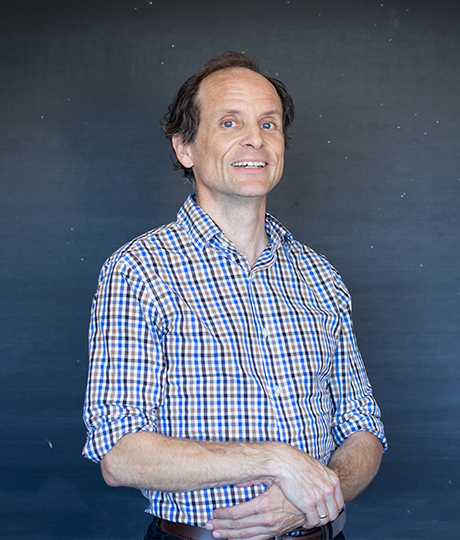
Professor Göran Broström works at the Department of Marine Sciences at the University of Gothenburg . His research focuses on physical oceanography, marine turbulence, tidal energy systems, and biophysical processes in marine ecosystems. Current research themes include methane emissions from ocean infrastructure, turbulence in tidal flows, and wave-current interactions He utilizes advanced numerical modeling (e.g., Large Eddy Simulation, Bayesian inversion) and field observations Recent publications emphasize climate impacts (methane plumes), tidal energy innovations, and marine ecological connectivity His work appears in high-impact journals like Nature , Molecular Ecology , and Frontiers in Marine Science . Collaborative projects span oceanographic modeling, environmental monitoring, and marine renewable energy. No specific student advising information appears in the provided text.
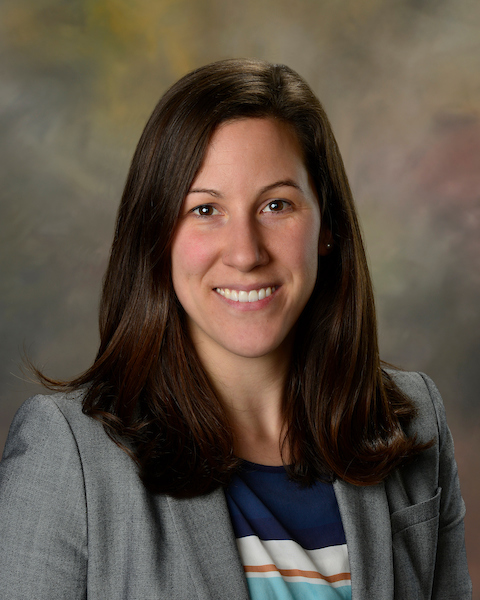
Morgan Edwards is an Assistant Professor at the University of Wisconsin-Madison's La Follette School of Public Affairs, specializing in human-centered energy responses to the climate crisis. Her work bridges policy analysis, systems modeling, and equity considerations across global, national, and local scales. Education: PhD in Engineering Systems (MIT), SM in Technology and Policy (MIT), BS in Environmental Science and Economics (UNC Chapel Hill) Research focuses on: Equity implications of energy transitions Systems modeling for climate policy Natural gas leak detection and mitigation Coal power phaseout strategies Negative emissions technology assessment Her lab develops tools connecting global climate goals with local action, emphasizing partnerships with underserved communities. Recent publications analyze methane mitigation, corporate climate-tech investments, and equity challenges in electrification.
Bryan Watts is the Director of the Center for Conservation Biology and holds the Mitchell A. Byrd Research Professorship in Conservation Biology at William & Mary. He has a B.S. in Biology from Virginia Tech, an M.A. in Biology from William & Mary, and a Ph.D. in Ecology from the University of Georgia. His research focuses on avian conservation, wetland ecosystems, and the impacts of environmental changes on bird populations, particularly in coastal regions. He leads long-term monitoring programs for species like ospreys, red knots, and black rails, emphasizing habitat conservation and population dynamics. His work integrates citizen science, toxicology assessments, and climate adaptation strategies for vulnerable species. Watts collaborates with federal agencies and NGOs to inform policy decisions and habitat management. His projects include the Virginia Marshbird Survey, Whimbrel migration tracking, and assessments of contaminants in apex predators like peregrine falcons and bald eagles. Key areas of focus include the demographic responses of birds to fluctuating fish stocks, the effects of human activity on nocturnal roosting behaviors, and the development of conservation strategies for coastal wetlands under climate change. His research outputs span over three decades, addressing both applied and theoretical questions in conservation biology. Watts also advises on wildlife management policies, such as landfill use by bald eagles and wind energy siting to minimize bird collisions.
Byron Crape, PhD, MSPH, is an Associate Professor of Practice at the Nazarbayev University School of Medicine, Department of Biomedical Sciences. He has previously served as Assistant Professor of Practice at the same institution and has held academic positions at the American University of Armenia College of Health Sciences, Anton de Kom University School of Medicine in Suriname, and King Saud University College of Medicine. His extensive career spans global health roles with WHO, Johns Hopkins University, and the Maryland State Department of Health. Education: PhD in Infectious Disease Epidemiology, Johns Hopkins University (2006) MSPH in Biostatistics, Loma Linda University Health (1988) BS in Physics, University of Washington (1980) Research Interests: Dr. Crape's research focuses on Evidence-Based Medicine , Infectious Diseases , Chronic Diseases , Mental Health , and Environmental Health . He employs Population-Based Research Methodologies and Clinical Research approaches to address global health challenges, particularly in resource-limited settings. His work on Disaster Surveillance systems has been critical in managing public health emergencies. His recent publications demonstrate a strong focus on COVID-19 , neurological disorders , and environmental health impacts in Central Asia, especially Kazakhstan. The research spans from assessing the burden of Parkinson's disease to evaluating the neurotoxic effects of indoor air pollution from cooking. Scientific Awards: While specific awards are not detailed in the provided text, his significant contributions are evidenced by a substantial publication record and active research funding. Projects and Funding: Prerequisites for end-of-life care provision in Kazakhstan (2021-2025, PI) Effectiveness of preloaded combination nicotine replacement therapy on smoking cessation in Kazakhstan (2022-2024, Co-PI) Exposure to Cooking Ultrafine Particles and Neurodegenerative Diseases (2022-2024, Co-PI) Clinico-epidemiological assessment of COVID-19 infection in Kazakhstan (2021-2022, Co-Investigator) Longitudinal Tracking of COVID-19 seroprevalence in Kazakhstan (2021-2024, Co-Investigator) Laboratory and Team: Dr. Crape collaborates extensively with multidisciplinary teams across institutions, mentoring students and junior researchers. His projects involve partnerships with WHO, national ministries of health, and academic institutions worldwide, fostering a collaborative environment for global health research.
Aleksandr (Sasha) Aravkin is Associate Professor in the Department of Applied Mathematics and Adjunct Associate Professor of Health Metrics Sciences, Mathematics, and Statistics at the University of Washington. He serves as Director of Mathematical Sciences at the Institute for Health Metrics and Evaluation (IHME), where he leads the Mathematical Sciences and Computational Algorithms team and contributes to strategic direction for applying mathematical sciences to analytic challenges. Dr. Aravkin earned his PhD in Mathematics (Optimization) and MS in Statistics from the University of Washington in 2010, following a BSc in Mathematics and Computer Science in 2004. His educational background forms the foundation for his interdisciplinary research approach. His research expertise spans large scale optimization, machine learning, data science, convex and variational analysis, algorithm design, robust statistics, inverse problems, and uncertainty quantification . These methodologies are applied across diverse domains including health metrics, computational medicine, tracking and navigation, seismic imaging, computational finance, and neuroscience. Dr. Aravkin has pioneered approaches for fusing physics-based and data-driven models, enabling innovative solutions to complex problems. Dr. Aravkin's publication record demonstrates a strong focus on health metrics and Global Burden of Disease studies, with recent work emphasizing meta-analytic approaches for risk-outcome relationships. His research spans epidemiological modeling, health effects of various exposures, and forecasting disease burden across populations. The publications reveal a consistent pattern of high-impact work in top journals including The Lancet and Nature Medicine, often addressing critical public health questions through rigorous statistical and mathematical frameworks. At IHME, Dr. Aravkin has led significant projects including the Burden of Proof Studies (2019-2024) which analyzed 153 risk-outcome pairs, and COVID-19 Modeling (2020-2023) where his team developed forecasting models and excess mortality estimation methods. He has also been instrumental in developing the Evidence Score model, requiring novel algorithmic approaches. His work bridges theoretical mathematical sciences with practical applications to improve global health policy and practice.
Daniel Jacob is the Vasco McCoy Family Professor of Atmospheric Chemistry and Environmental Engineering at Harvard University, affiliated with the Harvard University Center for the Environment and the Department of Earth & Planetary Sciences. His research focuses on atmospheric chemistry, greenhouse gas emissions, and satellite remote sensing, with a strong emphasis on methane monitoring and climate policy applications. He leads the Atmospheric Chemistry Modeling Group and has pioneered tools like the Integrated Methane Inversion (IMI) system using TROPOMI satellite data. Recent work includes high-resolution global methane emission quantification, stratospheric ozone contributions, and urban landfill emissions assessment. His research integrates satellite observations with advanced modeling to inform environmental policy. Notable contributions include developing methodologies for diagnosing particulate nitrate sensitivity, quantifying aviation NOx impacts on air quality, and analyzing transpacific transport of pollutants. He advises students like Hannah Nesser (Ph.D. '23) and collaborates on NASA missions such as Carbon-I for greenhouse gas observation. His lab's work spans environmental chemistry, geostationary satellite data analysis, and interdisciplinary climate solutions. Awards and recognitions are not explicitly listed in the provided texts, but his extensive publications and leadership roles reflect significant academic impact. His research has implications for global climate mitigation strategies, air quality management, and sustainable agricultural practices.
Stephanie Rogers is an Assistant Professor of Geosciences at Auburn University's College of Sciences and Mathematics, specializing in geospatial technologies and environmental applications. She leads the GeoIDEA Lab, focusing on GIScience, water quality modeling, and environmental impacts on honey bee colonies. Her research integrates emerging technologies like drones for ecological monitoring and addresses interdisciplinary challenges such as groundwater management and pollution tracking. Education: PhD in Geosciences from the University of Fribourg, Switzerland. Research Interests: Rogers' work bridges geospatial innovation with real-world problem-solving. Key areas include: GIS-driven environmental monitoring and modeling Drone-based assessment of water quality and algal blooms Groundwater contamination dynamics and public health implications Honey bee colony health through spatial analysis Advising & Grants: Currently mentors two trainees (Bethany Foust and Mallory Jordan) and collaborates on projects funded by environmental agencies. Her grants focus on geospatial data integration for ecological decision-making. Labs/Teams: GeoIDEA Lab coordinates multidisciplinary efforts in environmental geoscience, with active projects in Alabama's Black Belt region and international glacial archaeology initiatives.
Katrine Eldegard is a Professor at the Norwegian University of Life Sciences (NMBU), Faculty of Environmental Sciences and Natural Resource Management (MINA), Department of Ecology and Natural Resource Management (INA). She leads BatLab Norway and contributes extensively to national and international conservation science policy. Institution: Norwegian University of Life Sciences School: Faculty of Environmental Sciences and Natural Resource Management Department: Department of Ecology and Natural Resource Management Position: Professor Her research centers on understanding how human activities and land use affect natural ecosystems and species across taxa and spatial scales. She specializes in the behavioral, population, and community-level responses of mammals, birds, and insects to anthropogenic pressures such as energy infrastructure, transport networks, and forestry. A major focus is on bat ecology and conservation, pollination dynamics, and biodiversity monitoring in boreal and agricultural landscapes. Her recent publications reveal strong trends in climate change impacts on bat morphology and distribution, pollinator-plant interactions under environmental change, and the ecological consequences of infrastructure development. These works integrate field ecology with advanced modeling and policy-relevant assessments. She has played leading roles in key scientific committees: Chair, Mammal Committee, Norwegian Red List for Species (2021) Chair, Mammal Committee, Norwegian Alien Species List (2023) Member, Norwegian Scientific Committee for Food and Environment (VKM), CITES Expert Panel Norway’s representative, UNEP/Eurobats Advisory Committee Eldegard has supervised numerous research projects and collaborated with government agencies and private partners on applied ecology. She teaches courses including NATF200 Vern og forvaltning av norsk natur and the upcoming NATF300 Conservation Science. Her work is supported by extensive fieldwork, interdisciplinary collaboration, and integration of ecological theory with practical conservation. She leads BatLab Norway, a research group dedicated to advancing knowledge on bat ecology, behavior, and conservation through innovative methods including telemetry, acoustic monitoring, and landscape analysis.
Michele DiBenedetto is an Assistant Professor in the Department of Mechanical and Aerospace Engineering at Princeton University, associated with the High Meadows Environmental Institute (HMEI). Her research focuses on environmental fluid mechanics, ocean waves, and turbulent flows, with applications in contaminant transport, biomonitoring, and ocean sensing. She holds a PhD from Stanford University (2019) and moved to Princeton in 2025 after serving as an Assistant Professor at the University of Washington (UW). Her work integrates laboratory experiments, mathematical modeling, and field observations to study interdisciplinary challenges like plastic pollution, renewable energy, and air-sea interactions. Key achievements include an NSF CAREER Award (2023) and NOAA Sea Grant funding (2024). She advises a team of graduate and undergraduate students, including Carlos, Julio, Andrew, and Ethan, whose research contributes to understanding particle dynamics in turbulent systems. Notable projects include investigating buoyant particles in wind-driven ocean boundary layers and developing methods to track particle orientation using collimated light. Her lab’s move to Princeton in 2025 marks a strategic shift to enhance collaborations in environmental fluid mechanics. Publications span experimental fluid mechanics and environmental applications, emphasizing ocean transport and marine biology.
M.T.O. (Chiel) Jonker is an Assistant Professor at the Faculty of Veterinary Medicine , Utrecht University , affiliated with the Institute for Risk Assessment Sciences (IRAS) and its Toxicology division . He specializes in exposure assessment of hydrophobic organic chemicals (e.g., PFAS , PAHs , PCBs ), focusing on sorption processes , bioaccumulation dynamics , and passive sampling techniques in both in vivo and in vitro settings. His research emphasizes methodological innovation for high-quality chemical analysis (GC-MS, LC-MS) and environmental risk assessment . Recent work includes PFAS degradation , sediment toxicity testing , and temperature/salinity effects on contaminant partitioning. His 2018-2024 publications highlight passive sampling calibration , mechanistic toxicity models , and bioavailability prediction using polyoxymethylene and silicone rubber samplers .
Gary M. Shaw is the Rosemarie Hess Professor and Professor (Research) at Stanford University , with courtesy appointments in the Department of Epidemiology and Population Health and Department of Obstetrics & Gynecology - Maternal Fetal Medicine . He serves as Co-PI of the March of Dimes Prematurity Research Center at Stanford and PI of the California Center for Finding Causes and Preventives of Birth Defects . His research focuses on the Epidemiology of birth defects Gene-environment interactions in perinatal outcomes Nutritional factors in reproductive health . He has developed machine learning approaches for precision parenteral nutrition and predictive models for preterm birth, while investigating persistent metabolomic signatures following hypertensive pregnancy disorders. Shaw's recent work explores Climate change impacts on reproductive health Maternal-fetal immune interactions Epigenetic mechanisms in perinatal disease with applications of multiomics to neonatal intensive care units. As a member of Bio-X and the Maternal & Child Health Research Institute , he contributes to translational research networks while serving as Associate Editor for Birth Defects Research and American Journal of Medical Genetics . He supervises Med Scholar Project student Richard Liang Doctoral co-advisor for Saskia Comess and Richard Liang Master's advisor for Lenae Joe while leading the Division of Neonatology as Associate Chair for Clinical Research (2012-2025). His laboratory work integrates Metabolomic profiling Proteomic analysis Computational modeling Machine learning for biomedical data to advance neonatal care through precision medicine approaches.
Joseph Holden holds the Chair of Physical Geography at the School of Geography, University of Leeds , and serves as Director of water@leeds and the Yorkshire Integrated Catchment Solutions Programme (iCASP) . His expertise spans peatlands , hydrology , soil dynamics , and carbon cycling under environmental change. Education: MA Geography (Cambridge), PhD Peatland Hydrology (Durham) Key Roles: Pro-Dean for Research (2013-2019), NERC Freshwater Quality Programme Champion (2022-2027) Research focuses on peatland hydrology , agricultural impacts on water quality , and hazard cascades like flooding and pollution. He leads major projects including: EU-funded WaterLANDS (wetland restoration, 2021-2026) West Yorkshire Flood Innovation Programme (£300k+ UKSPF, 2022-2025) Environmentally Sensitive Hydropower (Nature Water, 2022) Scientific awards include: 2007 Philip Leverhulme Prize (outstanding research contribution) 2011 Gordon Warwick Medal (British Society for Geomorphology) Fellowships: Royal Geographical Society, Royal Meteorological Society He supervises 13 PhD students globally and leads £30M+ in active grants, including the £6M iCASP and £8.4M NERC Freshwater Quality Programme. His work combines field research, modeling, and policy engagement across Southeast Asia, Europe, and Africa.
Patrick Brown is an Associate Professor at the University of Toronto , affiliated with the Department of Statistical Sciences and cross-appointed to the Centre for Global Health Research and St. Michael's Hospital . His research focuses on spatio-temporal data modeling , Bayesian inference , and non-parametric methods for spatial epidemiology and environmental sciences. Fields of Interest : Spatial Statistics, Cancer Statistics, Statistical Software Education : PhD from University of Lancaster His methodological work encompasses Bayesian inference for non-Gaussian spatial data, Gaussian Markov random fields, and computational techniques like INLA and MRA. Applied research themes include disease mapping, environmental risk assessment, and public health surveillance using real-world data sources such as electronic health records and wastewater monitoring . He has developed key R packages (mapmisc, geostatsp, diseasemapping) supporting spatial statistical applications. Current collaborative projects span diverse fields: Ultra-diffuse galaxy detection with astrophysical applications Multi-pollutant mortality studies in Canadian cities SARS-CoV-2 seropositivity tracking Homelessness population estimation using EHR Geospatial cancer risk tools for Nova Scotia His work bridges statistical innovation with global health challenges , emphasizing computationally efficient solutions for large-scale spatiotemporal datasets.
Dr. Emre Alp is an Associate Professor at the Environmental Engineering Department of Middle East Technical University (METU) , where he has served since 2014. Previously, he held roles as Assistant Professor (2011-2014), Instructor (2008-2011), and Part-time Instructor (2008). His research spans Watershed Management , Water-Energy-Food Nexus , and Environmental Economics , with a focus on Diffuse Pollution and Water Quality Modeling using GIS and Remote Sensing . Education : Ph.D. in Civil and Environmental Engineering (2006), M.S. in Environmental Engineering (1999), and B.S. in Environmental Engineering (1997) from METU and Marquette University. Research : His work integrates Environmental Risk Assessment with optimization models like SWAT for nutrient load analysis, economic valuation of ecosystems, and urban waterway pollution control. Key projects include Sustainable Stormwater Management on METU campus and Water-Energy Nexus studies in Turkey. Publications : Over 14 refereed journal articles since 2007, focusing on Urban Hydrology , Environmental Economics , and Watershed Modeling . Awards : Post-Doctoral Scholarship (Marquette University, 2006-2008) and Research/Teaching Assistantships (Marquette, 2000-2006). Students : Supervised 2 Ph.D. and 7 M.S. theses on topics like climate change impacts, water allocation, and pollution control.
Nicolas Riviere is a Professor at INSA Lyon in the Department of Mechanical Engineering, working within the Laboratory of Fluid Mechanics and Acoustics (LMFA - UMR 5509). He is part of the "Fluides complexes et transferts" (Complex Fluids and Transfers) group and the Environment team. His teaching activities primarily focus on fluid mechanics at the Mechanical Engineering Department of INSA Lyon, covering: General balances (mass, momentum, energy) Aerodynamics Compressible flows Numerical simulation of flows Free surface hydraulics Prof. Riviere's research centers on free surface hydrodynamics, with applications to natural and industrial risks. His work takes an experimental approach, utilizing the laboratory's channel facilities, particularly the channel intersection installation. His research spans river floods with compound beds, urban flooding, sanitation networks, torrential flows, and flow-obstacle interactions. He has developed a strong interdisciplinary focus, co-leading the "Baignades en Rivières Urbaines" studio with Oldrich Navratil from University Lyon 2 and the EVS Laboratory. His publication record demonstrates consistent contributions to the fields of fluid mechanics and environmental hydraulics, with recent work focusing on open-channel flows, urban flooding phenomena, vegetation-flow interactions, and experimental techniques for studying complex hydraulic phenomena. His research often bridges theoretical fluid mechanics with practical environmental applications. Prof. Riviere has received recognition for his work in environmental fluid mechanics, with numerous publications in high-impact journals in hydraulic engineering and fluid mechanics. He has supervised multiple PhD students and research projects related to environmental fluid mechanics and has collaborated with various institutions on interdisciplinary research projects addressing water-related challenges. The laboratory where he works, LMFA, provides extensive experimental facilities including wind tunnels, hydrodynamic channels, and advanced measurement techniques such as PIV (Particle Image Velocimetry), LDV (Laser Doppler Velocimetry), and other state-of-the-art instrumentation for fluid flow analysis.