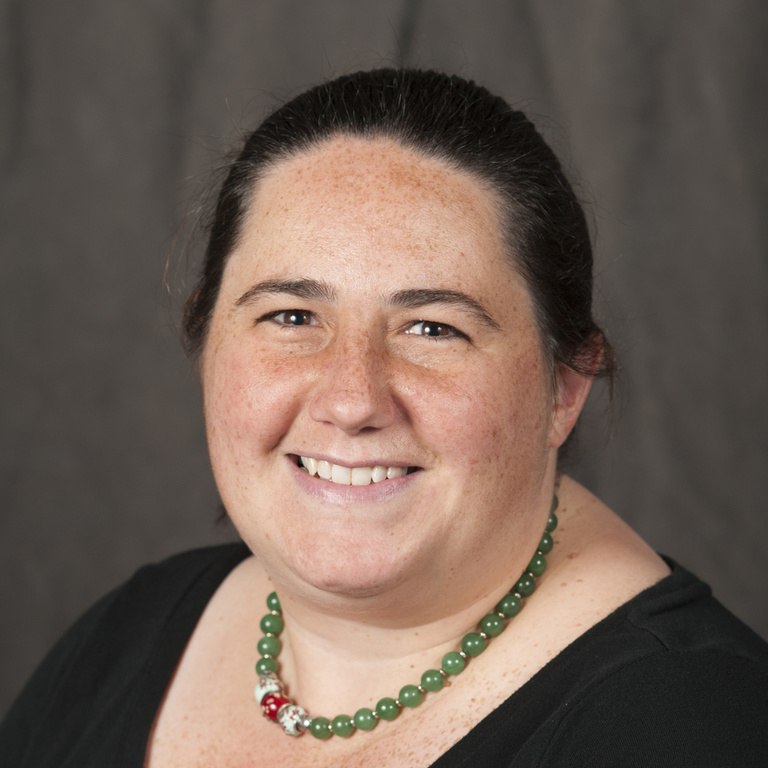
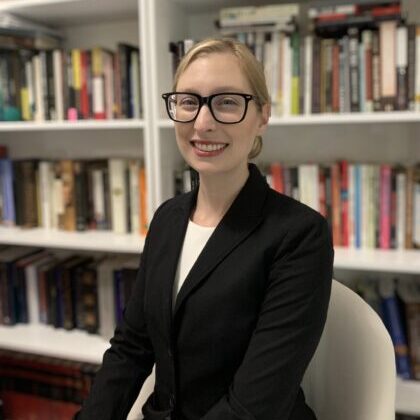
Darrell Bricker is a Senior Fellow at the Munk School of Global Affairs & Public Policy at the University of Toronto. He is a renowned expert in polling, quantitative research methods, and public opinion research, with a career spanning executive roles at Ipsos Global—Public Affairs and the Angus Reid Group. As a strategic advisor, he serves public, corporate, and not-for-profit sectors, and is frequently featured as a commentator on major Canadian media outlets including Reuters News, Global TV, and CBC NewsWorld. Ph.D. in Political Science from Carleton University Honorary Doctorate of Laws from Wilfrid Laurier University Bricker’s research and professional work focuses on understanding public opinion trends, political science, and policy implications. His expertise extends to advanced research methodologies and demographic shifts, particularly in the context of Canadian and global populations. He has co-authored several bestselling books, including Empty Planet: The Shock of Global Population Decline (shortlisted for the Donner Prize) and Next: Where to Live, What to Buy, and Who Will Lead Canada’s Future (nominated for the Canadian Business Book of the Year). These works explore seismic changes in Canadian politics, culture, and global demographic trends. Scientific Awards SSHRC Doctoral Fellow Wilfrid Laurier University's Top 100 Graduate (2011) Carleton University's Top 75 Public Affairs Graduate (2016) Empty Planet shortlisted for the Donner Prize Next nominated for the Canadian Business Book of the Year Bricker has lectured at prestigious institutions such as the Rotman School of Management, Canadian Forces College, Carleton University, and Wilfrid Laurier University in areas including political science, public policy, and advanced research methods. His contributions bridge academic inquiry and practical application in public affairs.
Professor Joshy Easaw is a Professor of Economics at Cardiff Business School, Cardiff University, where he joined in October 2014 after holding permanent appointments at Bath and Swansea Universities. He is currently a Visiting Professor at the Department of Economics, University of Bologna, Italy, and serves as the decolonisation of curriculum and research lead for the CARBS Race Equality Committee, which he helped found. His research spans macroeconomics, political economy, and development economics, with specific focus on bounded rationality , microfoundations of household expectations , professional forecasters' inattentiveness , and the interaction between economic and political institutions . His work examines how households form expectations about macroeconomic variables, how voters perceive policy competence, and the relationship between democracy, institutions, and economic growth in developing economies. Easaw's recent publications reveal strong trends in uncertainty modeling, household expectation formation, and historical economic analysis, particularly regarding the long-term impacts of the transatlantic slave trade. His methodological approaches combine theoretical modeling with empirical analysis using household surveys and professional forecast data. Leverhulme Trusts Research Fellowship (2007-2008) for research on 'Microfoundations of how households form subjective macroeconomic expectations: The role of news' Professor Easaw has successfully supervised nine PhD students whose careers span academia (including positions at the University of Manchester, Taiwan, and China) and international institutions (World Bank). His research has been supported by various grants, though specific current funding isn't detailed in the provided text. He actively contributes to the academic community as a member of the Royal Economic Society and has previously been a member of the American Economic Association and Econometric Society. His scholarly work spans multiple research teams and collaborations, with recent projects examining uncertainty spillovers in the euro area, the impact of the transatlantic slave trade on contemporary institutions, and innovative approaches to election forecasting using ensemble methods.
Raktim Mitra is a Professor and Director of the School of Urban and Regional Planning at Toronto Metropolitan University, co-directing the TransForm Research Laboratory. His expertise spans the built environment, travel behavior, and health linkages, with a focus on active transportation, micromobility, and healthy communities. Mitra teaches courses in Transportation Planning, Healthy Communities, and Research Methods. His research explores how urban planning impacts physical activity and wellbeing, particularly for pedestrians, cyclists, and micromobility users. Current projects include pandemic-era travel behavior shifts, cycling infrastructure impacts, and children’s outdoor play. He has led studies on post-pandemic active transportation policies, equity in street reallocation, and mobility for students with disabilities. Key funded research areas include cycling facility efficacy, post-pandemic active transportation, student travel wellbeing, and e-scooter policy. Mitra’s work bridges academic inquiry with practical solutions, emphasizing equity and sustainability in urban environments. His laboratory focuses on interdisciplinary approaches to transportation-land use-health interactions. Publications highlight pandemic mobility shifts, gendered cycling behavior, and the role of neighborhood environments in child health. Mitra collaborates on community science initiatives like Canada’s Pedal Poll, analyzing cycling demographics and infrastructure use patterns.
Pierpaolo Vivo is a Reader in Disordered Systems at King's College London's Department of Mathematics, part of the Faculty of Natural, Mathematical & Engineering Sciences. He holds a PhD from Brunel University (2008) and conducted postdoctoral research at ICTP Trieste and LPTMS Orsay. His research focuses on Random Matrix Theory, Statistical Mechanics applied to socio-economic systems, and complexity science in legal frameworks. Key research interests include eigenvalue statistics, financial stability modeling, and legal system complexity. His work bridges physics, economics, and law, with recent projects exploring phase transitions in debt recycling and network-based legal visualization tools like Graphie. Major achievements include a UKRI Future Leaders Fellowship (2019) and over 50 peer-reviewed publications. He leads projects on legal system modeling and collaborates internationally on interdisciplinary topics.
Laura Tamman is a Clinical Assistant Professor in the Department of Political Science at Dyson College of Arts and Sciences, Pace University, New York City. She holds a Ph.D. in Political Science from the CUNY Graduate Center (2023), an M.A. in Politics, Philosophy, and Economics from Oxford University, and a B.A. in Political Science from the University of Georgia. Her academic and civic work bridges scholarship and practice in American and urban politics. Research Interests: Laura's research focuses on American and urban politics, with an emphasis on political persuasion, campaign contact effects, and electoral behavior. She employs quantitative methods to analyze how race, ethnicity, and campaign strategies influence election outcomes. Her work is deeply informed by over two decades of frontline experience in political campaigns. Her recent publications and presentations highlight trends in voter engagement, polling in 2024, the decline of local news, and the impact of political advertising. A significant portion of her current work centers on Ranked Choice Voting (RCV) in New York City, including civic education and evaluation of its electoral impact. YES Recognition Program, 2024, YES I Make It Happen Recognition Grants and Civic Engagement: She has secured funding from Pace University’s Helene and Grant Wilson Center for Social Entrepreneurship and is involved in projects with Project Pericles and the New York Community Trust. Her grant work integrates civic learning into the classroom through voter simulations and political education. She also leads initiatives to improve classroom well-being through social connection and nourishment. Professional Service: Laura serves on the Wilson Center Faculty Steering Committee, chairs the Political Science Department Newsletter committee, and is a board member of GoVoteNYC. She is an editor for Urban Affairs Review and a guest speaker for civic organizations. Her public scholarship appears in New York Daily News , City & State , US News and World Report , and Campaigns & Elections Magazine , and she is a frequent media commentator on NBC News 4 and Fox 5.
Kent Engelhardt is a Professor at the Dana School of Music & University Theatre at Youngstown State University (YSU). He has maintained a dual career as both an academic scholar and professional performer, with faculty appointments at YSU since 1994, Lakeland Community College (1991-2011), and the Youngstown State University Summer Jazz Camp (1997-1999). As a Conn-Selmer Artist and active musician, he bridges scholarly research with practical musical application through performance. Dr. Engelhardt's educational background includes: PhD in Ethnomusicology/Jazz from the University of Pittsburgh (2001) MA in Ethnomusicology/Jazz from the University of Pittsburgh (1999) BM in Performance/Clarinet from Youngstown State University (1993) MM in Performance/Jazz from Youngstown State University (1986) His research focuses on Kansas City Jazz, Charlie Parker, and Tadd Dameron , with particular emphasis on jazz composition, arranging, and historical performance practices. Dr. Engelhardt has created 47 critical editions and arrangements of Dameron's music, representing one of the most comprehensive scholarly efforts on this important jazz composer. His work combines meticulous historical research with practical musical application, often resulting in performances that bring historical works to contemporary audiences. His teaching interests span Jazz Studies: Improvisation, Composition/Arranging, Ethnomusicology, and instruction on multiple instruments including saxophone, flute, clarinet, and piano. Dr. Engelhardt's scholarly output demonstrates a consistent focus on preserving and reinterpreting jazz history, particularly the works of Tadd Dameron. His research spans from historical analysis of Count Basie's arrangements to contemporary reinterpretations of Dameron's music for modern big bands. The January 2023 release of "Central Avenue Swing & Our Delight" represents the culmination of years of research into Dameron's work, featuring 22 new editions and arrangements that have received significant critical acclaim. His scholarly contributions have been recognized through multiple university research appointments: YSU Research Professorship 2011-2012: "The 'Head' Arrangements of the Count Basie Orchestra 1937-1939" YSU Research Professorship 2012-2013: "Musical Contextualization of Charlie Parker's Solos with The Jay McShann Orchestra" CCAC re-assigned time 2013-2014: "The Music of Tadd Dameron for Harlan Leonard and his Rockets" YSU Research Professorship 2016-2017: "Tadd Dameron: The Magic Touch" for Dameron's centennial His recording "Central Avenue Swing & Our Delight" (2023) received significant recognition, being named among the "Top 25 Jazz Recordings of 2023" by Scott Yanow and appearing in the "Top 10 Critics Poll in Cadence Magazine," with additional reviews from major jazz publications including Jazz Wax, LA Jazz Scene, and All About Jazz. As an educator and performer, Dr. Engelhardt has mentored countless students through his teaching positions and ensemble leadership. His Madd For Tadd ensemble serves as both a creative outlet and educational platform, having performed at numerous festivals including the TRI-C Jazz Fest, Kaleidoscope Festival, and Lakeland Jazz Festival. Dr. Engelhardt's research has been consistently supported by university grants, enabling him to preserve and reinterpret important jazz repertoire for contemporary audiences. Dr. Engelhardt leads the Madd For Tadd ensemble, which focuses on performing and recording Tadd Dameron's music in new arrangements for big band. The ensemble has performed at major jazz festivals and venues including the TRI-C Jazz Fest, Cleveland's Bop Stop, and BLU-Jazz. Recently, he has expanded the reach of his work by performing Dameron's music with the Orlando Jazz Orchestra and at the University of South Florida, demonstrating the national recognition of his scholarly and artistic contributions to jazz studies.
Dan Hedlin is a Professor of Statistics at Stockholm University's Department of Statistics, specializing in official statistics production. He holds a PhD in Statistics from the University of Southampton (2003) and maintains an office at Room A4625, Albanovägen 12, Building 4, floor 6. His contact information includes email dan.hedlin@stat.su.se and phone +46 8 16 2975. Hedlin's primary research focuses on survey methodology and official statistics, with expertise in sampling design and estimation, nonresponse issues, analysis of survey data, statistical editing, response burden, reporting delays, experiments embedded in surveys, cut-off sample designs, and opinion polls. His work bridges theoretical statistical methods with practical applications in government and public policy contexts. His publications and media contributions demonstrate a strong emphasis on statistical literacy and proper interpretation of survey data, particularly regarding opinion polls. Hedlin frequently engages with the public through Swedish media, addressing common misinterpretations of statistical data and promoting better understanding of survey methodology among journalists and the general public. Hedlin serves on the Scientific Councils of both the Swedish National Council for Crime Prevention and Transport Analysis, applying his statistical expertise to inform policy decisions. His teaching portfolio includes advanced courses in Machine Learning, Statistics and Data Analysis III, and supervising independent student work.
Prof. Dr. Richard Traunmüller is a Professor of Political Science and Empirical Democracy Research at the University of Mannheim. He serves as Scientific Director of the German Internet Panel (GIP) and is affiliated with the Research Institute Social Cohesion (RISC) at Goethe University Frankfurt. His research spans multidimensional social change, immigration policy, wartime sexual violence, and quantitative methodology. School of Social Sciences, University of Mannheim Goethe University Frankfurt University of Essex University of Bern University of Konstanz His research focuses on: Democratic challenges from social structural reconfiguration Religious diversity and social cohesion Free speech regulation in digital democracies Long-term effects of wartime sexual violence Recent work analyzes: Causal impacts of immigration policies Contextual speech norms Gendered consequences of conflict trauma Bayesian approaches to sensitive topics Scientific awards include: BEST PAPER AWARD (CES Immigration Research Network, 2017) BEST ARTICLE AWARD (APSA Migration & Citizenship, 2017) He teaches courses on: Bayesian Statistics Data Visualization Free Speech & Censorship Political Methodology Conflict Studies
Dr. Ling Liu is an Assistant Professor (non-tenure-track) at the Waseda Institute for Advanced Study within Waseda University, Japan. Her academic journey includes a PhD in Journalism (2022, Waseda University), a Master's in Journalism (2014, Waseda University), and a Bachelor's in Japanese (2012, Shanghai University of Finance and Economics, China). She has also engaged in interdisciplinary research as a Visiting Researcher at The Ohio State University (2016-2018) and Masaryk University (2011-2012). PhD (2022, Waseda University) Master's (2014, Waseda University) Bachelor's (2012, Shanghai University of Finance and Economics) Visiting Researcher at The Ohio State University (2016-2018) Visiting Student at Masaryk University (2011-2012) Liu's research focuses on political communication, media trust, and selective exposure mechanisms in high-trust environments like Japan. Her comparative studies across Japan, the US, and Hong Kong reveal how media trust levels influence partisan selective exposure behaviors, challenging assumptions based on Western contexts. She has contributed to theoretical frameworks distinguishing hostile media perception from general media distrust. Her publications span journals like Communication Research and European Journal of Political Research Political Data Yearbook , with notable work on cross-national differences in confirmation bias (2019) and partisan selective exposure (2024). She leads projects funded by organizations such as the Japan Society for the Promotion of Science and Waseda University's Special Research Grants, including the Disinformation and Democracy in East Asia (2023-2029) and Media Trust Impacts on Exposure to Political Information (2023-2024). Dean's Academic Prize (2022, Waseda University) JSPS Grants-in-Aid for Scientific Research Waseda University Special Research Grants Suntory Foundation for Young Researchers Liu has taught courses such as Intermediate Seminar (Political Communication and Media Studies) and Political Science Experiment at Waseda University. She serves on the editorial board of the Bulletin of the Waseda Institute for Advanced Study and contributes as a peer reviewer for journals like Communication Research and conferences including the International Communication Association. Her laboratory collaborations include the Media Trust and Hostile Media Perceptions project (2024), which developed a typology of media trusters, and the Media Trust Impacts on Exposure to Political Information project (2023), advancing theoretical foundations for cross-cultural analysis of media trust dynamics.
Professor Kristin M. Bakke is a leading scholar in Political Science and International Relations at University College London (UCL), affiliated with the Department of Political Science and the School of Public Policy. She co-founded UCL's Conflict & Change research cluster and teaches in the European and International Social and Political Studies program. Her research focuses on political violence, post-war state-building, self-determination struggles, and geopolitical dynamics in post-Soviet regions. She has held academic positions at UCL since 2009, previously serving as Assistant Professor at Leiden University and a post-doctoral fellow at Harvard University's Belfer Center. She holds a PhD from the University of Washington and BA from Indiana University. Her research employs both quantitative and qualitative methods, including fieldwork in Northern Ireland, India, Guatemala, and post-Soviet states. Key themes include state responses to opposition, wartime legacies, and memory politics. She authored *Decentralization and Intrastate Struggles* and contributes to journals like the *Journal of Peace Research*. She chairs the Conflict Research Society and sits on editorial boards of top journals. Her recent work addresses challenges in polling during wartime, memory politics in Ukraine, and Putin's influence in post-Soviet states. She collaborates internationally, including with PRIO and WIDER, focusing on conflict dynamics and policy implications.
Sheri L. Lambert is an Associate Professor in the Department of Marketing at Temple University's Fox School of Business and Management. She serves as Managing Director of the Fox Center for Executive Education and founded the Fox MSMR Industry Advisory Board. Her roles bridge academia and industry, with experience in global leadership at firms like Delta Air Lines, Southwest Airlines, and Kantar Group. Education: MBA (Marketing) from the Stephen M. Ross School of Business, University of Michigan; BSIE in Industrial Engineering from Purdue University. Research focuses on marketing innovation, consumer behavior, digital strategies, and emerging markets. Awards include the 2021 Andrisani-Frank Teaching Award and recognition as a Top 50 Undergraduate Business Professor. Teaches courses like Marketing Strategy and Digital Innovation, and advises executives globally through Fox's Executive Education programs. Her work has been featured in The New York Times, Wall Street Journal, and Forbes.
D. Sunshine Hillygus is a Professor of Political Science at Duke University and serves as Interim Director of the Social Science Research Institute and Director of the Duke Initiative on Survey Methodology. She is also a Professor in the Sanford School of Public Policy. Ph.D., Stanford University (2003) M.A., Stanford University (2000) Her research focuses on American political behavior, campaigns and elections, survey methods, public opinion, and information technology's impact on politics. Recent work explores voter turnout barriers, youth engagement, and digital survey methodologies. The 15 most recent publications highlight methodological innovations in survey research, election analysis, and political communication studies. Key themes include voter turnout modeling, social media's role in campaigns, and survey data integrity. Scientific recognition includes the Howard D. Johnson Distinguished Teaching Award (2019) and the Robert E. Lane Award (2009). Current grants address election studies, social media polarization, and youth voter turnout solutions.
Tracy Osborn is an Associate Professor in the Department of Political Science at the University of Iowa, affiliated with the College of Liberal Arts and Sciences. Her research focuses on women’s political representation in U.S. state legislatures, Congress, and political behavior. She holds a PhD from Indiana University (2004). Her notable work includes the book How Women Represent Women (2012), examining gendered legislative representation under party and institutional conditions. Her research spans gendered political behavior, legislative collaboration, electoral forecasting, and policy-making dynamics. Recent projects include analyzing the impact of gendered political corruption on public opinion, forecasting presidential elections using voter data, and studying legislative success in Texas. She was honored as a Dean's Scholar (2012) for outstanding contributions to research. Her work addresses critical questions about women’s legislative influence, partisan environments, and policy outcomes in American politics. Her scholarship bridges electoral processes, legislative behavior, and gender politics, with a focus on how institutional structures shape women’s roles in governance. She has published in Political Research Quarterly , American Politics Research , and Politics & Gender , among others.
Virginia Riel is an Asst Teaching Professor in the Department of Sociology and Anthropology at North Carolina State University, within the College of Humanities and Social Sciences. She specializes in teaching courses such as Theories of Social Structure, Sociology of Family, and Juvenile Delinquency. Additionally, she serves as an academic advisor for sociology and criminology majors, helping students navigate academic goals and opportunities. As director of the departmental honors programs, she mentors students in research projects. Education: B.A. in Sociology and American Studies, University of North Carolina at Chapel Hill M.S. and Ph.D. in Sociology, North Carolina State University Research Interests: Racial dynamics in education, school choice policies, charter school recruitment strategies, and social inequality. Her work examines how structural and interpersonal factors shape educational opportunities and racial stratification. Recent Research Trends: Her publications analyze the interplay between educational policies and social inequality, particularly through studies on charter school practices, racial microaggressions in schools, and the impact of school siting on community dynamics. Advising and Mentorship: Virginia advises students on academic trajectories and supports honors program research, fostering student engagement in sociological inquiry.
Xiaojun Li is an Associate Professor of Political Science at the University of British Columbia (UBC) and a non-resident scholar at the 21st Century China Centre at UC San Diego School of Global Policy and Strategy. He holds a Ph.D. from Stanford University and has held visiting positions at Harvard University, Fudan Development Institute, and ISEAS–Yusof Ishak Institute. His research focuses on international/comparative political economy, emphasizing domestic politics' impact on foreign policy, global supply chains, and trade liberalization in developing nations, with China as a central case study. Education: Ph.D., Political Science, Stanford University, 2013. Research interests include Asia, comparative politics, conflict and peacekeeping, foreign policy, international organizations, and methods like experimental and quantitative research. His recent books address UN peacekeeping dynamics, trade liberalization in China/US, and Chinese scholars' views on international relations. His work has been supported by grants from SSHRC, NSF, and others. Teaching includes courses on international political economy, Asia-Pacific relations, and quantitative methods. He advises Ph.D. students and has contributed to over 50 peer-reviewed articles and book chapters, covering topics like public opinion on China, environmental regulation, and Belt and Road Initiative engagement. Awards/grants: Social Science and Humanities Research Council of Canada, National Science Foundation, American Political Science Association, and Chiang Ching-Kuo Foundation. Labs/teams: Collaborates with global institutions like UC San Diego, ISEAS, and Fudan University. Active in research networks analyzing China's global role and policy impacts.