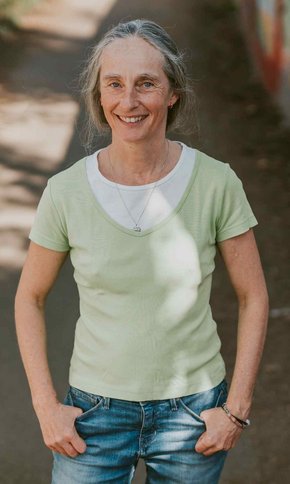
Dr. Guillermo Amador is an Assistant Professor in the Experimental Zoology department at Wageningen University & Research. His research focuses on understanding how animals interact with complex environments through locomotion, adhesion, and fluid dynamics. He investigates biological systems like insects, plants, and marine organisms to inspire bio-engineered solutions for robotics, microfluidics, and material science. Amador received his PhD in Mechanical Engineering from Georgia Institute of Technology (USA), followed by postdoctoral research at the Max Planck Institute for Intelligent Systems (Germany) and a Marie Sklodowska-Curie fellowship at TU Delft (Netherlands). His expertise spans biophysics, biomaterials, and biomechanics, with a focus on self-cleaning mechanisms and bioadhesion. He collaborates with the 4TU consortium on Dutch Soft Robotics to develop bio-inspired designs. His work bridges fundamental biology with engineering applications, emphasizing interdisciplinary approaches to solve challenges in robotics and environmental science. Amador teaches courses including Biomimetics and Functional Zoology , integrating his research into education. His research highlights include studies on cuttlefish suction cups, stick insect adhesion, and pollen transport mechanisms in pollinators.
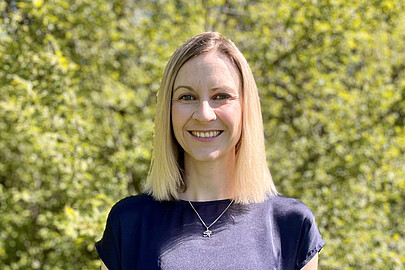
Olga Saukh is an Associate Professor at the Institute of Technical Informatics, Graz University of Technology (TU Graz), and a Faculty member at the Complexity Science Hub Vienna (CSH). She leads the Embedded Learning and Sensing Systems research group, which operates across both institutions, focusing on the design and deployment of efficient AI-based systems on edge and mobile platforms. Her work bridges deep learning and embedded systems, with applications in environmental monitoring, precision agriculture, and digital health. Ph.D. in Computer Science, University of Bonn (2009) Habilitation in Embedded Systems, TU Graz (2020) Postdoctoral Training, ETH Zurich (2010–2016) B.Sc. in Applied Mathematics, Taras Shevchenko National University of Kyiv (2002) M.Sc. in Applied Computer Science, University of Freiburg (2004) Her research centers on efficient machine learning, particularly model optimization, neural network pruning, and contrastive learning for resource-constrained devices. She is deeply engaged in solving real-world challenges in IoT, sensor networks, and cyber-physical systems. Her work emphasizes data privacy, sustainability, and practical deployment of AI at the edge. The 15 most recent publications highlight a strong trend in efficient deep learning, including model compression, pruning, and transfer learning, applied to diverse domains such as environmental sensing (air quality, pollution tracking), digital agriculture (cattle farming), and embedded AI (sensor calibration, on-demand sensing). Her work frequently appears in top-tier venues like NeurIPS, ICLR, and IEEE/ACM IPSN, reflecting her leadership at the intersection of machine learning and embedded systems. Scientific awards include: CONET Ph.D. Academic Award (2010) Multiple Best Paper Awards at IEEE PerCom, ACM/IEEE IPSN, IEEE ICPADS, IEEE SECON, and UrbCom Spotlight and Oral presentations at ICML and CoLLAs workshops Ph.D. scholarship from IPVS, University of Stuttgart (2004–2005) Prizes in Ukrainian national mathematics competitions (1996–1998) Olga Saukh actively serves on program committees of leading international conferences in machine learning and embedded systems. She has advised multiple students and leads a collaborative research group spanning TU Graz and CSH Vienna. Her group develops practical AI systems for real-world deployment, with a focus on sustainability and privacy. She co-organizes the public EfficientML reading group and has secured recognition through numerous grants and awards. Her future work continues to explore the theoretical and practical challenges of deploying efficient, trustworthy AI in mobile and embedded environments. Her research group, Embedded Learning and Sensing Systems, operates jointly between TU Graz and CSH Vienna, fostering interdisciplinary collaboration across institutions. The team develops AI solutions for edge computing, sensor networks, and cyber-physical systems, with a strong emphasis on environmental sustainability and data privacy. Members work on joint challenges using advanced collaboration tools, reflecting the distributed nature of modern academic research.
Carol Smith is an Associate Professor in the Department of Soil & Physical Sciences at Lincoln University, New Zealand, where she serves as Head of Department since 2017. She has been an elected academic staff member of the Lincoln University Council from 2018-2022. Dr. Smith holds a PhD from the University of Aberdeen, an MSc from the University of Reading, and a BSc(Hons) from the University of Portsmouth, forming the foundation of her expertise in soil science and physical geography. Her research spans both fundamental and applied aspects of pedology. On the fundamental side, she investigates Quaternary pedology and paleoenvironmental reconstruction using loess stratigraphy, geomorphology, and micromorphology, which provides critical data for verifying future climate change predictive models. Applied research focuses on sustainable use of recycled organic matter and rehabilitation of degraded soils. She collaborates internationally on multidisciplinary projects involving paleoclimate reconstruction, paleoliquefaction, Antarctic soils, and viticulture. Dr. Smith is passionate about teaching and science communication, employing experiential learning methods to develop practical field skills in soil science through 'soil judging competitions' in New Zealand and Australia. Her research addresses UN Sustainable Development Goals including Life on Land (15), Climate Action (13), and Quality Education (4). Among her notable recognitions are the Norman H Taylor Memorial award 2020 from the New Zealand Society of Soil Science for outstanding contributions to soil science in New Zealand and Fellowship in the Royal Geographical Society, London. She serves as Associate Editor of Natural Sciences Education and was previously editor of Quaternary Australasia. Dr. Smith has supervised numerous graduate students through research-based supervision, with completed projects covering diverse topics from soil patterns in Southland to Antarctic soil ecology. She teaches advanced courses in field research, soil science, and physical landscapes, and has developed innovative approaches to teaching during the pandemic, including virtual field trips.
Paul O'Toole is a Professor of Microbial Genomics and Principal Investigator at the APC Microbiome Ireland, University College Cork. His research focuses on the gut microbiome's role in health, aging, and disease, particularly in the context of diet and probiotics. He leads projects like the ELDERMET study on elderly nutrition and the NU-AGE project exploring Mediterranean diets' anti-aging effects. He holds a BA (Mod.) from Trinity College Dublin and a PhD from Lund University, with postdoctoral training in Canada and New Zealand. Key grants include studies on dairy-derived microbiota, probiotic strain improvement, and microbiome analysis in aging populations. He has published extensively on Lactobacillus genomics, gut-brain interactions, and microbiome-driven health outcomes. His work bridges fundamental microbiology with clinical applications, emphasizing translational research. Scientific highlights include discovering microbiome links to cognitive decline, demonstrating dietary modulation of gut microbes to combat obesity, and identifying keystone species in healthy aging. He advocates for sustainability in conservation and food systems, reflecting his interdisciplinary approach to global health challenges.
Matthew D. Potts is the S.J. Hall Chair in Forest Economics and Professor at UC Berkeley's Department of Environmental Science, Policy, & Management. He also serves as Associate Director for Sustainable Development at the Blum Center for Developing Economies. With interdisciplinary training in mathematics, ecology, and economics, his research focuses on nature-based climate solutions and ecosystem service co-production. Research addresses carbon sequestration through forest management, biodiversity conservation, land use planning, and sustainable development in tropical ecosystems. Recent work examines cost-effectiveness of reforestation, climate-driven migration patterns, and plantation carbon modeling. Publications demonstrate strong focus on quantitative analysis of land-use impacts, with methodological innovations in remote sensing applications and spatial modeling for carbon accounting. Awards include recognition for young faculty research and leadership in international environmental assessments. Leads the Potts Research Group, mentoring graduate students working on tropical ecology, restoration, and climate adaptation projects.
Dr. Yunfei Jiang is an Assistant Professor in the Department of Plant, Food, and Environmental Sciences at Dalhousie University's Faculty of Agriculture. Her research focuses on improving crop resilience to climate change and sustainable agronomic practices in Atlantic Canada, with expertise in agronomy, crop physiology, and environmental stress responses. She holds a Ph.D. in Plant Science from the University of Saskatchewan (2017), an M.Sc. from Dalhousie University (2013), and a B.Sc. in Horticulture from Fujian Agriculture and Forestry University (2010). Her research includes evaluating enhanced efficiency fertilizers, biochar, and intercropping systems to enhance soil health and crop yields. She teaches courses such as AGRN2001 (Cereal-Based Cropping Systems) and PLSC2001 (Plant Propagation Techniques). Funding and awards details, along with her graduate students' projects, are available on her lab website at jiangdal.ca . Dr. Jiang is affiliated with professional organizations including the Nova Scotia Institute of Agrologists and the American Society of Agronomy. Her lab, the Agronomy and Crop Physiology (ACP) Lab, emphasizes sustainable agriculture and crop adaptation to environmental challenges. Contact her via email at yunfei.jiang@dal.ca or visit her lab's address: PO Box 550, Truro, NS B2N 5E3.
Leibniz Institute for Tropospheric ResearchGermany
Dr. Heike Wex is a prominent atmospheric scientist at the Leibniz Institute for Tropospheric Research in Leipzig, Germany, where she serves as a Researcher in the Atmospheric Microphysics department. With over two decades of continuous research since completing her PhD in 2002, she has established herself as a leading expert in aerosol-cloud interactions and ice nucleation processes. Her work spans multiple international collaborations and major research initiatives including (AC)³, PICNIC, MarParCloud, and PI-ICE projects. Her research focuses on experimental investigations and theoretical descriptions of aerosol-cloud interactions, with specific expertise in hygroscopic growth at high relative humidities (>99% RH), particle activation to cloud droplets, heterogeneous ice nucleation processes, and the role of atmospheric aerosol particles as nuclei for cloud droplets and ice formation. Her work bridges atmospheric physics, climate science, and environmental chemistry, with significant contributions to understanding how microscopic processes affect cloud formation and climate. Analysis of her recent publications reveals a strong focus on polar and marine environments, with particular attention to biological contributions to ice nucleation, seasonal variations in Arctic aerosols, and the development of advanced measurement techniques. Her work consistently addresses fundamental questions about how aerosols influence cloud properties and climate systems, with increasing emphasis on climate-relevant processes in polar regions. Dr. Wex has held significant leadership positions, including serving as Vice President of the International Commission on Clouds and Precipitation (ICCP) from 2021-2024. She is also actively engaged with Scientists for Future in Leipzig, demonstrating her commitment to addressing climate change through scientific expertise and public engagement. Beyond her research, she has organized numerous scientific workshops and field campaigns, including leadership roles in the LExNo experiment, FROST projects, and the 16th International Conference on Clouds and Precipitation. Her work has established important methodological approaches for studying ice nucleation and has contributed significantly to our understanding of aerosol impacts on cloud formation across diverse environments from the Arctic to the tropics.
Prof. Dr. Nadja Kabisch is a leading academic at the Institute of Earth System Sciences within the Faculty of Natural Sciences at Leibniz University Hannover. Her work bridges landscape ecology , population geography , and health geography , focusing on nature-based solutions for urban challenges like climate change, demographic shifts, and environmental justice. She employs digital methods for ecosystem service analysis and urban climate resilience. Her research explores the health impacts of urban green spaces , environmental justice in global change contexts, and systematic approaches to human-environment interactions. Recent studies analyze allergenic pollen dynamics , microclimate regulation , and 15-minute city models for climate-resilient urbanism. As Deputy Management of her institute and a member of multiple committees (e.g., M.Sc. Landscape Sciences Selection Committee ), she shapes academic governance and curriculum. Her collaborations span institutions like Springer and Edward Elgar Publishing, with peer-reviewed articles in journals such as Nature Reviews Biodiversity and Landscape and Urban Planning .
Katrine Eldegard is a Professor at the Norwegian University of Life Sciences (NMBU), Faculty of Environmental Sciences and Natural Resource Management (MINA), Department of Ecology and Natural Resource Management (INA). She leads BatLab Norway and contributes extensively to national and international conservation science policy. Institution: Norwegian University of Life Sciences School: Faculty of Environmental Sciences and Natural Resource Management Department: Department of Ecology and Natural Resource Management Position: Professor Her research centers on understanding how human activities and land use affect natural ecosystems and species across taxa and spatial scales. She specializes in the behavioral, population, and community-level responses of mammals, birds, and insects to anthropogenic pressures such as energy infrastructure, transport networks, and forestry. A major focus is on bat ecology and conservation, pollination dynamics, and biodiversity monitoring in boreal and agricultural landscapes. Her recent publications reveal strong trends in climate change impacts on bat morphology and distribution, pollinator-plant interactions under environmental change, and the ecological consequences of infrastructure development. These works integrate field ecology with advanced modeling and policy-relevant assessments. She has played leading roles in key scientific committees: Chair, Mammal Committee, Norwegian Red List for Species (2021) Chair, Mammal Committee, Norwegian Alien Species List (2023) Member, Norwegian Scientific Committee for Food and Environment (VKM), CITES Expert Panel Norway’s representative, UNEP/Eurobats Advisory Committee Eldegard has supervised numerous research projects and collaborated with government agencies and private partners on applied ecology. She teaches courses including NATF200 Vern og forvaltning av norsk natur and the upcoming NATF300 Conservation Science. Her work is supported by extensive fieldwork, interdisciplinary collaboration, and integration of ecological theory with practical conservation. She leads BatLab Norway, a research group dedicated to advancing knowledge on bat ecology, behavior, and conservation through innovative methods including telemetry, acoustic monitoring, and landscape analysis.
Professor David J.A. Evans is a distinguished glacial geomorphologist at Durham University's Department of Geography. His research spans three interconnected themes at the interface of glacial geology and Quaternary science, focusing on palaeoglaciology and the reconstruction of former glaciers and ice sheets through time. With extensive field experience across the Arctic, North Atlantic, and Southern Hemisphere, he has contributed significantly to the understanding of glacial landscapes and processes globally. BA (Hons), St. David's University College, University of Wales, Lampeter, 1982 MSc, Memorial University of Newfoundland, Canada, 1984 PhD, University of Alberta, Canada, 1988 Professor Evans' research centers on glacial landsystems, glacial sedimentology, and Quaternary palaeoenvironments of glaciated basins. His work develops conceptual landsystems models for glacial process-form relationships, with field sites ranging from the Canadian High Arctic to mid-latitude mountains. He has pioneered research connecting subglacial process-form relationships to landform development models, particularly through his studies of active temperate glacier margins in Iceland. His sedimentological work has established a genetically framed classification scheme for tills and glacitectonites. Evans has contributed to major ice sheet reconstructions worldwide, including the British and Irish Ice Sheet (through the BRITICE-CHRONO project), Laurentide Ice Sheet, and Arctic Norway. His extensive publication record demonstrates consistent research activity with 15 recent articles focusing on ice sheet dynamics, glacial landform evolution, and Quaternary environmental reconstruction across multiple continents. These works reveal a strong emphasis on methodological innovation in mapping and analyzing glacial landscapes, with increasing integration of remote sensing and quantitative approaches to understand both contemporary glacier behavior and past ice sheet dynamics. Scientific Recognition: Busk Medal (Royal Geographical Society), 2017, for excellence and originality in the study of glacial landscapes and processes and empowering the next generation Professor Evans has collaborated extensively with international research teams on major projects including BRITICE-CHRONO and has contributed to engineering geology applications through technical guides for glaciated terrains. His work bridges pure academic research with practical applications in engineering geology and environmental management. He has supervised numerous field guides and edited influential publications in glacial geomorphology. His research involves extensive fieldwork in Iceland (particularly on the Vatnajökull ice cap), the British Isles, Canadian Arctic, and other glaciated regions, often using modern glacier systems as analogues for reconstructing past ice sheets. Evans has developed significant expertise in glacial landsystem mapping and interpretation, contributing to both academic understanding and practical engineering applications in glaciated terrains.
Charless Fowlkes is a Professor in the Department of Computer Science at the University of California, Irvine (UCI). His research focuses on computational vision, spanning human visual system understanding, machine vision systems, and applications in biomedical informatics and forensic science. He holds a Ph.D. from UC Berkeley (2005). His work integrates techniques from computer vision, AI, and applied mathematics to address challenges in automated biological data analysis, morphology, and spatial gene expression. Key research areas include forensic science (e.g., shoeprint matching via 3D reconstruction), biomedical applications (e.g., heart function mapping and pollen classification), and AI-driven systems for scene understanding. Recent projects include a $20M forensic science center funded by the National Institute of Justice. His publications emphasize geometric reasoning, 3D reconstruction, and adaptive learning algorithms. Notable contributions include developing algorithms for 3D human pose estimation with scene constraints, automated pollen identification via CNNs, and frameworks for cross-domain forensic analysis. His work bridges theoretical computer vision with real-world applications in forensics, healthcare, and environmental science.
Dr. Jason Gibbs is an Associate Professor in the Department of Entomology at the University of Manitoba, Faculty of Agricultural and Food Sciences. He also serves as the Curator of the J. B. Wallis / R. E. Roughley Museum of Entomology (WRME), a significant center for the study of bee biodiversity. His work is central to advancing knowledge in wild bee systematics, phylogenetics, and conservation. PhD in Biology, York University, Canada MSc in Botany, University of Toronto, Canada BSc in Biological Sciences, University of Toronto Scarborough, Canada His research focuses on the diversity, taxonomy, and conservation of wild bees , particularly halictid and panurgine bees. He employs integrative taxonomic approaches , combining morphological, molecular, and ecological data to resolve species boundaries and evolutionary relationships. His work extends to pollinator ecology , examining how habitat management, agricultural practices, and landscape changes affect bee communities and pollination services. He is deeply involved in bee conservation , including the rediscovery of rare species and the development of habitat strategies to support pollinators in human-modified landscapes. The trends in his recent publications reveal a strong emphasis on systematics and alpha-taxonomy , with numerous revisions of bee genera and checklists of regional faunas. He frequently uses DNA barcoding and phylogenomics to address taxonomic challenges. Additionally, his work explores pollination dynamics in agricultural systems , particularly in blueberry and other crops, assessing the roles of wild versus managed bees. There is a consistent theme of habitat enhancement and conservation across his research, with studies on floral strips, prairie restoration, and the impacts of land-use change. Dr. Gibbs is actively involved in mentoring and training the next generation of entomologists. His lab includes several graduate students and highly qualified personnel who contribute to his diverse research projects, as indicated by the asterisked names in his publications. He leads the Gibbs Wild Bee Lab, which is dedicated to understanding bee diversity and evolution. The lab combines field research with molecular and morphological analyses, and maintains close ties with the WRME museum, which serves as a vital resource for specimen-based research and education.
Dr Farhad Masoomi-Aladizgeh is a Research Fellow in the School of Life and Environmental Sciences at the University of Sydney. His work focuses on understanding how environmental stresses like heat and drought impact crop fertility, particularly in cereal crops. He holds a BSc, MSc, and PhD in Plant Biology. His research emphasizes male reproductive systems in plants and seeks to identify molecular mechanisms underlying abiotic stress susceptibility to enhance climate resilience in crops. Education includes advanced training in plant sciences, with a focus on molecular biology and stress physiology. Current research projects explore transcriptome responses to stress, stress tolerance gene identification in crop relatives, and ABA-mediated stress protection in rice. His publications span plant proteomics, stress physiology, and molecular protocols, with a strong emphasis on drought and heat tolerance mechanisms. Notable work includes developing universal nucleic acid isolation protocols and analyzing stress responses in rice and cotton. No scientific awards are listed, but his contributions to crop resilience research are significant. He advises no current students but collaborates on interdisciplinary projects involving genomic and proteomic approaches to agricultural challenges. Research is centered at the University of Sydney with potential collaborations in plant science labs focused on environmental stress mitigation strategies.
Gregory Michael Peck is an Associate Professor and Director of Undergraduate Studies for the Plant Sciences Major at Cornell University's School of Integrative Plant Science, Horticulture Section. His research focuses on sustainable tree-fruit production, particularly in organic apple systems , cider apple germplasm evaluation , and crop-load management through pollen tube growth modeling . Award-winning educator (2021 Cornell Teaching, Advising & Mentoring Award) 2018 Grower Advocate of the Year (American Cider Association) Active in outreach through field days, extension publications, and social media Peck's work spans tree-fruit physiology , soil health , and mechanization of orchard practices . He co-teaches Cornell's popular cider appreciation course with microbiologist Kathy Arnink, combining apple production science with fermentation expertise. His research explores phenolic development , nitrogen management , and yeast interactions in cider production systems. Recent publications highlight collaborations in rootstock effects , compost applications , and fermentation chemistry . Peck's career has included work in California, Washington, New York, and Virginia, with training spanning horticulture, plant physiology, soil science, and agricultural economics.
Ueli Grossniklaus is an Ordinary Professor at the University of Zurich within the Faculty of Mathematical and Natural Sciences , affiliated with the Department of Plant and Microbiology . His work focuses on plant developmental biology, particularly epigenetic and genetic mechanisms governing reproduction and adaptation. Key Courses: Epigenetics, Plant Biology Workshop, Group Seminars on Current Research Laboratory Techniques: Advanced methods in plant cell mechanics, transcriptomics, and genome editing Research Interests span plant epigenetics, reproductive biology, and the interplay between environmental stress and genetic regulation. He investigates: Mechanistic control of gametogenesis and fertilization Epigenetic contributions to plant adaptation Evolutionary implications of asexual reproduction Biophysical forces in plant cell growth Publication Trends (2025–2018) reveal expertise in: Arabidopsis and fern model systems Epigenetic regulation (DNA methylation, histone dynamics) Apomixis and hybrid seed failure mechanisms Biomechanics of pollen tubes and carnivorous plants Genome editing tools (CRISPR) and long-read sequencing Scientific Collaborations include interdisciplinary projects on: Microfluidic devices for plant cell analysis Gene drive ecology and ethics 3D imaging of plant reproductive structures Advising and Grants focus on mentoring through research internships in developmental biology, genetics, and systems biology. His lab engages in: Epigenetic response to environmental stress Cell wall mechanics in reproduction Computational modeling of plant growth Laboratory Teams integrate plant biologists, bioengineers, and computational scientists to study: Mechanistic gene regulation Evolutionary developmental biology Microrobotics for cellular force measurement