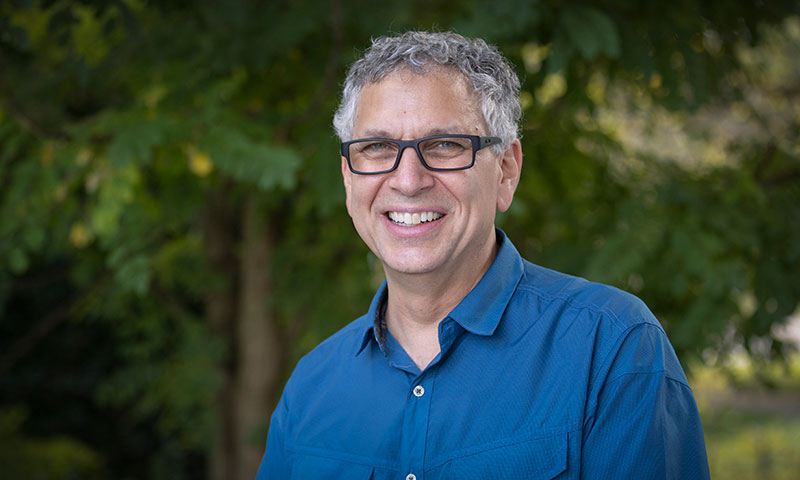
Lailiang Cheng is a Professor in the Horticulture Section of Cornell University's School of Integrative Plant Science, specializing in the physiological processes of deciduous fruit crops (particularly apple). His research focuses on sugar/malate metabolism, mineral nutrition, and environmental stress responses to improve orchard productivity and fruit quality. He integrates physiological, biochemical, and molecular approaches to study sorbitol signaling and nutrient management in high-density orchards. Education: Doctorate, Oregon State University (1999) Master of Science, Shandong Agricultural University (1989) Bachelor of Science, Shandong Agricultural University (1984) Research Focus: Cheng's work investigates carbon partitioning, malate accumulation, and nutrient transport dynamics in apple trees under abiotic stresses. His extension program delivers nutrient management strategies to the apple industry, while his teaching emphasizes analytical techniques (PLSCI 6170) and crop nutrition principles (PLSCI 4551/6551). Publication Analysis: Recent articles (2021-2025) reveal dominant themes in molecular regulation of fruit acidity, transporter biology, stress-responsive transcription factors, and omics-assisted breeding. Over 70% of publications involve collaborative work on apple genomics, with consistent emphasis on translating basic research into orchard management solutions. Awards & Recognition: No scientific awards mentioned in source materials. Academic Contributions: Advises graduate students in Horticulture; research supported by Cornell University Agricultural Experiment Station. Collaborates extensively with pomology breeders, extension specialists, and molecular biologists globally.
David Finkelstein is an Associate Professor in the Department of Geosciences at Hobart and William Smith Colleges, where he has been a faculty member since 2013. He earned his Ph.D. from the University of Illinois at Urbana-Champaign and holds advanced degrees from the University of Massachusetts, Amherst. His academic affiliations include prior roles as a Research Assistant Professor and Lab Manager at the University of Massachusetts and as an Assistant Professor at the University of Tennessee. Ph.D., University of Illinois at Urbana-Champaign M.S., University of Massachusetts, Amherst B.S., University of Massachusetts, Amherst Dr. Finkelstein's research centers on limnogeology and biogeochemistry , with a focus on the chemical evolution of lake systems, stable isotope geochemistry, and microbial life in extreme environments. His work integrates aqueous geochemistry, organic molecular analysis, and microbiological methods to reconstruct paleoenvironments and climate change across geological timescales, including the Holocene, Pleistocene, Cretaceous, and Triassic periods. He has extensively studied lake sediments, wildfires, and the environmental impacts of the 2010 Gulf of Mexico oil spill. His recent publications show a strong trend in using biogeochemical proxies and isotopic signatures to understand past climate variability, human-environment interactions, and extreme environmental conditions. His research often involves multidisciplinary collaborations and field-based studies in diverse regions such as Russia, Iran, and Central America. Dr. Finkelstein is actively involved in scientific communities, with affiliations including: International Association of Limnogeology American Geophysical Union Geological Society of America Geochemical Society SEPM (Society for Sedimentary Geology) He has advised numerous research projects and mentored students in geoscience, though specific names are not listed. His teaching includes courses such as Stable Isotope Geochemistry, Limnology, and Environmental Geochemistry, reflecting his expertise in both theoretical and applied aspects of earth sciences. Dr. Finkelstein has not received any explicitly listed scientific awards in the provided text, but his publication record in high-impact journals demonstrates significant scholarly contributions. He does not appear to lead a named laboratory or research center, but his work is deeply embedded in field and laboratory-based geochemical analysis.
Dr. Leonie Guerrero Lara is a researcher at the Copernicus Institute of Sustainable Development , Utrecht University, focusing on the intersection of community-supported agriculture (CSA) , degrowth , and post-capitalism . Her work applies social movement theory to analyze how CSA networks drive ecological and social justice in agri-food systems. She contributes to academic discourse through publications in journals like Agriculture and Human Values and Sustainability Science , while volunteering with Germany’s Netzwerk Solidarische Landwirtschaft . PhD research: Political agency of CSA networks Key themes: Degrowth, Post-Capitalism, Social Justice Her studies explore coalition-building between CSA and degrowth movements, emphasizing transformative strategies for sustainable food systems. Recent articles highlight systemic transitions and policy engagement in agri-food governance. She also participated in international conferences such as the International Degrowth Conference and POLLEN .
Univ.-Prof. Karl Crailsheim is a Professor at the University of Graz, affiliated with the Institute of Zoology within the Faculty of Natural Sciences. His research focuses on honeybee behavior, physiology, and health, particularly investigating the honeybee superorganism and threats to their colonies. He explores swarm systems, robotics, and swarm intelligence, with recent emphasis on colony losses and environmental threats. His work bridges biology and robotics, applying insights from honeybee behavior to algorithm design. Research interests include honeybee nutrition, immune responses, pathogen impacts, and the application of citizen science in ecological studies. Key projects involve tracking honeybee behavior, analyzing pollen diversity, and developing robotic systems inspired by swarm dynamics. Collaborative efforts with citizen scientists enhance ecological data collection. Publications highlight advancements in understanding bee health, pesticide effects, and swarm robotics. His interdisciplinary approach addresses both biological and technological challenges in apiculture and robotics.
Marcel Dorken is a Professor in the Department of Biology at Trent University. He holds a B.Sc. from the University of Guelph, M.Sc. from Queen's University, Ph.D. from the University of Toronto, and postdoctoral training at Oxford University. His research focuses on the evolution and ecology of plant reproduction, particularly transitions from hermaphroditism to dioecy, clonality, and plant-pollinator interactions. He investigates these topics through field experiments, genetic analysis, and modeling. Current projects include studying the ecological impacts of invasive hybrid cattails and the role of spatial structure in plant fitness. Teaching responsibilities include BIOL 1020H (Foundations of Biodiversity), BIOL 3170H (Plants and their Ancestors), BIOL 3190H (Wild Plants of Ontario), and BIOL 4610H (Evolutionary Ecology). His lab actively mentors graduate and undergraduate students in field and lab-based research. Contact: marceldorken@trentu.ca, Office DNA C250.
Jessica Forrest is an Associate Professor in the Department of Biology at the University of Ottawa, affiliated with the Faculty of Science. Her research focuses on evolutionary ecology, particularly plant-pollinator interactions, climate change impacts on pollinators, and the ecological consequences of phenological shifts. She studies native bees, their interactions with plants, and how agricultural practices can benefit from native bee ecology. Her work spans field studies in natural and agricultural landscapes, emphasizing pollinator conservation and climate adaptation. Notable projects include investigations into bee nesting habitat enhancement in orchards, the effects of drought on alpine bees, and the role of floral traits in pollinator attraction. Research Themes: Pollination ecology, climate change biology, bee behavior, and agricultural sustainability. Labs/Teams: Leads the Forrest Lab at the University of Ottawa, involving graduate and undergraduate students in field and lab-based studies. Her recent work highlights the importance of Asteraceae pollen in protecting mason bees from brood parasites and the complex effects of temperature on bee reproductive success in high-elevation habitats. Students advised include Lydia, Michelle, Natasha, Roisin, Tovah, and others, with projects ranging from bee cognition to agricultural pollination systems. The Forrest Lab collaborates widely, addressing applied and theoretical questions in pollinator ecology.
Charless C. Fowlkes is a Professor in the Department of Computer Science at the University of California, Irvine (UCI), and a member of the UCI Vision Group. His research focuses on computational vision, integrating visual recognition with 3D scene understanding and developing tools for biological image analysis. UCI Chancellor's Fellow (2019-2022) NSF CAREER Award recipient (2013) Helmholtz Prize winner (2015) Research Interests His work spans computational vision, image understanding, 3D scene reconstruction, and machine learning applications in biological and forensic domains. He develops methods for automated pollen classification, cardiac tissue analysis, and forensic shoeprint matching. Recent Publications His recent work includes 3D scene reconstruction with epipolar transformers, forensic shoeprint analysis, and image inpainting techniques. These show trends in integrating geometric understanding with deep learning. Scientific Awards Awarded the Marr Prize (2009), Helmholtz Prize (2015), and NSF CAREER Award (2013), he has received recognition for both theoretical and applied contributions to computer vision. Teaching & Advising He has taught graduate and undergraduate courses in computer vision since 2008 and advised numerous PhD, MS, and BS students who now work at institutions like Google, Apple, and CMU. Collaborations He collaborates with labs at UIUC (Punyasena Lab), Harvard (DePace Lab), and UCI (Cinquin Lab, Khine Lab) for biological applications of computer vision.
Lily Rui Liang is a Professor and Director of the MSCS Program in the Department of Computer Science and Information Technology at the University of the District of Columbia (UDC), School of Engineering and Applied Sciences. She joined UDC in 2004 after completing her Ph.D. at the University of Nevada, Reno. Her educational background includes: Ph.D. in Computer Science and Engineering, University of Nevada, Reno Dr. Liang's research spans cybersecurity , digital image processing , artificial intelligence , and computer science education , with a dedicated focus on broadening participation in computing . Her technical work includes deepfake detection and reinforcement learning for cybersecurity, while her educational innovations develop inclusive curricula for commuter and underrepresented students through Minecraft, robotics, and service learning. Analysis of her recent publications (2024-2018) shows a strategic evolution from core AI/image processing research toward educational interventions, particularly addressing commuter student engagement in urban settings while maintaining technical contributions in multimedia security and deep learning. Her scientific awards and honors include: Fellow of Center for the Advancement of STEM Leadership (CASL) (2019-2020) Fellow of Opportunities for UnderRepresented Scholars (OURS) (2014) Outstanding University Service Award from School of Engineering and Applied Sciences, UDC (2014) Myrtilla Miner Faculty Fellow (2012-2013) Frontiers of Engineering Education (FOEE) Conference participant, NAE (2011) Project Kaleidoscope (PKAL) Summer Leadership Institute participant (2011) Preparing Critical Faculty for the Future (PCFF) program participant (2011) Dr. Liang serves as Co-PI on multiple NSF grants including the UDC-CSEC-ENGAGE Project ($399,924, 2024-2027) for cybersecurity workforce development, CUE-T: HBCU Learning Community ($654,004, 2023-2026), and the AI-CyS Research Partnership ($152,350, 2021-2024) with six HBCUs and national labs. Her mentorship is evidenced through extensive curriculum development projects targeting K-12 and undergraduate students, particularly women and commuters. She leads the MSCS program and coordinates the AI-CyS consortium researching video authentication and autonomous cybersecurity agents, establishing UDC as a hub for HBCU cybersecurity education and AI research.
Prof. Dr. Christoph Oberlack is an affiliated Professor of Sustainability Governance at the University of Bern's Institute of Geography and the Centre for Development and Environment (CDE). His work focuses on institutional barriers to climate adaptation, land-use governance, and sustainable development. He holds a PhD in Institutional Economics of Climate Adaptation from the University of Freiburg (2015). Research Interests: - Sustainability governance frameworks - Deforestation-free supply chains - Climate adaptation policies - Telecoupling in socio-ecological systems - Environmental justice in global value chains - Archetype analysis methodologies Recent work explores implementation challenges of EU deforestation regulations in Peru's cocoa/coffee sectors and gender equity in cacao cooperatives. He frequently collaborates with international organizations and policymakers to translate research findings into actionable strategies. Key contributions include developing diagnostic frameworks for institutional analysis in climate adaptation contexts. Publications span 20+ peer-reviewed journals including Nature Climate Change and Global Environmental Change. He actively participates in international conferences such as POLLEN and Swiss Geoscience Meetings. Current research emphasizes participatory approaches to landscape governance and private sector roles in sustainability transitions.
Ulrich Pöschl is Director of the Multiphase Chemistry Department at the Max Planck Institute for Chemistry and Professor in the Department of Chemistry, Pharmacy and Geosciences at Johannes Gutenberg University (JGU) in Mainz, Germany. He has held leadership roles at MIT, the Max Planck Society, and the Technical University of Munich, and is a globally recognized expert in atmospheric and multiphase chemistry. Education: PhD (Doctor technicae) in Chemistry, Technical University of Graz (1995) Habilitation in Geochemistry, JGU Mainz (2007) Habilitation in Chemistry, Technical University of Munich (2006) Research Interests: His research centers on multiphase processes at the interface of atmosphere, biosphere, and hydrosphere. Key areas include aerosol chemistry, climate interactions, oxidative stress, protein modification, and the health impacts of air pollution. His work integrates field observations, laboratory experiments, and modeling. Publication Trends: His recent research spans atmospheric new particle formation in the Amazon, health effects of air pollution, open access science, and the role of bioaerosols in disease transmission. The work is highly interdisciplinary, bridging environmental science, chemistry, public health, and climate science. Scientific Awards: Highly Cited Researcher (Web of Science, 2014–2024) AGU Union Fellow (2023) Copernicus Medal (2015) Pius XI Gold Medal (2012) EGU Union Service Award (2005) Advising and Grants: Pöschl has mentored numerous PhD and postdoctoral researchers, many of whom now hold senior academic positions worldwide. He leads major international collaborations and has secured significant research funding. He is a strong advocate for open science, having founded the journal Atmospheric Chemistry and Physics and co-leading the OA2020 initiative. Labs and Teams: He leads the Multiphase Chemistry Department at MPIC, overseeing a large interdisciplinary team conducting cutting-edge research on aerosols, climate, and health. His group collaborates globally and uses advanced analytical, experimental, and computational methods.
Ellen Currano is Professor of Paleobotany in the Department of Geology and Geophysics at the University of Wyoming. Her research integrates fossil plants, insect herbivory, and paleoenvironmental proxies to understand how ancient forest ecosystems responded to climate perturbations, with field projects spanning Wyoming’s Paleogene strata and East Africa’s Miocene basins. She teaches courses in paleobotany, paleoecology, and paleoclimatology and is co-founder of The Bearded Lady Project , a science-outreach documentary initiative. Education Ph.D., Pennsylvania State University, 2008 B.S., University of Chicago, 2003 Research Interests Currano’s work centers on reconstructing ancient forest ecosystems using fossil plants and their insect-mediated damage. She investigates how taxonomic diversity, ecosystem structure, plant–insect interactions, and biogeographic patterns shifted during past global warming events. Her current projects include: Biotic responses to Paleogene hothouse climates across the Western US, especially Wyoming. Evolution of East African terrestrial ecosystems over the last 30 million years. Fossil-plant proxies for paleoclimate and paleoenvironmental reconstruction. Scientific Awards Paleontological Society Medal, 2021 Teaching & Mentoring Currano emphasizes active, process-based learning and critical thinking in her courses on paleobotany, paleoecology, and paleoclimatology. Leveraging Wyoming’s world-class fossil exposures, she mentors both undergraduate and graduate students in independent research. Outreach & Leadership She co-founded The Bearded Lady Project: Challenging the Face of Science , a documentary film and photography campaign that confronts stereotypes surrounding women in field sciences.
Klaus Moeltner is a Professor in the Department of Agricultural and Applied Economics at Virginia Tech since 2015. He previously held positions at the University of Nevada, Reno, including Associate and Assistant Professor roles. His expertise lies in environmental economics, natural resource valuation, and applied econometrics. He has secured over $6 million in grants as PI or Co-PI and contributes to interdisciplinary research through the Global Change Center and Remote Sensing Program at Virginia Tech. Education: Ph.D., Economics, University of Washington, 2000 M.A., Economics, University of Washington, 1998 M.A., International Policy Studies, Monterey Institute of International Studies, 1994 M.S., Environmental Planning & Engineering, University of Agriculture and Forestry, Vienna, Austria, 1990 Research Interests: Dr. Moeltner’s work focuses on environmental and natural resource economics, including water quality valuation, wildfire health impacts, urban water use, and coastal flooding risks. His research employs advanced econometric methods, such as Bayesian modeling and meta-regression, to inform policy decisions. Current projects include analyzing the economic benefits of stream restoration, harmful algal bloom forecasts, and offshore wind farm co-location opportunities. Awards: 2023: Distinguished Graduate Teaching Award (AAEA) 2014: Best Paper in Environmental and Resource Economics (EAERE) 2004: CABNR Outstanding Instructor Award Advising & Grants: Advised 6 Ph.D. students and secured over $6 million in grants. Research collaborations include USDA-NIFA, EPA, and the European Union. Labs & Teams: Active in interdisciplinary groups like the Global Change Center and Remote Sensing Program at Virginia Tech.
Davin Wallace is an Associate Professor at the University of Southern Mississippi's School of Ocean Science and Engineering, where he investigates coastal and marine system responses to storms, sea-level rise, and sediment dynamics across timescales ranging from days to millennia. His research employs field observations, laboratory analyses, and numerical modeling, with active sites across the Gulf of Mexico, Bermuda, and the Philippines. Education: Ph.D. in Earth Science, Rice University (2007-2010) B.S. in Geology and German, Tulane University (2003-2006) Research Focus: Dr. Wallace's work bridges paleotempestology, coastal geomorphology, and sedimentary processes. His research examines hurricane impacts on sediment structures, barrier island resilience under sea-level rise, and Holocene coastal evolution. He specializes in reconstructing historical storm patterns using geologic proxies and assessing anthropogenic influences on coastal erosion. Publication Trends: His recent articles demonstrate interdisciplinary approaches to coastal vulnerability, combining geophysical data, machine learning, and multiproxy sediment analysis. Work consistently addresses climate change impacts, with emphasis on sedimentation mechanisms during extreme events and Quaternary landscape evolution. Scientific Recognition: No major awards documented in provided sources. Academic Leadership: Leads the USM Coastal Evolution and Hazards Research Lab, supervising field campaigns and collaborative projects. Secured grants for Gulf Coast studies from NSF and NOAA. Mentors graduate students in geological oceanography programs and coordinates international research teams across field sites.
Wiebke Kirleis is Professor for Environmental Archaeology and Archaeobotany at the Institute for Pre- and Protohistory, Faculty of Arts and Humanities, Christian-Albrechts-Universität zu Kiel (CAU). She has held this position since May 2014 and was previously a junior professor at the same university from 2008 to 2014. She is actively involved in major interdisciplinary research projects, including the Cluster of Excellence ROOTS and the Collaborative Research Centre 1266 'Scales of Transformation', where she serves as co-speaker and technical platform speaker. PhD in Natural Sciences, University of Göttingen (2002) Diploma in Biology, University of Göttingen (1998) Studies in Botany, Anthropology, and Environmental History, University of Göttingen (1990–1998) Wiebke Kirleis' research centers on the interaction between humans and plants during the late Pleistocene and Holocene, with a focus on plant economy, domestication, agricultural development, and landscape transformation. Her work explores how wild and cultivated plants were used for nutrition, ritual, and technical purposes, and how agricultural innovations such as ploughing and manuring impacted Central European landscapes. She has a strong geographical focus on Northern and Central Germany, Southeastern Europe, the Near and Middle East, and Southeast and East Asia, particularly Indonesia. Her methodological expertise includes archaeobotany (analysis of charred and waterlogged plant remains), palynology (pollen and spore analysis from sediment cores), and anthracology (study of charcoal remains). Her recent research includes studies on broomcorn millet diffusion, early farming in Scandinavia and Russia, and plant use in Bronze Age settlements across Europe and Turkey. She leads and collaborates on numerous interdisciplinary projects, emphasizing the integration of botanical data into broader archaeological narratives. Her publications reflect a consistent trend in environmental archaeology, focusing on plant domestication, agricultural transitions, and human-induced landscape change. Keywords across her recent work include archaeobotany, palynology, Neolithic and Bronze Age subsistence, and environmental reconstruction. Her research spans subfields such as food security, cultural transmission of plant use, early monumentality, and socio-economic aspects of prehistoric agriculture. Board member, Cluster of Excellence ROOTS Co-speaker, CRC 1266 'Scales of Transformation' Speaker, ROOTS Technical Platform Board member, Johanna-Mestorf-Akademie Chair, Scientific Advisory Board, Dithmarschen Stone Age Park (since 2023) Full member, German Archaeological Institute (DAI) Elected member, Commission for Archaeology of Non-European Cultures (KAAK) Wiebke Kirleis has supervised numerous research projects funded by the DFG and other agencies, including the Graduate School 'Human Development in Landscapes'. She has advised students and collaborated internationally with institutions in Italy, Norway, Indonesia, and Australia. Her leadership roles in academic self-administration include serving on planning, budget, and equality committees at CAU Kiel. She is committed to science communication, having launched the digital exhibition 'Alles bleibt anders' and produced educational films on archaeobotany. She is also involved in mentoring female postdocs through the via:mento program. She leads the archaeobotanical component in the 'Superfood' module of the SFB 1266 digital exhibition and is actively involved in the ROOTS Cluster’s Subcluster 'Dietary ROOTS'. Her lab and research team operate within the Institute for Pre- and Protohistory, contributing to the university’s strong focus on interdisciplinary landscape archaeology.
Laura Righetti serves as Assistant Professor in Organic Chemistry at Wageningen University & Research and is a core member of the Team Natural Toxins. Her work bridges analytical chemistry and food safety research with institutional collaborations across European universities including University of Parma and University of Almería. Her research program centers on natural toxins in food systems, particularly mycotoxins like deoxynivalenol (vomitoxin) produced by Fusarium species. She employs advanced metabolomics and tandem mass spectrometry techniques to analyze contaminants in grains, plant-based foods, and dietary supplements. Key focus areas include food authenticity verification, chemical characterization of wild edible plants, and developing sustainable analytical methods for toxin detection. Recent publications demonstrate a clear trajectory toward integrating eco-metabolomics with portable mass spectrometry for on-site food safety testing. Her work increasingly addresses emerging challenges in botanical supplement standardization and antibacterial properties of plant compounds, reflecting growing interdisciplinary connections between food chemistry, toxicology, and microbiology. Dr. Righetti actively mentors doctoral researchers through three ongoing PhD projects: development of portable biotoxin detection systems, toxicological assessment of bee pollen supplements, and identification of novel plant toxins. She also leads the LVVN-funded Pull Down Approach project focused on selective sampling methodologies. As part of Wageningen's Laboratory of Organic Chemistry, she contributes to the Team Natural Toxins research collective which maintains active collaborations across food safety networks in Europe. Current work includes metagenomic analysis of perennial grain rhizospheres and metabolomic profiling of medicinal plants like Melissa officinalis .